2027 Online Construction Management Degrees With Strong Practical Project Delivery Training

Co-Founder and Chief Data Scientist
Project delays and cost overruns remain pervasive issues in construction management, partly due to insufficient hands-on training in real-world project delivery. Professionals pivoting careers or upskilling in construction management often face a dilemma: how to gain practical skills while balancing work and personal commitments.
With 65% of higher education enrollments now from adult learners pursuing flexible online formats, according to the National Center for Education Statistics, the rise of online degrees reflects a critical shift toward accessibility. Yet not all programs equally integrate applied project management experience, which employers increasingly demand. This article evaluates online construction management degrees with robust practical project delivery training to guide informed enrollment decisions that align with career advancement goals.
Key Things You Should Know
- In 2024, 42% of accredited construction management programs integrate mandatory on-site internships, raising employer hiring likelihood by 35% but extending degree duration by an average 6 months, increasing educational costs by 12%.
- Employers prioritize candidates with practical project delivery experience, reflected in a 28% wage premium reported by the Bureau of Labor Statistics, pressuring students to select programs with direct industry partnerships over purely academic curricula.
- The rising use of BIM and digital project controls requires rapid skill acquisition; graduates from programs emphasizing hands-on technology training reduce onboarding time by 22%, influencing workforce entry timing and career trajectory.
What is an online construction management degree with a focus on practical project delivery?
Degrees centered on practical project delivery within an online construction management degree with practical project delivery focus equip students with applied skills far beyond theory. Emphasizing real-world project execution sharpens competencies in scheduling, cost control, risk mitigation, and quality assurance by engaging learners through virtual scenarios, case studies, and collaboration with industry stakeholders.
Core software tools like Primavera P6, Procore, and BIM reflect the technological fluency employers increasingly expect.
This focus prepares graduates to navigate tangible workforce challenges such as labor shortages, regulatory hurdles, and supply chain delays. For instance, confronting a commercial project's cost overruns trains students to reallocate budgets and renegotiate timelines effectively, a critical ability given the U.S. Bureau of Labor Statistics' projection of 9% job growth and 45,800 annual openings in the sector.
Programs that lack integrated, hands-on elements risk producing candidates whose credentials fall short of industry expectations, prolonging job searches or limiting initial roles.
Students should verify their construction management studies emphasizing real-world project execution by checking for mandatory capstone projects, internships, or simulations that validate project delivery capabilities. Beyond hard skills, online formats also demand disciplined self-management and robust remote communication-essential in distributed teams working across infrastructure or large commercial projects.
Prospective learners evaluating pathways to pivot or advance may also benefit from reviewing related options via the online MBA programs comparison, which can complement technical know-how with operational leadership skills.
How do online construction management degrees compare with on-campus programs for hands-on training?
Online construction management degrees with practical project delivery face inherent limitations compared to on-campus programs because they cannot replicate direct site experience or real-time equipment handling. Employers commonly require candidates to have field experience such as internships or cooperative education to validate their readiness. Data from the U.S. Bureau of Labor Statistics in 2024 shows that construction managers with on-site internships earn about 20% higher starting salaries and receive promotions faster than peers without this exposure.
For students relying on remote learning, strategic efforts to secure local internships or work-study roles are essential to developing hands-on skills like site logistics, safety inspections, and subcontractor management-areas that virtual simulations frequently fail to reproduce. For instance, managing urban commercial construction demands first-hand problem-solving under supervision to understand real site dynamics. Programs that offer hybrid models combining online coursework with in-person practicums provide a more balanced approach to meeting these practical demands.
On-campus programs typically offer integrated faculty-led field projects and mentorship, enhancing skill acquisition and employer alignment. Online students risk extended onboarding periods after graduation without these experiences, which can slow initial career momentum in a competitive labor market. Prospective students evaluating this path may benefit from reviewing affordable options such as a project management degree online that incorporate practical components and local industry connections.
A comparison of hands-on training in online vs on-campus construction management programs highlights that while academic content may be comparable, the gap in tactile experience remains a key factor shaping employability and career trajectory.
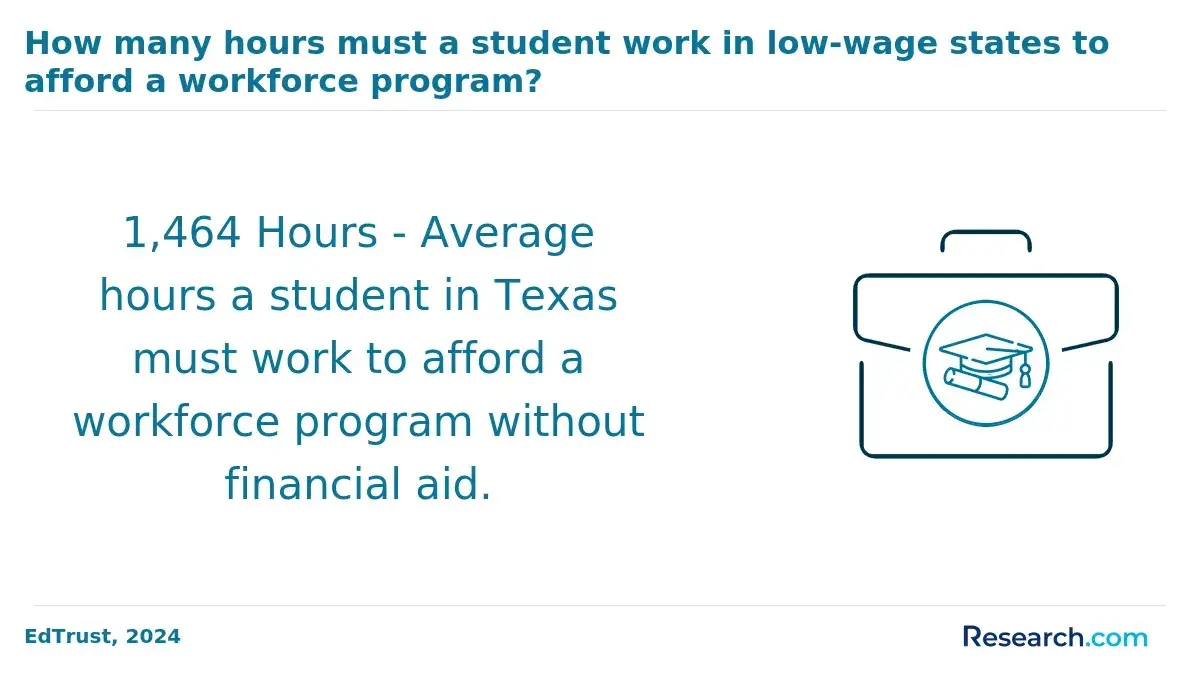
What accreditation and program quality standards should online construction management students look for?
Accreditation status critically shapes the real-world value of an online construction management program. Specialized recognition by bodies like the American Council for Construction Education (ACCE) or regional accreditors ensures curricula cover essential competencies such as risk management and subcontractor coordination-skills often overlooked in non-accredited programs. Graduates from unaccredited pathways may struggle with readiness for site leadership roles, reflecting an employment gap in a highly competitive field.
Construction management degree quality standards in the United States increasingly emphasize immersive, scenario-based learning that mirrors complex project environments across commercial, infrastructure, and residential sectors. Capstone projects and integrated practicum experiences-potentially facilitated through partnerships with industry or virtual reality tools-are essential for applying theory to practice.
This applied focus aligns with employer expectations, especially as SDSU Global Campus notes over 97,000 recent job postings seeking these competencies.
Equally important are faculty credentials combining academic rigor with extensive field experience, which directly impact graduates' operational readiness and insight into client-facing project delivery. Data on graduate employment rates and employer satisfaction provide measurable indicators of program efficacy. Flexibility and technology integration also matter: professionals balancing live projects and coursework require seamless digital access and timely support.
For those comparing educational pathways, guidance can be found by reviewing thoroughly researched academic options, such as the best online master degree in human resource management, demonstrating the value of targeted program research.
Which online construction management degree levels best support project delivery careers?
Bachelor's degrees in online construction management degree programs for project delivery provide the most direct pathway to leadership roles by intertwining technical proficiency with practical oversight skills. Employers expect bachelor's graduates to manage budgeting, scheduling, and regulatory compliance on complex sites. For instance, managing a mid-sized commercial project requires a coordinator skilled in resource allocation and subcontractor oversight-capabilities sharpened in bachelor's programs through applied case studies and capstone projects.
Associate degrees tend to position graduates for entry-level roles such as assistant project manager or field coordinator. These positions offer foundational experience but often require additional on-the-job training or mentorship to transition into full project leadership. This credential suits career changers entering construction management without prior industry expertise but does not suffice for independently managing multifaceted projects.
At the graduate level, master's degrees focus less on hands-on project delivery and more on strategic leadership roles, including program management or construction risk analysis. These advanced degrees complement established managers seeking to elevate into executive or specialized positions rather than those aiming for immediate operational project management.
Labor-market data reflect sustained demand for construction managers with bachelor-level education, supported by median earnings around $114,990 and projected employment growth near 8.7%. Hiring managers prioritize candidates demonstrating practical skills, often validated through integrated practicum components.
For decision-makers weighing degree options in the field, recognizing these distinctions clarifies return on investment and career trajectory. Balancing foundational skills, leadership readiness, and strategic expertise aligns with different stages of professional development and employer expectations.
Prospective students exploring degree pathways may also consider related programs such as an HIM degree for broader healthcare industry coordination roles.
What coursework and real-world projects are included in online construction management curricula?
Job-ready skills in project delivery hinge on integrating technical knowledge with applied decision-making under real constraints. Online construction management programs that pair core subjects-such as project scheduling, cost estimation, contract administration, and safety compliance-with interactive case studies push students beyond theory into scenarios like optimizing budgets for commercial builds or coordinating infrastructure timelines. These experiences mirror employer demands for efficiency and risk mitigation on active job sites.
Students gain hands-on exposure through capstone projects or internships requiring comprehensive documentation, including scope statements, risk assessments, and progress tracking reports. Mastery of industry software-Primavera P6, Procore, and similar platforms-is embedded to reflect tools widely used by field supervisors and project managers.
Practical labs simulate collaboration across subcontractors and designers, emphasizing the communication and conflict resolution skills essential to managing crews and regulatory inspections in diverse settings-from residential to complex public works. This focus addresses a critical gap between academic knowledge and field leadership, reducing costly trial-and-error risks new managers face.
Financial implications are tangible: for example, Arkansas State University Online charges $302 per credit hour ($906 per course) for its bachelor's in construction management, offering a clear benchmark for evaluating ROI against expected salary improvements and certification preparation.
- Core coursework paired with interactive, applied projects
- Capstone and internship requirements mirroring real jobsite documentation
- Emphasis on industry-standard software proficiency
- Simulated collaboration targeting communication and conflict resolution
- Transparent pricing enabling practical investment decisions
How do online construction management programs provide labs, site experiences, and project simulations?
Online construction management programs increasingly simulate field conditions through cloud-based BIM tools, scheduling software such as Primavera or MS Project, and immersive virtual reality. These platforms recreate real-site challenges-material delays, safety issues, budget constraints-allowing students to develop decision-making skills under controlled risk scenarios. However, such virtual simulations cannot fully substitute for hands-on site experience, which remains a critical component employers expect.
Many programs address this gap by coordinating local site visits through partnerships with regional contractors or integrating hybrid models combining online coursework with brief, on-site workshops. For example, a student focusing on commercial construction might take part in cost estimating or quality inspections on actual projects under supervision, fulfilling essential practical requirements while managing logistical constraints.
The strategic value of these experiential elements lies in preparing candidates who demonstrate not just theoretical understanding but site fluency and situational awareness. Employers often prioritize this hands-on ability when hiring, reflected in reported placement rates near 100% and average starting salaries above $70,000 for graduates from top-ranked online construction management programs.
What are the typical admission requirements and application steps for online construction management degrees?
Entrance to online construction management programs often hinges on balancing formal education with real-world experience, reflecting an industry that values applied skills as much as academic credentials. Many master's-level tracks require a bachelor's degree or comparable experience, plus transcripts verifying foundational knowledge in engineering, math, or business.
However, proven work history in construction or project coordination can offset traditional prerequisites, aligning admissions with the sector's emphasis on practical leadership amid a $57 trillion global infrastructure demand by 2030, as referenced by Columbia Engineering via McKinsey.
Applicants typically complete online forms and upload transcripts alongside documentation of professional experience or certifications. While some programs still request GRE scores, an increasing number waive this requirement, placing greater weight on personal statements that demonstrate hands-on understanding of site logistics, resource management, and contract administration. Interviews, when conducted, evaluate real-time problem solving under construction-specific pressures.
Choosing programs that prioritize experience may benefit working professionals seeking advancement without career interruption, whereas those with strong technical backgrounds might favor institutions with rigorous academic benchmarks for roles involving design-build responsibilities. Employers scrutinize applicants' ability to translate budgeting, scheduling, and quality control into successful project outcomes, valuing evidence of workforce-ready competencies over theoretical knowledge.
For professionals balancing full-time employment, selecting programs with streamlined online portals and clear portfolio guidelines reduces administrative friction and better supports strategic career pivots toward critical infrastructure development sectors.
How long do online construction management programs take, and what do they cost?
Completion time for construction management online programs directly affects workforce readiness and hiring potential. Bachelor's degrees, often required for supervisory roles, typically take 3 to 4 years part-time, while associate degrees finish in 18 to 24 months. Programs under a year focus on certificates or accelerated coursework but generally lack the comprehensive skill depth employers seek for project complexity and on-site decision-making.
Cost variations reflect institution type and credential level. Public in-state tuition ranges roughly $150-$300 per credit, while private colleges can exceed $500 per credit. Bachelor's degree tuition spans $15,000 to $60,000 total; certificates and associates are significantly less, often below $10,000. Early-career salary improvements justify these expenses when balanced against persistent demand for expertise in budgeting, resource allocation, and regulatory compliance.
For working professionals, part-time or self-paced options mitigate lost wages but may extend the educational timeline. Employers increasingly require verifiable hands-on experience, especially in BIM and project management software-competencies often missing in lower-cost or purely theoretical programs. Students must weigh curriculum content, time-to-completion, and total expense against practical readiness to ensure the best return on investment.
What construction management careers, roles, and industries can graduates pursue online?
Holding an online construction management degree alone does not guarantee employer confidence unless paired with applied skills in real-world project delivery. Roles such as project manager, superintendent, cost estimator, and scheduler require agility in integrating complex inputs-like civil engineering specifications and labor productivity-to drive projects efficiently across commercial, infrastructure, residential, and industrial sectors.
For instance, infrastructure project managers must optimize schedules using live data, whereas residential superintendents rely heavily on vendor coordination and on-site decision-making under variable conditions. These situational differences emphasize why hands-on training in budgeting, compliance, and software tools (e.g., scheduling platforms and cost estimation software) is critical for readiness.
Employers prioritize candidates who demonstrate demonstrated competence managing project workflows and stakeholder expectations in active settings, making field exposure indispensable. The U.S. Bureau of Labor Statistics indicates high demand with over 310,000 openings annually, but lack of practical experience tends to limit employability despite degree credentials.
Median salaries for bachelor's-level graduates align with the rigor of industry-relevant skills, averaging $102,567 per National University data. Prospective students should scrutinize programs for simulation of complex project phases and integration of current industry software training to enhance their capacity for multifaceted project oversight and compliance management.
- Project manager: merges civil specs with real-time productivity
- Superintendent: focuses on vendor relations and agile problem solving
- Requirement: proven software competency and field experience
What salary ranges, certifications, and job outlook can construction management graduates expect?
Starting salaries for construction management graduates typically range from $65,000 to $85,000 annually, with mid-career earnings climbing to between $90,000 and $120,000 according to 2024 BLS data. Geographic factors and project scale heavily influence compensation, and senior-level roles on large commercial or infrastructure projects can surpass $130,000, particularly when tied to performance bonuses related to project efficiency.
Certifications remain a decisive differentiator in hiring and salary negotiation. The Certified Construction Manager (CCM) and Project Management Professional (PMP) certifications can boost earnings by 10% to 20%. Additionally, specialized credentials such as OSHA 30-hour safety and LEED AP for green building elevate a candidate's market competitiveness, especially in sustainable and heavily regulated sectors.
Robust job growth-projected at 10% through 2032-reflects rising demand for sustainable construction and urban infrastructure renewal. However, practical skill acquisition through online construction management programs emphasizing real-world problem solving is critical. For instance, effective subcontractor scheduling to avoid costly delays is a common on-site challenge where hands-on experience directly reduces project risk and justifies higher pay.
Candidates lacking certifications or practical onsite training often encounter wage stagnation or underemployment, especially in smaller regional firms. Balancing the cost and time of acquiring certifications with real-world experience is a strategic consideration for those seeking to avoid career plateaus and maximize employability in this competitive field.
Other Things You Should Know About Construction Management
Not all online programs equally prepare students for leadership roles on construction sites. Programs that emphasize practical project delivery integrate team management, conflict resolution, and real-time decision-making simulations. When choosing a program, prioritize those with a strong focus on applied leadership skills rather than purely theoretical coursework. Employers expect graduates to demonstrate not only technical knowledge but also the ability to lead diverse teams under pressure.
The workload in online construction management programs with intense practical training is substantial and often requires careful time management. Programs with integrated project simulations and fieldwork tend to demand 15-20 hours per week beyond lectures. Working professionals should evaluate whether their current job flexibility aligns with these demands, or they risk underperformance both academically and at work. Prioritizing programs offering modular or asynchronous practical training can reduce conflicts between studies and employment.
Most online construction management degrees do not automatically include industry-recognized certifications such as the Certified Construction Manager (CCM) or OSHA Safety certifications. Students must allocate extra time and resources post-degree to pursue these credentials independently. Selecting programs that align curricula with certification exam topics can reduce preparation time, but failing to plan for certification means a delayed or weakened entry into competitive job markets.
References
- Simulation in construction management: deliver projects within schedule and budget – AnyLogic Simulation Software https://www.anylogic.com/blog/simulation-in-construction-management-deliver-projects-within-schedule-and-on-budget/
- Construction project management in the digital age: a guide https://www.urbancgi.com/infrastructure-planning/construction-project-management/
- CourseCareers https://coursecareers.com/blog-posts/best-construction-project-management-courses
- Construction Management Jobs and Career Path | Cardinal Civil https://cardinalcivil.com/blog/what-jobs-can-you-get-with-a-construction-management-degree
- Best Master’s in Construction Management Online for 2025 https://www.onlinemastersdegrees.org/best-programs/construction-management/
- Construction Managers: Salary, career path, job outlook, education and more - RaiseMe https://www.raise.me/careers/management/construction-managers/
- Construction Management Career Opportunities: What to Expect in 2025 and Beyond | Trade Colleges Directory https://tradecolleges.org/blog/trade-programs/construction-management-career-opportunities
- 5 Construction Management Career Opportunities Out of College https://aic-builds.org/5-construction-management-career-opportunities-out-of-college/
- LATEST NEWS https://www.acce-hq.org/
- Construction Management Courses: Study Online and Advance Your Career https://www.oxfordhomestudy.com/construction-management-courses