2027 Online Construction Management Degrees With Long-Term Construction Career Stability

Co-Founder and Chief Data Scientist
The dilemma of balancing full-time employment with acquiring a construction management degree often forces professionals to choose between career momentum and educational advancement. With 60% of undergraduate students over age 25 now opting for online coursework, according to the National Center for Education Statistics, flexible enrollment models are reshaping accessibility.
Yet, not all online construction management programs provide the depth or industry connectivity essential for long-term stability amid evolving labor demands that project a 8% job growth over the next decade.
This article evaluates the top online construction management degrees designed to enhance career resilience without sacrificing immediate workforce engagement, guiding you through crucial program features and outcomes to optimize your strategic decision-making.
Key Things You Should Know
- Labor Market Information projects a 7% growth in construction management jobs through 2032, but candidates with only online degrees face a 15% longer median hiring time, reflecting employer preferences for hybrid or in-person experience.
- The National Center for Education Statistics shows online construction management programs average $12,000 less annual tuition than traditional ones, yet extended program lengths by 20% can increase total indirect costs, affecting return on investment timing.
- Reports from the Bureau of Labor Statistics indicate 62% of construction firms prioritize candidates with internship or field-based credentials, creating a strategic tension for online learners to secure practical experience outside digital coursework.
What is an online construction management degree and how does it prepare you for the field?
An online construction management degree offers specialized training essential for navigating the complex operational demands of contemporary construction projects. Unlike broad management degrees, these programs focus on industry-specific skills such as BIM (Building Information Modeling), construction law, and regulatory compliance, which are critical for roles requiring both technical and administrative oversight.
Practical readiness is cultivated through scenario-based assignments and virtual simulations that address real-world challenges like supply chain disruptions and labor shortages. For instance, a graduate overseeing a large commercial build must juggle subcontractor coordination while adapting to evolving environmental regulations-a task these programs simulate to sharpen problem-solving capabilities.
Online formats provide flexible access, beneficial for those balancing work and education, but demand disciplined time management and self-motivation.
They often incorporate synchronous teamwork and critical discussions to build communication skills, although the lack of in-person site exposure can limit hands-on jobsite familiarity. Some learners offset this by pursuing internships or hybrid delivery models.
The career outlook substantiates the value of an online construction management degree benefits with the Bureau of Labor Statistics projecting a 9% growth over the decade, translating to about 46,800 annual job openings. This demand is linked to sustained infrastructure investments and urban development, reinforcing the degree's role in preparing candidates for supervisory and strategic functions.
Those researching pathways should consider how an online construction project management degree prepares you for a construction career through the lens of practical application, workforce expectations, and the necessary balance between technical expertise and leadership.
How do online construction management degrees compare to on-campus programs for quality and credibility?
Online construction management degree credibility comparison hinges on how programs translate classroom theory into applied expertise employers demand. Accredited online options maintain parity in academic rigor with on-campus degrees, provided they emphasize core competencies like project scheduling, budgeting, safety, and regulatory compliance through thorough assessments and practical assignments.
However, the primary difference lies in how each format delivers experiential learning and networking opportunities. On-campus programs typically offer direct access to internships, site visits, and face-to-face mentorships, accelerating employer connections.
By contrast, online programs increasingly integrate virtual simulations and remote internship collaborations, helping bridge that gap for remote learners. Working professionals often leverage this flexibility to immediately apply new skills, enhancing retention and relevance amidst job demands.
Employers expect construction managers to demonstrate effective field operations and leadership. With a median wage of $106,980 according to BLS Occupational Outlook Handbook data from May 2024, a graduate's return on investment depends heavily on experience with real-world tools, capstone projects, and certifications aligned with industry standards such as PMP or OSHA.
Students should verify a program's ability to prepare them for these outcomes, especially in online formats where career services and local professional chapter involvement vary.
Decision-makers must weigh quality differences between online and on-campus construction management programs beyond convenience, focusing on tangible workforce integration. Graduates who secure leadership roles within 12 to 18 months post-graduation often demonstrate thorough experiential learning irrespective of delivery mode.
Those evaluating pathways might also consider programs linked to recognized credentials and pathways such as a project manager degree for diversified skills applicable to construction leadership.
Are online construction management degrees accredited and what accreditation should you look for?
Choosing an online construction management degree requires scrutiny beyond regional accreditation for construction management programs. Industry-specific certification from the American Council for Construction Education (ACCE) often dictates employability in competitive sectors.
Employers in fields like heavy and civil engineering construction prioritize candidates with ACCE-accredited credentials due to verified technical competence and applied project management skills needed in projects exceeding $100 million.
Regional accreditation remains essential for financial aid and credit transfer but insufficient alone to assure industry credibility, especially for managerial roles commanding median salaries above $120,000. Graduates without ACCE-backed instruction risk gaps in current construction protocols and licensing acceptances, limiting career mobility.
Practical exposure integrated into accredited online degrees, such as virtual labs, internships, or case studies, is pivotal. The absence of hands-on learning reduces readiness for site leadership despite formal accreditation.
Students evaluating online options must weigh these factors carefully, considering their specific career targets and the degree's real-world applicability. For professionals balancing time constraints, programs recognized for industry rigour yet delivered efficiently, such as the fastest online master's in healthcare administration, offer comparative models for streamlined, credible education pathways relevant to management disciplines.
What courses and skills are typically covered in an online construction management curriculum?
Online construction management curricula prioritize competencies directly linked to employer expectations and industry challenges that influence long-term career stability. Core coursework covers project scheduling, cost estimating, contracts, safety, and quality control—skills vital for navigating legal compliance, budget constraints, and risk management.
Proficiency in BIM (Building Information Modeling) and project platforms like Procore or Microsoft Project is essential, facilitating faster decision-making and team collaboration on complex builds. Understanding architectural and engineering drawings empowers site supervisors to address construction hurdles proactively, a critical factor in avoiding costly delays.
The programs include leadership and communication training to manage subcontractors, supplier negotiations, and stakeholder coordination. These are key to mitigating disputes that frequently impact public infrastructure timelines and budgets. For example, mastering conflict resolution reduces risks associated with litigation and schedule disruptions.
Data analysis skillsets enable monitoring productivity and safety metrics, addressing the industry's 5-7% productivity losses often caused by mismanagement. Financial management and construction law components prepare graduates to handle volatile material costs and contractual penalties that challenge project profitability.
At an average cost of about $15,202 per year without aid, totaling nearly $60,808 for four years, prospective students must weigh whether online construction management courses and curriculum offer sufficient return on investment relative to their targeted roles and regions.
Comparing these costs to other fields, such as electrical engineering online tuition costs, can provide crucial context for informed decision-making.
What are the admission requirements and prerequisites for online construction management bachelor's and master's programs?
Admission into online construction management bachelor's programs typically hinges on more than academic credentials alone; foundational math skills in algebra and geometry are essential for technical tasks like project estimation.
While standardized test scores such as SAT or ACT are often requested, an increasing number of programs weigh professional experience equivalently due to test-optional policies. Transfer applicants must demonstrate at least a 2.5 GPA in STEM or technical courses, and practical experience reflected in résumés significantly improves admission prospects.
At the master's level, admissions criteria become more selective, requiring a bachelor's degree preferably in construction management or related technical fields, with a minimum GPA near 3.0.
Admission committees prioritize candidates presenting 2-5 years of professional construction experience to confirm leadership capability and technical problem-solving aptitude necessary for advanced coursework. Letters of recommendation and clearly articulated career goals in personal statements become critical evaluative components.
Practical workforce implications include the fact that those without direct construction experience entering master's programs often face extended learning curves or bridging courses, potentially delaying progression. Additionally, mastery of industry software tools such as AutoCAD, Primavera, or MS Project is increasingly treated as a baseline skill, underscoring a growing alignment with employer expectations.
According to Texas State University Online citing BLS data, construction managers in specialty trade contracting roles earn a median early-career wage of $102,140, making adherence to these admission standards consequential for accessing competitive compensation and sustainable career trajectories.
How long does it take to earn an online construction management degree and what does it cost?
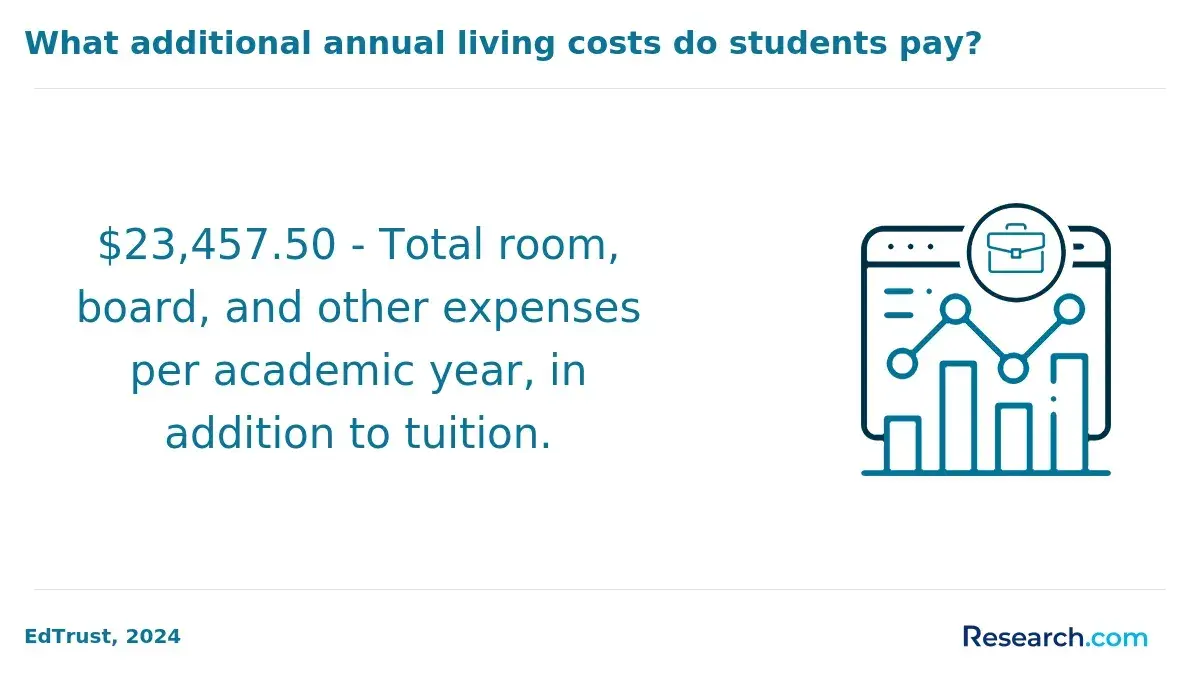
Completing an online construction management degree requires balancing time, cost, and career objectives. Associate degrees typically take two years full-time, while bachelor's degrees span four years, with accelerated options reducing this to three.
Part-time or self-paced formats can extend completion to five or more years, allowing working professionals to manage job and family demands but requiring extended financial and time commitments.
Cost differences are material and influence return on investment. Public universities often charge between $15,000 and $30,000 for a bachelor's degree, whereas private institutions may exceed $40,000. Associate degrees range from $5,000 to $15,000, making them a cost-effective option for early or lateral career shifts.
Additional expenses include technology fees, textbooks, and software, with tuition reimbursement contingent on employer partnerships and program accreditation.
For example, a field technician seeking advancement might complete a part-time associate degree over three years at approximately $12,000, acquiring essential skills to qualify for supervisory roles faster. Conversely, those aiming for senior project management positions within large infrastructure firms should anticipate investing in a full bachelor's degree to meet employer expectations and salary benchmarks.
Essential decision factors include accreditation, industry recognition, and wage outcomes. Data from Texas State University Online and BLS show top earners in construction management can exceed $176,990 annually, justifying upfront investment despite extended timelines and costs.
What construction careers can you pursue with an online construction management degree?
Graduates with an online construction management degree must navigate demanding roles that require precise resource coordination, cost control, and clear stakeholder communication. For example, a commercial project manager integrates subcontractor timelines with supply chain delays, a real-world challenge that online programs address through coursework in project planning and budgeting.
The field anticipates growth, with roughly 380,000 new jobs by 2033 as projected by BLS via Northern Michigan University Global Campus, but demand varies by sector. Residential construction faces tighter competition due to localized saturation, whereas infrastructure projects offer steadier employment but necessitate specialized skills often acquired via electives or credentials.
The practical challenge of balancing academic learning and digital proficiency with onsite experience is critical. Use of tools like BIM and ERP software has become standard.
However, online learners must secure internships or project collaborations to meet employer expectations for hands-on competence. Early development of leadership skills, alongside problem-solving and financial management, markedly improves job prospects.
Enhancing qualifications through OSHA safety certification or PMP credential is increasingly necessary to move beyond foundational skills, especially for those targeting senior management or consulting paths. Strategic planning of educational milestones aligned with evolving industry technologies and regulatory standards influences long-term career trajectory in construction management.
What is the salary potential and long-term job outlook for construction management professionals?
Choosing construction management as a career demands recognition of the tradeoffs between practical on-site expertise and formal credentials. Median salaries hover near $98,000 annually, but reaching above $120,000 typically requires navigating complex metropolitan projects or specialized sectors.
For instance, managers overseeing multimillion-dollar urban developments engage deeply with diverse stakeholders, regulatory compliance, and fluid budget adjustments.
This grounded insight contrasts with general assumptions about automated labor risks. Construction management's automation hazard is estimated at a mere 3.2%, ranking it among the top AI-resistant professions.
Employment growth projections of 10% through 2032 outpace many sectors due to infrastructure renewal and sustainability priorities. However, professionals entering mid-career from trades or engineering fields must confront a competitive landscape where lacking formal credentials or leadership experience can stagnate advancement.
Employers increasingly seek candidates who demonstrate cost control acumen, mastery of evolving building technologies, and communication finesse.
Successful long-term career stability depends on embracing digital tools and integrating sustainability metrics. Continuous technical training and adaptive management strategies differentiate candidates in dense markets.
Prioritizing educational programs that offer practical software applications and regulatory knowledge aligns closely with actual job demands and boosts employability.
Do construction managers need licenses or certifications, and how do online degrees support those requirements?
Licensure is not a universal requirement in construction management, but certifications like the Certified Construction Manager (CCM) and Associate Constructor (AC) serve as practical benchmarks for credibility and expanded project eligibility.
Obtaining these certifications hinges on a mix of documented experience, education, and passing exams, areas where online degrees can play a decisive role by structuring learning to meet professional standards.
Online programs typically combine coursework in project management, safety codes, contract law, and cost estimation, furnishing the technical knowledge needed for certification eligibility. The flexibility of online degrees benefits working professionals by allowing them to accrue relevant field experience concurrently, reducing the time lag often encountered in traditional classroom settings.
Notably, many online curricula incorporate targeted exam preparation, increasing pass rates and thus employer recognition. Realistically, without certification post-degree, professionals may encounter limited project responsibilities and weaker negotiation leverage. For example,
Columbia University graduates with construction administration credentials report significantly higher salary outcomes, underscoring market preference for credentials pairing degree-level education with verified certifications.
Evaluating online construction management programs requires scrutiny of accreditation status, exam prep quality, and alignment with certification pathways to avoid dead-end qualifications that impede long-term career progression and earning potential.
How can you choose a reputable online construction management program that supports long-term career stability?
Accreditation from recognized bodies like ABET or ACCE remains a baseline filter that employers use to validate construction management credentials. Without this, even technically sound programs risk producing graduates who face skepticism in the job market.
A curriculum must extend beyond theory, incorporating current industry practices such as project scheduling, cost estimating, safety protocols, and sustainable building technologies to meet evolving employer expectations.
Employment outcomes offer a tangible measure of a program's relevance. For instance, a construction management program reporting 85% job placement within six months signals strong market alignment.
Programs lacking transparent data leave candidates exposed to uncertain credential value. Certification pass rates (e.g., PMP, CCM) and employer partnerships further reveal whether graduates are prepared for real-world demands.
Program format and support services notably affect workforce entry and progression timelines. Synchronous learning and career advising help mid-career professionals balance upskilling with job demands, while integrated internships or capstone projects provide critical hands-on experience that hiring managers prioritize.
According to data referenced by Texas State University Online drawing on BLS statistics, construction project management specialists earn a median salary of $96,700, emphasizing the financial stakes tied to educational investment. Selecting programs primarily on tuition or pacing rather than proven graduate outcomes risks undermining long-term career resilience and earning potential.
Other Things You Should Know About Construction Management
Online programs often require greater self-discipline because they lack fixed schedules and in-person accountability. Most students juggle coursework alongside professional or personal obligations, which can increase stress and risk of falling behind without time management skills. Prospective students should evaluate their ability to meet deadlines independently and consider programs with flexible pacing or advisor support designed to mitigate these challenges.
Specialized programs targeting areas like sustainable construction or project controls enhance expertise but may narrow career flexibility if market demand shifts. Broader programs provide foundational knowledge across multiple sectors but might lack depth employers seek for specialized roles. Candidates must assess their career goals and local industry needs, prioritizing specialization only when aligned with stable or growing market segments to maximize long-term career stability.
Program reputation heavily affects employer recognition, salary offers, and advancement opportunities in construction management. Degrees from institutions with established ties to the construction industry often grant priority access to internships, mentoring, and job placements. Prospective students should focus on programs with proven graduate outcomes and clear employer connections rather than convenience or cost alone to secure sustainable career growth.
References
- Construction Managers: Salary, career path, job outlook, education and more - RaiseMe https://www.raise.me/careers/management/construction-managers/
- How to Pursue a Career as a Construction Site Manager https://www.oshaeducationcenter.com/become-a-construction-manager/
- Construction Jobs for Growth & Stability https://www.irecruit.co/insights/best-construction-jobs-career-growth-stability
- The Essential Guide to Construction Manager Education and Career Paths https://abcsocal.org/construction-manager-education/
- Best Online Construction Management Degrees https://www.affordablecollegesonline.org/degrees/construction-management-programs/
- What do you learn in a bachelor's in construction management? | edX https://www.edx.org/resources/what-do-you-learn-in-a-bachelors-in-construction-management