2027 Best Online Master's in Construction Management With Project Management Tracks

Co-Founder and Chief Data Scientist
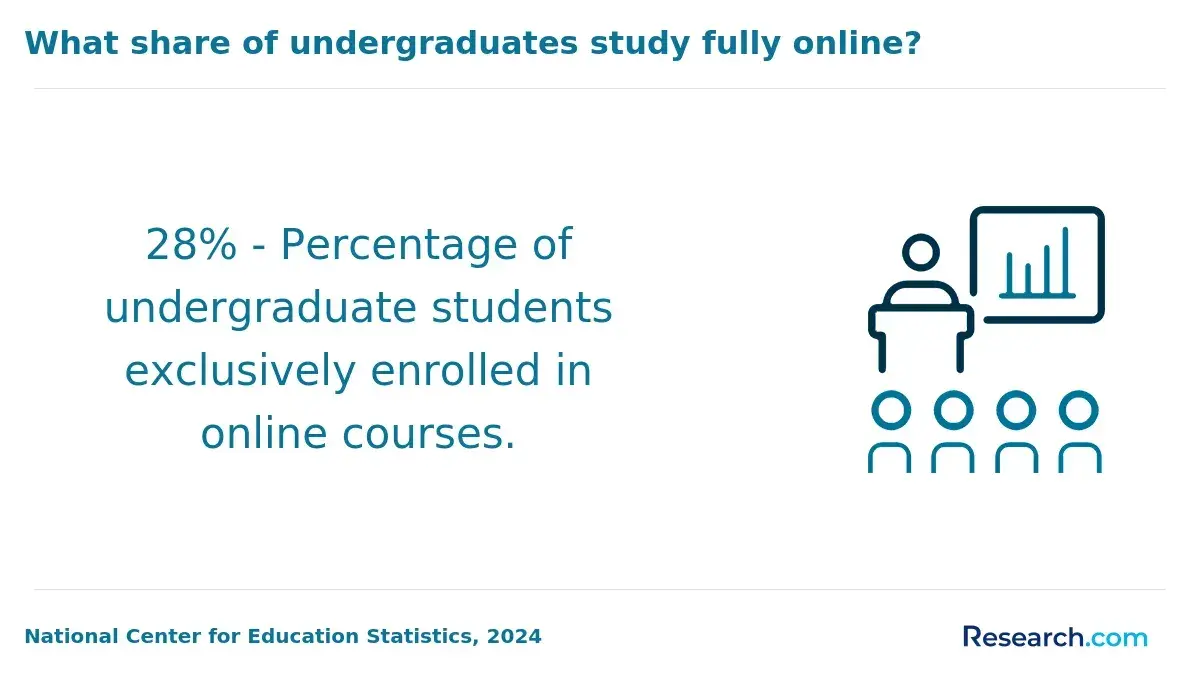
Facing projects with escalating complexity, many construction managers grapple with aligning on-site execution and strategic planning without formal training in project management. This gap often jeopardizes timelines and inflates budgets, risking career progression and client trust. According to the National Center for Education Statistics, over 40% of graduate students in construction-related fields now pursue fully online degrees, a trend driven by professionals seeking flexible schedules amid demanding work environments.
This shift acknowledges adult learners' need to integrate education and employment seamlessly, influencing program design toward practical, career-oriented curricula. This article examines top online master's programs in construction management with project management tracks, guiding readers through the most effective options to bridge these critical skill gaps efficiently.
Key Things You Should Know
- Data from the U.S. Bureau of Labor Statistics in 2024 shows construction management employment growing 11% through 2032, but the added project management specialization narrows eligible roles, demanding candidates demonstrate both skill sets.
- Employers increasingly require PMP certification alongside a master's degree, forcing a tradeoff: programs lacking integrated project management tracks risk graduates facing slower hiring or lower starting salaries.
- Median tuition for online master's construction management programs with project management tracks rose 9% in 2024, intensifying cost versus accelerated degree completion tradeoffs critical for mid-career professionals balancing income loss risks.
What is an online master's in construction management with a project management track?
Mastering construction management with a project management specialization requires balancing detailed technical knowledge and strategic oversight. Professionals must manage budget constraints, scheduling demands, and regulatory compliance while coordinating diverse stakeholders. A typical scenario is overseeing a large-scale transit infrastructure project where on-the-ground construction quality control must align tightly with municipal deadlines, reflecting the real complexity of this dual expertise.
Students enrolling in the best online graduate programs for construction management and project management should be ready for intensive coursework covering risk assessment, contract negotiation, resource management, and software applications like Primavera and MS Project that replicate industry workflows and cost controls.
Workforce data substantiates the market's need for these hybrid skills. Purdue's online MS in construction management reports over 528,000 unique job postings and anticipates a 9.2% growth rate in related roles, with median advertised salaries around $140,200, underscoring robust demand for talent capable of integrating project management methodologies such as Agile or Lean Construction into construction leadership.
Nevertheless, significant challenges persist. Candidates must evaluate the time required to juggle live project coordination alongside asynchronous online studies and often need prior industry experience to effectively contextualize advanced project management within construction's dynamic environment.
Interested individuals can explore in-depth options among construction management degrees online to identify programs aligned with their goal to transition from technical roles to strategic management positions.
How do online construction management master's programs compare to on-campus options?
Online construction management master's programs deliver core competencies comparable to on-campus tracks but differ sharply in access to hands-on experience and networking opportunities. Employers recruiting for senior project management roles frequently prioritize candidates with practical exposure gained through internships or cooperative education, features more systematically embedded in on-campus programs.
For working professionals pursuing project management tracks in online construction management degrees, the primary benefit is flexibility-allowing simultaneous employment and direct application of new methodologies to current projects. This arrangement accelerates skill transfer in active construction environments yet demands disciplined time management without the structured support typical of campus-based education.
Conversely, on-campus study supports immediate access to site visits and face-to-face collaboration, which benefits sectors requiring tactile familiarity with equipment and processes such as heavy civil construction or infrastructure. Employers report comparable competency in graduates from both program types provided online learners supplement studies with recognized industry credentials like PMP or Lean Construction.
However, online students face reduced informal mentoring and peer-networking, critical for navigating the construction management field and building regional connections. Prospective students should weigh their current role, geographic flexibility, and readiness to develop experiential learning actively to compensate for gaps inherent in virtual environments. Those exploring foundational pathways may also consult options for a bachelor of project management online to complement advanced study.
Which accreditation and institutional approvals should these programs have in the United States?
Online master's programs in construction management that incorporate project management tracks must have regional accreditation recognized by the U.S. Department of Education or the Council for Higher Education Accreditation. Without this, credits may not transfer, federal financial aid eligibility can be lost, and employability suffers notably. For those pursuing Certified Construction Manager (CCM) licensure through the Construction Management Association of America, accredited programs are a near necessity.
Programs with accreditation from bodies like the American Council for Construction Education (ACCE) are better aligned with industry-specific competencies, enhancing graduate credibility in fields such as heavy civil construction or sustainable project delivery. Although ACCE accreditation is not mandatory, it can affect job placement opportunities in specialized roles.
Regional institutional approvals for online construction management degrees are another practical consideration. State authorization governs where programs can legally enroll residents and noncompliance risks enrollment caps or legal issues. Professionals relocating between states or taking extended leave must confirm these approvals to maintain uninterrupted access.
Employers often prioritize candidates from programs that offer accelerated timelines, similar to UNSW's one-year full-time master's in construction project management, reflecting industry demands for timely project delivery alongside technical skills. This approach supports a faster transition into mid- and senior-level positions.
When evaluating educational pathways, comparing construction management degrees to other accelerated programs, such as those found in the hospitality sector, can offer insight into flexible pacing options; see more about hospitality degree online for related examples.
What admission requirements and professional background do these master's programs typically expect?
Admission criteria for online master's programs with project management tracks in construction management emphasize a relevant bachelor's degree-typically construction, engineering, or architecture-with a minimum GPA near 3.0. Applicants generally need 2 to 5 years of professional experience in project coordination, site supervision, or estimating to demonstrate practical knowledge critical to later coursework.
Those pivoting from unrelated fields such as business or IT often must complete foundational bridge courses to establish construction management fundamentals, addressing knowledge gaps to prevent difficulty with advanced topics. Professional background requirements for construction management degrees reflect employer demand for graduates with hands-on exposure across project lifecycle stages: bidding, scheduling, budgeting, and regulatory compliance.
Without this experience, students may experience delayed comprehension and weaker employment prospects. For example, a construction manager moving from commercial to civil infrastructure projects might struggle without prior relevant exposure but could offset this by selecting programs with robust foundational modules.
Application strength hinges on detailed transcripts, resumes that highlight increasing responsibility, and recommendations ideally from supervisors in the construction industry. GRE requirements are waning, often waived for candidates with significant experience and solid academic records. International students must provide English proficiency scores such as TOEFL or IELTS.
Tuition inflation is notable, exemplified by Coventry's online MSc in Construction, influencing financial planning. Prospective students balancing these costs against anticipated salary gains would benefit from comparative research on program expenses-covering areas similar to mechanical engineering degree online cost-to inform decisions aligned with career goals.
What core courses and project management specialization classes can students expect to take?
Master's programs in construction management with project management tracks are designed less as generic education and more as targeted preparation for complex operational roles where cost, compliance, and scheduling precision determine project success. The curriculum commonly integrates industry-standard methodologies such as the Critical Path Method (CPM) to train students in advanced schedule controls vital for managing diverse and overlapping timelines.
Specialized coursework emphasizes practical skills in Earned Value Management (EVM) and contract administration, reflecting employer expectations for negotiation and dispute resolution in both private developments and public infrastructure projects. Leadership training covers logistics and digital coordination tools like Building Information Modeling (BIM), which increasingly shape project workflows today.
Given that firms bidding on government and industrial contracts scrutinize safety risk assessments and environmental impact plans, programs include real-world case studies involving multidisciplinary teams, preparing graduates for stakeholder management and conflict mitigation in high-stakes environments.
Salary increases noted by Purdue-from 25% to over 75%-illustrate the tangible value of mastering both technical project controls and strategic decision-making. For professionals evaluating this pathway, the ability to forecast budgets with accuracy and handle contract disputes efficiently is often the dividing line between mid-level project leads and executive roles in construction management.
How long do online construction management master's programs take and what do they cost?
Master's programs in construction management with project management tracks typically demand 18 to 24 months of full-time study, though many accommodate part-time enrollment that can extend completion to three or more years. This flexibility addresses the reality that many candidates juggle full-time employment and project responsibilities.
For example, ASU Online offers rolling admissions with frequent start dates, allowing working professionals to begin without long delays, which can significantly affect time-to-completion and career timing. Cost considerations vary widely. Public universities usually charge between $15,000 and $35,000 for the full degree, while private institutions can exceed $50,000. These figures often exclude incidental expenses like textbooks or specialized software.
Employer tuition assistance and GI Bill benefits mitigate costs but require careful eligibility checks. Notably, programs shorter than 18 months should be scrutinized for their capacity to deliver adequate depth in project controls, budgeting, and risk mitigation-skills employers expect for leadership roles in construction.
For part-time students balancing ongoing work, asynchronous coursework and modular scheduling are essential to sustain progress without burnout. Alternatively, professionals targeting rapid shifts into market segments such as infrastructure or renewable energy may prioritize continuous enrollment offerings to shorten their pathway. Incorporating industry-recognized certifications within curricula adds upfront cost but can enhance employability in competitive markets.
When evaluating options, students must weigh tuition commitment and total time-to-completion against targeted career outcomes, as compressed programs risk limiting applied learning critical for advancement in operationally intensive construction management roles.
What construction and project management careers can graduates pursue with this degree?
Project management specialization within an online master's in construction management trains graduates to lead complex projects demanding coordination across technical, financial, and regulatory dimensions. For instance, a commercial construction project manager must navigate contractor schedules, budget constraints, and evolving compliance standards simultaneously-a skill set honed through focused curricula emphasizing both operational oversight and strategic problem-solving.
Employers increasingly prioritize candidates with dual expertise in construction and project management, particularly for multi-phase infrastructure work where regulatory adherence and stakeholder negotiation are critical. Residential and industrial sectors, by contrast, emphasize efficiency in budgeting and streamlined scheduling. Graduates equipped with both knowledge areas fill gaps between on-site demands and executive planning.
Salary data from the U.S. Bureau of Labor Statistics indicates median earnings for project managers exceed $95,000 annually, with competitive premiums in engineering firms and large contractors who value proficiency with advanced digital tools and methodologies.
Tuition costs, such as Drexel's online MS rate of $830 per credit for 2026/27 with a notable 40% discount compared to traditional rates, represent significant investment balanced against potential income gains and quicker workforce integration. Ongoing credentials like PMP or CCM remain necessary for sustaining upward mobility and market relevance.
What salary ranges and earning potential exist for construction managers and project managers?
Salary outcomes for construction managers and project managers vary significantly based on sector specialization, experience, and geographic location, often exceeding median figures for comparable professions. In the U.S., standard annual salaries range approximately from $70,000 to $130,000, but senior roles handling complex infrastructure projects can surpass $150,000. Entry-level wages tend to start lower, from $55,000 to $65,000, notably in residential or smaller-scale projects.
Sector differences impact compensation-project managers in infrastructure such as highways or bridges typically earn 15-20% more than those in commercial construction. This gap reflects the elevated risk management and technical demands in certain domains, influencing the relevance of tailored certifications and software proficiency for prospective candidates.
Employers commonly demand proficiency in budgeting, regulatory compliance, and scheduling software, establishing credentials as a threshold for competitive pay. Without established project coordination experience or formal certification, graduates often enter contract roles or accept lower salaries, highlighting a common early-career tradeoff.
Professionals pivoting from unrelated fields must balance credentialing investments against delayed salary gains while navigating regional market dynamics and stakeholder complexities. Purdue's Lightcast data reports over half a million job postings in this domain, indicating strong demand but also implying that employer standards and market segmentation critically shape employability and remuneration trajectories.
What certifications and licenses align with this degree, such as PMP or CCM?
Achieving certifications like the Project Management Professional (PMP) or Certified Construction Manager (CCM) is a strategic move for those pursuing an online master's in construction management with project management tracks. These credentials demand significant prior experience-PMP requires 36 months of leading projects with 4,500 hours directing tasks for bachelor's degree holders, aligning well with graduates stepping into supervisory roles.
CCM certification, offered by the Construction Management Association of America (CMAA), targets those with documented construction project management experience and passing an exam, sharpening focus on construction oversight leadership. A notable tradeoff occurs in preparation: While Texas State's minimum 2.75 GPA sets a baseline for admission, competitive certification candidates typically present stronger academic and professional records, which better match industry demand for analytical and leadership proficiency.
For example, a project manager coordinating multiple subcontractors in commercial construction might apply PMP techniques to schedule and allocate resources, then draw on CCM principles to ensure compliance with safety standards and contractual specifications. Additional certifications such as OSHA safety and LEED accreditation equip candidates for specialized sectors including sustainable construction and heavy civil projects.
Early planning to acquire these credentials during or post-degree minimizes career downtime and maximizes workforce readiness. This multifaceted credentialing reflects the varied technical, managerial, and regulatory demands encountered in construction project roles, providing graduates with tools to meet employer expectations effectively while navigating complex workflows.
How can students choose the best online construction management program for their goals?
Choosing an online construction management program requires balancing accreditation, cost transparency, curriculum focus, and delivery format against tangible workforce outcomes. Regional accreditation confirms employer recognition and eligibility for licensure, while undisclosed fees or inflated credit requirements often mean unnecessary financial burdens without proportional career returns.
For example, Southern New Hampshire University sets a benchmark with a clear $23,724 tuition for a 36-credit MS in Management featuring a construction management concentration, providing a useful reference point for assessing program value. Curriculum relevance varies significantly by career trajectory.
A professional aiming for real estate development needs deeper finance and legal coursework, contrasting with a candidate focused on-site project management, who requires integrated project management training. Programs lacking this specificity often leave graduates underprepared for sector demands.
Flexibility matters: asynchronous and part-time options help working professionals maintain income while advancing skills. Access to industry-standard software and simulations is a strong predictor of employability, as is verified job placement and alumni outcome data from reliable labor sources.
Employer networks, particularly programs linked to major trade associations or construction firms, create critical pipelines for internships and jobs. Those switching careers benefit most from programs striking a balance between theory, applied skills, and project management certifications, accelerating their path to new roles or promotions.
Other Things You Should Know About Construction Management
Most programs recommend or require some professional experience in construction or a related field because this background allows students to contextualize advanced project management concepts effectively. Without prior experience, students may struggle with the practical application of courses focused on budgeting, scheduling, and site management. If you lack experience, prioritize programs offering foundational or bridging courses that build essential industry skills before advancing to specialized project management topics.
Online construction management master's programs with project management tracks often compress demanding workloads into shorter terms or require strict self-discipline to manage time effectively. While content coverage is similar to traditional formats, the lack of in-person interaction means students must be proactive in seeking clarification and collaboration. Prospective students should assess their current work and personal commitments to determine if they can maintain consistent progress without the structured environment that on-campus programs provide.
Employers increasingly accept accredited online degrees, especially when paired with relevant certifications and work experience, but perceptions vary depending on the employer's familiarity with online education. Programs that integrate applied projects and industry partnerships tend to enhance employer recognition. When choosing a program, prioritize those with proven graduate outcomes, industry connections, and accreditation to maximize credibility in the job market.
References
- Accreditation In the United States https://usinfo.org/enus/education/overview/accreditation.html
- How to choose a bachelor's in construction management | edX https://www.edx.org/resources/how-to-choose-a-bachelors-in-construction-management
- US Higher Education Accreditation and Its Critics https://hedclub.com/en/library/us_higher_education_accreditation_and_its_critics
- 5 Things You Should Know About Studying a Project Management Degree. MANCOSA https://www.mancosa.co.za/blog/5-things-you-should-know-about-studying-a-project-management-degree/
- 11 Best Certifications for Construction Managers 2026 - ABLEMKR https://ablemkr.com/best-certifications-construction-managers/
- 5 Construction Management Career Opportunities Out of College https://aic-builds.org/5-construction-management-career-opportunities-out-of-college/
- Construction/Project Management Graduate Jobs | Gradcracker - Careers for STEM Students https://www.gradcracker.com/search/civil-building/construction-project-management-graduate-jobs-with-bakkavor
- The 9 Best Project Management Qualifications in 2025 | Project Management https://www.icslearn.co.uk/blog/management/the-9-best-project-management-qualifications/
- Best Master’s in Construction Management Online for 2025 https://www.onlinemastersdegrees.org/best-programs/construction-management/