2027 Best Online Bachelor's in Construction Management for Commercial Building Careers

Co-Founder and Chief Data Scientist
Facing the pressure of managing multi-million-dollar commercial building projects without a formal degree in construction management, many industry professionals struggle to validate their expertise while keeping up with evolving regulations and technology. The National Center for Education Statistics reports a 15% surge in adults enrolling in fully online bachelor's programs since 2023, signaling a growing reliance on digital education for career advancement amid tight schedules.
This shift reflects a need for flexible, accredited options that reconcile job demands with educational progress. This article evaluates top online bachelor's programs designed to equip students for commercial construction leadership roles, focusing on accessibility, curriculum rigor, and employer recognition to guide informed decisions.
Key Things You Should Know
- According to the U.S. Bureau of Labor Statistics, construction management roles grow 14% through 2032-exceeding average job growth-but bachelor's graduates face a wage premium only when paired with relevant internships, reflecting employer emphasis on practical experience over degree alone.
- National Center for Education Statistics data reveals bachelor's in construction management programs vary widely in industry integration; graduates from programs with mandatory capstone projects report 18% faster job placement, underscoring how practical, employer-vetted training drives workforce readiness.
- The Council for Higher Education Accreditation highlights that online bachelor's programs cost 12-20% less than in-person, yet delayed cohort starts-common in accredited online offerings-increase time-to-employment risk, a critical factor for career changers balancing income loss and skill acquisition.
What is an online bachelor's in construction management and how does it prepare you for commercial building careers?
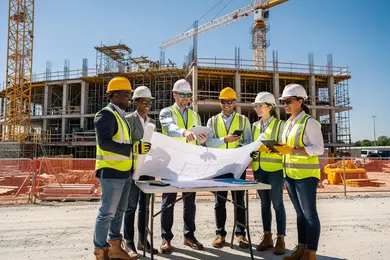
An online bachelor's degree in construction management for commercial building jobs demands more than theoretical knowledge; it requires applied skills to manage complex projects under real-world constraints. Graduates must navigate challenges such as coordinating subcontractors, maintaining safety compliance, and balancing budgets within strict timelines.
For instance, managing a commercial high-rise involves simultaneous oversight of architectural integrity, contractor negotiations, and regulatory inspections-tasks sharpened through practical coursework and virtual simulations.
This bachelor's program in construction management for careers in commercial construction stresses technical proficiency in scheduling, cost estimation, and construction law, alongside mastery of industry software like BIM and project management tools.
The U.S. Bureau of Labor Statistics reports a median wage of $106,980 for construction managers, illustrating the high responsibility and expertise demanded by employers. However, online students should verify that programs offer accreditation and hands-on opportunities such as internships to combat isolation and increase employability.
Decision makers must weigh flexibility against the need for practical experience, often sourcing internships or industry partnerships to complement online study.
Graduates face employer expectations that include leadership, conflict resolution, and supply chain management skills critical to career success in diverse commercial environments, from retail complexes to industrial facilities.
For those comparing pathways, consulting trusted resources like the construction management degree listings can provide insight into program affordability and rigor.
Which online construction management bachelor's programs are considered the best for commercial construction roles?
Employer expectations in commercial building consistently prioritize direct, applicable experience over theory. Online bachelor's degrees in construction management that lack structured internships or cooperative education components limit graduates' readiness for overseeing large-scale projects with complex scheduling and safety compliance demands.
Students pursuing the best online bachelor's in construction management programs for commercial building must evaluate the availability of rigorous practicum elements, as these translate into leadership opportunities in a highly competitive labor market.
The most effective top accredited online construction management degrees for commercial construction careers combine ABET or ACCE accreditation with curricula integrating cost estimation and project management tailored to commercial environments.
Programs like those at California State University or Arizona State University demonstrate this alignment, offering transparent tuition models that often start around $276 per credit hour, balancing cost with practical outcomes.
Decision-makers should also consider faculty experience and alumni networks focused on commercial construction to avoid generic lessons disconnected from current industry methods. Strong career services and network access significantly impact job placement for working professionals pivoting into construction management.
Evaluating program formats for substantive faculty interaction is critical, given that many online options fall short of simulating real-world project management challenges.
For those comparing pathways beyond construction management, exploring related fields with proven ROI may be prudent; one resource for such alternatives is available through online sports degrees, which outline different instructional and market dynamics.
How does an online construction management degree compare to an on-campus program for commercial building work?
Online construction management degree programs deliver academic depth comparable to on-campus offerings but lack the hands-on training and networking crucial for commercial building roles. The complex demands of site coordination, safety adherence, and subcontractor oversight require practical experiences often limited in online formats. This gap can delay real-world readiness, especially for those without prior field exposure.
Employers increasingly prioritize candidates who combine academic credentials with demonstrable site experience. Students enrolled exclusively online must be intentional about securing internships or local project involvement to supplement their education.
For working professionals, the flexibility of an online path is valuable, though it often entails higher tuition rates, such as Rowan University's $609 per credit hour, which may influence long-term return on investment in commercial construction careers.
In contrast, on-campus programs offer access to specialized equipment, immediate faculty mentorship, and collaborative learning environments fostering applied skills.
Online education more effectively imparts project management principles suited for those with existing site experience or aiming for planning and contract administration roles rather than direct site management. Selecting between these formats depends on career stage, financial capacity, and access to practical training.
For example, a mid-career supervisor may leverage an online degree to advance without disrupting employment, while an entry-level candidate risks missing critical industry insights without in-person exposure.
Candidates comparing an online construction management degree vs. an on-campus program for commercial building should also consider pathways for complementary experience.
Those evaluating related fields might explore options like a hotel and restaurant management degree online to understand different operational environments affecting project management styles.
What accreditation and institutional quality standards should online construction management programs meet?
Program accreditation by bodies like the American Council for Construction Education (ACCE) is a non-negotiable benchmark for online construction management program accreditation standards, directly impacting graduate readiness for commercial building projects.
Employers scrutinize candidates for competencies such as project planning, cost estimation, and construction law-skills systematically embedded in accredited curricula but often inconsistent in nonaccredited offerings.
Regional institutional quality criteria for construction management degrees also prioritize curriculum relevance tied to real-world conditions, including case studies and project-based tasks specific to sectors like retail, healthcare, or office construction.
This emphasis addresses the varied compliance, safety, and materials challenges professionals face on site. For example, managing a healthcare facility project demands stringent adherence to regulatory safety protocols that differ markedly from retail environments.
Faculty expertise is critical; programs staffed with instructors actively engaged in the industry outperform those reliant solely on academic credentials. Graduates benefit from exposure to capstone projects or internships that bridge theory and field application, smoothing the transition into management roles.
The U.S. Bureau of Labor Statistics projects 9% growth in construction management employment from 2024 to 2034, underscoring the competitive edge earned by graduates from quality programs.
For students weighing alternatives, comparing outcomes with other fields such as online electrical engineering career outcomes can provide clarity on market demand and skill transferability.
What courses and technical skills are typically included in an online construction management curriculum for commercial projects?
Effective construction management education for commercial projects demands a focus on applied skills that directly influence project outcomes. Beyond theory, students must master project planning, cost estimation, and scheduling via tools like Primavera or Microsoft Project to handle complex timelines and budgets accurately. A failure to internalize these tools can hinder coordination among diverse stakeholders and subcontractors, increasing risks and delays.
Understanding construction law, contracts, and regulatory standards is essential to prevent costly disputes and navigate compliance challenges typical of large-scale projects such as office towers or retail centers.
Programs that emphasize building systems and materials science equip students to make informed decisions on procurement and quality control, an important consideration given the specialized components these projects require.
Hands-on proficiency with site safety and OSHA regulations directly affects workforce safety and liability management, an oft-overlooked aspect that dramatically impacts project viability and insurance costs. Integration of Building Information Modeling (BIM) and sustainable construction methods reflects the shift toward digital and environmental standards, allowing managers to proactively resolve interdisciplinary conflicts and fulfill evolving regulatory demands.
Salary data from the U.S. Bureau of Labor Statistics shows that those in the top echelon earn upwards of $176,990 annually, but reaching this level hinges on practical mastery rather than theoretical knowledge alone.
Prospective students should critically evaluate whether a program's curriculum aligns with employer expectations around these operational competencies to position themselves effectively within competitive commercial construction markets.
What are the usual admission requirements and application materials for online construction management bachelor's programs?
Applicants to online bachelor's programs in construction management face admissions protocols that go beyond basic academic metrics, emphasizing experience and demonstrated readiness for highly technical, safety-critical roles. Accepted students typically provide high school transcripts or GED results confirming a GPA near 2.5-3.0 and often submit SAT or ACT scores, though test-optional policies are increasingly common.
Letters of recommendation serve not just as formalities but as endorsements of an applicant's practical aptitude and capacity to handle rigorous project oversight.
Work history or internships in construction-related fields substantially strengthen applications, particularly for transfer students or professionals. Personal statements must articulate clear insight into industry challenges and career intentions.
For non-native English speakers, documented proficiency via TOEFL or IELTS is essential, with some programs adding placement assessments in math or writing to verify foundational skills.
Employers and programs prioritize candidates with tangible project experience; for example, graduates with documented internships managing projects often receive hiring preference. This alignment between admissions stringency and workforce outcomes is significant: a reported program achieved 100% graduate employment over multiple recent years, demonstrating the efficacy of selective criteria in preparing students for labor market demands.
Applicants should prepare for logistical complexities, including coordinating documents from different institutions and crafting essays that tightly connect backgrounds with program objectives. Some schools mitigate these barriers through targeted workshops or advising. Navigating these requirements is crucial since admission impacts access to scholarships and financial aid that support persistence and completion.
How long does it take to earn an online bachelor's in construction management and what does it cost?
Completing an online bachelor's in construction management often demands balancing program length, cost, and professional momentum. Programs usually mirror traditional full-time timelines of four to five years, but accelerated paths or credit from prior experience can reduce this to around three years - a notable advantage for mid-career professionals aiming to pivot swiftly.
Conversely, part-time enrollment, while accommodating work-life constraints, commonly extends study to six years or beyond, increasing both total tuition and the delay before accessing higher wage brackets.
Cost disparities hinge on institution type and residency status, with average annual prices around $15,202 without financial aid and dropping to approximately $8,774 with aid, per BestColleges using NCES data. This difference significantly affects the net investment and return potential, especially for those relying on scholarships or employer tuition support.
Consider a commercial building professional working full-time: opting for part-time study maintains income flow but delays eligibility for project management roles, which currently command median salaries near $97,000.
In contrast, a full-time student's earlier completion can justify higher debt loads through quicker career advancement. Importantly, employers prioritize relevant experience alongside academic credentials, so integrating internships or certifications during study enhances job prospects more reliably than expedited graduation alone.
Decision-makers should evaluate credit transfer policies, cohort pacing, and aid availability carefully. Extended timelines magnify opportunity and living costs, while insufficient aid burdens those juggling family or work. Navigating these factors effectively determines when graduates can leverage construction management expertise within commercial sectors to secure measurable career gains.
What entry-level and mid-career jobs can graduates get in commercial construction management?
Graduates with a bachelor's in construction management typically enter roles such as assistant project manager, construction estimator, field engineer, or scheduler within commercial building firms, where practical skills in budgeting, contract compliance, and site logistics are essential.
These positions require effective coordination to prevent costly delays, illustrating why programs with around 120 credit hours, like those offered by ASU Online or Rowan University, emphasize hands-on budget and communication competencies.
Mid-career professionals often progress to project manager, construction superintendent, or safety manager roles, managing multi-million-dollar commercial projects across retail and industrial sectors.
For example, a project manager must balance stakeholder expectations, navigate material shortages, and coordinate safety protocols while using advanced scheduling software, a demanding intersection of technical, financial, and leadership skills. Employers expect mid-level managers to control budgets often exceeding $5 million and supervise teams of 10+ subcontractors.
Advancement beyond entry-level positions requires more than the bachelor's core curriculum; candidates increasingly need specialized certifications or technical training in construction technology and safety standards. Strong negotiation abilities, blueprint interpretation, and risk management under time pressures become pivotal.
Understanding these practical workforce standards informs candidates on where to invest effort for meaningful career progression in commercial construction management.
What salary ranges and advancement opportunities can commercial construction managers expect with a bachelor's degree?
Salary prospects for commercial construction managers holding a bachelor's degree typically range from $65,000 to $115,000 annually, with specialized roles nearing the upper tier. Data from Career Diversity ASU Online cites $114,990 for construction manager roles and $102,320 for project managers in 2024 or beyond, aligning with U.S. Bureau of Labor Statistics figures that place median wages near $100,000. These figures vary significantly by regional market dynamics and project scale.
Career progression often depends on mastery of leadership skills in large-scale developments, fluency in technologies like BIM (Building Information Modeling), and expertise in contract negotiation or risk mitigation.
For instance, a construction manager focused on commercial retail who optimizes budget controls and regulatory compliance may advance into senior management overseeing multiple sites. Conversely, those maintaining a generalist profile without formal project delivery experience may stall near mid-level roles, earning around $75,000.
Key tradeoffs involve balancing early positions that offer broad site exposure but lower pay against specialized roles demanding advanced certifications or software competencies with higher compensation. Employers prioritize candidates blending construction knowledge with business savvy and data-driven decision-making.
Other critical factors include geographic variability-with metropolitan hubs offering higher salaries but increased living costs-and the impact of credentials such as PMP (Project Management Professional) or CCM (Certified Construction Manager) on both earnings and leadership opportunities.
How is the job outlook, licensing, and certification landscape for commercial construction managers in the United States?
Growth in commercial construction manager roles outpaces most sectors, driven largely by infrastructure and commercial real estate investments. However, securing positions in this field demands more than a degree; employers expect a blend of formal education and applicable experience, as seen in OU Online's requirement for either one year of commercial construction experience or college coursework.
This signals a clear tradeoff for students and professionals: entry without practical knowledge often limits immediate job prospects and slows career progress.
Licensing and certification complicate entry and advancement. States differ in licensing mandates, often requiring general contractor licenses for commercial projects beyond set budget levels. Public sector work adds layers of complexity with strict prequalification, bonding, and sometimes multiple credential demands, making regulatory navigation a critical skill for sustained eligibility.
Certification status heavily influences employability and earning potential. Credentials like the Certified Construction Manager (CCM) and Project Management Professional (PMP) have distinct employer recognition and signal readiness to handle complex project workflows and stakeholder coordination. Without these, workers risk stagnation in low-level supervisory roles, especially when competing for leadership on large projects.
Other Things You Should Know About Construction Management
While prior construction experience is not strictly required for entering an online bachelor's in construction management, candidates without hands-on exposure may face a steeper learning curve. Programs often assume some familiarity with job site dynamics and technical processes, so those lacking this background should prioritize courses or certificates that provide practical skills early on. Employers hiring graduates typically expect at least internship experience or field exposure, making it essential to seek programs offering strong practicum or cooperative education components.
Top online bachelor's programs for construction management in 2027 include Everglades University, Arizona State University, and Purdue University Global. These institutions offer comprehensive curricula focusing on modern construction methodologies and management techniques, promising a robust entry into commercial building careers. Certification programs and hands-on projects enhance their industry readiness.
Limited peer interaction in online settings can reduce opportunities for collaborative problem-solving and networking, skills critical in construction management roles that demand team coordination and leadership. Students should prioritize programs that incorporate synchronous sessions, group projects, or industry-aligned mentorship to mitigate this gap. Without such engagement, graduates may find themselves less prepared for the interpersonal dynamics typical in commercial building environments.
Given the increasing reliance on construction management software for project scheduling, cost estimating, and digital modeling, programs with dedicated training in tools like Primavera, Procore, or BIM software offer a clear advantage. Graduates lacking this technical proficiency may need additional self-directed learning after graduation, which can delay productivity and advancement. Prioritize programs that integrate software application throughout the curriculum to align with employer expectations and enhance immediate job readiness.
References
- Construction Managers: Salary, career path, job outlook, education and more - RaiseMe https://www.raise.me/careers/management/construction-managers/
- LATEST NEWS https://www.acce-hq.org/
- Bachelor's Degree in Construction Management - Dunwoody College https://dunwoody.edu/construction/construction-management/
- Best Master’s in Construction Management Online Degree [currentyear] | NEIT https://www.neit.edu/blog/best-masters-in-construction-management-online-degrees
- CourseCareers https://coursecareers.com/blog-posts/construction-management-degree-vs-field-experience-vs-online-construction-pm-training
- What do you learn in a bachelor's in construction management? | edX https://www.edx.org/resources/what-do-you-learn-in-a-bachelors-in-construction-management
- American Council for Construction Education | Council for Higher Education Accreditation https://www.chea.org/american-council-construction-education
- Construction Manager https://www.randstadusa.com/job-seeker/career-advice/job-profiles/construction-manager/
- Certified Construction Manager | Construction Management Association of America https://www.cmaanet.org/certification/ccm
- Construction Management Jobs and Career Path | Cardinal Civil https://cardinalcivil.com/blog/what-jobs-can-you-get-with-a-construction-management-degree