2027 Best Online Construction Management Programs for Professionals Seeking General Contractor Careers

Co-Founder and Chief Data Scientist
Balancing project deadlines with managing subcontractors, budgets, and regulatory compliance presents a relentless challenge for aspiring general contractors. For many, accessing flexible education that aligns with unconventional work hours is critical; the National Center for Education Statistics reports a 15% rise in adult enrollment in online degree programs since 2023, reflecting growing demand for adaptable learning formats. This trend reveals an industry shift where rigid on-campus schedules significantly hinder career advancement.
Choosing the right online construction management program directly impacts a professional's ability to pivot efficiently into leadership roles without sacrificing ongoing employment. This article identifies top online programs focused on practical skills, career mobility, and flexible structures suited for general contractor career ambitions.
Key Things You Should Know
- Programs accredited by ACCE report 15% higher employment placement in general contractor roles within 12 months, yet require 18-24 months of full-time study, creating opportunity-cost tradeoffs for working professionals balancing income loss.
- Employer surveys from the Associated General Contractors of America in 2024 emphasize advanced software proficiency as decisive, pressuring candidates to prioritize programs integrating BIM, project scheduling, and cost estimating tools.
- Tuition variance ranging from $8,000 to $35,000 annually sharply affects mid-career entrants, making accelerated or hybrid cohorts essential for roles demanding OSHA certifications and field experience alongside academic credentials.
What is an online construction management degree and how does it prepare general contractors?
Online construction management degree benefits for general contractors are rooted in delivering the practical skills demanded on-site and in offices, overseeing complex projects.
Such programs stress critical competencies like blueprint interpretation, subcontractor coordination, and compliance with safety and regulatory standards, which directly reflect real-world job tasks spanning residential to major infrastructure construction.
Technology integration, especially proficiency with project management software and building information modeling (BIM), is essential.
For example, mastering BIM helps detect design or cost conflicts early, mitigating expensive delays on commercial projects. This capability supports the growing workforce need to coordinate multiple trades and vendors efficiently, a frequent challenge in large urban developments.
Given the leadership and communication challenges general contractors face, online programs that emphasize negotiation, compliance documentation, and team-based case studies help prepare graduates for state-specific regulatory environments.
However, the limited fieldwork in many online formats risks leaving candidates less prepared for hands-on decision-making and managing site risks, a notable tradeoff when weighing these educational pathways.
The Bureau of Labor Statistics projects construction managers' employment growth at 9% from 2024 to 2034, nearly double the average. This demand is fueled by expanding industry complexity and the need for advanced managerial expertise.
Workers balancing employment and education can find flexible options, but should prioritize accredited curricula offering internships or virtual site visits to bridge theory with practice.
Prospective students actively seeking construction management degrees online must critically assess programs against these criteria to ensure effective preparation for general contractor careers.
Which online construction management programs are considered the best for aspiring general contractors?
Choosing among the best online construction management programs for general contractors requires careful scrutiny of how curricula align with real industry expectations.
Programs must blend accredited coursework with practical skills like contract negotiation, budgeting software proficiency, and project scheduling to meet employer priorities effectively.
For a professional transitioning from a trade role to a general contractor position, recognizing where programs address legal and financial rigor is critical; gaps here often undercut job readiness despite technical competence.
Structured experiential learning, such as virtual project simulations or capstone projects tied to actual construction challenges, significantly improves decision-making abilities and employer confidence.
Top-rated construction management courses for aspiring general contractors also vary in format, with asynchronous models offering flexibility but potentially limiting essential networking and mentorship opportunities that support contract acquisition over time.
The growing demand for graduates who can bridge field operations with administrative controls underscores the need for programs that update content regularly to reflect regulatory shifts and technological advances. Evaluating programs by graduate employment rates and employer feedback is necessary for informed selection.
Understanding what jobs can you get with a project management degree related to construction management further aids in aligning education choices with career trajectories.
How do online construction management degrees compare to on-campus programs for contractor careers?
Online construction management degree advantages for contractor careers often come down to cost flexibility and schedule adaptability, rather than parity in practical training.
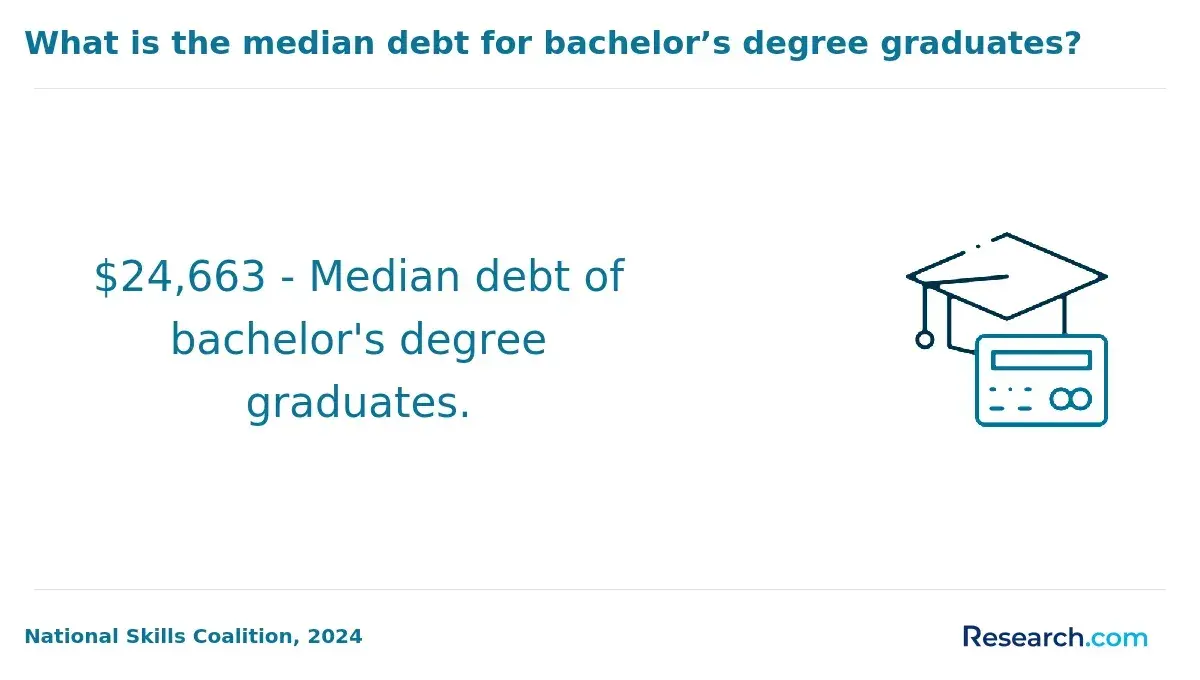
While these programs average $15,202 per year-roughly $60,808 for a four-year bachelor's before financial aid, they tend to underdeliver on hands-on exposure critical for managing complex commercial projects or unionized worksites.
Employers typically prioritize candidates with direct site experience, industry networks, and familiarity with physical materials and workflows, areas where on-campus programs hold a distinct edge through labs, site visits, and local professional connections.
Comparing on-campus and online construction management programs for general contractors reveals key tradeoffs: online study supports working professionals juggling job demands via asynchronous learning, but may lack robust project-based mentorship and real-world simulations needed to build practical competence recognized by licensure bodies.
Prospective students should seek programs incorporating internship opportunities or hybrid models to counterbalance these limitations.
Decision-making for candidates must factor in:
- Whether program rigor translates to employer recognition in their local markets
- Access to networks vital for subcontractor relationships or union affiliations
- Compliance with certification requirements that often mandate in-person components
Those exploring educational pathways in related fields might also compare options such as online health information management degree programs CAHIIM accredited, illustrating how accreditation and practical training alignment impact career trajectories across disciplines.
What accreditation and state licensing requirements should online construction management programs meet?
Accreditation is a critical gateway in online construction management program accreditation standards, directly influencing professional eligibility and workforce outcomes.
Programs must hold regional accreditation from recognized bodies such as the Higher Learning Commission (HLC) or Southern Association of Colleges and Schools (SACS) and specialized recognition by the Accreditation Board for Engineering and Technology (ABET) to ensure curriculum rigor. Without these credentials, graduates often face obstacles in securing state licensing or employer-required certifications.
State licensing requirements for construction management professionals generally demand a blend of accredited education, field experience, and passing a state exam. For example, candidates in California must clear the Construction Supervisors State License Board exam, which prioritizes local laws rarely covered in generic online courses.
Students pursuing licensing should verify their program's alignment with state rules, including coursework in legal issues, project management, estimating, and safety.
Employers prioritize candidates from accredited online degrees because these programs align with industry standards and facilitate smoother entry into regulated roles. Graduates from unaccredited programs often encounter delays and extra costs due to supplemental requirements.
A practical step for prospective students is to compare construction management programs with similar rigor and recognition as other technical fields, like the online bachelor's in electrical engineering, which typically meet stringent academic and licensing benchmarks.
What types of construction management degrees and certificates support a general contractor pathway?
Degrees in construction management, construction engineering, and civil engineering with construction emphases remain the most direct routes toward general contractor roles due to their comprehensive scope.
These programs combine technical site knowledge with leadership training, covering contracts, safety protocols, and materials science elements essential for meeting employer expectations.
By contrast, certificate programs that focus narrowly on project management, cost estimation, or construction technology serve best as adjuncts, complementing degrees rather than replacing them when pursuing licensure or executive positions.
Professionals transitioning from trades often face the dilemma of balancing hands-on experience with formal education. Pursuing an associate or bachelor's degree in construction management equips them with foundational skills in project planning and resource allocation, which are critical for advancing into supervisory roles.
Adding certificates in construction project control or technology can help bridge knowledge gaps, particularly in digital competencies required in modern construction software and analytics. This layered approach can enhance eligibility for licensure as a general contractor in many states.
Arizona State University Online graduates entering roles like construction manager (projected growth 8.7%) and construction project engineer (projected growth 4.4%) illustrate how combining technical and managerial expertise aligns workforce readiness with demand.
However, learners should weigh real-world applicability: degree programs that integrate case studies, legal frameworks, and finance better prepare graduates to handle contract disputes and budget overruns, risks often underestimated by those relying solely on certificates.
What courses and skills are typically covered in online construction management curricula?
Effective construction management education prioritizes applied skills over theoretical knowledge, reflecting the sector's demand for professionals who can manage complex projects under real-world constraints.
For example, project scheduling courses teach the use of Primavera P6 or Microsoft Project software, essential for aligning resources and deadlines on multimillion-dollar builds. This hands-on focus helps graduates anticipate operational challenges rather than relying solely on textbook scenarios.
Financial and risk management components address budgeting accuracy and OSHA compliance, both critical for controlling costs and reducing liabilities in general contracting roles. Such practical training enables students to foresee cost overruns and enforce safety protocols that directly affect profit margins.
Technical instruction integrates sustainable materials and methods, preparing students to make decisions that balance environmental impact and long-term durability. Leadership and communication modules equip them to coordinate subcontractors and negotiate with stakeholders effectively-skills that affect project flow and delivery.
Admissions criteria, like those at the University of Oklahoma, requiring relevant construction experience or coursework, align programs with working professionals, ensuring immediate applicability but potentially limiting access for traditional students.
Graduates frequently find themselves bridging the gap between field teams and executive leadership, tasked with interpreting technical details in business terms while advancing their own leadership capabilities amid evolving contract landscapes.
What are the typical admission requirements for online construction management programs?
Admission criteria for online construction management programs balance academic preparation with tangible industry experience, shaping student readiness beyond mere credentials.
Candidates holding only a high school diploma may enter undergraduate tracks, but competitive programs often prioritize applicants with degrees in construction management, engineering, or related fields at the bachelor's or master's levels.
Work history in relevant roles, like project coordinator or estimator, is often more predictive of success than standardized test scores, which many programs waive in favor of professional certifications such as OSHA or PMP.
Expect admissions evaluators to weigh a candidate's documented GPA alongside practical experience, occasionally preferring five years of field roles over purely academic achievements since this real-world context accelerates skill application.
Technical proficiency in software tools like MS Project, AutoCAD, or BIM platforms is increasingly mandatory as the field digitalizes project delivery workflows, mirroring labor market demands for versatile skill sets that extend to sustainability or executive management niches.
Application steps involve submitting transcripts, letters of recommendation, and career-focused personal statements. Programs often assess communication and problem-solving abilities through interviews, which can be barriers for working professionals managing schedules. The format of courses-whether synchronous or asynchronous-adds a logistical dimension to program fit, impacting feasibility for full-time employees.
How long do online construction management programs take and what do they cost?
Pursuing an online construction management degree is a strategic choice that demands weighing educational duration against professional timing and licensing requirements.
Typically, associate degrees take about two years, while bachelor's degrees, increasingly the baseline for supervisory roles, require four years of full-time study, with part-time and accelerated options shifting completion to 3-5 years for working adults.
Costs vary markedly: public in-state programs generally charge $5,000-$15,000 annually for bachelor's degrees, whereas out-of-state or private institutions push tuition beyond $30,000.
Certificate programs, often supplemental, fall between $2,000 and $8,000 total. Students must also budget for fees, textbooks, software, and exam prep tied to contractor licensing expenses that sometimes go overlooked but influence total investment.
Consider this example: a mid-career professional opts for a four-year online bachelor's to meet licensure expectations rather than relying solely on experience.
This longer timeline delays direct entry into licensed roles but may improve hiring prospects where degree credentials weigh heavily. Accelerated paths can shorten study time but intensify course loads, a challenging tradeoff for those managing full-time jobs.
Effective decision-making involves comparing program expenses against expected salary increases and licensure access.
Employer tuition assistance or GI Bill benefits may offset costs but require prior confirmation. Aligning education choices with career and licensing timelines shapes long-term employability in construction management.
What jobs, salaries, and career advancement options exist for graduates pursuing general contractor roles?
The pathway into general contractor roles demands more than foundational knowledge; real-world success is tied to managing multifaceted project elements such as budgets, schedules, and compliance with evolving safety standards.
Positions like superintendent and estimator typically see median salaries between $75,000 and $110,000 annually, reflecting the operational complexities overseen.
Advancement often depends on both experience and credentials, like the Certified Construction Manager (CCM), with leadership and contract negotiation skills accelerating upward mobility.
For instance, a superintendent engaged in large commercial projects who supplements experience with an online construction management degree may transition into project executive roles within 5 to 7 years, leveraging a deeper understanding of risk and subcontractor coordination.
However, the significant time and financial commitments of online degree programs-averaging $60,808 over about four years-require prospective students to weigh opportunity costs carefully, especially those balancing work-study constraints. Tradeoffs emerge distinctly across industry segments:
- Large-scale residential or infrastructure projects demand mastery of complex subcontractor ecosystems and rigorous project control.
- Smaller commercial or specialty construction roles may allow quicker application of degree skills but typically offer lower salary ceilings.
This segmentation underlines the importance of aligning educational investment with targeted career goals and realistic salary trajectories, as reported by BestColleges and supported by U.S. Bureau of Labor Statistics data.
How can students evaluate and choose a reputable online construction management program?
Selecting construction management programs demands prioritizing accreditation from recognized bodies such as ACCE or ABET, which directly influence employer recognition and curriculum rigor.
Programs reporting graduation rates above 60% combined with graduate employment near or exceeding 80% offer tangible evidence of effectiveness, a critical consideration for students funding their education and career transitions.
Course content must integrate contemporary industry tools like BIM and project management software. Without such digital skill development, graduates risk falling short of employer expectations in an increasingly technology-driven sector.
Strong practicum or internship opportunities tied to specific construction sectors enhance practical proficiency, bridging academic knowledge and workforce readiness.
For professionals pivoting into construction management-especially those shifting from unrelated industries-part-time or asynchronous study options can maintain income flow but may slow acquisition of hands-on skills vital in this field.
Evaluating faculty with active industry roles or research engagement helps identify programs that stay current amid rapidly evolving technologies, illustrated by Udemy's 2025 data showing hundreds of updated construction technology courses.
Additionally, access to dedicated career services, including job placement and employer networking, substantially affects long-term employment outcomes.
Choosing between traditional institutions and specialized online providers involves tradeoffs between brand recognition, cost, and curriculum adaptability to emerging market demands, making these factors essential in strategic decision-making.
Other Things You Should Know About Construction Management
The workload in online construction management programs is significant and often mirrors the intensity of on-campus studies. Students with full-time jobs must prioritize time management, as courses require regular assignments, project work, and often group collaboration. Programs that offer asynchronous options allow greater scheduling flexibility, but students should expect to dedicate 15-20 hours weekly to remain competitive and absorb practical skills critical for general contractor roles. Choosing programs with modular pacing or extended timelines can ease workload pressure without compromising learning outcomes.
Employers typically view degrees, especially bachelor's or higher, as more comprehensive credentials that better prepare candidates for general contractor responsibilities, including project leadership and contract negotiation. Certificates often serve as supplemental qualifications or upskilling tools for industry veterans rather than standalone hiring credentials. For career pivots or entry into management, prioritizing degree programs provides stronger position leverage and access to management-track roles. Certificates may expedite specific skill acquisition but usually do not replace degree requirements in competitive hiring markets.
For aspiring general contractors, a comprehensive construction management curriculum is preferable over narrow specialization. Broad coverage-including project scheduling, cost estimating, contract administration, and risk management-builds the versatile skill set employers demand. Specializations can be useful later for career refinement but limiting foundational knowledge risks gaps in practical leadership and operational competence. Prioritize programs with balanced core courses and industry-recognized electives to ensure adaptability across diverse projects and contracting environments.
In 2027, top online construction management programs for aspiring general contractors include Arizona State University's M.S. in Construction Management, Purdue University's online graduate certificate, and Columbia University's Construction Administration program. These programs offer comprehensive coursework and flexible formats suitable for professionals seeking to advance their careers.
References
- How to choose a bachelor's in construction management | edX https://www.edx.org/resources/how-to-choose-a-bachelors-in-construction-management
- CourseCareers https://coursecareers.com/course/construction-management
- Construction Management Courses & Training Pathways - Linesight https://www.linesight.com/careers/learning-pathways/
- Best Online Construction Management Degrees: 2026 https://gobuid.com/en/blog/all-articles/best-online-construction-management-degree-programs
- The Essential Guide to Construction Manager Education and Career Paths https://abcsocal.org/construction-manager-education/
- 5 Construction Management Career Opportunities Out of College https://aic-builds.org/5-construction-management-career-opportunities-out-of-college/
- In-Demand Jobs in the Construction Industry https://www.mccarthy.com/insights/in-demand-jobs-in-the-construction-industry
- Certified Construction Manager | Construction Management Association of America https://www.cmaanet.org/certification/ccm
- Project Management, Construction Management, and Configuration Management | Advance Your Management Skills Today — Logistics+ Courses & Ventures https://coursewell.com/cmpm
- Construction Management | GNTC https://www.gntc.edu/construction-management/