2027 Online Construction Management Degrees With Scheduling Career Alignment

Co-Founder and Chief Data Scientist
Facing persistent project delays and strained budgets, construction managers often struggle to balance hands-on leadership with mastering complex scheduling software and methodologies. The dilemma intensifies for professionals seeking to pivot or advance careers without sacrificing income or location flexibility. Notably, 45% of adult learners pursuing higher education in 2024 choose online programs for their adaptability, according to the National Center for Education Statistics.
This shift reveals growing demand for accessible pathways that sync rigorous scheduling expertise with real-world constraints. This article evaluates online construction management degrees tailored to scheduling careers, helping candidates select programs that align academic rigor with career mobility and practical deployment.
Key Things You Should Know
- Over 40% of construction management roles require project scheduling proficiency, yet only 28% of 2024 online degree graduates meet this standard, creating a skill-employment mismatch that delays career advancement.
- Employers prioritize candidates with integrated scheduling experience embedded in curricula, influencing hiring by reducing on-the-job training costs by up to 22%, as reported by the Associated General Contractors of America.
- Median online program costs rose 12% since 2022, forcing candidates to balance quicker certification paths versus comprehensive scheduling mastery, impacting long-term salary growth and debt levels per National Center for Education Statistics data.
What is an online construction management degree and how does it prepare you for the field?
Choosing an online construction management degree requires assessing how well it prepares students for tangible challenges like scheduling complexities and contract liability. Project schedulers in residential settings, for instance, must orchestrate tightly sequenced tasks to prevent costly delays, while in commercial projects, managing multiple subcontractors and regulatory hurdles demands nuanced coordination skills.
This degree's focus on applied scheduling tools such as Critical Path Method (CPM) and Building Information Modeling (BIM) aligns directly with employer expectations. Graduates who grasp these tools alongside contract administration and risk mitigation are more equipped to lead diverse teams and navigate legal obligations effectively.
Employment growth projections by the U.S. Bureau of Labor Statistics at 9% from 2024 to 2034 signify stable demand for professionals who combine scheduling expertise with operational leadership, making such programs strategically valuable. However, the online format necessitates strong self-discipline and may limit hands-on experience unless supplemented by internships or part-time work.
Students weighing the online construction management degree benefits should factor in this tradeoff between flexibility and practical exposure. Employers emphasize proven ability to apply project delivery methods under pressure, which purely theoretical learning may not fully provide.
Those seeking feasible pathways to develop both knowledge and workplace credibility can reference the best online construction management degree options currently available.
Construction management scheduling career preparation demands consistent integration of real-world techniques and leadership skills to meet evolving industry standards.
How do online construction management programs compare to on-campus options for flexibility and outcomes?
Flexibility distinguishes online construction management degree programs from traditional campus options, especially for professionals balancing demanding work and family schedules. Unlike rigid on-campus classes, asynchronous lectures, modular coursework, and remote collaboration tools allow engagement during off-hours, which benefits those managing fluctuating site demands or infrastructural projects without halting their careers.
However, outcomes hinge on program quality and student initiative; online students must often seek internships or mentorships to offset limited hands-on labs and in-person networking opportunities.
Employers prioritize proven practical experience alongside advanced project scheduling skills, favoring candidates who demonstrate proficiency in real-world project management software. Median total pay data from Coursera's 2026 guide-$115,000 for construction managers, $111,000 for project managers, and $110,000 for superintendents-corroborate the value of such skills.
Civil engineers transitioning into construction management might choose accredited courses that connect tightly with industry needs to sharpen scheduling expertise in commercial projects, while entry-level students often gain more from campus programs offering immediate team engagement and fieldwork.
Differences in rigor between online and on-campus options make it essential to evaluate accreditation and industry partnerships critically. Ultimately, candidates with reputable online degrees should supplement education with documented practical experience and software mastery to meet employer expectations and optimize career outcomes inherent to a project management degree online accredited framework.
The online construction management degree flexibility comparison is not merely about convenience; it reflects strategic tradeoffs impacting long-term workforce integration and job placement potentials.
What accreditation should online construction management degrees have to support careers and licensure?
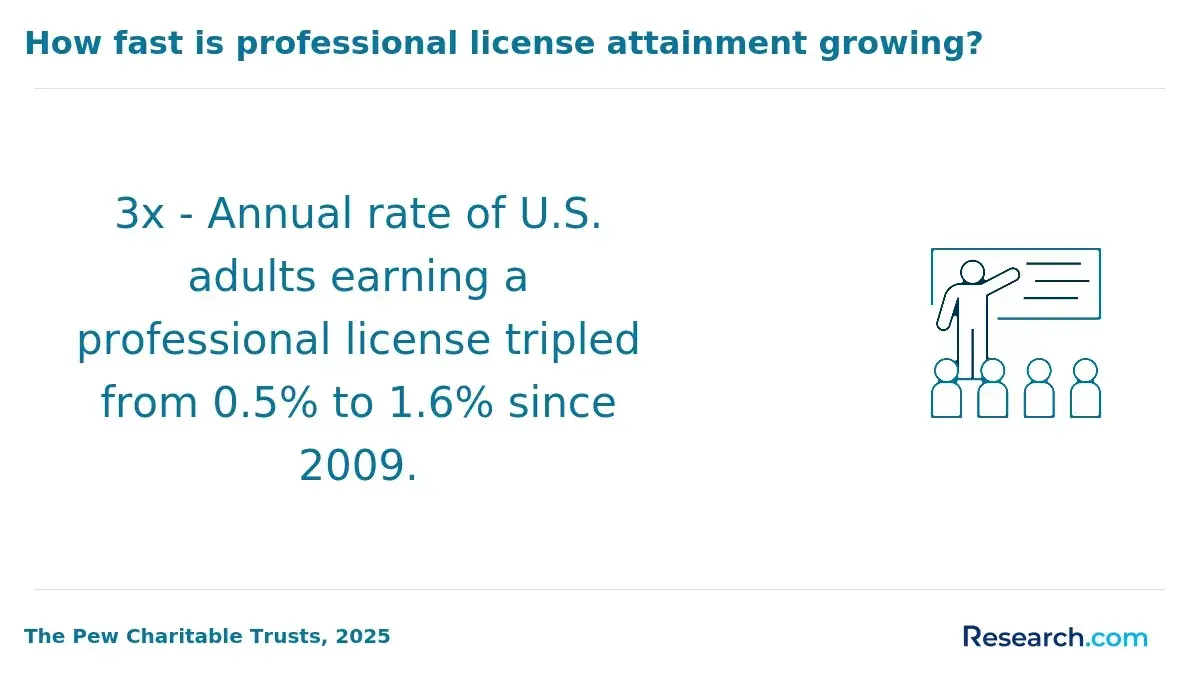
Accreditation by the American Council for Construction Education (ACCE) directly affects the applicability and recognition of an online construction management degree accreditation for career advancement. Employers in commercial and heavy civil sectors emphasize verified skills in project planning, contract administration, and specialized software-elements that ACCE-accredited programs explicitly cover.
Graduates from non-accredited programs often encounter obstacles when pursuing roles that require adherence to industry best practices or licensure qualifications such as the Certified Construction Manager (CCM).
State licensure boards enforce regional accreditation requirements for construction management licensure, making ACCE approval a practical necessity for candidates targeting leadership positions. Without this endorsement, candidates risk voided eligibility or extended licensure pathways, particularly in markets where mastery of scheduling software integration and risk management is mandatory.
The impact of accreditation extends beyond licensure, influencing employer evaluation in high-stakes infrastructure markets where median management salaries surpass $105,990 nationally. Recruiters prioritize candidates with credentials grounded in recognized training standards to mitigate operational and compliance risk.
Prospective students must confirm their target program's compliance with state-specific licensure mandates and assess curriculum rigor, including case studies and up-to-date software training. Evaluating these factors objectively helps manage tradeoffs in hiring competitiveness and long-term mobility within regulatory-heavy construction domains. For comparison on degree pathways in related fields, see hospitality management degree online.
What types of online construction management degrees and certificates are available for different learners?
Online construction management degree programs present a clear divide between entry-level accessibility and advanced specialization, demanding careful alignment of educational choices with targeted career trajectories. Associate degrees offer quick workforce entry but limited upward mobility, suited only for roles without significant scheduling responsibilities.
Bachelor's programs emphasize project management and cost estimating with direct application to construction scheduling, making them more relevant for supervisory or planner roles in firms or government sectors.
Graduate certificates and master's degrees push into strategic scheduling and risk management, necessary for handling complex portfolios or infrastructure consulting. In practical workforce terms, many employers seek candidates with specialized certifications in scheduling software like Primavera P6 or Microsoft Project to supplement academic credentials. Balancing part-time or asynchronous delivery formats with employer expectations is crucial, especially for full-time workers seeking career shifts.
Cost-to-benefit tradeoffs are noticeable: CareerPathed's 2026 guide reports 89% of graduates from accredited online programs noting positive ROI, with about 32% earning salary bumps often exceeding 20%. Those seeking niche scheduling roles must prioritize programs offering current software training and recognized credential pathways.
Broader management degrees paired with construction management certification options in the US remain viable alternatives for those aiming for generalist supervisory positions.
Practical program selection also means considering alternatives such as an electrical engineering degree online for veterans when cross-disciplinary skills or rapid reskilling are part of a longer-term strategy.
What courses and skills are typically included in an online construction management curriculum?
Project scheduling and cost control define the operational core of construction management education, directly influencing employability and job-site impact. Mastery of software tools like Primavera P6 or Microsoft Project is not optional; it shapes a student's ability to produce actionable timelines that reconcile resource constraints with budget demands.
For example, a project manager who cannot adapt schedules dynamically during supply chain delays risks cascading overruns. Core competencies in quantity surveying and cost estimation form the quantitative backbone for this, enabling accurate forecasting and bid evaluation.
Courses on construction law and contract administration extend beyond theory, addressing legal risk and compliance that mitigate costly disputes or work stoppages in a challenging regulatory environment. Safety management training, including OSHA standards, equips students to proactively identify hazards that otherwise compromise schedules and inflate costs through accidents or fines.
Building Information Modeling (BIM) technologies embed digital coordination into the workflow, reducing rework and communication failures between teams. Leadership and communication modules support real-world requirements for managing multiple stakeholders and negotiating priorities under shifting site conditions, such as labor shortages or weather disruptions.
Data from Prospects confirms that 72% of UK graduates work in professional roles requiring precise scheduling and cost control within 15 months, demonstrating alignment with employer needs. For U.S. students, selecting programs emphasizing these technical skills and regulatory knowledge yields smoother transitions into roles like project managers or quantity surveyors. However, the balance between technical proficiency and adaptive decision-making under external pressures ultimately influences career trajectories and operational success.
What are the usual admission requirements for online construction management programs?
Admission to online construction management programs involves more than proof of academic readiness; it often serves as an early filter for career alignment and practical capability. While a high school diploma or equivalent is a baseline, many bachelor's tracks expect prior college coursework or an associate degree to reduce attrition from technical knowledge gaps.
Applicants with industry experience-commonly two to five years-may access accelerated options, reflecting an employer preference for candidates who blend formal education with applied skills.
Standardized tests such as SAT or ACT are less frequently mandatory but may still appear in selective admissions. Programs emphasizing scheduling proficiency often require demonstration of quantitative skills via placement exams or prerequisite courses in algebra, statistics, or technology applications. This ensures students can handle core software and data interpretation tasks vital to workforce productivity.
Supplemental materials like letters of recommendation, personal statements, and professional resumes function as tools to gauge motivation and specialized competencies beyond transcripts. This dimension helps distinguish candidates aligned with construction scheduling and data literacy demands, which correlate strongly with employability and earning potential according to the American Institute of Constructors 2024 data.
For international students, verified English language proficiency through TOEFL or IELTS is standard, helping mitigate risk of miscommunication in technical contexts. Practical readiness also includes ensuring access to adequate computing resources, as insufficient technology access can directly impede completion of software-intensive coursework.
How long do online construction management degrees take and what do they typically cost?
Completing an online construction management degree within a streamlined timeframe is critical for aligning with employer expectations and industry dynamics. A traditional full-time Bachelor of Science curriculum typically spans four years, balancing technical instruction with managerial and elective coursework. However, accelerated or part-time pathways extend this period to five or six years, frequently introducing a tradeoff between flexibility and timely workforce entry.
Cost structures vary significantly, with some public universities charging around $445 per credit hour. Total tuition can exceed $54,000 without credit transfers, imposing substantial financial and temporal burdens on students. Those leveraging transfer credits-up to 75% in some cases-can reduce costs drastically, down to roughly $14,685. For professionals juggling existing careers and family obligations, such transfer-friendly policies materially influence the feasibility of pursuing a degree and reentering the workforce equipped with relevant skills.
The impact of pacing decisions reveals itself in hiring outcomes: employers often prefer candidates who complete accredited degrees within five years to ensure currency and competence. Delays or part-time attendance without strategic planning risk signaling outdated knowledge or diminished preparation, potentially hampering employability in a contracting market sensitive to economic cycles.
- Full-time BS construction management: 4 years
- Part-time/accelerated options: 3-6 years
- Total cost (no transfer): approx. $54,735-$55,635
- Total cost (max 75% transfer): approx. $14,685
What construction management careers can you pursue with an online degree?
More than 40% of construction industry leaders identify a shortage of field managers as a top business risk, making the ability to fill these roles promptly a critical concern. An online construction management degree can help meet this demand by preparing candidates for positions such as project scheduler, field construction manager, cost estimator, contract administrator, and site superintendent.
Each role requires distinct operational skills that go beyond classroom theory, demanding hands-on or prior trade experience to satisfy employer expectations.
For example, project schedulers must adeptly use specialized software to coordinate subcontractor deadlines, mitigating costly project delays. Field construction managers oversee on-site activities and safety protocols, balancing logistical complexities and workforce coordination. Cost estimators play a pivotal role in shaping project feasibility through accurate bid analysis and budgeting forecasts.
Graduates must also integrate digital scheduling tools with real-world project dynamics and develop leadership skills to manage conflict and pressure effectively-capabilities often refined through application-focused coursework and case studies. Contract administrators, meanwhile, face growing responsibilities managing legal compliance as projects increase in complexity.
Choosing an online program should be a strategic decision grounded in evaluating curriculum focus, industry alignment, and career support rather than solely convenience. Practical challenges tied to transitioning from degree completion to demonstrated on-site competence still significantly impact employability. Successfully navigating this gap often requires supplementary internships or direct field experience.
What salary ranges and job outlook can construction management graduates expect in the U.S.?
Starting salaries for construction management graduates targeting scheduling roles typically range between $70,000 and $100,000 within the first few years, but these figures mask critical regional and organizational variables. Metropolitan areas with large contractors often yield faster salary growth and earlier access to six-figure compensation compared to smaller markets or subcontractors.
Employers prioritize candidates with hands-on experience using software such as Primavera P6 or Microsoft Project, combined with leadership capabilities and field exposure. These skills often determine access to higher-paying scheduling positions with increased project oversight.
The early salary step is not guaranteed to persist without ongoing professional development. Continuous skill upgrading, certifications, and progression into project or program management typically influence longer-term earning potential. Graduates must weigh the investment in additional qualifications against the delayed income plateau, which may occur if they remain solely in scheduling roles. Strategic planning and stakeholder coordination expertise become essential for advancement beyond initial salary brackets.
Graduates who balance technical scheduling proficiency with developing soft skills are most likely to secure sustained career growth amid fluctuating demand linked to regional infrastructure needs and commercial construction cycles. The Columbia University School of Professional Studies 2021 Construction Administration Career Outcomes Report illustrates that 90.5% of graduates obtained relevant roles, with 50% earning over $100,000 early on and 27% between $70,000 and $98,063.
How can you evaluate and choose the best online construction management program for your goals?
Choosing an online construction management program requires scrutiny beyond accreditation and curriculum. Regional or programmatic accreditation confirms baseline quality, but the curriculum must address tools like Primavera P6, Microsoft Project, cost estimation, and contract law to mirror workplace demands. Programs offering internships or realistic project simulations add significant value by bridging theory and practice.
Consider this scenario: a mid-career tradesperson transitioning into management needs a program with strong scheduling and budgeting training to maximize earning potential, while an entry-level candidate eyeing infrastructure projects benefits from courses on regulatory compliance and risk management. Graduate employment rates and employer ties indicate how well a program aligns with market realities.
Be aware of format tradeoffs: asynchronous programs offer flexibility for shift workers but restrict networking opportunities essential for referrals and mentorship. Cohort-based or synchronous formats promote professional connections that often influence job placement in this competitive field.
- Verify faculty industry experience and access to standard software for hands-on competence.
- Check credit transfer policies to avoid unnecessary course repetition.
- Assess tuition against local salary prospects and employment projections, which show construction management jobs growing 9% by 2033 with median wages near $104,900, per Northern Michigan University Global Campus referencing BLS data.
Other Things You Should Know About Construction Management
Employer acceptance of online construction management degrees depends largely on program reputation and accreditation. Degrees from regionally accredited institutions with strong industry connections carry more weight and can lead to better job prospects. Candidates should prioritize programs that integrate applied project experience and emphasize recognized certifications, as employers expect practical skills over theoretical knowledge alone.
Focusing on scheduling equips graduates with detailed planning and time-management expertise, which is highly valued in project-driven construction roles. However, this specialization may narrow job options compared to broader construction management degrees, which cover budgeting, contracts, and safety as well. Students aiming for leadership roles should ensure their program balances scheduling skills with broader management competencies to remain competitive.
Time management is the critical challenge for working professionals pursuing online degrees in construction management. Programs with asynchronous content improve flexibility but may reduce live interaction and networking opportunities that some employers value. Choosing a program with hybrid options or cohort-based scheduling can mitigate isolation and boost engagement, though it requires careful planning to handle workload peaks effectively.
In 2027, online construction management degrees are widely respected by employers, as long as they are from accredited institutions. Employers value degrees that include scheduling career alignment because they align with industry needs, offering a balance of theoretical knowledge and practical skills relevant to modern construction practices.
References
- Top 10 Criteria for Choosing the Best Construction Project Management Software https://visilean.com/blog/top-10-criteria-to-choose-the-best-construction-management-software
- How to Select the Best Construction Management Software https://www.constructionbase.ai/blog/how-to-evaluate-and-select-the-best-construction-management-software-for-your-firm
- What do you learn in a bachelor's in construction management? | edX https://www.edx.org/resources/what-do-you-learn-in-a-bachelors-in-construction-management
- Certified Construction Manager | Construction Management Association of America https://www.cmaanet.org/certification/ccm
- CourseCareers https://coursecareers.com/blog-posts/construction-management-degree-vs-field-experience-vs-online-construction-pm-training
- 5 Construction Management Career Opportunities Out of College https://aic-builds.org/5-construction-management-career-opportunities-out-of-college/
- How to Choose the Right Project Management Software for Construction Operations https://next-tech.com/en/how-to-choose-the-right-project-management-software-for-construction-operations-2/
- Best Online Construction Management Degrees: 2026 https://gobuid.com/en/blog/all-articles/best-online-construction-management-degree-programs
- Construction Management - Atlantic Technological University https://www.atu.ie/courses/bachelor-of-science-construction-management