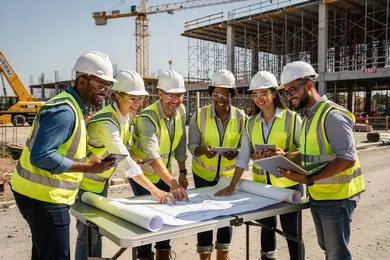
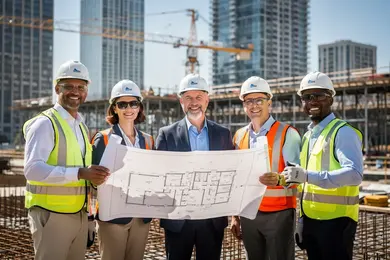
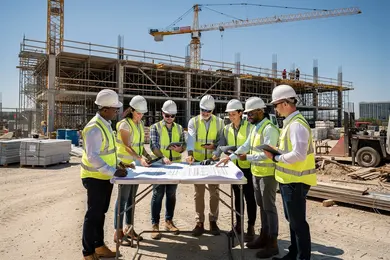
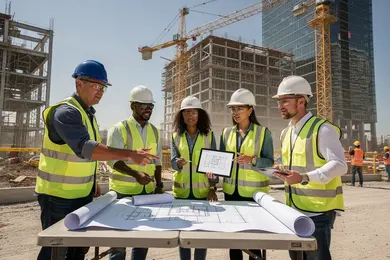
2027 Best Online Master's in Construction Management With Construction Case Study Learning

Co-Founder and Chief Data Scientist
Project managers grappling with costly schedule overruns often face a critical gap between theory and practice, where textbook models fail to capture real-world complexities. The challenge grows as 55% of graduate students enrolling in construction-related online programs in 2024 pursue degrees part-time while working, according to NCES data, signaling a need for flexible formats that accommodate professional demands without sacrificing applied learning.
This shift underlines how accessibility and timing shape enrollment and career mobility more than ever. This article evaluates top online master's in construction management programs, emphasizing immersive construction case study learning designed to bridge this divide and equip professionals for immediate impact.
Key Things You Should Know
- Construction management online programs showing 12% higher average time-to-degree than on-campus options reveal a tradeoff between accelerated workforce entry and comprehensive case study immersion critical for project complexity mastery.
- Employers in the U.S. commercial construction sector, per AGC 2024 data, prioritize candidates with applied case study experience 35% more in hiring decisions, stressing tangible scenario-based learning over solely theoretical credentials.
- Remote program costs averaging 25% less than traditional degrees reduce financial barriers but introduce disparities in access to networking and on-site experiential learning crucial for leadership track advancement.
What is an online master's in construction management with construction case study learning?
Programs offering an online master's in construction management with practical case studies respond directly to employer demands for candidates proficient in real-world project complexities. Students confront scenarios such as budget overruns, labor disputes, and regulatory compliance issues drawn from actual commercial or renewable energy projects. This method goes beyond theory, sharpening advanced construction management problem-solving skills critical for infrastructure projects that face unpredictable challenges and tight schedules.
Through case study learning, candidates derive actionable insights in financial planning, contract negotiation, risk management, and sustainability. For instance, analyzing delays in urban transit construction trains students in mitigation strategies applicable to municipal contracts, while energy-efficient building case studies offer firsthand understanding of green certification-a growing priority across sectors.
The labor market outlook supports this pragmatic approach: employment for construction managers is forecasted to grow 9% from 2024 to 2034 due to expanding infrastructure and green construction initiatives.
Without exposure to real project case studies, candidates risk gaps in managing dynamic variables common in the field. Online delivery widens access, enabling professionals to integrate lessons immediately into their roles and engage with diverse project types beyond regional limitations.
Those evaluating pathways can find vetted options through resources like construction management degree online listings that emphasize programs with rigorous case study components and proven practical value.
How do online construction management master's programs compare to on-campus options?
The choice between online master's in construction management vs on-campus programs hinges on tangible differences in experiential learning and access to industry networks. While in-person programs enable direct engagement with physical sites and peer collaboration, accelerating practical skill development, online alternatives compensate through detailed, scenario-based case studies and simulations that tackle real-world project complexities.
This approach allows working professionals, such as a project manager in urban infrastructure, to engage asynchronously with material on cost control, risk mitigation, and stakeholder communication without interrupting their employment.
Resource constraints and career demands often limit the feasibility of on-campus attendance, positioning online degrees as flexible but rigorous paths that maintain industry relevance. Virtual classroom discussions and collaborative tools increasingly mitigate the traditional absence of face-to-face mentorship in remote formats.
Labor market data from Lightcast identifies 528,158 unique U.S. construction management job postings from July 2022 to July 2023, with an anticipated 9.2% growth through 2033. Employers prioritize graduates proficient not only in theoretical frameworks but also in analyzing complex, real-world case studies to navigate dynamic project challenges.
Prospective students should consider how modality affects immediate skill application and long-term adaptability when weighing the benefits of online construction management master's degrees against on-campus options.
For those seeking accelerated pathways tailored to professional schedules, the fastest online project management degree programs offer relevant alternatives.
Which accredited schools offer the best online master's in construction management?
Top accredited schools offering the best accredited online master's in construction management programs maintain selective admissions to ensure alignment with the evolving demands of the industry. Institutions like Arizona State University and the University of Florida emphasize practical case studies that develop competencies in project delivery, risk management, and cost control skills critical for navigating complex real-world scenarios.
Only 52% of nearly 3.1 million fall 2023 master's applicants were admitted nationally, illustrating the rigor necessary to preserve program integrity and graduate readiness.
Online master's degrees in construction management for working professionals need to balance curriculum focus with scheduling flexibility. Programs that integrate extensive case study work often require synchronous sessions and teamwork, challenging those managing full-time employment.
Conversely, less interactive programs might sacrifice applied learning, which employers value when assessing leadership in subcontractor negotiation or compliance issues.
Admissions demand prerequisite knowledge in engineering, business, or architecture and measurable leadership potential, given the industry's preference for professionals who can make strategic decisions under pressure.
Students targeting specialized sectors, like green building or commercial infrastructure, must critically evaluate whether the curriculum aligns with those career paths.
Due to the specificity of on-the-job skills gained, some candidates pursue alternative advanced degrees; for example, professionals considering broader healthcare or management roles might explore options such as a PhD in healthcare management to complement their technical expertise.
What accreditation and industry standards should these construction management programs meet?
Master's programs in construction management that lack accreditation from agencies like ABET or ACCE pose significant risks to graduates' market viability. Without meeting these online construction management program accreditation standards, students may earn credentials that are less recognized by employers who expect proficiency in core areas such as project management, risk mitigation, and sustainability compliance.
Curricula must incorporate key industry standards for construction management degrees, including OSHA safety regulations, Lean Construction methodologies, and BIM technologies. For instance, a graduate unfamiliar with OSHA standards will face hurdles managing site safety on urban projects, triggering additional costs and delays to secure necessary certifications post-graduation.
Beyond technical skills, effective programs align construction case studies with evolving market demands like modular construction and sustainable materials. These real-world components are imperative for employability in specialized sectors such as green building.
A program's advisory board with active industry representation fosters curriculum agility, preventing skills obsolescence amid shifting regulations and technologies.
Prospective students must weigh tuition costs against this curriculum's rigor. The average master's degree in this field costs $59,684, with public tuition around $12,596 annually and private tuition approximately $28,017 per year. For those exploring parallel fields, consider a health information technology degree as an alternative strategic investment in employment stability.
What curriculum, courses, and case study projects are included in these online programs?
Online master's in construction management programs equip students with a pragmatic blend of technical knowledge and leadership acumen tailored to evolving industry demands. Coursework integrates detailed project management techniques, cost estimating, scheduling, safety protocols, contract administration, and sustainable construction practices. This curriculum is essential for navigating projects ranging from commercial developments to infrastructure initiatives.
A notable aspect is the emphasis on case study analysis, confronting real-world challenges such as unforeseen site contamination or supplier disruptions. For instance, a scenario involving a multi-million-dollar commercial project must address unexpected soil issues, requiring rapid recalibration of budgets and timelines-reflecting the tactical decision-making employers expect in leadership roles.
Students also engage with digital tools like building information modeling (BIM), construction software, and data analytics to manage increasingly complex, often remote, project teams. This combination of skills underpins effective coordination in modern construction environments.
The true cost of these programs varies considerably, generally between $20,000 and $75,000 in total tuition. Prospective students must weigh this investment against potential salary improvements and the availability of financial aid. Programs featuring robust case study components often deliver better returns by enhancing graduates' readiness to manage contractual and operational complexities specific to the construction industry.
What are the typical admission requirements and prerequisites for online construction management master's degrees?
Applicants pursuing an online master's degree in construction management face a prerequisite balance: technical preparation versus real-world experience. Programs generally require a bachelor's degree from an accredited institution, often in fields like civil engineering or architecture, but some allow non-related degrees if candidates complete foundational courses in construction technology or project scheduling.
Most value two to five years of professional experience, recognizing that practical insights critically enhance understanding of advanced project management strategies.
Admission materials typically include official transcripts, a professional resume, and letters of recommendation that verify leadership potential and graduate study readiness. A statement of purpose must clearly articulate career objectives and relevant construction project experience.
While some institutions still ask for GRE scores, a growing number waive this for candidates with substantial industry track records, shifting emphasis from standardized testing to demonstrated skill.
From a workforce standpoint, the median annual wage for construction managers was $104,900 in 2023, with top earners exceeding $174,780, signaling strong occupational demand. Employers expect graduates to contribute from day one; thus, programs offering part-time or accelerated formats must be evaluated carefully for their ability to balance rigor with schedule flexibility.
Students without sufficient field experience risk underperformance, while those with extensive backgrounds may find standardized prerequisites redundant.
How long do online construction management master's programs take and what do they cost?
Time commitment and format flexibility are decisive factors for prospective students of online construction management master's programs. Full-time, these typically span two years, though accelerated tracks condense the curriculum to 18 months, while part-time paths can extend to three or four years.
Balancing work and study often pushes students toward asynchronous learning combined with synchronous case-study sessions, which help maintain depth without rigid scheduling. This balance is essential for professionals seeking promotion or a shift in responsibilities.
Cost variation is significant, from around $15,000 at regionally accredited public universities to upwards of $50,000 at private institutions emphasizing applied learning through real-world construction scenarios.
Tuition rates usually range between $700 and $1,500 per credit hour, supplemented by fees for specialized materials and technology critical to mastering virtual construction project environments. The total investment must be weighed against opportunity costs, including time away from income and on-site experience.
Employers prioritize candidates capable of practical problem-solving within complex construction contexts, elevating programs with case-study-driven curricula.
Graduates from these programs tend to demonstrate better job readiness, but must consider the tradeoffs between program length, cost, and scheduling flexibility. In particular:
- Align program duration with career timing and workload demands
- Assess tuition relative to potential employer reimbursement and return on investment
- Ensure curriculum emphasizes applied methodologies simulated through case studies
- Verify accreditation for professional recognition and credit transferability
- Evaluate digital platforms and academic support effectiveness
For example, a commercial construction project manager aiming for promotion may benefit from a 24-month hybrid program featuring evening live sessions emphasizing case analyses.
Meanwhile, a site engineer pursuing a quicker transition might choose an 18-month fully online program focused on financial controls and contract administration simulations.
What careers can you pursue with an online master's in construction management?
Professionals pursuing an online master's in construction management often do so to transition into leadership roles that demand coordination of complex projects with tight budget and regulatory constraints. For example, a construction superintendent with a decade of field experience might secure a project director position by leveraging skills in risk management and legal compliance acquired through advanced coursework.
This shift is supported by data from a recent research report, which notes that 76% of U.S. online graduate students were employed full-time during their studies, reflecting the pragmatic need to balance work and education without sacrificing income.
Key career roles enabled by this degree include:
- Project managers overseeing large-scale urban developments
- Estimators navigating bidding processes for public infrastructure contracts
- Safety managers ensuring compliance on industrial sites
- Facilities managers handling maintenance for corporate real estate
The degree's practical value hinges on integrating classroom knowledge with real-world project demands. Students must allocate rigorous study time to scenario-based projects, often collaborating across locations, to meet employer expectations for immediate applicability.
In fluctuating sectors like public infrastructure, these skills also open doors to emerging fields such as renewable energy and modular construction, where expertise in regulatory frameworks and project sequencing is critical. Ultimately, the balance of ongoing employment and targeted study shapes the degree's impact on career trajectory.
What salary ranges and job outlook can graduates expect in construction management?
Graduates holding advanced credentials in construction management see a distinct salary advantage that reflects the premium employers place on leadership and specialized expertise. Median salaries near $140,200 for senior roles substantially exceed the typical $70,000 to $90,000 range for general construction positions, illustrating how targeted skills and graduate-level preparation translate to measurable financial returns.
For instance, a project manager transitioning from basic supervisory tasks to regional oversight in a utility company can justify a salary increase above $130,000 annually by leveraging a master's degree. This outcome is tied directly to managing complex, multidisciplinary teams and driving sophisticated project execution across commercial infrastructure and industrial development sectors.
The hiring landscape is competitive and favors candidates who combine educational credentials with demonstrated abilities in project delivery, financial oversight, and adaptable leadership. Roles commanding elevated compensation also come with greater responsibility for risk mitigation, compliance, and stakeholder coordination at scale.
Employment prospects are projected to grow by roughly 8% through 2032, supported by infrastructure investments and technology adoption. However, those without graduate-level credentials or leadership experience may encounter limited openings in senior ranks or highly contested job markets.
- Advanced degrees support access to strategic roles with salaries well above general construction positions.
- Employers prioritize proven leadership and financial management alongside formal education.
- Online master's programs offer a practical pathway but require readiness for higher accountability and operational complexity.
How can prospective students evaluate and choose a reputable online construction management program?
Choosing an online master's in construction management requires scrutiny beyond accreditation, focusing on how the curriculum prepares students for complex, real-world scenarios. Programs emphasizing case study analysis of project scheduling, safety protocols, cost control, and sustainability better align with the evolving demands of industries like commercial development or heavy civil construction.
For example, a student balancing a full-time role in infrastructure projects benefits from asynchronous classes that incorporate scenarios typical in their sector, ensuring immediate skill application.
Employment outcomes and return on investment hold significant weight. Data from the BestColleges Online Education Trends Report shows 74% of online graduate students advance career-wise, with 64% achieving financial returns within three years, indicating measurable professional benefits.
Prospective students should also evaluate whether programs facilitate preparation for certifications such as PMP or CCM, which employers often require for leadership roles.
Flexibility is critical but not sufficient. Technical support and industry-relevant content must complement virtual learning environments to mitigate challenges tied to remote education.
Employer and alumni networks provide practical intelligence on graduate preparedness and problem-solving aptitude, which employers prioritize when differentiating candidates in a competitive labor market.
Other Things You Should Know About Construction Management
Maintaining full-time employment during the program depends largely on the program's structure and your personal time management skills. Programs that heavily emphasize case studies and project-based learning demand significant weekly hours beyond lectures, often 15-20 hours per week. Prioritize programs that offer flexible deadlines or asynchronous coursework if you plan to work full-time, but be prepared for a substantial workload that can impact work-life balance during peak project phases.
Programs with robust, real-world case studies align student experience closely with employer expectations, showing practical problem-solving skills over theoretical knowledge. Graduates from these programs often report better preparedness for complex project management roles, which increases employability in competitive markets. Focus on programs where case studies reflect current industry challenges and incorporate cross-functional team collaboration to maximize your career readiness.
Fully online case study learning can restrict spontaneous peer interaction and immediate feedback, which are critical in construction management's collaborative environment. Hybrid models offer more networking and live scenario analysis opportunities, which improve soft skills and real-time decision-making. If your goal includes managerial positions requiring strong interpersonal skills, prioritize programs that incorporate in-person components or live virtual collaboration sessions.
References
- Best Practices for Integrating Case Studies in Online Courses https://thecasehq.com/best-practices-for-integrating-case-studies-in-online-courses/
- Case studies | Oppida's elearning case studies https://oppida.co/case-studies
- Case Studies in Learning & Development - PETRA MAYER CONSULTING https://petramayerconsulting.com/resources/ld-case-studies/
- The Best Online Master's in Construction Management Programs - OnlineMasters.com https://www.onlinemasters.com/best-degree-programs/construction-management/
- Best Online Construction Management Degrees https://www.affordablecollegesonline.org/degrees/construction-management-programs/
- Best Master’s in Construction Management Online for 2025 https://www.onlinemastersdegrees.org/best-programs/construction-management/
- 5 Construction Management Career Opportunities Out of College https://aic-builds.org/5-construction-management-career-opportunities-out-of-college/
- Construction management master’s program | Advance your career https://www.edx.org/masters/construction-management