2027 Superintendent Roles You Can Target With a Construction Management Degree

Co-Founder and Chief Data Scientist
Securing a superintendent role in construction demands more than technical knowledge; it requires navigating complex project scopes, workforce coordination, and escalating deadlines with precision. As reported by the National Center for Education Statistics, enrollment in flexible, online construction management programs grew by over 30% in the past two years, signaling a shift toward adult learners balancing careers and education.
This trend highlights the need to choose programs that accommodate real-world constraints while equipping candidates for leadership roles in dynamic building projects. This article examines superintendent career paths aligned with a construction management degree, providing clarity on viable targets and the skills they demand.
Key Things You Should Know
- Construction management degrees correlate with a 12% higher supervising capacity in project scale, but require 4+ years to complete, posing a tradeoff against immediate workforce entry post-technical training-Bureau of Labor Statistics 2024.
- Employers increasingly demand proficiency in digital tools like BIM and Lean Construction; graduates without hands-on software experience face placement delays, per McKinsey's 2024 industry analysis.
- Regional market volatility pushes many construction firms to prioritize adaptable superintendents with mixed credentials, limiting exclusive degree holders' opportunities in smaller or fluctuating markets, according to AGC workforce reports.
What superintendent roles can construction managers target?
Candidates pursuing construction management superintendent positions in the United States must weigh the operational distinctions between general, specialty, and senior superintendent roles to align their education with market realities. General superintendents coordinate broad site activities and contract schedules, demanding strong leadership and cost controls.
Specialty superintendents focus on trades like electrical or HVAC, requiring deep technical expertise and close interaction with subcontractors. Senior or program superintendents oversee multiple projects simultaneously, emphasizing risk management and stakeholder communication.
Industry sectors such as commercial, infrastructure, and residential strictly shape job scope. Commercial superintendents juggle building codes and liaison with architects and agencies, while infrastructure roles prioritize safety and environmental compliance. Residential superintendents face pressure to maintain quality amid fluctuating timelines driven by market demand.
These variants underscore why career opportunities for construction managers as project superintendents hinge on both specialized knowledge and practical adaptability.
A bachelor's degree in construction management is a near-mandate, equipping candidates with project scheduling software skills, regulatory understanding, and contract administration competencies. However, the median annual wage of $106,980 and 46,800 projected annual openings by the U.S. Bureau of Labor Statistics also implies a competitive job market requiring tangible field experience and flexibility, including potential relocations and extended hours.
Prospective students should carefully evaluate the online construction management degree cost against these employment factors when choosing programs, balancing financial investment with practical career outcomes and role-specific expertise.
What education do construction superintendents need?
In the US, the educational threshold for construction superintendent roles increasingly favors candidates holding a bachelor's degree in construction management, civil engineering, or a related discipline. Employers expect superintendents to combine technical proficiency, such as blueprint reading, scheduling software, and knowledge of building codes, with foundational management skills.
This dual expertise proves critical on larger infrastructure or commercial projects, where advanced risk management and regulatory compliance knowledge differentiate candidates capable of overseeing complex operations.
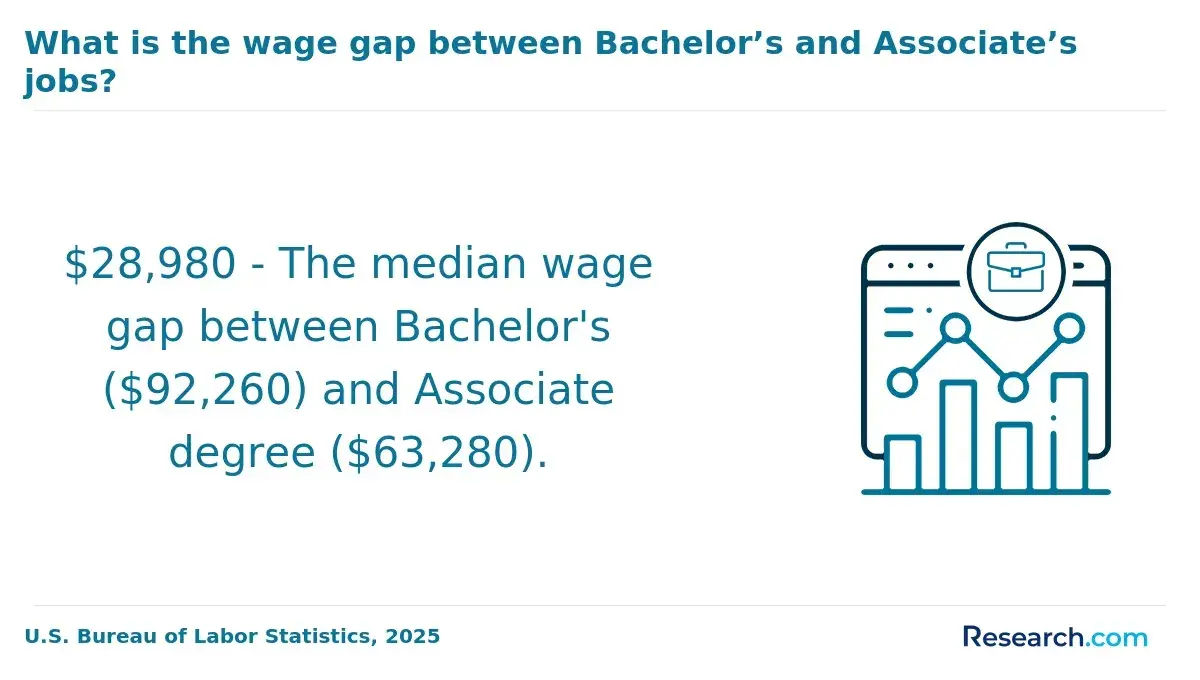
Although some entry-level superintendent roles accept applicants with an associate degree paired with substantial field experience, this path often limits long-term advancement due to intensifying competition driven by a 9% projected employment increase in construction management from 2024 to 2034. Candidates without formal degrees typically need to offset this gap through certifications like OSHA safety training or project management credentials.
Construction superintendent educational requirements in the US reflect this market reality, emphasizing degrees as signals of readiness for leadership rather than routine oversight.
The practical value of embedded internships and hands-on training within bachelor's programs cannot be overstated. Employers prioritize graduates who demonstrate immediate applicability of skills, especially in sectors with complex contracts and environmental regulations.
Prospective students weighing degree qualifications for construction superintendent roles must consider the tradeoff between accelerated associate programs with limited scope and comprehensive bachelor's programs that better align with evolving industry standards and career mobility.
Those interested in a more focused academic path might explore a bachelor's degree in project management to complement their technical training and strengthen their management credentials.
Is a construction management degree enough for superintendent jobs?
Holding a construction management degree alone does not meet the practical requirements for superintendent roles in 2026, where hands-on experience is equally critical. According to Procore data from 2024, employers expect candidates to combine a bachelor's degree in construction management, engineering, architecture, or a related discipline with 3 to 4 years of field experience. This expectation reflects the operational necessity of managing complex, large-scale sites that demand autonomous leadership and quick resolution of unforeseen challenges.
For individuals pursuing superintendent career paths with a construction management degree, real-world site supervision often involves responsibilities beyond textbook knowledge-managing daily operations, coordinating subcontractors, and making critical decisions under pressure. Graduates frequently enter roles such as assistant superintendents or project engineers to build this essential experience, highlighting a tradeoff between formal education and applied leadership competence.
Those transitioning from office-based positions must actively seek opportunities that develop tangible field skills. Internships, cooperative education programs, or entry-level roles on construction sites represent strategic approaches to close this gap efficiently. Without such experience, demonstrating readiness for leadership on industrial or commercial projects with large teams tends to be difficult.
Students and professionals considering this pathway should weigh the construction management degree requirements for superintendent jobs carefully and explore supplemental experiential learning. Additionally, exploring online health information management degree programs CAHIIM accredited can provide insights into structured program standards and career-aligned outcomes across disciplines.
Which accreditation should a construction management program have?
Accreditation from the American Council for Construction Education (ACCE) is often a decisive factor for construction management program accreditation requirements United States applicants face. Without ACCE accreditation, programs typically fail to align adequately with core industry competencies such as project scheduling, safety, cost estimation, and leadership - elements crucial to superintendent effectiveness in commercial, residential, and infrastructure sectors.
Employers, especially in larger firms and general contracting, generally prefer graduates of ACCE-accredited programs because the certification signals practical readiness and knowledge rigor. For instance, a candidate entering commercial construction with an accredited degree will have studied contract administration and risk management, skills that non-accredited graduates often lack, complicating their on-site effectiveness and progression.
Given the superintendent role usually requires 1 to 2 years of prior trade experience, the best accredited construction management degrees in the US serve to formalize and expand that experience into management capabilities, directly impacting licensure eligibility in some states. Ignoring accreditation can retard career growth and reduce competitive standing.
Prospective students should verify accreditation status directly and weigh it against their trade background and licensing region. In tandem with a degree, gaining hands-on experience and considering complementary fields, such as a health information management associate degree online, might present strategic alternatives for workforce flexibility and career pivots.
Should you choose online or campus construction management programs?
Choosing between online and campus construction management programs requires careful consideration of practical exposure and career context. Online formats suit working professionals aiming to advance into superintendent roles without disrupting their income, offering strong theory focus and training in project management software and virtual collaboration.
Yet, these programs rarely provide the direct site experience that many employers equate with readiness, a critical factor given that superintendent wages at Mortenson range from $111,400 to $195,200 depending on seniority.
Campus programs compensate by delivering immersive fieldwork, lab access, and hands-on mentorship, aligning more closely with employers seeking candidates who demonstrate real-world site proficiency. This is especially vital in labor-intensive scenarios such as managing high-rise commercial construction where nuanced risk, schedule, and safety management demand more than theoretical knowledge. Students also gain networks that often translate into better job placement opportunities.
Pragmatically, online degrees serve superintendents already embedded in the workforce looking to sharpen leadership and technical skills without relocation, while campus programs fit those at earlier career stages who must build foundational site experience. Decisions should reflect current employment status, need for applied skills, and the urgency of access to supervisory roles paying within or above those Mortenson benchmarks.
What coursework prepares you for superintendent responsibilities?
Technical proficiency alone does not prepare superintendents for the unpredictable complexities of construction projects; effective preparation requires a composite skill set bridging construction methods, legal knowledge, safety management, and leadership under pressure. Coursework in construction materials and scheduling software such as MS Project or Primavera equips students to sequence tasks and allocate resources with precision, mitigating costly delays typical in large commercial or infrastructure builds.
However, the superintendent's responsibility extends beyond management tools to ensuring OSHA compliance and navigating contract disputes, areas often overlooked in more technical-focused curricula.
Financial oversight is equally critical. Early detection of budget variances through cost control coursework can prevent project derailments. Equally significant is the refinement of communication and negotiation abilities, essential to coordinate diverse subcontractors and suppliers-especially in multi-trade projects like healthcare facility expansions where timing and coordination directly affect patient safety and operational readiness.
Practical integration through internships or capstone projects is indispensable, exposing candidates to real-world conditions such as labor shortages or sudden site changes that no textbook can replicate. These experiences foster adaptive decision-making crucial for meeting employer expectations of immediate operational competence. According to Autodesk citing ZipRecruiter, the average superintendent salary sits around $95,168 annually, reflecting consistent demand for professionals who blend technical savvy with strong leadership and financial acuity.
What admission requirements do construction management programs have?
The baseline requirement for construction management programs is typically a high school diploma or equivalent, but the practical value lies in the applicant's demonstrated readiness through math and English proficiency, which underpin contract analysis and documentation skills. Institutions increasingly adopt test-optional policies post-2024, yet prior experience in construction trades remains a strong differentiator for bachelor's program admissions, accelerating mastery of both technical material and site-based decision-making.
Success in the field often depends on selecting programs that mandate foundational courses in physics, economics, or business, reflecting the multifaceted role of managing budgets, schedules, and teams. For example, candidates aiming for superintendent positions with salaries between $90,000 and $120,000-as cited by Harkins Builders-benefit from programs with robust industry connections and a focus on leadership capabilities, current technology, and safety standards.
Advanced admissions weigh professional endorsements and portfolios to assess leadership and supervisory potential, recognizing that military veterans and working professionals bring valuable applied skills through accelerated or competency-based pathways. However, programs emphasizing certifications or BIM (Building Information Modeling) training often introduce added technical prerequisites, which can extend time-to-employment but provide specialized competencies favored by employers.
- Prerequisite courses in physics, economics, or business signal readiness for complex budget and timeline management.
- Test-optional admissions increase accessibility but do not replace the value of prior practical experience.
- Leadership evidence and portfolios strongly influence acceptance into graduate-level programs.
- Specialized technical training may delay entry-level employment but enhances competitiveness for future superintendent roles.
How long does a construction management degree take?
The timeline for completing a construction management degree varies significantly and directly impacts readiness for superintendent roles, where employer expectations heavily emphasize extensive field experience alongside formal education. A traditional bachelor's degree typically takes four years, but this alone rarely suffices for leadership roles requiring 7+ years in construction plus 5+ years as a lead superintendent, as noted by Build Group. This combination places meaningful emphasis on hands-on experience rather than credentials alone.
Associate degrees, often accomplished in about two years, cater more to foundational competencies but necessitate substantial on-site work to compensate for the shorter academic duration. Certificates last only a few months, and while they offer quick entry, they do not replace the supervisory skills demanded at senior levels.
Students should consider how part-time study options might extend their academic timeline yet enable income continuity. This tradeoff delays degree completion but can accelerate overall career progression by maintaining work experience. Moreover, specialized sectors such as commercial high-rise or infrastructure construction inherently demand longer accumulation of certifications and skill sets due to project complexity and safety standards.
In contrast, smaller residential or renovation projects may permit faster advancement by leveraging associate-level education plus practical experience. Candidates need to strategize accordingly, recognizing that a degree is a milestone, not a substitute, for the substantial experiential requirements shaping superintendent eligibility.
What salary can construction management graduates earn?
Starting salaries for graduates with a construction management degree typically range from $65,000 to $85,000 annually, but this can vary significantly based on industry sector, location, and employer size. Mid-career professionals often earn between $90,000 and $120,000, with specialized commercial or industrial roles surpassing $130,000. For instance, superintendents managing complex commercial projects can command salaries 15-20% above those overseeing residential work.
The value of hands-on experience cannot be overstated. Employers like Siemens Energy set a minimum of 3+ years in managing commercial construction projects, emphasizing proven field expertise in office, production, or warehouse settings. Entry-level candidates lacking real project experience usually start at the lower end of the salary scale and must actively seek internships or assistant roles to improve earning potential.
Job seekers face strategic tradeoffs between smaller firms offering faster promotions but lower base pay, and larger organizations providing stable advancement paths with comprehensive benefits. Geographic location also plays a critical role, as metropolitan areas rich in commercial developments consistently offer higher wages than rural regions.
- Construction managers' median annual wage, per U.S. Bureau of Labor Statistics data, is approximately $103,000.
- Sector-specific experience-especially in energy or industrial environments-enhances negotiation leverage.
- Career progression depends heavily on targeted experience acquisition and geographic flexibility.
What certifications help construction managers become superintendents?
Construction manager candidates targeting superintendent roles must prioritize certifications that demonstrate precise skills in safety oversight, schedule adherence, cost control, and quality assurance. Employers, particularly on projects exceeding $10 million, commonly require or strongly prefer credentials such as the OSHA 30-Hour Construction Safety and Health certification, the Certified Construction Manager (CCM), and the Project Management Professional (PMP) certification.
On urban commercial projects, a superintendent holding OSHA 30 and CCM certifications can proactively minimize safety incidents and reduce costly delays by anticipating hazards and streamlining workflow processes. In contrast, civil infrastructure projects elevate the value of PMP certification, which improves complex coordination among subcontractors and suppliers to meet aggressive timelines.
Absent these certifications, candidates face tangible employability challenges, as they struggle to verify competency managing compliance and project intricacies-factors critical in competitive markets and contractual accountability. Certification programs differ in cost, duration, and renewal demands, requiring candidates to weigh these practical commitments alongside their career goals and project sector demands.
Prioritizing these credentials aligns technical knowledge with evolving regulatory standards and industry best practices, allowing construction management professionals to assert measurable authority in roles demanding safety leadership, scheduling finesse, cost monitoring, and quality oversight.
Other Things You Should Know About Construction Management
Focus on gaining hands-on experience in site supervision, contract administration, and construction safety compliance. Programs emphasizing internships or co-op placements that expose students to real projects provide a tangible advantage when seeking superintendent roles. Prioritizing courses and training in cost control and communication helps meet employer demands for efficient team leadership and client coordination.
Yes, specialization can significantly improve job prospects by aligning expertise with industry demand. For example, familiarity with commercial or infrastructure projects is often preferred by large contractors in those sectors. Candidates should weigh local market trends and employer needs, pursuing targeted electives or certifications that confirm relevant, practical experience in their chosen niche.
Employers increasingly expect superintendents to be proficient with project management software, BIM models, and digital reporting tools. Graduates lacking these skills face disadvantages despite solid construction knowledge. Prioritizing technology fluency in your program or through supplemental training enhances your ability to manage schedules, budgets, and compliance efficiently and positions you as a competitive candidate.
References
- Construction Management Certifications: Why Should You Pursue? https://aic-builds.org/construction-management-certifications-why-should-you-pursue/
- Best Online Construction Management Degrees https://www.affordablecollegesonline.org/degrees/construction-management-programs/
- Construction Manager Salary in AU (June, 2026) – SEEK https://au.seek.com/career-advice/role/construction-manager/salary
- Construction Project Manager vs. Superintendent: What’s the Difference? - Russ Hadick https://rharecruiters.com/construction-project-manager-vs-superintendent-whats-the-difference/
- Advancing Your Career With Construction Superintendent Online Courses https://constructionclasses.com/advancing-your-career-with-construction-superintendent-online-courses/
- Education, Superintendent Certification https://catalog.sulross.edu/preview_program.php
- Construction Superintendent Requirements [Explained] https://www.nectoselection.com/blog/construction-superintendent-requirements
- Certified Construction Manager | Construction Management Association of America https://www.cmaanet.org/certification/ccm
- What Recruiters Look for in Top Construction Leaders | K2 Staffing https://k2staffinginc.com/superintendent-career-paths-what-recruiters-look-for-in-top-construction-leaders/
- 17 Construction Certifications To Enhance Your Career | BigRentz https://www.bigrentz.com/blog/construction-certifications