2027 Best Online Construction Management Programs for Professionals Seeking Renewable Energy Project Careers

Co-Founder and Chief Data Scientist
Facing rapidly evolving building codes and sustainability mandates, construction management professionals targeting renewable energy projects must navigate an increasingly complex regulatory landscape without interrupting project timelines or inflating budgets. This challenge intensifies as the Bureau of Labor Statistics projects a 13% growth in renewable energy construction roles through 2032, driven by federal clean energy investments. These dynamics pressure practitioners to acquire specialized skills quickly, yet many cannot afford full-time, campus-based programs due to existing work commitments.
The rise in flexible, accredited online construction management offerings-enrolling over 40% more adult learners since 2022 according to NCES-addresses this gap effectively. This article examines the best online construction management programs tailored to advance careers precisely in renewable energy sectors, focusing on accessibility, curriculum relevance, and employer recognition to aid informed enrollment decisions.
Key Things You Should Know
- Programs integrating renewable energy modules face cost premiums averaging 15%-20% higher than traditional construction management degrees, per 2024 NCES tuition datasets, challenging mid-career professionals balancing time and salary tradeoffs.
- Employers in the U.S. green infrastructure sector prioritize candidates with demonstrable project lifecycle and regulatory compliance experience, with 68% of job postings requiring specific renewable construction certifications, per Labor Department analysis.
- Graduates from programs with embedded policy and sustainability case studies see 25% faster placement in project management roles focused on clean energy projects, signaling that timing and curriculum specificity directly affect employability trajectories.
What is an online construction management degree for renewable energy careers?
Online construction management degrees tailored for renewable energy careers emphasize specialized skills that align with the sector's technical complexities and regulatory demands. Unlike standard construction management programs, these pathways embed critical training in energy systems, environmental impact, and grid integration-essential for managing projects dominated by solar and wind installations.
Demand for professionals with expertise in renewable energy project construction management programs online reflects massive global investment spikes, particularly $705.5 billion in clean energy infrastructure in 2024. This market scale requires managers adept in navigating intricate permitting, coordinating diverse teams, and handling logistics unique to remote or harsh environments.
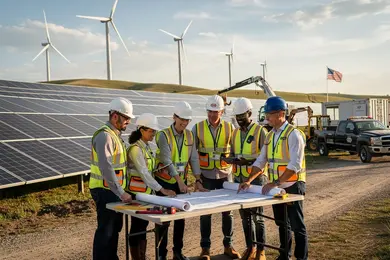
Consider solar farm development in arid regions, which hinges on mastery of mounting systems, erosion mitigation, and local utility standards. In contrast, wind turbine projects demand orchestrating heavy equipment operations and adapting to volatile weather conditions. Failing to account for these nuances often results in cost overruns, schedule delays, or compliance lapses, stressing the advantage of degree programs that integrate real case scenarios with industry standards.
The challenge remains for working professionals balancing remote learning with field-relevant applications, yet graduates tend to secure roles in firms leading sustainable infrastructure modernization due to their practiced oversight and technical acumen. Those evaluating options should consult established construction management programs to find curricula that address these specific workforce needs.
Which accreditation matters for construction management programs?
Choosing an ABET-accredited program remains essential for professionals aiming to pivot into renewable energy within construction management. Such accreditation assures that a program adheres to stringent curriculum standards and faculty qualifications, which align with technical competencies increasingly demanded by renewable energy projects. For example, managing a wind turbine installation requires engineering principles not always covered in non-accredited programs.
Regional accreditation standards for construction management degrees primarily influence financial aid and graduate study eligibility but fall short in signaling employer trust or meeting licensing prerequisites in competitive renewable sectors. Non-accredited programs might offer lower costs or flexible schedules; however, graduates often face limited recognition and weaker licensure outcomes.
The U.S. Bureau of Labor Statistics projects minimal growth for construction managers overall, but specialized roles-such as wind turbine service technicians growing at 45%-highlight the value of transferable skills grounded in accredited construction management education. Those pursuing credentials like Certified Construction Manager (CCM) for solar or wind projects benefit significantly from ABET-aligned pathways.
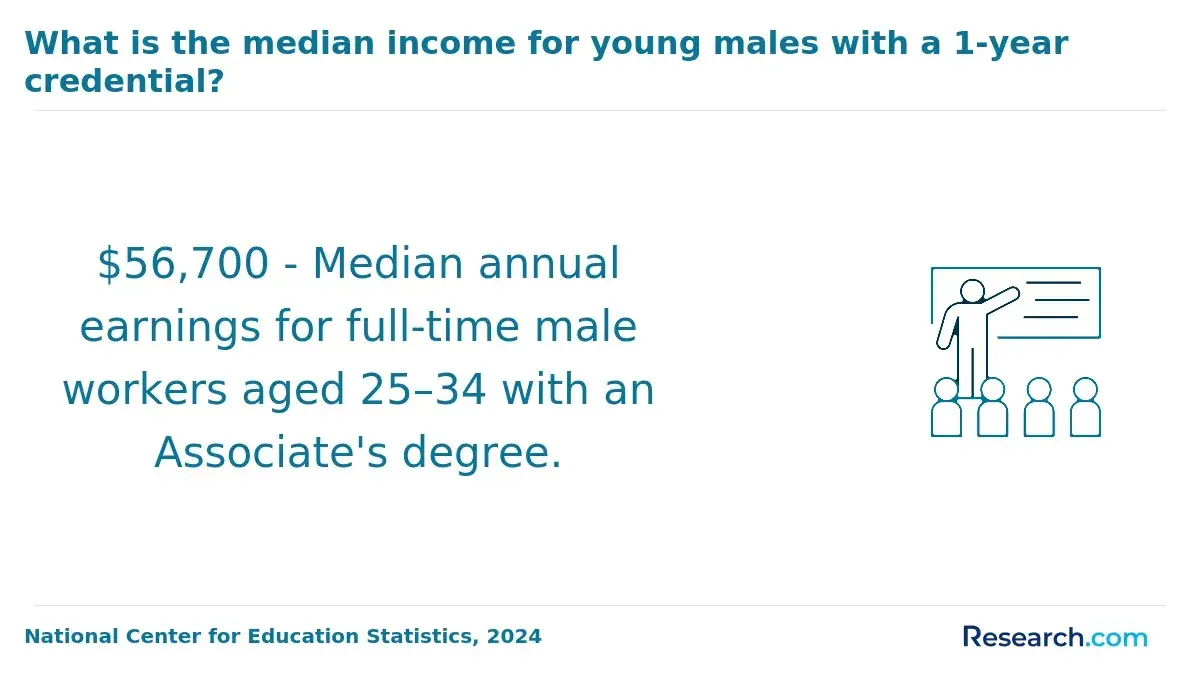
Practical considerations include evaluating programs against long-term career mobility versus short-term convenience. Working professionals balancing schedules might also explore related fields; for instance, a sport management degree online shows different logistical and labor market tradeoffs often useful when comparing education delivery modes.
How do online and campus programs compare for construction management?
Hands-on experience remains a critical differentiator between online vs campus construction management degree benefits, particularly in renewable energy sectors where site-specific skills and safety mastery are non-negotiable. Campus programs provide direct access to labs, site visits, and face-to-face engagement, giving students tangible exposure to equipment and regulatory compliance challenges typical of wind, solar, and electrical grid projects. This in-person training aligns closely with employer expectations, especially in fields where coordinating multiple subcontractors and navigating complex regulations is essential.
In contrast, online construction management programs emphasize flexibility and outcomes through virtual simulations and remote collaboration, which develop project leadership and communication skills but may fall short on replicating tactile, on-site realities. For working professionals balancing job commitments or location constraints, these programs offer accelerated theoretical mastery and credential upgrades without relocation or disruption.
Given that advanced renewable energy construction increasingly integrates digital project management tools, online education can suffice when combined with employer-supported field experience. Prospective students should prioritize programs with proven partnerships facilitating practical training and measurable employment outcomes.
Those seeking flexible options might also explore pathways like the fastest online MHA, illustrating how targeted online degrees can balance professional demands and educational rigor.
What courses prepare students for renewable energy projects?
Effective preparation for renewable energy project management demands a hybrid skill set-merging core construction management with specialized knowledge in sustainable technologies and regulatory contexts. Construction management programs for sustainable energy careers prioritize critical curricula such as renewable energy systems design, environmental impact assessments, and project planning aligned with energy efficiency goals, paired with foundational expertise in budgeting, risk evaluation, and contract oversight.
Students must navigate tradeoffs specific to renewable projects-for example, balancing upfront capital costs against long-term operational savings when assessing solar or wind infrastructure. Practical courses tailor traditional methodologies like CPM and agile frameworks to weather-driven timelines and supply chain variability inherent in renewable installations, which directly affect project delivery and cost controls.
Safety protocols extend beyond standard construction hazards to address electrical and chemical risks unique to renewable sites, while compliance training covers evolving federal and state incentives, zoning requirements, and environmental regulations that directly influence project feasibility and avoid delays.
With remote learning increasingly common, over 30% of enrollments now online, accessing renewable energy project management online courses offers necessary flexibility but requires proactive experiential learning through internships or vendor certifications to bridge gaps in real-world site challenges.
Prospective students considering this pathway may also explore specialized online electrical engineering degree programs for veterans to augment their technical credentials, enhancing employability in energy-focused construction roles.
What admission requirements do online construction management programs have?
Admission to online construction management programs increasingly reflects the sector's pivot toward renewable energy projects and low-carbon building methods. Candidates typically need a bachelor's degree in construction management, engineering, or architecture, paired with two to five years of relevant professional experience. This requirement aligns with employer preference for those familiar with grid integration and energy storage-skills essential for the expanding utility-scale renewable infrastructure.
Applicants should demonstrate proficiency in STEM fundamentals like math and physics, as these underpin critical competencies in managing complex renewable construction environments. While GRE scores are often optional, they can strengthen applications targeting technically rigorous curricula. Letters of recommendation must highlight relevant achievements, especially those tied to sustainable or energy-efficient projects, to meet the immediate operational expectations of hiring managers.
Applicants without formal degrees face added challenges; many programs mandate bridge courses to fill technical knowledge gaps before admission. Practical evaluations-such as portfolios or case-study analyses-are increasingly preferred over traditional exams. These assessments measure applied problem-solving relevant to real-world, distributed construction teams managing renewable infrastructure, emphasizing digital collaboration and self-direction.
This rigorous admission framework is a response to the evolving workforce that requires technical adaptability beyond standard construction skills. Candidates must weigh the tradeoff between meeting these demanding prerequisites and positioning themselves in a competitive market shaped by rapid renewable energy integration.
How long does an online construction management degree take?
Completing an online construction management degree within four years is standard for full-time students, but many working professionals extend this to five or six years to balance job responsibilities. Accelerated programs can shorten this to about three years with year-round courses or recognition of prior learning; however, this often demands significant time commitment. This timeline influences not only tuition expenses but also when a professional can enter renewable energy construction roles-a sector where timely credentialing and relevant experience are critical.
Employers prioritize candidates who combine solid technical knowledge with applied skills relevant to sustainable construction projects. For instance, a mid-career engineer targeting a transition into renewable energy within three years needs a program that integrates core construction management coursework with renewable energy applications and certifications. Fully online, asynchronous formats enable continuous income and work experience during study, which is practical for such pivots.
Key considerations for prospective students include total credit demands, transfer credit policies, and inclusion of industry-recognized credentials like LEED. These factors affect program duration and net return on investment. According to a 2024 Georgetown University Center on Education and the Workforce analysis, construction management majors show a median 10-year ROI of roughly $306,000, illustrating substantial long-term value despite delayed completion risks.
Choosing a program that balances flexible scheduling with substantive project management training tailored to sustainable infrastructure development is essential for navigating employer expectations and market demands.
What do online construction management programs cost?
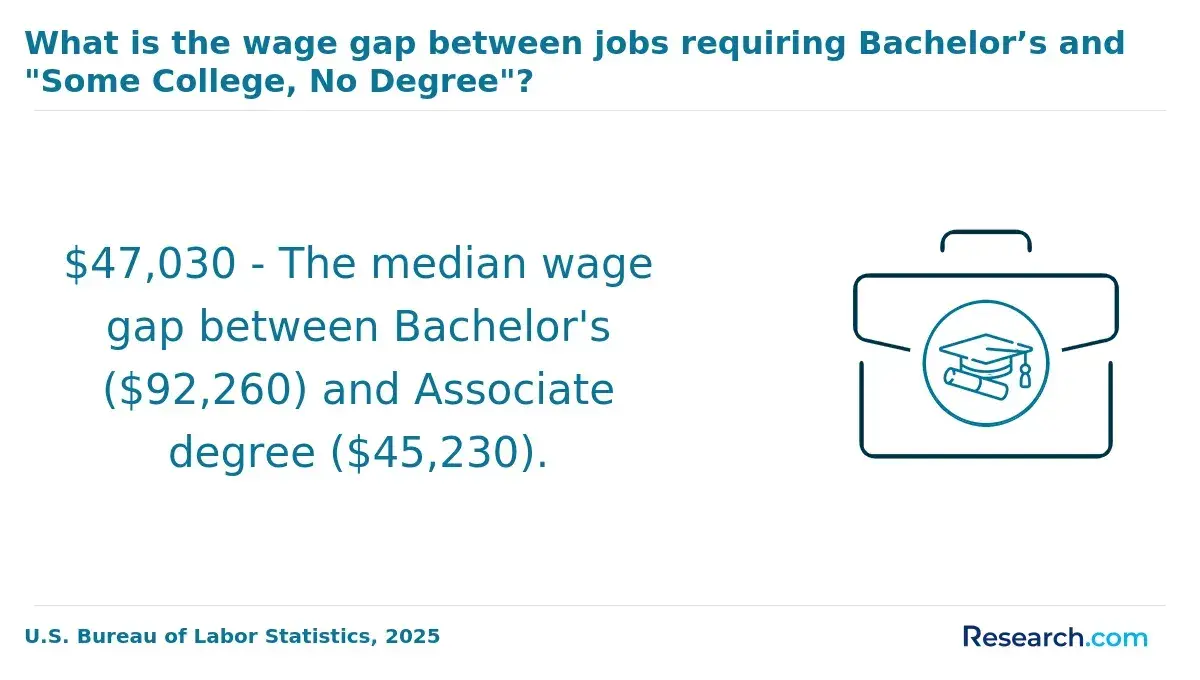
Choosing an affordable online construction management program requires balancing upfront costs with long-term employability, especially for those targeting renewable energy projects. Full degree pathways generally range from $10,000 to $40,000, with associate degrees or certificates at $5,000 to $15,000. Bachelor's and master's programs, particularly those offering sustainability-focused content, often surpass $20,000. While less expensive generic programs save initial expenses, they may limit access to emerging green building roles increasingly prized by employers.
Working professionals should factor in more than tuition: opportunity costs, technology fees, and travel for residencies can significantly raise total investment. For instance, a project manager shifting to renewable energy-linked construction must weigh tuition against lost income during study hours and potential decreases in billable assignments. Programs with flexible scheduling or tuition assistance can mitigate these challenges but remain inconsistent.
The green building materials market's growth-from $488 billion and expected to exceed $1.1 trillion by 2032-intensifies demand for construction management talent versed in sustainability. Employers now emphasize candidates with both project leadership skills and renewable energy knowledge. Consequently, higher-cost specialized programs may represent a strategic investment rather than an optional expense.
- Lower-cost programs offer more affordable access but less targeted skill development and may hinder competitiveness.
- Specialized renewable energy curricula enhance relevance but add financial and scheduling complexity.
- Evaluating program outcomes and employer alignment is essential before committing.
Which jobs can renewable energy construction management graduates get?
Graduates in renewable energy construction management face roles requiring precise coordination of multi-stakeholder projects under shifting regulatory and supply chain pressures. Project management positions demand advanced skills in budgeting, timeline control, and contract negotiation, especially where government incentives and ESG commitments accelerate schedules. For instance, managing large-scale solar installations in China involves balancing resource constraints against aggressive build targets, a scenario less typical in the EU or U.S., where grid integration and energy storage infrastructure dominate.
The concentration of 80% of global renewable capacity expansion in China, the EU, the U.S., and India creates a geographic imperative: candidates must often relocate or excel at remote coordination to position themselves for meaningful opportunities. Early-career roles prioritize technical tasks like compliance tracking or scheduling, while progression leads to overseeing sustainable design phases and multi-project portfolios.
Practical challenges-extended on-site hours, unpredictable weather, and evolving technology integration-require ongoing digital tool proficiency and regulatory knowledge. Employers emphasize expertise in vendor negotiations and adherence to environmental and safety standards as daily essentials for project viability and long-term career resilience in this sector.
- Project managers in China handle high-volume solar builds under regulatory inconsistencies, demanding heightened risk mitigation
- EU and U.S. roles often focus on integrating renewables into existing infrastructure and advancing energy storage projects
- Entry-level positions hone technical scheduling and compliance skills, foundational for leadership advancement
What salary can construction managers earn in renewable energy?
Salary expectations for construction managers in renewable energy vary widely, typically between $85,000 and $140,000 annually, driven by project size, region, and technical expertise. Those managing small-scale solar or wind projects earn on the lower end, around $85,000 to $95,000, while senior managers of large utility-scale or integrated green infrastructure projects can exceed $130,000. This wage disparity highlights the importance of specialized skills and geographic context-states with strong renewable mandates like California, New York, and Texas consistently offer higher pay due to project complexity and volume.
Green building credentials such as LEED certification influence salary by 10% to 15%, reflecting employer demand for verified knowledge in sustainable practices amid regulatory pressures. Construction managers transitioning from traditional construction fields must develop fluency in renewable technologies-photovoltaic installation, offshore wind logistics, or battery storage integration-to avoid stagnating at lower salary tiers.
Employers increasingly seek candidates combining traditional project oversight with hands-on renewable expertise, proven regulatory compliance, and team leadership. The tradeoff for candidates lies in investing time and resources to obtain relevant sustainability certifications and practical experience, which can meaningfully extend career longevity and earning potential in a competitive market.
Those evaluating a pivot into renewable energy construction management should weigh geographic factors, credential costs, and gaining niche skills to position for superior wage outcomes. Practical readiness in emerging technologies often distinguishes successful candidates from less competitive peers.
Which certifications help in renewable energy construction management?
In renewable energy construction management, certifications must align with both broad project leadership and specific technical challenges. For instance, the Project Management Professional (PMP) credential offers critical expertise in navigating supply chain fluctuations and weather impacts typical of solar farm projects. Concurrently, the Certified Construction Manager (CCM) certification focuses on practical cost control and on-site execution, which are essential when managing wind turbine assembly under tight budget constraints.
Specialized credentials such as NABCEP certification provide targeted knowledge of solar photovoltaic systems, enabling managers to make informed decisions about safety and technical feasibility. Meanwhile, proficiency in Building Information Modeling (BIM), supported by Autodesk certifications, addresses the increasing demand for digital collaboration tools-an advantage given projections that BIM and digital construction spending will surpass $20 billion annually by 2030, led primarily by renewable projects.
The timing and combination of certifications influence employability and career trajectory. Younger professionals may benefit from integrated renewable energy credentials embedded in academic programs, whereas mid-career managers often gain greater value by adding BIM certification to a PMP foundation when transitioning from traditional sectors. Employers seek candidates who can bridge project scale with domain expertise and regulatory compliance, highlighting the importance of strategic credential layering rather than isolated certification pursuit.
Other Things You Should Know About Construction Management
Many online construction management programs require significant time commitments for project work, team collaboration, and technical assignments. Working professionals must consider whether their current job demands allow enough focus to meet these requirements effectively. Prioritizing programs with flexible deadlines and asynchronous content can reduce stress, but less structured programs may risk lower completion rates and weaker skill acquisition.
Employer acceptance depends heavily on program reputation, curriculum relevance, and graduate outcomes rather than delivery mode alone. Employers in renewable energy sectors especially favor candidates who demonstrate practical skills and up-to-date industry knowledge. Selecting programs with strong industry partnerships and opportunities for applied learning or internships increases employability compared to purely theoretical online degrees.
While specializing early can provide targeted skills and faster entry into renewable energy roles, a broader construction management foundation enables adaptability across multiple project types and markets. Graduates with generalist knowledge often find more diverse job prospects and can transition into renewable energy projects as they gain field experience. Prioritizing programs that balance core construction management principles with elective renewable energy courses allows both pathways.
In 2027, top online construction management programs for renewable energy project careers include Arizona State University, Purdue University, and the University of Southern California. These programs offer specialized courses in sustainable construction and green building practices, catering to the growing demand for skilled professionals in the renewable energy industry.
References
- Exciting Renewable Energy Jobs: Bright Futures in Green Careers https://enable.green/renewable-energy-jobs/
- DEGREE PROGRAMS ACCREDITATION GLOBAL DIRECTORY LISTING https://www.acce-hq.org/accredited-degree-programs-directory
- Low-Carbon Development and Renewable Energy Project Planning Course https://upskilldevelopment.com/low-carbon-development-and-renewable-energy-project-planning-course
- Clean Energy Careers Guide - By Career Pathway | Clean Energy Council https://cleanenergycouncil.org.au/working-in-clean-energy/careers-guide/clean-energy-careers-by-career-pathway
- Jobs in the Renewable Energy sector: Top career paths for 2026 and beyond https://www.morson.com/blog/jobs-renewable-energy-sector-top-career-paths-2026-and-beyond
- Renewable Energy Education: Preparing the Next Generation https://www.pvfarm.io/blog/renewable-energy-education-preparing-the-next-generation
- These are the top 10 energy certifications in 2025 https://www.wtsenergy.com/top-10-energy-certifications-to-boost-your-career/
- Search jobs https://careers.aggreko.com/oc/en/jobs/jr19040-construction-manager-renewable-energy-projects
- Renewable Energy Salaries: How Much Can You Earn in the Industry? - The Renewable Energy Institute https://www.renewableinstitute.org/renewable-energy-salaries/
- Clean Energy https://www.sustainabilitydegrees.com/careers/clean-energy/