2027 Online Construction Management Degrees With Real Estate Development Coursework

Co-Founder and Chief Data Scientist
Professionals in construction face increasing pressure to integrate real estate development knowledge alongside core construction management skills, especially as project scopes expand into mixed-use and urban redevelopment sectors. The scarcity of flexible, accredited programs that combine these disciplines impedes timely career advancement for working adults, often delaying critical upskilling until project demands become urgent.
Enrollment trends from the National Center for Education Statistics show a 12% annual rise in adult learners choosing online degrees with specialized coursework, emphasizing a shift toward accessible education that fits complex schedules. This article evaluates online construction management degrees integrating real estate development coursework to help students select pathways that optimize flexibility, relevance, and employability.
Key Things You Should Know
- Online construction management degrees with real estate development focus average 24% higher graduate starting salaries per the U.S. Bureau of Labor Statistics, but programs emphasizing real estate coursework often extend completion time by 20% due to cross-disciplinary credit requirements.
- Employers in commercial construction increasingly expect candidates to integrate real estate finance metrics, with 62% of surveyed firms in 2024 prioritizing dual-skilled graduates for project leadership roles, impacting hiring competitiveness.
- Cost premiums for programs combining construction management and real estate development run 15-30% higher on average, driven by specialized faculty and licensing exam prep, posing a critical financial access barrier for mid-career pivots.
What is an online construction management degree with real estate development coursework?
Pairing an online construction management degree with focused real estate development coursework equips professionals to navigate beyond the physical build. For instance, managing a mixed-use urban project demands alignment between construction schedules and capital deployment, requiring fluency in site acquisition, zoning, and financing. Such integrated knowledge is increasingly vital in large-scale commercial and infrastructure projects where asset valuation and stakeholder negotiation influence success.
Accredited online programs for construction management and real estate development commonly combine project scheduling, cost controls, and contract administration with real estate market analysis and development law. This curriculum blend meets the evolving employer expectation for candidates who can interpret market trends alongside technical project demands.
Employers prioritize this intersection when hiring, favoring individuals capable of balancing construction execution with financial and regulatory frameworks. Employment in construction management is projected to grow 9% from 2024 to 2034, almost triple the average occupational growth rate, driven by demand for professionals skilled in both construction and property development.
Professionals lacking this dual insight may face limited advancement opportunities in competitive sectors. Working professionals considering this pathway must weigh tradeoffs: online delivery offers flexibility but requires disciplined self-study across technical and market domains. Program relevance depends on incorporation of current regulatory updates and practical tools like BIM software alongside real estate financial modeling.
Prospective students should consult recognized resources, such as the best MBA in operations management, to contextualize their educational choices within broader management skill sets.
How do online construction management programs compare with campus-based options for flexibility and learning?
Online construction management program flexibility provides significant advantages for working professionals but entails critical operational tradeoffs. While asynchronous coursework accommodates mid-career pivots and geographically dispersed learners, the reduced immediacy of hands-on experience and spontaneous collaboration may limit skill development in practical site leadership and dynamic problem-solving.
For example, managing a commercial real estate project demands real-time coordination of subcontractors and swift adaptation to evolving site conditions-skills frequently honed through labs, site visits, and in-person networking opportunities more inherent to campus-based education.
Employer preferences underscore demonstrated field competence, often valuing candidates with integrated internships or cooperative education, which traditional programs typically facilitate more directly. Online students must therefore be proactive in securing practical engagements independently to match these expectations.
Given that construction managers earned a median wage of $106,980, with top earners surpassing $175,000 in May 2024, effectively converting education into applicable skills is instrumental in achieving competitive employability. Those evaluating online degrees should assess how curricula incorporate simulations, virtual reality, or residencies to mitigate experiential gaps.
Prospective students can explore varying program structures and outcomes, including options beyond traditional routes, by reviewing resources such as the project management bachelor degree online. This comparative lens is essential for aligning educational investment with market realities and realistic professional growth trajectories within the sector.
Which accreditations and institutional approvals should these online programs have in the United States?
Choosing an online construction management program in the United States without regional institutional approvals risks limiting career mobility and access to financial aid. Regional accreditation recognized by the U.S. Department of Education is not merely an academic formality; it determines eligibility for federal funding and signals baseline institutional quality important for workforce credibility.
Programmatic accreditation by the American Council for Construction Education (ACCE) is equally consequential. Employers prioritize ACCE-accredited graduates for roles involving project oversight in nonresidential building construction, a sector with a median pay of $119,660 per year. Such accreditation confirms that curricula include applied project management, cost estimation, and adherence to real estate development regulations, which aligns directly with practical labor market demands.
State authorization plays a less visible but critical role for online learners. Without authorization, students may face barriers in securing necessary professional licenses or certifications, a common scenario for those relocating or working across state lines within construction and related real estate sectors. This is particularly relevant given that online construction management accreditation in the United States varies widely by region and institution.
Professionals pivoting from fieldwork to supervisory positions should seek programs with dual accreditation-both regional and ACCE-as these credentials improve employer recognition and future-proof credentials. Those focusing on sustainable urban development or specialized real estate aspects must verify coursework relevance to local zoning and building codes to avoid costly retraining or certification hurdles.
For those exploring adjacent career pathways, understanding these accreditation requirements also directs attention to vetted alternatives like online colleges for hospitality management, where similar regional and programmatic accreditations govern credential value.
What real estate development courses are typically included in online construction management curricula?
Integrating real estate development coursework into online construction management degree programs adds essential financial, regulatory, and market analysis skills that directly affect project outcomes. Professionals equipped with knowledge in real estate finance learn to handle complex cash flow modeling, risk assessment, and funding mechanisms critical to managing large-scale commercial or mixed-use developments.
For instance, understanding investment risk helps prevent budget overruns and financing delays common in multifaceted projects. Real estate project management coursework in online construction management programs also includes market analysis, land use, and zoning classes that develop the capacity to read demand trends, navigate municipal regulations, and expedite permitting processes.
These competencies reduce costly legal hold-ups and timeline risks, especially when managing urban redevelopments that must balance modernization with historical preservation rules. The University of Oklahoma's workforce projections highlight an average of 45,800 annual job openings in construction management through 2033, signaling strong demand for professionals fluent in both construction and real estate development disciplines.
Students considering this career pivot should prioritize programs offering these targeted courses to meet employer expectations for managing complex projects from site acquisition to delivery. For those evaluating educational pathways, it helps to compare construction management with related fields as seen in the online electrical engineering degree ranking, to assess how skills in construction align with broader infrastructure and development needs.
Successful candidates understand that delays or misaligned strategies in real estate development often result in multimillion-dollar losses, emphasizing the practical necessity of specialized coursework to mitigate these risks.
What admission requirements and prior experience do online construction management programs usually expect?
Applicants to online construction management programs must balance academic prerequisites with practical experience to succeed. While a high school diploma or equivalent is the baseline, many programs expect work backgrounds in construction, engineering, or related trades, particularly for bachelor's degrees that integrate real estate development concepts. This experience supports comprehension of core subjects like project scheduling, cost estimation, and site safety, which assume industry fluency.
For those without formal work history, the absence of internships or practical placement components can limit mastery of complex topics and reduce competitiveness in the labor market. Conversely, construction professionals such as site supervisors who bring credentials like OSHA or PMP can often leverage prior learning and flexible program structures to advance efficiently.
Financial considerations demand scrutiny: average annual tuition approximates $15,202 pre-aid, but with assistance, this drops to about $8,774-reducing total four-year costs from nearly $61,000 to $35,000, based on 2024 NCES data reported by BestColleges. This distinction significantly influences affordability for working adults balancing education with living expenses in regions where wages fluctuate.
Strong foundations in mathematics, technical skills, and real estate principles are vital when programs cover cost control, contract negotiation, and feasibility analysis, reflecting employer expectations that graduates can contribute immediately to complex projects.
How long do online construction management degrees take and what do they typically cost?
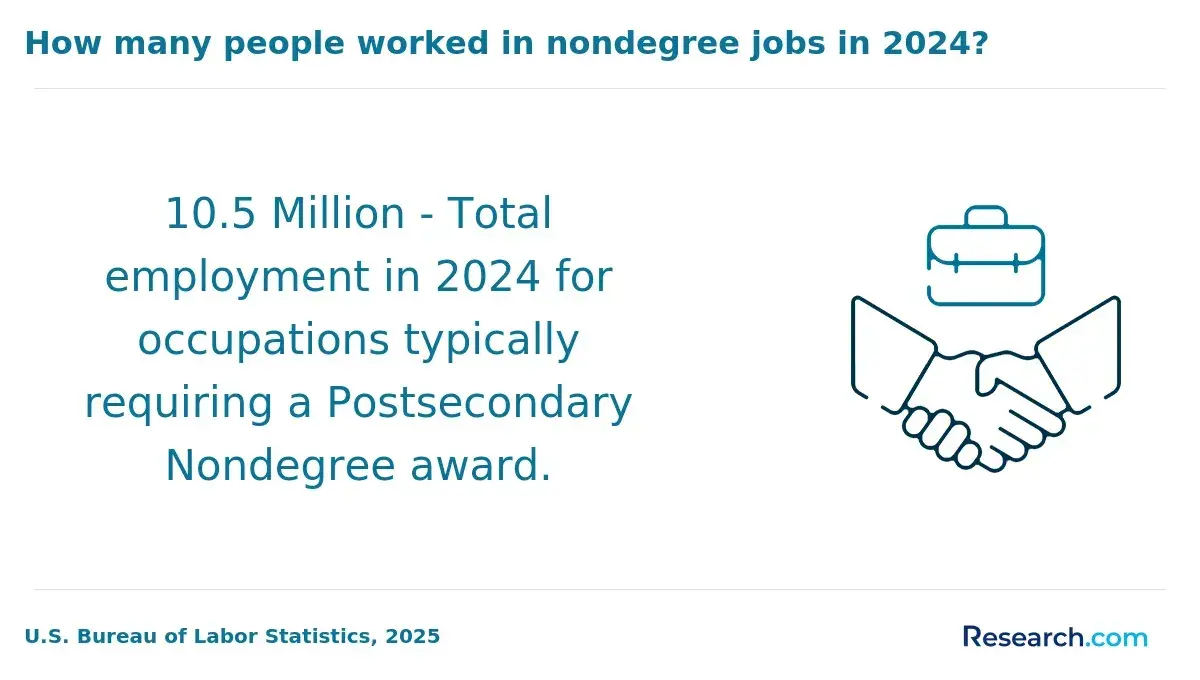
Completion timelines for online construction management degrees vary significantly due to differing program formats and student backgrounds. While traditional bachelor's degrees typically span four years, transfer students or experienced professionals often accelerate completion to two or three years by leveraging prior credits or competency-based assessments. This flexibility suits working adults balancing employment.
Cost remains a decisive factor, with tuition ranging from roughly $120 to $350 per credit hour at public universities for in-state students, and private institutions often charging $400 or more per credit. Consequently, total tuition for bachelor's degrees spans from $24,000 up to $60,000, excluding additional fees and materials. Associate degrees offer a lower-cost entry, usually falling between $6,000 and $20,000, but come with limitations in career trajectory and earning potential.
Demand for construction managers is projected to grow by 9% over the next decade, prompting more programs to offer fully online curricula. However, graduates and employers alike emphasize the importance of recognized accreditation and specialized coursework-such as real estate development-for relevant skills and improved hiring outcomes. Prospective students should also calculate technology fees and any required on-campus residencies into their total investment.
- Full-time bachelor's route suits recent high school graduates aiming to minimize time to workforce entry
- Part-time pathways accommodate working professionals but often increase overall cost and duration
- Choosing programs with employer-aligned credentialing enhances job market competitiveness
What careers combine construction management and real estate development, and what do they involve?
The intersection of construction management and real estate development demands professionals who can navigate both technical construction processes and complex financial and regulatory landscapes. For instance, a development project manager spearheading a mixed-use urban redevelopment must coordinate contractors while negotiating financing and zoning approvals. This hybrid role requires skills extending beyond standard site supervision.
Employers value candidates with dual expertise because such professionals minimize delays and cost overruns caused by fragmented communication between developers and construction teams. A dual MS in Construction Management and Real Estate Development, like the accelerated program at Thomas Jefferson University, strategically reduces the total credit load, easing student burden while aligning with labor market expectations for cross-disciplinary fluency.
The tradeoffs for students pursuing this combined pathway include mastering diverse workflows-switching between on-site construction sequencing and understanding real estate economics, legal frameworks, and investor negotiations. Day-to-day roles blend tactical delivery oversight with strategic decision-making.
Professionals who manage this balance gain access to advanced leadership opportunities and higher compensation brackets but must remain adaptable and effective multitaskers.
- Development project managers integrate construction scheduling with regulatory compliance and financial feasibility.
- Hybrid expertise addresses workforce needs by mitigating common project inefficiencies.
- Educational programs that reduce credit requirements can ease student time and cost pressures while preserving comprehensive training.
- Mastering multidisciplinary skills involves a tradeoff between technical acuity and business negotiation capabilities.
What salary ranges and earning potential exist for construction managers focused on real estate development?
Construction managers in real estate development see salaries that vary widely based on project scope and expertise, typically ranging from $70,000 at entry level to above $150,000 for those managing large-scale developments. U.S. Bureau of Labor Statistics 2024 data reports a median annual wage near $98,000, but professionals blending construction oversight with real estate finance and regulatory skills often earn more, especially in urban centers where demand intensifies.
Mid-career professionals who pursue targeted credentials, such as online master's degrees with focused real estate coursework, can expect faster salary growth. For example, a project manager shifting to real estate development roles within metropolitan markets might see a 15% to 25% pay raise within two years post-degree. This demonstrates the tangible value of integrating market analysis and financial acumen into construction management expertise.
Key determinants of earning potential include the complexity and financing of the projects managed:
- Large mixed-use or commercial projects with deal structuring responsibilities typically offer salaries between $120,000 and $160,000
- Residential project managers generally start at $70,000 to $90,000 but can climb with experience and project size
Balancing field operations and real estate insight challenges many without specialized education, often limiting earnings. Online master's programs provide mid-career professionals an accelerated way to acquire relevant coursework, minimizing downtime and responding to employer demand for integrated skill sets in construction management and real estate development.
What licenses or optional certifications are relevant for construction and real estate development professionals?
Licenses and certifications in construction and real estate development serve as practical gatekeepers, directly shaping who can legally and effectively manage complex projects. For example, a construction manager overseeing multi-million-dollar commercial work in California must secure a General Contractor (GC) license, mandated by state law and obtained through a combination of experience and rigorous testing.
In contrast, those focused on residential remodeling in states like Texas may only need subcontractor licenses accompanied by essential safety certificates. Among safety credentials, Occupational Safety and Health Administration (OSHA) certifications-especially the 30-hour Construction Safety course-are frequently non-negotiable on large sites, signifying baseline risk mitigation competence that employers demand.
Developers tend to prioritize certifications such as the Certified Commercial Investment Member (CCIM), which underpins sound investment decisions through market and financial analysis. Additional credentials like the Project Management Professional (PMP) certification bring recognized proficiency in budgeting, scheduling, and risk control. However, pursuing multiple certifications requires deliberate planning due to the associated financial and time investments.
Employers increasingly seek professionals blending licenses and credentials with technical know-how, a factor reflected in programs like Arizona State University's online construction management technology pathway, which reports a median salary near $115,000. This signals a premium placed on integrated skills relevant to both field operations and strategic oversight.
How can students evaluate and choose a reputable online construction management program with real estate focus?
Accreditation and curriculum scope directly influence the practical value of online construction management programs focused on real estate development. Regional or ABET accreditation confirms adherence to standards that employers recognize, while course content must extend beyond core construction skills to include real estate finance, urban planning, and property law for a comprehensive skill set.
Students transferring credits can reduce program costs by nearly 50%, especially relevant for working professionals balancing budgets and timelines. Programs transparent about transfer policies and articulation agreements provide tangible savings and shorten degree completion time.
Employment outcomes data reveal a program's alignment with industry needs. Graduates placed in construction and real estate roles, particularly those prepared for certifications like LEED or PMP, indicate curriculum relevance and market demand. Robust online delivery platforms that support synchronous learning enhance engagement and networking opportunities, critical for mastering real estate development through project simulations and case studies.
For example, a mid-career professional moving from general construction to real estate project management must ensure the program addresses advanced market analysis and development feasibility alongside construction scheduling. Career services with deep industry insight become essential to translate academic credentials into job placement and internships effectively.
Other Things You Should Know About Construction Management
Online construction management degrees, especially with real estate development coursework, require significant self-discipline due to uneven pacing and varied assignment types-from readings to group projects. Balancing full-time work with demanding modules is difficult without strong time management skills. Students should prioritize programs that offer flexible scheduling but also cohort structures or regular synchronous sessions to reduce isolation and prevent falling behind. Underestimating workload can delay completion and reduce learning outcomes.
Incorporating real estate development coursework expands understanding of project financing, market analysis, and regulatory impact, which construction managers without this knowledge often lack. This dual focus enables graduates to qualify for roles that require cross-disciplinary skills like development coordination or pre-construction planning. However, students must ensure these courses teach applied competencies and not just theory, as employers expect actionable skills that influence project viability and investment decisions.
Yes, technical proficiency with tools like BIM, cost estimation, and real estate analytics software is a critical differentiator in employer evaluations. Programs that integrate current technology training prepare students for workflows they will encounter day one, affecting efficiency and career advancement. Avoid programs focused solely on legacy methods or abstract theory; investing in up-to-date software skills delivers immediate practical value and aligns with industry trends toward digital project delivery.
References
- Quality Standards and Accreditation of Distance Education Programs in a Pandemic - OJDLA https://ojdla.com/articles/quality-standards-and-accreditation-of-distance-education-programs-in-a-pandemic
- Education and Career https://www.naiop.org/education-and-career/certificate-programs/
- CourseCareers https://coursecareers.com/blog-posts/how-to-choose-a-construction-project-management-course
- What do you learn in a bachelor's in construction management? | edX https://www.edx.org/resources/what-do-you-learn-in-a-bachelors-in-construction-management
- Real Estate Development, Construction and Management https://www.uclaextension.edu/real-estate/real-estate/course/real-estate-development-construction-and-management-mgmt-x-47712
- Accredited Online Courses: How to Pick Programs That Actually Count https://www.upskillist.com/blog/accredited-online-courses-how-to-pick-programs-that-actually-count/
- Construction and Real Estate Certifications https://gaqm.org/certification/construction_and_real_estate
- Careers in real estate overview - Real Estate Balance https://realestatebalance.org/careers-in-real-estate-overview/
- How to Get Started in Real Estate Project Management https://zoetalentsolutions.com/real-estate-project-management/