2027 Best Online Construction Management Programs for Hands-On Professionals Moving Into Leadership

Co-Founder and Chief Data Scientist
Midlevel construction supervisors face a critical inflection point when shifting from hands-on roles to leadership positions demanding advanced project coordination, budgeting, and compliance expertise. This transition often coincides with inflexible work schedules and limited on-campus availability, constraining access to essential higher education.
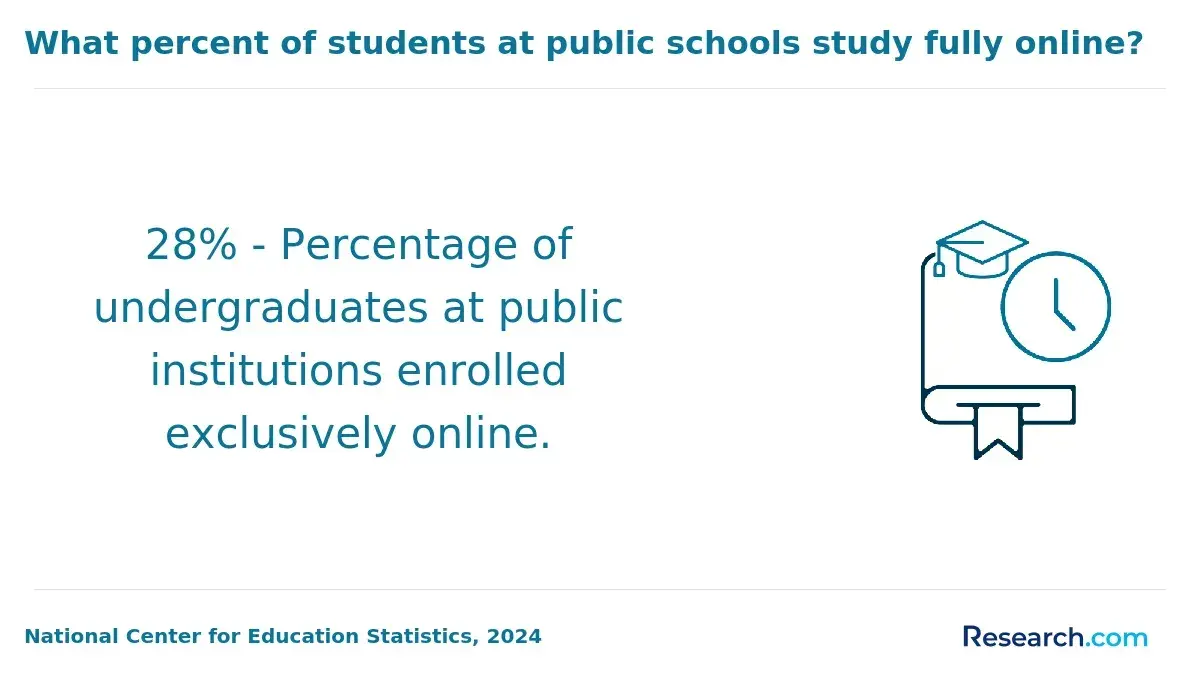
According to the National Center for Education Statistics, 45% of undergraduates today attend at least some courses fully online, a testament to rising demand for flexible learning tailored to working adults. This shift enables professionals to balance job responsibilities while acquiring leadership competencies. The article evaluates top online construction management programs suited for those prioritizing practical, time-sensitive advancement and leadership readiness.
Key Things You Should Know
- Programs emphasizing integrated project delivery saw 23% faster leadership placement post-graduation, but require early mastery of digital collaboration tools, increasing upfront learning burdens for hands-on professionals.
- Employers prioritize candidates with proven cost control experience; graduates lacking internships face a 15% disadvantage in competitive bids, indicating a growing gap between theoretical knowledge and practical bidding skills.
- Median tuition for top-tier construction management programs rose 12% since 2023, disproportionately affecting mid-career workers balancing education with income loss, leading to longer ROI horizons for career advancement.
What is an online construction management degree and who is it best suited for?
Professionals balancing ongoing work in construction trades often pursue an online construction management degree to bridge practical experience with formal training that supports leadership advancement. This pathway suits those seeking roles requiring command of project planning, budgeting, and regulatory compliance while maintaining employment. For example, a site supervisor moving toward project manager responsibilities benefits from a program deepening technical skills alongside instruction in team leadership and contract negotiation.
The value in such degrees stems from their blend of theoretical frameworks with applied skills like risk assessment and resource coordination, essential for managing complex commercial, infrastructure, or residential projects. However, students must navigate the demands of self-discipline, time management, and reliable access to digital tools, as online study inherently limits face-to-face interaction. Programs incorporating virtual simulations, case studies, or internships mitigate remote learning challenges and better prepare candidates for workforce realities.
Employers increasingly expect candidates with both hands-on experience and training in software tools for project tracking and communication. With construction manager employment growth projected at 9% from 2024 to 2034, this credential enhances eligibility for roles focused on comprehensive oversight, sustainable building practices, and regulatory adherence.
For those evaluating whether to pursue an online degree in construction management, assessing how programs address these practical elements is critical. Prospective students can review detailed options at construction management degrees online.
How do online construction management programs work compared with on-campus options?
Online construction management programs versus on-campus learning present a critical choice shaped by practical demands and career impact rather than curricular content alone. Online formats rely heavily on asynchronous coursework, virtual simulations, and video lectures, catering to working professionals who need scheduling flexibility.
However, this flexibility comes with a tradeoff-students must cultivate self-discipline and independently secure hands-on experience, often through local internships or virtual reality environments. On-campus education embeds fieldwork and collaborative projects directly into the schedule, providing immediate access to labs, faculty mentorship, and peer interaction.
These elements accelerate leadership readiness by exposing students to team dynamics and site-based learning critical to management and safety competencies. Employers prioritize candidates who demonstrate both technical knowledge and actual leadership on construction projects, favoring graduates who have integrated experiential learning.
The median pay for construction managers is $106,980, according to University of Oklahoma Online citing BLS data. A project foreman pursuing a part-time online degree, for example, must balance work commitments while organizing internships separately-an additional logistical challenge compared to on-campus peers.
Key considerations for decision-makers include:
- Online education enhances access and fits around job responsibilities but demands proactive pursuit of field experience.
- On-campus programs offer immersive networking and skill-building environments less adaptable to irregular schedules.
Those weighing the flexibility and benefits of online construction management education may also explore related fields such as the MBA healthcare management, which shares similarly structured online program models and workforce implications.
What accreditation should online construction management programs have to be considered reputable?
Accreditation standards for online construction management programs directly shape employability and credential viability, especially for professionals aiming at supervisory or certification-eligible roles. Regional accreditation from bodies recognized by the U.S. Department of Education-such as the Higher Learning Commission or Middle States Commission on Higher Education-is essential but insufficient alone.
The American Council for Construction Education (ACCE) provides programmatic accreditation specifically attuned to industry requirements, ensuring curricula cover project management, cost estimation, safety compliance, and leadership skills. A practical example is a mid-career professional pivoting into commercial construction leadership: enrolling in an ACCE-accredited online degree avoids barriers to certifications like Certified Construction Manager (CCM).
Without this specific accreditation, graduates often find limited access to licensure and reduced career mobility. Regional accreditation for construction management degrees supports financial aid eligibility and credit transfer, but only ACCE approval aligns with employer and certification standards.
Cost considerations underscore this dynamic. With average annual tuition around $15,202 and net costs reaching $35,096 after aid, investing in accredited programs balances price against long-term salary growth and job market value. Candidates should also compare in-state pricing and assess whether employer tuition reimbursement policies hinge on recognized accreditation.
For those weighing industry alternatives, examining pathways like hospitality management courses online may reveal differing accreditation models and workforce outcomes worth considering alongside construction management options.
Which degree levels in construction management (certificate, associate, bachelor's, master's) fit different career goals?
Construction management degree levels for career advancement vary significantly in scope, employer expectations, and practical value. Certificate programs provide targeted skills suitable for tradespeople moving into site supervision or safety compliance but rarely open pathways into leadership or project management roles due to their limited curriculum.
Associate degrees blend technical know-how with essential business fundamentals, fitting professionals balancing work and study who seek to become project coordinators or assistant superintendents. However, these credentials often cap advancement at mid-field roles, necessitating further education for managerial positions.
Bachelor's degrees remain the industry benchmark for leadership-track roles, integrating financial controls, contract administration, and scheduling. LSU Online data indicates a 90%+ job placement rate for graduates, reflecting alignment with employer demand for project managers and operations supervisors. For candidates targeting these positions, a bachelor's degree is generally mandatory for salary-grade elevation and supervisory authority.
Master's programs cater to executives and consultants focusing on strategic leadership and technology integration like BIM. Despite high costs and time commitments, they unlock senior management and director-level opportunities unavailable to those without advanced credentials.
Practical decision-making about the best construction management programs by degree type requires weighing timing, resources, and roles sought. For example, trades professionals might start with certificate or associate programs before progressing to a bachelor's degree. Meanwhile, established managers aiming for executive roles often must pursue a master's degree to overcome advancement plateaus.
Prospective students should also consider cost efficiencies and program affordability; exploring resources such as the cheapest mechanical engineering degree online can inform budget-conscious planning aligned with workforce realities.
What core courses and specializations are typically included in online construction management programs?
Core courses in online construction management programs focus tightly on project scheduling, cost estimating, construction law, safety management, and contract administration-areas that directly align with employer demands to control budgets, timelines, and legal risk on complex commercial or infrastructure projects. For instance, a grasp of construction law is not academic but a practical necessity to reduce exposure to litigation during contract disputes, especially in public-private partnerships.
Specializations often enable mid-career professionals to pivot toward growth sectors such as green construction or real estate development. Tradeoffs surface here: a foreman advancing to superintendent must supplement technical knowledge with leadership and workforce coordination skills, which differ notably from field labor roles. Prioritizing these leadership courses can be decisive for workplace success.
Practical competencies in Building Information Modeling (BIM), project management software, and risk analysis form the backbone of site supervisors' daily decision-making, enabling quick responses to design modifications or supply chain issues. This technical fluency is not optional but essential for operational effectiveness.
According to data from the University of Oklahoma Online citing Bureau of Labor Statistics projections, construction management roles will add roughly 45,800 job openings per year over the next decade. This labor market growth favors candidates from programs that balance rigorous theory with applied case studies and capstone projects simulating complex negotiations or crisis scenarios-skills that meaningfully differentiate graduates in competitive hiring environments.
What are the typical admission requirements and application materials for online construction management degrees?
Admission into online construction management programs often hinges on striking a balance between formal academic credentials and relevant professional experience. While a bachelor's degree in construction, engineering, or a related technical field remains the baseline, those lacking this background are frequently expected to demonstrate substantial industry experience to qualify. This tradeoff reflects employer preferences prioritizing proven project delivery and leadership capabilities as much as academic achievement.
Typical application components are designed to reveal both technical competence and managerial potential, including:
- Completed application forms outlining education and work history
- Personal essays articulating career objectives and leadership aspirations
- Letters of recommendation from supervisors attesting to project management skills
- Resumes detailing certifications and expertise with construction software
- Standardized test scores, seldom required, but occasionally requested for competitive candidates
For example, a field superintendent with over a decade managing projects may bypass strict degree requirements by demonstrating documented leadership and industry certifications. This practical equivalency aligns with labor market demands, especially given a projected construction manager job growth of 8.7%, per Arizona State University Online.
Institutions increasingly weigh the capacity to lead dynamic teams and oversee complex workflows over the mere presence of transcripts with minimum GPAs around 2.5 to 3.0. Applicants should also prepare for interviews or scenario-based assessments that measure communication skills and decision-making under pressure. This evaluation reflects the sector's emphasis on actionable leadership and the ability to coordinate manpower and resources efficiently in fluctuating project environments.
How long do online construction management programs take and what do they cost?
Completing an online construction management program demands careful consideration of pacing and its impact on career trajectory. Full-time students typically finish within 12 to 24 months, but part-time learners, balancing ongoing work, extend that to 18-24 months, which can delay opportunities for advancement. Accelerated tracks for those with relevant experience shorten this to 9-12 months, offering a more immediate skill upgrade.
Program costs range markedly, influenced by public versus private institutions and program level. Public options generally charge $10,000 to $20,000, while private programs may exceed $40,000. Additional expenses such as technology fees and software licenses add $1,000 to $3,000 annually, pushing total investment higher, especially when specialized simulation tools are required.
Employers prioritize candidates demonstrating both technical competence and leadership, reflecting a 10% industry growth forecast through 2028. This places premium value on programs integrating real-world project simulations and technology training, despite their typically greater duration and cost.
Trade-offs are substantial: shorter credentials provide limited managerial breadth, often insufficient for leadership roles, whereas comprehensive degrees demand more time and money but enhance competitiveness and salary prospects. Field professionals transitioning to leadership benefit most from programs with strong technology and leadership components.
Pragmatic learners might combine accredited associate or bachelor's degrees with targeted bootcamps, balancing financial and time constraints while developing critical skills, though this hybrid path requires robust self-discipline and employer support to yield significant career shifts.
- Longer programs correlate with higher job placement but necessitate greater upfront investment
- Accelerated options suit experienced professionals needing rapid credentialing
- Budget-conscious learners face trade-offs between credential depth and program cost
What jobs can you get with an online construction management degree and what do they pay?
Earning an online construction management degree positions graduates for diverse roles with distinct operational demands and compensation profiles. Construction managers earn roughly $77,939 per year, reflecting their comprehensive oversight of project execution, resource allocation, and regulatory compliance. This role often serves as a springboard to project management, where salaries typically range from $70,000 to $85,000 and require stronger stakeholder coordination and strategic scheduling skills.
Site supervisors, earning between $60,000 and $75,000, focus on daily labor and operational management, predominantly in commercial or residential settings. Cost estimators and contract administrators occupy specialized niches with average earnings from $50,000 to $72,000. Their work centers on accurate budgeting, bidding, and contract compliance rather than broad project oversight.
Industry segment significantly influences earning potential: infrastructure projects demanding rigorous regulatory adherence can increase salaries by $5,000 to $10,000 beyond average, while smaller residential firms often offer lower wages and limited advancement. Successful candidates typically combine their degree with certifications like PMP or CCM to enhance market competitiveness and salary leverage.
Graduates face a practical tradeoff between mastering advanced leadership skills or deepening technical expertise in estimating and scheduling. Employers increasingly expect proficiency with digital construction tools and cost control expertise, which integrated hands-on online programs better deliver, supporting smoother workforce integration and faster career progression.
What is the job outlook for construction managers and related roles over the next decade?
Employment growth in construction management is uneven, shaped by geography and specialization rather than broad expansion alone. With a projected 9% increase in jobs over the next decade, driven largely by infrastructure investment and urban redevelopment, the demand favors candidates who combine traditional oversight with expertise in sustainability, digital project management, and regulatory safety.
Employers increasingly prioritize professionals adept in Building Information Modeling (BIM) and advanced scheduling software to handle complex, risk-intensive projects. Graduates with a degree in construction management often find their opportunities extend beyond project manager roles to positions such as project engineer, scheduler, safety coordinator, and sustainability specialist.
For example, a scheduler with skills in managing intricate timelines can become pivotal on large public infrastructure projects, while sustainability specialists support firms chasing green certifications, buffering against fluctuating demand in other roles. Practical career resilience requires continual upskilling in emerging technologies and legal frameworks.
Narrow focus on traditional site supervision risks wage stagnation and limited hiring prospects as the industry shifts toward integrated financial, contractual, and labor coordination competencies. Professionals who combine leadership with specialized knowledge commonly sustain stronger long-term career trajectories. Those planning a career pivot or advancement should weigh these dynamics carefully to meet employer expectations and navigate evolving market realities.
How can working professionals choose the best online construction management program for their needs?
Choosing an online construction management program requires clear-eyed analysis of how its accreditation, curriculum, and delivery format align with your immediate job role and future ambitions. Accreditation from recognized bodies such as ABET or ACCE matters because it influences both employer recognition and licensure eligibility.
For example, a field technician shifting toward supervisory roles needs programs emphasizing project management software, budgeting, scheduling, contract administration, and risk management-skills employers actively seek. Cost considerations must be weighed against tangible ROI. With total program costs averaging around $60,808 before financial aid, as reported by BestColleges citing NCES data, professionals should scrutinize whether accelerated courses or employer partnerships can shorten time-to-value.
Those working full-time in construction trades benefit most from asynchronous coursework with minimal live components, while mid-level managers might gain from hybrid formats that foster leadership communication through optional workshops. Practical exposure is critical: programs integrating real-world case studies or virtual simulations better prepare students for the challenges of transitioning from fieldwork to management.
Likewise, graduation rates, job placement data, and employer networks reveal how effectively a program translates academically trained candidates into industry-ready professionals. Specialized electives or certifications like LEED and OSHA can differentiate those targeting commercial or infrastructure sectors.
Programs offering robust career services-including resume critiques, interview coaching, and targeted connections to industry recruiters-substantially enhance job market outcomes for working professionals navigating competitive transitions.
Other Things You Should Know About Construction Management
Most online construction management programs integrate case studies, project simulations, and virtual collaboration exercises to build practical skills. However, they often lack direct site-based experience, which is critical for leadership credibility and real-time decision-making. Candidates aiming for leadership should seek programs that require or facilitate internships, apprenticeships, or local fieldwork to complement online coursework.
Leadership in construction management demands a balance between technical knowledge and management acumen. Programs heavily skewed toward technical skills may leave graduates unprepared for team leadership, budgeting, or contract negotiation. Prioritize programs that offer integrated curricula combining construction technology with leadership, finance, and communication to match employer expectations in managerial roles.
Hands-on professionals should prioritize programs with strong industry links, faculty expertise in leadership, and comprehensive coursework covering both technical and managerial skills. Accreditation and flexible learning options are also crucial to accommodate the demands of working professionals transitioning into leadership.
Time management and workload balancing are the primary challenges, as construction roles frequently involve unpredictable hours and project deadlines. Programs with asynchronous content and flexible deadlines reduce conflicts but may limit real-time networking opportunities. Prospective students should prioritize programs with robust support services and structured pacing that accommodate their professional responsibilities without sacrificing depth of learning.
References
- University of Calgary Continuing Education https://conted.ucalgary.ca/international/oneyear/construction-management/
- The Fastest-Growing Jobs in Construction [2025 Edition] https://constructioncoverage.com/research/fastest-growing-construction-jobs
- Best Master’s in Construction Management Online Degree [currentyear] | NEIT https://www.neit.edu/blog/best-masters-in-construction-management-online-degrees
- The Essential Guide to Construction Manager Education and Career Paths https://abcsocal.org/construction-manager-education/
- 7 Best Degrees for Construction: From Entry-Level to Six Figures - College Educated https://collegeeducated.com/online-degrees/best-degrees-for-construction/
- CourseCareers https://coursecareers.com/blog-posts/construction-management-degree-vs-field-experience-vs-online-construction-pm-training
- 5 Construction Management Career Opportunities Out of College https://aic-builds.org/5-construction-management-career-opportunities-out-of-college/
- Construction Management https://www.aims.edu/degrees-certificates/construction-management
- Construction manager bachelor’s degree: career outlook, skills, jobs | edX https://www.edx.org/bachelors/construction-management
- Online Specialization in Construction Management | Colorado State University Global https://csuglobal.edu/academic-programs/undergraduate-specializations/undergraduate-specialization-construction-management