2027 Biological Sciences Specializations for Environmental Biology Careers

Co-Founder and Chief Data Scientist
Environmental biology professionals increasingly confront the challenge of selecting specializations that meet evolving climate policy demands and dynamic ecological threats, where employer preferences shift rapidly toward interdisciplinary expertise.
Workforce data from the U.S. Bureau of Labor Statistics reveals a projected 8% growth in environmental science roles through 2032, underscoring the urgent need for adaptable skills tied to both laboratory research and fieldwork. Simultaneously, 2024 reports from the National Center for Education Statistics indicate a 40% rise in online program enrollment for life sciences between 2019 and 2023, reflecting a broader move to flexible, career-integrated education paths.
These patterns complicate timely, strategic specialization choices amid diverse delivery formats and credential expectations. This article examines current biological sciences specializations tailored for environmental biology careers, highlighting practical tradeoffs and pathways to enhance employability and professional mobility in this fluid landscape.
Key Things You Should Know
- Environmental toxicology specialization demands proficiency in advanced analytical chemistry, with employment projections showing a 12% growth through 2031 per the U.S. Bureau of Labor Statistics, but programs often require costly lab access, limiting feasibility for part-time students.
- Employers increasingly prefer candidates blending field ecology with geographic information systems (GIS), as 68% of environmental biology roles now mandate spatial data analysis skills per the EPA workforce report, creating a barrier for traditional biology majors.
- Programs emphasizing molecular biology applications in environmental remediation yield higher mid-career salaries, yet average time-to-degree extends by 18 months due to required interdisciplinary coursework, impacting opportunity cost and financial aid eligibility.
What are the main biological sciences specializations for students interested in environmental biology careers?
The top biological sciences focus areas for environmental biology careers require evaluating sector-specific employability and skill demands rather than defaulting to popular specializations.
Conservation biology, directly tied to maintaining biodiversity vital to over half of the global GDP, primarily serves public agencies and NGOs engaged in habitat restoration. Ecology offers a broader understanding of organism-environment relationships, aligning with environmental consulting roles that necessitate balancing industrial impact assessments with regulatory compliance.
Environmental toxicology emphasizes quantitative lab skills for assessing chemical threats to ecosystems and public health, positioning graduates for work in regulatory and private environmental health sectors. Wildlife biology requires rigorous field research capabilities, analyzing population dynamics and species behavior often in remote or protected areas.
These biological sciences specializations for environmental biology students present distinct operational tradeoffs, notably between fieldwork intensity and laboratory proficiency.
Students need to assess their strengths against the availability of programs and employer expectations in their targeted region, as this decisively influences employment outcomes. For example, interdisciplinary collaboration and socio-economic understanding are increasingly critical in conservation biology, contrasting with the technical rigor demanded in environmental toxicology.
More detailed information on career pathways and specialization alignment can be found through resources like a dedicated environmental science degree guide.
How does environmental biology differ from ecology, conservation biology, and environmental science majors?
Environmental biology's distinct value lies in its targeted examination of organismal responses within physical environments, emphasizing applied biological techniques over rather broad ecosystem theories typical of ecology. This specialization diverges sharply from ecology degrees by focusing on practical, measurable outcomes such as habitat restoration and pollution mitigation instead of theoretical ecosystem dynamics.
For working professionals weighing environmental biology vs. ecology degrees, this difference translates into diverse career trajectories—environmental biology prepares students for hands-on roles that combine laboratory and fieldwork with data analysis, while ecology often leans toward research and systemic evaluation.
The differences between conservation biology and environmental science majors become especially clear when considering scope and focus. Conservation biology stresses biodiversity preservation with strong ethical and policy negotiations embedded in training, whereas environmental science integrates chemistry, geology, and human impact assessments, mainly concentrating on abiotic environmental factors.
Environmental biology bridges these fields by applying biological understanding to environmental challenges, which suits the rising demand for expertise in climate impact and species adaptation. This is evident in climate impact assessment positions, where environmental biology grads utilize physiological and genetic methods, while environmental science professionals might prioritize climate modeling and pollutant tracking.
Students aiming for cost-effective educational routes should consult resources on the cheapest master in data science to supplement their analytical skillsets, a growing expectation in environmentally focused roles. The International Labour Organization anticipates 14 million new green jobs by 2030, with employers requiring robust biological field skills alongside interdisciplinary knowledge, differentiating environmental biology from more policy-centered disciplines.
Which biological sciences degrees best prepare you for environmental biology jobs and research?
Environmental biology research careers in biological sciences degrees demand strategically chosen specializations to align with shifting employer needs. Programs emphasizing environmental toxicology are critically relevant given pollution's role in 9 million premature global deaths in recent data, creating employer emphasis on expertise in chemical exposure assessment and human-ecosystem risk management.
Graduates equipped with toxicant pharmacodynamics, environmental chemistry, and advanced risk assessment skills hold a competitive edge, especially in health-impact-linked roles.
Ecological biology remains essential for natural resource management but typically requires additional toxicology credentials to address pollutant-specific challenges. Prospective students evaluating biological sciences degrees for environmental biology research careers must weigh this tradeoff carefully, considering that ecological programs excel in biodiversity and fieldwork training but may limit immediate access to the highest-demand toxicology roles.
Applied molecular biology degrees introduce valuable competencies in DNA-based biomonitoring, which government and consulting employers prioritize for detecting cellular-level environmental stressors through genetic markers. Employers highly value combined lab experience and GIS proficiency prevalent in interdisciplinary curricula tailored for environmental applications.
Access to internships within environmental agencies or field stations directly influences employability—graduates accessing partnered research opportunities report 35% faster job placement. This highlights the importance of logistical considerations when selecting programs beyond the core curriculum.
For those comparing pathways, including physical health sciences, it can be useful to examine related degree opportunities such as an exercise science online degree, which presents a different yet complementary skill set within biological sciences specializations for environmental biology jobs.
What courses and lab experiences are included in environmental-focused biological sciences programs?
Focusing on environmental biology course curriculum reveals a critical balance between interdisciplinary breadth and technical specialization, where students must develop practical laboratory experiences in environmental biology programs without accumulating excessive credits. Core courses such as ecology, environmental microbiology, biostatistics, and toxicology are paired with labs emphasizing quantitative data collection and species identification.
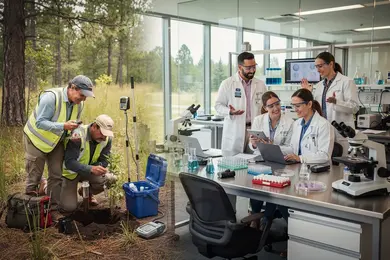
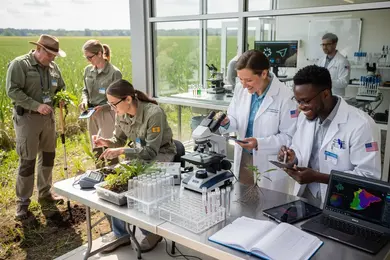
Fieldwork often includes sampling water and soil to monitor pollution and biodiversity, applying instruments like spectrophotometers and GIS mapping software to process spatial data accurately.
The growing demand in marine and aquatic biology programs stems from industry shifts reflected in the Food and Agriculture Organization's report showing a 21.2 kg per capita aquatic food consumption, with a projected 12% increase by 2032.
This trend drives requirements for hands-on competence in sustainable fishery management, hatchery operation, water quality testing, and regulatory monitoring. Employers increasingly expect graduates to master aquaculture system technologies and population assessment models to comply with environmental standards.
For those aiming to pivot careers, strategically selecting environmental toxicology labs or GIS spatial analysis workshops is essential to align marketable skills with public and non-profit environmental sector needs. Internships or cooperative education placements function as vital bridges between academic concepts and workforce expectations.
Candidates evaluating this pathway should also consider programs integrating current software tools and data-reporting protocols to avoid training gaps.
Prospective students and working professionals assessing biological sciences degrees must weigh the practical demands of cross-disciplinary knowledge against the risk of diluted expertise.
For veterans exploring academic options, military friendly online electrical engineering degree programs might offer a parallel example of structured, workforce-aligned curricula designed for efficient skill acquisition.
How do online environmental biology and biological sciences programs compare to on-campus options?
Online programs in environmental biology and biological sciences often fall short of delivering the hands-on skills that employers expect in wildlife ecology and conservation roles.
Practical competencies—such as habitat surveys or animal tracking—are challenging to master without direct fieldwork and lab experience typically embedded in on-campus curricula. This limits graduates' immediate workplace readiness in sectors where proficiency with specialized equipment and in-person data collection is essential.
For example, a student pursuing zoology remotely must actively seek external internships or field placements to gain practical exposure, which can complicate scheduling and delay skill development. On-campus programs generally integrate these experiential components into coursework, enabling smoother transitions into professional environments and stronger employer confidence.
The U.S. Bureau of Labor Statistics forecasts just a 2% employment growth for zoologists and wildlife biologists over the next decade, with roughly 1,500 annual openings largely driven by retirements. This constrained growth heightens competition, making applied experience a critical differentiator.
Prospective students should assess how online options facilitate timely access to local agencies or external fieldwork opportunities.
Supplementing online study with volunteer roles or internships becomes imperative for applicants unable to attend campus, requiring strategic planning to avoid delays in skill acquisition and career progression.
What accreditation and program quality standards matter for environmental biology-related degrees?
Accreditation from organizations like the Society for Environmental Toxicology and Chemistry (SETAC) or regional institutional accreditors such as HLC and WSCUC directly influences environmental biology programs' credibility and graduate employability. Employers in environmental consulting and regulatory sectors heavily favor candidates from accredited programs, viewing them as proficient in essential skills like environmental sampling, data analysis, and compliance.
Graduates from non-accredited schools, even with comparable coursework, often struggle to demonstrate current industry-ready competencies, limiting early career mobility.
The rigor of interdisciplinary curricula blending biology, chemistry, and geospatial analysis aligns with evolving workforce demands. For instance, environmental microbiology tracks that omit microbial monitoring or biostatistics fail to meet the expectations of the rapidly growing environmental testing market, poised to expand from $10.9 billion to $15.4 billion by 2029 at a 7.1% CAGR, per MarketsandMarkets. Without such specialized coursework, entry-level lab roles become more difficult to secure and sustain.
Transparency about practical opportunities—such as internships or certified fieldwork—is a critical factor affecting hiring readiness and salary potential. Programs lacking verified faculty expertise in environmental regulations and soil science reduce graduates' capability to transition smoothly into roles like ecological risk assessment or government environmental technician.
Students should prioritize programs that maintain updated lab infrastructure and invest in research connected to present environmental challenges. Such institutional commitments offer tangible benefits: improved hands-on training, stronger industry collaborations, and demonstrable outcomes data necessary for strategic career moves in environmental biology.
What are the admission requirements and typical time to complete an environmental biology specialization?
Admission criteria for environmental biology specializations typically require a bachelor's degree in biological sciences or related fields with a minimum 3.0 GPA and foundational coursework in ecology, chemistry, and statistics. While some programs maintain GRE scores as competitive factors, others have waived this requirement as of 2024, shifting more emphasis toward applicants' research or fieldwork experience and the clarity of their career objectives.
Professional references mostly come from academic or ecology-sector supervisors. Part-time and online formats offer flexibility but often prolong completion times, which can be a difficult tradeoff for working professionals balancing employment and study.
Time to degree completion varies: full-time students usually finish in 1.5 to 2 years, while part-time tracks can take 3 years or more. Accelerated paths may reduce this to about a year but demand heavy workloads and limit practical internship opportunities. For those aiming to pivot careers, limited access to field-based experience—critical for employment in environmental consultancies or city planning—can impede workforce entry.
Fields like restoration and urban ecology are expanding due to infrastructure needs. The World Bank's 2024 analysis finds a $4 economic return per $1 invested in urban nature solutions, suggesting a tangible wage premium for skills in these areas.
Selecting programs offering applied projects versus purely theoretical study can improve employment prospects. Applicants should also budget for prerequisite remediation courses to avoid admission delays and prioritize institutions with strong local environmental industry connections to facilitate smoother workforce integration.
Which environmental biology careers can you pursue with different biological sciences specializations?
Choosing a specialization within biological sciences shapes distinct career paths with contrasting demands and workforce realities. Ecology and conservation biology often require extensive fieldwork and proficiency in regulatory frameworks, critical for roles in habitat restoration and environmental impact assessment.
These positions typically involve navigating competitive funding and the need for certifications tied to governmental or NGO work focused on biodiversity protection.
In contrast, molecular biology and genetics careers in environmental genomics and bioinformatics demand strong interdisciplinary skills, including programming and data analytics. According to U.S. Bureau of Labor Statistics projections, bioinformatics roles will grow about 5% over the coming decade, with approximately 1,500 openings annually, reflecting rising industry reliance on computational biology to assess environmental DNA and species health.
Other specializations like microbiology suit environmental monitoring by requiring laboratory expertise to analyze soil and water microbial communities, often within public health or private lab contexts. Toxicology and applied physiology concentrate on chemical risk assessment, aligning with policy advisory functions that influence standards affecting ecosystems and human health.
Tradeoffs are significant: computational specializations limit candidates lacking coding skills, while field-based ecologists contend with funding competition and compliance hurdles. Prospective students and professionals must weigh their technical aptitude, preferred work environments, and long-term employability when selecting a path within biological sciences.
What salary ranges and job outlook can biological sciences graduates expect in environmental roles?
Graduates with biological sciences backgrounds targeting environmental positions face distinct tradeoffs between private consulting and public sector roles. Median salaries hover around $71,690 for environmental scientists in scientific and management consulting, but this varies significantly by employer type, region, and expertise.
Private sector roles frequently offer salaries exceeding $75,000, especially for those skilled in regulatory issues and data analysis, while government and nonprofit positions typically range from $55,000 to $80,000, offering greater job security but slower wage growth.
Environmental specialists focused on policy and regulatory compliance are seeing faster employment growth due to persistent demand for environmental governance. Success in this field increasingly hinges on interdisciplinary competencies such as GIS mapping, stakeholder engagement, and certifications in environmental law or sustainability reporting. Candidates lacking these supplementary skills may struggle in competitive hiring landscapes driven by evolving ESG standards.
For example, environmental policy advisors at consulting firms navigate tight deadlines linked to government reporting cycles and complex regulations, candidate adaptability in these areas accelerates salary progression more than technical roles focused on lab work or sample collection.
Choosing between higher-paying private roles and more stable but slower-growing public sector jobs depends largely on individual priorities around risk tolerance, earnings trajectory, and work environment.
Targeted internships or cooperative education focused on environmental policy are pivotal for aligning academic knowledge with employer expectations and enhancing early career mobility.
How can prospective students choose the right school for environmental biology-focused study?
Employers in environmental biology increasingly seek graduates who combine technical expertise with applied sustainability skills aligned to distinct workforce demands. Programs integrating sustainability science and corporate environmental management provide a competitive advantage, reflecting workforce data showing growth in "green skill" requirements outpacing overall labor markets by nearly double from 2018 to 2023, according to LinkedIn's 2024 Global Green Skills Report.
Students targeting roles in corporate sustainability should prioritize curricula offering internships or cooperative education with companies focused on carbon reduction and supply chain transparency.
In contrast, those aiming at biodiversity preservation or ecosystem restoration benefit from programs connected to federal agencies or conservation projects. Evaluating faculty research activity and industry partnerships is essential for securing hands-on experience in pollution control, resource management, or environmental informatics.
Potential students should weigh accreditation and graduate employment rates alongside geographic proximity to innovation hubs or sensitive regions, which affect applied learning opportunities and networking. Cost and flexibility are critical—especially for working professionals—making remote or part-time study and a curriculum incorporating emerging technologies like remote sensing practical differentiators.
Objective data from sources such as the U.S. Department of Education and National Science Foundation validate claims on outcomes and skill applicability, enabling informed choices in this competitive sector.
Other Things You Should Know About Biological Sciences
A research-focused biological sciences degree is not strictly necessary for environmental biology careers in 2027. Many roles value practical skills, fieldwork experience, and interdisciplinary knowledge. While research experience can enhance career prospects, hands-on experience and relevant internships are equally pivotal.
The intensity of coursework and lab hours in biological sciences directly influences mastery and employability. Rigorous programs with demanding schedules foster problem-solving abilities and technical competence valued by employers but can strain students balancing work or family commitments. Those unable to commit full-time may face slower progress or reduced skill acquisition. Candidates should evaluate program workload against personal circumstances to ensure timely completion without sacrificing critical skill development.
Specializing narrows your expertise but does not preclude career shifts within environmental biology fields. However, overspecialization can reduce adaptability if local job markets change or if broader ecological knowledge is required. A biological sciences degree with foundational breadth and elective choices in multiple environmental topics offers greater long-term employability. For strategic career growth, prioritize programs emphasizing both specialization and diverse ecological skills.
Employers consistently prioritize bachelor's or higher degrees in biological sciences for environmental biology roles, often considering certifications or field experience supplementary rather than substitutive. Entry-level positions increasingly require technical knowledge validated by a degree, reflecting evolving regulatory standards and environmental complexity. Certifications can accelerate advancement but rarely replace degree credential expectations at hiring. Candidates without degrees face significant barriers in competitive job markets.
References
- Top 15 Environmental Science Colleges https://www.collegeadvisor.com/resources/environmental-science-colleges/
- 10 best environmental science research programs for US high school students (2026) https://riseglobaleducation.com/blogs/best-environmental-science-research-programs-high-school-202
- Application Requirements https://www.regis.edu/academics/majors-and-programs/application-requirements/environmental-biology-ms
- Accreditation https://www.rsb.org.uk/accreditation.html
- Environmental Science vs Environmental Studies vs Environmental Biology – Understanding the Differences with Dr. Nate Bosch https://www.grace.edu/environmental-science-vs-environmental-studies-vs-environmental-biology/
- 5 fascinating career paths for biology majors https://www.ecologyproject.org/post/5-fascinating-career-paths-for-biology-majors
- Strong Programs in Environmental Studies https://toptieradmissions.com/strong-programs-in-environmental-studies/
- Environmental Science - ABET https://www.abet.org/accreditation/new-and-developing-program-areas/environmental-science/
- Top Research Programs to Apply For High School Environmental Studies https://pioneeracademics.com/news/top-environmental-studies-research-programs-for-high-school-students/
- Environmental Careers for Biology Majors: Protecting Our Planet https://www.shawnee.edu/blog/what-can-you-do-with-a-biology-degree-biology-major-careers