2027 Best AI Strategy Courses for Security Automation Teams

Co-Founder and Chief Data Scientist
Security automation teams often face the challenge of integrating complex AI strategies while managing evolving cyber threats. Without specialized training, professionals struggle to design and implement robust solutions that adapt to real-time risks. This gap slows response times and undermines organizational defense mechanisms. Professionals seeking to transition from unrelated fields need accessible programs that combine technical rigor with practical applications to bridge this knowledge divide. This article explores top AI strategy courses tailored for security automation teams, highlighting accredited, flexible options that equip learners with essential skills to enhance security frameworks effectively and stay ahead in the dynamic landscape of cyber defense.
Key Things You Should Know
- AI strategy courses for security automation focus on integrating machine learning and threat detection, crucial as cyberattacks rose 25% in 2024, emphasizing real-time defense skills.
- Leading programs emphasize hands-on labs with cloud platforms and SIEM tools, reflecting industry demand for expertise in automated incident response and risk management workflows.
- Certification in AI security automation correlates with 15-20% higher job placement rates, signaling growing employer preference for candidates skilled in both AI and cybersecurity strategy.
Advance Your Career with AI Online Courses
Artificial Intelligence: Implications for Business Strategy
This program provides an introduction to Artificial Intelligence and their implications for business strategy. Earn an official digital certificate.

Oxford Artificial Intelligence Programme
Explore this Oxford Artificial Intelligence programme offered in a flexible learning environment and explore topics like machine learning, automation, and robotics.

Implementing Agentic AI: Building Your Organizational Playbook
This online MIT Agentic AI course offers a practical approach to deploying AI agents in your organization, including a custom playbook. 3 weeks, exclusive launch price.

AI Adoption: Driving Business Value and Impact
This online MIT AI Adoption: Driving Business Value and Impact offers practical frameworks to close the gap between AI potential and business reality.

Artificial Intelligence in Pharma and Biotech
Discover the applications and limitations of artificial intelligence in pharma and biotech with this MIT online short course.

What is an AI strategy course for security automation teams and who should take it?
An AI strategy course for security automation professionals equips cybersecurity teams with the necessary skills to integrate artificial intelligence into threat detection, incident response, and automated remediation workflows. These courses emphasize developing strategic frameworks covering AI model selection, ethical implications, risk management, and alignment with overall security objectives. Including hands-on experience with automation platforms and case studies, they prepare teams to handle real-world AI deployment challenges effectively.
Such training benefits security analysts, cybersecurity managers, IT professionals, and others responsible for automating threat detection and response. Whether transitioning into roles requiring AI competency or optimizing current security automation, professionals gain valuable expertise. For instance, a security engineer might learn to implement AI-driven anomaly detection, while a cybersecurity manager can select AI tools compliant with organizational risk policies. The benefits of AI strategy training for security teams include improving threat accuracy and reducing manual workloads within security operations.
With organizations planning to increase AI use in cybersecurity by 199% over the next five years, mastering AI strategy is a critical asset. Security operations and automation remain top investment areas, enhancing scalable defenses against evolving threats. Many professionals pursuing advanced knowledge in this field often seek a computer science degree online to strengthen their foundation for AI and cybersecurity roles.
Advance Your Career with AI Online Courses
Artificial Intelligence: Implications for Business Strategy
This program provides an introduction to Artificial Intelligence and their implications for business strategy. Earn an official digital certificate.
Oxford Artificial Intelligence Programme
Explore this Oxford Artificial Intelligence programme offered in a flexible learning environment and explore topics like machine learning, automation, and robotics.
Implementing Agentic AI: Building Your Organizational Playbook
This online MIT Agentic AI course offers a practical approach to deploying AI agents in your organization, including a custom playbook. 3 weeks, exclusive launch price.
How do AI strategy courses prepare security automation teams to defend against evolving threats?
AI strategy courses enhance security automation skills by teaching teams to integrate machine learning models and automation pipelines that detect and respond to threats faster than traditional methods. These programs emphasize developing and tuning anomaly detection algorithms that highlight unusual network behavior linked to intrusions or insider risks.
Preparing security teams to counter evolving cyber threats with AI strategies also involves using predictive analytics to anticipate attack vectors, which improves response times and mitigates breach impacts. Mastery of AI-powered automation tools for repetitive tasks like log analysis and vulnerability scanning allows professionals to focus on complex threats demanding human oversight.
These courses emphasize contextualizing AI outputs with respect to evolving cyber landscapes and compliance needs. This ensures automation aligns with organizational risk tolerance and legal frameworks. Training further covers AI system verification and bias mitigation to protect against adversarial manipulation of defenses.
The global market's rapid expansion highlights demand: spending on AI-enabled cybersecurity solutions is projected to reach $101.8 billion by 2030 with a 22.7% CAGR from 2024, according to Fortune Business Insights. This creates strong career opportunities for those skilled in AI-driven security strategies.
For those interested in broadening their qualifications, combining AI skills with other disciplines can be valuable. For example, pursuing a mechanical engineer degree online alongside AI-focused courses may enhance versatility in tech-driven roles.
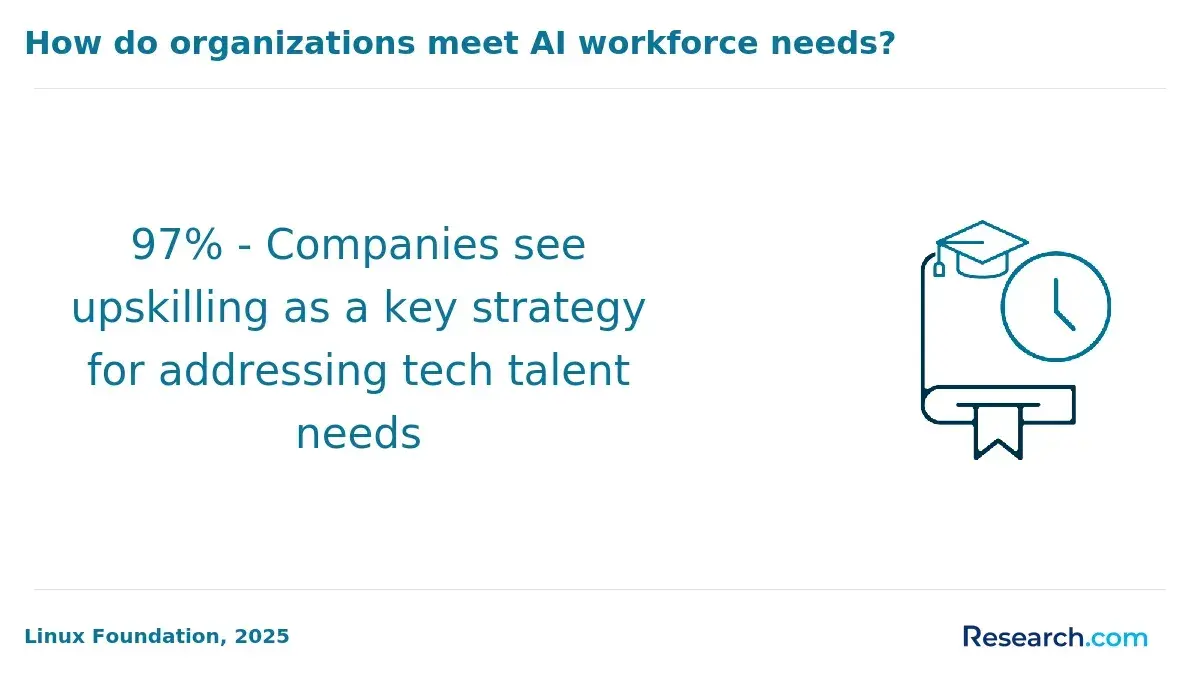
Which types of U.S. degrees and certificates focus on AI strategy for security automation?
U.S. degrees and certificate programs in ai strategy for security automation often reside within computer science, cybersecurity, and business analytics disciplines. Bachelor's and master's degrees in cybersecurity or IT frequently include courses on ai applications for threat detection, automated response, and risk management. Specialized master's programs emphasize designing and deploying AI-driven defense systems to meet evolving cyber threats.
Certificates in ai strategy and security automation target working professionals, focusing on practical skills such as machine learning for intrusion detection and automated incident response workflows. Examples include certificates in cybersecurity AI or strategic AI management, balancing technical and strategic knowledge.
Programs typically integrate both coding AI models and managing AI-driven security automation within broader enterprise policies. Business analytics degrees may emphasize evaluating AI investments and ROI in security operations to guide leadership decisions. These ai strategy degrees for security automation in the U.S. prepare students for leadership roles by teaching strategic implementation alongside technical competence.
The 2024 IBM Cost of a Data Breach report highlights that security teams using AI automation reduce breach lifecycles from 308 days to 214 days and cut costs by an average of $2.22 million. Integrating such insights, degree and certificate programs underscore the tangible benefits of ai strategy for security operations.
Prospective students seeking advanced education may also explore online masters in data science, which often include security-focused AI applications. Overall, certifications in ai strategy and security automation provide vital skills for current professionals aiming to enhance cybersecurity defenses effectively.
How do online AI strategy programs for security automation compare with campus-based options?
Online ai strategy courses for security automation offer flexibility by allowing professionals to learn without disrupting their work schedules. These programs usually have modular coursework emphasizing current automation tools and ai applications in cybersecurity, enabling rapid updates to keep pace with evolving technology. In contrast, campus-based programs often provide deeper foundational knowledge with in-person labs that support hands-on experience, though they require more time and may update curricula less frequently.
Virtual ai strategy training for security automation teams excels at delivering focused learning on topics such as threat detection algorithms, machine learning integration, and automated incident response. These offerings often include certifications and micro-credentials designed for quick skill acquisition. Meanwhile, campus programs typically cover broader theory and allow access to faculty expertise, which benefits those seeking comprehensive understanding or research opportunities.
With 61% of organizations reporting significant skills gaps in AI and automation for security operations, as noted by ISACA's "State of Cybersecurity" report, online courses can quickly scale training across teams by incorporating collaboration tools and virtual labs simulating real-world environments. Campus options may better suit individuals targeting advanced degrees or leadership roles requiring strategic depth. Combining both approaches-starting with online certifications and progressing to campus degrees-can provide optimal preparation.
Students interested in advanced education might explore options like an online doctorate data science program. Decision-making depends on goals, time availability, and preferred learning style, balancing practical skills with academic rigor.
What core topics and tools are covered in AI strategy curricula for security automation teams?
Curricula for AI strategy aimed at security automation teams focus on essential skills such as machine learning fundamentals, anomaly detection, and integrating automated threat intelligence. Practical training emphasizes developing AI models to recognize cybersecurity patterns and executing AI-driven response playbooks.
Courses typically cover key technologies including Security Information and Event Management (SIEM) systems enhanced with machine learning, SOAR (Security Orchestration, Automation, and Response) frameworks, and programming languages like Python for data analysis. Hands-on experience often involves applying AI models to real-world challenges such as phishing detection, malware classification, and intrusion attempt identification.
Ethics and risk management in AI are critical components, teaching students to address data bias and minimize false positives. Performance evaluation metrics like precision, recall, and F1 score are integral to ensuring AI tools align with organizational risk goals. Training also reflects the increasing adoption of cloud-native AI security solutions to support hybrid infrastructure.
Security operations centers (SOCs) highlight the practical value of AI: a significant majority incorporate AI or machine learning for detection and response, while many rely on AI-enabled automation to manage high alert volumes. This illustrates why proficiency in AI strategy is vital for effective incident response and workflow optimization.
Ultimately, mastering AI strategy equips security professionals to deploy adaptable AI systems, streamline automation, and embed AI insights within comprehensive cybersecurity frameworks.
What accreditation and institutional quality standards matter for AI security automation programs?
Accreditation plays a vital role in selecting ai security automation programs, ensuring that training is rigorous and skills are industry-relevant. Prospective students should focus on programs accredited by recognized agencies such as ABET, the Center of Academic Excellence (CAE) by the NSA and DHS, or regional bodies like the Middle States Commission or WASC. These credentials guarantee that the curriculum meets high academic standards and cybersecurity industry demands.
Alignment with respected standards, such as those from the National Institute of Standards and Technology (NIST) or (ISC)², adds practical value by mirroring real-world security automation needs. Certifications from leaders like the SANS Institute are especially valuable, reflecting ongoing engagement with cybersecurity operations trends.
Key program features to consider include faculty expertise, research output, and partnerships with cybersecurity and ai firms, which enhance curriculum relevance. Hands-on exposure to AI-driven SIEM tools or threat detection platforms further indicates a program's commitment to practical learning.
Evidence from the SANS Institute shows that organizations offering structured AI/ML training saw a 42% increase in analyst productivity and a 28% reduction in incident detection time, underscoring the importance of selecting accredited programs that incorporate such training rigor.
Careful evaluation of syllabi, accreditation, and industry alignment enables students to choose programs delivering measurable skill and operational improvements.
What are typical admission requirements and prerequisites for AI strategy security automation courses?
Admission to AI strategy courses in security automation generally requires a strong cybersecurity background and familiarity with data analytics or programming. Most programs expect applicants to hold a bachelor's degree in computer science, information technology, cybersecurity, or related fields, along with 2-3 years of experience in security operations or IT roles that involve AI or automation tools.
Key prerequisites often include knowledge of machine learning basics, scripting languages like Python, and security frameworks such as NIST or ISO 27001. Some advanced courses may also require previous study in statistics or algorithm design. Executive-level programs may prioritize leadership experience in risk management and governance alongside technical skills.
A Gartner survey highlights the pressing need for AI governance: 73% of security leaders expect formal AI governance mandates by 2026, yet only 24% have defined AI risk governance today. This gap makes prior understanding of governance, risk, and compliance (GRC) crucial in AI security automation courses.
Applicants without these skills can benefit from preparatory or modular courses covering AI ethics, data privacy, and foundational machine learning pipelines. Such programs enable professionals from diverse backgrounds to enter AI strategy roles in security automation.
Success in these courses combines formal education, relevant cybersecurity experience, and knowledge of AI-related governance challenges.
How long do AI strategy programs for security automation take, and what do they cost?
AI strategy programs for security automation vary in length from 6 weeks to 6 months, depending on the depth and delivery method. Shorter courses lasting 6 to 12 weeks concentrate on foundational topics such as AI-driven threat detection and automating incident response. More extensive programs, spanning 4 to 6 months, provide hands-on labs, implementation frameworks, and strategic planning to integrate AI copilots within security operations effectively.
Costs range widely based on program type and complexity: introductory courses typically cost between $1,000 and $3,000, aimed at professionals seeking rapid skill enhancement. Advanced certifications with practical projects and vendor-specific tools range from $4,000 to $10,000. Executive or team training bundles, offering personalized coaching and enterprise-level content, can exceed $15,000.
Choosing the right program depends on experience and goals. Teams focused on improving incident response times justify investment in longer, in-depth training. Microsoft's 2024 report highlights that organizations adopting Copilot for Security experienced a 22% faster incident response and 7% improvement in accuracy, demonstrating tangible outcomes.
Individuals may prefer intensive bootcamps for rapid, practical skills, while security teams handling complex workflows should consider extended programs with simulation environments. Budget-conscious learners might start with self-paced, low-cost options and add workshops tailored to specific needs.
What careers, job titles, and industries do AI strategy security automation graduates pursue?
Graduates of ai strategy security automation courses move into various roles such as Security Automation Engineer, AI Security Analyst, Threat Intelligence Specialist, and Cybersecurity Automation Architect. These positions involve leveraging ai tools to improve security operations, threat detection, and incident response.
Employers hiring these professionals span multiple industries beyond traditional cybersecurity firms. Financial services use ai-driven automation to detect fraudulent transactions, healthcare protects patient data, and manufacturing and government sectors apply similar security solutions to safeguard infrastructure.
Many graduates also advance to strategic roles like AI Security Program Manager or Cybersecurity Strategy Consultant. These roles require a blend of technical expertise and leadership in ai governance, risk management, and compliance frameworks.
Investment trends highlight the growing demand for these skills. According to ISC2's 2024 Cybersecurity Workforce Study, 48% of organizations raised their training budgets for ai and automation, spending 27% more per security professional than average. This surge reflects the importance of ai in security automation and the need for specialists who can implement these technologies effectively.
- Security Automation Engineer
- AI Security Analyst
- Threat Intelligence Specialist
- Cybersecurity Automation Architect
- AI Security Program Manager
- Cybersecurity Strategy Consultant
What salaries, job outlook, and certifications are associated with AI security automation roles?
AI security automation roles in the U.S. offer salaries ranging from $110,000 to $180,000 annually, influenced by experience, certifications, and location. Entry-level salaries start around $90,000, while senior roles can surpass $200,000. The job outlook is very positive, with the U.S. Bureau of Labor Statistics projecting a 33% growth in cybersecurity employment through 2031, driven by expanding use of AI technologies in security frameworks.
Certifications play a crucial role in boosting career prospects and salaries. Important certifications include Certified Information Systems Security Professional (CISSP), Certified Ethical Hacker (CEH), and vendor-specific credentials like Microsoft Certified: Azure AI Fundamentals. Specialized certifications such as the AI Security Professional certification or AI strategy courses in cybersecurity showcase expertise in managing AI tools within security automation.
By 2027, 60% of Chief Information Security Officers (CISOs) are expected to be evaluated on their ability to operationalize AI, up from less than 10% recently, emphasizing the growing value of AI strategy skills for leadership.
Practical experience with machine learning models, automation scripting, and cloud security platforms is highly valuable. Knowledge of frameworks like MITRE ATT&CK alongside AI-enabled detection tools prepares professionals to effectively address evolving cyber threats.
Other Things You Should Know About Artificial Intelligence
The primary challenges include data privacy concerns, integration with existing security infrastructure, and the need for large, high-quality datasets to train AI models effectively. Additionally, bias in AI algorithms and the complexity of evolving cyber threats pose significant hurdles for security teams deploying AI-driven solutions.
AI automates the detection and prioritization of threats by analyzing vast amounts of security data in real-time. This allows security teams to respond faster to incidents by highlighting critical alerts and providing actionable insights without the delays inherent in manual analysis.
AI enhances but does not replace human analysts in security automation. While AI tools excel at processing large data volumes and identifying patterns, human expertise remains crucial for interpreting complex threats, making strategic decisions, and handling scenarios where contextual judgment is necessary.
In 2027, top courses for AI strategy in security automation include Stanford Online's "AI in Security Automation," MIT's "AI Strategies for Cybersecurity," and Coursera's "AI-Driven Security Automation Course," designed to equip teams with the skills needed for effective AI integration.
References
- SEC598: AI and Security Automation for Red, Blue, and Purple Teams https://www.sans.org/cyber-security-courses/ai-security-automation
- Best AI Security Certification in 2026 - Practical DevSecOps https://www.practical-devsecops.com/best-ai-security-certifications-2026/
- What Is AI Security Training and Why Is It Important? https://sisa.ai/resource/blog/what-is-ai-security-training-and-why-is-it-important
- Top 7 artificial intelligence courses 2025: Comparison of the best online programs https://xd-i.com/en/data-en/ai-courses/
- Security Automation Doesn't Mean What It Used To: A 2026 Practitioner's Guide https://torq.io/blog/ai-driven-security-automation/
- Best AI Cybersecurity Training for Security Teams: How to Pick https://dev.to/cgivre/best-ai-cybersecurity-training-for-security-teams-how-to-pick-5325
- AI Security Analyst (AISA) Training https://www.bactrya.com/en/trainings/aicci-ai-security-analyst
- New Use of Artificial Intelligence Accreditation Policy and Procedures - Middle States Commission on Higher Education https://www.msche.org/2025/07/02/new-use-of-artificial-intelligence-accreditation-policy-and-procedures/
- SOC automation trends and strategies : How AI and Automation Are Redefining Cyber Defense - Seceon Inc https://seceon.com/soc-automation-trends-and-strategies-how-ai-and-automation-are-redefining-cyber-defense/
- Top AI courses in 2025 https://firebrand.training/en/blog/top-ai-courses