2027 Best AI Courses for Operations Managers

Co-Founder and Chief Data Scientist
Operations managers frequently face challenges integrating emerging technologies to optimize workflows without disrupting existing processes. A lack of targeted training in artificial intelligence often limits their ability to leverage data-driven decision-making. This gap can slow innovation and reduce competitive agility within their organizations. Addressing this skills deficit requires accessible, comprehensive education tailored to professionals transitioning from unrelated fields. This article evaluates the best AI courses designed to equip operations managers with practical knowledge and strategic insights. It aims to guide readers in selecting flexible, accredited programs that facilitate effective career pivots into the artificial intelligence industry.
Key Things You Should Know
- Courses focus on integrating ai tools with operational processes, boosting efficiency by up to 40% according to 2025 industry reports.
- Key skills taught include machine learning basics, predictive analytics, and automation relevant to supply chain and project management.
- Programs average 8-12 weeks and emphasize hands-on experience, aligning with growing demand for ai-literate operations managers in U.S. companies.
Advance Your Career with AI Online Courses
Artificial Intelligence: Implications for Business Strategy
This program provides an introduction to Artificial Intelligence and their implications for business strategy. Earn an official digital certificate.

Oxford Artificial Intelligence Programme
Explore this Oxford Artificial Intelligence programme offered in a flexible learning environment and explore topics like machine learning, automation, and robotics.

Implementing Agentic AI: Building Your Organizational Playbook
This online MIT Agentic AI course offers a practical approach to deploying AI agents in your organization, including a custom playbook. 3 weeks, exclusive launch price.

AI Adoption: Driving Business Value and Impact
This online MIT AI Adoption: Driving Business Value and Impact offers practical frameworks to close the gap between AI potential and business reality.

Artificial Intelligence in Pharma and Biotech
Discover the applications and limitations of artificial intelligence in pharma and biotech with this MIT online short course.

What are the best AI courses for operations managers?
The best ai courses designed for operations managers focus on practical applications such as AI-driven process automation, data analytics, and strategic decision-making within operational environments. As 84% of operations leaders at large enterprises expect AI-driven automation to become the main productivity source by 2029, mastering these skills is essential. Courses like AI for Operations Leaders cover workflow automation, predictive maintenance, and supply chain optimization, often emphasizing hands-on projects and real-world case studies.
Top artificial intelligence training programs for operations management professionals also include offerings like Machine Learning Fundamentals for Business, which introduce model building and evaluation without requiring an advanced technical background. These programs help managers collaborate better with data scientists. Additionally, Data-Driven Decision Making courses teach how to interpret AI-generated insights and align them with business objectives.
Short executive programs from reputable universities offer flexible learning options, addressing industry-specific challenges such as AI applications in logistics or manufacturing. Online platforms provide modular learning paths featuring real-time AI simulations, enabling managers to keep pace with technological changes.
Operations managers should prioritize courses that cover:
- Integration of AI in existing workflows
- Ethical and regulatory considerations
- Cost-benefit analysis of AI implementation
- Leadership in AI transition management
For those looking to further deepen their technical knowledge, pursuing an accelerated bachelor's degree computer science can provide a strong foundation.
Advance Your Career with AI Online Courses
Artificial Intelligence: Implications for Business Strategy
This program provides an introduction to Artificial Intelligence and their implications for business strategy. Earn an official digital certificate.
Oxford Artificial Intelligence Programme
Explore this Oxford Artificial Intelligence programme offered in a flexible learning environment and explore topics like machine learning, automation, and robotics.
Implementing Agentic AI: Building Your Organizational Playbook
This online MIT Agentic AI course offers a practical approach to deploying AI agents in your organization, including a custom playbook. 3 weeks, exclusive launch price.
Do AI courses for operations managers require prerequisites?
AI courses for operations managers vary widely in prerequisite requirements depending on course complexity and target audience. Many introductory programs require no formal background, making them accessible to professionals new to AI concepts. These courses focus on foundational AI principles, automation tools, and practical applications in operations, suited for managers with general business or operational experience. When considering ai course prerequisites for operations managers, it is important to match skills with course demands to ensure success.
Advanced or specialized AI courses often expect basic knowledge in data analysis, statistics, or programming. For instance, courses teaching predictive analytics or machine learning models for supply chain optimization typically require familiarity with Python or R. Some programs may specify quantitative skills or prior experience with ERP systems integrated with AI modules. Understanding the required skills before taking AI courses for operations management helps avoid potential skill gaps that could hinder progress.
Given the rapid 210% year-over-year increase in operations manager roles demanding AI or automation skills, bridging these gaps is critical for career advancement. Many online platforms offer tiered learning paths to accommodate diverse backgrounds:
- Beginner track covering AI basics with no prerequisites
- Intermediate modules requiring basic coding or data skills
- Advanced certifications focused on AI-driven decision-making and automation
Starting with foundational courses before advancing to technical subjects ensures a thorough understanding and effective application of AI in operations strategies. Prospective students can explore affordable education options such as an online engineering degree to build the necessary skills.
Are online AI courses better than campus programs?
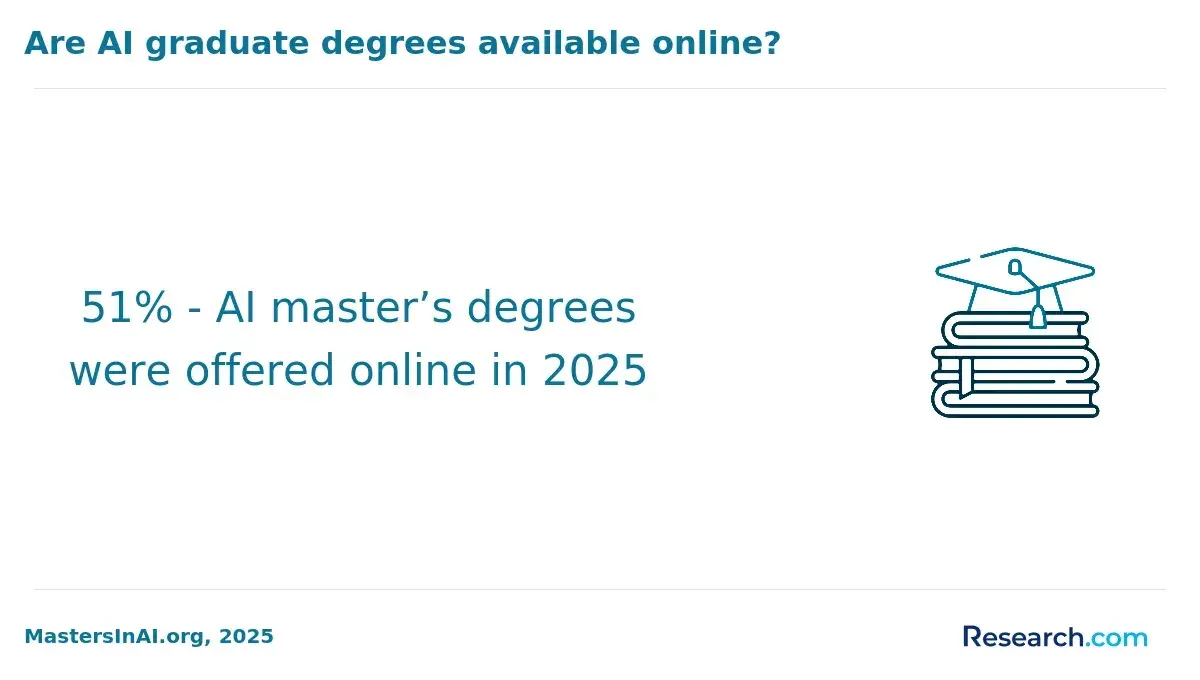
Online AI courses for operations management provide flexibility that suits professionals juggling demanding schedules. These courses often feature current content reflecting the latest AI applications in operations, unlike many campus programs with fixed curricula that may fall behind industry developments. Diverse delivery methods such as self-paced modules, live sessions, and real-time projects allow managers to immediately apply AI techniques, such as cost optimization aligned with findings from McKinsey's 2025 State of AI in Operations report, which notes AI use can reduce operating costs by 18-25% and improve throughput by 20-30%.
Campus vs online AI learning programs each offer distinct advantages. Campus options facilitate direct interaction with faculty and peers, fostering networking and in-depth discussions. Hybrid and boot camp formats blend hands-on experience with structured guidance, valuable for those needing lab access and instructor feedback.
Key considerations when choosing between these learning paths include:
- Time constraints and ability to learn independently
- Need for hands-on lab access and instructor feedback
- Preference for networking opportunities
- Specific AI tools and operational contexts covered
For those seeking a cost-effective, agile approach, well-designed online courses often strike the right balance between up-to-date content and practical skills. Exploring options like the ms data science online can further support career advancement in AI-driven operations.
What topics do AI courses for operations managers cover?
AI courses for operations managers focus on integrating intelligent systems into operational workflows. Core topics often include data analytics and machine learning techniques for operations managers to analyze large datasets, improving decision-making processes. Process automation training covers robotic process automation (RPA) and AI-driven tools that reduce manual labor and boost efficiency.
Predictive analytics is another key area, helping managers forecast demand, maintenance needs, and supply chain disruptions. Risk management with AI explores algorithms that identify operational risks and suggest real-time mitigation strategies. Many courses also address AI ethics and governance, preparing managers to implement technology responsibly while complying with legal and societal norms.
Practical case studies from manufacturing, logistics, and quality control sectors illustrate AI applications in demand forecasting, inventory optimization, and workflow scheduling. Operations managers also learn AI project management to lead teams adopting AI within existing systems. According to Deloitte's 2024 Human Capital Trends, those with applied AI skills earn about 27% more than peers without such expertise, highlighting the value of mastering these competencies.
Specialized subjects may cover emerging technologies like natural language processing for customer service and computer vision in quality inspections. Many aspiring professionals interested in the intersection of cyber technology and management consider a fast cyber security degree to complement AI knowledge, expanding career opportunities in operations and IT security.
Which accreditation matters for AI training programs?
Accreditation plays a crucial role in assessing the credibility and value of ai training programs tailored for operations managers. The most reputable accreditations come from established educational institutions, professional organizations, or industry partnerships that ensure the coursework meets high standards. For operations managers, accreditations from bodies like the Project Management Institute (PMI), ai-focused professional associations, or universities with strong ai research programs indicate relevant and reliable education.
Such accredited programs confirm that the curriculum covers up-to-date, industry-relevant ai techniques along with ethical considerations. Certifications aligned with frameworks from organizations like IEEE or the Association for the Advancement of Artificial Intelligence (AAAI) add further recognition. These accreditations ensure managers gain technical skills as well as an understanding of responsible ai use in operational settings.
Employers increasingly favor candidates with accredited ai training since this correlates with improved implementation of ai initiatives and better operational results. For example, IBM's AI Skills Gap Survey highlights that organizations investing over 40 hours of ai training per employee in operations experienced a 3.6x greater ROI on ai projects compared to those with minimal training.
When selecting ai courses, check accreditation status and look for programs offering practical case studies related to supply chain automation, resource allocation, or predictive maintenance. Programs providing recognized certifications help demonstrate expertise to employers, supporting career advancement effectively.
How long do AI courses for operations managers take?
AI courses for operations managers vary in length from brief workshops lasting a few days to extensive programs spanning several months. Foundational courses typically take 4 to 12 weeks and combine essential AI concepts such as predictive analytics, machine learning basics, and AI-driven decision support tools with practical case studies. These are ideal for building core skills relevant to operations management.
Longer, part-time courses designed for working professionals often run 3 to 6 months. They cover advanced topics including AI deployment strategies, integration with supply chain management, and real-world AI application development. Project work is commonly included to help managers implement AI solutions effectively within their organizations.
Short workshops of 1 to 3 days deliver focused training on specific AI tools or technologies but might lack the broader strategic perspective needed for scaling AI adoption. According to Gartner's 2025 Supply Chain & Operations Survey, only 31% of operations functions have scaled AI decision support despite 78% prioritizing it, so choosing courses with an emphasis on practical scalability is crucial.
Consider these factors when deciding on course duration:
- Beginners benefit from longer courses that build foundational skills gradually.
- Experienced managers might prefer shorter, targeted sessions addressing immediate challenges.
- Workload and schedule determine whether a full-time bootcamp or part-time cohort is more suitable.
Ensure the programs emphasize real-world applications to bridge the adoption gap and drive measurable business results in operations teams.
How much do AI courses for operations managers cost?
Costs for AI courses tailored to operations managers vary widely, from under $500 to more than $5,000. Short online courses or certificates designed for foundational skills and specific AI applications typically range between $300 and $1,200. These options suit professionals seeking quick skill upgrades. More comprehensive executive education programs and university-affiliated certificates focusing on strategic AI risk, compliance, and operational governance can cost between $2,000 and $4,500.
Corporate training packages often have variable pricing depending on customization and group size. Subscription-based platforms, which offer multiple courses, start at approximately $40 monthly, providing flexibility but often lacking the depth needed for AI operations oversight.
Investing in AI education is essential for effective operational risk management. According to PwC's AI Governance & Risk report, 62% of AI-related operational disruptions in large firms result from insufficient training in AI controls among operations teams. This highlights the importance of selecting courses that emphasize practical AI governance and compliance alongside technical skills.
When budgeting for AI education, consider these key points:
- Short courses: $300-$1,200, focused on foundational AI concepts and operational tools.
- Advanced certificates or executive education: $2,000-$4,500, covering strategic AI risk and compliance.
- Subscription models: $40-$100 monthly, flexible but may lack operations-specific depth.
- Corporate training: Highly variable pricing based on customization and group training.
What jobs can operations managers pursue after AI training?
Operations managers with AI training can access diverse roles that combine management experience with new technical skills. Key opportunities include AI project managers who oversee AI integration to boost efficiency and decision-making within business processes. AI operations analysts also play vital roles, using machine learning and data insights to optimize supply chains, manage inventory, and enhance production workflows.
Other growing positions include AI strategy consultants, automation specialists, and process improvement managers. These jobs require AI literacy to develop robotic process automation (RPA) and predictive analytics systems that address operational challenges and produce measurable results.
A survey by Coursera for Business found that 71% of mid-career operations managers prefer short modular AI courses under 20 hours, which reflects a strong demand for practical, immediately applicable skills rather than longer programs favored by only 14%. This trend supports roles such as AI-enabled supply chain coordinators and AI-driven quality assurance managers, emphasizing continuous learning and on-the-job application.
With AI training, operations managers effectively bridge technical teams and business units, leading data-centric initiatives, optimizing workflows, and driving digital transformation. Examples of focus areas include predictive maintenance, demand forecasting, and intelligent resource allocation. Targeting positions that value cross-disciplinary expertise enables these professionals to enhance strategic planning alongside operational efficiency.
What salary can operations managers expect with AI skills?
Operations managers with AI skills command significantly higher salaries than those without. Industry data show average pay for these professionals ranges from $95,000 to $130,000 annually, depending on factors like experience, sector, and location. In technology-driven industries or companies prioritizing AI adoption, salaries often surpass $140,000, reflecting strong demand for AI-savvy leadership.
Expertise in AI-driven tools, particularly low-code and no-code platforms, is increasingly important. IDC's 2025 AI in Enterprise Applications report notes that 58% of new AI deployments in operations now rely on these platforms, up from 32% in 2023. This trend reduces technical barriers and lets managers who understand AI workflows optimize operations efficiently, helping justify higher compensation.
Salary levels vary based on specific AI skills such as machine learning, data analytics, and process automation combined with traditional operational knowledge. Entry-level managers with foundational AI skills typically earn $85,000 to $95,000, while those with advanced AI project experience or leadership responsibilities can see salaries reach $120,000 or more.
To increase earning potential, operations managers should pursue comprehensive AI education and gain hands-on experience with low-code AI platforms. Demonstrating capability to lead AI-driven initiatives directly enhances salary offers and career growth opportunities.
How do you choose a reputable AI course provider?
Choosing a reputable AI course provider involves evaluating key factors that ensure practical skills and career readiness. Verify the provider's industry recognition and partnerships, especially collaborations with established technology firms or accreditation from recognized educational institutions. Courses endorsed by leading AI research bodies or universities often feature cutting-edge tools and methodologies.
Focus on course content that aligns with operations management, covering process redesign, generative AI, and automation orchestration-areas projected to create 70% of AI-driven operational value by 2030, according to Accenture's 2025 Technology Vision report. Modules should include data-driven decision-making, workflow automation, and AI's role in supply chains or production.
Instructor expertise is crucial; look for professionals with backgrounds in both AI and operations management. Effective programs offer hands-on projects or simulations to connect theory with real-world applications.
- Ensure transparent pricing and clear refund policies.
- Confirm the availability of certifications recognized by employers in the operations field.
- Opt for flexible schedules suitable for working professionals.
Strong learner support-mentorship, career counseling, and community access-boosts completion rates and knowledge retention. Reviews from past students provide insight into course effectiveness. Evaluating these factors helps select AI courses that meet industry demands and prepare students for future careers.
Other Things You Should Know About Artificial Intelligence
In 2027, the "AI for Operations Managers" course by Coursera, developed in collaboration with Stanford University, stands out for its comprehensive curriculum. It includes practical applications tailored for operations managers, taught by leading experts in AI, ensuring a well-rounded understanding of AI’s impact on operations.
No, artificial intelligence is relevant beyond strictly technical roles. Operations managers and business leaders can benefit from understanding AI principles to optimize workflows, improve decision-making, and oversee AI-driven projects. Non-technical professionals often learn AI concepts to collaborate effectively with data scientists and engineers.
Common challenges include data quality issues, integration with existing systems, and lack of skilled personnel. Ethical concerns and managing change within organizations also play significant roles. Addressing these challenges requires strategic planning and cross-functional collaboration.
Artificial intelligence enhances operations managers' roles by automating routine tasks, improving forecasting accuracy, and enabling data-driven decision-making. It allows managers to focus on strategic priorities and resource optimization. Adopting AI tools also necessitates continuous learning to keep up with technological advancements.
References
- Certified AI Operations Manager - The Case HQ Online https://thecasehq.com/courses/certified-ai-operations-manager/
- AI in Operations Management: A Must-Know for PGDM Aspirants https://www.fiib.edu.in/blog/ai-in-operations-management-a-must-know-for-pgdm-aspirants/
- Best AI Training for Operations Teams (2026) https://iternal.ai/ai-training-for-operations
- NVIDIA AI Operations (AIO) Certification https://www.nvidia.com/en-us/learn/certification/ai-operations-professional/
- Which Course do you recommend after AI For Everyone? https://community.deeplearning.ai/t/which-course-do-you-recommend-after-ai-for-everyone/834556
- The EU AI Act: What Associations Need to Know About AI in Education and Certification Programs - Dennison & Associates https://www.dennison-associates.com/eu-ai-act-what-associations-need-to-know/
- Artificial Intelligence (AI) for Managers Training Course https://www.nobleprog.pl/en/cc/aiformanagers
- AI Prerequisites: What to Learn Before AI https://blog.nobledesktop.com/learn/ai/ai-prerequisites
- Ultimate Guide: How to Choose the Right AI Training Course to Boost Your Career - ONLC https://www.onlc.com/blog/how-to-choose-ai-training-courses/
- Getting a high six-figure salary as an AI Product Manager | Product Coalition https://medium.productcoalition.com/from-low-six-figure-to-high-six-figure-how-to-become-an-ai-product-manager-444ca0fe3ed0