2027 Best Agentic AI Courses for Team Leads

Co-Founder and Chief Data Scientist
Team leads often struggle to identify effective agentic AI courses that fit their busy schedules while providing practical skills for managing AI-driven projects. Many available options lack clear guidance on leadership applications or require extensive technical backgrounds, creating barriers for professionals transitioning from unrelated fields. Selecting the right course is crucial to ensure teams leverage AI effectively and ethically in their workflow. This article examines top agentic AI courses tailored for team leads, focusing on flexible, accredited programs that bridge leadership knowledge and technical insight, enabling readers to confidently guide AI integration in their organizations.
Key Things You Should Know
- Agentic AI courses for team leads in 2026 emphasize practical skills in autonomous decision-making and leadership, boosting productivity by up to 40% in AI-driven projects.
- Curricula increasingly incorporate ethics and human-AI collaboration, addressing regulatory demands and ensuring responsible deployment in corporate environments.
- Over 65% of top-rated programs offer blended learning formats, enabling flexible access for working professionals to master cutting-edge agentic AI methodologies.
Advance Your Career with AI Online Courses
Artificial Intelligence: Implications for Business Strategy
This program provides an introduction to Artificial Intelligence and their implications for business strategy. Earn an official digital certificate.

Oxford Artificial Intelligence Programme
Explore this Oxford Artificial Intelligence programme offered in a flexible learning environment and explore topics like machine learning, automation, and robotics.

Implementing Agentic AI: Building Your Organizational Playbook
This online MIT Agentic AI course offers a practical approach to deploying AI agents in your organization, including a custom playbook. 3 weeks, exclusive launch price.

AI Adoption: Driving Business Value and Impact
This online MIT AI Adoption: Driving Business Value and Impact offers practical frameworks to close the gap between AI potential and business reality.

Artificial Intelligence in Pharma and Biotech
Discover the applications and limitations of artificial intelligence in pharma and biotech with this MIT online short course.

What is agentic AI for teams and why should current or aspiring team leads learn it?
Agentic AI applications for team leadership empower AI systems to make autonomous decisions and act independently within collaborative environments. These systems can dynamically assign tasks based on real-time data, streamline workflows, and coordinate across departments without constant human supervision. Team leads benefit from learning agentic AI as it transforms traditional management by enhancing automation, minimizing errors, and speeding up decision-making processes.
Familiarity with these technologies enables leaders to design and oversee AI-augmented workflows that boost productivity while maintaining human oversight to mitigate risks. This balance is essential to prevent overdependence on automation and to integrate AI insights effectively into team communication and decision-making.
A 2025 Deloitte global survey of 2,800 executives found that 62% of organizations piloting agentic or autonomous AI report significant productivity improvements, with 39% noting revenue growth tied directly to these systems within 12-18 months. The benefits of learning agentic AI for team leads extend beyond efficiency-they help leaders navigate ethical and operational challenges involved in autonomous AI deployment. Prospective students interested in these skills often explore programs at the best universities for data science undergraduate, where agentic AI concepts are increasingly integrated into curricula to prepare future team leads.
Advance Your Career with AI Online Courses
Artificial Intelligence: Implications for Business Strategy
This program provides an introduction to Artificial Intelligence and their implications for business strategy. Earn an official digital certificate.
Oxford Artificial Intelligence Programme
Explore this Oxford Artificial Intelligence programme offered in a flexible learning environment and explore topics like machine learning, automation, and robotics.
Implementing Agentic AI: Building Your Organizational Playbook
This online MIT Agentic AI course offers a practical approach to deploying AI agents in your organization, including a custom playbook. 3 weeks, exclusive launch price.
What are the best agentic AI courses specifically designed for team leads and managers?
Top agentic AI courses for team leads and managers focus on leadership in AI strategy, ethical deployment, and cross-functional coordination. These programs emphasize managerial skills for overseeing AI agents, aligning AI initiatives with business goals, and fostering collaboration between technical teams and stakeholders. Examples include executive courses from institutions like MIT Sloan and Stanford, which offer curricula focused on AI leadership and governance.
Effective programs blend technical literacy with management frameworks, equipping team leads to communicate smoothly with AI engineers while promoting adoption within their teams. Topics often include AI system design principles, agent autonomy levels, and performance monitoring metrics. Case studies on deploying autonomous agents in customer service or supply chain illustrate diverse use cases and outcome management, helping clarify the best agentic AI courses for team leads and managers.
A 2024 McKinsey report finds companies investing in AI upskilling for managers and team leads are 3.5 times more likely to scale advanced AI beyond pilots than those focusing only on technical staff. This highlights the impact of leadership-focused AI education on organizational success. Top agentic artificial intelligence training programs for team leadership also stress practical application through project-based learning or simulations with agentic AI tools.
Courses with modules on ethical AI and regulatory compliance provide frameworks to navigate emerging legal constraints. Continuous learning paths and certification options help professionals stay current in this dynamic field. For those interested in related technical paths, consider an online degree in mechanical engineering as a complementary option.
How do online agentic AI programs for team leads compare with in-person or hybrid options?
Online agentic AI training versus in-person programs for team leads offers distinct advantages depending on learners' needs. Online options provide flexibility, allowing busy professionals to study at their own pace while managing work responsibilities. These programs often include real-time collaboration tools and interactive simulations that replicate complex AI-driven workflows, helping bridge theoretical knowledge with practical application.
In-person and hybrid agentic AI courses for leadership development excel in delivering immediate feedback and hands-on experience. They foster richer peer interaction and networking, essential for leadership roles requiring cross-departmental coordination. Hybrid programs especially balance face-to-face sessions with remote learning flexibility, supporting both skill development and professional connections.
The Gartner 2024 Emerging Tech report highlights a market shift: by 2027, agentic AI could reduce operational costs by up to 20%, yet only 15% of enterprises currently have managers skilled enough to design these workflows. This gap underscores the need for training that emphasizes practical AI orchestration skills, available through both modalities but via different approaches. Professionals interested in furthering their expertise might explore an online master in data science to complement agentic AI capabilities and broaden leadership impact.
What skills and topics do agentic AI courses for team leads typically cover in the curriculum?
Agentic AI courses for team leads blend technical proficiency, leadership skills, and ethics, equipping leaders to manage AI-driven projects effectively. The team lead curriculum for agentic AI implementation often covers AI fundamentals such as machine learning basics, natural language processing, and automation workflows, which help leaders communicate clearly with technical teams.
Training also emphasizes practical skills like selecting AI tools, deployment strategies, and monitoring performance to ensure smooth AI integration with organizational goals. Leaders gain expertise in overseeing project lifecycles, including requirement analysis, risk mitigation, and iterative improvements based on AI outputs. Ethical considerations are central, focusing on bias detection, data privacy, and regulatory compliance. This ethical framework supports leaders in making decisions that align AI applications with legal and societal norms, fostering responsible AI use and governance.Communication skills and change management strategies are pivotal, teaching how to bridge gaps between AI specialists and stakeholders, foster team adoption of AI, and manage resistance. Negotiating resource allocation and promoting cross-department collaboration are also key components of agentic AI leadership and decision-making skills. Professionals aiming to deepen their expertise can explore advanced credentials like a PhD data science online, which enhances skills for leading AI projects at a strategic level.
What education, experience, and technical background do you need to enroll in these courses?
Enrollment in agentic AI courses for team leads typically requires a blend of education, experience, and technical skills. Most programs expect candidates to have at least a bachelor's degree in fields like business administration, computer science, information technology, or engineering. Interdisciplinary backgrounds that combine management and technology often provide an edge. Prior experience managing technology-driven teams or projects is usually essential to apply course concepts practically.
Technical prerequisites often include basic programming skills, familiarity with data analytics, and an understanding of AI concepts such as machine learning and automation. Proficiency in languages like Python or R, or prior exposure to AI tools, is commonly recommended. For instance, executive programs may expect completion of introductory AI or data science courses or demonstrated experience deploying AI workflows within teams.
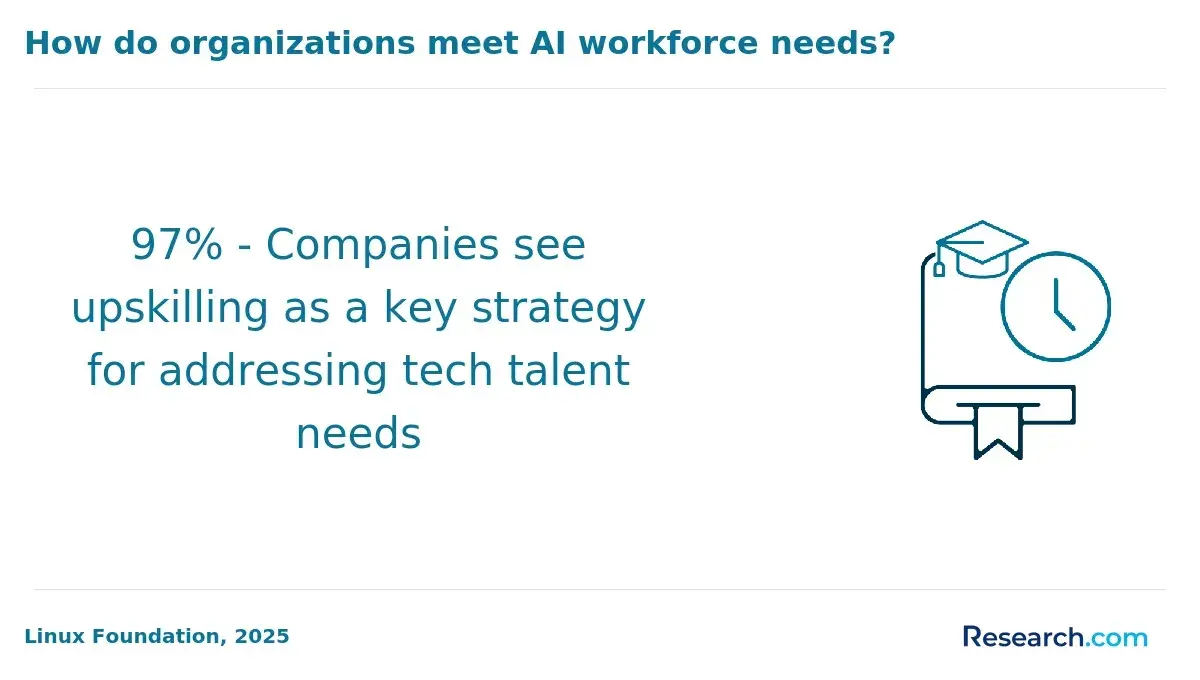
PwC's 2024 Global CEO Survey highlights that 72% of CEOs expect AI agents and automation to transform leadership skills within three years, but only 30% report their mid-level managers receive formal AI training. This gap underlines the urgency for targeted education tailored to leaders navigating AI-driven changes.
How long do agentic AI programs for team leads take and what do they cost?
Agentic AI programs designed for team leads typically last between 4 and 12 weeks, varying by course intensity and format. Intensive boot camps offer completion in 4 to 6 weeks, focusing on rapid skill acquisition for busy professionals. More extensive part-time courses can span up to 12 weeks, accommodating work schedules and often including project-based learning for deeper understanding.
Costs range from approximately $1,000 to $4,000, with vendor-specific certifications nearer $1,200 and university-affiliated or specialized leadership tracks reaching beyond $3,500. Subscription models allow flexibility with monthly fees from $50 to $200, enabling learners to progress at their own pace.
Programs targeting shorter durations emphasize core competencies such as ai-driven decision-making frameworks and effective deployment strategies, ideal for immediate practical use. Longer programs incorporate advanced agentic AI concepts and ethical leadership, catering to professionals aiming for strategic roles.
The 2024 Global Skills Report by Coursera highlights a 78% year-over-year increase in enrollments for "AI for business decision-makers" and "AI for leaders," with enterprise learners representing over 60% of growth. This trend reflects strong demand for AI education tailored to leadership positions.
When choosing a program, consider your team's current needs, budget, and schedule. Prioritize courses offering hands-on case studies or mentorship, as these elements enhance practical application in leadership roles.
How can team leads evaluate accreditation, certificates, and the credibility of agentic AI programs?
When evaluating programs focused on agentic AI, verify institutional recognition by reputable U.S. education authorities, such as regional accreditors approved by the U.S. Department of Education or the Council for Higher Education Accreditation. This ensures rigorous academic standards and trustworthy curriculum quality.
Certificates should emphasize hands-on, project-based learning with agentic AI tools and systems. Look for credentials from respected professional organizations or industry partners that highlight practical skills beyond theory. Examples include certificates linked to AI research centers or collaborations with leading AI firms, which signal valuable real-world competence.
Faculty expertise is crucial-prefer programs led by instructors actively involved in agentic AI research or deployment, including those publishing in peer-reviewed journals. Detailed syllabi with clear learning outcomes aligned with current challenges support relevant skill development.
Consider the program's alumni outcomes. Data showing graduates advancing in agentic AI-related roles indicates program effectiveness. A 2024 BCG study reveals organizations providing hands-on AI training to team leads are 2.4 times more likely to scale agent-based systems into full production, underscoring the value of applied learning. Lastly, ensure certificates remain adaptable to rapidly evolving AI frameworks to maintain relevance as agentic AI technologies progress.
What leadership and career outcomes can graduates of agentic AI courses realistically expect?
Graduates of agentic AI courses gain leadership skills that directly address obstacles hindering AI adoption in many organizations. According to the 2025 IBM Global AI Adoption Index, 47% of companies experimenting with AI agents cite a lack of non-technical leadership understanding as a key barrier. These courses prepare leaders to guide AI-driven initiatives efficiently without needing deep technical knowledge.
Leadership benefits from agentic AI training include:
- Better decision-making through understanding AI's capabilities and limitations.
- Aligning AI projects with strategic goals to enhance success.
- Improved communication between technical teams and stakeholders, minimizing delays.
- Managing ethical and operational risks effectively.
Career-wise, graduates often advance to roles such as AI project manager, strategy lead, or innovation officer. They become vital translators of AI potential for non-technical teams and clients, filling significant leadership gaps-only 21% of companies offer structured AI learning paths for managers.
Practical uses vary across sectors: healthcare leaders might oversee AI tools for diagnostics ensuring compliance and ethics, while finance professionals could manage AI risk and optimize chatbots to improve customer service. Agentic AI courses foster actionable leadership that integrates AI into business processes to drive innovation and measurable growth.
What salaries, bonuses, and promotion opportunities are common for leaders skilled in agentic AI?
Leaders with expertise in agentic AI typically earn base salaries between $120,000 and $170,000 annually in the U.S., varying by industry and company size. Bonuses commonly add 10% to 25% of the base salary, underscoring the high value of skills in automating decision-making and workflow management. For instance, a tech team lead expanding AI-driven projects may receive a $20,000 bonus on top of a $150,000 salary. In sectors like finance or consulting, total compensation with incentives can exceed $200,000.
Promotion paths for agentic AI professionals tend to follow a clear trajectory: starting with project or team lead roles, advancing to director or head of AI initiatives with 15-30% salary increases and more budget authority. Successful leaders in cross-functional AI adoption can progress to executive roles such as AI strategy director or chief innovation officer, earning six-figure salaries plus equity or profit-sharing, especially in startups.
Growing demand for these skills is reflected in Udemy's 2025 Workplace Learning Trends report, which notes a 210% increase in course consumption tagged "AI agents," "agentic AI," or "AI workflows" among managers and team leads from 2023 to 2024. Career advancement advice includes specializing in AI workflow orchestration tools, mastering human-AI collaboration strategies, and showing measurable impacts on projects to qualify for bonuses and promotions.
How can you choose the right agentic AI course to upskill your team in your industry?
Choosing an agentic AI course for your team requires identifying the specific skills demanded by your industry. Different fields apply agentic AI uniquely-such as autonomous decision-making in manufacturing, predictive analytics in finance, or adaptive automation in healthcare. Assess your team's existing AI proficiency and pinpoint gaps, particularly in AI literacy for leadership roles. The World Economic Forum's 2024 Future of Jobs report highlights that roles involving AI-augmented decision-making are expected to grow by 30-45% by 2028, with AI literacy among top skill needs.
Focus on courses offering practical, domain-specific training rather than purely theoretical instruction. For example, supply chain managers benefit from AI tools for logistics optimization and risk management. Review course materials for current case studies that demonstrate decision-making frameworks driven by agentic AI. Consider format and delivery style to match your team's learning preferences and operational demands. Blended options combining live sessions with self-paced modules help balance training with workload. Hands-on projects or simulations that enable practicing autonomous AI-agent collaboration can improve skill retention and real-world application.
Evaluate instructor credentials and institutional reputation carefully. Prefer programs led by experts with proven experience in agentic AI relevant to your sector. Check participant feedback for course relevance and career impact. Prioritize certifications recognized by professional bodies or your industry.
Other Things You Should Know About Artificial Intelligence
Artificial intelligence can enhance team collaboration by automating routine tasks and providing data-driven insights that improve decision-making. AI-powered tools can facilitate clearer communication channels through chatbots, scheduling assistants, or sentiment analysis. However, it requires careful integration to avoid overdependence or reduced interpersonal interaction.
Implementing artificial intelligence in established workflows can be challenging due to resistance to change, lack of technical skills, and integration difficulties with legacy systems. Teams may face a learning curve when adopting AI tools, and leaders need to manage these transitions while maintaining productivity. Ensuring proper training and phased rollout helps mitigate these challenges.
Yes, artificial intelligence can analyze historical data, communication patterns, and project metrics to predict team performance and potential risks. These predictive analytics allow leaders to make proactive adjustments and optimize resource allocation. However, predictions depend heavily on data quality and context sensitivity.
References
- Cost Guide: Agentic AI Deployment – Pricing and Planning https://www.gravitee.io/blog/cost-guide-agentic-ai-deployment-pricing-and-planning
- 7 free agentic AI training courses - PEX Network https://www.processexcellencenetwork.com/ai/articles/7-free-agentic-ai-training-courses-for-business-leaders
- Agentic AI Careers India 2026: Skills, Salaries & Jobs - Edzor https://www.edzor.com/blogs/agentic-ai-careers-india-2026-skills-salaries-jobs
- Agentic AI Course with Advanced Training and Certification https://www.edureka.co/agentic-ai-training-course
- Hands-on Agentic AI for Leaders by James Gray on Maven https://maven.com/james-gray/hands-on-ai-for-leaders
- Agentic AI In Learning And Development: Future Of Corporate Training https://elearningindustry.com/agentic-ai-in-learning-and-development-future-of-corporate-training
- Cost to Build Agentic AI for Your Business: 2026 Guide https://www.netclues.com/blog/agentic-ai-workforce-cost
- Career Opportunities After IIT KGP AI Program - IITKGP https://online.iitkgp.ac.in/blog/career-paths-after-generative-ai-and-agentic-ai-program-at-iit-kgp
- Agentic AI Implementation Playbook: From Pilot to 300% ROI - Accelirate https://www.accelirate.com/enterprise-agentic-ai-implementation-guide/
- Agentic AI Platforms: 2026 Buyer's Guide & Vendor Comparison | Automation Anywhere https://www.automationanywhere.com/rpa/agentic-ai-platforms