2027 AI Agent Courses vs Automation Courses

Co-Founder and Chief Data Scientist
Many professionals face challenges when deciding whether to pursue ai agent courses or automation courses to enhance their careers. The rapid growth of AI technologies creates confusion about which skills will remain relevant and offer the best job prospects. The distinction between designing intelligent autonomous systems and automating routine workflows is often unclear to newcomers. This uncertainty can lead to misaligned learning paths and lost time. This article will clarify the differences between these course types and provide guidance on selecting programs that align with career goals in the evolving ai landscape.
Key Things You Should Know
- AI agent courses in 2026 emphasize practical skills in machine learning, natural language processing, and autonomous system design, preparing students for rapidly evolving job markets.
- Automation courses remain focused on process optimization and robotic process automation (RPA), targeting efficiency improvements across industries but with less emphasis on cognitive computing.
- Recent data shows a 34% higher salary premium for AI agent specialists than automation professionals, reflecting growing demand for advanced AI expertise in U.S. technology sectors.
Advance Your Career with AI Online Courses
Artificial Intelligence: Implications for Business Strategy
This program provides an introduction to Artificial Intelligence and their implications for business strategy. Earn an official digital certificate.

Oxford Artificial Intelligence Programme
Explore this Oxford Artificial Intelligence programme offered in a flexible learning environment and explore topics like machine learning, automation, and robotics.

Implementing Agentic AI: Building Your Organizational Playbook
This online MIT Agentic AI course offers a practical approach to deploying AI agents in your organization, including a custom playbook. 3 weeks, exclusive launch price.

AI Adoption: Driving Business Value and Impact
This online MIT AI Adoption: Driving Business Value and Impact offers practical frameworks to close the gap between AI potential and business reality.

Artificial Intelligence in Pharma and Biotech
Discover the applications and limitations of artificial intelligence in pharma and biotech with this MIT online short course.

What are AI agent courses and automation courses?
AI agent training programs in the current market focus on designing autonomous systems that perceive, reason, and act on behalf of users or organizations. These programs cover machine learning algorithms, natural language processing, multi-agent systems, and reinforcement learning. Students often build intelligent entities such as chatbots for customer service or robotic agents that navigate complex environments independently, emphasizing adaptability and decision-making.
By contrast, automation and AI agent course comparisons reveal that automation courses target streamlining business processes through technologies like robotic process automation (RPA), workflow management, and software integration. Automation specialists develop systems to handle repetitive tasks such as data entry or report generation without the advanced decision-making capabilities of AI agents.
Skills gained from these areas lead to distinct career paths. AI agent courses prepare learners for roles like AI research engineer or intelligent systems developer, while automation courses gear professionals toward business process automation and operations management roles focusing on efficiency.
According to the World Economic Forum's Future of Jobs 2025 update, roles requiring advanced AI and automation expertise will account for 23% of net global job growth by 2028. Demand in these fields is expanding faster than average labor market growth, supporting strong prospects for those investing in either discipline.
Aspiring students may also explore the data science major ranking to find affordable programs that complement their AI and automation education goals.
Advance Your Career with AI Online Courses
Artificial Intelligence: Implications for Business Strategy
This program provides an introduction to Artificial Intelligence and their implications for business strategy. Earn an official digital certificate.
Oxford Artificial Intelligence Programme
Explore this Oxford Artificial Intelligence programme offered in a flexible learning environment and explore topics like machine learning, automation, and robotics.
Implementing Agentic AI: Building Your Organizational Playbook
This online MIT Agentic AI course offers a practical approach to deploying AI agents in your organization, including a custom playbook. 3 weeks, exclusive launch price.
How do AI agent courses differ from automation courses?
AI agent training programs versus automation training differ significantly in focus and outcomes. AI agent courses emphasize building autonomous systems that can learn, adapt, and make decisions independently. These programs cover advanced topics like machine learning, natural language processing, reinforcement learning, and multi-agent systems, preparing students to create intelligent agents capable of negotiation, prediction, and complex interaction.
In contrast, automation courses concentrate on optimizing workflows and automating repetitive tasks using predefined rules, scripting, and robotic process automation (RPA). Core skills include scripting languages, system integration, and algorithmic logic designed to improve efficiency rather than replicate human reasoning.
Differences between artificial intelligence agent courses and automation courses include the programming tools and frameworks taught: AI agent programs typically require intensive Python programming and knowledge of TensorFlow or PyTorch, while automation training often focuses on tools like UiPath, Blue Prism, PowerShell, and Bash scripting.
The 2025 Robert Half Technology Salary Guide highlights that roles in AI engineering and automation architecture command median salaries 32-38% higher than general software developers in North America, reflecting a strong market demand for these skills.
Students and professionals should weigh career goals carefully, choosing between specializing in adaptive intelligent systems or workflows designed for task automation. For those exploring options beyond AI and automation fields, a mechanical engineering online program may offer alternative pathways.
Which course fits your career goals better?
Choosing between 2026 ai agent training programs for career advancement and automation courses depends on your professional goals and task complexity. AI agent training programs focus on creating adaptive, multi-step processes that integrate various tools to solve dynamic problems. These skills are highly relevant for roles in advanced AI development, product management of intelligent systems, and AI research. Conversely, automation courses emphasize rules-based, single-step workflows designed for operational efficiency, commonly applied in manufacturing, IT support, and data processing.
McKinsey's 2024 global AI survey highlights that 72% of organizations using generative AI also employ agent-like workflows, making them 1.8× more likely to achieve revenue growth of 10% or more compared to those relying on traditional automation. This suggests that pursuing ai agent training aligns better with innovation-driven career paths.
For working professionals, automation courses aligned with professional goals may provide immediate improvements in business processes, while those aiming to lead AI innovation should prioritize agent courses that emphasize generative AI integration, autonomous decisions, and tool use.
Consider these questions:
- Do you want to create systems that learn and adapt, or automate fixed tasks?
- Are you targeting roles in AI R&D or applying automation in business workflows?
- Will you work in industries adopting generative AI and agent workflows?
Developing skills through AI agent courses offers greater engagement with AI's evolving landscape. For those interested in expanding their data expertise, finding a reputable data science degree online can complement your AI education and strengthen your career prospects.
What skills do AI agent courses teach?
AI agent courses focus on programming skills essential for designing and deploying autonomous software capable of interpreting and acting on complex tasks with minimal human oversight. These programs teach advanced concepts such as natural language processing, machine learning algorithms, and decision-making frameworks to enable agents to perform context-aware actions efficiently.
Students gain expertise in automation and ai integration techniques using frameworks like reinforcement learning, dialog systems, and robotic process automation augmented by AI. This training often includes developing virtual assistants that manage scheduling or customer support without continuous supervision and configuring agents to monitor and adapt workflows dynamically.
The curriculum also emphasizes measuring agent performance through simulations and continuous feedback to improve accuracy, efficiency, and user experience. Unlike traditional rule-based automation courses, these programs prioritize adaptability and learning capabilities, preparing professionals to deploy robust AI solutions in unpredictable environments.
A recent Deloitte study highlights the significant advantages of combining AI agents with workflow automation, revealing a median 31% reduction in process cycle time and 27% lower operating costs. These benefits considerably surpass improvements seen with automation alone.
Prospective students interested in enhancing their career prospects with AI agent course programming skills and integration methods may explore advanced education options including masters in data analytics, which provide complementary knowledge and expand opportunities in this rapidly evolving field.
What skills do automation courses teach?
Automation courses focus on practical skills that enhance business efficiency by reducing repetitive manual work through technology. Students gain proficiency in scripting and programming languages like Python and JavaScript, allowing customization of automation tools. Training also covers orchestration platforms that synchronize multiple systems for seamless data flow and task execution.
Robotic process automation (RPA) tools play a key role, enabling automation of rule-based tasks in finance, customer service, and supply chain management. Learners develop expertise in process mapping, identifying automation opportunities, and ensuring adherence to compliance standards.
Analytics and monitoring are critical for tracking performance and diagnosing failures. Courses include API integration skills to connect diverse applications and expand automation capabilities. Soft skills such as problem-solving, process analysis, and change management prepare students to lead automation projects effectively.
According to IBM's 2024 Global AI Skills report, around 40% of the global workforce-more than 1.4 billion workers-will require reskilling due to the growing impact of AI and automation technology. Workflow automation and orchestration tools rank among the fastest-growing skill gaps, underscoring the urgent need for proficiency in these areas.
Overall, automation education equips professionals with both technical and strategic skills essential for implementing scalable, efficient digital transformation solutions.
What prerequisites do these courses require?
Prerequisites for ai agent courses generally include a solid foundation in programming languages like Python, as most curricula involve coding and model implementation. Students should understand machine learning basics, including supervised and unsupervised learning methods. Knowledge of linear algebra, calculus, and probability theory is often required to grasp key algorithmic concepts behind ai agents. Advanced courses may additionally require experience in natural language processing or reinforcement learning, depending on the specialization.
Automation courses tend to vary more in their requirements, reflecting the diversity of the field. Entry-level classes often need only logical reasoning skills and familiarity with scripting languages such as JavaScript or shell scripting. More advanced programs usually expect knowledge of software development life cycles, APIs, and robotic process automation (RPA) tools. Understanding business processes is frequently emphasized to connect technical skills with organizational goals.
When choosing between these paths, consider your career objectives. Ai agent courses demand stronger coding and mathematical backgrounds, fitting roles in research and development. Automation courses may be more accessible to those with less technical experience but require awareness of system architecture and workflow management.
Class Central's analysis shows a 250% growth in online ai agent-focused courses since 2024. This surge has introduced varied prerequisite structures, including beginner-friendly bridge modules and options for those with advanced ai or machine learning knowledge.
Are online programs better than campus programs?
Online programs offer unmatched flexibility for working professionals and students juggling multiple commitments. They allow access to course materials anytime and anywhere, making them ideal for acquiring AI agent or automation skills without relocating or taking extended time off work. These programs often update their content rapidly to keep pace with evolving industry demands, aligning with a 2025 PwC survey that found 64% of large enterprises increased budgets for AI and automation upskilling and saw a 29% annual rise in per-employee training spend.
Campus-based programs provide a structured setting with direct faculty interaction and peer networking, which benefits some learners. However, fixed schedules and location constraints can delay skill acquisition. Campus labs may offer hands-on experience but often come with limited access hours, unlike many online platforms that integrate project-based learning, simulations, and interactive labs accessible remotely.
Prospective students should consider their learning styles and career goals when choosing between program formats:
- In-person networking and mentorship favor campus programs.
- Flexibility and immediate skill application are best supported by online courses.
- Hybrid models combine benefits from both formats.
How long do these programs take and what do they cost?
AI agent and automation courses differ widely in duration and cost, depending on curriculum depth and target learners. Intensive AI agent bootcamps typically last 3 to 6 months, while more extensive certification or part-time programs can extend up to 12 months. Automation courses tend to be shorter, ranging from a few weeks to professional certificates completed within 4 to 8 months.
Pricing varies by content and delivery method. AI agent bootcamps in 2026 often cost between $5,000 and $12,000, with examples like a six-month AI agent integration course priced around $8,000. Automation courses focusing on robotic process automation or workflow automation usually range from $1,500 to $6,000. University-affiliated programs may exceed $10,000, reflecting academic rigor and credentials.
Programs featuring hands-on projects, real-world simulations, and mentorship typically provide stronger career outcomes. Market data from the WBS Coding School for AI automation in Germany shows junior AI automation consultants earn €48,000-€60,000 annually, while experienced freelancers command day rates above €900, underscoring demand for advanced skills.
When selecting a program, consider duration and cost relative to career goals: longer and pricier courses often lead to higher starting salaries and freelance opportunities, while shorter, affordable options offer quicker access but may require further learning for complex roles. This approach supports informed investment in education aligned with professional ambitions.
What jobs can you get after each course?
AI agent courses prepare students for roles involving the design and management of intelligent systems capable of autonomous decision-making. Graduates often become AI specialists, machine learning engineers, conversational AI developers, or automation architects. These careers require skills in natural language processing, reinforcement learning, and neural network design, applied across sectors like tech, finance, and healthcare.
Automation courses focus on optimizing business processes through software tools and robotic process automation (RPA). Typical roles include automation analysts, RPA developers, workflow consultants, and process improvement specialists. These professionals mainly support small and medium-sized businesses, manufacturing, and customer service industries by implementing solutions that streamline repetitive tasks and reduce costs. Unlike AI agent roles, these positions generally do not demand expertise in advanced AI techniques.
Recent data from the 2024 HubSpot and Zapier report shows that 61% of SMBs have adopted new automation tools. Businesses leveraging AI-powered workflows are 2.3 times more likely to save over 10 hours per employee each week compared to those using traditional automation. This trend underscores an increasing demand for professionals skilled in AI agents who can create adaptive, intelligent systems. Meanwhile, automation course graduates enjoy solid prospects focused on efficiency and deployment but may have limited opportunities in advanced AI development.
Job seekers should consider their career goals. AI agent courses are suited for those aiming at advanced AI roles with deep technical expertise, while automation courses provide quicker access to roles centered on productivity improvements. Combining both skill sets can offer a strategic advantage in the evolving job market.
What salaries and job outlook can graduates expect?
Graduates of AI agent courses in 2026 can expect higher salaries and stronger job prospects compared to those focusing on general automation. The OECD's 2024 AI in Work report highlights that AI-augmented roles-such as AI system trainers, explainability specialists, and human-AI interaction designers-are predicted to grow three times faster than fully automated or non-automated jobs by 2030. This trend positions AI agent course graduates at an advantage in rapidly evolving job markets.
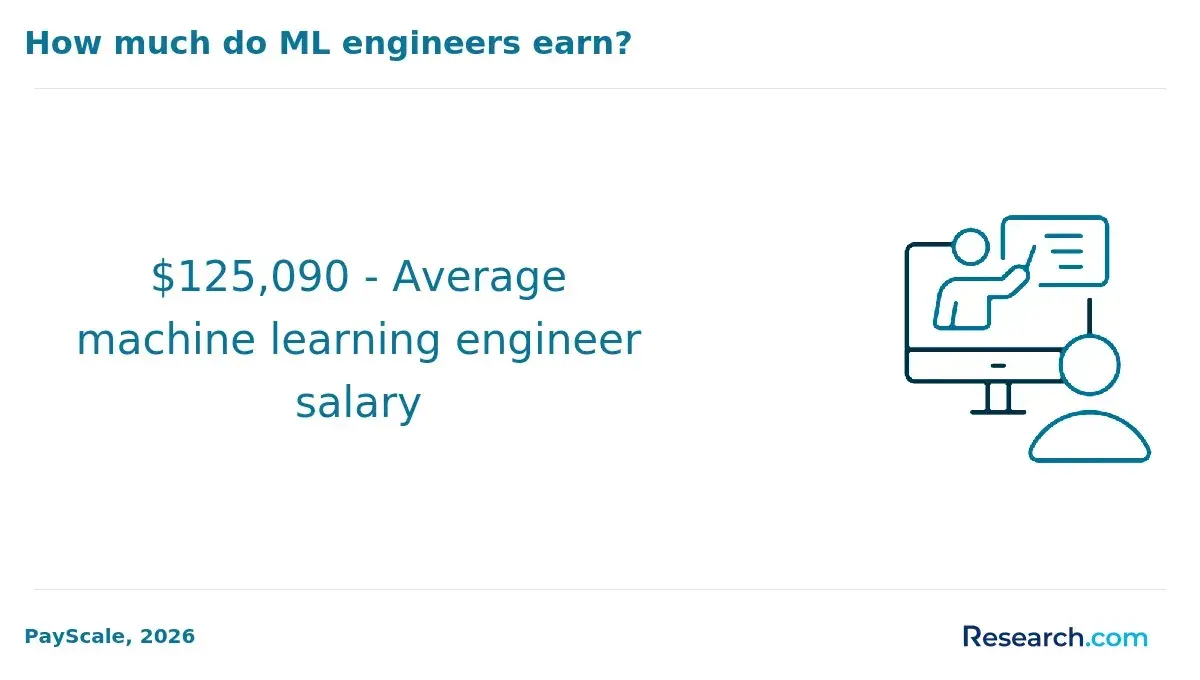
Salary expectations vary by experience and specialization. Entry-level AI agent developers in the U.S. typically earn between $85,000 and $110,000 annually, while mid-career professionals overseeing AI agent deployment can reach $130,000 to $160,000. In contrast, automation roles like process automation analysts or RPA consultants often start near $75,000 and grow to around $120,000 depending on the skill set and domain.
Job outlook challenges include keeping pace with technology changes and developing soft skills for effective AI-human collaboration. Graduates are encouraged to enhance expertise in AI model explainability, ethics, and system integration to stay competitive. Since over 27% of tasks in white-collar jobs are highly automatable, these AI-augmented competencies help workers collaborate with technology rather than compete.
Opportunities are abundant in cutting-edge sectors like healthcare, finance, and autonomous systems, where AI knowledge is increasingly valuable. Those completing automation courses may find roles in broader traditional industries but often with slower salary growth. Combining AI agent skills with automation expertise boosts career resilience and earning potential.
Other Things You Should Know About Artificial Intelligence
In 2027, students should consider the course content's focus, the skills in demand, potential career paths, and industry growth. AI Agent Courses may emphasize developing interactive AI systems, while Automation Courses might focus on streamlining processes. Understanding one's interests and career aspirations is key to making the right choice.
Automation incorporating artificial intelligence can replace some repetitive or routine tasks, but it also creates new job roles requiring AI oversight and development skills. While certain manual positions may decrease, demand grows for professionals who can design, manage, and improve AI systems. The shift emphasizes human-AI collaboration rather than full replacement.
Artificial intelligence supports decision-making by analyzing large datasets more quickly and accurately than humans can. It can identify patterns, predict outcomes, and suggest optimal choices, which helps in areas like healthcare, finance, and marketing. However, final decisions often require human judgment to contextualize AI recommendations.
Industries such as technology, healthcare, finance, manufacturing, and logistics benefit significantly from artificial intelligence education. AI skills enable improvements in predictive analytics, process automation, and customer service. Growing interest from sectors like automotive and retail also drives demand for AI-educated professionals.
References
- Subject requirement (A-G) https://admission.universityofcalifornia.edu/admission-requirements/first-year-requirements/subject-requirement-a-g.html
- Navigating the Job Market: Salary Tips for Graduates https://www.step.org.uk/graduating-from-university-can-be-a-thrilling-and-proud-moment-but-it-can-also-bring-with-it-a-sense-of-uncertainty-about-the-future/
- 7 Must-Have Skills to Start a Career in Industrial Automation in 2026 - CADCAMGURU Institute https://cadcamguru.com/blogs/7-must-have-skills-to-start-a-career-in-industrial-automation-in-2026/
- [Discussion] What are the essential skills that an automation beginner should have? https://forum.katalon.com/t/discussion-what-are-the-essential-skills-that-an-automation-beginner-should-have/148521
- Top 10 Concepts You’ll Learn in Industrial Automation Training https://www.koenig-solutions.com/blog/industrial-automation-training
- College grads expect an $80k salary. Good luck with that https://www.usatoday.com/story/money/personalfinance/2026/05/29/college-graduates-salary-unemployment-job-market-ai/90280770007/
- AI Automation and AI Agents: A Business Guide https://bhcourses.com/ai-hub/ai-automation-agents
- Choosing the Right Course for Your Career Goals - Keepmeposted Blog https://keepmeposted.com.mt/blog/choosing-the-right-course/
- Home - Prereqcourses https://www.prereqcourses.com/
- How Long Does a PhD Degree Take https://henryharvin.ae/blog/how-long-does-a-phd-degree-take/