2027 Operations Management Career Outcomes by Degree Level Report: Pay, Employment, and Advancement Patterns

Co-Founder and Chief Data Scientist
Deciding which degree level in operations management leads to the most favorable career outcomes can overwhelm students balancing current jobs, family, or military service. In 2024, a National Career Statistics report revealed that bachelor's degree holders in operations management experienced a 15% higher employment rate within six months of graduation compared to associate degree completers.
This gap underscores critical access and mobility differences that shape career trajectories in supply chain, logistics, and production roles. Understanding such nuances is essential for allocating time and resources effectively. This article dissects pay, employment, and advancement patterns by degree level to guide informed, practical decision-making for operations management students.
Key Things to Know About Operations Management Career Outcomes by Degree Level
- Associate degrees in operations management often lead to quicker labor-market entry but limit advancement, as 2024 data shows only 32% of supervisory roles prefer less than a bachelor's, indicating a tradeoff between speed and career ceiling.
- Bachelor's degrees remain the most sought credential by employers, reflecting workforce trends where 68% of openings require fundamental strategic and analytical skills, emphasizing credential relevance over purely experiential hires.
- Master's-level credentials provide access to leadership pipelines but come with higher costs and time investments; learners must weigh delayed workforce entry against the 22% higher promotion rate reported for advanced degrees in 2024.
- Key Things to Know About Operations Management Career Outcomes by Degree Level Key Things to Know About Operations Management Career Outcomes by Degree Level
- What Career Outcomes Can Students Expect From Each Operations Management Degree Level? Career Outcomes by Degree
- How Much Do Operations Management Graduates Earn by Degree Level? Salary by Degree Level
- Which Operations Management Degree Level Offers the Strongest Employment Prospects? Best Degrees for Employment
- What Entry-Level Jobs Can You Get With a Operations Management Degree? Entry-Level Career Opportunities
- How Do Operations Management Degree Levels Affect Career Advancement and Promotion Opportunities? Career Growth by Degree
- Is a Operations Management Degree Worth It Based on Salary, Employment, and ROI? Salary, ROI, and Value
- How Do Associate, Bachelor's, Master's, and Doctoral Operations Management Degrees Compare? Comparing Degree Levels
- Which Industries and Employers Hire Operations Management Graduates by Degree Level? Which Industries and Employers Hire Operations Management Graduates by Degree Level?
- What Skills, Credentials, and Experience Improve Operations Management Career Outcomes? What Skills, Credentials, and Experience Improve Operations Management Career Outcomes?
- Which Operations Management Degree Level Is Best for Your Career Goals? Choosing the Right Degree
What Career Outcomes Can Students Expect From Each Operations Management Degree Level?
Career outcomes in operations management vary significantly by degree level, reflecting distinct pathways that influence employment access and advancement potential. For example, an associate degree holder may secure positions focused on routine operational tasks such as logistics coordination but will often find that progression beyond these entry roles requires additional credentials or certifications like Six Sigma or PMP. In contrast, bachelor's degree programs typically position graduates for analytical and supervisory roles with responsibilities in supply chain optimization or plant management, where employers increasingly expect internship experience and project-based learning to demonstrate applied expertise. The varying time investments and credit transfer policies at these levels mean working adults and military-affiliated students must carefully weigh the shorter-term credential benefits against long-term mobility in operational roles.
Master's degrees further expand opportunities, especially for positions involving strategic decision-making, process analytics, and cross-functional leadership, with data from the National Center for Education Statistics showing these graduates experience lower unemployment and stronger wage growth trends. However, this level demands a greater commitment of time and resources, which may not align with every learner's immediate career needs, pushing some to evaluate accelerated paths, such as an accelerated master's program social work, to balance progression and speed.
Meanwhile, doctoral degrees in operations management open narrow, specialized roles primarily in academia and research, where candidates must weigh the opportunity cost against the limited labor market demand. Aligning degree-level decisions with realistic employer expectations and certification synergy remains essential for maximizing pay, employment stability, and upward progression across the evolving operations management landscape.
How Much Do Operations Management Graduates Earn by Degree Level?
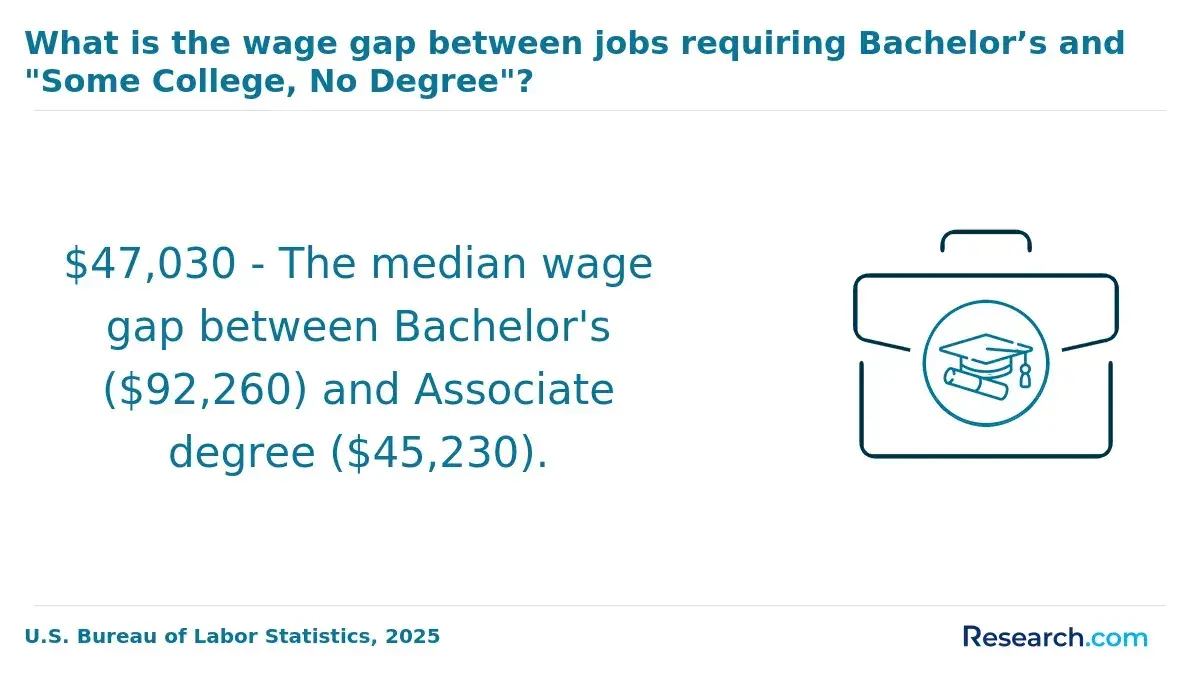
Earnings for operations management graduates vary significantly by degree level, shaped by employer expectations, job responsibilities, and market conditions rather than a simple linear pay scale. According to recent 2024 data from the U.S. Bureau of Labor Statistics, median salaries for bachelor's degree holders hover around $75,000 annually, reflecting access to supervisory roles with strategic input. Those with associate degrees or certificates usually earn between $45,000 and $55,000, highlighting slower growth potential and a narrower set of opportunities that favor entry-level positions. Master's graduates can expect a notable jump to approximately $95,000, which mirrors the demand for specialized skills and leadership in areas like supply chain oversight or operational consulting, though this premium is contingent on factors such as industry sector, geographic location, and relevant work experience.
While doctoral credentials are less common, they often lead to highly specialized roles in academia, research, or consultancy, with salaries surpassing $110,000 but requiring a clear alignment with niche career ambitions outside typical management tracks. It's important to weigh these pay differentials against practical concerns: time to completion, costs of further education, available transfer credits, and local labor market realities. Entry-level stability and employment rates favor associate-level graduates but come with limited upward mobility. Working professionals and adult learners must consider whether the incremental earnings justify the investment in advanced degrees, especially when employer preferences and industry demand vary dramatically across regions and sectors.
One operations management graduate recounted initially pursuing a bachelor's degree while working full-time and hesitating about a master's due to cost and time. After reviewing job postings and talking with local employers, they realized many leadership roles explicitly required or preferred a master's credential, pushing them to complete graduate studies despite concerns about balancing work and education. Their experience underscored how wage gains are often tied to meeting specific employer criteria and demonstrated that clear career goals must inform decisions around investing in higher credentials rather than relying solely on median salary reports or generalized earnings projections.
Which Operations Management Degree Level Offers the Strongest Employment Prospects?
Employers tend to prefer candidates with bachelor's degrees in operations management or closely related fields, as these programs typically cultivate the analytical, managerial, and cross-functional skills essential for mid-level roles. Individuals holding only certificates or associate degrees often face higher unemployment rates-reported at roughly 6.5% compared to 3.2% for bachelor's degree holders according to the U.S. Bureau of Labor Statistics in 2024-which reflects limited access to supervisory responsibilities and complex operational challenges. While certificates and associate credentials enable quicker workforce entry, they frequently restrict upward mobility, making them more suitable for technician or support functions rather than decision-making positions requiring strategic insight and leadership.
Master's degrees further differentiate candidates by emphasizing specialized knowledge, such as logistics optimization and operations research, which grows increasingly valuable in competitive, technology-driven industries and large corporations. Although not mandatory for most mid-level jobs, a graduate degree substantially enhances eligibility for senior roles where advanced problem-solving and leadership are prioritized. Conversely, doctoral degrees remain uncommon and mostly relevant to academic or high-level consulting paths, presenting narrower direct employment options. For students weighing whether to enter the workforce early or pursue further study, the National Center for Education Statistics notes that approximately 78% of bachelor's completers secure employment within a year-a rate significantly higher than those without four-year credentials-highlighting the tradeoff between immediate income and longer-term career flexibility linked to degree attainment.
What Entry-Level Jobs Can You Get With a Operations Management Degree?
Entry-level jobs for operations management degree holders diverge sharply depending on degree level, shaping both immediate job functions and long-term career trajectory. Associate degree graduates often find themselves in operational support or logistics roles that demand practical problem-solving but limit strategic involvement, whereas bachelor's degree holders gain access to positions emphasizing data-driven decision-making and cross-functional collaboration. Many employers prioritize candidates with internships or comparable practical experience, with recent federal data showing about 65% of entry-level operations-related hires expect such engagement, reflecting a labor market where academic credentials alone rarely suffice. This dynamic means students must weigh degree costs against the necessity of acquiring relevant experience early or risk stalling in narrowly defined entry roles.
The absence of licensure requirements in operations management allows flexibility, but certifications like Six Sigma or APICS CPIM meaningfully enhance employability and early leadership prospects. Geographic considerations and the blend of remote versus hands-on roles also produce tradeoffs; positions involving direct production oversight typically require physical presence, unlike analytical or coordination tasks that may permit remote work. For those contemplating advanced degrees or certifications, evaluating entry-level roles through the lens of skill acquisition and network building is critical to navigating workforce volatility and promotion disparities.
Career pathways in operations management unfold unevenly, making it essential for students to critically assess how their chosen degree aligns with employment stability, advancement potential, and long-term mobility within the evolving landscape of entry-level career opportunities with an operations management degree. Incorporating strategic education choices, including sometimes exploring related fields such as social work masters programs, can also shape versatile career pathways.
How Do Operations Management Degree Levels Affect Career Advancement and Promotion Opportunities?
Degree level in operations management directly affects eligibility for supervisory roles and shapes internal promotion pipelines, reflecting employer expectations grounded in credential verification and demonstrated managerial readiness. For example, employers frequently require a bachelor's degree as a baseline for team leadership or project management, valuing its structured focus on analytical problem-solving and supply chain strategy. Associate degree holders often encounter limited pathways beyond support or technician roles, while master's degree holders may advance faster into senior management but often face delayed promotion timing due to balancing work and study simultaneously. According to the U.S. Department of Education and Lightcast 2024 data, bachelor's graduates typically achieve mid-level supervisory positions more rapidly than those with associate degrees, underscoring the practical advantage of comprehensive four-year training in leadership competencies.
The tradeoff for working professionals contemplating further education centers on timing and the complexity of roles accessed. While advanced degrees expand qualification for executive positions requiring strategic oversight, employers may discount partial graduate credentials completed alongside employment when assessing immediate advancement readiness. Licenses and certifications add another layer of influence, especially in regulated sectors where they supplement academic credentials and impact promotion eligibility. Transfer-credit pathways and prior experience can accelerate degree completion for adult learners, yet degree levels remain a key filter in many organizations' promotion algorithms, signaling leadership potential and readiness more than just accumulated coursework.
One recent operations management graduate described weighing the decision to pursue a bachelor's after earning an associate while working full-time in logistics. Though hesitant about the delayed salary increase, the graduate recognized the bachelor's credential was essential to move into supervisor roles at their company. They noted, "Without the bachelor's, my role felt stuck in a technical support lane, and I was cautious applying for leadership positions that required more than just hands-on experience. Getting that degree opened doors I didn't realize would be closed otherwise." This experience highlights how degree level tangibly shapes both opportunity perception and actual promotion prospects in operations management careers.
Is a Operations Management Degree Worth It Based on Salary, Employment, and ROI?
Deciding if an operations management degree is worth pursuing depends heavily on how salary potential, employment stability, and career mobility align with individual circumstances. For example, a bachelor's degree holder may see a significant salary premium compared to those without formal credentials, but regional labor demand and prior work experience can alter this advantage. Working adults weighing time-to-completion and opportunity costs might prioritize part-time study or transfer credits to reduce educational disruption and improve their return on investment. Meanwhile, professionals targeting rapid entry into entry-level roles might find credential alternatives or real-world experience more viable paths than additional schooling.
The variation in employment outcomes and salary gains tied to operations management degree salary and employment outcomes emphasizes the importance of credential level and supplemental certifications. Advanced degrees such as a master's or MBA often deliver faster salary growth and broader career opportunities, yet the added time and cost must be balanced against potential earnings. Furthermore, certifications in supply chain or project management commonly enhance upward mobility, reflecting employer preferences for specialized skills beyond basic degrees. These factors combine to shape realistic ROI expectations, especially when considering non-tuition expenses and local market conditions.
Prospective students should also consider program affordability within their broader educational strategy. The average cost for an operations management degree can vary widely, influencing debt levels and financial flexibility post-graduation. For those exploring options, analyzing alternatives like a real estate degree may provide insight into cost-competitive credentials with different workforce demands. Ultimately, informed decisions hinge on aligning degree-level outcomes with career goals, cost concerns, and the evolving labor market landscape.
How Do Associate, Bachelor's, Master's, and Doctoral Operations Management Degrees Compare?
Choosing to limit one's education to an associate degree in operations management typically restricts individuals to support-level roles with limited upward mobility, especially given that only about 55% find employment within six months post-graduation according to the National Center for Education Statistics. This credential offers a faster and less costly entry but often requires subsequent education or certifications like the Certified Supply Chain Professional to improve marketability. In contrast, a bachelor's degree provides access to mid-level supervisory positions and broadens specialization options, leveraging credit transfers from associate programs to facilitate progression. Employers increasingly view the bachelor's as the baseline for leadership-track roles, with a measurable 10% higher employment rate compared to associate holders, as noted by the Bureau of Labor Statistics.
Advancing to a master's degree tends to accelerate career growth into senior management and niche specialties such as logistics optimization, though it demands significant additional investment in time and finances. Despite higher average student debt reported by the U.S. Department of Education, master's graduates often achieve greater job stability and faster promotion, particularly in sectors valuing strategic expertise and credentialing. Doctoral programs, while offering critical pathways into research, academia, and high-level consulting, impose extended completion times and uncertainty due to limited occupational positions outside academia. Deciding to pursue a doctorate requires weighing institutional reputation and long-term professional goals against the opportunity cost, as the direct utility for most practitioners remains narrow.
Transferability of credits across these degree levels supports stackable education strategies, allowing working adults to build credentials systematically while managing employment stability. However, the decision to stop after an associate or bachelor's degree versus continuing with graduate study hinges on realistic assessment of role eligibility, leadership aspirations, and certification requirements within relevant industries. Employer expectations increasingly prioritize specialized knowledge and formal credentials at higher levels, but practical utility diminishes beyond the master's degree for many operational roles, emphasizing the importance of aligning educational investments with clear career pathways and workforce dynamics.
Which Industries and Employers Hire Operations Management Graduates by Degree Level?
Hiring patterns in operations management differ notably by credential level, reflecting distinct employer expectations and role complexities. Associate degree holders predominantly fill technical or supervisory roles in manufacturing, retail, and logistics sectors, where hands-on experience and operational proficiency matter more than advanced academic qualifications. For example, a production supervisor in a mid-sized warehouse may advance by demonstrating process efficiency rather than holding a bachelor's degree, highlighting a pragmatic tradeoff where time and financial investment in higher education may not always yield immediate returns in these settings.
Bachelor's degree graduates access broader sectors such as healthcare administration, consulting, and technology, with a strong preference for analytical and leadership skills alongside foundational operations knowledge. A 2024 National Center for Education Statistics report reveals that nearly 70% of bachelor's-level hires enter midsize to large organizations emphasizing managerial potential. Master's degree holders are more often recruited for strategic and senior roles in industries with complex supply chains-pharmaceuticals or aerospace, for instance-where advanced credentials enable eligibility for cross-functional leadership and data-driven decision-making positions. Doctoral graduates, meanwhile, are largely channeled into policy research, academia, or executive roles within government or multinational corporations, highlighting a distinct shift toward specialization and innovation over operational execution.
Meanwhile, certificate programs serve as targeted upskilling tools for professionals in established roles but rarely substitute for degrees in leadership hiring decisions. Employers calibrate educational requirements based on strategic impact and job complexity, meaning students must weigh the immediate applicability of technical skills against the potential long-term benefits of advanced study when selecting their educational trajectory.
What Skills, Credentials, and Experience Improve Operations Management Career Outcomes?
The strongest predictors of improved outcomes in operations management are the combination of targeted credentials, applied technical skills, and relevant work experience, rather than degree level alone. For instance, candidates with certifications like the Certified Associate in Production and Inventory Management (CAPIM) or lean Six Sigma Yellow Belt often gain early role access and demonstrate readiness valued by employers, especially at associate and bachelor's degree levels. This practical credentialing complements foundational education, offering clearer paths to employment and promotion by reducing onboarding time and expanding specialization options in supply chain optimization or data analytics. Employers often prioritize these competencies over abstract academic achievement, placing higher stakes on proven ability to drive operational efficiency.
Integrating internships, apprenticeships, or military experience into career profiles aligns with employer expectations for applied learning, particularly for bachelor's degree holders seeking advancement into supervisory roles. Soft skills such as leadership, communication, and problem-solving, cultivated through real-world management projects, significantly influence career mobility and eligibility for promotion. Graduate degree holders enhance these foundations with strategic portfolio-building and executive-focused credentials, which prepare them for senior leadership.
Still, these advanced qualifications should be weighed against their time and cost relative to immediate job readiness gained through credentials at lower degree tiers. Prospective students, including working adults or transfer learners, must carefully navigate how stacking certifications and experience-alongside degree attainment-impacts employment access and advancement opportunities in operations management certification and credential requirements. For those beginning their educational journey, exploring 2 year degrees can provide a practical entry point balancing prior credits, experience, and credential pathways.
Which Operations Management Degree Level Is Best for Your Career Goals?
Selecting the appropriate operations management degree level has significant consequences for employment prospects and career mobility. For example, a bachelor's degree typically provides the most balanced access to supervisory and mid-level roles, reflected by an 88% employment rate within six months of graduation according to recent national statistics. Associate degrees, while faster and less expensive, often restrict graduates to technician or assistant positions, limiting specialization and advancement without further education. In contrast, master's degrees can enhance eligibility for senior leadership and specialized areas like supply chain analytics but require weighing increased tuition and longer time-to-completion against expected salary gains and industry demand.
These distinctions matter for transfer students, working professionals, and military-affiliated learners who must navigate credit transfer, program flexibility, and opportunity costs carefully. Employers increasingly prioritize field experience and certifications alongside degrees, making integrated internships valuable for career readiness beyond diploma titles. Those aiming for roles demanding niche skills or strategic leadership may find that advanced degrees or additional credentials are essential, underscoring the need to align degree pursuit with realistic timelines and labor market dynamics. This nuanced understanding is essential when considering which operations management degree level is best for your career goals in the United States.
Career advancement opportunities by operations management degree level also depend on ongoing skill development and sector-specific needs, particularly as many industries adopt data-driven methods. For students considering doctoral trajectories, investigating specialized pathways such as the online doctorate data science programs can be relevant for expanding expertise. Ultimately, decisions about degree levels must factor in not only immediate employability but also long-term professional flexibility and financial tolerance, reflecting complex workforce planning realities.
References
- Is a Business Degree Worth It in the UK in 2026? Salary & Career ROI https://olceurope.com/blog/is-a-business-degree-worth-it-in-the-uk-in-2026-the-salary-truth
- Unlock Your Career: Essential Operations Management Skills https://matchtocollege.com/blog/operations-management-skills-companies-want
- Entry Level Operations Manager Certifications: Best Credentials to Advance Your Career | Teal https://www.tealhq.com/career-paths/entry-level-operations-manager-certifications
- Operations Manager https://ace.edu/student-success/career-guides/operations-manager/
- Career development opportunities: better than a promotion https://www.neobrain.io/en/blog/redefining-career-growth-opportunities
- Quantic School of Business and Technology https://quantic.edu/blog/2021/09/28/operations-management-career-path-best-mba-to-advance/
- Operations Manager Career Guide : missions, training, and salary https://www.iscparis.com/en/program/career-guides-operations-manager/
- What Is the Typical Operations Manager Salary? https://claremontlincoln.edu/news-blog/operations-manager-salary/
- Achieving Success in Your Operations Career: How to Build a Rewarding Professional Path - Mangrum Solutions https://mangrumcareersolutions.com/blog/achieving-success-in-your-operations-career-how-to-build-a-rewarding-professional-path/
- Is College Worth it? | Return on Investment Analysis of College Degree https://educationdata.org/college-degree-roi
Other Things You Should Know About Operations Management
The workload increases substantially from associate to bachelor's and further into graduate programs, reflecting deeper theoretical complexity and applied project demands. Students at the bachelor's level can expect a mix of conceptual frameworks and practical case studies, while master's level programs often require original research, complex data analysis, and longer-term team projects. This progression means students must prepare for more self-driven study and time management challenges as they advance, making it critical to assess current professional and personal commitments before enrolling.
Employers increasingly prioritize practical experience alongside academic credentials, especially at the bachelor's and master's levels. While an associate degree may suffice for entry roles with limited prior experience, many mid-level positions require demonstrated competency in supply chain software, process optimization tools, and project leadership-skills more rigorously developed in higher degree programs. For students deciding on degree level, prioritizing programs with integrated internships or experiential learning is advisable to align with hiring expectations.
Choosing between further education and accumulating work experience hinges on long-term career goals and current market demand; a master's degree often opens doors to leadership and specialized roles but requires significant time and financial investment. Conversely, gaining diverse work experience can enhance practical skills and network growth, sometimes compensating for the absence of advanced credentials in certain operational roles. Professionals should weigh industry-specific norms: in some sectors, credentials strongly influence advancement, while in others, proven operational impact carries more weight.
Associate programs typically emphasize technical skills and immediate job readiness with limited breadth, suitable for operational support roles. Bachelor's degrees broaden understanding and strategic thinking, preparing graduates for supervisory roles and cross-functional collaboration. Master's curricula prioritize strategic leadership, analytics, and innovation, creating pathways into higher management or specialized consulting roles. Thus, candidates aiming for flexible long-term growth should consider how each program's focus aligns with evolving career ambitions and the necessity to adapt to changing industry trends.