
2027 How to Become an Art Teacher in Arizona: Requirements & Certification

Co-Founder and Chief Data Scientist
If you want to teach visual art in an Arizona K-12 classroom, the main decision is not simply whether you love art. You need to know which degree path meets Arizona certification rules, what exams and background checks are required, how student teaching works, and whether the career fits your income expectations and preferred school setting.
This guide explains how to become an art teacher in Arizona, including education requirements, certification steps, classroom experience, curriculum expectations, salaries, job-market conditions, professional development, and practical ways to stand out when applying for teaching roles. It is written for high school graduates considering an art education degree, career changers with an art background, current teachers seeking an art endorsement, and working adults comparing traditional and alternative routes.
Arizona can be a strong place to pursue art education because schools, museums, cultural organizations, and community arts programs create multiple ways to build experience. However, candidates should also plan carefully: certification requirements are specific, school budgets vary, and salary expectations can differ by district, experience, and location.
Quick Answer: How do you become an art teacher in Arizona?
To become an art teacher in Arizona, you generally need a bachelor’s degree, approved teacher preparation or qualifying coursework in art education, practicum or student teaching experience, passing scores on required educator assessments, a fingerprint clearance card, and an Arizona teaching certificate for art education. Candidates who already hold a bachelor’s degree in another field may be able to use an alternative certification pathway, but they should confirm that the program is accepted by the Arizona Department of Education before enrolling.
Key Things You Should Know About Becoming an Art Teacher in Arizona
- Salary expectations: The average salary for art teachers in Arizona is approximately $59,000 per year, although pay can vary by school district, years of experience, grade level, and location.
- Job outlook: Some projections cite a 10% growth in art teacher positions over the next decade, while another outlook referenced for Arizona indicates about 5% growth. Treat these as directional estimates and check current district openings before choosing a program.
- Cost of living: Arizona’s cost of living is often lower than in many other states, and the average monthly rent for a one-bedroom apartment in urban areas such as Phoenix is around $1,400.
- Certification matters: A strong art portfolio is helpful, but public school teaching usually requires state certification, educator testing, classroom experience, and background clearance.
- Experience improves employability: Student teaching, community arts work, museum education, youth workshops, and digital art skills can help candidates compete for school-based positions.
- Steps to become an art teacher in Arizona
- Education requirements for Arizona art teachers
- Certification and licensing process
- Student teaching, internships, and classroom experience
- Arizona art standards and curriculum expectations
- Job market and salary expectations
- Professional development and continuing education
- Classroom management and teaching methods
- Interdisciplinary teaching in art education
- Advanced education and career prospects
- Career advancement and specialization options
- Resources for new Arizona art teachers
- Using digital tools in the art classroom
- Building partnerships with cultural institutions
- Scholarships, grants, and financial support
- Collaborating with librarians
- Public versus private school teaching environments
- Alternative degree pathways
- Supporting students with special needs
- Maximizing classroom resources
- Questions to ask before choosing an art education pathway
How can you become an art teacher in Arizona?
The path to becoming an art teacher in Arizona usually follows a sequence: complete the right education, gain supervised teaching experience, pass required assessments, apply for certification, and then pursue teaching openings in public, charter, private, or community-based settings.
| Step | What it involves | Why it matters |
| Earn a bachelor’s degree | Complete an accredited art education program or a related degree with the required art education coursework. | Arizona teaching certification generally requires formal preparation, not only artistic ability. |
| Complete art education coursework | Candidates typically need at least 30 semester hours in art education, including practicum experiences. | Coursework builds knowledge in pedagogy, studio practice, curriculum design, assessment, and student development. |
| Gain classroom experience | Student teaching or practicum placements allow candidates to work with students under an experienced teacher. | Schools want evidence that you can manage a classroom, adapt lessons, and teach safely with art materials. |
| Pass required assessments | Arizona requires competency testing that may include subject knowledge and professional knowledge assessments. | Passing scores show readiness to teach both art content and general educational practice. |
| Apply for certification | Submit the state application, complete fingerprinting and background checks, and provide required documentation. | Certification is essential for most public school art teaching positions. |
| Prepare job materials | Create a teaching-focused resume, lesson samples, classroom management statement, and digital or physical art portfolio. | Hiring committees need to see both your artistic skill and your ability to teach diverse learners. |
| Maintain certification | Complete continuing education and renewal requirements, including required training such as Structured English Immersion when applicable. | Renewal keeps your credential active and supports long-term career growth. |
Aspiring teachers should also compare programs before enrolling. Look for accreditation, supervised fieldwork, pass-rate support, advising for certification, and partnerships with Arizona schools. If you are comparing requirements across nearby states, this guide to Nevada educator certification can help you understand how state rules can differ.
What are the educational requirements for becoming an art teacher in Arizona?
The minimum education requirement for most Arizona art teacher candidates is a bachelor’s degree. The most direct route is a bachelor’s program in art education that combines studio art, art history, child development, instructional planning, classroom assessment, and supervised teaching practice.
Candidates commonly need a minimum of 30 semester hours in art education. This preparation may include at least eight hours focused on either elementary or secondary education and 12 hours of practicum experience. In some cases, two years of verified teaching experience may be used in place of the practicum requirement.
Teacher preparation programs are especially important because they translate artistic knowledge into classroom-ready teaching skills. A strong program should help students learn how to design age-appropriate lessons, safely manage materials and tools, assess creative work fairly, teach students with different learning needs, and connect art to culture, history, and contemporary media.
When reviewing degree options, check whether the institution and program are accredited by recognized bodies such as the National Association of Schools of Art and Design or the National Council for Accreditation of Teacher Education. Accreditation can affect certification eligibility, transferability of credits, graduate school options, and employer confidence.
| Pathway | Best for | Important considerations |
| Bachelor’s in art education | Students who know they want to teach art in K-12 schools. | Usually the most straightforward option because art coursework and teacher preparation are built into the same program. |
| Bachelor’s in studio art plus teacher preparation | Students with strong studio interests who later decide to teach. | May require additional education coursework, practicum experience, and careful advising to meet certification rules. |
| Post-bachelor teacher preparation | Career changers who already hold a bachelor’s degree. | Program acceptance for Arizona certification should be verified before enrollment. |
| Alternative certification | Adults with a bachelor’s degree in a non-education field who want a faster transition. | May include additional coursework, mentorship, and provisional teaching requirements. |
Older students and career changers should pay close attention to transfer credit policies, field placement scheduling, and whether evening or online coursework is available. Research.com’s guide to teaching degree programs for older students can help working adults compare return-to-school options.
What is the certification and licensing process for an art teacher in Arizona?
Arizona art teachers need a valid teaching certificate that matches their intended grade level and subject area. For art education, candidates typically work toward the Standard Professional Certificate for art education after meeting education, testing, field experience, and background-clearance requirements.
A typical candidate holds a bachelor’s degree in art education or a closely related field from an accredited institution. Degree programs generally include art techniques, art history or criticism, teaching methods, classroom assessment, pedagogy, and child or adolescent development.
Student teaching is a central part of the licensing process. This supervised experience usually takes place near the end of a degree program and places the candidate in a real K-12 setting with a licensed teacher mentor.
Candidates must also pass the Arizona Educator Proficiency Assessment (AEPA) for art education. The AEPA evaluates both art-specific knowledge and teaching-related competencies, helping ensure that new teachers are prepared to lead instruction responsibly.
Fingerprinting and background checks are required. Candidates must submit a fingerprint clearance card application to the Arizona Department of Public Safety, which helps protect student safety and uphold professional standards in schools.
After completing the required education and passing the AEPA, candidates can apply through the Arizona Department of Education. Arizona also offers a Provisional Certification that is valid for three years and can be upgraded to Standard Certification after two years of teaching experience.
Certification renewal should be planned from the beginning of a teaching career. The certification process described here includes 180 professional development hours every six years to maintain certification. Because professional development requirements can vary by certificate type, training category, and state policy updates, candidates should confirm the current renewal rules directly with the Arizona Department of Education before submitting renewal documentation.
Arizona also provides alternative routes for candidates who already have a bachelor’s degree outside education. These pathways can be useful, but they are not shortcuts around professional standards. Candidates should expect extra coursework, mentorship, and state documentation.
How important is teaching experience and what are the internship opportunities for art teachers in Arizona?
Teaching experience is one of the strongest ways to become a competitive art teacher candidate in Arizona. A portfolio may show artistic ability, but schools also need proof that you can explain concepts clearly, manage materials safely, support students with different skill levels, and keep a creative classroom productive.
The Arizona certification process includes student teaching, and candidates are commonly expected to complete at least 12 weeks of student teaching. This placement may occur in public, private, or charter school settings, depending on program partnerships and certification requirements.
Student teaching usually involves planning lessons, demonstrating techniques, assisting with critiques, assessing student work, organizing supplies, communicating with families or staff, and observing how experienced teachers handle classroom routines. Candidates should treat this placement like a long-form job interview because mentor teachers and administrators can become references.
Where aspiring art teachers can gain experience
- K-12 school placements: Student teaching and practicum experiences provide the most direct preparation for certified teaching roles.
- Community art centers: Workshops and youth programs help candidates practice instruction with different age groups.
- Museums and galleries: Education programs can build experience in interpretation, public speaking, and arts outreach.
- Summer camps: Art camps offer fast-paced classroom management practice and project planning experience.
- Volunteer programs: Community murals, after-school programs, and nonprofit arts initiatives can strengthen a resume.
- Alternative certification mentorships: Some nontraditional pathways include supervised teaching while candidates complete coursework.
How to make student teaching count
- Ask your mentor teacher for frequent, specific feedback rather than waiting until the end of the placement.
- Keep copies of lesson plans, rubrics, student work samples when allowed, and reflection notes for your teaching portfolio.
- Practice multiple teaching formats, including demonstrations, small-group coaching, critique sessions, and inquiry-based lessons.
- Learn how the school handles accommodations, English language learners, classroom behavior, safety, and supply budgets.
- Build professional relationships with administrators, department chairs, counselors, librarians, and other arts faculty.
What are the standards and curriculum requirements for teaching art in Arizona?
Arizona’s art education expectations are tied to the state’s K-12 academic framework. Art teachers are expected to help students build creative habits, technical skills, visual literacy, cultural understanding, and the ability to discuss and evaluate artwork.
The Arizona arts curriculum is designed to support flexible instruction. That matters because art classrooms often include students with very different backgrounds, abilities, interests, and prior exposure to the arts.
Effective curriculum planning should include more than studio production. Strong art programs usually combine artmaking, art history, criticism, reflection, experimentation, and connections to community culture. Arizona teachers can make lessons more relevant by incorporating regional history, Indigenous and local artistic traditions, public art, museum resources, and contemporary creative industries.
| Curriculum area | What students should practice | How teachers can support learning |
| Creating | Developing ideas, experimenting with media, revising work, and producing original art. | Use demonstrations, sketchbook planning, studio routines, and guided exploration. |
| Presenting | Preparing, displaying, and discussing artwork in appropriate contexts. | Teach matting, artist statements, critique language, and exhibition planning. |
| Responding | Analyzing visual choices, interpreting meaning, and evaluating artistic work. | Use classroom critiques, visual thinking strategies, and comparison activities. |
| Connecting | Linking art to culture, history, personal experience, and other subjects. | Partner with community organizations and design interdisciplinary projects. |
Professional development workshops, online courses, educator networks, and museum programs can help teachers stay aligned with standards while refreshing their lesson design. Teachers who want deeper studio or teaching expertise may also compare budget online MFA degrees, especially if they are interested in advanced art practice, community arts leadership, or postsecondary teaching.
Assessment should be clear and fair. Art teachers should avoid grading only on “talent” and instead use rubrics that measure process, effort, technique, creativity, reflection, craftsmanship, and growth. This approach helps students understand expectations and gives teachers defensible evidence of learning.
What is the job market like and what are the salary expectations for art teachers in Arizona?
The average salary for art teachers in Arizona is around $59,000 per year. Pay can vary widely by district, experience, school type, and location. Art teachers in larger urban areas such as Phoenix and Tucson may earn more than $60,000, while some rural district salaries may be closer to $45,000.
The job market is described as relatively promising, supported by steady demand for creative educators in public and private schools. Still, candidates should understand that art positions can be more limited than core-subject openings, especially in smaller districts where one teacher may cover multiple grade levels or campuses.
What affects art teacher pay in Arizona?
- District salary schedules: Public schools often use salary tables based on education level and years of experience.
- Location: Urban, suburban, and rural districts may offer different compensation levels and cost-of-living trade-offs.
- Experience: New teachers generally earn less than educators with several years in the classroom.
- Graduate education: Some districts provide salary movement for advanced degrees or approved credits.
- Additional duties: Stipends may be available for clubs, exhibitions, after-school programs, or department leadership, depending on the school.
| Compensation factor | What to check before accepting a job |
| Base salary | Review the district salary schedule and confirm where your degree and experience place you. |
| Health insurance | Compare premiums, deductibles, dependent coverage, and employer contribution. |
| Retirement plan | Ask how retirement contributions work and when you become vested. |
| Paid time off | Clarify sick leave, personal leave, holidays, and contract length. |
| Professional development | Ask whether the district funds conferences, workshops, graduate credits, or required training. |
| Art supply budget | Find out whether the art program has a reliable annual budget or depends heavily on donations and fundraising. |
One Arizona teacher described the trade-off this way: “I graduated from ASU’s art education program and worried at first about the salary. The pay was not as high as I imagined, but the benefits, the school community, and the chance to teach art every day made the decision worthwhile.” Her experience highlights a common reality: compensation matters, but work environment, administrative support, and program resources can strongly affect job satisfaction.
What professional development and continuing education opportunities are available for art teachers in Arizona?
Arizona art teachers can use professional development to keep their certification active, improve instruction, and build a stronger career path. Useful options include workshops, district training, museum educator programs, state arts initiatives, webinars, conferences, and graduate coursework.
Organizations such as the Arizona Commission on the Arts and the Arizona Department of Education provide professional learning resources for educators. The Phoenix Art Museum also offers educator workshops that connect teachers with arts professionals, hands-on learning, and networking opportunities.
The certification information in this article identifies 180 professional development hours every six years for renewal. Another professional learning requirement referenced for art educators is 45 hours of professional development every six years, including Structured English Immersion training for those working with English language learners. Because requirements can change and may depend on certificate type, teachers should verify the current rules with the Arizona Department of Education before relying on any single hour total.
Professional development topics worth prioritizing
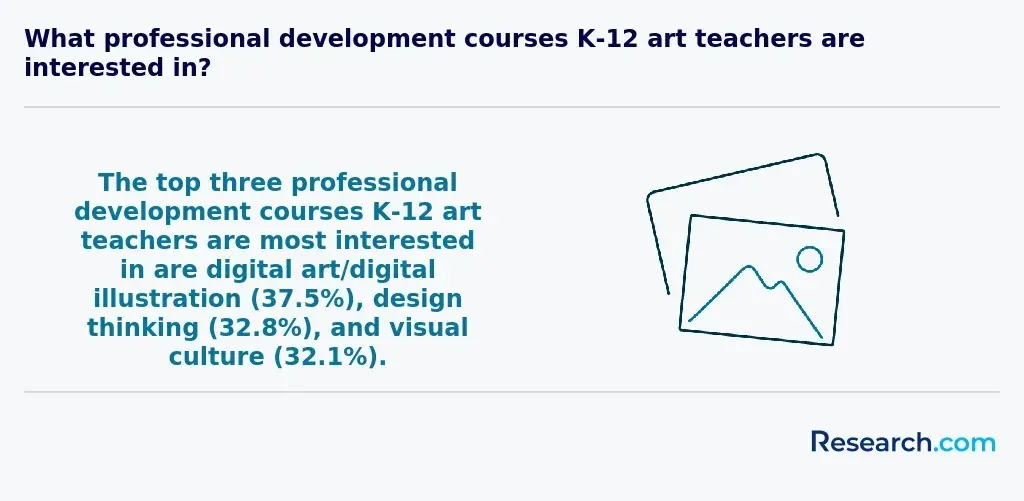
- Teaching English language learners through visual and language-supported instruction.
- Adapting art lessons for students with disabilities and different motor, sensory, or communication needs.
- Digital art, media literacy, photography, animation, and design software.
- Assessment methods that value process, revision, creativity, and reflection.
- Safe studio practices, material storage, and classroom procedures.
- Community-based art, public art, and culturally responsive teaching.
- Leadership, curriculum planning, and arts advocacy.
Teachers who want to move into department leadership, program coordination, or school administration may also benefit from graduate study. Research.com’s guide to online leadership and organizational change degrees can help educators compare leadership-focused options outside a traditional art education master’s degree.
What are effective classroom management strategies and teaching methods for art teachers in Arizona?
Art rooms require strong classroom management because students use shared tools, messy materials, movement, collaboration, and open-ended creative processes. A successful art classroom is not silent or rigid, but it must be structured enough for students to create safely and respectfully.
Classroom management strategies that work well in art rooms
- Teach routines explicitly: Demonstrate how to enter the room, collect supplies, clean tools, store projects, and transition between activities.
- Use visual procedures: Posters, supply maps, cleanup checklists, and step-by-step examples help students work independently.
- Set material rules before distributing supplies: Students should know safety expectations for scissors, clay tools, paint, adhesives, digital devices, and printmaking equipment.
- Build positive reinforcement into the studio culture: Recognize preparation, persistence, peer support, responsible cleanup, and thoughtful critique behavior.
- Differentiate assignments: Offer structured choices so beginners, advanced students, English language learners, and students with special needs can all participate meaningfully.
- Use critique carefully: Teach students how to give feedback that is specific, respectful, and connected to learning goals.
- Assess throughout the process: Check sketches, drafts, reflection notes, and revisions instead of waiting until the final product.
Art teachers should design lessons that combine engagement with clear objectives. Hands-on work, visual journals, collaborative murals, role-playing, creative drama, and cross-media projects can make classroom expectations easier to understand while also encouraging creativity.
Teachers should also avoid assuming that students who are quiet are learning or that students who struggle with drawing are not creative. Effective art instruction gives students multiple ways to show understanding: design thinking, storytelling, critique, digital composition, sculpture, photography, mixed media, and written reflection.
If affordability is a major factor in your teacher preparation search, compare cheap online education degrees and verify whether each program can support Arizona certification, field placements, and required art education coursework.

How can interdisciplinary teaching enhance art education in Arizona?
Interdisciplinary teaching helps students see art as part of a larger learning experience rather than an isolated elective. In Arizona, art teachers can connect lessons to language arts, history, science, mathematics, technology, music, and community studies.
For example, an art teacher might partner with an English teacher to combine visual storytelling with narrative writing, have students illustrate themes from literature, or ask students to analyze how images shape meaning. Educators comparing related teaching pathways can review how to become an english teacher in Arizona to understand how language arts and visual arts can support one another.
| Partner subject | Art connection | Student benefit |
| English language arts | Graphic narratives, visual symbolism, artist statements, and illustrated poetry. | Students strengthen interpretation, writing, and visual communication. |
| History | Public art, cultural artifacts, protest posters, architecture, and regional art movements. | Students connect creative work to historical context and civic identity. |
| Science | Botanical drawing, color theory, environmental art, and observational sketching. | Students practice careful observation and evidence-based thinking. |
| Math | Perspective, symmetry, tessellations, proportion, scale, and design grids. | Students apply abstract concepts through visual problem-solving. |
| Music and performing arts | Set design, album art, performance posters, movement studies, and rhythm-based composition. | Students explore how different art forms communicate emotion and structure. |
Can advanced education boost career prospects for art teachers in Arizona?
Advanced education can help art teachers deepen their subject expertise, qualify for leadership responsibilities, and strengthen their long-term earning potential. A master’s degree may be useful for teachers interested in curriculum design, instructional coaching, school leadership, arts administration, museum education, or college-level teaching.
Graduate study can also expand a teacher’s professional network. Many educators use master’s programs to develop a specialty in digital media, ceramics, art history, special education, educational leadership, or curriculum development. Research.com’s overview of high-paying jobs with a master's in education can help teachers understand how graduate credentials may connect to broader education careers.
Before enrolling, compare the total cost, delivery format, accreditation, faculty expertise, studio access, field requirements, and whether the degree will move you on a district salary schedule. A graduate degree can be valuable, but it should fit your career plan rather than serve as an automatic next step.
What are the career advancement opportunities and specializations for art teachers in Arizona?
Art teachers can grow their careers without leaving the classroom, but they can also move into leadership, curriculum, community arts, and administrative roles. The best path depends on whether you want deeper studio teaching, broader school influence, or work beyond K-12 classrooms.
- Specialized teaching areas: Arizona art teachers may focus on art history, digital media, ceramics, photography, design, printmaking, animation, or art therapy-related programming where appropriate.
- Department leadership: Experienced teachers may become art department chairs, fine arts leads, or mentors for new teachers.
- Curriculum coordination: Teachers with strong planning and assessment skills can support district-level curriculum design or arts integration initiatives.
- School administration: Some art teachers pursue administrative roles such as assistant principal, principal, or program director after completing leadership training.
- Additional credentials: A K-12 Art Endorsement, National Board Certification, or graduate degree can strengthen a teacher’s professional profile.
- Policy and advocacy: Experienced educators may work with local education agencies, arts councils, or nonprofits to support arts education access.
Teachers considering leadership roles may want to compare an online master's degree in educational leadership with art-focused graduate programs. The right choice depends on whether your goal is classroom mastery, arts administration, curriculum leadership, or school administration.
One Arizona educator described how specialization changed her path: “After graduating from Arizona State University, I began teaching in a small district in Tempe. My interest in digital media helped me become the district’s art curriculum coordinator.” Her story shows how a focused skill set can create opportunities beyond a standard teaching assignment.
What resources and support are available for new art teachers in Arizona?
New art teachers need more than certification. They need lesson support, mentorship, supply strategies, classroom management guidance, and a professional network. Arizona offers several support options through state agencies, universities, professional associations, school districts, and arts organizations.
- Arizona Art Education Association: New teachers can look for professional development, networking, conference opportunities, and connections with other art educators.
- Arizona Department of Education: Teacher induction and educator support resources can help early-career teachers understand expectations and renewal requirements.
- Arizona State University and Northern Arizona University: University programs may provide resources, coursework, research, and alumni networks for art educators.
- District professional learning communities: Local PLCs allow teachers to share lesson ideas, compare assessment practices, and solve classroom challenges together.
- Arizona Commission on the Arts: Grants and arts education resources can help teachers bring new materials, projects, or partnerships into the classroom.
- National Art Education Association: National conferences, publications, and educator communities can help teachers stay current with best practices.
- Online platforms: Teachers Pay Teachers, Artsonia, and similar platforms can offer lesson ideas, but teachers should adapt materials to Arizona standards and their students’ needs.
What new art teachers should do in their first year
- Meet with your principal to clarify expectations for exhibitions, grading, supply budgets, and schoolwide events.
- Create routines for material distribution, cleanup, storage, and safety before launching complex projects.
- Build a yearlong curriculum map that balances technique, creativity, culture, and assessment.
- Document student learning with rubrics, photographs when allowed, artist statements, and reflection prompts.
- Find at least one mentor inside your district and one professional connection outside your school.
How can art teachers in Arizona integrate digital tools into their art curriculum?
Digital tools can strengthen art instruction when they support creative thinking rather than replace hands-on making. Arizona art teachers can use tablets, interactive whiteboards, digital drawing platforms, animation tools, photo editing, virtual galleries, online portfolios, and collaborative platforms to expand what students can create and critique.
Technology is especially useful for demonstrations, portfolio documentation, student feedback, and access to global art examples. It can also help students who struggle with traditional materials explore design, composition, revision, and visual communication in different ways.
| Digital tool | Classroom use | Teaching caution |
| Tablets or drawing devices | Digital sketching, illustration, layering, and design practice. | Students still need instruction in composition, visual thinking, and revision. |
| Online portfolios | Students can document progress, reflect on work, and prepare for exhibitions or applications. | Follow district policies on student privacy and image sharing. |
| Virtual museums and galleries | Teachers can introduce artwork students may not be able to see locally. | Use guided questions so online viewing does not become passive browsing. |
| Interactive whiteboards | Teachers can model techniques, annotate images, and compare student examples. | Balance teacher demonstration with student studio time. |
| Open-source or low-cost software | Students can explore design and media art without expensive licenses. | Check device compatibility and district technology rules before building assignments around a tool. |
Art teachers can also borrow useful planning habits from other subjects, such as step-by-step modeling, scaffolded problem solving, and clear evidence of learning. For a cross-subject comparison, review how to be a middle school math teacher in Arizona.
What steps can aspiring art teachers in Arizona take to prepare for a successful teaching career?
Aspiring art teachers should begin by understanding the full how to become a teacher in Arizona process, then choose an art education pathway that matches state certification rules. The strongest candidates combine academic preparation, supervised classroom experience, a teaching portfolio, and evidence of adaptability.
Practical preparation checklist
- Confirm the current Arizona Department of Education certification requirements for art education.
- Choose an accredited program with supervised field placements in Arizona schools.
- Build a portfolio that includes both personal artwork and teaching artifacts.
- Gain experience with children or teenagers before student teaching begins.
- Learn basic classroom management strategies for studio environments.
- Develop comfort with digital art tools, inclusive teaching, and culturally responsive curriculum.
- Network with art teachers, museum educators, district arts coordinators, and local artists.
- Track certification deadlines, testing requirements, fingerprint clearance, and renewal obligations.
How can art teachers foster community partnerships with local cultural institutions?
Community partnerships can make an art program stronger, especially when classroom budgets are limited. Arizona art teachers can collaborate with museums, galleries, universities, libraries, local artists, community arts centers, cultural organizations, and performing arts groups.
Partnerships may include guest artist visits, field trips, student exhibitions, mural projects, portfolio reviews, workshops, public art research, or interdisciplinary performances. These experiences help students see art as part of civic life and creative careers, not only as a classroom subject.
Art teachers can also collaborate with music educators on set design, album art, concert posters, performance documentation, and sound-inspired visual projects. For a related arts education pathway, see how to become a music teacher in Arizona.
How to build a strong partnership
- Start with a clear learning goal instead of asking for general help.
- Choose partners whose mission aligns with student needs and curriculum standards.
- Clarify costs, transportation, permissions, scheduling, and supervision early.
- Prepare students before the visit or project so the experience connects to classroom learning.
- Document outcomes through student reflections, photos when permitted, exhibitions, or presentations.
What financial supports and scholarship opportunities are available for art teachers in Arizona?
Future and current art teachers should look for financial support at several levels: federal aid, institutional scholarships, local arts grants, district support, professional association awards, and educator loan forgiveness programs. Availability changes, so candidates should verify deadlines and eligibility each year.
Some teacher preparation programs offer scholarships or tuition incentives. Local arts councils and community organizations may also fund classroom projects, conference travel, art supplies, or student exhibitions. Current teachers should ask district administrators whether professional development funds can be used for art education workshops or required renewal training.
Researching funding in adjacent subject areas can also help candidates understand how education-related aid is structured. For comparison, review how to become a history teacher in Arizona.
Funding questions to ask
- Does the program offer scholarships specifically for future teachers or art education majors?
- Can transfer credits reduce tuition or time to completion?
- Are student teaching placements unpaid, and how should you budget for that semester?
- Does the district reimburse professional development or graduate coursework?
- Are there grants for classroom materials, exhibitions, guest artists, or community projects?
How can art teachers effectively collaborate with librarians in Arizona?
Librarians can be valuable partners for art teachers because they support research, media literacy, copyright awareness, digital archives, citation skills, and access to visual culture resources. Collaboration is especially useful when students are creating artist research projects, museum-style exhibitions, visual essays, or digital portfolios.
An art teacher and librarian might co-teach a unit on finding credible artist sources, analyzing images, understanding fair use, comparing historical movements, or building a research-backed artist statement. Librarians can also help students locate books, databases, local history materials, and online collections that broaden their creative references.
Educators interested in the information-literacy side of collaboration can review how to become a librarian in Arizona for more context on library roles and resource management.
How do public and private school environments differ for art teachers in Arizona?
Public and private schools can offer very different teaching experiences for art educators. Public schools typically follow state certification rules, district curriculum expectations, salary schedules, and standardized employment procedures. Private schools may offer more flexibility in curriculum design but can have different hiring requirements, budgets, salaries, and expectations.
| Factor | Public schools | Private schools |
| Certification | State certification is commonly required for public school teaching roles. | Requirements may vary by school, though certification can still strengthen candidacy. |
| Curriculum | Often aligned with state standards and district pacing or program goals. | May allow more flexibility, depending on school mission and leadership. |
| Pay structure | Often based on published salary schedules. | May be negotiated or determined by school-specific policies. |
| Resources | Budgets vary by district and campus. | Resources vary widely; some schools have strong arts funding, while others operate with limited materials. |
| Teaching environment | May include larger classes and broader student populations. | May include smaller classes, specialized missions, or different parent expectations. |
Candidates considering nonpublic school settings should review hiring expectations carefully. Research.com’s guide on how to become a private school teacher in Arizona explains how private school pathways may differ from public school certification routes.
Can alternative degree pathways streamline the process to becoming an art teacher in Arizona?
Alternative pathways can help career changers enter teaching without completing a traditional four-year art education degree from the beginning. These options may work well for adults who already hold a bachelor’s degree, professional artists who want to teach, or educators seeking to add art preparation.
However, alternative routes should be evaluated carefully. A faster pathway is only useful if it meets Arizona certification requirements, includes appropriate mentorship, prepares candidates for required exams, and provides enough classroom practice to succeed with students.
| Question | Why it matters |
| Is the program accepted for Arizona teacher certification? | Enrollment alone does not guarantee eligibility for a teaching certificate. |
| Does it include supervised teaching or mentorship? | Art teachers need real classroom practice, especially for studio management and safety. |
| Will it prepare you for the AEPA? | Assessment support can affect your certification timeline. |
| Can you complete coursework while working? | Career changers often need flexible scheduling. |
| Are credits transferable to a master’s degree? | This can matter if you later pursue graduate study or salary advancement. |
If you are comparing faster education options, Research.com’s guide to the easiest teaching degree can help you think through speed, rigor, accreditation, and certification alignment.
How can art teachers support students with special needs in Arizona?
Art classrooms can be highly inclusive because students have many ways to express understanding. Still, inclusion requires planning. Art teachers should adapt instructions, materials, timing, communication, and assessment so students with disabilities can participate safely and meaningfully.
Inclusive art teaching strategies
- Break projects into smaller steps with visual examples.
- Offer adaptive tools such as larger grips, alternative scissors, textured materials, or digital options when appropriate.
- Provide choices in media, scale, process, or final format while keeping the learning goal consistent.
- Use peer support carefully so classmates assist without taking over the work.
- Coordinate with special education teachers, occupational therapists, paraprofessionals, and families.
- Use clear rubrics that assess individual growth, process, and effort alongside final products.
- Prepare sensory-sensitive options for students who may struggle with strong smells, textures, noise, or crowded workspaces.
Teachers who want deeper preparation can review special education teacher certification in Arizona for insight into special education roles, training, and student support practices.
How can art teachers maximize classroom resources while fostering creativity?
Art teachers often work with limited budgets, so resourcefulness is part of the job. Strong programs do not depend only on expensive supplies; they depend on thoughtful planning, community support, safe reuse of materials, digital options, and projects that emphasize creativity over consumption.
Ways to stretch an art classroom budget
- Design projects around versatile materials such as paper, cardboard, drawing media, found objects, and recycled materials.
- Ask local businesses, families, and community partners for safe, usable donations.
- Apply for grants through arts councils, education foundations, and community organizations.
- Partner with galleries, museums, libraries, and cultural institutions for shared resources or exhibition space.
- Use open-source software and digital galleries to supplement physical materials.
- Create reusable demonstration kits, visual guides, and classroom supply systems.
- Teach students how to conserve materials without limiting experimentation.
Teachers in younger grades often develop strong strategies for low-cost, hands-on creativity. For related ideas about early learning environments and resource planning, see how to become a kindergarten teacher in Arizona.
What do graduates have to say about becoming an art teacher in Arizona?
- Teaching art in Arizona changed how I see both education and creativity. The cultural variety across the state gives my students rich material to explore, and their artwork often reflects perspectives I would not have seen in a textbook. Lila
- Access to arts education grants and classroom resources has helped me try projects that would have been difficult to fund on my own. Watching students gain confidence through those projects is one of the best parts of the job. Marcus
- Arizona’s art community has helped me grow professionally. Working with local artists and other educators has made my classroom more connected to real creative practice. Sofia
Common mistakes to avoid when becoming an art teacher in Arizona
| Mistake | Why it can hurt you | Better approach |
| Choosing a program without checking certification alignment | You may complete coursework that does not meet Arizona requirements. | Confirm approval, accreditation, and certification support before enrolling. |
| Focusing only on tuition | Fees, student teaching travel, supplies, testing, and lost work hours can affect total cost. | Compare full cost of attendance and ask about scholarships, transfer credits, and aid. |
| Building only an artist portfolio | Schools also need to see teaching skill, lesson design, and student-centered thinking. | Create a teaching portfolio with lesson plans, rubrics, reflections, and classroom examples. |
| Underestimating classroom management | Art rooms involve tools, movement, cleanup, and shared materials. | Practice routines, safety procedures, and behavior expectations during fieldwork. |
| Assuming online programs automatically meet requirements | Online coursework may not include approved practicum or Arizona-specific certification advising. | Ask how field placements, testing, and certification paperwork are handled. |
| Ignoring district differences | Pay, benefits, supplies, class size, and arts support vary by employer. | Research district salary schedules, art budgets, and program expectations before applying. |
| Assuming salary outcomes are guaranteed | Average salary does not represent every teacher’s starting pay or long-term earnings. | Use district-specific salary schedules and benefit details for realistic planning. |
Questions to ask before choosing an Arizona art teacher pathway
- Does this degree or certification program meet Arizona Department of Education requirements for art education?
- How many semester hours in art education will I complete, and do they satisfy the expected 30 semester hours?
- Where will I complete practicum or student teaching, and who arranges the placement?
- How does the program prepare students for the AEPA and professional knowledge assessments?
- What percentage of graduates secure teaching positions, and how is that placement rate calculated?
- Will the program help me build a teaching portfolio, not just an art portfolio?
- What is the full cost, including fees, supplies, testing, fingerprinting, and transportation?
- Can I transfer previous credits or professional experience?
- Does the program include training for English language learners, students with special needs, and digital art instruction?
- What support is available after graduation for certification paperwork and job placement?
Related Articles for Nearby States
- 2027 How to Become an Art Teacher in New Mexico: Requirements & Certification
- 2027 How to Become an Art Teacher in Nevada: Requirements & Certification
- 2027 How to Become an Art Teacher in California: Requirements & Certification
- 2027 How to Become an Art Teacher in Utah: Requirements & Certification
- 2027 How to Become an Art Teacher in Colorado: Requirements & Certification
- 2027 How to Become an Art Teacher in Texas: Requirements & Certification
- 2027 How to Become an Art Teacher in Oklahoma: Requirements & Certification
- 2027 How to Become an Art Teacher in Kansas: Requirements & Certification
- 2027 How to Become an Art Teacher in Wyoming: Requirements & Certification
- 2027 How to Become an Art Teacher in Idaho: Requirements & Certification
References:
- Arizona Department of Education (2024). The Well-Managed Classroom.
- Arizona Department of Education (n.d.). Art Education Pre-K to 12.
- Arizona State University (n.d.). A degree in Art Education.
- Arizona Commission on the Arts (n.d.). Arizona.
- Glendale Community College Libraries (2024). Education standards guide.
- Petillo, L. (2023). Using arts to establish classroom expectations.
- Phoenix Art Museum (2022). Teacher Programs.
Key Insights
- Becoming an art teacher in Arizona usually requires a bachelor’s degree, art education coursework, student teaching or practicum experience, required assessments, fingerprint clearance, and state certification.
- The most direct route is an accredited art education degree, but career changers with a bachelor’s degree may be able to use an alternative certification pathway if it meets Arizona requirements.
- Arizona art teacher salary expectations center around an average of approximately $59,000 per year, with urban roles sometimes exceeding $60,000 and some rural positions closer to $45,000.
- Job outlook estimates vary, with references to both 10% projected growth and about 5% growth over the next decade, so candidates should research current openings in their target districts.
- Strong candidates show more than artistic talent. They provide evidence of lesson planning, classroom management, inclusive teaching, safe studio routines, digital fluency, and student-centered assessment.
- Before enrolling in any program, confirm accreditation, Arizona certification alignment, practicum placement support, AEPA preparation, total cost, and transfer credit policies.
- Long-term career growth can come through specializations such as digital media, ceramics, art history, curriculum coordination, department leadership, graduate education, or arts administration.
- The best art teaching pathway is the one that fits your certification needs, budget, timeline, preferred school environment, and willingness to keep developing as both an educator and artist.
Other Things You Should Know About Becoming an Art Teacher in Arizona
In 2027, to become an art teacher in Arizona, you need a bachelor's degree in art education and state certification. This includes completing a teacher preparation program, passing the Arizona Educator Exams, and applying for an Arizona teaching license.
Yes, in 2027, individuals can become art teachers in Arizona with a bachelor's degree. Essential requirements include completing a teacher preparation program, passing the Arizona Educator Proficiency Assessments (AEPA), and obtaining a fingerprint clearance card.
To become a certified art teacher in Arizona in 2027, you need to earn a bachelor's degree in art education or a related field, complete a state-approved teacher preparation program, and pass the Arizona Educator Proficiency Assessments (AEPA). Additionally, you must apply for certification through the Arizona Department of Education.


