2027 Sport Management vs. Procurement for a Business Administration BS: Which Fits?
Audited and Verified:
Our Editorial and Data Verification Process
Research.com uses government datasets, official education statistics and primary institutional information to support its career and degree guides. Our review process checks factual accuracy, occupational definitions, source dates and the requirements associated with the credentials discussed.
How This Article Was Fact-Checked
Our editorial team verifies salary estimates, employment projections, education requirements and program information against original data providers and official organizations. Salary figures are checked against the relevant occupational definitions and reporting periods. Information about licensure, accreditation and required in-person training is reviewed separately.
Fact-checked and verified on:

Co-Founder and Chief Data Scientist
Sport management and procurement can both sit within a Business Administration BS, but they prepare you for different work. One centers on the business of sport organizations and events; the other centers on purchasing goods and services responsibly. If you are choosing a concentration—or deciding whether either is worth extra coursework—this comparison will help you weigh career access, practical learning, program quality, and cost. The best choice depends less on the concentration's name than on the work you want to do and the experience you can gain while studying.
Key Things You Should Know
- Choose sport management for sport-industry operations, events, or partnerships; choose procurement for purchasing, supplier relationships, and supply-chain work across industries.
- Neither concentration guarantees a specialist or management job. Compare required courses, internship access, and whether the concentration adds credits before enrolling.
- For context, the May 2025 U.S. median wage was $61,160 for meeting and event planners and $82,320 for logisticians; neither figure represents starting pay for graduates of these concentrations.
What Is the Difference Between Sport Management and Procurement in Business Administration?
Sport management applies business skills to sport organizations, venues, events, and related commercial activities. Procurement focuses on identifying purchasing needs, evaluating suppliers, negotiating terms, and managing buying processes. Both use budgets, data, communication, and contracts, but they answer different operational questions: how to deliver and sustain a sport product versus how to obtain what an organization needs at an appropriate cost and risk.
The distinction is not simply "sport versus business." Sport organizations buy equipment and services, while procurement teams may support major events. Decide which function you want to practice most often. If your main interest is coordinating projects rather than either sector or purchasing, explore colleges accepting coursework toward project management bachelor's study as a separate pathway.
Which Career Paths Are Available With Each Business Administration Specialization?
Early-career sport management applicants might pursue event assistant, venue operations coordinator, ticketing or partnership support, or athletic department administrative roles. Procurement applicants might pursue purchasing assistant, procurement coordinator, buyer trainee, or supplier operations support roles. Titles vary by employer; compare the actual tasks and requirements in local postings.
Sport jobs can reward direct experience with events, customers, sponsors, and irregular schedules. Procurement roles call for careful records, spreadsheet work, vendor communication, and judgment about price, quality, delivery, and compliance. Neither concentration makes a graduate a sport executive or procurement manager. If the work you most enjoy is staffing, employee support, or workplace policy rather than either function, you could instead apply prior credits to an HR bachelor's degree after comparing the programs' requirements.
What Do Sport Management and Procurement Degree Programs Teach?
A business administration BS generally combines a business core with concentration courses. The core may cover accounting, finance, marketing, management, statistics, and operations; the specialized courses—and their depth—depend on the school. Use the catalog, not the concentration label, to see what you will actually learn.
This comparison highlights the coursework and applied evidence most relevant to each choice:
| Area | Sport management | Procurement |
| Specialized study | Sport marketing, event or venue operations, sponsorship, and sport governance where offered | Sourcing, purchasing, supplier evaluation, contracts, inventory, and supply chain fundamentals where offered |
| Useful applied work | Supervised event planning, ticketing analysis, or an approved venue project | A supplier-comparison exercise, purchasing analysis, or an approved process project |
| Depth to verify | Access to sport-specific courses and organizations | Coverage of purchasing practice, analytics, and relevant software |
A classroom exercise is not proof of professional experience. Ask whether an internship or capstone is required, who arranges it, and whether your intended placement meets academic rules. If your interests lean toward delivering projects rather than sport or supplier management, you can also compare affordable project management schools; check their curricula rather than assuming the degrees are interchangeable.
First, confirm that the institution holds accreditation from an accreditor recognized by the U.S. Department of Education. Then check whether any advertised business accreditation—such as AACSB, ACBSP, or IACBE—covers the relevant business school or program. These are distinct checks: institutional accreditation does not establish that a particular concentration has separate business accreditation.
Accreditation supports a program-quality review but does not establish that its sport or procurement courses match your goal or that employers recruit there. Compare the published curriculum, faculty access, placement opportunities, and student support alongside accreditation. You can compare accredited schools with no application charge, then verify each school's current accreditation scope directly before applying.
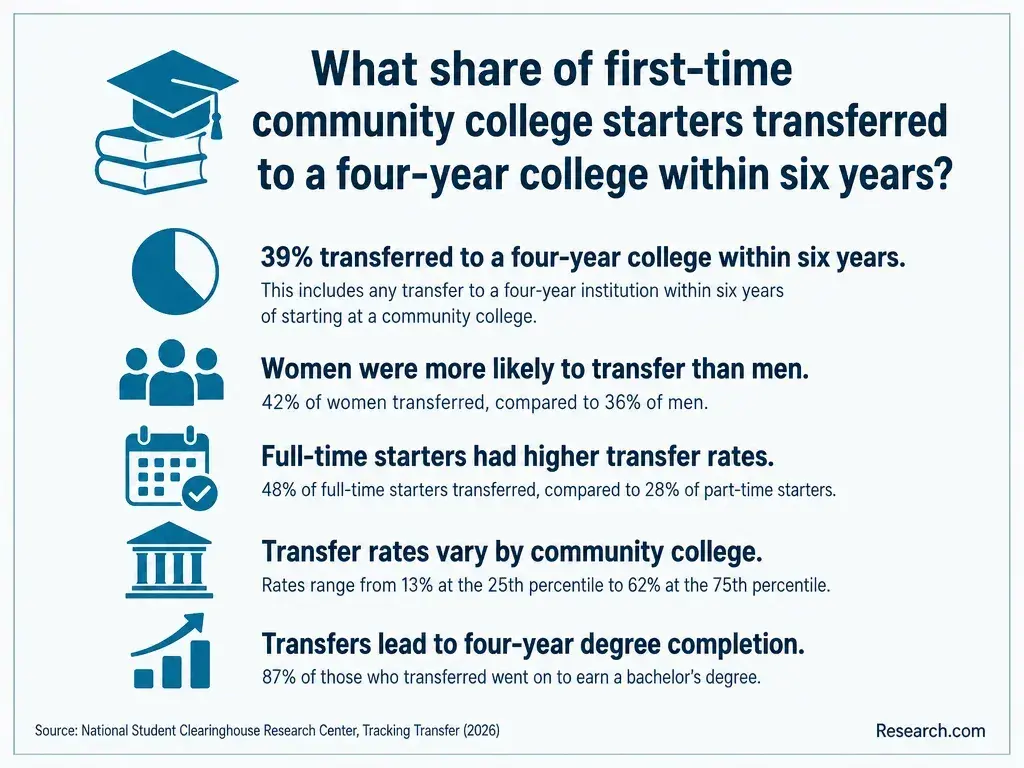
Requirements vary by institution and by whether you enter as a first-year or transfer student. Schools commonly request prior academic records; some business majors also set minimum grades or require introductory mathematics, accounting, economics, or statistics before students take upper-level courses. Admission to a university does not necessarily mean admission to every concentration.
If you have college credits, request a written evaluation showing which courses apply to general education, the business core, concentration requirements, and residency credits. Ask when you can start the specialized courses and whether they run every term. An online college offering an accelerated bachelor's may look faster, but prerequisites and course availability still determine your individual completion path.
Online study can reduce commuting, while campus study may make local events, faculty meetings, and employer connections easier to access. Neither format automatically provides the experience you need. For sport management, check whether you can reach approved events or venues; for procurement, ask whether remote projects or local employers can provide relevant purchasing work.
Before choosing a format, confirm live class times, group assignments, exam arrangements, internship rules, and any required visits. These details matter if you work during typical event hours or need a predictable schedule. If you plan to balance employment and business administration college study, compare actual weekly obligations rather than relying on an "online" label.
A bachelor's degree is commonly planned around four academic years of full-time study from the beginning, but transferred credits, part-time enrollment, prerequisites, and course scheduling can change the remaining timeline. A concentration may fit within the degree's electives—or require additional courses. Get an individual degree audit before treating an advertised timeline as your own.
Compare total remaining tuition and fees, not just a per-credit price. Include books or software, travel to placements, and any earnings you might forgo to attend daytime activities. To find cost-saving online business administration school choices, calculate costs from the courses each school says you still need, then ask whether switching concentrations would add a term.
There is no single U.S. salary for either concentration: employers pay for a specific occupation, location, and level of responsibility, not the concentration name alone. The following Bureau of Labor Statistics medians for May 2025 provide context for related occupations, not predicted starting salaries or direct measures of procurement and sport management graduates' earnings.
| Related occupation | U.S. median annual wage | How to interpret it |
| Meeting and event planner | $61,160 | Relevant to some sport-event work, but not a measure of all sport jobs |
| Logistician | $82,320 | Relevant to supply-chain work, but not a direct wage figure for purchasing assistants or buyers |
For a useful personal comparison, collect pay ranges from entry-level postings you would qualify for in your area and note any experience requirements. Weigh those ranges against your likely borrowing and remaining degree cost. If financing is central to the decision, examine low-cost business administration degrees with federal aid options without assuming you will qualify for a particular award.
The Bureau of Labor Statistics projects U.S. employment growth from 2025 to 2035 of 6% for meeting and event planners and 18% for logisticians. Those figures describe related occupations, not openings reserved for sport management or procurement graduates. They also do not show whether opportunities near you require sports industry contacts, purchasing experience, or a different degree.
Look at local job descriptions for the function you want: event delivery and revenue support on one side, sourcing and supplier operations on the other. If you want the broader supply-chain path represented by logistician roles, compare procurement coursework with a dedicated supply-chain degree. Students with applicable prior credit can investigate shorter completion timelines for supply chain bachelor's students, subject to each school's credit evaluation.
Which Certifications Support Sport Management or Procurement Careers?
A voluntary credential can help demonstrate focused learning, but it does not replace a degree requirement, relevant work, or an employer's assessment of your skills. In sport roles, the most useful training depends on the job—event operations, safety responsibilities, and ticketing systems are different needs. In procurement, purchasing and supply-chain credentials may become more valuable as you gain responsibility for sourcing or supplier decisions.
Check a credential issuer's current eligibility rules, exam content, fees, and renewal requirements before paying. If the role you want actually emphasizes project coordination, compare targeted training with a separate degree and review FAFSA grants and scholarships for project management students before committing to the longer pathway. Choose the option that closes a documented skill or qualification gap.
Other Things You Should Know About Business Administration
Often, but the school decides how completed courses apply. Request a revised degree audit before switching so you can see whether the change adds requirements or delays graduation.
No. Its business core and experience may be relevant elsewhere, but you will need to show how your work fits the responsibilities of the non-sport role.
Possibly. Ask the program about approval, supervision, learning objectives, and permission to use workplace information before assuming your job qualifies.
No. Compare required courses, available projects, added time and cost, and the qualifications listed in jobs you would realistically pursue.
- What Is Procurement Management vs. Contract Management? | Arkansas State University Online https://degree.astate.edu/online-programs/business/mba/supply-chain-management/procurement-vs-contract/
- BBA in Sport Management | Quinlan School of Business | Loyola University Chicago https://www.luc.edu/quinlan/academics/undergraduatedegrees/bba/bbainsportmanagement/
- What is Sports Management? | snhu.edu https://www.snhu.edu/about-us/newsroom/business/what-is-sports-management
- Business Degree vs. Sports Management Degree | Maryville University Online https://online.maryville.edu/blog/business-degree-vs-sports-management-degree/
- Full article: How and why do students' career interests change during higher education? | tandfonline.com https://www.tandfonline.com/doi/full/10.1080/03075079.2023.2166916
- Bachelor's in Sport Management | Davenport University https://www.davenport.edu/academics/areas/business/bachelors-sport-management
- What Is Sport Management? - Texas A&M | Kinesiology & Sport Management https://knsm.tamu.edu/what-is-sport-management/
- Bachelor of Science in Sport Management | Wayne State University https://education.wayne.edu/sports-administration-management/bs
- Sports Management vs. Sports Administration | University of Bridgeport https://www.bridgeport.edu/news/sports-management-vs-sports-administration/
- Types of Sports Management Degrees | allbusinessschools.com https://www.allbusinessschools.com/sports-management/degrees/