2027 Speech Pathology Master's Degree vs Graduate Certificate: Which Is Better?

Co-Founder and Chief Data Scientist

Reviewed by Rhea Paul, PhD
SLP Education & Research Expert
The choice between a speech pathology master’s degree and a graduate certificate is not just about program length. It affects whether you can pursue licensure, what jobs you can realistically qualify for, how much clinical preparation you receive, and how employers interpret your credential.
A master’s degree is the standard route for people who want to become licensed speech-language pathologists and compete for clinical, school-based, healthcare, supervisory, or advanced practice roles. A graduate certificate is usually narrower: it can help career changers build prerequisites, help current professionals add focused skills, or provide a lower-cost way to test whether the field is the right fit.
The trade-off is time and cost. A master’s program requires a larger investment but usually carries stronger professional value. A certificate is faster and often cheaper, but it may not qualify you for licensure or the same salary trajectory. According to the U.S. Bureau of Labor Statistics in 2024, speech-language pathologists with a master's degree earn a median annual wage 22% higher than those without.
This guide compares the two options across admissions, GPA expectations, completion time, cost, salary impact, employer perception, career paths, and stackability so you can choose the credential that fits your goals instead of paying for the wrong one.
Key Things to Know About Which Is Better: A Speech Pathology Master's Degree or a Speech Pathology Graduate Certificate
- The master's degree typically requires two years of full-time study, while graduate certificates may be completed in 6 to 12 months, offering a faster route for career-changers.
- Cost differences are significant: master's programs average $30,000-$60,000, whereas graduate certificates often cost under $15,000, impacting student debt and financial planning.
- Employers favor master's degree holders for clinical roles, yielding a 15-25% higher average salary and greater career advancement opportunities than certificate holders.
What Is the Difference Between a Speech Pathology Master's Degree and a Speech Pathology Graduate Certificate?
A speech pathology master’s degree is a full graduate degree designed to prepare students for professional practice as speech-language pathologists. It typically requires 60 or more credit hours and combines advanced coursework, supervised clinical training, assessment and intervention methods, research literacy, and preparation for certification and state licensure.
A speech pathology graduate certificate is a shorter credential with a more limited purpose. Many certificate programs include 12 to 18 credit hours and focus on prerequisites, specialized skills, or continuing education. A certificate can strengthen an academic record, support a career transition, or add expertise in a niche area, but it is not normally a substitute for a licensure-qualifying master’s degree.
- Credential purpose: A master’s degree is usually the required credential for becoming a licensed speech-language pathologist. A certificate is more often used for preparation, specialization, or professional development.
- Curriculum depth: Master’s programs cover the broad clinical and scientific foundation of speech-language pathology. Certificates cover selected topics and usually do not include the same level of supervised clinical practicum.
- Time commitment: A master’s degree takes substantially longer because it includes comprehensive coursework and clinical requirements. A certificate can often be completed in months rather than years.
- Career value: Employers treat the master’s degree as the stronger credential for clinical roles, leadership tracks, and licensure-based positions. Certificates may be useful for support roles, niche skills, or prerequisite completion.
- Stackability: Some schools allow certificate credits to apply toward a later master’s degree, but this is not automatic and must be confirmed before enrollment.
The simplest way to compare the two is this: choose the master’s degree if your goal is licensed clinical practice or long-term advancement as an SLP; consider the certificate if you need targeted training, prerequisite coursework, or a lower-risk entry point before committing to a full degree. Students comparing program affordability and licensure-oriented options can also review masters in speech pathology pathways as part of their planning.
Professionals exploring broader healthcare advancement may also compare how shorter and accelerated credentials work in other fields, such as accelerated DNP programs.
What Are the Typical Admission Requirements for a Speech Pathology Master's Program Compared to a Speech Pathology Graduate Certificate?
Speech pathology master’s programs usually have more demanding admissions requirements because they lead toward clinical training and, in many cases, licensure eligibility. Graduate certificate programs are generally more flexible because they serve a wider range of students, including career changers, working professionals, and applicants who still need prerequisite coursework.
Common requirements for a speech pathology master’s program
- Bachelor’s degree: Applicants need an undergraduate degree, often with coursework related to communication sciences and disorders or closely related subjects.
- Minimum GPA: Many programs require a minimum undergraduate GPA of 3.0 on a 4.0 scale, though competitive applicants may need stronger academic records.
- Prerequisite coursework: Programs often expect foundational classes in areas such as biology, anatomy, linguistics, psychology, and statistics.
- GRE scores: Some programs request GRE scores, though this requirement is not universal.
- Recommendations: Applicants commonly submit two or three letters from faculty members, supervisors, or clinical professionals who can speak to academic readiness and professional fit.
- Personal statement: Most programs require an essay explaining the applicant’s motivation, career goals, and understanding of speech-language pathology.
Common requirements for a speech pathology graduate certificate
- Bachelor’s degree: A completed undergraduate degree is typically required, but the major may be more flexible.
- Less rigid GPA screening: Some certificate programs still set GPA expectations, but they may weigh professional experience and career goals more heavily than a master’s program would.
- Fewer prerequisites: Certificates may include prerequisite coursework inside the program or waive certain requirements for qualified applicants.
- Limited testing requirements: The GRE is rarely required for certificate admission.
- Shorter application materials: Essays and recommendations may still be requested, but the process is often less extensive.
This distinction matters if you are not yet competitive for a master’s program. A certificate can be an academic bridge if it helps you complete prerequisites, demonstrate graduate-level performance, or clarify your interest in the field. However, you should not assume that certificate admission guarantees later acceptance into a master’s program.
Before enrolling, ask whether certificate credits are transferable, whether the courses meet prerequisite expectations for target master’s programs, and whether the certificate has any clinical or licensure value. Similar accessibility trends can be seen in other health-related fields, including nursing programs that don't require TEAS test.
What Is the Minimum GPA Requirement for a Speech Pathology Master's Program?
Accredited speech pathology master’s programs commonly set minimum GPA requirements between 3.0 and 3.5 on a 4.0 scale. The exact threshold depends on the school, applicant pool, program capacity, and admissions philosophy.
A published minimum GPA should be treated as an eligibility floor, not a realistic admissions target. Competitive programs may admit students whose GPAs are well above the minimum, especially when clinical placements are limited and applicant demand is high.
- Selective programs: Programs with strong reputations or limited seats often expect GPAs closer to 3.5, even if the posted minimum is lower.
- Programs with broader access: Some schools may consider applicants near 3.0 if they show strong professional experience, excellent recommendations, upward academic trends, or compelling preparation.
- Prerequisite GPA: Admissions committees may pay close attention to grades in science, communication, statistics, linguistics, psychology, and other prerequisite courses.
- Conditional admission: Some schools offer provisional or conditional admission for applicants slightly below the standard, often requiring strong performance in early graduate coursework.
- Holistic review: GPA is important, but it is rarely the only factor. Clinical exposure, writing quality, recommendations, and fit with the profession can influence the final decision.
If your GPA is below the target range, focus on repair strategies before applying. Retake key prerequisites when appropriate, earn strong grades in recent coursework, gain observation or related work experience, and choose recommenders who can address your readiness for graduate-level clinical training.
One graduate described the process this way: “The stated minimum GPA got me in the door, but it did not make me competitive by itself. I strengthened my application with clinical exposure, stronger recommendations, and proof that I could handle demanding coursework.”
How Long Does It Take to Complete a Speech Pathology Master's Degree Versus a Speech Pathology Graduate Certificate?
A speech pathology master’s degree usually takes much longer than a graduate certificate because it is designed for comprehensive professional preparation. The master’s path includes advanced coursework, clinical practicum, and often a capstone, thesis, or comprehensive exam. A certificate is shorter because it focuses on a narrower set of courses or competencies.
- Master’s degree, full time: Most students complete a speech pathology master’s degree in two to three years.
- Master’s degree, part time: Part-time study can extend completion to three to five years, especially for students balancing work or family responsibilities.
- Accelerated master’s formats: Some intensive formats may shorten completion to about 18 months, but they usually require a heavier course load and less schedule flexibility.
- Graduate certificate, full time: A certificate can often be completed in six months to a year.
- Graduate certificate, part time: Working students may take one to two years, depending on course availability and pacing.
The time difference reflects the credential’s purpose. A master’s degree is structured to prepare students for broad clinical competence and licensure-related expectations. A certificate is more realistic for someone who wants faster upskilling, prerequisite completion, or exposure to the field without pausing work for several years.
For career planning, the key question is not simply “Which is faster?” but “Which credential gets me to the role I actually want?” If licensure or independent clinical practice is the goal, the longer master’s route may be unavoidable. If the goal is a specific skill set or a bridge into graduate study, the certificate may be enough for the next step.
Students considering adjacent health science pathways may also compare options such as an online kinesiology degree, which leads to different career outcomes and training requirements.
How Much Does a Speech Pathology Master's Degree Cost Compared to a Speech Pathology Graduate Certificate?
A speech pathology master’s degree costs more in total because it requires more credits, more time in school, and more clinical training. A graduate certificate is usually cheaper because it is shorter and narrower, but the lower price does not always mean it delivers better value for your goal.
Typical tuition ranges
- Public in-state master’s programs: Typically between $20,000 and $50,000 in total tuition.
- Public out-of-state master’s programs: Often from $40,000 to $75,000.
- Private master’s programs: Generally from $50,000 to over $90,000.
- Public in-state graduate certificates: Around $5,000 to $15,000.
- Public out-of-state graduate certificates: Roughly $8,000 to $20,000.
- Private graduate certificates: Commonly between $10,000 and $30,000.
The cost gap is largely explained by credit requirements. Master’s programs often require 60 or more credit hours, while many certificate programs are closer to 15 to 30 credits, with some narrower options falling around 12 to 18 credit hours. Master’s programs may also require clinical supervision, placement coordination, lab resources, and faculty-intensive training.
Costs beyond tuition
- Fees and materials: Graduate programs may charge technology fees, clinical fees, background check fees, testing fees, and materials costs.
- Clinical placement expenses: Master’s students may need to pay for travel, immunizations, documentation, or reduced work hours during placements.
- Opportunity cost: A full-time master’s student may lose income while studying, while a certificate student may be more able to keep working.
- Financial aid access: Master’s students may have more access to assistantships, fellowships, employer tuition benefits, and graduate aid options. Certificate students may have fewer funding choices.
To compare real affordability, calculate net cost rather than sticker price. Subtract scholarships, assistantships, tuition reimbursement, and employer support. Then factor in income lost during study and the credential’s likely effect on eligibility for higher-paying or licensed roles.
One speech pathology professional described the master’s degree as financially difficult but professionally decisive: “The cost was stressful, and I had to reduce my work hours, but the clinical training and employer recognition opened opportunities I would not have had with only a certificate.”
How Does Earning a Speech Pathology Master's Degree Affect Salary Compared to a Speech Pathology Graduate Certificate?
A speech pathology master’s degree generally has stronger salary potential than a graduate certificate because it is tied to broader clinical preparation, licensure eligibility, and access to higher-responsibility roles. Data from the Bureau of Labor Statistics and recent studies show that professionals with a master's degree in speech pathology typically earn between 20% and 35% more than those holding a graduate certificate.
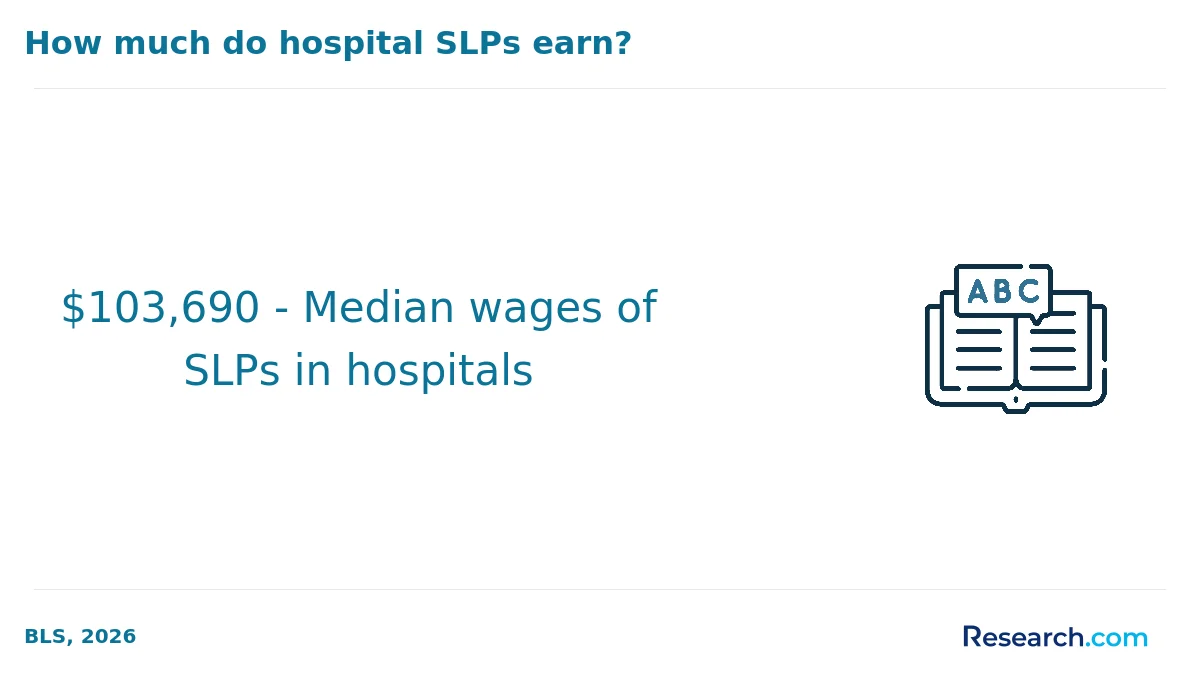
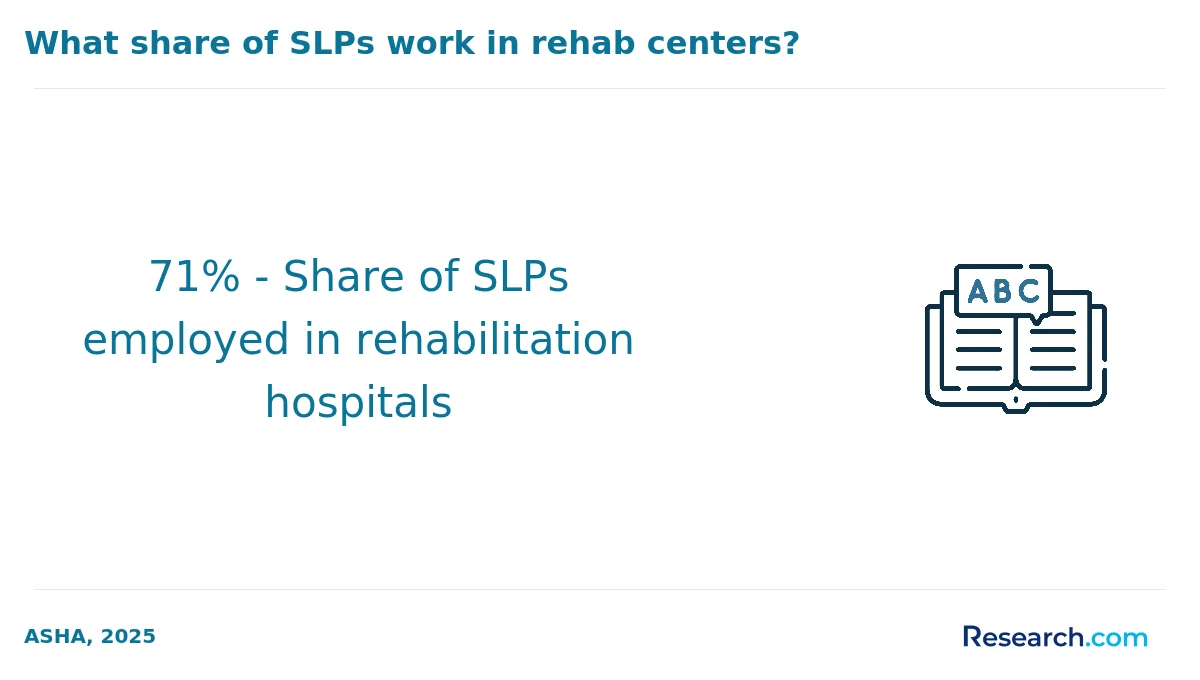
The salary difference is especially visible in healthcare settings such as hospitals, rehabilitation centers, and specialized clinics, where employers often require advanced clinical training and credentialing for independent practice or senior roles.
- Master’s degree advantage: The master’s credential can support eligibility for licensed clinical roles, supervisory positions, and broader practice settings.
- Certificate value: A certificate may improve pay when it adds a specialized skill to an existing background, especially for professionals who are already working in education, healthcare support, or related fields.
- Specialized niches: Areas such as augmentative and alternative communication (AAC) or voice therapy may reward targeted expertise, especially when the skill is in short supply.
- Short-term ROI: A certificate may produce a faster return if it costs less, takes less time, and directly improves current job performance.
- Long-term ROI: A master’s degree may provide stronger wage growth over time because it supports advancement into roles that a certificate alone may not qualify for.
Recent 2024 data indicates that specialized certificate holders in AAC technology have experienced a 10% salary increase year-over-year. That does not mean a certificate replaces the master’s degree; it means targeted credentials can have meaningful value when they match a clear labor-market need.
For salary planning, compare credentials by the jobs they unlock, not just the credential name. A low-cost certificate that does not qualify you for your target role may have weak ROI, while an expensive master’s degree may be justified if it leads to licensure, advancement, and sustained earnings growth.
Which Speech Pathology Career Paths Favor a Master's Degree Over a Graduate Certificate?
Career paths that involve independent clinical practice, licensure, diagnosis, treatment planning, supervision, or advanced clinical responsibility strongly favor the master’s degree. In many cases, the master’s is not merely preferred; it is required.
Licensure boards across most states mandate a master's degree from an accredited program for full clinical practice eligibility, while graduate certificates provide skill enhancement but cannot replace this formal requirement.
- Licensed speech-language pathologist: The master’s degree is the standard credential for those pursuing state licensure and full SLP practice.
- School-based SLP roles: Many school systems require the appropriate graduate preparation and credentialing for speech-language pathology positions.
- Hospital and rehabilitation settings: Employers often expect master’s-level clinical training for work with complex communication, swallowing, cognitive-communication, or neurological conditions.
- Clinical supervisor: Supervisory positions typically require advanced preparation, professional experience, and the credibility associated with graduate clinical training.
- Program director or clinical lead: Leadership roles often involve compliance, staffing, supervision, assessment standards, and interdisciplinary coordination.
- Research and academic pathways: The master’s provides a stronger foundation for research literacy, evidence-based practice, and later doctoral study.
Employers often use the master’s degree as a screening requirement because it signals comprehensive preparation, supervised clinical experience, and readiness for regulated practice. A certificate may strengthen a resume, but it usually will not overcome a stated master’s requirement in a licensed clinical job posting.
According to the Bureau of Labor Statistics, speech-language pathologist employment is projected to grow 17% through 2035, signaling strong demand for fully credentialed professionals prepared via master's programs.
Which Speech Pathology Career Paths Favor a Graduate Certificate Over a Master's Degree?
A graduate certificate may be the better choice when the goal is targeted skill development rather than full clinical licensure. It can be especially useful for professionals who already work in education, healthcare, assistive technology, early intervention support, or communication-related services and want a focused credential without completing a full degree.
- Clinical support roles: Some employers may value certificates for positions that assist licensed clinicians or support communication-related services without requiring independent diagnosis or treatment planning.
- Speech therapy assistant pathways: A certificate may strengthen preparation for support-level work, depending on state rules and employer requirements.
- Telepractice support: Certificates focused on technology, service delivery, or digital tools may help professionals working in remote or hybrid service environments.
- Augmentative and alternative communication: AAC-focused certificates can be useful for professionals who work with assistive communication systems and need concentrated technical expertise.
- Pediatric feeding or specialized education support: Targeted certificates may help professionals add practical knowledge in a defined area without pursuing a second full degree.
- Prerequisite completion: Career changers may use a certificate to complete foundational coursework before applying to a master’s program.
The certificate advantage is strongest when the job requires a specific competency and does not require licensure as a speech-language pathologist. It is weaker when employers need candidates who can evaluate, diagnose, treat, document, and manage cases independently under state licensure rules.
Professionals considering faster training options should still verify whether the credential matches their intended role. Some students use certificates alongside or before accelerated speech pathology programs, especially when they need prerequisite coursework or a clearer route into graduate study.
Is a Speech Pathology Graduate Certificate Stackable Toward a Master's Degree?
A speech pathology graduate certificate may be stackable toward a master’s degree, but stackability is never guaranteed. It depends on the institution, the program design, the accreditation context, course equivalencies, grades earned, and time limits on transfer credits.
Stackable credentials allow students to apply certificate credits to a related master’s program later. This can reduce duplicated coursework, shorten time to completion, and lower total cost. However, the policy must be confirmed in writing before you enroll if your long-term plan depends on credit transfer.
Several accredited universities, such as Northeastern University and the University of Wisconsin-Madison, explicitly permit graduate certificate coursework in related fields to count toward their speech pathology master's programs. These institutions generally require:
- Institutional alignment: Credits are more likely to transfer when the certificate and master’s are offered by the same university or an approved partner.
- Course relevance: Certificate courses must match required or approved elective coursework in the master’s curriculum.
- Minimum grades: Students usually need a minimum grade, often a B or better, for credits to be eligible.
- Time limits: Credits often must be completed within a set period, commonly five to seven years.
- Program approval: Admissions or faculty review may still be required, even if the catalog says credits can transfer.
Ask direct questions before committing: Which exact courses transfer? How many credits can be applied? Will the credits satisfy prerequisites, electives, or core requirements? Does completing the certificate improve admission odds, or does it only provide transferable coursework?
Stacking can be a smart strategy for students who are undecided or not yet ready for a full master’s degree. It is less useful if the certificate courses do not align with your target program. Students comparing compressed credential options in other healthcare-adjacent areas may also review medical billing and coding certificate online accelerated programs.
How Do Employers in the Speech Pathology Field Perceive a Master's Degree Versus a Graduate Certificate?
Employers usually view a speech pathology master’s degree as the stronger and more complete credential, especially for regulated clinical roles. A graduate certificate is viewed as supplemental: valuable when it adds a relevant skill, but not usually enough for positions that require licensure or full SLP preparation.
Data from sources like the NACE Job Outlook Report and LinkedIn Talent Insights show that regulated fields, such as healthcare and academia, tend to prioritize master's-level credentials as essential for licensure and comprehensive clinical preparation. Meanwhile, graduate certificates are more often valued in support or specialized roles where targeted expertise is sufficient.
- Clinical employers: Hospitals, clinics, rehabilitation centers, and many school systems are more likely to require a master’s degree for speech-language pathology roles.
- Support-role employers: Organizations hiring for assistant, coordinator, technology support, or education support roles may consider a certificate useful if it matches the job duties.
- Specialized employers: Employers working with AAC, telepractice tools, or targeted intervention areas may value certificates that show current, applied expertise.
- Institution reputation: A certificate from a respected university can help, but it usually does not replace a master’s degree where the master’s is a formal requirement.
- Job-posting reality: The clearest evidence is in job descriptions. If target postings consistently say “master’s required,” a certificate alone is unlikely to be enough.
Before choosing a credential, collect job postings for the roles you want and mark the required degree, preferred qualifications, licensure language, and specialized skills. This simple exercise can prevent a costly mismatch between your education plan and employer expectations.
Can a Speech Pathology Graduate Certificate Help Someone Transition Into the Field From a Different Background?
Yes. A speech pathology graduate certificate can help career changers enter the field strategically, especially if they need foundational coursework, exposure to communication sciences, or a more affordable way to test their interest before applying to a master’s program.
The certificate is most useful when it serves a defined purpose. It may help an educator better support students with communication needs, help a healthcare worker move toward speech-language pathology, or help an applicant complete prerequisites for graduate admission. It can also provide portfolio-ready projects, applied coursework, and terminology that make the transition more credible.
However, a certificate has limits. It typically does not provide the full theoretical foundation, supervised clinical practicum hours, or professional standing required for senior or licensed speech-language pathologist roles. Career changers who want independent clinical practice should treat the certificate as a bridge, not the final credential.
- Best use case: Building prerequisites, confirming fit, and strengthening a future master’s application.
- Good fit for: Teachers, healthcare support workers, behavioral health professionals, linguistics graduates, and communication-related professionals exploring the field.
- Key advantage: Lower cost and shorter completion time than a full master’s degree.
- Main limitation: It usually does not qualify graduates for licensure as speech-language pathologists.
- Smart strategy: Pair the certificate with observation hours, volunteering, related work experience, and careful planning for a future master’s application if licensure is the goal.
For a career changer, the decision should start with the end role. If the desired job requires a licensed SLP credential, plan backward from master’s admission and licensure requirements. If the goal is support work or skill-building within a related profession, a certificate may be a practical and cost-conscious option.
What Graduates Say About Which Is Better: A Speech Pathology Master's Degree or a Speech Pathology Graduate Certificate
-
: "
Choosing the speech pathology master’s degree felt like a long-term investment. It cost more and took longer, but the clinical preparation, peer network, and employer recognition made it worthwhile. For the jobs I wanted, the master’s degree carried much more weight.
— Esteban
"
-
: "
I chose the graduate certificate because I needed something realistic for my schedule and budget. It helped me build practical skills quickly, but I also learned that some advanced roles were still out of reach without the master’s degree.
— Alexis
"
-
: "
Looking back, the master’s degree was the better fit for my goals because I wanted clinical credibility and room to grow. The certificate can be a smart first step, but for licensed practice and stronger career mobility, the master’s offered more value.
— Eli
"
Other Things You Should Know About Speech Pathology Degrees
Online Speech Pathology master's programs are generally more comprehensive and widely recognized within clinical and academic communities than graduate certificates. Master's programs include extensive coursework and supervised clinical practice required for certification and licensure, while graduate certificates often focus on specific skills or knowledge areas. Employers tend to value master's degrees more when considering candidates for clinical roles, although certificates may support continuing education or specialization.
Accreditation is critical for Speech Pathology master's programs because it ensures the program meets professional standards needed for certification and licensure. The Council on Academic Accreditation in Audiology and Speech-Language Pathology (CAA) accredits master's programs, which graduates must complete to practice clinically. Graduate certificates may or may not be accredited by CAA and typically do not by themselves qualify students for licensure, making accreditation a key factor in the master's degree choice.
A master's degree in Speech Pathology is often a prerequisite for pursuing doctoral studies or advanced clinical certifications, providing a foundation recognized by doctoral programs. Graduate certificates are usually specialized credentials that do not substitute for a full graduate degree, limiting their effectiveness in advancing to doctoral studies. Prospective doctoral candidates usually need to complete an accredited master's program first to meet admission requirements.
References
- U.S. Bureau of Labor Statistics - Speech-Language Pathologists https://www.bls.gov/ooh/healthcare/speech-language-pathologists.htm
- ASHA EdFind - Accredited Speech-Language Pathology Programs https://find.asha.org/ed/
- Audiology and Speech-Language Pathology Interstate Compact https://aslpcompact.com/compact-map/
- University of Wisconsin-Eau Claire - Master of Science in Speech-Language Pathology (Online) https://www.uwec.edu/speech-language-and-hearing-sciences-department/graduate-program/speech-language-pathology-online
- Nova Southeastern University - SLP Program - Master of Science in Speech-Language Pathology https://osteopathic.nova.edu/degrees/masters/speech-language-pathology/index.html
- California State University-San Marcos - Online MS in Speech-Language Pathology https://www.csusm.edu/slp/programs/mastersonline/index.html
- Ithaca College - Online Master of Science in Speech-Language Pathology https://slponline.ithaca.edu/programs/masters-speech-language-pathology-online
- New York University - Online MS, Communicative Sciences and Disorders (Speech@NYU) https://steinhardt.nyu.edu/degree/online-ms-communicative-sciences-and-disorders