2027 Best Value Online Speech Pathology Master's Degrees: Affordable Accredited Programs with the Highest ROI

Co-Founder and Chief Data Scientist

Reviewed by Rhea Paul, PhD
SLP Education & Research Expert
Choosing an online master's degree in speech pathology involves balancing cost, accreditation, and long-term career benefits. For many prospective students-especially working adults and career changers-finding programs that combine affordability with credible academic standards is crucial. Recent data from the National Center for Education Statistics highlights a 12% increase in online graduate enrollment in health-related fields since 2021, signaling growing acceptance of remote learning.
This shift reflects demand for flexible schedules without sacrificing program quality. Understanding which programs deliver the best return on investment helps avoid costly missteps and supports informed decisions for sustainable career advancement in speech pathology.
Key Things to Know About the Best Value Online Speech Pathology Master's Degrees
- Programs accredited by the Council on Academic Accreditation ensure academic rigor but often require synchronous sessions, limiting flexibility and potentially extending time-to-degree for working adults balancing commitments.
- Employers increasingly prefer graduates from accredited online speech pathology programs, associating them with consistent clinical training standards that improve early-career job placement and long-term professional mobility.
- With online graduate enrollment growing 5% annually, according to the National Center for Education Statistics, cost-effective program options enhance access for adult learners facing financial and scheduling constraints, but may trade off with local clinical placement opportunities.
What Are the Best Value Online Speech Pathology Master's Programs in the U.S.?
Best value in an online speech pathology master's program transcends mere tuition numbers, reflecting a critical balance of accredited rigor, reliable graduation outcomes, and measurable post-degree salary increases. For instance, a working professional weighing a lower-cost asynchronous program against a more expensive hybrid option with synchronous clinical seminars must consider how these formats affect licensure timelines, practical training quality, and ultimately employability.
Employers increasingly scrutinize CAA accreditation and graduating cohorts' clinical readiness when recruiting, so graduates from programs offering robust telepractice or state-assisted clinical partnerships may access a broader job market or quicker professional certification-key practical distinctions often hidden behind sticker price comparisons.
Presented here is a carefully selected list of five fully online master's programs in speech pathology, all accredited and evaluated for their practical value and educational delivery modes, sorted from most affordable to highest tuition, enabling informed budget-sensitive decisions:
- University of Arkansas: With an estimated tuition of $28,000, this program is delivered in a fully asynchronous format and is distinguished by strong state partnerships that facilitate regional clinical placements, helping students progress toward licensure more efficiently.
- West Virginia University: This program has an estimated tuition of $30,500 and follows a hybrid format with synchronous seminars. Its curriculum emphasizes extensive telepractice clinical training, preparing students for modern and evolving service delivery models.
- University of Florida: Estimated to cost approximately $33,000, this fully asynchronous program is recognized for its high graduation rate and strong alumni network within Florida's growing healthcare sector, enhancing career opportunities after graduation.
- Boston University: With an estimated tuition of $45,000, this synchronous program focuses on interdisciplinary collaboration and leadership development, integrating these competencies into advanced clinical coursework.
- Northeastern University: This program carries an estimated tuition of $53,000 and utilizes a hybrid format with live sessions. It stands out for its extensive employer partnerships and comprehensive career services that contribute to strong post-graduate salary growth.
This summary presents key factors used to evaluate academic programs, including accreditation, graduation rates, tuition levels, salary increases, and delivery modes. These elements collectively highlight program quality, flexibility, and return on investment.
- Data Sources: IPEDS, institution self-reports, and CAA accreditation records provide the foundational metrics for comparison.
- Tuition Figures: Reflect current academic year and include estimated full program costs without regional financial aid adjustments.
- Accreditation: All programs listed hold CAA accreditation, essential for clinical certification eligibility in speech pathology.
- Graduation & Outcomes: Data derived from the latest available student completion rates and surveyed alumni salary outcomes.
- Program Format: Format details denote predominant course delivery modes, affecting accessibility and pacing options.
Prospective students evaluating these affordable accredited speech pathology graduate degrees with high ROI should carefully align program delivery with personal schedules and clinical preparation needs; those balancing work and study may prefer asynchronous formats, while individuals prioritizing interactive, supervised clinical experience may opt for hybrid or synchronous programs despite higher costs. Additionally, understanding the nuances of financial aid options-akin to those in affordable online FNP programs can further optimize investment in human capital by reducing net debt burden.
What Accreditations Should an Online Speech Pathology Master's Program Have?
Choosing an online speech pathology master's program without verifying accreditation can lead to costly setbacks, such as ineligibility for state licensure or invalid credits hindering transfer to other institutions. For example, a graduate from a program lacking proper programmatic accreditation may find their degree unrecognized by employers or licensing boards, delaying career entry or advancement.
Accreditation in this field operates on two critical levels. First, regional accreditation by one of the seven recognized agencies-such as the Higher Learning Commission (HLC), Southern Association of Colleges and Schools Commission on Colleges (SACSCOC), or Middle States Commission on Higher Education (MSCHE)-ensures institutional quality and is essential for federal financial aid, credit transferability, and broad employer recognition. Secondly, programmatic accreditation specific to speech pathology, primarily through the Council on Academic Accreditation in Audiology and Speech-Language Pathology (CAA), validates the curriculum rigor, clinical training, and faculty expertise vital for licensure and workforce readiness.
Programs accredited solely by national entities or unrecognized bodies often lack the clinical rigor or academic credibility needed for professional certification and may limit mobility across states or employers. Even university-based online programs without CAA accreditation risk leaving graduates underprepared for licensure requirements in a field with growing regulatory scrutiny and increasing demand across healthcare systems.
Checklist for Prospective Students:
- Regional Accreditation: Is the institution accredited by a recognized agency like HLC or SACSCOC?
- Programmatic Accreditation: Does the speech pathology master's program hold accreditation from the CAA?
- Licensure Eligibility: Are graduates eligible for state licensure and professional certification upon completion?
- Credit Transfer: Can credits transfer if I pursue further education or switch institutions?
How Much Does an Online Speech Pathology Master's Degree Cost on Average?
Online speech pathology master's degree costs can significantly influence a student's educational and financial trajectory, with total expenses ranging broadly based on institutional type and fee structure. Learners must anticipate tuition spanning roughly $20,000 to over $60,000, typically charged between $600 and $1,800 per credit hour at accredited U.S. programs.
This wide range reflects differences between public and private institutions, with important cost implications for career changers or working professionals balancing investment against expected outcomes.
- Tuition Range: Public universities generally charge $600-$1,200 per credit hour, while private and nonprofit institutions may range from $900 to $1,800 per credit hour, affecting overall program affordability and return on investment.
- Residency Requirements: Many public schools offer flat-rate tuition for online learners regardless of in-state or out-of-state status, reducing cost disparities, though exceptions remain where residency impacts fees and total expenses.
- Mandatory Fees: Beyond tuition, consider registration, student services, and library fees that can add hundreds or thousands of dollars, often overlooked in budgeting but essential to program access.
- Technology and Proctoring Fees: Online courses frequently impose additional charges for digital platform use and secure exam proctoring, typically billed per course or exam.
- Thesis or Capstone Fees: Certain programs include fees tied to thesis supervision or comprehensive projects, representing further investment beyond course credits.
- Public University Average: $600-$1,200 per credit hour with some flat-rate options and mandatory fees around 5-10% of tuition.
- Private/Nonprofit Average: $900-$1,800 per credit hour with more frequent technology and capstone-related fees in addition to tuition.
For students seeking affordable accredited speech pathology master's programs in the United States, understanding these layers of cost is critical to avoid unexpected financial burdens. Given the increasing demand across healthcare systems, weighing these expenses against salary prospects and program credibility is key. Prospective enrollees should also explore financial aid pathways and factor in price differences linked to residency policies.
Moreover, those considering shifts into related fields might find value in comparing opportunities such as the medical billing and coding job outlook, where educational requirements and cost structures differ substantially.
What Is the Return on Investment (ROI) of an Online Speech Pathology Master's Degree?
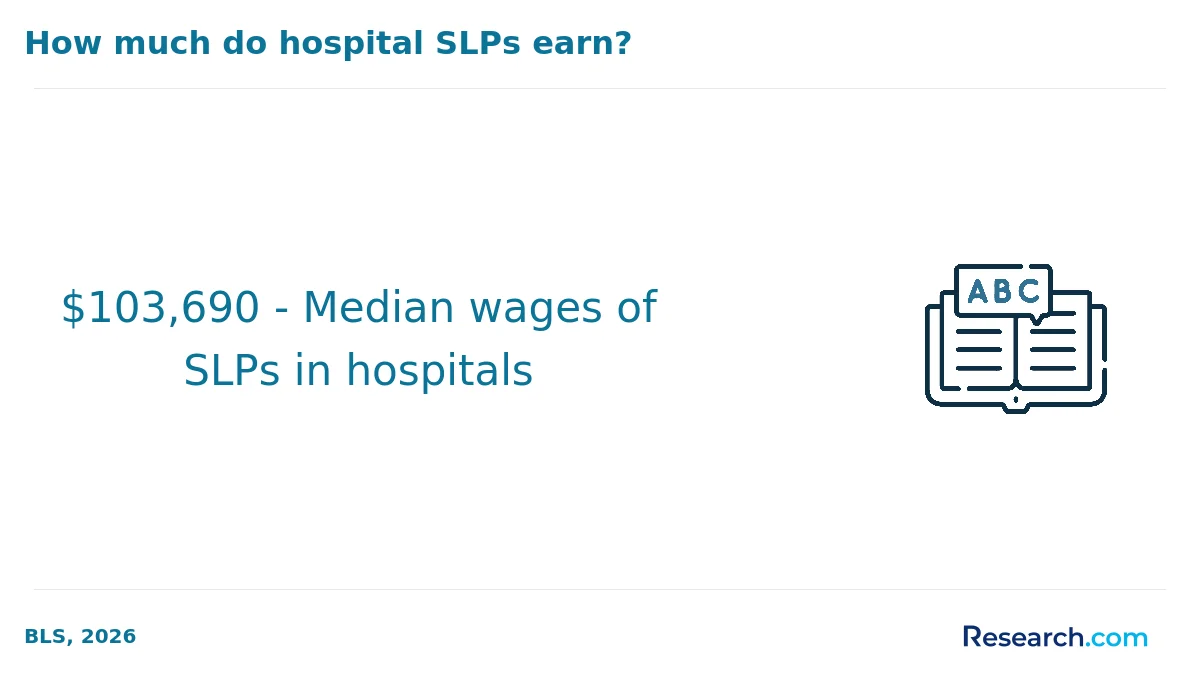
Evaluating the financial return of an online speech pathology master's degree requires framing ROI as the salary increase after graduation minus total program costs, divided by those costs, commonly expressed as a percentage or payback period in years. For many candidates, this investment translates into an annual salary boost of roughly $62,900 to $134,160, as entry-level salaries without the degree often fall between $62,900 and $134,160, while median wages for credentialed speech-language pathologists hover near $97,870, according to Bureau of Labor Statistics data.
However, the overall financial gain is highly sensitive to program tuition, which can vary from $20,000 to $50,000, and regional wage differences. Several factors critically shape the ROI calculation beyond baseline salary figures:
- Existing Experience: Previous clinical or related work can accelerate salary progression and reduce the effective payback period.
- Institution Prestige: Graduates from highly regarded programs may access better-paying roles and more rapid advancement.
- Regional Demand: Locations facing shortages in speech pathology professionals often offer higher salaries and more employment opportunities.
- Specialization: Expertise in niche areas such as pediatric or neurogenic speech disorders can improve earnings potential.
It's important to recognize that financial ROI is only part of the picture. Qualitative benefits-such as enhanced career flexibility, eligibility for advanced roles, and increased job security-contribute significantly to the degree's overall value.
What Are the Admission Requirements for an Online Speech Pathology Master's Program?
Admission to online speech pathology master's programs often hinges on a nuanced balance between academic benchmarks and practical readiness. Applicants who meet the common threshold of a 3.0 undergraduate GPA on a 4.0 scale demonstrate baseline capability for graduate-level study, though some schools adjust this depending on overall application strength. This becomes a critical filter given the program's rigorous blend of clinical and theoretical demands.
Letters of Recommendation typically number two or three and must come from academic or professional referees who can attest to the candidate's relevant skills and work ethic. This evidence of interpersonal capacity is crucial for roles requiring client interaction and multidisciplinary collaboration.
A clear statement of purpose helps differentiate applicants by revealing their motivation and alignment with the profession's requirements, while a detailed resume or CV supplies concrete context about related work, volunteer, or research experience in communication disorders or healthcare.
Many programs insist on prerequisite coursework in subjects such as anatomy, linguistics, or psychology to ensure foundational knowledge. Although the use of standardized tests like the GRE or GMAT is diminishing-with numerous institutions adopting test-optional policies-some competitive or research-focused tracks may still require these scores. It's also notable that several programs emphasize quantitative competency due to the STEM aspects embedded in the discipline.
Given the considerable variation in admission criteria, applicants benefit from spreading their efforts across reach, match, and safety programs. This strategic approach can optimize placement chances while accounting for differing expectations among accredited programs and the realities of investment in time and finances.
What Is the Minimum GPA Requirement for a Speech Pathology Master's Program?
The minimum GPA requirement for admission to an online speech pathology master's program typically represents a baseline rather than a predictor of ultimate success or employability in the field. Many accredited programs set a minimum undergraduate GPA between 2.75 and 3.0 to ensure foundational academic competence.
However, employers and graduate programs alike usually expect candidates to exceed this floor, commonly favoring applicants with a GPA of 3.2 or higher, reflecting both academic readiness and competitiveness in admissions. Understanding the distinction between minimum eligibility and competitive GPA is vital for applicants to realistically assess their chances and prepare their overall profile effectively.
- Minimum Eligibility GPA: Most programs require a GPA around 2.75 to 3.0 as the floor for admission consideration, ensuring applicants meet academic standards.
- Competitive GPA: Programs aiming for highly selective cohorts often target GPAs of 3.2 or above, indicating stronger chances of acceptance and alignment with workforce expectations.
- Program Transparency: Many schools differentiate between eligibility and competitive GPA thresholds in published criteria, guiding applicants to gauge realistic admissions goals.
- GPA Waivers and Exceptions: Some schools allow waivers when applicants showcase professional experience, a strong portfolio, or high standardized test scores, providing alternative routes beyond strict GPA limits.
- Conditional or Provisional Admission: Candidates below minimum GPA thresholds might still enter programs under provisional status, subject to performance benchmarks during initial coursework.
- Holistic Review: Admission decisions typically incorporate a rounded evaluation of personal statements, letters of recommendation, relevant experience, and diversity factors, recognizing GPA as just one facet of candidate potential.
Choosing a program based solely on meeting minimum academic criteria without considering program outcomes or affordability can limit long-term career ROI, especially given the financial commitment associated with graduate education. Applicants should compare programs not only on GPA requirements but also on factors like accreditation, job placement rates, and salary outcomes across specializations.
Those exploring advanced healthcare degrees may also find value in reviewing other options, such as the best DNP programs, which sometimes offer different admission and career trajectories suited to experienced professionals or career changers. Prospective students with lower GPAs are encouraged to leverage holistic admissions factors and, if appropriate, build a portfolio that reflects professional competencies to enhance their application strength beyond numerical cutoffs.
What Financial Aid Options Are Available for Online Speech Pathology Master's Students?
Securing financial aid for an online master's in speech pathology often requires navigating limited options and strategic timing, especially for students balancing employment and familial obligations. Graduate students must weigh the relative benefits and constraints of each aid type, considering how they impact debt levels and career flexibility.
- Federal Loans: Graduate students typically rely on Direct Unsubsidized Loans and Graduate PLUS Loans accessed via FAFSA, where the Student Aid Index influences award amounts. Though carrying interest, these loans usually feature predictable repayment plans, making them a practical fallback when other funding falls short.
- Institutional Scholarships and Fellowships: Many programs earmark competitive funds strictly for master's candidates in speech pathology. Early application and demonstrating clear professional intent improve chances of securing these awards, which can significantly reduce tuition burdens.
- Employer Tuition Reimbursement: Professionals employed in healthcare or education sectors should assess whether their employers offer tuition assistance, which often requires commitment to remain with the company for several years post-graduation-an arrangement with clear tradeoffs for job stability versus financial relief.
- Graduate Assistantships: Although uncommon in online formats, select programs offer assistantships in teaching or research that provide stipends or tuition discounts, aligning financial aid with skill-building and professional development.
- External Scholarships: Specialized scholarships from state or national speech pathology associations frequently target underrepresented or career-changing students, providing important supplementary funding sources.
Federal grant programs like Pell Grants are generally unavailable to graduate applicants, surprising many first-generation students expecting similar support at the graduate level. To maximize aid, apply early through FAFSA and state aid portals, target scholarships tied to speech pathology specifically, negotiate directly with programs on financial aid packages, and explore state grants that may not be widely advertised but can offset costs.
How Long Does It Take to Complete an Online Speech Pathology Master's Degree?
The time it takes to complete an online speech pathology master's degree varies significantly based on enrollment status and program design, influencing career entry and job market timing. Full-time students typically finish within 18 months to 2 years, offering a focused pace that suits those able to prioritize study over other commitments.
Part-time students, who make up most online enrollees due to balancing work, family, and other responsibilities, often extend their studies to 2.5 to 4 years. This longer timeline impacts workforce entry and salary trajectories, a critical consideration for first-generation graduate students and career changers weighing affordability against earning delays.
- Enrollment Status: Full-time enrollment accelerates completion to about 18-24 months, while part-time pace often stretches to 2.5-4 years, reflecting real-world demands of working professionals.
- Credit Hour Requirements: Most programs require 30 to 45 credit hours, and higher credit loads per term facilitate faster completion but add significant pressure, especially when combined with employment.
- Program Structure: Cohort-based models impose fixed progression, limiting flexibility, whereas self-paced tracks accommodate individual pace variations but may prolong total duration.
- Transfer Credits: Prior graduate coursework can reduce required credits, shortening time to degree for students with relevant backgrounds if the school accepts those credits.
- Accelerated Options: Certain programs promote 12-month completion, but employer hiring practices and accreditation prove more decisive than speed in assessing program quality.
- Thesis or Capstone: These requirements can add one to two semesters depending on faculty oversight and student management of project workload.
In evaluating the online speech pathology master's degree duration, consider that while some students seek the fastest route, logistical constraints and program rigor often dictate a more extended timeline. Recent hiring feedback suggests that employers prioritize program credibility and accreditation status over rapid completion, which aligns with trends seen across healthcare education fields, including nurse practitioner programs. For those managing multiple roles, understanding these factors and planning accordingly is essential. For a comparative perspective on program duration within healthcare, see this detailed nurse practitioner course analysis.
What Specializations or Concentrations Are Available in Online Speech Pathology Master's Programs?
Choosing a specialization within online speech pathology master's programs significantly shapes a graduate's employability and salary potential, as it dictates skill development tailored to specific clinical populations or settings. For instance, a professional focusing on pediatric speech-language pathology will develop expertise suited for educational environments and early intervention programs, which differs greatly from a clinician specializing in adult neurogenic communication disorders, who often works in rehabilitation clinics serving stroke or brain injury patients.
This differentiation impacts not only job availability but also labor market competitiveness, making it critical to select a concentration aligned with targeted roles and regional demand.
- Pediatric Speech-Language Pathology: Focuses on communication disorders in children, requiring knowledge of developmental benchmarks and educational interventions.
- Adult Neurogenic Communication Disorders: Targets rehabilitation for adults with neurological impairments such as stroke or Parkinson's disease.
- Augmentative and Alternative Communication (AAC): Emphasizes assisting individuals who use communication devices or non-verbal methods, integrating technological advancements.
- Fluency Disorders: Specializes in stuttering and related fluency challenges across all ages.
- Voice Disorders: Addresses vocal quality, pitch, and resonance, relevant to performers and vocally demanding professions.
- Swallowing Disorders (Dysphagia): Trains clinicians to treat swallowing difficulties, common in medical and rehabilitative settings.
- Cleft Palate and Craniofacial Disorders: Involves managing speech issues related to congenital anomalies, requiring interdisciplinary collaboration.
- Adult Medical Speech Pathology: Covers a broad spectrum of speech and swallowing disorders in hospital or clinical contexts.
Some accredited online speech pathology programs offer a general track with elective flexibility, allowing students to explore multiple areas. Others mandate declaration of a concentration upon admission, which can streamline academic planning but restrict broader exposure. Students aiming to optimize career outcomes should analyze job postings specific to their location or intended work setting to identify which concentrations are most commonly sought by employers. This practical research informs decisions, especially since labor market demand varies by specialization, affecting both job security and earning potential.
Meeting with program alumni or academic advisors adds valuable real-world perspective on employment trajectories and the rigor of different specializations, helping avoid mismatches between training and market needs. This nuanced approach is essential given the competitive landscape of the field and the investment required for advanced degrees. Those balancing career change or first-generation graduate status benefit especially from such informed guidance.
For students comparing options, consultation about financial aid and alignment with recognized accreditation remains crucial-this is true across other disciplines as well, visible in programs such as online masters in marriage and family therapy.
- Accrediting Bodies: Council on Academic Accreditation in Audiology and Speech-Language Pathology (CAA), and for dual-focus programs, the Commission on Collegiate Nursing Education (CCNE).
- Certification Standards: Curricula align with American Speech-Language-Hearing Association (ASHA) Clinical Certification Standards to ensure eligibility for licensure and certification.
- Job Placement: Programs with robust practicum partnerships report better employment outcomes and market relevance.
How Do Online Speech Pathology Master's Programs Compare to On-Campus Programs in Quality and Recognition?
Employer surveys, including recent data from SHRM, consistently show that hiring managers generally do not distinguish between online and on-campus speech pathology master's degrees when both are from regionally accredited institutions. Accreditation remains the primary credential equalizer, ensuring that a degree's value is preserved regardless of delivery mode-especially when diplomas omit any "online" designation. This means graduates aiming for roles in clinical or educational settings can rely more on institutional reputation and outcomes than modality alone.
However, on-campus master's programs often maintain tangible advantages in areas critical to skill development and career networking. Face-to-face interaction facilitates stronger connections with peers, faculty, and recruiters-connections that often translate directly into job opportunities within established campus pipelines. In addition, hands-on practicum experiences in dedicated labs can be more accessible for those physically present, offering training environments difficult to fully replicate online.
Conversely, many online programs have adapted by deploying virtual networking events, employer partnership initiatives, and hybrid residency weekends to bridge this gap. This hybrid approach enables working professionals and career changers to balance education with personal obligations without entirely sacrificing practical readiness or employer engagement. Given the growing demand across healthcare systems for speech pathology services, candidates should carefully weigh how each program's structure supports practicum access and applied learning.
Reviewing graduates' employment outcomes-such as salaries reported in healthcare labor statistics-and assessing alumni career progression on platforms like LinkedIn provide clearer ROI insights than simply comparing program modality. Ultimately, practical value derives from the interplay of institutional credibility, hands-on training opportunities, and professional integration rather than whether coursework was delivered online or on campus.
- Accreditation: Degrees from regionally accredited schools carry equal weight regardless of online or on-campus delivery if diplomas omit "online" designation.
- Employer Perception: SHRM surveys show minimal hiring bias against online speech pathology degrees from reputable institutions.
- Networking Opportunities: On-campus offers stronger face-to-face recruiting and peer connections; online programs use virtual platforms and hybrid events to compensate.
- Practicum Access: On-campus eases hands-on training via labs; online programs provide local placements and hybrid residencies to replicate this experience.
- Outcomes Focus: Candidates should analyze alumni employment and salary progression rather than modality alone to gauge program ROI.
What Graduates Say About the Best Value Online Speech Pathology Master's Degrees
- Esteban: "Balancing a full-time job and family made finding time for graduate school tough, so I picked a program known for its flexible online schedule and affordable tuition. The decision was really about minimizing debt while still getting accredited coursework that would build my skills. After graduation, I landed an internship that helped me build a portfolio, but I quickly learned that some employers prioritized candidates with licensure, which means there's still a hurdle if you want to advance to certain clinical roles."
- Alexis: "I was switching careers from education and needed a program that wouldn't break the bank or take years to finish. The affordable, accredited speech pathology master's degree offered a fast track that allowed me to enter the workforce sooner, albeit with limited direct clinical experience. While I was able to find remote work supporting telepractice sessions, I noticed salary growth was slower without full licensure, so I'm now planning to pursue certification as a next step."
- Eli: "Financial constraints shaped my choice to enroll in one of the best value speech pathology programs with a strong focus on practical experience through internships. It was a challenge managing coursework alongside unpaid fieldwork, but it paid off when I secured a job at a local clinic where employers valued my hands-on experience over test scores. Still, navigating hiring realities taught me that building a diverse skill set and continual networking is key in this competitive field."
Other Things You Should Know About Speech Pathology Degrees
Graduates from accredited online speech pathology master's programs typically qualify for state licensure and certification required to work as speech-language pathologists. However, job placement rates vary significantly depending on the program's clinical practicum opportunities and connections with healthcare or school districts. Programs that facilitate diverse, supervised clinical hours and offer career services aligned with employer expectations tend to produce graduates who secure full-time positions faster and command higher starting salaries. Prioritizing programs with robust practicum networks and employer engagement is crucial for maximizing employability and long-term career growth.
Beyond tuition, candidates should anticipate costs related to clinical placements, such as travel, background checks, and liability insurance, since these are often not included in the base program fees. Additional expenses may include specialized software licenses, technology upgrades to meet course delivery requirements, and sometimes mandatory exams or certification fees. These can add thousands of dollars over the duration of the program, disproportionately affecting students with limited financial flexibility. Evaluating the comprehensive cost structure, including these less obvious expenditures, is essential for accurate financial planning and avoiding unexpected debt.
Selecting the right program requires balancing affordability with academic rigor, clinical training quality, and professional networking opportunities. Candidates aiming for work in specialized settings or regions with strict licensure requirements should verify that clinical practicum experiences align with local standards and employer preferences. Since employer expectations often emphasize hands-on skills and familiarity with specific populations, programs with diverse practicum placements and faculty with strong industry ties typically enhance career outcomes. Prioritizing programs that mesh with your intended work environment and provide transparent clinical placement support is key to long-term success.
References
- U.S. Bureau of Labor Statistics - Speech-Language Pathologists https://www.bls.gov/ooh/healthcare/speech-language-pathologists.htm
- ASHA EdFind - Accredited Speech-Language Pathology Programs https://find.asha.org/ed/
- O*NET OnLine - Speech-Language Pathologists https://www.onetonline.org/link/summary/29-1127.00
- West Virginia University - Speech-Language Pathology, M.S. - Online https://medicine.hsc.wvu.edu/communications-sciences-and-disorders/speech-language-pathology-ms/future-students/curriculum/online-slp-program/
- Pepperdine University - Master of Science in Speech-Language Pathology https://healthscience.pepperdine.edu/online-masters-in-speech-language-pathology/
- Abilene Christian University - Master of Science in Speech-Language Pathology (Online) https://acu.edu/academics/graduate/master-of-science-in-speech-language-pathology/
- Baylor University - Master of Science in Speech-Language Pathology (Online) https://csd.robbins.baylor.edu/graduate/online-csd-graduate-program
- California State University-San Marcos - Online MS in Speech-Language Pathology https://www.csusm.edu/slp/programs/mastersonline/index.html