2027 Should You Choose a BS in Business Administration or Bookkeeping Certification for Your Next Career Step?
Audited and Verified:
Our Editorial and Data Verification Process
Research.com uses government datasets, official education statistics and primary institutional information to support its career and degree guides. Our review process checks factual accuracy, occupational definitions, source dates and the requirements associated with the credentials discussed.
How This Article Was Fact-Checked
Our editorial team verifies salary estimates, employment projections, education requirements and program information against original data providers and official organizations. Salary figures are checked against the relevant occupational definitions and reporting periods. Information about licensure, accreditation and required in-person training is reviewed separately.
Fact-checked and verified on:

Co-Founder and Chief Data Scientist
If you want to work with financial records, bookkeeping certification may be a more direct next step than a business bachelor's degree. If you want broader options in operations, finance, or other business functions, a BS in Business Administration may be worth the greater investment. The distinction matters whether you are entering the workforce, changing careers, or building on administrative experience. This guide compares what each pathway teaches, what employers may expect, and the time and cost questions to resolve before you enroll.
Key Things You Should Know
- Choose bookkeeping training for a faster route to transaction recording, reconciliations, and accounting software; choose the BS for broader business preparation, not as a substitute for specialized accounting training.
- Neither credential guarantees a job or promotion. The $83,680 May 2025 median for accountants and auditors applies to that occupation - not to bookkeepers or business administration graduates.
- Compare the degree's remaining credits and net cost with a certification program's training, exam, and renewal costs before deciding; prior college credit and existing work experience can change the answer.
What is the difference between a BS in Business Administration and bookkeeping certification?
A BS in Business Administration is an undergraduate degree covering several business functions. Bookkeeping certification is a narrower credential intended to demonstrate specified bookkeeping knowledge or software skills. A course-completion certificate and a professional certification are not necessarily the same: the latter may require an exam, experience, or continuing education, depending on the issuer.
This comparison starts with the work you want to do, not which credential sounds more impressive. The table shows where each pathway is most directly useful.
| Decision factor | BS in Business Administration | Bookkeeping certification |
| Primary preparation | Accounting basics alongside management, finance, marketing, operations, and analysis | Recording transactions, reconciling accounts, maintaining ledgers, and using bookkeeping tools |
| Credential awarded | Bachelor's degree from a college or university | Issuer-specific certification; eligibility and recognition vary |
| Best immediate fit | Roles calling for broad business knowledge or a bachelor's degree | Entry-level bookkeeping work or validation of existing bookkeeping skills |
| Important limit | Does not establish advanced accounting competence or CPA eligibility | Does not replace a bachelor's degree where one is required |
If your goal is a bookkeeping job soon, targeted training plus practice with real workflows may be sufficient. If postings for your intended next role consistently require a bachelor's degree, compare degree programs by price, duration, and outcomes of business administration degrees rather than assuming the broadest program is automatically the best investment.
Which career path offers better salary and job growth potential?
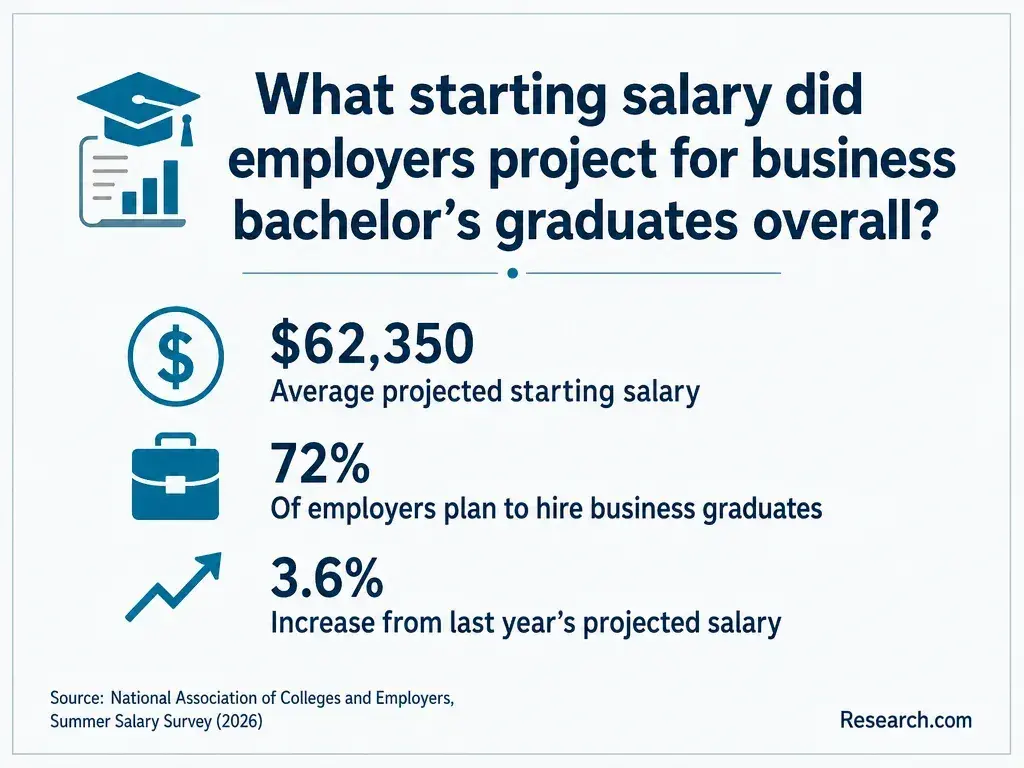
A business degree offers access to a wider range of job categories, but it has no single salary or growth rate. The Bureau of Labor Statistics reports a May 2025 median annual wage of $83,680 for accountants and auditors and projects 5% employment growth from 2025 to 2035. Those occupation-wide figures are not starting pay, and a general business administration degree does not necessarily meet an accountant job's education requirements.
For a fairer personal comparison, look up local postings for the exact jobs you would pursue: bookkeeper, accounting assistant, operations coordinator, or another target role. Note the requested credential, software, experience, and pay range. A specialized path may be stronger if your goal is outside general administration; for example, someone aiming at logistics should compare three-year-or-less supply chain degrees with a general business degree. Bookkeeping may offer an earlier entry point, while later earnings and advancement depend heavily on demonstrated responsibility and the roles available to you.
What are the education and certification requirements for bookkeeping careers?
There is no single US license required for every bookkeeping job. Employers set their own education and experience requirements, while certification issuers set separate rules for their credentials. An entry-level employer may prioritize accurate transaction entry, reconciliations, spreadsheets, software proficiency, and careful handling of confidential records over a bachelor's degree.
Before paying for a credential, check its issuer's published eligibility rules, assessed skills, exam format, experience requirements, and renewal obligations. Then compare those skills with nearby job postings. If you already have office or customer-service experience, seek opportunities to document accuracy, deadlines, and financial-record responsibilities without claiming duties you have not performed.
Bookkeeping can also be a way to earn relevant experience while studying. If you plan to keep working, compare business administration degrees for working learners by actual class schedules and workload, not the online label alone.
Business administration curricula typically combine general education with courses in financial and managerial accounting, economics, finance, marketing, management, operations, statistics, and business communication. Requirements vary by institution. An accounting introduction can help you interpret statements and understand controls, but it may provide less repeated practice with reconciliations and bookkeeping software than a focused training program.
Inspect the required courses rather than relying on the degree title. For bookkeeping, look for accounting labs, spreadsheet assignments, and opportunities to work through a complete transaction-to-report cycle. For broader advancement, consider whether electives or an official concentration support your target function. If people operations interests you more than financial records, learning what to expect from an HR degree can help you judge whether general business electives provide enough depth.
A traditional bachelor's degree is commonly planned as four years of full-time study from entry, but your remaining time depends on transferable coursework, required courses, scheduling, and enrollment pace. Bookkeeping courses and certification preparation are generally shorter; do not confuse finishing training with meeting any separate examination or experience requirement.
Ask a degree program for an evaluation showing which prior credits apply to graduation requirements - not merely which credits it accepts. Ask a bookkeeping provider whether its advertised duration includes practice, assessments, and certification steps. If speed is decisive, compare fast-paced online business degrees against a realistic work schedule: compressed classes do not eliminate the coursework.
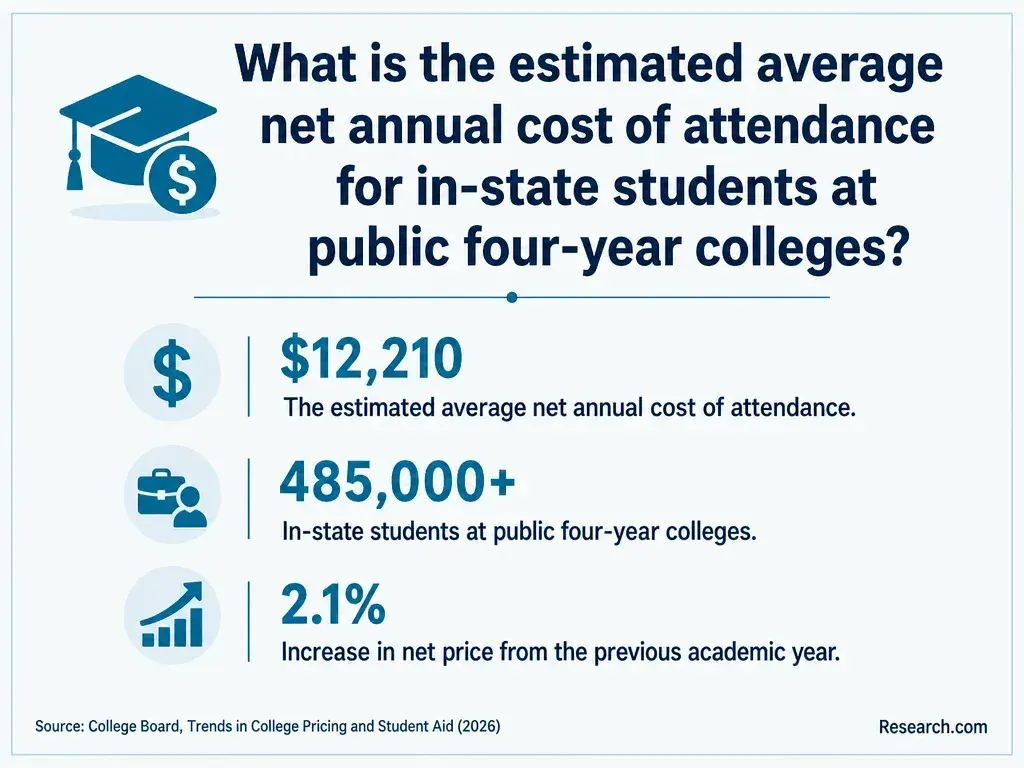
The useful comparison is total cost to reach your goal, not a degree's annual tuition against a course's advertised price. For the BS, request a cost estimate based on the credits you still need, including mandatory fees, books, technology, and possible travel. For bookkeeping, include training, materials, software access, exam attempts, and any renewal charges. Provider prices and school charges change, so obtain current written figures before calculating a total.
Also separate cost from cash flow. Grants and scholarships need not be repaid under their terms; loans generally do. Employer reimbursement may arrive only after you finish a course and meet workplace rules. If you are comparing a specialized alternative as well, the same distinction applies when weighing grants versus loans for project management bachelor's study. Avoid assuming that future wages will cover borrowing: compare costs with the requirements and pay ranges of jobs you could realistically seek.
An online BS can be a credible bachelor's degree when the institution holds recognized accreditation and the program meets its stated academic requirements. Delivery mode alone does not establish quality - or make a degree less legitimate. Check the exact program, institution, curriculum, student support, and any in-person obligations rather than relying on an "online" designation.
For someone working in bookkeeping, scheduling can matter as much as credibility. Confirm live-session times, group projects, proctored exams, course availability, and whether an internship or capstone requires employer approval. You can use online business degree school rankings in America to identify candidates, but verify current policies directly with each school before applying.
Schools commonly request a high school credential or previous college transcripts, but admission standards and entry points differ. A university may admit you while its business major has additional prerequisites or progression rules. Math, accounting, economics, and statistics requirements also vary; prior bookkeeping work does not automatically waive them.
If you have college coursework, ask for an official evaluation showing how credits apply to general education, the business core, electives, and residency requirements. If you are starting without a business background, review academic preparation for business administration applicants, then ask your chosen school which requirements must be completed before admission and which can be taken after enrollment.
Bookkeeping preparation aligns most directly with bookkeeper, accounting clerk, and accounts-support openings involving records, invoices, reconciliations, and routine reports. A BS in Business Administration can support applications for a broader set of entry-level roles, such as operations coordinator, administrative specialist, sales support, or HR assistant. Neither pathway by itself establishes readiness to manage staff or qualify for a regulated accounting role.
Use job postings to identify the gap between your current evidence and your target role. A bookkeeping applicant might build supervised experience with reconciliations and software; a business-degree student might add an internship or approved project that demonstrates communication and analysis. If you already hold college credits and want to move into people operations, online HR bachelor's programs accepting transfer credits may be a more targeted comparison than a general business degree.
How can you choose an accredited business administration program or bookkeeping certification?
For a degree, verify the institution's accreditation with the accreditor and confirm the exact program's requirements in the current catalog. AACSB, ACBSP, and IACBE recognition concerns defined business-school or program scope; do not assume it covers every degree at an institution. For bookkeeping certification, identify the issuing organization and check what it assesses, whether employers recognize it, and what it takes to maintain it. A certification issuer is not the same thing as a college accreditor.
Make your final comparison against one realistic target job. Request a degree audit and itemized cost from each college; request the certification's complete eligibility and fee schedule from its issuer. Check local postings for credential preferences and skills you can demonstrate. To narrow degree options, consider affordable accredited business administration programs accepting FAFSA, then confirm each school's current accreditation, aid eligibility, and your personal aid offer. Choose the shorter bookkeeping route if it meets the job's requirements; invest in the BS when its broader curriculum or degree status addresses a specific barrier you face.
Other Things You Should Know About Business Administration
Not automatically. CPA eligibility is set by state boards and includes specific education and other requirements. Ask the board in the state where you intend to qualify to review the coursework your program offers.
Yes, if the schedules and costs work for you. The credentials remain separate; ask your college whether any bookkeeping coursework can count toward degree requirements before enrolling in it.
It can be if your degree did not provide hands-on bookkeeping practice and the credential assesses skills requested in jobs you want. Compare the credential with targeted software training and supervised experience first.
A certification may help demonstrate training, but it does not establish business readiness or authorize every financial service. Define the services you can competently provide, protect client records, and check applicable business and tax-preparation rules before accepting work.
- How Financial Aid Is Calculated | studentaid.gov https://studentaid.gov/complete-aid-process/how-calculated
- What is the difference between a B.A. and B.S. in business administration? | Concordia University, Nebraska https://www.cune.edu/news/what-difference-between-b-and-bs-business-administration
- Online Bookkeeping Certificate Program | Self-Paced Course | U.S. Career Institute https://www.uscareerinstitute.edu/online-bookkeeping-specialist-school
- Online Bachelor's Degree in Business Administration | Purdue Global https://www.purdueglobal.edu/degree-programs/business/bachelor-business-administration/
- What Jobs Can You Get With a Business Degree? | snhu.edu https://www.snhu.edu/about-us/newsroom/business/what-jobs-can-you-get-with-a-business-degree
- Entry-Level Jobs With a Business Administration Degree | Warner Pacific University http://www.warnerpacific.edu/blog/top-entry-level-jobs-ba-business-administration/
- Entry-Level Accounting Jobs: No Degree Required https://www.accounting.com/resources/top-entry-level-jobs/
- How to Become a Bookkeeper in 2026: No Degree Required | Intuit Blog https://www.intuit.com/blog/life-at-intuit/intuit-experts/how-to-become-a-bookkeeper-a-complete-guide/
- What Employers Look for When Hiring Entry-Level Bookkeepers | CourseCareers https://coursecareers.com/blog-posts/what-employers-look-for-bookkeepers-and-accountants