2027 BS in Business Administration Decision Guide: A Business Major or a Business Minor for an Existing Student
Audited and Verified:
Our Editorial and Data Verification Process
Research.com uses government datasets, official education statistics and primary institutional information to support its career and degree guides. Our review process checks factual accuracy, occupational definitions, source dates and the requirements associated with the credentials discussed.
How This Article Was Fact-Checked
Our editorial team verifies salary estimates, employment projections, education requirements and program information against original data providers and official organizations. Salary figures are checked against the relevant occupational definitions and reporting periods. Information about licensure, accreditation and required in-person training is reviewed separately.
Fact-checked and verified on:

Co-Founder and Chief Data Scientist
If you are already enrolled in college, choosing a business major or adding a business minor can change which of your completed courses count toward graduation. The better option depends on your current degree, the work you want to do, and how many requirements each choice adds.
This guide compares the credentials, career uses, scheduling, and costs, then shows you what to verify in a degree audit before changing your academic plan.
Key Things You Should Know
- Choose a business administration major when broad business study is central to your career goal and an official degree audit shows a feasible path to graduation; choose a minor when another major remains your strongest qualification.
- Accepted credits do not necessarily satisfy business-core requirements. Compare remaining required courses, prerequisites, residency rules, and course availability before estimating time or cost.
- A minor can strengthen a résumé but does not replace job-specific experience. For context, the U.S. Bureau of Labor Statistics reports a $75,940 May 2025 median wage for human resources specialists, an occupation-wide figure, not an expected starting salary for either credential.
What Is the Difference Between a Business Major and a Business Minor?
A business administration major is the principal field of study within a bachelor's degree. A business minor is a smaller, officially approved set of courses completed alongside a different major; it is not a separate bachelor's degree.
A BS in Business Administration, BBA, or BA in Business may differ in quantitative, general education, and major requirements, so compare the actual catalog rather than the degree initials.
This comparison shows what each choice changes for a student who has already completed coursework. The decisive question is how the requirements fit into your remaining degree plan.
| Decision point | Business administration major | Business minor |
| Credential | Business is the primary degree field. | Another field remains the primary degree field; the minor is recorded according to school policy. |
| Coursework | Typically includes a broader business core and upper-level requirements. | Typically provides selected foundational courses, with less functional depth. |
| Best fit | Students seeking broad business preparation who can complete its requirements efficiently. | Students who want business context without replacing a well-aligned existing major. |
| Main risk | A change may leave prior credits applicable only as electives. | The limited course set may not address a specific hiring requirement or skill gap. |
If your goal is specifically HR rather than general business, compare the business options with online HR bachelor's programs accepting transfer credits. A specialized degree may fit better, but only an institution's evaluation can establish how your existing credits apply.
Should You Choose a Business Administration Major or Minor?
Start with your current major and target role, not the appeal of adding "business" to your transcript. A major is more compelling if you want broad preparation for business operations or related functions and can meet its requirements without an unacceptable delay.
A minor is often the better complement when your current field provides the expertise employers primarily need—for example, technical knowledge for a technology role or subject knowledge for a nonprofit program role.
Three comparisons make the decision concrete:
- Request a degree audit for each option showing completed requirements, remaining courses, prerequisites, and credits that would become electives.
- Check whether either path develops the specific skills your target roles require, then identify experience or projects you would still need.
- Compare additional tuition, fees, aid eligibility, and likely graduation dates using the school's actual course schedule.
A business minor may be enough if you need accounting, marketing, or management context to complement another discipline. If you want a particular function, a specialized degree, approved elective cluster, or targeted experience may be more useful than a broad major.
Funding can also change the choice: project management undergraduate scholarship comparisons illustrate an adjacent path to investigate, but eligibility and awards must be confirmed for your own program.
What Can You Do With a Business Administration Degree or Minor?
A business administration major can support applications for entry-level work in operations, sales support, marketing coordination, procurement, or administrative functions.
Which roles are realistic depends on your electives, work history, software skills, and evidence of results, not the degree title alone. Management positions generally require relevant responsibility and experience beyond undergraduate study.
A minor works differently: it adds business knowledge to your primary qualification. A health student might apply budgeting concepts to clinic operations; a design student might use marketing coursework in a portfolio project. Neither example means the minor independently qualifies someone for a regulated role or a specialist position.
For a defined supply-chain goal, compare the actual operations and logistics coursework in your business options with budget-friendly supply chain degrees with shorter schedules. A focused program may offer more relevant preparation, provided its transfer evaluation and total completion cost work for you.
Business majors commonly combine accounting, economics, finance, marketing, management, operations, and quantitative or analytical study. A minor usually selects fewer courses from these areas. Schools determine the exact courses, minimum grades, prerequisite order, upper-level requirements, and whether a capstone is required.
For an existing student, the important distinction is between having taken a related course and having satisfied a requirement. An introductory statistics course, for example, may need a formal equivalency decision before it counts toward a business prerequisite.
Ask the business department and registrar to identify approved substitutions in your audit. The guide to business administration admissions coursework and credit requirements can help you prepare questions, but your school's catalog and written evaluation control your plan.
Delivery format matters only if it lets you complete the right courses on a workable schedule. Online classes may still have live meetings, timed exams, team presentations, or fixed weekly deadlines. Campus courses can offer convenient access to faculty and peers but may conflict with work or commuting commitments.
Before changing programs, check when required courses, not just electives, are offered, whether a minor is available online, and whether an internship or capstone requires a particular setting. Online business study with accelerated terms may shorten the calendar between courses, but faster terms do not remove prerequisites or reduce the work required.
As a current student, you may need approval to declare the business major even though you are already admitted to the university. A minor may have a separate declaration process.
Depending on the school, either decision can involve prerequisite courses, a minimum GPA, capacity limits, or an application deadline. Admission to a major is also separate from the decision to apply prior courses toward its requirements.
Ask an adviser for the catalog rules governing your enrollment term and request a written evaluation before switching. If a more specialized project-management degree is an alternative, online project management degrees for transfer applicants offer options to compare; do not assume that admission or accepted credits mean your remaining major requirements will be shorter.
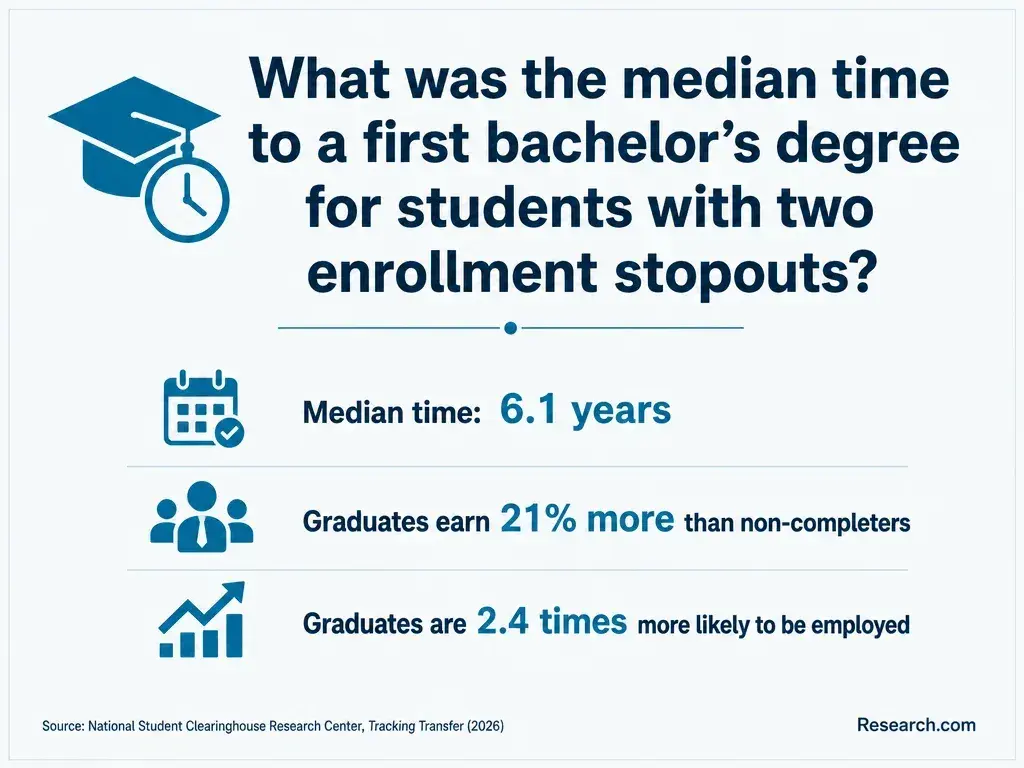
There is no reliable completion estimate based on the words "major" and "minor." Your timeline depends on which completed courses apply, prerequisite chains, how often required classes run, enrollment pace, and residency requirements. A smaller minor can still delay graduation if its final course is unavailable when you need it.
Have an adviser map both options term by term, including a backup if a course fills or is not offered. If your goal is logistics, compare that schedule with faster-paced online supply chain college study, but use your evaluated credits and the program's course rotation, not an advertised fastest-possible timeline, to plan graduation.
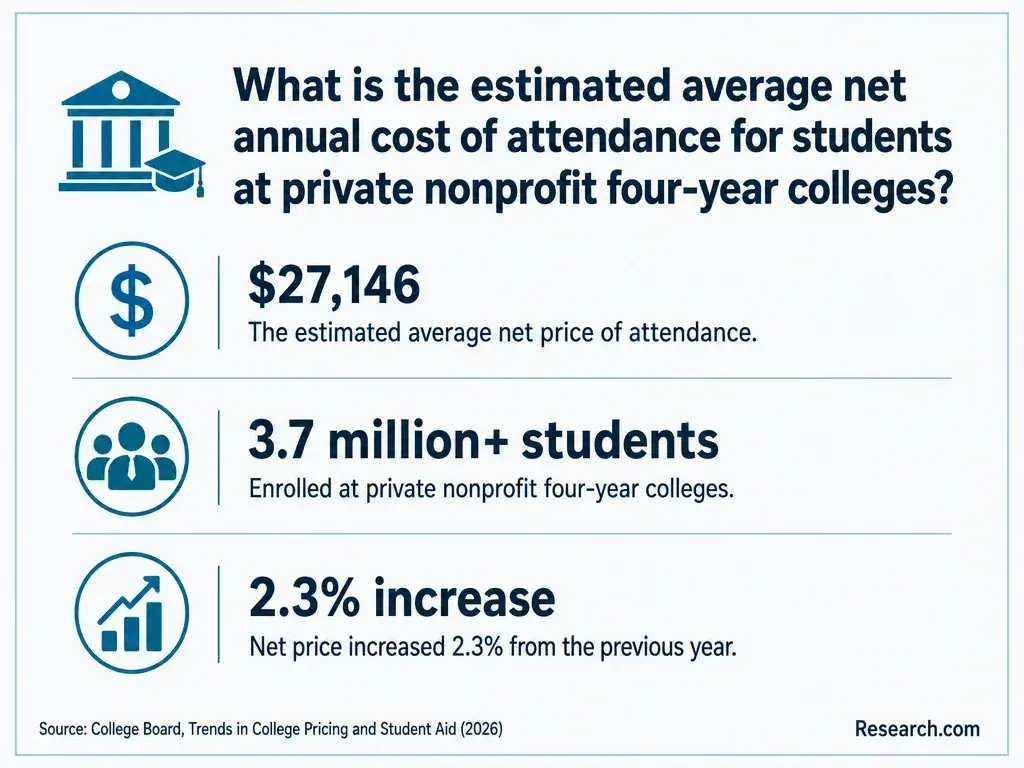
For an existing student, the useful figure is additional cost to completion, not a program's advertised tuition alone. Compare the remaining courses for each path, tuition and mandatory fees, books or software, possible extra terms, and any earnings affected by your schedule. Also check whether a change in enrollment pace would affect financial aid or employer reimbursement.
Request a written degree audit and calculate costs from the school's published charges for the courses you would actually take. Budget-conscious online business administration education can provide comparison options, but a lower advertised rate may not be cheaper if fewer of your completed credits satisfy the new program.
Verify that the institution has recognized institutional accreditation, then check whether any claimed business accreditation, such as AACSB, ACBSP, or IACBE, covers the school or program you are considering. These are different questions. Business accreditation does not establish that a minor is offered, that your courses will transfer, or that graduates obtain particular jobs.
When comparing schools, use US rankings of online business degree programs as a starting list rather than a substitute for checking accreditor scope, the current catalog, course availability, and your own degree audit.
What Are the Salary and Job Outlook for Business Careers?
Salary data describes occupations, not the return on a business major or minor. For example, the U.S. Bureau of Labor Statistics reports a $75,940 median annual wage for human resources specialists in May 2025 and projects 6% employment growth from 2025 to 2035. Those figures cover workers across experience levels; they do not predict an individual student's starting pay or show that a business credential alone qualifies someone for HR work.
Use postings for your intended role and location to identify the degree, skills, and experience employers request. Then compare those requirements with what each academic option, and your existing work, can demonstrate. If speed and cost are priorities, assess shorter business administration study options and career prospects against your remaining requirements rather than assuming a faster credential will produce a higher salary.
Other Things You Should Know About Business Administration Programs
Yes, once the minor is officially awarded or recorded. Before completion, label it "in progress" and include an expected completion date only if your academic plan supports it.
Not necessarily. Schools vary in whether minors appear on diplomas, transcripts, or both. Check the registrar's policy if formal documentation matters to you.
Sometimes, but overlap limits vary by institution. Ask for a degree audit showing which courses may satisfy both sets of requirements.
Do not assume so. Many schools require minors to be declared and completed before the bachelor's degree is awarded; ask the registrar about your institution's policy.
- The Major Payoff: Evaluating Earnings and Employment Outcomes Across Bachelor's Degrees - CEW Georgetown https://cew.georgetown.edu/cew-reports/major-payoff/
- Business Administration Major - UCR School of Business https://business.ucr.edu/undergraduate/major
- Frequently Asked Questions | Olin Undergraduate Programs | Washington University in St. Louis https://olinundergrad.wustl.edu/faq/
- Policies Governing Double Counting Courses | upenn.edu https://www.college.upenn.edu/node/254
- 10 Best Business Degrees for High Pay and Career Growth | Pace University New York https://www.pace.edu/news/best-business-degrees-undergrad-grad
- Career and Life Design for Students | Oakland University https://www.oakland.edu/business/careers-internships/students/
- MBA Concentrations: Types, Skills, and Career Paths | SCU https://www.scu.edu/business/blog/mba/mba-concentrations/
- BBA Degree Requirements - Zicklin School of Business - CUNY https://zicklin.baruch.cuny.edu/academic-programs/undergraduate/bba-degree-requirements/
- Fall 2025 Major-Specific Degree Requirements (College of Business) | California State University Long Beach https://www.csulb.edu/student-records/fall-2025-major-specific-degree-requirements-college-of-business
- Multiple Use of Courses | Office of the Registrar https://registrar.arizona.edu/support-services/graduation-services/degree-candidacy/multiple-use-courses