2027 Public, Nonprofit and For-Profit Colleges by Accreditor

Co-Founder and Chief Data Scientist
Choosing a business administration college means evaluating more than a school's public, nonprofit, or for-profit label. Accreditation affects federal aid eligibility, transfer credit, employer confidence, and graduate-school options. NCES reports average published tuition and fees of $10,662 at public four-year institutions and $42,162 at private nonprofit four-year institutions for 2022-23.
This guide helps prospective business students compare college types and accreditors, verify a program's status, estimate trade-offs, and select an option aligned with their budget and career plans.
Key Things You Should Know
- Institutional accreditation is the essential baseline, it can affect federal financial aid, transfer-credit review, graduate admissions, and whether employers recognize the institution.
- Public, private nonprofit, and private for-profit colleges can each be institutionally accredited, ownership type alone does not establish academic quality, affordability, or career value.
- For business administration, programmatic accreditation from AACSB, ACBSP, or IACBE can be a useful additional signal, but it does not replace institutional accreditation and is not required for most entry-level business jobs.
How do public, nonprofit and for-profit business administration colleges differ by accreditor?
Public colleges are government-supported institutions, while private nonprofit colleges reinvest revenue into their educational mission. Private for-profit colleges are investor-owned or commercially operated. Each type may hold institutional accreditation from a recognized accrediting agency, so students should verify the individual campus or online division rather than make assumptions from the ownership category.
The comparison below shows common patterns, not universal rules. A public university may cost more for an out-of-state student than a local private nonprofit college after institutional scholarships, and a for-profit program may offer convenient scheduling but have different transfer or financing outcomes.
| College type | Typical institutional profile | Common business administration strengths | Questions to investigate |
| Public | State-supported university, community college, or technical college; often accredited by a long-established institutional accreditor | Resident tuition, broad course selection, alumni networks, and clear community-college transfer routes | Residency rules, class availability, online support, and out-of-state pricing |
| Private nonprofit | Mission-driven private institution; may be secular, religiously affiliated, or specialized | Smaller classes, targeted advising, institutional aid, and specialized business tracks | Net price after grants, graduation outcomes, debt, and whether the business school has programmatic accreditation |
| Private for-profit | Commercial institution that may focus on career-oriented or flexible delivery | Frequent start dates, accelerated terms, and scheduling designed for working adults | Total borrowing, withdrawal policies, transferability, placement claims, and eligibility for employer or professional goals |
Institutional accreditors do not "rank" one ownership model over another. Their review focuses on areas such as academic quality, governance, student support, finances, assessment, and compliance. The best choice is the school that combines verified accreditation, realistic total cost, usable course scheduling, and outcomes relevant to your goal.
For many learners, public community colleges make sense for lower-cost general education and transfer preparation. Private nonprofit colleges may fit students seeking a particular academic environment or generous need-based aid. A for-profit option should be considered only after a close comparison of net price, credits accepted elsewhere, and the value of its flexible format for your circumstances.
Which accreditors approve business administration programs and why does accreditation matter?
Business administration students may encounter two separate forms of accreditation. Institutional accreditation evaluates the college as a whole. Programmatic accreditation evaluates a business school, department, or defined set of business programs. A legitimate business degree normally begins with an institutionally accredited college; programmatic business accreditation is an additional, more specialized review.
Several institutional accreditors historically served geographic regions, including the Higher Learning Commission, Middle States Commission on Higher Education, New England Commission of Higher Education, Northwest Commission on Colleges and Universities, Southern Association of Colleges and Schools Commission on Colleges, and WASC Senior College and University Commission. Other recognized institutional accreditors serve particular institutional missions or delivery models. The U.S. Department of Education's recognition status is important because recognition can affect access to Title IV federal student aid.
For business-specific review, students most often see the following organizations. Their standards and scope differ, so the label should be interpreted alongside the school's curriculum, faculty, student outcomes, and cost.
| Accreditor type | Examples students may see | What the review generally addresses | How to use it in a decision |
| Institutional | HLC, MSCHE, NECHE, NWCCU, SACSCOC, WSCUC, DEAC, ACCSC | Institution-wide academic quality, governance, resources, integrity, and student support | Confirm this first before relying on a degree for aid, transfer, or further study |
| Business programmatic | AACSB, ACBSP, IACBE | Business curriculum, faculty qualifications, assessment, strategic management, and learning outcomes | Especially useful for students targeting selective employers, competitive MBA programs, or business-school-focused learning |
AACSB accreditation is often sought by research-oriented universities and can be a meaningful factor for students pursuing competitive finance, consulting, analytics, or graduate-business pathways. ACBSP and IACBE also evaluate business education, often including teaching-centered and professionally focused institutions. None of these designations guarantees a job, salary, admission to graduate school, or transfer credit.
Accreditation matters because it creates an external accountability process. It is not a substitute for checking graduation rates, debt, faculty access, internship opportunities, and curriculum. Treat it as a threshold for legitimacy, then compare the program's evidence of value.
How can I verify that a business administration program is properly accredited?
Do not rely solely on a college logo, an admissions representative's statement, or a directory that does not identify the accrediting agency. Verify both the college and, when relevant, the specific business school or degree program. This matters especially for fully online programs, branch campuses, teach-out arrangements, and programs offered through third-party platforms.
Students comparing accredited online degree programs should confirm that the exact institution and delivery location are covered by the listed accreditation, not merely a parent company or a partner organization.
Use this sequence before applying or paying a deposit:
- Find the institution in the U.S. Department of Education's Database of Accredited Postsecondary Institutions and Programs and identify its current institutional accreditor.
- Visit the accreditor's own directory and confirm the college's status, location, effective dates, and any public sanctions or notices.
- Check the college catalog for the exact business administration degree, modality, campus, credit requirements, and academic year you intend to enter.
- If programmatic business accreditation matters to you, search the AACSB, ACBSP, or IACBE directory and verify that your degree level and business unit are included.
- Ask the receiving college, licensing authority, employer, or graduate program directly if you need credits or a degree accepted for a specific purpose.
A major red flag is vague language such as "internationally accredited" without naming a recognized agency and a searchable status. Another is a school that claims transferability is universal. Transfer decisions are made by the receiving institution, course by course, and accreditation is only one consideration.
What are the main differences between regional, national and programmatic accreditation?
The terms regional and national are still widely used by students, but they can be misleading. Historically, regional accreditors mainly served colleges in defined areas of the United States, while national accreditors often served career, faith-based, distance-learning, or specialized institutions. The Department of Education no longer formally separates institutional accreditors into regional and national categories for recognition purposes.
The practical distinction remains relevant because receiving colleges may have longstanding policies and faculty expectations about which credits they accept. A regionally associated accreditor does not automatically make every credit transferable, and a nationally associated accreditor does not automatically make a degree unusable. The receiving school's written policy, course equivalencies, grade requirements, and program capacity control the outcome.
| Term | What it generally means today | Primary student concern | Best use |
| Institutional accreditation | External review of the entire college by a recognized accrediting agency | Federal aid eligibility, institutional legitimacy, and broad academic quality review | Required baseline check for every degree-seeking student |
| "Regional" accreditation | Legacy term commonly associated with major historically regional institutional accreditors | Potentially smoother transfer history at many traditional colleges, though never guaranteed | Useful context when planning to transfer or attend graduate school |
| "National" accreditation | Legacy term commonly associated with specialized, career-focused, distance-learning, or faith-based accreditors | Some receiving institutions may apply more restrictive transfer policies | Requires early confirmation from the intended receiving school |
| Programmatic accreditation | Review of a discipline-specific unit or program in addition to institutional accreditation | Curricular depth and discipline-specific quality expectations | Helpful differentiator for business-school-focused goals |
For a student starting at a two-year college and planning to earn a bachelor's degree elsewhere, transfer agreements and course equivalency databases are more actionable than accreditation labels alone. For a student finishing one degree for immediate workplace advancement, institutional accreditation, employer tuition-benefit rules, and program fit may matter more than programmatic business accreditation.
How do online and campus business administration programs compare in accreditation standards?
Accreditation standards generally evaluate academic quality rather than treating online education as inherently weaker or stronger than campus instruction. An accredited college must be able to demonstrate that online students receive appropriate instruction, assessment, academic support, identity verification, complaint processes, and access to learning resources.
The real decision is whether the delivery model supports your learning style and career plan. Online business administration can fit working adults, caregivers, military-connected learners, and students who need geographic flexibility. Campus programs may better suit students who want structured schedules, in-person networking, student organizations, recruiting events, and face-to-face access to professors.
When comparing formats, focus on the features that can materially change your experience and total cost.
| Decision factor | Online program considerations | Campus program considerations |
| Accreditation verification | Confirm the online division and exact degree are covered by the institution's accreditation | Confirm the campus location and business unit are included |
| Schedule | May offer asynchronous coursework, frequent starts, or accelerated terms | Usually follows scheduled class meetings and academic terms |
| Networking | May rely on virtual events, employer partnerships, and local internships | May offer easier access to campus recruiting, clubs, and in-person faculty contact |
| Cost beyond tuition | May reduce commuting and housing costs but can include technology, proctoring, or residency expenses | May add transportation, housing, parking, and activity costs |
| Learning fit | Requires consistent self-management and comfort communicating digitally | Provides more externally structured routines and immediate in-person interaction |
Before enrolling online, ask whether exams use remote proctoring, whether group projects require scheduled meetings, whether internships can be completed where you live, and whether the school provides career services to distance learners. A school's institutional accreditation should be verifiable regardless of format; a different website domain or marketing partner should prompt additional questions.
What degree levels exist in business administration and which accreditors cover them?
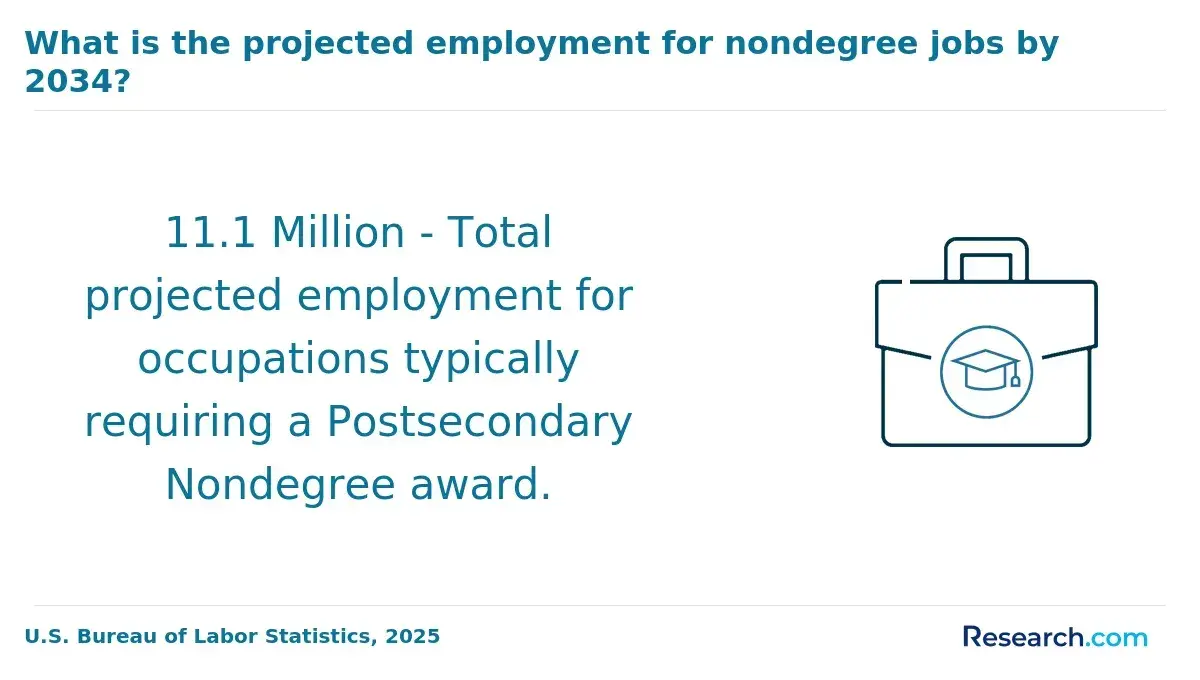
Business administration is offered from short-term certificates through doctoral study. Institutional accreditation covers the college's authority and quality framework across its approved offerings, while AACSB, ACBSP, or IACBE coverage may apply only to particular business degrees, locations, or units. Always check the listing for your exact level.
Degree level should follow your target role rather than the assumption that more education is always better. An associate degree can support entry-level business operations roles or a lower-cost transfer plan; a bachelor's degree is the common starting point for many analyst, sales, operations, and management-track roles; an MBA or specialized master's degree is usually most valuable when paired with clear experience-based goals.
| Credential | Typical purpose | Who it may suit | Accreditation check |
| Certificate | Focused introductory business, bookkeeping, management, or software skills | Career changers and learners testing a field | Verify the sponsoring institution and whether credits can later apply to a degree |
| Associate degree | Foundational business education and transfer-ready general education | Students seeking entry-level preparation or a bachelor's pathway | Check institutional accreditation and written transfer agreements |
| Bachelor's degree | Broad business core with concentrations such as management, marketing, finance, or analytics | Students pursuing many entry-level professional business roles | Check institutional status and business-school programmatic coverage if relevant |
| Master's degree or MBA | Advanced management, leadership, or specialized business study | Professionals with defined advancement or career-change goals | Confirm graduate-business accreditation coverage and admissions prerequisites |
| Doctoral degree | Advanced research, teaching, or executive practice preparation | Future faculty, researchers, and senior practitioners | Verify institutional and doctoral-program authorization carefully |
If speed is the priority, compare completion requirements rather than marketing language. Some learners explore an associate degree in 6 months online free while researching faster pathways, but an accredited associate degree normally requires substantial college credit and a realistic study plan. Confirm the actual number of credits, transfer limits, fees, and whether "free" refers to tuition, aid eligibility, or a limited course option.
Shorter workforce credentials can be useful when they teach a defined, marketable skill and connect to a larger academic plan. They are less appropriate when a target employer, promotion policy, or graduate program specifically requires a bachelor's degree.
How does accreditation influence admission requirements and transfer of business credits?
Accreditation does not create a universal admission standard. Colleges set their own requirements for high school records, prior college GPA, placement, English proficiency, prerequisites, work experience, and graduate entrance exams. Competitive business programs may also require prerequisite courses in accounting, economics, calculus, or statistics.
For transfer students, institutional accreditation can make a course more likely to receive review, but it does not compel acceptance. Receiving colleges commonly evaluate course content, credit hours, grade earned, recency, equivalency to their curriculum, and the number of credits allowed toward the major. Business courses can be particularly sensitive because accounting, finance, analytics, and business-law requirements often have sequenced prerequisites.
Take these steps before completing a large block of credits at another institution:
- Obtain written confirmation of how each planned course will transfer, not just whether the school generally accepts credits.
- Save syllabi, assignments, catalog descriptions, and course-learning outcomes for business courses that may need faculty review.
- Check whether transferred credits satisfy major requirements, electives only, or lower-division prerequisites.
- Review residency requirements, which may require completing a minimum number of credits at the degree-granting college.
- Ask whether a future concentration, internship, capstone, or programmatic accreditation requirement limits transfer credit in the business major.
A common mistake is enrolling in the lowest advertised tuition option before selecting a receiving school. If credits transfer only as electives, the apparent savings can disappear through extra semesters. Students planning a bachelor's completion path should choose courses from an articulated pathway whenever possible.
How does accreditation affect career options, licensure and professional certifications in business?
For most general business jobs, employers evaluate a combination of degree completion, skills, experience, internships, communication ability, and job-specific knowledge. Institutional accreditation can reassure employers that the college has undergone external review, but it does not guarantee employment. Programmatic business accreditation may be a differentiator for some employers and graduate programs, particularly when comparing otherwise similar candidates.
The Bureau of Labor Statistics reports that business and financial operations occupations had a median annual wage of $80,920 in May 2024. That figure covers a broad occupational group rather than all business administration graduates, so it is best used as labor-market context, not a predicted outcome for any individual degree.
Licensure is less central to general business administration than to fields such as nursing or teaching, but it can matter in related pathways. CPA licensure is regulated by states and typically requires specific accounting coursework and credit hours; insurance, securities, real estate, and certain financial-services roles may also require examinations, sponsorship, registration, or state approval. A general business degree may not include every required course.
Professional certificates can strengthen a focused career plan, especially in project management, human resources, analytics, bookkeeping, sales technology, or digital marketing. Students considering certifications online should first determine whether the credential is recognized by the relevant employer or professional association and whether it complements rather than duplicates their degree coursework.
Ask a program advisor for a course map if your goal is CPA eligibility, finance licensing, or a specific professional certification. The right degree is one that delivers the needed coursework and experience - not merely a business title.
How do accreditation and college type impact tuition, financial aid and total program cost?
Accreditation and price interact because institutional accreditation recognized by the Department of Education is generally tied to a school's eligibility to participate in federal student aid programs. Eligibility does not mean a program is affordable, and students should never use aid availability as the only quality test.
For 2022-23, NCES reported average published tuition and fees of $10,662 at public four-year institutions, $42,162 at private nonprofit four-year institutions, and $17,571 at private for-profit four-year institutions. Published prices are not net prices: public resident rates, institutional grants, state grants, employer support, transfer credits, housing, and program fees can substantially change what a student actually pays.
Compare offers using total program cost rather than a single term's tuition. The following costs often explain why an apparently cheaper program becomes more expensive.
| Cost factor | Why it matters | What to request |
| Tuition and mandatory fees | May vary by residency, format, credit load, and program | Itemized estimate for all remaining credits |
| Transfer credit | Accepted credits can reduce time enrolled and borrowing | Written transfer evaluation before enrollment |
| Grants and scholarships | Gift aid reduces net cost, but renewal conditions matter | Renewal GPA, enrollment, and duration terms |
| Living and opportunity costs | Housing, commuting, childcare, and reduced work hours affect affordability | Full cost-of-attendance budget |
| Books, software, and proctoring | Business platforms and online testing can create recurring charges | Program-specific fee schedule |
| Time to completion | Extra terms can add tuition and delay earnings | Personalized graduation plan based on accepted credits |
Students seeking a quick skills route may also compare 6 month programs with degree study. A short certificate can lower upfront cost and help test a career direction, but it may not meet bachelor's-degree hiring requirements or transfer toward a later business degree. Evaluate the credential's purpose before borrowing for it.
Red flags include pressure to sign enrollment documents before receiving an aid offer, unclear loan amounts, claims that grants will cover every future term, and refusal to provide a written total-cost estimate. Use the FAFSA process, compare net-price information, and read loan disclosures before committing.
What criteria should I use to choose a reputable accredited business administration college?
A reputable business administration college matches verified quality with your intended career path and financial limits. Start with institutional accreditation, then evaluate whether the degree's curriculum, delivery format, support services, and total cost make practical sense for you. Do not assume a public college is automatically inexpensive, a nonprofit is automatically better, or a for-profit college is automatically unsuitable.
Use the following decision criteria to compare finalists consistently:
- Verify current institutional accreditation through the accreditor and federal accreditation database, including the exact campus or online program.
- Confirm whether AACSB, ACBSP, or IACBE accreditation applies if business-school programmatic accreditation is important to your goals.
- Match concentrations and electives to your intended work, such as accounting, supply chain, entrepreneurship, marketing, management, or business analytics.
- Compare net price, expected borrowing, accepted transfer credits, and likely time to graduation rather than advertised tuition alone.
- Review student support, tutoring, career coaching, internship access, technology requirements, and support for online learners.
- Ask for outcome information that is clearly defined by cohort, time period, and methodology, be cautious with vague placement or salary claims.
- Check graduate-school, employer, or licensing prerequisites before selecting a general business curriculum.
Business administration is a strong fit for students who want a flexible foundation across organizations and are willing to build a specialization through electives, internships, projects, and professional experience. It may be a weaker fit for students with a tightly regulated goal, such as CPA licensure, who may need an accounting-specific curriculum and state-approved coursework.
Before making a final choice, request a written credit evaluation, a degree map to graduation, an itemized cost estimate, and confirmation of the accreditation status. These documents are more useful than broad marketing claims and can reveal whether a school's promise fits your actual timeline.
Other Things You Should Know About Business Administration
It can be valid if the institution is properly accredited and authorized, but validity alone does not answer whether it is the best investment. Verify accreditation, total cost, transfer rules, employer recognition, and student outcomes before enrolling.
No. AACSB accreditation is not required for most business jobs. It can be helpful for students targeting certain competitive employers, MBA programs, or business-school environments, but institutional accreditation, curriculum fit, experience, and cost are often more important.
Possibly, but transfer is never automatic. The receiving college decides whether credits meet its requirements based on accreditation, course equivalency, grades, credit hours, and its residency rules. Obtain a written evaluation before enrolling.
An institution's accreditation can cover both formats, but students should verify the exact online program and campus. Check whether online learners receive appropriate academic support, career services, internship access, and clear information about fees and requirements.
References
- 2025 Best Online Accelerated Accounting Degrees https://www.onlineu.com/degrees/accelerated-accounting
- Accelerated Accounting Degrees Online 2025 | Accounting.com https://www.accounting.com/degrees/accounting/accelerated-online-bachelors/
- Fast Track Your Future: How Accelerated Degrees Benefit Career Starters, Changers and Climbers - Beal University https://beal.edu/fast-track-your-future-how-accelerated-degrees-benefit-career-starters-changers-and-climbers/
- How Long Does It Take to Complete an Online Accounting Course? - Best Colleges Online https://www.bestcollegesonline.org/faq/how-long-does-it-take-to-complete-an-online-accounting-course/
- Southwestern College - Professional Studies https://ps.sckans.edu/news/view/110/
- Online Accounting Degrees: How to Choose a Program That Can Boost Your Career https://money.com/online-accounting-degrees/
- ADP in Accounting Ignite Your Career with an Innovative Global Online Graduate Programs https://career.cuchicago.edu/accelerated-accounting/
- Online Bachelor's Degree: Accounting https://www.umgc.edu/online-degrees/bachelors/accounting
- Best Accelerated Online Accounting Degree Programs of 2025 - Intelligent https://www.intelligent.com/best-online-accounting-degree-programs/accelerated/
- Traditional Semester Based vs. Self-Paced Online Courses https://www.cpacredits.com/resources/comparing-online-courses/