2027 Post-Master's Palliative Care Nursing Certificates for Nurses in Nebraska: Admission, Study Format, and Cost
Audited and Verified:
Our Editorial and Data Verification Process
Research.com uses government datasets, official education statistics and primary institutional information to support its career and degree guides. Our review process checks factual accuracy, occupational definitions, source dates and the requirements associated with the credentials discussed.
How This Article Was Fact-Checked
Our editorial team verifies salary estimates, employment projections, education requirements and program information against original data providers and official organizations. Salary figures are checked against the relevant occupational definitions and reporting periods. Information about licensure, accreditation and required in-person training is reviewed separately.
Fact-checked and verified on:

Co-Founder and Chief Data Scientist
A Nebraska nurse with a master's degree may want deeper palliative care preparation without earning another full degree. The first challenge is identifying an actual post-master's certificate - not a continuing education course or an unrelated nurse practitioner track - and confirming that its format and clinical expectations fit a working nurse's schedule. This guide explains what to verify about Nebraska options and out-of-state programs, how to estimate the full cost, and when a certificate is more useful than specialty certification or employer-supported training.
Key Things You Should Know
- A Nebraska school's currently offered, specifically named post-master's palliative care nursing certificate, credit count, and tuition should be confirmed directly with the school before applying; a general graduate nursing or palliative care offering is not proof of that credential.
- Online coursework may still involve scheduled classes or approved clinical experiences. Confirm where a Nebraska-based student can complete every requirement.
- For budgeting only, 12 credits at $750 per credit would mean $9,000 in tuition before fees and travel; neither figure is a verified program price.
What is a post-master's palliative care nursing certificate?
A post-master's palliative care nursing certificate is a graduate-level academic award intended for someone who already holds a master's degree and wants focused study in care for people with serious illness. Depending on the school, it may emphasize symptom assessment, communication about goals of care, family support, ethics, and coordination across settings. The exact award matters: a university certificate, a short continuing education course, and a professional certification are different qualifications.
For an experienced RN or APRN, the best fit depends on the intended role. A non-APRN palliative care certificate can strengthen practice within an existing license; it does not create a new nurse practitioner population focus or expand legal scope. Someone who does not yet hold an RN license needs an initial nursing pathway instead. Nursing master's entry routes without an RN license address that different starting point.
Which Nebraska schools offer post-master's palliative care nursing certificates?
Do not assume that a Nebraska school currently offers the exact credential in the title. A school may advertise graduate nursing certificates, palliative care coursework, or interdisciplinary training without offering a separately awarded post-master's palliative care nursing certificate. No specific Nebraska program, tuition rate, or start date is established here as a verified current offering. Ask each prospective school for its current catalog entry, award name, accepting term, and contact for the nursing graduate program.
If a Nebraska-based certificate is unavailable or does not meet your goal, an out-of-state program may be worth considering - but first obtain written confirmation that it accepts Nebraska residents and can accommodate any required clinical learning in Nebraska. If your highest nursing credential is an associate degree rather than a master's, ADN-to-MSN bridge programs address the earlier educational step; they are not substitutes for a post-master's certificate.
What are the admission requirements for palliative care nursing certificates?
Admission rules belong to the individual certificate program. A prospective applicant should expect the school to review the prior graduate degree, nursing license where required, transcripts, and the match between previous coursework and the certificate's objectives. Some programs may also request a résumé, statement of purpose, recommendations, or evidence of relevant practice. An APRN applicant should ask whether existing graduate courses or supervised experiences can be applied; employment experience alone should not be assumed to replace required credits or clinical work.
Before paying an application fee, send admissions your degree information, license status, and intended role, then request a written answer on eligibility and any prerequisites. If your actual goal is a practice doctorate rather than focused palliative care study, planning applications to accessible DNP programs is a separate decision; DNP admission does not establish that a program teaches palliative care.
A Nebraska resident may be able to take an out-of-state certificate's didactic courses online, but online does not necessarily mean fully remote or self-paced. Live seminars, campus sessions, simulation, or supervised experiences can change both feasibility and cost. Ask for the course schedule and attendance rules for the term you would enter, not just an "online" label.
For a nurse working shifts, the decisive questions are whether live meetings are required, when they occur, who secures clinical sites and preceptors, and whether the school permits those activities in Nebraska. Online programs in another specialty, such as affordable online psychiatric nurse practitioner programs, should not be treated as palliative care alternatives merely because their delivery format is convenient.
There is no universal post-master's palliative care certificate curriculum. A relevant syllabus may cover serious-illness symptom assessment, communication and shared decision-making, psychosocial and spiritual concerns, caregiver support, ethical issues, and collaboration with hospice or other services. Compare course objectives and assessed work with the patient population and responsibilities in your present role.
Look beyond course titles: determine whether learning is evaluated through case analysis, supervised practice, a project, or another method. Project-based work in RN-to-BSN project-based learning options serves a different degree level and cannot be presumed equivalent to graduate palliative care preparation or supervised clinical hours.
Completion time depends on required credits, course sequencing, enrollment pace, and any clinical or project requirements. A short catalog description is not a reliable graduation date: a required course offered only once a year or a delayed placement can extend study. Request a term-by-term plan based on your prior coursework and intended part-time or full-time enrollment.
A working nurse should also ask how long a leave of absence can last and whether returning students must repeat courses. Comparing a certificate with FNP programs with shorter completion timelines is useful only if becoming an FNP is the goal; an FNP track is a distinct APRN pathway, not an accelerated palliative care certificate.
Calculate cost from the school's current per-credit charge and your approved number of credits, then add mandatory fees, books, technology, travel, and any clinical-site expenses. For a usable comparison, request an itemized estimate for the same enrollment pace at each school. The following prices are illustrative arithmetic, not published Nebraska certificate prices:
- Tuition example: 12 credits × $750 per credit = $9,000.
- Total attendance cost: $9,000 plus the school's applicable fees, materials, travel, and any additional required terms.
Check whether graduate-certificate students qualify for federal aid or employer reimbursement; neither should be assumed. If your goal is a new NP qualification, cost comparisons across online NP pathways address a different, potentially larger investment. Compare complete costs only after confirming which credential your intended job requires.
No academic certificate automatically awards professional palliative nursing certification. The Hospice and Palliative Credentialing Center administers hospice and palliative nursing credentials, including credentials for different nursing roles. Eligibility depends on the particular credential's current rules, which may address license type, education, and practice experience. The certifying organization - not the school - decides examination eligibility.
This distinction helps prevent an expensive credential mismatch. The awards below serve different purposes:
| Qualification | What it establishes | What to verify |
| Academic palliative care certificate | Completion of the school's specified coursework | Exact award, curriculum, and assessed clinical requirements |
| Professional specialty certification | Meeting a certifying body's credential requirements | Current eligibility, examination, and renewal rules |
| RN or APRN license | Authorization to practice within the applicable jurisdiction and role | License status and permitted scope |
An APRN considering shorter online PMHNP certificate programs should make the same distinction: a population-focused APRN certificate and palliative specialty education lead toward different objectives and require separate eligibility checks.
Palliative care preparation may support an experienced nurse's work in hospital consultation, oncology, hospice, home-based care, or serious-illness care coordination. Duties depend on the position and license: an RN may emphasize assessment, education, coordination, and escalation, while an appropriately licensed APRN may have additional responsibilities within their authorized role. Employers can still require relevant experience, orientation, and demonstrated competencies.
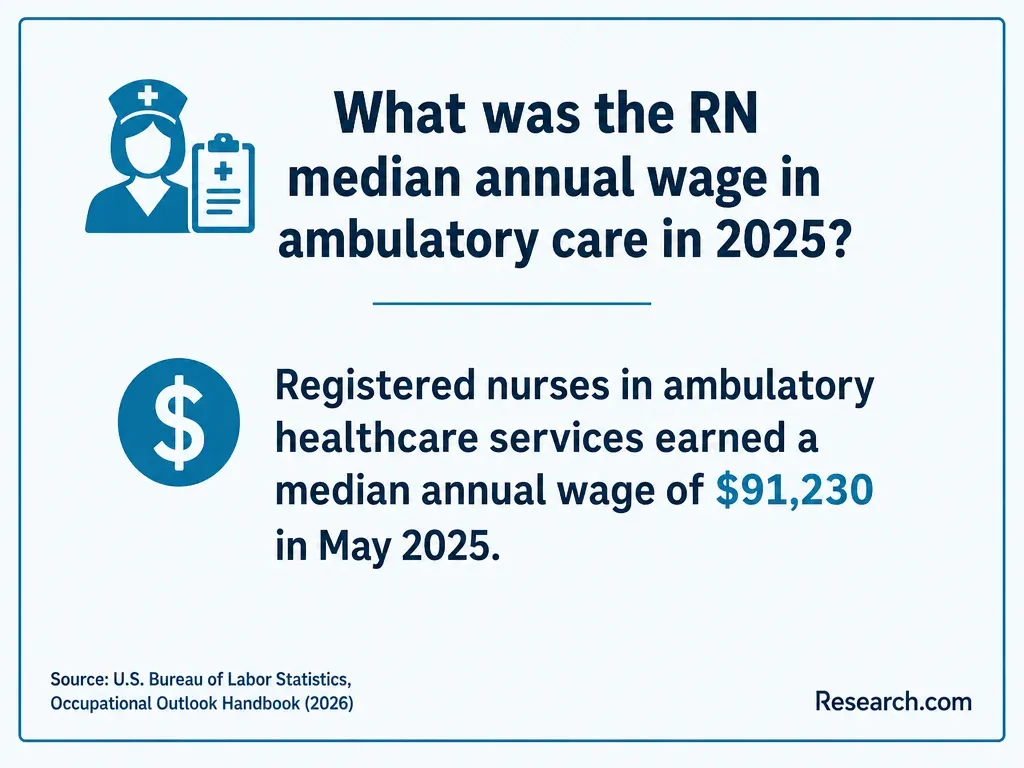
There is no reliable single "palliative care certificate salary." The U.S. Bureau of Labor Statistics reports pay and employment outlook for occupations such as registered nurses and nurse practitioners, not for graduates of this particular certificate or every palliative care job title. Use the wage data for your actual occupation as context, then compare local postings by duties, schedule, experience requirements, and compensation. Accelerated online PMHNP MSN programs prepare for a different specialty and should not be used to infer palliative care pay or hiring prospects.
How should nurses choose an accredited palliative care certificate program?
Start by confirming that the institution is appropriately accredited, then determine whether its nursing program has applicable programmatic accreditation and whether the specific certificate falls within the relevant scope. Institutional accreditation, nursing accreditation, permission to enroll a Nebraska resident, and certification eligibility answer different questions; none should be inferred from another.
Ask the program for the current catalog, written total-cost estimate, term-by-term schedule, clinical-placement policy, and an explanation of how the certificate supports your intended role. If the objective is practice-focused doctoral study instead, fast-track DNP study options warrant a separate comparison; a shorter doctorate is not necessarily the most direct way to gain palliative care skills. Choose the certificate only when its verified coursework and learning experiences fill a gap that employer training or targeted continuing education cannot meet as well.
Other Things You Should Know About Nursing
Only if the school's published policy and individual review allow it. Ask what documentation is needed; relevant employment does not automatically replace a required course or supervised experience.
Training does not change an APRN's authorized population focus. Check the applicable scope rules and the responsibilities of the proposed position.
Not universally. Check the specific program's admission rules and whether its coursework assumes prior serious-illness care experience.
Compare the skills needed for the role with each option's assessed learning, cost, and scheduling demands. Ask whether reimbursement requires preapproval, minimum grades, or a continued-service commitment.
- Types of Financial Aid: Grants, Work-Study, and Loans | studentaid.gov https://studentaid.gov/understand-aid/types
- APRN - Advanced Practice Registered Nurses | Ohio Board of Nursing https://nursing.ohio.gov/advanced-practice-registered-nurses-aprn
- Professional Education and Development - Dying in America https://www.ncbi.nlm.nih.gov/books/NBK285682/
- Employer-offered educational assistance programs can help pay for college | Internal Revenue Service https://www.irs.gov/newsroom/employer-offered-educational-assistance-programs-can-help-pay-for-college
- Advanced Practice Registered Nurse (APRN) | Florida Board of Nursing https://floridasnursing.gov/advanced-practice-registered-nurse/
- Post Master's Certificate in Nursing | NWU https://www.nebrwesleyan.edu/academics/graduate-programs/certificates/nursing-education-certificate
- Post-Master's Certificate in Nursing - Palliative Care | Walden University https://www.waldenu.edu/online-certificates-programs/nursing-post-masters/palliative-care
- What's the Difference Between Asynchronous and Synchronous Learning? | Ohio State Online https://online.osu.edu/content-hub/blogs/whats-the-difference-between-asynchronous-and-synchronous-learning/
- End of Life Care | ccp.edu https://www.ccp.edu/academic-offerings/professional-development/non-credit-courses/end-life-care
- Online SLP Clinical Education Requirements | University of Nebraska at Kearney https://www.unk.edu/academics/cdis/online-slp-clinical-education-requirements.php