
2027 Online Music Education Master's Programs Under $20,000: Total Tuition and Required Fees

Co-Founder and Chief Data Scientist
An advertised tuition figure can make an online music education master's degree look affordable while required university fees, course materials, and extra credits push the final bill higher. This matters for working educators: the U.S. Bureau of Labor Statistics reported a $63,680 median annual wage for elementary school teachers in 2023.
This guide helps licensed teachers and aspiring music leaders calculate a realistic total, assess program quality, verify accreditation, and decide whether a degree below $20,000 fits their career and budget.
Key Things You Should Know
- A program is genuinely under $20,000 only when its required credits, mandatory tuition charges, and unavoidable institutional fees stay below that amount - not when its per-credit rate alone appears low.
- Most online music education master's degrees require roughly 30 to 36 credits; multiplying the published online rate by every required credit is the fastest first cost check.
- Affordability should not outweigh accreditation, state licensure alignment, curriculum fit, and schedule design, especially for teachers seeking salary-lane advancement or leadership roles.
How Much Does an Online Music Education Master's Degree Under $20,000 Cost in Total?
The total cost is the amount a student must pay to graduate, not the tuition number highlighted on a program page. For an online Master of Music Education, Master of Arts in Music Education, or comparable degree, start with required credits and tuition, then add fees charged to all online graduate students. Books, instruments, travel, and optional services should be tracked separately unless the school requires them.
The comparison below shows how credit requirements can change the affordability of programs with similar-looking tuition rates. These are calculation models, not quotations from specific institutions.
| Cost model | Required credits | Tuition rate | Tuition subtotal | Maximum room for required fees before $20,000 |
| Lower-credit program | 30 | $550 per credit | $16,500 | $3,500 |
| Typical-credit program | 33 | $550 per credit | $18,150 | $1,850 |
| Higher-credit program | 36 | $550 per credit | $19,800 | $200 |
A 36-credit program can exceed the ceiling even with a modest fee, while a 30-credit program may leave useful budget room for technology or course materials. Compare the degree audit rather than assuming that a lower per-credit price produces the lowest degree cost.
For perspective on evaluating tightly priced graduate credentials in other fields, cost-conscious applicants sometimes also compare structures used by eMBA online programs. The subject matter differs, but the same total-cost discipline applies: confirm credits, mandatory charges, and whether the stated rate is locked through completion.
What Required Fees Can Increase the Cost of an Online Music Education Master's Degree Beyond $20,000?
Required fees are charges a student cannot reasonably decline and should be included in the under-$20,000 test. They may be billed each term, per credit, per course, or once at enrollment. A program that is only a few hundred dollars below the threshold deserves especially close scrutiny because recurring fees can erase the apparent savings.
Ask the bursar or graduate admissions office for a written estimate covering the full program. The following charges commonly deserve confirmation.
- Application, enrollment, graduation, and transcript fees
- Per-term student services, distance-learning, technology, or learning-platform fees
- Per-credit college, university, or course fees
- Required background checks, fingerprinting, field-placement clearances, or liability insurance when applicable
- Required residencies, practicum travel, performance attire, software, textbooks, and music scores
Do not automatically count optional parking, recreational memberships, or voluntary insurance as required costs. However, do include a required campus residency or practicum trip even when instruction is primarily online. Hybrid requirements can make a nominally online degree materially more expensive than a fully online alternative.
Music educators considering behavior-support coursework in schools may also encounter cost comparisons for accredited BCBA programs online. That credential has distinct professional requirements, so it should not be treated as a substitute for a music education master's degree.
How Does Per-Credit Tuition Affect the Total Cost of an Online Music Education Master's Degree Under $20,000?
Per-credit tuition is useful only when paired with the exact number of credits required for your entry status. Use this formula: required program credits × applicable online tuition rate + mandatory fees = estimated institutional cost. If a school accepts transfer credit, calculate only after confirming which credits will actually apply.
This table illustrates why two programs with different prices per credit can still have similar totals.
| Program pattern | Credits required | Per-credit tuition | Estimated tuition before fees | Cost interpretation |
| Shorter curriculum | 30 | $600 | $18,000 | Can remain below the limit if required fees are low. |
| Longer curriculum | 36 | $500 | $18,000 | Matches the tuition subtotal but may create more fee exposure. |
| High-rate curriculum | 33 | $625 | $20,625 | Exceeds the threshold before required fees. |
Check whether the posted rate applies to graduate online coursework, all terms, and nonresidents. A common mistake is multiplying a rate by 30 credits when the degree actually requires 33 credits plus a capstone. Also ask whether tuition can change annually; a program below the line at admission may not remain below it if rates rise before graduation.
Applicants who are comparing advanced online degrees across disciplines may find that online PhD artificial intelligence options use very different timelines and pricing models. Those comparisons are useful for understanding pricing formats, but they do not establish the value or requirements of a music education degree.
How Long Does It Take to Complete an Online Music Education Master's Degree Under $20,000?
Completion time depends on credit load, term length, sequencing, summer availability, and whether a thesis, capstone, practicum, or recital is required. Many working teachers take one or two courses at a time, making a two-year or longer plan practical even when an accelerated pathway exists. Faster completion can limit exposure to future tuition increases, but it may increase weekly workload and reduce flexibility during concert, testing, and school-event seasons.
Format affects both time and fit. Asynchronous courses let teachers complete discussions and assignments around school schedules, while synchronous classes provide real-time ensemble, pedagogy, or cohort interaction but require dependable availability. Hybrid programs may include short residencies, observations, or performances that require advance leave planning and travel funds.
Before enrolling, request the course sequence and identify prerequisites. Music theory, research methods, technology, or certification-related coursework may add time if prior preparation does not meet departmental expectations. Also ask whether students can pause enrollment and whether a pause changes their tuition rate or graduation deadline.
How Can Students Verify Accreditation for an Online Music Education Master's Degree Under $20,000?
First verify institutional accreditation through the U.S. Department of Education database or the Council for Higher Education Accreditation directory. Institutional accreditation matters for federal aid eligibility, credit recognition, and employer confidence. Then check whether the music unit holds specialized accreditation, such as accreditation from the National Association of Schools of Music, when that distinction is relevant to your goals.
Accreditation is not the same as teacher licensure approval. A master's degree for currently licensed music teachers may support salary advancement without leading to initial certification, while a degree intended for certification may require state-approved preparation, supervised clinical work, and testing. Requirements vary by state and can change.
Use these verification steps before paying an application fee.
- Confirm the institution's current accreditor and accreditation status in an official directory.
- Ask the program whether its online pathway is covered by the same institutional and, if applicable, specialized accreditation.
- Contact your state education agency or district human-resources office to confirm salary-lane, endorsement, or licensure treatment.
- Save written confirmation of program requirements, residency expectations, and any clinical-placement obligations.
Do not rely solely on a school logo, an old catalog, or the phrase "accredited program." The credential must align with the purpose you have for earning it.
Do Out-Of-State Students Pay More for an Online Music Education Master's Degree Under $20,000?
Sometimes. Public universities may charge a single online graduate rate to all students, but others apply resident and nonresident tuition schedules even when coursework is online. A program marketed below $20,000 for in-state students may exceed that amount for a learner living elsewhere. Private nonprofit institutions may also use one nationwide rate, but nonprofit status alone does not determine price or value.
Request a residency-specific estimate that includes every required term. Confirm whether residency is determined at admission, whether military or reciprocal agreements apply, and whether the rate changes if you move. Do not assume that online enrollment automatically eliminates residency rules.
Also verify state authorization. A school must be permitted to enroll distance learners where the student is located, and fieldwork or licensure-related elements can impose additional state-specific limits. This is particularly important for educators who expect the degree to affect certification, endorsements, or a district pay scale.
For students exploring other education-serving graduate paths, a masters child and adolescent mental health program has separate authorization and professional-practice considerations. Compare each degree against its own intended role rather than transferring assumptions across fields.
Can Transfer Credits Keep the Total Cost of an Online Music Education Master's Degree Under $20,000?
Transfer credits can reduce tuition only if the receiving institution accepts them and applies them to required degree components. Graduate transfer limits are often restrictive, and schools may require that a substantial portion of the degree be completed in residence, meaning through that institution even when courses are online. Credits may also need to meet grade, recency, and curriculum-match standards.
Before assuming a transfer will lower your total, obtain a preliminary evaluation. The most useful questions to ask are:
- How many graduate credits may transfer into this specific music education degree?
- Which required courses, if any, can transferred work replace?
- What minimum grade, age limit, and institutional-accreditation standards apply?
- Will accepting transfer credits affect financial aid, cohort sequencing, tuition guarantees, or time to completion?
- Is there a transfer-evaluation fee or a requirement to submit syllabi and official transcripts?
Do not take extra courses elsewhere solely because they seem cheaper until the receiving school approves them in writing. An unaccepted course adds cost and time without moving you closer to graduation. For many applicants, a 30-credit degree with no transferable coursework can be a better value than a longer program with an uncertain transfer policy.
Can Financial Aid Bring the Cost of an Online Music Education Master's Degree Below $20,000?
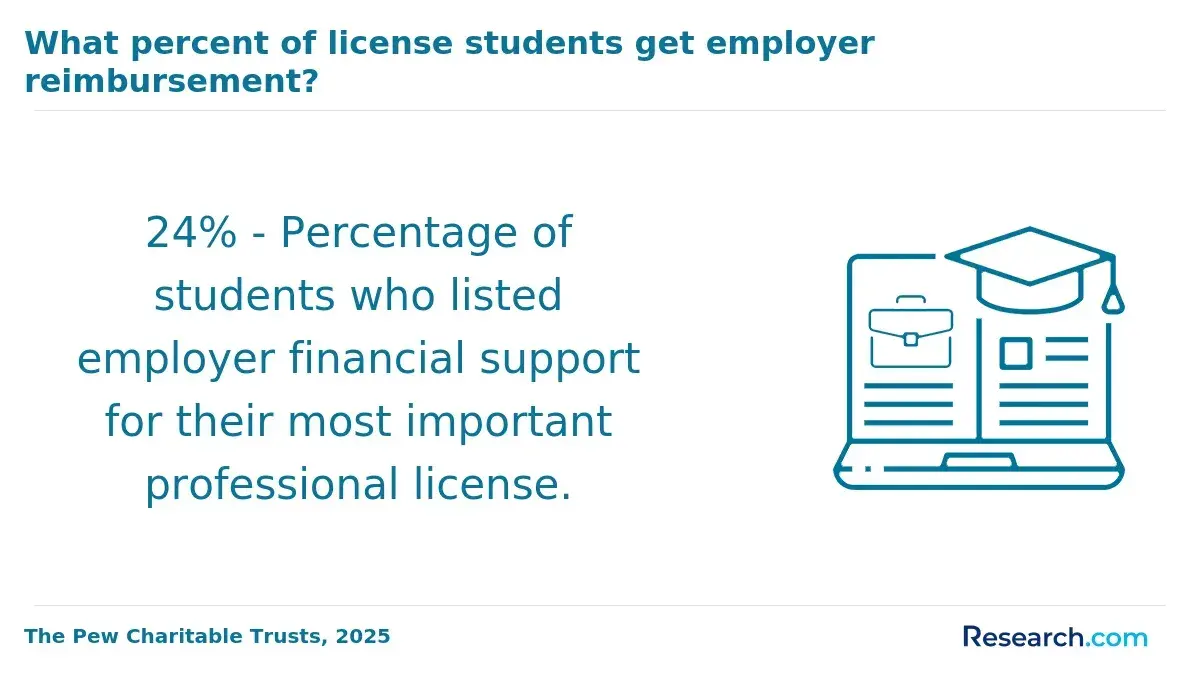
Yes, but distinguish the published program price from your net price after aid. Eligible graduate students may use federal Direct Unsubsidized Loans and, subject to eligibility and cost-of-attendance limits, Direct PLUS Loans. Graduate students generally are not eligible for federal Pell Grants, so scholarships, employer tuition assistance, district professional-development funds, and assistantships can be especially important for reducing out-of-pocket cost.
Complete the FAFSA and then compare each school's aid offer with its complete cost estimate. Loans can make enrollment possible, but they do not reduce the underlying price; they create repayment obligations and interest costs. Ask whether scholarships are renewable, whether enrollment intensity is required, and whether employer reimbursement is paid upfront or only after successful course completion.
Teachers should also ask their district whether a completed, accredited master's degree qualifies for a salary schedule increase and whether preapproval is required. A salary-lane policy can affect return on investment, but it is employer-specific and should be confirmed before choosing a program.
Professionals comparing career-change education may also review paralegal courses online for a different credential path. Aid rules, credential length, and employment outcomes differ, so their pricing should not be used to estimate music education costs.
Is an Online Music Education Master's Degree Under $20,000 Worth the Cost for Career Advancement?
An affordable online music education master's degree can be worthwhile when it meets a clearly defined goal: moving into a district salary lane, strengthening instructional practice, qualifying for a music leadership assignment, teaching dual-enrollment or postsecondary courses where permitted, or preparing for doctoral study. It is less compelling when the degree does not meet a required certification standard, lacks coursework tied to your target role, or would require borrowing beyond what the likely professional benefit supports.
The broader teacher labor market provides useful context but not a guaranteed outcome. The U.S. Bureau of Labor Statistics projects employment of kindergarten and elementary school teachers to decline 1% from 2023 to 2033, while replacement needs still create openings. Music education opportunities vary more specifically by district budgets, enrollment, local arts priorities, and state certification rules.
Evaluate career value using your own employment setting. Compare the district's documented salary increment, your expected completion time, total borrowing, and the degree's applicability to your intended work. A low-cost general music education program may fit a practicing K-12 teacher, while a more expensive program with a relevant concentration, supervised experience, or stronger research focus may make sense for a specialized leadership or doctoral goal.
Music educators build transferable skills in curriculum design, assessment, ensemble leadership, educational technology, communication, and project management. Still, no master's degree guarantees a promotion, a salary increase, or a teaching position; district policies and hiring decisions remain outside the institution's control.
How Should Students Choose the Best-Value Flat-Rate Online Music Education Master's Program?
A flat-rate program charges one total amount for the degree or a fixed amount per term rather than a standard per-credit price. It can offer predictable budgeting, particularly for students who need more credits in a term, but only if the agreement clearly covers all required coursework and does not exclude fees, residencies, or extension terms.
Use a consistent comparison process rather than selecting the lowest advertised figure.
- Request the current degree plan, including total credits, capstone, practicum, residency, and graduation requirements.
- Obtain a written tuition-and-fee estimate for your residency status and anticipated start term.
- Determine whether the quoted rate is fixed through graduation and what happens if you take longer than planned.
- Compare asynchronous, live online, and hybrid scheduling against your teaching calendar and family responsibilities.
- Verify institutional accreditation, specialized music accreditation when relevant, and state or district recognition for your goal.
- Review faculty expertise, music pedagogy curriculum, technology preparation, advising, and career relevance before making a final choice.
The best value is not always the cheapest option. A program closer to $20,000 may be preferable when it has fewer hidden costs, a fixed tuition commitment, a curriculum aligned with your specialization, and a format you can realistically complete. Conversely, a lower-cost program is often sufficient when you already hold the required license, need graduate credits for a documented salary lane, and do not need extra certification or in-person experiences.
Other Things You Should Know About Music Education
Programs commonly request a bachelor's degree, official transcripts, a minimum undergraduate GPA, recommendation letters, a statement of purpose, and evidence of music training or teaching experience. Some require a teaching license, while others admit applicants from broader music backgrounds. Review prerequisites early because missing theory, pedagogy, or research-methods preparation can add courses and cost.
Not necessarily. Initial public-school music teaching typically requires state licensure or certification, and an online master's degree may be designed for educators who are already licensed. Confirm requirements with the state education agency and the university before enrolling, especially if the program does not include student teaching or supervised clinical practice.
Some are fully online, while others require a residency, recital, practicum, observation, or synchronous performance-based activity. Ask for the complete schedule before applying. Required travel can affect both total cost and whether the program fits a full-time teaching job.
Options vary by institution and may include elementary general music, choral or instrumental pedagogy, conducting, music technology, curriculum and assessment, special education, or community music. Choose a concentration only when it supports your intended role; a specialization can add value, but it may also add required courses or limit scheduling flexibility.
References
- News Archive https://www2.naz.edu/news/archive/2026/February/921/nazareth-launches-online-music-education-master-s-degree
- Master of Music Education Programs https://www.lvc.edu/programs/master-music-education/
- 2025-2026 Tuition and Fees Current 2-21-25 https://www.vandercook.edu/2025-26_grad_tuition_and_fees/
- Average Cost of a Master's Degree: 2025 Analysis https://educationdata.org/average-cost-of-a-masters-degree
- Music Education Master's Programs Online: Review Top Schools https://www.onlinemastersdegrees.org/best-programs/education/music-education/
- 2025 Most Affordable Online Master's Degrees in Music Education https://www.onlineu.com/most-affordable-colleges/music-masters-degrees
- Master's Degree: How Long Does It Take? | Teacher's Guide https://creditsforteachers.com/masters-degree-how-long-does-it-take-a-complete-guide-for-teachers/
- Hidden College Costs: What Families Miss Every Year https://www.collegeflightpath.com/cfp-blog/hidden-college-costs-and-how-to-manage-them


