2027 Online Music Education Degree Programs With No Letters of Recommendation Required

Co-Founder and Chief Data Scientist
Applicants returning to school often have transcripts and relevant experience but no recent professors or supervisors who can write recommendations. Online Music Education programs with no letters of recommendation required can reduce that barrier, although they still assess academic readiness and career fit.
National Center for Education Statistics data released in 2024 found that 53% of U.S. postsecondary students took at least one distance-education course in fall 2022. This guide helps prospective music teachers and arts educators identify no-recommendation options, confirm legitimacy, compare costs, and protect their path toward state licensure.
Key Things You Should Know
- "No letters of recommendation required" means an application does not require recommendation letters from any applicant; it is different from letters that are optional, waived only for certain applicants, or requested after review.
- Online Music Education options are limited because teacher-preparation degrees usually include supervised fieldwork and state-specific licensure requirements; verify institutional accreditation, educator-preparation approval, and local placement support before enrolling.
- Cost and career fit matter as much as simplified admissions: the College Board reported average 2024-25 published tuition and fees of $11,610 at public four-year in-state institutions and $43,350 at private nonprofit four-year institutions, before aid.
Which Online Music Education Degree Programs Require No Letters of Recommendation?
A fully online Music Education degree without recommendation letters is less common than a general online music degree because programs leading to K-12 certification must evaluate teaching readiness, musicianship, and field-placement eligibility. The most practical options are usually bachelor's completion pathways, graduate degrees for already licensed teachers, and education degrees with music-focused coursework.
Applicants should treat "no recommendation letters" as a term-specific admission policy rather than a permanent program feature. The programs below are examples of options whose published standard application processes have been described as not requiring recommendation letters; confirm the current checklist directly with the institution before paying an application fee.
| Program type or example | Typical student | Recommendation-letter approach | Important limitation |
| Liberty University online Master of Arts in Music Education | Teachers, church musicians, and music professionals seeking graduate study | Graduate application materials have generally emphasized transcripts and an application rather than recommendation letters | Confirm whether the degree meets the requirements for a specific state credential or salary lane |
| Western Governors University Music Education bachelor's pathway | Prospective K-12 music teachers seeking competency-based study | Standard undergraduate admissions have generally focused on transcripts and enrollment documentation rather than letters | Clinical practice, performance requirements, and state authorization can limit where and how students complete the program |
| Online M.M.E. or M.A. programs for licensed educators | Current teachers who already hold a music teaching license | Some use a transcript-only or streamlined review process | Many still require letters, so applicants must check the exact concentration and term |
| Online music or education degree with a music concentration | Adults seeking arts-administration, community-music, or enrichment roles | Often may not require recommendations | May not qualify a graduate for public-school music teacher licensure |
Do not confuse a music degree, music business degree, or general education degree with a state-approved Music Education teacher-preparation program. A program may be academically sound yet not include the pedagogy, practicum, subject assessments, and student teaching needed to teach music in public schools.
Students who are still deciding between an associate-level start and a bachelor's route can also compare entry-level options such as what is the easiest associate degree to get. An associate degree can build general education or music foundations, but it typically does not meet requirements for K-12 music teacher licensure.
Before applying, ask admissions staff to state in writing whether recommendation letters are required for your intended start term, degree level, concentration, residency status, and licensure track. This avoids a common mistake: relying on a general university admissions page while the music department uses additional requirements.
What Are the Admission Requirements for Online Music Education Degree Programs With No Recommendation Letters?
No-recommendation admissions are streamlined, not requirement-free. Schools still need evidence that an applicant can complete college-level music, education, and writing coursework. Requirements vary substantially between an initial teacher-licensure bachelor's degree and a graduate degree designed for practicing educators.
The following comparison shows the materials applicants commonly encounter in place of recommendation letters. It is useful because an applicant can identify missing items before starting an application.
| Applicant type | Common required materials | Possible additional review | Why the school requests it |
| First-time or transfer bachelor's applicant | Application, high school or college transcripts, identification, and placement information when applicable | Audition, musicianship assessment, interview, background check, or prerequisite review | Confirms academic preparation and capacity for music performance and teacher training |
| Bachelor's completion applicant | Official college transcripts and transfer-credit evaluation | Minimum GPA, prerequisite music theory or education courses, and portfolio review | Determines which credits apply and whether upper-level work can begin |
| Graduate Music Education applicant | Bachelor's transcript, application, and often a statement of purpose | Resume, teaching license verification, writing sample, or interview | Assesses professional context and readiness for advanced inquiry |
| Licensure or endorsement applicant | Prior degree and educator-license documentation | State-specific testing, field-placement clearance, and district approval | Connects coursework to a regulated teaching credential |
A stated GPA minimum is not always an admission guarantee. Programs may require a cumulative GPA, a GPA in transferable coursework, or a separate threshold for professional education admission. Applicants with lower GPAs should ask whether the school offers conditional admission, a formal appeal process, or prerequisite coursework instead of assuming a denial.
GRE requirements have become less common in many education graduate programs, but applicants should not assume a test-free application. Music-specific requirements can include a recorded performance, theory diagnostic, repertoire list, or evidence of classroom teaching. These materials evaluate abilities that recommendation letters alone could not verify.
Applicants should make a one-page requirements checklist from the exact degree page and compare it with the graduate catalog, teacher-preparation office, and state-authorization disclosures. If these sources conflict, request clarification from the department that controls admissions decisions.
Are Online Music Education Programs With No Letters of Recommendation Easier to Get Into?
Not necessarily. Removing recommendation letters makes an application more accessible for working adults, career changers, and applicants who have been away from college, but it does not automatically lower academic or professional standards. A school may simply use more direct evidence, such as transcripts, prerequisite grades, interviews, auditions, and license verification.
Teacher-preparation programs can be especially selective at the point of professional-program admission or student-teaching placement. An applicant may be admitted to the university, complete online general education courses, and still need to meet separate requirements before beginning supervised teaching. This distinction is critical for students whose goal is public-school licensure.
The table separates conveniences from indicators of actual selectivity, helping applicants avoid interpreting a simplified form as an easier degree.
| Admissions feature | What it may mean | What it does not mean |
| No recommendation letters | The school relies on applicant-controlled records or direct assessments | Automatic admission or fewer graduation requirements |
| No standardized test | The school may prioritize coursework, professional experience, or holistic review | No assessment of writing, academic preparation, or music skills |
| Rolling admission | Multiple start dates or ongoing application review | Unlimited seats in internships, clinical practice, or student teaching |
| Online coursework | Greater flexibility in lecture-based classes | A completely remote route through observations, practicum, and licensure |
Programs may be a good fit for applicants with solid records who cannot reasonably obtain current references. They may be a poor fit for students seeking to avoid performance feedback, classroom observation, required placements, or state certification rules. The right question is whether the program's evaluation method matches your evidence of readiness and your intended job.
A common red flag is advertising "easy admission" while providing little detail about faculty, curriculum, licensure outcomes, or field experiences. Legitimate institutions can offer accessible admissions without making unrealistic promises about acceptance, certification, employment, or time to completion.
What Do Online Music Education Programs Evaluate Instead of Letters of Recommendation?
Letters traditionally provide outside evidence of academic habits, professional judgment, and teaching potential. When a program does not collect them, admissions staff usually evaluate more standardized evidence. This can be beneficial because applicants know exactly what documents they need to strengthen.
The most common substitutes are listed below. Each item helps a school assess a different part of an applicant's preparation.
- Official transcripts: Show completed coursework, grades, degree conferral, and whether music, education, or general education prerequisites are satisfied.
- Personal statement: Explains the applicant's teaching goals, musical background, reasons for choosing online study, and plans for meeting practicum requirements.
- Resume or professional history: Documents teaching, ensemble leadership, private lessons, worship music, youth programs, arts administration, or related employment.
- Audition, portfolio, or musicianship review: Gives faculty direct evidence of performance, arranging, conducting, composition, or music-theory preparation.
- Interview or admissions conversation: Allows the school to assess communication, motivation, schedule realism, and understanding of licensure obligations.
- License and background-clearance records: May be required for programs serving licensed teachers or arranging school-based experiences.
A strong application should be specific rather than overly broad. For example, a prospective elementary music teacher can explain experience leading choirs, teaching rhythm concepts, using inclusive repertoire, or working with students of varied ability levels. A licensed teacher pursuing a graduate degree can connect the statement to curriculum leadership, assessment, technology integration, or a district advancement goal.
Applicants should not submit extra materials unless the school permits them. Unrequested references, lengthy portfolios, or generic resumes can make it harder for an admissions reviewer to find the evidence requested. Follow the program's rubric and use the statement to address gaps honestly, such as a low early GPA or a long break from school.
How Can You Tell if an Online Music Education Degree With No Recommendation Requirement Is Accredited and Legitimate?
Accreditation and licensure alignment matter more than whether a program requires recommendations. Institutional accreditation indicates that a college has met quality standards through a recognized accreditor. For students seeking public-school teaching jobs, they should also verify that the educator-preparation program is approved for the relevant state and that its curriculum supports the desired music endorsement.
Use the following verification sequence before enrollment. It helps distinguish a legitimate online degree from one that has unclear credential value.
- Confirm institutional accreditation through the U.S. Department of Education's Database of Accredited Postsecondary Institutions and Programs or the Council for Higher Education Accreditation.
- Read the program page and catalog to determine whether the degree is a teacher-preparation program, a graduate degree for licensed teachers, or a non-licensure music degree.
- Check the school's state-authorization and professional-licensure disclosures for your state of residence, not only the state where the university is based.
- Ask who arranges field experiences, whether local placements are guaranteed, and what happens if a suitable placement cannot be secured.
- Verify required examinations, fingerprinting, background checks, student-teaching hours, and endorsement rules with your state education agency.
- Review faculty credentials, course descriptions, tuition disclosures, refund policies, and the process for receiving official transcripts after graduation.
Specialized accreditation can add useful context in music and educator preparation, but its relevance depends on the program. The National Association of Schools of Music evaluates music units, while educator-preparation approval is often handled at the state level. Neither label by itself replaces checking whether the exact degree leads to the credential you need.
Prospective students comparing regulated helping-profession degrees can apply the same caution used when reviewing online MFT programs accredited: confirm the institution, the specific program, state authorization, and the credential pathway separately. A school's overall accreditation does not automatically establish eligibility for every state license or endorsement.
Warning signs include pressure to enroll immediately, vague claims about certification, missing faculty information, unclear total charges, or refusal to provide written answers about state eligibility. Legitimate admissions teams can explain limitations even when their process is simple.
How Much Do Online Music Education Degree Programs With No Letters of Recommendation Cost?
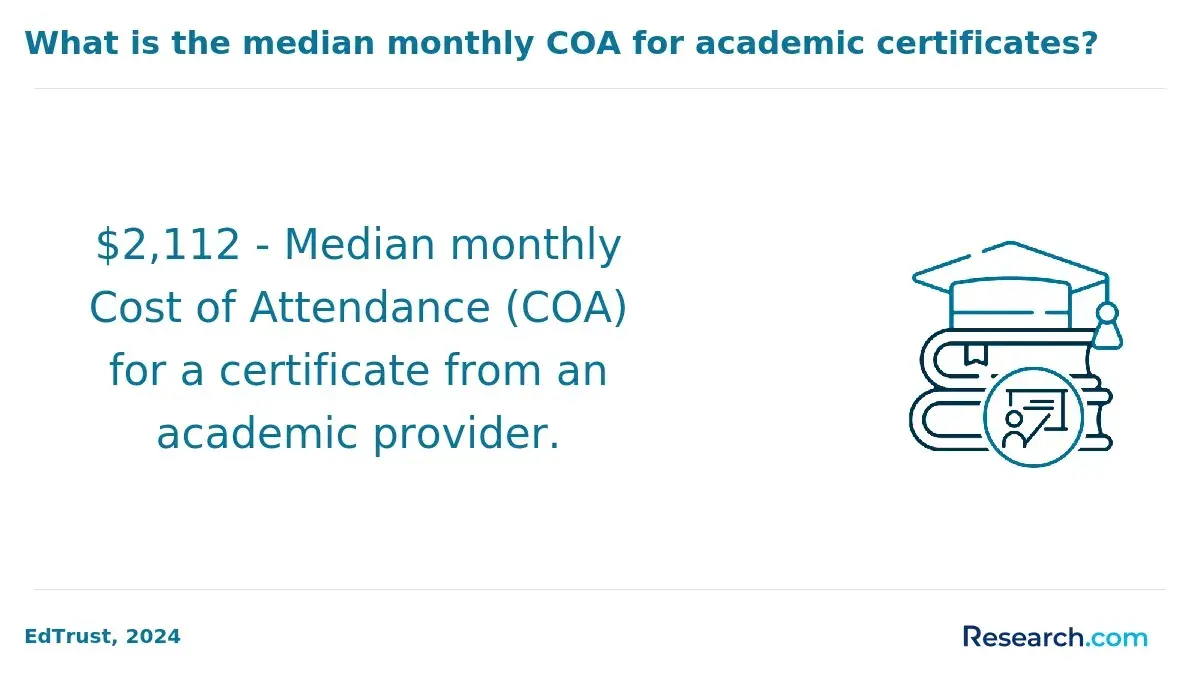
Recommendation-letter policies do not determine tuition. The total cost of an online Music Education degree depends on degree level, public or private control, residency rules, transfer credit, technology charges, books, performance needs, and travel for fieldwork or campus intensives. Students should compare a written program estimate rather than only a per-credit tuition figure.
For broad context, College Board's Trends in College Pricing 2024 reported average published tuition and fees of $11,610 for in-state students at public four-year institutions and $43,350 at private nonprofit four-year institutions in 2024-25. These are national benchmarks, not the net price of a specific online Music Education program, and aid can substantially change what a student pays.
The cost categories below show why two programs with similar advertised tuition can produce different out-of-pocket totals.
| Cost category | What to verify | Music Education-specific concern |
| Tuition and mandatory fees | Per-credit rate, full-time rate, distance-learning fee, and rate-lock policy | Graduate programs may charge a different rate from undergraduate programs |
| Transfer credit | Maximum transferable credits and residency requirement | Accepted theory, ensemble, and education credits can reduce remaining coursework |
| Fieldwork expenses | Travel, background checks, fingerprinting, testing, and liability coverage | Local observations and student teaching may create costs not included in online tuition |
| Technology and materials | Required hardware, software, instruments, recording equipment, and textbooks | Music notation, recording, and video-submission requirements can add expenses |
| Lost income or scheduling costs | Course pacing, daytime school placements, and required synchronous meetings | Student teaching can limit the ability to work full time |
Request a net-price estimate, a degree map showing remaining credits, and a list of non-tuition costs before comparing offers. If you are comparing tuition across disciplines, resources on a cheapest online history master's degree can illustrate why published tuition should be separated from fees, transfer policies, and completion requirements.
Lower cost is valuable only if the degree supports the intended outcome. Paying less for a non-licensure program can be sensible for community music or enrichment work, but it may be a costly detour for someone who needs initial K-12 certification.
Can You Get Financial Aid for an Online Music Education Degree With Streamlined Admissions?
Yes. Eligibility for federal student aid generally depends on the student, the institution, enrollment status, satisfactory academic progress, and whether the program is eligible to participate in federal aid programs - not on whether the application required recommendation letters. Students should complete the Free Application for Federal Student Aid as early as the school permits and follow its verification requests carefully.
Federal grants may be available to eligible undergraduate students, while federal Direct Loans may be available to eligible undergraduate and graduate students. Teacher candidates should also ask about institutional scholarships, state grants, district tuition assistance, employer reimbursement, veterans' education benefits, and music-education scholarships offered through local or professional organizations.
Before accepting aid, compare the following items because they affect affordability more than an admissions convenience does.
- Whether the program is eligible for federal aid and whether the school provides a clear financial-aid code and cost-of-attendance estimate.
- How part-time enrollment, competency-based pacing, repeated courses, withdrawals, or incomplete field placements affect satisfactory academic progress.
- Whether scholarships require full-time enrollment, a minimum GPA, teaching employment, or service in a particular district.
- How practicum or student-teaching schedules may reduce work hours and increase borrowing needs.
- Whether private loans are necessary after grants, scholarships, payment plans, and federal loan options are considered.
Students should borrow based on a realistic completion plan, not on the maximum amount offered. For public-school teaching goals, compare projected debt with the likely local salary schedule, benefits, loan-forgiveness eligibility, and the additional credentials that may be needed after graduation.
Streamlined admissions can help a working adult apply sooner, but it does not eliminate the need to plan for enrollment verification, aid deadlines, or documentation. Missing financial-aid paperwork can delay registration even after academic admission.
How Long Does an Online Music Education Degree With No Letters of Recommendation Take to Complete?
Completion time depends on the degree level, accepted transfer credits, course sequence, and whether the program includes initial teacher licensure. A graduate degree for an already licensed teacher may be completed faster than an initial licensure bachelor's program because it generally does not include the same undergraduate general education and student-teaching sequence.
The timeline comparison below helps applicants identify the point at which "online" may still require in-person commitments.
| Pathway | Typical pacing pattern | Completion variables | In-person expectation |
| Bachelor's degree with initial licensure | Usually structured around sequential education and music coursework | Transfer credits, prerequisite completion, state testing, and placement availability | Observations, practicum, and student teaching are commonly required |
| Bachelor's completion or non-licensure degree | Often more flexible for students with substantial transfer credit | Credit evaluation, upper-division residency rules, and course availability | May include limited or no school-based clinical work |
| Master's degree for licensed teachers | May offer part-time, accelerated, or cohort scheduling | Capstone, research project, summer terms, and employer workload | Often online, though residencies or applied projects may occur |
| Endorsement or certificate coursework | Shorter than a full degree when prior credentials align | State rules and prior preparation | May require supervised classroom evidence |
Accelerated formats deserve careful scrutiny. A shorter session length can increase weekly workload, and a faster academic calendar does not necessarily shorten the time needed to secure a school placement. Students exploring compressed professional programs in other fields may see similar scheduling trade-offs in accelerated social work programs.
Music educators commonly teach general music, choir, band, orchestra, guitar, or other ensemble courses; responsibilities can include lesson planning, rehearsals, performances, assessment, family communication, and instrument or inventory management. The U.S. Bureau of Labor Statistics reported a 2024 median annual wage of $64,580 for secondary school teachers, excluding special and career/technical education. That broad occupation figure is not a Music Education salary guarantee, because pay varies by state, district, degree level, union contract, experience, and assignment.
Ask for a term-by-term plan showing the earliest and latest realistic completion dates. A credible plan includes prerequisites, testing windows, clinical milestones, and the point when daytime school availability becomes essential.
Can You Transfer Credits Into an Online Music Education Degree Program With No Recommendation Letters?
Many online programs accept transfer credit, but the decision is independent of the recommendation-letter policy. Transfer reviews typically examine accreditation of the prior institution, course level, grades, equivalency, age of coursework, and how much of the degree must be completed at the new school.
Music Education transfer evaluations can be more detailed than general transfer reviews because performance, theory, aural skills, conducting, methods, and education courses must align with sequenced curriculum outcomes. A transferred course may count as elective credit even if it does not replace a required music pedagogy or licensure course.
Students should take these steps before committing to a program, especially if they have credit from several institutions.
- Send official transcripts early and request a written preliminary or formal evaluation of transferable credit.
- Keep syllabi, course descriptions, repertoire lists, and assignment samples for music courses that may need departmental review.
- Ask whether transferred education coursework meets the requirements of the target state's educator-preparation pathway.
- Confirm the maximum transfer allowance and the number of credits that must be earned through the degree-granting institution.
- Compare the remaining-credit estimate with the student-teaching sequence before accepting admission or borrowing funds.
A frequent mistake is enrolling based on a verbal estimate that "most credits should transfer." Wait for documentation and ask which requirements remain. This is particularly important for applicants who have already completed an associate degree, private music study, military training, or coursework from institutions with different calendars.
Prior learning assessments, challenge exams, and portfolio credit may exist at some schools, but they are not universal and may not substitute for state-mandated teacher-preparation coursework. Students should ask whether a credit source applies to degree completion, financial-aid enrollment, licensure, or all three.
How Should You Compare Online Music Education Degree Programs That Do Not Require Letters of Recommendation?
Compare programs by career outcome first and admissions convenience second. The best no-recommendation option is one that accepts your current evidence of readiness while leading to the role you actually want: licensed K-12 music teacher, current teacher seeking a master's degree, private instructor, community arts educator, church musician, or arts program administrator.
The comparison framework below focuses on the questions that can reveal whether a program is practical, recognized, and financially sound for your circumstances.
| Comparison factor | What to ask | Why it matters |
| Admissions policy | Are letters truly not required for my degree, concentration, and start term? | Prevents a surprise departmental requirement after application |
| Career and licensure outcome | Does this pathway lead to initial licensure, a music endorsement, a master's degree, or no teaching credential? | Aligns the degree with the intended employer and state requirements |
| Accreditation and approval | What institutional accreditation and state educator-preparation approval apply? | Supports degree recognition and credential eligibility |
| Clinical experience | Who secures placements, and can they be completed in my district? | Fieldwork is often the limiting factor in online teacher preparation |
| Music curriculum | Which courses cover methods, conducting, theory, technology, inclusion, and assessment? | Shows whether the program develops classroom-ready music teaching skills |
| Cost and aid | What is the estimated total cost after transfer credit and aid, including non-tuition expenses? | Creates a more accurate affordability comparison |
| Schedule and support | Are courses asynchronous, and what advising, tutoring, technical, and placement support are available? | Determines whether the format fits work and family obligations |
After narrowing choices, contact each school with a consistent set of questions and save the answers. Ask for the current admissions checklist, state-authorization disclosure, transfer evaluation process, total-cost estimate, practicum plan, and a statement of whether the program meets requirements for your desired credential in your state.
Applicants comparing online programs across education-related fields can use the same method when considering online speech pathology programs masters: accreditation, placement structure, state rules, and total cost usually matter more than one simplified application requirement.
Choose a no-recommendation Music Education degree when it removes an unnecessary application barrier without weakening your professional plan. Consider a traditional program with references if it offers clearly better licensure support, local placement relationships, curriculum fit, affordability, or access to the specialization you need.
Other Things You Should Know About Music Education
Yes, many online programs are designed for adult learners. A no-recommendation policy can be especially helpful if former instructors are difficult to contact. You may still need official transcripts, a personal statement, a resume, prerequisite courses, and evidence of musical preparation.
Only submit one if the program explicitly allows optional materials. Some schools do not review unrequested documents. A strong resume and focused personal statement may be more useful when recommendations are not part of the stated evaluation process.
Check the exact program's admissions page, graduate or undergraduate catalog, and application portal. Then email admissions or the department and ask whether letters are required, optional, or waived for your degree, concentration, start term, and state-based licensure track.
Districts generally focus on whether you hold the required state license or endorsement, completed an approved preparation pathway, passed required assessments, and meet local hiring standards. The online format alone is less important than institutional accreditation, program approval, supervised experience, and your qualifications.
References
- Music Education https://www2.naz.edu/admissions/grad/how-apply/music-education/
- Master of Music Education Admission Requirements | Lebanon Valley College https://www.lvc.edu/programs/master-music-education/admission-requirements/
- Music Education Vs. Violin Performance w/ teaching certificate https://www.violinist.com/discussion/archive/24710/
- Earn a Master's Degree in Music Education Online with These Top Programs https://www.onlinecolleges.me/education-degrees/masters/music-education/
- Empowering music education with technology: a bibliometric perspective - Humanities and Social Sciences Communications https://www.nature.com/articles/s41599-025-04616-2
- Music Education Master's Programs Online: Review Top Schools https://www.onlinemastersdegrees.org/best-programs/education/music-education/