2027 Online Music Education Master's Programs With No Personal Statement or Admissions Essay Required

Co-Founder and Chief Data Scientist
Applying to graduate school can feel unnecessarily time-consuming when an admissions essay is the main barrier. This guide examines online Music Education master's programs that may waive a personal statement or admissions essay, while explaining the requirements that can replace it. The Bureau of Labor Statistics reported a 2024 median annual wage of $62,340 for elementary school teachers, a relevant benchmark for many licensed music educators. Learn how to verify policies, compare quality and cost, and decide whether streamlined admissions fit your goals.
Key Things You Should Know
- "No personal statement" usually means a program does not require a long narrative essay; it does not necessarily mean there are no written responses, recommendations, résumé requirements, transcripts, auditions, or teaching-license documentation.
- A no-essay online Music Education master's program can still require a minimum undergraduate GPA - often around 2.75 or 3.0 - plus educator credentials, prerequisite coursework, and evidence of classroom experience; no essay and no GRE are separate admissions policies.
- Verify the university's institutional accreditation, confirm whether the degree supports your state's licensure goals, and request the current admissions checklist in writing before paying an application fee or enrolling.
What Does "No Personal Statement or Admissions Essay Required" Mean for Online Music Education Master's Programs?
A program described as having no personal statement or admissions essay required generally does not ask applicants to submit a traditional multi-paragraph narrative explaining their career goals, educational philosophy, or reasons for choosing the degree. This can make the application faster for working teachers who already have documented professional experience.
The wording matters. A personal statement, statement of purpose, admissions essay, and short-answer prompt can serve similar purposes but are not always identical. A school may waive a formal essay while asking applicants to answer a brief question about teaching experience, upload a professional résumé, or provide a writing sample from prior coursework.
The comparison below clarifies common labels and the questions to ask before assuming an application is truly essay-free.
| Application item | What it commonly asks for | Does "no essay" always eliminate it? |
| Personal statement | Background, goals, motivation, and fit | Usually, but verify the current checklist |
| Statement of purpose | Academic interests and professional objectives | No; some schools use this term instead of "essay" |
| Short-answer response | A brief answer about licensure, experience, or goals | No; it may still be required |
| Professional résumé | Teaching roles, credentials, ensembles, and accomplishments | No; it is often required instead of an essay |
| Portfolio or audition material | Performance, conducting, lesson-planning, or instructional evidence | No; requirements vary substantially by program |
For applicants, the practical distinction is simple: review every required upload and every question in the application portal, not just the marketing phrase "no essay." A streamlined process is valuable when your record already demonstrates readiness, but it should not be confused with an application that has no evaluation standards.
Which Online Music Education Master's Programs Do Not Require a Personal Statement or Admissions Essay?
There is no permanent nationwide list of online Music Education master's programs that waive essays because graduate admissions pages, application platforms, and departmental policies can change by term. Some universities simplify admission for licensed teachers by emphasizing official transcripts, a résumé, and teaching credentials; others retain a statement of purpose even when they do not require GRE scores.
The most reliable way to identify a legitimate no-essay option is to compare the program-level application checklist rather than relying only on a university-wide graduate admissions page. Music education programs may have extra departmental requirements that do not apply to other master's degrees at the same institution.
Use this screening framework when narrowing your list. It helps distinguish a documented waiver from an incomplete or ambiguous admissions page.
| Program listing language | How to interpret it | Best next action |
| "No essay required" | Promising, but may refer only to the general application | Check the Music Education department checklist |
| "Statement of purpose optional" | The statement may still strengthen borderline applications | Ask whether optional means truly optional for admission |
| "Teacher certification required" | The program likely serves practicing educators | Confirm accepted license types and state limitations |
| "Portfolio required" | The school uses performance or instructional evidence instead of an essay | Review format, repertoire, and submission deadlines |
| "Additional departmental materials" | The listed university requirements are not complete | Contact the program coordinator before applying |
When speaking with admissions staff, ask one direct question: "For the online Music Education master's application for my intended term, is any personal statement, statement of purpose, essay, or short-answer narrative required?" Request confirmation by email and save it with the application checklist.
Applicants comparing graduate options across disciplines may notice similar variations in admissions language. For example, requirements for accredited BCBA programs online can also differ between general graduate admission and program-specific professional requirements.
What Admission Requirements Do Online Music Education Master's Programs Use Instead of an Essay?
When an essay is removed, admissions teams still need evidence that an applicant can succeed in graduate-level coursework and that the program matches the applicant's professional preparation. For Music Education, that evidence frequently comes from academic records, teaching experience, credentials, and music-specific materials.
Requirements differ by school and concentration, especially between programs designed for licensed K-12 teachers and programs open to performers, community music educators, or career changers. The following materials are common substitutes for a formal essay.
- Official transcripts showing a completed bachelor's degree and the required cumulative or upper-division GPA.
- A current résumé documenting teaching, ensemble leadership, private instruction, performance, curriculum work, or arts administration.
- One or more recommendation letters, often from a principal, supervisor, professor, or music department chair.
- A valid teaching license or evidence of eligibility when the program is intended for practicing educators.
- Music prerequisites, such as undergraduate music theory, history, conducting, education, or applied-study coursework.
- A portfolio, audition recording, interview, or sample lesson plan when the program evaluates musicianship or instructional practice.
A résumé is not merely an administrative substitute for an essay. It should clearly identify grade levels taught, ensembles directed, licenses held, software or instructional technology used, and measurable responsibilities. If a program allows extra materials, a concise résumé and carefully selected recommender can provide useful context without submitting an unsolicited essay.
Students considering several professional graduate paths should avoid assuming that one field's admissions practices transfer directly to another. For instance, eMBA online options often place more formal emphasis on managerial work experience than Music Education programs do.
Can You Get Into an Online Music Education Master's Program With No Essay, No GRE, or a Low GPA?
Yes, it can be possible to find an online Music Education master's program with no essay and no GRE requirement, but each policy must be confirmed separately. "No GRE" means standardized test scores are not required; it does not indicate that the program waived a statement, recommendation, GPA threshold, or music prerequisite.
A lower GPA does not automatically rule out admission, but it can change which programs are realistic. Some graduate schools consider applicants below the published minimum through conditional admission, a probationary first term, additional coursework, stronger professional evidence, or a holistic departmental review. Others apply the minimum GPA without exceptions.
Applicants with an academic record below a school's stated threshold should focus on programs that clearly describe their review process. The following distinctions can prevent common application errors.
| Applicant situation | Possible admissions response | What to verify |
| No essay and no GRE | Transcript- and credential-based review | Whether recommendations, résumé, or a short answer remain required |
| GPA below the stated minimum | Conditional review may be available | Whether exceptions are allowed and what evidence is needed |
| Non-music bachelor's degree | Prerequisite courses or portfolio review | Required theory, history, pedagogy, and performance preparation |
| No teaching license | Admission to a non-licensure track may be possible | Whether the degree leads to, supports, or excludes teacher licensure |
Do not treat a low GPA as a reason to omit required information or submit incomplete records. Ask whether the school calculates cumulative GPA, last-60-credit GPA, or major GPA, and ask whether an explanatory statement is permitted. A well-documented professional record can help where holistic review exists, but it cannot override a nonnegotiable policy.
Applicants exploring other fields with structured professional prerequisites may find that paralegal courses online use a different education and credentialing model, so admissions flexibility should always be evaluated within the specific profession.
Are Online Music Education Master's Programs With No Personal Statement Easier to Get Into?
Not necessarily. Removing an essay reduces application workload, but it does not reveal a program's selectivity, academic expectations, or capacity limits. A department may use transcripts, professional licensure, recommendations, auditions, prerequisite grades, and available cohort space to make admission decisions.
No-essay admissions can be especially appropriate for established teachers whose qualifications are already easy to document. It may be less suitable for career changers, applicants with unusual backgrounds, or candidates whose transcript does not reflect their current abilities. In those cases, a program that permits a statement of purpose can give the applicant a meaningful opportunity to explain fit, growth, and professional goals.
Consider the trade-off between convenience and context before deciding that an essay-free process is automatically better.
| Application model | Potential advantage | Potential limitation |
| No essay, credential-focused review | Faster submission for applicants with clear records | Less room to explain nontraditional experience or academic improvement |
| Holistic review with statement | More space to explain goals and circumstances | Requires more time and stronger writing preparation |
| No GRE with essay required | Eliminates a testing burden while retaining applicant context | Still requires written preparation |
| Conditional-admission pathway | May create an option for some lower-GPA applicants | Can involve academic conditions and is not guaranteed |
A red flag is any school that uses "easy admission" as its primary selling point while providing little information about faculty, curriculum, practicum expectations, accreditation, student support, or total cost. A reputable program should be able to explain how it evaluates readiness even when it does not request an essay.
How Can You Tell Whether a No-Essay Online Music Education Master's Program Is Accredited and Reputable?
Start with institutional accreditation. A legitimate university should hold accreditation from an agency recognized by the U.S. Department of Education or the Council for Higher Education Accreditation. Institutional accreditation matters for federal financial aid, transfer-credit evaluation, employer confidence, and many state or district tuition-benefit policies.
Music-specific quality indicators also matter. Some institutions or music units pursue specialized recognition through organizations such as the National Association of Schools of Music, but specialized accreditation is not universal and is not a substitute for checking the university's institutional status. For educator-focused degrees, also examine whether the program is designed for licensed teachers, offers a licensure pathway, or is explicitly non-licensure.
Before enrolling, use the following checks to evaluate quality beyond an essay waiver.
- Confirm the institution's current accreditation status through an official accreditor or government-recognized directory.
- Read the curriculum and determine whether it includes music pedagogy, research, assessment, culturally responsive teaching, technology, and the musical areas relevant to your goals.
- Review faculty biographies for experience in music education, performance, research, and the grade levels or settings you plan to serve.
- Ask whether online students receive advising, library access, technology support, field-placement assistance, and opportunities for feedback from faculty.
- Check your state education agency or licensing board if you expect the degree to change, add, renew, or advance a teaching credential.
Be careful with claims such as "nationally recognized" or "career-ready" when they are not accompanied by verifiable details about accreditation, curriculum, faculty, or student services. The same due-diligence principle applies in clinical and education-adjacent fields; students researching a masters child and adolescent mental health option should likewise distinguish academic degrees from programs that meet specific professional licensing requirements.
How Much Do Online Music Education Master's Programs With No Admissions Essay Cost, and What Financial Aid Is Available?
The absence of an essay does not make a degree less expensive. Tuition depends on public or private control, residency policy, credit requirements, online-fee structures, course materials, and whether the program charges a flat per-credit rate. Compare the total estimated program cost rather than focusing only on one advertised per-credit figure.
For broad context, the National Center for Education Statistics reported that average graduate tuition and required fees at U.S. public institutions were $12,596 in the 2022-23 academic year, while private nonprofit institutions averaged $28,017. These figures are not Music Education program prices and do not predict what a particular online student will pay, but they illustrate why institution type and fee disclosures deserve close attention.
Use a total-cost comparison to avoid overlooking expenses that can materially affect affordability.
| Cost factor | Why it changes the total | Question to ask |
| Required credits | A lower per-credit rate can still lead to a higher total in a longer program | How many credits are required after transfer credit? |
| Online and university fees | Technology, student-service, and graduation fees may apply | Which mandatory fees apply to online graduate students? |
| Residency policy | Some public institutions charge all online students the same rate; others do not | Is the published online tuition rate available to out-of-state students? |
| Licensure or field requirements | Background checks, travel, testing, and placement costs may be separate | What costs are excluded from tuition? |
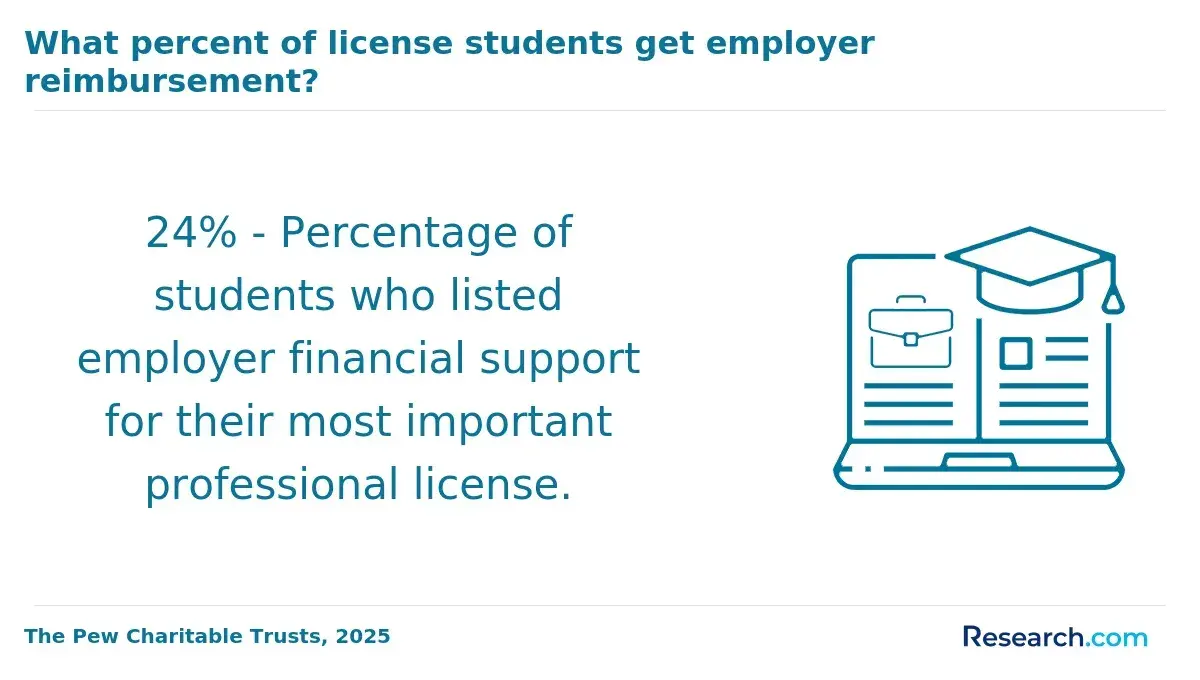
| Employer support | District reimbursement can reduce out-of-pocket expense | Does my employer require preapproval, a grade minimum, or a service commitment? |
Complete the Free Application for Federal Student Aid to determine eligibility for federal graduate loans and other aid. Also ask about scholarships for educators, graduate assistantships where available, district tuition reimbursement, union benefits, payment plans, and military education benefits. Borrow only after comparing projected payments with your likely salary progression, employer reimbursement rules, and the degree's actual value for your certification or advancement plan.
Cost-shopping is relevant across online graduate education, including highly technical programs such as an online PhD artificial intelligence; however, credit loads, funding structures, and employment outcomes are not directly comparable across fields.
How Do You Apply to an Online Music Education Master's Program With No Personal Statement Required?
Apply only after confirming that the essay waiver applies to your exact degree, concentration, delivery format, and start term. Universities can change requirements between terms, and a general graduate application page may not include Music Education department requirements.
A careful application sequence reduces the risk of missing a hidden writing prompt, recommendation deadline, or transcript-processing delay.
- Identify whether the degree is an M.M., M.M. Ed., M. Ed., or another master's format and confirm that it matches your career and licensure goals.
- Download or save the current program admissions checklist and read both the graduate-school and department-level instructions.
- Ask admissions whether a personal statement, statement of purpose, short-answer response, portfolio, interview, or audition is required for your intended term.
- Request official transcripts early, especially if you attended multiple institutions or need prerequisite coursework reviewed.
- Prepare a precise résumé and contact recommenders well before the deadline if letters are required.
- Submit the application, monitor the portal for missing items, and retain written confirmation of any stated essay waiver.
- Compare admission offers by total cost, curriculum, online schedule, support services, transfer-credit policy, and licensure relevance before accepting.
Common mistakes include assuming "no essay" means "no writing," uploading an outdated résumé, overlooking a departmental deadline, and enrolling before confirming whether the degree affects a state credential. If your background requires explanation, ask whether the program accepts an optional statement rather than sending unsolicited materials that may not be reviewed.
How Long Does an Online Music Education Master's Program With No Admissions Essay Take to Complete?
Most online Music Education master's programs are structured around graduate credits rather than a fixed calendar length. Full-time students may complete a program in roughly one to two years, while part-time working educators often take longer to accommodate teaching schedules, summer terms, family responsibilities, and course sequencing.
An essay waiver affects application preparation, not academic duration. The timeline is driven by required credits, cohort pacing, course availability, transfer-credit decisions, capstone or thesis requirements, and any field-based components.
This comparison highlights the enrollment patterns that most often affect completion planning.
| Enrollment pattern | Typical planning benefit | Potential consideration |
| Full-time accelerated study | May shorten the calendar time to graduation | Higher weekly workload and fewer scheduling options |
| Part-time study | More manageable alongside K-12 employment | Longer time to completion and possible tuition changes |
| Cohort format | Predictable sequence and peer community | Limited flexibility if a course must be postponed |
| Asynchronous courses | Flexible access for teachers with variable schedules | Still requires regular deadlines and active participation |
| Thesis or capstone option | Can support research or a practice-based project | May require additional planning and faculty supervision |
Ask for a term-by-term plan before enrolling. Confirm whether summer courses are required, whether students can pause enrollment, how long transferred credits remain valid, and whether the program has a maximum completion window. A realistic pace is usually more valuable than the shortest advertised timeline.
Is an Online Music Education Master's Degree With No Admissions Essay Worth It for Your Career?
An online Music Education master's degree can be worthwhile when it supports a specific professional outcome: deeper instructional expertise, eligibility for a district salary lane, preparation for curriculum leadership, community music work, higher education teaching opportunities where additional qualifications are accepted, or advanced study. The value comes from the curriculum, accreditation, credential fit, and skills gained - not from whether the application included an essay.
Music educators commonly develop skills in curriculum design, assessment, ensemble leadership, culturally responsive pedagogy, music technology, research literacy, communication, and program advocacy. The best program for you will align those skills with the students, settings, and roles you want to serve.
The Bureau of Labor Statistics projects employment patterns by broad occupational categories rather than by a standalone music-teacher category. Readers should therefore use national teacher wage and outlook data as context, not as a guaranteed outcome for music education graduates. Local district salary schedules, state funding, licensure rules, enrollment patterns, and union agreements can matter more for an individual teacher's earnings.
Before deciding, compare the degree against your employer's advancement rules and your longer-term plans.
- Choose a no-essay online program if you are a prepared applicant who values efficiency and can verify that the curriculum, accreditation, and credential fit meet your needs.
- Consider a program with a statement of purpose if you need to explain a career change, interrupted academic record, unusual performance background, or specialized research interest.
- Prioritize a lower total cost when the degree mainly supports a known district pay-scale increase, and calculate the expected break-even period using your employer's written salary schedule.
- Prioritize faculty expertise, specialized coursework, and mentoring when you want to move into leadership, research, collegiate teaching, or a distinctive music-education specialty.
A final decision should be based on documented outcomes you can verify: the degree's fit with your license, its total cost after aid, expected completion pace, faculty and course quality, and the professional opportunities it supports. Streamlined admission is a benefit, but it should be only one factor in a career investment.
Other Things You Should Know About Music Education
No. A school may waive a formal personal statement while still requiring short-answer responses, a résumé, recommendation letters, a teaching philosophy prompt, a portfolio description, or an explanation of licensure status. Review every question and required upload for the specific program.
Some programs are designed for already licensed teachers and do not lead to initial certification. Others may offer a licensure track with fieldwork and state-specific requirements. Confirm the program's status with the university and your state education agency before enrolling.
Some do, particularly when they evaluate performance, conducting, or specialized musicianship. Other programs serving practicing educators may not require an audition. A portfolio, recording, interview, or prerequisite review may be used instead.
Only if the program explicitly accepts optional materials. An optional statement may help explain a low GPA, career change, or unusual professional background, but unsolicited documents may not be reviewed and can delay an otherwise complete application.
References
- 2025 Most Affordable Online Master's Degrees in Music Education https://www.onlineu.com/most-affordable-colleges/music-masters-degrees
- Earn a Master's Degree in Music Education Online with These Top Programs https://www.onlinecolleges.me/education-degrees/masters/music-education/
- Med School Personal Statements for Different Application Platforms - Collegiate Gateway https://collegiategateway.com/med-school-personal-statements-for-different-application-platforms/
- Why personal statements in academic admissions are (mostly) a waste of time - Acuity Insights https://acuityinsights.com/personal-statements-academic-admissions-mostly-waste-time/
- Music Education Master's Programs Online: Review Top Schools https://www.onlinemastersdegrees.org/best-programs/education/music-education/