2027 Online Health Psychology Doctorate Program Costs: Tuition, Fees, Financial Aid, and Employer Reimbursement

Co-Founder and Chief Data Scientist
An online Health Psychology doctorate can be a major financial decision, especially as graduate borrowing costs remain high. Federal Student Aid lists graduate Direct Unsubsidized Loans at 8.08% and Grad PLUS Loans at 9.08% for loans first disbursed in the 2024-25 aid year, making program price and repayment strategy critical.
This guide is for working professionals, psychology graduates, clinicians, and health behavior researchers comparing online doctoral options. You will learn what drives tuition, which fees to expect, how aid and employer reimbursement work, and how to judge whether the investment fits your career goals.
Key Things to Know About Online Health Psychology Doctorate Program Costs
- Online Health Psychology doctorate costs are usually driven by total credits, per-credit tuition, dissertation enrollment rules, residency requirements, and whether the school charges flat online tuition or resident/nonresident rates.
- Federal graduate loans can cover up to the school-certified cost of attendance, but 2024-25 rates of 8.08% for Direct Unsubsidized Loans and 9.08% for Grad PLUS Loans make scholarships, assistantships, and employer support especially valuable.
- The degree tends to make the most financial sense for students targeting research, teaching, behavioral medicine, population health, program evaluation, or leadership roles rather than those seeking a quick salary increase.
What is the average tuition cost of an online Health Psychology doctorate program?
There is no single national average tuition specifically for online Health Psychology doctorates because federal datasets do not isolate this niche from broader psychology, behavioral health, and health sciences doctoral programs.
A practical benchmark is graduate tuition overall: the National Center for Education Statistics' latest published graduate tuition tables show that public institutions are generally far less expensive than private nonprofit institutions on an annual tuition-and-fee basis. For an online doctorate, however, the more useful calculation is total program tuition: required credits multiplied by the per-credit rate, plus recurring fees and dissertation continuation costs.
Health Psychology doctoral pathways also vary by credential. Some are PhD or PsyD programs in psychology with health psychology, behavioral medicine, or clinical health psychology coursework; others are applied health science doctorates with behavioral health concentrations. Applicants coming from an online clinical psychology masters should confirm whether the doctoral curriculum aligns with their intended licensure, research, or leadership goal before comparing tuition alone.
The table below shows how common tuition structures affect the final price a student may actually pay. Use it to compare programs even when schools advertise costs in different ways:
| Cost model | How it works | Best fit | Main risk |
| Per-credit online tuition | Students pay a set rate for each doctoral credit attempted. | Students who can transfer credits or finish the dissertation efficiently. | Total cost rises if the program requires more credits than expected. |
| Flat online graduate rate | Online students pay the same rate regardless of state residency. | Out-of-state students comparing public universities. | The flat rate may still be higher than another school's in-state doctoral rate. |
| Resident/nonresident graduate tuition | Public institutions charge different rates based on residency classification. | In-state students who qualify for the lower resident rate. | Nonresident tuition can erase the cost advantage of a public university. |
| Cohort or term-based pricing | Students pay by semester, term, or enrollment band instead of individual credits. | Students able to take a full course load consistently. | Part-time students may pay more over time if fees repeat each term. |
To estimate total tuition, request a degree audit before enrolling and ask the program to identify required credits after transfer evaluation, dissertation registration rules, and the maximum time-to-completion. A lower per-credit rate is not automatically cheaper if the program requires more credits or charges for extended dissertation enrollment.
Are online Health Psychology doctorate programs subject to distance learning or technology fees?
Yes. Many online doctoral programs charge technology, online learning, distance education, library, student services, or graduation fees in addition to tuition. These charges may appear small per term, but they matter because doctoral programs often last three to seven years depending on transfer credit, enrollment pace, research requirements, and dissertation progress.
Distance fees are especially important because they may not be included in a school's headline tuition figure. Before accepting an offer, ask for a written cost-of-attendance estimate that separates tuition from mandatory fees.
| Fee type | Why it may apply | Budgeting concern |
| Technology or online platform fee | Supports learning management systems, virtual labs, software, and support services. | May be charged per course, per credit, or per term. |
| Distance learning fee | Offsets costs tied to online course delivery and remote student administration. | May apply even when tuition is already labeled as an online rate. |
| Student services fee | Funds advising, library access, career services, records, and wellness resources. | Can be mandatory for online students even if they never visit campus. |
| Dissertation or doctoral continuation fee | Covers enrollment while the student completes research, writing, defense, or revisions. | Can extend costs beyond coursework if progress slows. |
| Graduation, transcript, or clinical documentation fee | Supports final records, credential processing, and institutional paperwork. | Usually appears late in the program, when students may not expect new charges. |
A common mistake is comparing programs only by base tuition. A better approach is to ask each school for a full "all-in" program cost based on your expected pace, including required fees, residencies, comprehensive exams, dissertation enrollment, and any repeated-course policies.
What out-of-pocket expenses should online Health Psychology doctorate students anticipate?
Online study can reduce commuting and relocation costs, but it does not eliminate out-of-pocket expenses. Health Psychology doctorate students may still need books, statistical software, assessment materials, research tools, conference travel, residency travel, professional memberships, and costs tied to practicum or applied research placements.
The expenses below are the ones most likely to surprise students because they are not always included in advertised tuition. Build a separate cash budget for them rather than assuming loans or tuition reimbursement will automatically cover every item.
| Expense | When it usually appears | Why it matters |
| Books, articles, and course materials | Every term during coursework | Graduate psychology texts and database access needs can vary by course. |
| Statistics or research software | Research methods, dissertation, or analytics courses | Some programs require specific tools for quantitative, qualitative, or mixed-methods research. |
| Residency travel and lodging | Short campus intensives, dissertation seminars, exams, or clinical skills sessions | Online programs may still require in-person participation. |
| Professional association membership | During research, networking, or career preparation | Membership may support conference discounts, journals, and student divisions. |
| Conference presentation costs | Dissertation, research assistantship, or academic job preparation stage | Presenting research can help career development but may require registration and travel funds. |
| Licensure-related documentation | If the program supports clinical practice pathways | State boards may require transcripts, supervised hour verification, exams, or background checks. |
Students comparing psychology specialties should also consider opportunity cost. For example, someone whose goal is applied practice with a narrower population may find that child psychology master's programs meet their current career needs at a lower cost than a doctorate, while students seeking faculty, research leadership, or advanced health behavior roles may need the terminal credential.
Does in-state versus out-of-state residency status impact online Health Psychology doctorate tuition?
Residency status can affect tuition, but the impact depends on the school's pricing model. Public universities often use resident and nonresident graduate tuition, while many online programs use a flat distance-learning rate for all students. Private nonprofit institutions typically do not use in-state tuition in the same way public institutions do, although they may offer institutional grants or cohort pricing.
The decision is not simply "public is cheaper" or "online is cheaper." The right comparison is your personal total cost after residency classification, transfer credits, program length, fees, and aid:
| Student situation | Likely better tuition structure | Reason |
| You qualify for resident graduate tuition at a public university | Public in-state pricing | The resident rate may be substantially lower than flat online or private tuition. |
| You live outside the state of a public university | Flat-rate online tuition | A fixed online rate can prevent high nonresident charges. |
| You need maximum schedule flexibility while working full time | Program with predictable per-credit or term pricing | Predictability helps avoid unexpected cost increases if you study part time. |
| You expect transfer credits from a prior graduate degree | Program with generous transfer evaluation | Accepted credits can reduce total tuition more than a small per-credit discount. |
Ask admissions whether online students are classified separately from campus students for tuition purposes. Also ask whether moving to the state later changes your rate, because many institutions apply different residency rules to online-only graduate students.
How do total costs for an online Health Psychology doctorate compare to traditional on-campus programs?
Online Health Psychology doctorate programs can be less expensive than on-campus programs when they eliminate relocation, commuting, parking, and housing changes. However, they are not automatically cheaper. Some online doctoral programs charge premium technology fees, require paid residencies, or use tuition rates similar to campus programs.
The table below compares the major cost categories that usually differ between online and campus study. Use it to avoid focusing only on tuition when format-related expenses may change the true cost:
| Cost category | Online doctorate | On-campus doctorate | Decision point |
| Tuition | May use flat online, per-credit, or resident/nonresident pricing. | Often tied to campus graduate tuition and residency status. | Compare total credits and fees, not advertised tuition alone. |
| Housing and relocation | Usually avoidable unless residencies are frequent. | May require moving near campus. | Online can be more affordable for working adults with stable housing. |
| Employment continuity | Often compatible with full-time or part-time work. | May require daytime availability or reduced employment. | Lost income can outweigh tuition differences. |
| Residencies and travel | Possible short-term travel for intensives or dissertation milestones. | Daily campus attendance may reduce special travel costs. | Check frequency, location, and whether residencies are mandatory. |
| Assistantship access | May be limited for remote students. | Often stronger for research and teaching roles. | Campus programs may offset tuition if funded assistantships are available. |
Online study is usually most cost-effective for students who can keep earning income while enrolled. On-campus study may be financially stronger when a program provides full funding, teaching experience, research mentorship, or tuition remission that online students cannot access.
Can graduate assistantships and fellowships reduce online Health Psychology doctorate costs?
Graduate assistantships and fellowships can reduce doctoral costs, but access varies widely for online students. Traditional PhD programs are more likely to offer teaching assistantships, research assistantships, tuition remission, or stipends, while professional doctorates and part-time online programs may offer fewer funded roles.
Students should not assume assistantships are unavailable simply because a program is online. Some universities hire remote research assistants, online course assistants, grant-funded project coordinators, or dissertation fellows, especially when faculty research is conducted through surveys, data analysis, health behavior interventions, or program evaluation.
Use the following questions when asking whether institutional funding can reduce your bill:
- Are online doctoral students eligible for teaching assistantships, research assistantships, tuition remission, or doctoral fellowships?
- Does the department reserve funding for full-time students only, or can part-time working professionals apply?
- Are assistantships remote, hybrid, or campus-based, and how many hours per week are required?
- Does funding cover tuition, fees, health insurance, a stipend, or only a partial award?
- Is funding guaranteed for multiple years, renewable by performance, or awarded one term at a time?
- Can assistantship work support dissertation research, publications, or future academic employment?
Applicants who are still deciding whether to pursue a doctorate or a terminal master's degree can compare lower-cost adjacent paths such as forensic psychology master's programs, especially if their career goal does not require doctoral-level research training or university teaching credentials.
What financial aid options are available for students enrolled in an online Health Psychology doctorate?
Financial aid for online Health Psychology doctorate students can include federal loans, institutional scholarships, assistantships, fellowships, state programs, private scholarships, military education benefits, and employer support. Eligibility depends on accreditation, enrollment status, satisfactory academic progress, citizenship or eligible noncitizen status, and whether the program participates in federal student aid.
Federal graduate aid is often the largest available funding source, but it is not always the cheapest. For 2024-25, graduate Direct Unsubsidized Loans carry an 8.08% fixed interest rate, while Grad PLUS Loans carry a 9.08% fixed interest rate before any future refinancing or repayment changes. That makes gift aid and employer-paid tuition especially important for reducing long-term cost:
| Aid option | What it can cover | Best for | Key limitation |
| Federal Direct Unsubsidized Loan | Graduate tuition, fees, and approved education costs up to annual limits | Students needing predictable federal borrowing access | Interest accrues while enrolled. |
| Federal Grad PLUS Loan | Remaining cost of attendance after other aid | Students with large tuition balances after other funding | Higher interest rate and credit check requirement. |
| Institutional scholarship or grant | Partial tuition reduction or award amount set by the school | Students with strong academic, research, service, or diversity profiles | Often competitive and may not renew automatically. |
| Assistantship or fellowship | Tuition remission, stipend, or partial award depending on the institution | Students who can contribute to teaching, research, or funded projects | May be limited for remote or part-time students. |
| Military or veteran education benefits | Approved tuition and eligible education costs | Eligible service members, veterans, and dependents | Program approval and benefit limits vary. |
| Private scholarship | Usually partial support for tuition, research, or professional development | Students in health equity, behavioral medicine, public health, or psychology research areas | Awards may be small relative to doctoral tuition. |
Before borrowing, complete the FAFSA, confirm that the institution is accredited and aid-eligible, and ask the financial aid office to model your debt at graduation under part-time and full-time pacing. This is also the right time to ask whether unpaid dissertation terms still require enrollment and whether aid can be used during those terms.
See our list of the cheapest online school psychology programs for cost-effective educational pathways.
Does employer tuition reimbursement cover an online Health Psychology doctorate?
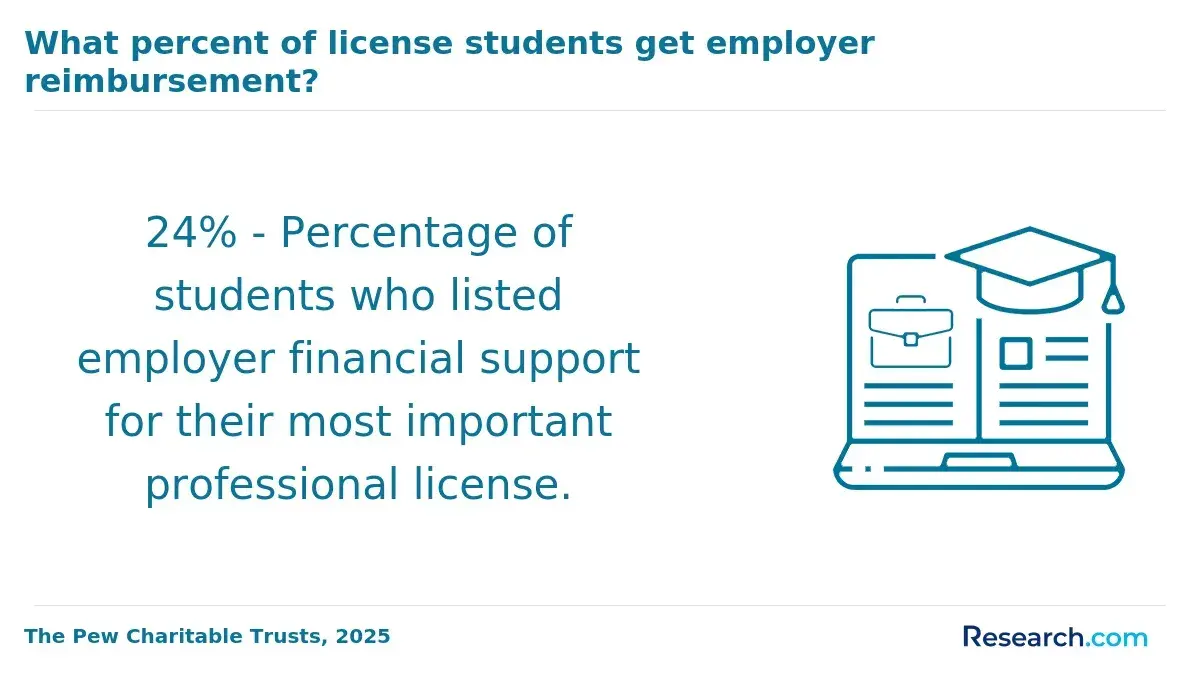
Employer tuition reimbursement may cover an online Health Psychology doctorate if the degree is job-related and the employer's policy includes graduate or doctoral education. Coverage is most plausible for employees in healthcare systems, insurance organizations, universities, public health agencies, behavioral health companies, wellness vendors, research organizations, and human services leadership roles.
Under current IRS rules, employer-provided educational assistance can be excluded from an employee's taxable income up to $5,250 per calendar year when offered through a qualified educational assistance program. That amount may not cover a full doctoral year, but it can reduce the need for high-interest borrowing when combined with scholarships, assistantships, or pay-as-you-go enrollment.
Employer policies usually differ on what they will pay for, when they pay, and what happens if the employee leaves. Review these items before you enroll:
- Whether doctoral tuition is eligible or the benefit is limited to undergraduate and master's coursework.
- Whether the program must be directly related to your current job or an approved future role.
- Whether the employer pays the school upfront or reimburses you after grades are posted.
- Whether books, technology fees, residencies, and dissertation credits are covered.
- Whether you must maintain a minimum grade, remain employed for a set period, or repay funds if you resign.
- Whether the annual benefit resets by calendar year, fiscal year, or academic year.
Employer reimbursement works best when the doctorate supports a clear business need, such as program evaluation, patient behavior change initiatives, staff wellness, population health strategy, clinical research coordination, or health outcomes leadership.
How can working professionals negotiate employer sponsorship for an online Health Psychology doctorate?
Working professionals have the strongest case for employer sponsorship when they connect the doctorate to measurable organizational value.
Instead of asking for tuition help as a personal benefit, present the degree as a workforce development investment that can improve research capacity, patient engagement, health behavior programming, employee wellness, or data-driven decision-making.
A strong sponsorship request should be specific, realistic, and easy for a manager or HR team to approve. Use the following sequence to prepare the conversation:
- Identify the business problem the doctorate will help solve, such as chronic disease behavior change, patient adherence, health equity, program evaluation, or workforce wellness.
- Map specific courses, dissertation plans, or research skills to your current role or a planned internal promotion pathway.
- Prepare a cost proposal showing annual tuition, fees, expected employer contribution, your personal contribution, and any scholarships or federal aid you will use.
- Offer a retention agreement that is reasonable, such as continued employment after each reimbursed year, while avoiding terms you cannot meet.
- Ask for non-tuition support as well, including flexible scheduling, conference leave, data access for approved research, or permission to complete a work-relevant dissertation.
- Document approval terms in writing before enrolling, including covered expenses, grade requirements, reimbursement timing, and repayment clauses.
One red flag is accepting informal verbal approval from a supervisor without HR confirmation. Tuition reimbursement is usually governed by written policy, and undocumented promises may not survive budget changes, manager turnover, or organizational restructuring.
What ROI can graduates expect from an online Health Psychology doctorate?
The ROI of an online Health Psychology doctorate depends on the student's starting salary, debt level, program cost, employer support, and target career. The degree may support roles in academic research, teaching, behavioral medicine, health promotion leadership, public health evaluation, clinical health psychology, consulting, or healthcare program administration.
It is not a guaranteed salary increase, and students should evaluate whether doctoral-level training is necessary for the roles they want.
The U.S. Bureau of Labor Statistics Occupational Outlook Handbook lists the median annual pay for psychologists at $92,740 based on May 2023 data, with employment projected to grow 7% from 2023 to 2033.
This benchmark is useful, but broad: it includes multiple psychologist categories and does not isolate online doctorate graduates or health psychology specialists. Use it as a labor market reference, not a personal earnings prediction.
The table below frames ROI by career direction rather than by institution type. This is more reliable because the value of the doctorate depends on whether it unlocks work you could not reasonably access with your current credential:
| Career direction | How the doctorate may create value | ROI caution |
| Academic or research faculty track | Doctoral research training may be expected for tenure-track, research, or dissertation-supervision roles. | Faculty markets can be competitive, and institutional prestige, publications, and mentorship matter. |
| Clinical health psychology pathway | A doctoral credential may be required for psychologist licensure depending on state rules and program accreditation. | Online format alone does not determine licensure eligibility; APA accreditation and supervised training requirements are critical. |
| Healthcare leadership or program evaluation | Doctoral training can strengthen credibility in outcomes measurement, intervention design, and behavioral health strategy. | Some leadership roles may value experience or an MPH, MBA, MHA, or master's degree as much as a doctorate. |
| Consulting, wellness, or population health strategy | Advanced expertise may support specialized consulting in behavior change, prevention, and health promotion. | Income may depend heavily on network, niche, contracts, and business development skill. |
| Specialized psychology-adjacent careers | Doctoral training may deepen research and assessment expertise across behavioral science fields. | Students comparing specialties should review market-specific salary data, such as resources on how much do forensic psychologists make, before assuming all psychology doctorates have similar payoff. |
A practical ROI test is to calculate your expected total debt at graduation, estimate monthly payments under federal repayment options, and compare that obligation with realistic job postings that require or strongly prefer a doctorate.
The degree is more defensible when it leads to a required credential, funded research opportunities, promotion eligibility, or employer-paid tuition; it is less defensible when the same goal is reachable through a lower-cost master's, certificate, or supervised experience path.
Other Things You Should Know About Health Psychology
Many students finish in about three to seven years, depending on transfer credit, enrollment pace, research requirements, practicum expectations, and dissertation progress. Part-time students should ask how long they can remain enrolled before extension fees or reapplication rules apply.
Yes. Institutional accreditation is important for federal aid eligibility, credit transfer, and employer recognition. If the program is intended to support psychologist licensure, students should also check state board rules and whether programmatic accreditation is required.
Not always. Licensure rules vary by state and usually depend on degree type, curriculum, supervised experience, exams, and accreditation. Students should verify requirements with the relevant state psychology board before enrolling.
Sometimes. Schools may accept selected graduate credits, but limits vary by institution, course age, grade, accreditation, and fit with the doctoral curriculum. Request a formal transfer evaluation before relying on transfer credit to reduce cost or time.
References
- How Much Does a PhD Cost https://aituedu.org/how-much-does-a-phd-cost/
- Scholarships For Psychology Majors (2025) https://www.psychology.org/scholarships/
- COGDOP Graduate Student Scholarships - American Psychological Foundation https://ampsychfdn.org/funding/cogdop/
- Tuition Reimbursement for MHA Programs https://www.mhaonline.com/blog/mha-tuition-reimbursement
- APA-Accredited PsyD Programs Under $50,000 Total Cost 2025 https://psydprograms.org/apa-accredited-psyd-programs-under-50000/
- How to Find and Win Psychology Scholarships https://www.onlinepsychologydegrees.com/psychology-scholarships/
- Types of Financial Aid https://www.hhloans.com/types-of-financial-aid/
- 2025 Most Affordable Online Colleges for a PhD in Psychology https://www.onlineu.com/most-affordable-colleges/psychology-doctoral-degrees
- Employee Tuition Reimbursement Guide | Wellhub https://wellhub.com/en-us/blog/wellness-and-benefits-programs/tuition-reimbursement/
- Employer Tuition Assistance Program / Employee Tuition Reimbursement - Finance | Learn & Work Ecosystem Library https://learnworkecosystemlibrary.com/topics/employer-tuition-assistance-program-employee-tuition-reimbursement-finance/