2027 Online Health Psychology Doctorate Programs with No Dissertation Requirement

Co-Founder and Chief Data Scientist
Choosing an online health psychology doctorate without a dissertation is really a question about career fit, academic rigor, and return on investment. The latest BLS projections place psychologist employment growth at 7% from 2024 to 2034, faster than average, but not every doctorate serves the same career path.
This guide is for working professionals, counselors, clinicians, health educators, and psychology graduates who want doctoral-level training without a traditional dissertation. You will learn what "no dissertation" actually means, what replaces it, how to verify legitimacy, and when this pathway is worth the cost.
Key Things You Should Know
Which Online Health Psychology Doctorate Programs Do Not Require a Dissertation?
Students can earn doctoral-level training related to health psychology without a traditional dissertation, but the exact label matters. A program may be called health psychology, behavioral health, clinical health psychology, health services psychology, counseling psychology with a health focus, or an applied psychology doctorate with health-related electives. The safest answer is that fully online, dissertation-free doctorates specifically titled "Health Psychology" are rare, while adjacent applied doctorates are more common.
The table below shows the main kinds of online doctoral pathways students usually evaluate when they want health psychology training without a traditional dissertation. Always confirm the current catalog language before applying because universities can change final project requirements.
| Program type | Typical dissertation status | Common final requirement | Best fit | Important caution |
| Doctor of Behavioral Health | Often dissertation-free | Applied project, portfolio, practicum, or capstone | Integrated care, behavioral medicine, healthcare consulting, population health behavior | Usually not a psychologist licensure route by itself |
| Doctor of Health Science with a behavioral health focus | Often uses a doctoral project instead of a dissertation | Applied evidence-based project or quality-improvement project | Healthcare leadership, health education, program design, clinical operations | May be broader than psychology and less focused on psychological theory |
| PsyD with health psychology or clinical health emphasis | Varies by school | Dissertation, doctoral project, or clinical research project | Clinical practice, assessment, intervention, integrated behavioral health | Licensure usually depends on APA accreditation, supervised hours, internships, and state rules |
| EdD or PhD in psychology with a health-related concentration | Often requires a dissertation, but some EdD programs use a capstone | Dissertation, capstone, or applied research project | Teaching, training, health promotion, organizational wellness, applied research | Degree title may not be "health psychology" even if coursework is relevant |
| DrPH with social and behavioral health concentration | Often dissertation-free or dissertation-alternative | Integrative learning experience, applied practice product, or doctoral project | Public health leadership, community health behavior, prevention programs | It is a public health doctorate, not a psychology doctorate |
When a school says "no dissertation," ask for the official degree audit, not just marketing language. Some programs avoid the word dissertation but still require a large independent research project with committee review, proposal approval, and final defense.
What Replaces the Dissertation in an Online Health Psychology Doctorate?
In legitimate programs, the dissertation is usually replaced by a structured applied requirement. The difference is that a dissertation is designed to produce original scholarly research, while a capstone or doctoral project is usually designed to solve a real practice problem using existing evidence, program evaluation, or applied data.
The table below compares common doctoral completion models so readers can see whether the "no dissertation" label matches the kind of work they actually want to do.
| Completion requirement | Main purpose | Typical work involved | Best for | Usually less suitable for |
| Traditional dissertation | Generate original research | Research question, methodology, data collection or analysis, committee review, defense | Academic research, tenure-track goals, research-intensive roles | Students seeking practice-focused completion |
| Applied doctoral project | Apply evidence to a professional problem | Needs assessment, intervention design, evaluation plan, final report or presentation | Healthcare systems, integrated care, program improvement | Students who need a strong publication record |
| Capstone | Synthesize doctoral learning into a final product | Portfolio, case analysis, program proposal, policy analysis, or implementation project | Working professionals who want a career-linked project | Students seeking traditional research training |
| Quality-improvement project | Improve outcomes in a real setting | Workflow analysis, behavioral intervention, metrics review, stakeholder report | Hospitals, clinics, community health organizations | Students without access to a practice site |
| Practicum-linked project | Connect doctoral learning to supervised practice | Fieldwork, case documentation, reflective analysis, supervisor evaluation | Applied behavioral health and health services roles | Students who cannot meet field placement requirements |
A strong dissertation alternative should still require evidence-based reasoning, graduate-level writing, and ethical handling of human-subject or organizational data. If a program advertises "no dissertation" and "no major project," that is a red flag because doctoral education should include a rigorous culminating assessment.
Are Online Health Psychology Doctorate Programs Without Dissertations Legitimate and Accredited?
Yes, a no-dissertation online health psychology-related doctorate can be legitimate, but only if the school is properly accredited and the degree structure matches your career goal. Accreditation is more important than the presence or absence of a dissertation because it affects federal financial aid eligibility, transfer recognition, employer acceptance, and, in some cases, licensure pathways.
Students should check accreditation at three levels because each level answers a different question about legitimacy and professional value:
- Verify institutional accreditation from an agency recognized by the U.S. Department of Education or the Council for Higher Education Accreditation.
- For clinical psychology licensure goals, check whether the program has APA accreditation or whether the state board accepts that specific degree route.
- For public health, counseling, or healthcare leadership pathways, review the relevant professional accreditation or state-specific credential requirements for the target occupation.
The main mistake is assuming that "doctorate in psychology" automatically leads to psychologist licensure. Many online applied psychology, behavioral health, and health science doctorates are designed for leadership, consulting, education, or program development rather than independent clinical practice as a licensed psychologist.
Are No-Dissertation Online Health Psychology Doctorate Programs Easier to Complete?
No-dissertation doctorates are not automatically easier. They may be more structured and more practice-oriented, which can make them feel more manageable for working adults, but they still require doctoral writing, advanced theory, applied research, and a major final product.
The real difference is the type of difficulty. Dissertation-based programs are often difficult because of independent research design, data collection, and committee revisions. Capstone-based programs are often difficult because students must connect evidence to a live organizational problem, coordinate stakeholders, and produce a usable professional deliverable.
Before assuming the program will be easier, review these workload signals carefully:
- Number of doctoral project courses and whether they run across multiple terms
- Required practicum, internship, residency, or field placement hours
- Whether the final project requires data from a workplace, clinic, school, or community organization
- Whether students must present or defend the project before faculty or professional reviewers
- Whether the program requires IRB approval, research ethics training, or formal program evaluation methods
A dissertation-free format is often better described as more applied, not less rigorous. It may be a better fit if you want to improve health behavior programs, support integrated care teams, design wellness interventions, or lead behavioral health initiatives rather than produce original academic research.
How Long Does It Take to Complete an Online Health Psychology Doctorate Without a Dissertation?
Completion time varies by degree type, transfer credit, enrollment intensity, and whether the program includes fieldwork or residencies. Many dissertation-free online doctorates are designed for working professionals and can be completed faster than research-heavy PhD programs, but the timeline is not guaranteed.
The table below summarizes typical completion ranges so you can compare the practical time commitment before applying:
| Doctoral pathway | Typical full-time or accelerated range | Typical part-time range | Timeline risk |
| Applied behavioral health doctorate | 3 to 4 years | 4 to 6 years | Practicum access, applied project scope, course sequencing |
| Health science doctorate with capstone | 3 to 4 years | 4 to 6 years | Project site approval, leadership project complexity |
| PsyD with clinical training | 4 to 6 years | Often longer if part-time is allowed | Clinical practicum, internship, residency, licensure preparation |
| Traditional PhD in psychology | 5 to 7 years | May exceed 7 years | Dissertation design, data collection, committee review, publication expectations |
| DrPH with behavioral health concentration | 3 to 5 years | 4 to 6 years | Applied practice products, public health project approvals |
Students trying to finish quickly should ask whether courses are asynchronous, whether doctoral project milestones are embedded into coursework, and whether the school publishes time-to-completion data. A program that advertises speed but hides project requirements may take longer than expected.
How Much Do Online Health Psychology Doctorate Programs Without Dissertations Cost?
Costs vary widely because doctoral tuition depends on credit count, per-credit rate, residency fees, technology fees, books, travel, and the number of terms needed to finish the final project. For many students, the largest financial risk is not only tuition but also extending enrollment by several terms while completing the capstone or project.
When comparing programs, look beyond the advertised per-credit price. A dissertation-free doctorate can still become expensive if it requires many credits, mandatory residencies, or repeated doctoral project continuation courses.
- Tuition is commonly billed per credit, so total cost depends on the required credit count and accepted transfer credits.
- Doctoral project, practicum, residency, graduation, and technology fees can add meaningful costs even when the program is online.
- Federal graduate borrowing can be expensive: Direct Unsubsidized Loans for graduate students carried an 8.08% fixed interest rate for 2024-25, while Grad PLUS Loans carried 9.08% for the same federal aid year.
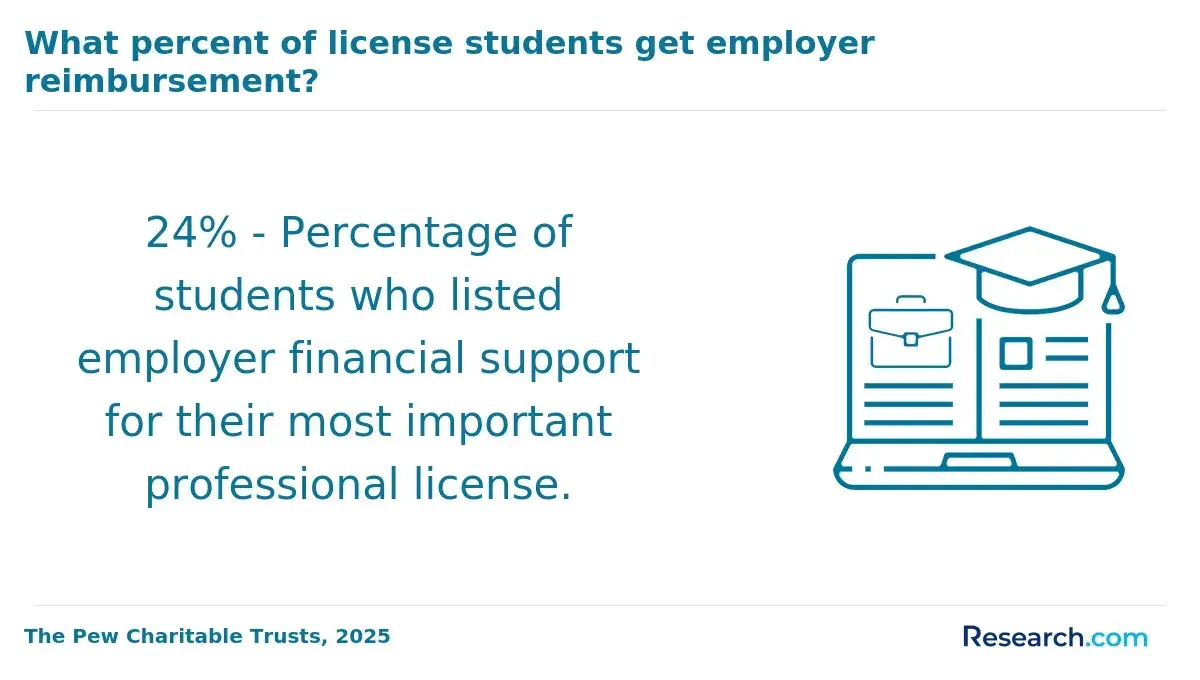
- Employer tuition assistance, military benefits, scholarships, and pay-as-you-go enrollment can reduce borrowing, but students should verify annual limits and service obligations.
The best financial comparison is total program cost divided by the realistic career value of the credential for your intended role. If the doctorate is not required for your target job, the return may depend more on leadership advancement, consulting opportunities, or credibility in health behavior program design than on a direct salary increase.
Who Benefits Most From an Online Health Psychology Doctorate Without a Dissertation?
A no-dissertation online health psychology doctorate is most useful for students who want applied expertise rather than a research-intensive academic path. It can work well for professionals already employed in healthcare, counseling, wellness, public health, education, or organizational leadership who want to design, evaluate, and improve behavior-focused health programs.
This pathway is often a strong fit for people in the following situations:
- You already have a master's degree and want doctoral-level applied training without pursuing a tenure-track research career.
- You work in healthcare, behavioral health, employee wellness, public health, or community health and can connect a doctoral project to real workplace problems.
- You want to strengthen skills in health behavior change, motivational interviewing, patient adherence, stress management, chronic illness support, or integrated care coordination.
- You value flexible online coursework but can still handle intensive writing, research interpretation, and possible field-based requirements.
Students who still need foundational clinical preparation may be better served by comparing an online clinical psychology masters before moving into doctoral study. A master's program can clarify whether clinical practice, applied health psychology, counseling, or healthcare leadership is the right direction.
How Does a No-Dissertation Online Health Psychology Doctorate Affect Career Opportunities?
A dissertation-free online health psychology-related doctorate can support careers in integrated care, behavioral health administration, patient education, wellness strategy, program evaluation, teaching, consulting, and healthcare leadership. Its value is strongest when employers want applied doctoral expertise, evidence-based program design, and the ability to translate psychology into health outcomes.
For salary context, the BLS reported a May 2024 median annual wage of $94,310 for psychologists. This figure is useful as a broad benchmark, but it should not be treated as a prediction for every graduate because pay varies by license status, employer type, specialty, region, and whether the role is clinical, academic, administrative, or consulting-focused.
The degree may be relevant to several career directions, but the doctorate is not always legally required for each one.
- Integrated behavioral health specialist: supports teams addressing chronic disease, lifestyle change, medication adherence, stress, pain, and behavioral risk factors.
- Health behavior consultant: designs or evaluates interventions for smoking cessation, obesity prevention, sleep, stress, or chronic illness self-management.
- Behavioral health administrator: leads programs, tracks outcomes, manages care models, and supports quality-improvement initiatives.
- College instructor or adjunct faculty member: teaches psychology, health behavior, or wellness-related courses, depending on institutional hiring rules.
- Clinical psychologist: requires a licensure-eligible doctoral pathway, supervised training, exams, and state approval; many dissertation-free applied doctorates do not meet this path.
If you are comparing psychology careers outside healthcare, reviewing how much do forensic psychologists make can help you see how specialty, work setting, and credential expectations affect earnings differently across psychology fields.
How Do No-Dissertation Online Health Psychology Doctorates Compare With Traditional Doctorates?
The best doctorate format depends on your goal. A dissertation-free program may be more efficient for applied healthcare roles, while a traditional dissertation-based doctorate is usually stronger for research careers, academic publishing, and some faculty positions.
The table below compares the major trade-offs students should weigh before choosing between a capstone-based or dissertation-based path:
| Factor | No-dissertation online doctorate | Traditional dissertation doctorate |
| Primary focus | Applied practice, program improvement, professional problem-solving | Original research, theory development, scholarly contribution |
| Typical final product | Capstone, applied project, portfolio, practicum project, quality-improvement project | Dissertation with proposal, methodology, analysis, committee review, and defense |
| Best career fit | Healthcare leadership, integrated care, health education, consulting, applied behavioral health | Research faculty, principal investigator roles, research-intensive policy or clinical science careers |
| Completion risk | Project site access, scope creep, practicum logistics | Data collection delays, committee revisions, dissertation momentum |
| Employer perception | Strong when role values applied expertise and accredited doctoral training | Strong when role values research productivity and scholarly independence |
| Licensure relevance | Depends heavily on degree type, accreditation, internship, and state rules | Also depends on accreditation and supervised training, but research doctorates are more common in licensure-eligible psychology pathways |
Students considering specialty alternatives should compare degree outcomes carefully. For example, forensic psychology master's programs may be a more direct option for law-and-psychology roles than a health psychology doctorate, especially if the goal is not healthcare behavior or integrated care.
How Should Students Choose an Online Health Psychology Doctorate Without a Dissertation?
Choosing the right program requires more than searching for "no dissertation." You need to verify the final requirement, accreditation, licensure relevance, total cost, and whether the degree title matches your intended career.
Use the following steps to evaluate programs before requesting transcripts or submitting an application:
- Confirm the exact degree title and concentration, then decide whether it is truly health psychology, behavioral health, health science, public health, clinical psychology, or applied psychology.
- Ask admissions for the official catalog page showing the culminating requirement, including whether it is a capstone, applied doctoral project, portfolio, practicum project, or dissertation under another name.
- Verify institutional accreditation through recognized accreditation databases and, if clinical licensure is a goal, contact the relevant state psychology board before enrolling.
- Request a full tuition-and-fee estimate based on your expected transfer credits, enrollment pace, residencies, technology fees, project courses, and continuation fees.
- Ask whether students must secure their own practicum, project site, data source, or organizational sponsor.
- Review faculty expertise in health behavior, behavioral medicine, integrated care, chronic illness, prevention, or healthcare systems.
- Compare career outcomes with your goal: licensure, teaching, leadership, consulting, wellness, program evaluation, or public health practice.
- Speak with current students or alumni if possible, especially about workload, faculty support, project expectations, and time to completion.
Avoid programs that overpromise speed, hide project details, lack recognized accreditation, or imply that a doctorate automatically leads to psychologist licensure. If your interest is more focused on youth mental health, school-based wellness, or developmental concerns, comparing child psychology master's programs may be a better first step before committing to a doctorate.
Other Things You Should Know About Health Psychology
Yes, many professionals apply health psychology concepts in wellness, public health, coaching, education, healthcare administration, and program evaluation roles. However, diagnosing or treating mental health conditions independently usually requires the appropriate state license.
Usually yes. Even dissertation-free programs commonly require research methods, statistics, evidence appraisal, or program evaluation because students must interpret data and judge whether interventions are effective.
Sometimes. A capstone may lead to a conference poster, professional report, white paper, or journal article, but publication is not always required. Students interested in publishing should ask whether faculty mentor scholarly dissemination.
No. Health psychology is a psychology specialty focused on how behavior, cognition, emotion, and social factors affect health. Behavioral health is broader and often includes mental health, substance use, integrated care, prevention, and healthcare delivery.
References
- Capstone Options in Master's in Communication Programs (Thesis vs Project) https://www.mastersincommunications.com/features/guide-to-graduate-communication-capstone-options
- Alternatives to Dissertation in PsyD Programs and their Benefits https://www.scuhs.edu/psyd-article/alternatives-to-dissertation-in-psyd-programs-and-their-benefits/
- Strategies for a Successful Capstone Project - Graduate Programs for Educators https://www.graduateprogram.org/blog/strategies-for-a-successful-capstone-project/
- How Much Does a PhD Cost https://aituedu.org/how-much-does-a-phd-cost/
- Online and Hybrid PhD & PsyD Programs in Psychology https://www.psychologist-license.com/phd/
- 1-2 Year Doctoral Programs Online: Top Schools & More https://www.phds.me/online-programs/one-year-doctoral-programs/
- PsyD vs. PhD in Psychology https://onlinecounselingprograms.com/mental-health-careers/how-to-become-psychologist/psyd-vs-phd-in-psychology/
- Psychology Ph.D. & Psy.D.: Costs, Requirements, And Careers https://www.psychology.org/degrees/phd/
- Professional Licensure https://www.fielding.edu/school-of-psychology/phd-in-clinical-psychology/professional-licensure/
- What Is a Non-Dissertation Doctorate, and Is It Right for You? https://www.snu.edu/blog/what-is-a-non-dissertation-doctorate-and-is-it-right-for-you