2027 Best Online Health Psychology Doctorate Programs for Consulting Careers

Co-Founder and Chief Data Scientist
An online Health Psychology doctorate can help consultants move from general advice-giving into evidence-based work on behavior change, patient engagement, workplace health, provider burnout, and health equity. The timing matters: the U.S. Bureau of Labor Statistics projects 9% growth for management analysts from 2024 to 2034, signaling continued demand for specialized consulting expertise.
This guide is for working consultants, clinicians considering advisory roles, and students planning a consulting path. You will learn which programs fit consulting goals, when the doctorate is optional, and how to judge whether the investment matches your career plans.
Key Things to Know About Health Psychology Doctorate Programs for Consulting Careers
- A Health Psychology doctorate is usually optional for consulting, but it can strengthen credibility for evidence-based advisory work in healthcare, wellness, behavioral medicine, employee health, and organizational change.
- Recent U.S. labor data supports the consulting case: BLS reported a May 2024 median pay of $101,190 for management analysts, while doctorate-level psychology roles often benchmark against higher-specialization categories rather than entry-level counseling jobs.
- The best online options are typically PhD in Psychology with a Health Psychology specialization, PhD in Health Psychology, or related low-residency doctoral programs; fully online licensure-oriented health psychology doctorates are uncommon.
How will a doctorate impact consulting careers in Health Psychology?
A doctorate can change where a health psychology consultant competes. Without one, consultants may still advise on wellness programs, healthcare communications, training, or patient experience. With a doctorate, the work can shift toward higher-stakes projects that require research design, behavioral intervention strategy, program evaluation, publication-level writing, or expert-level credibility with executives and clinical leaders.
Health psychology focuses on how behavior, cognition, stress, culture, relationships, and environments affect health outcomes. In consulting, that can mean helping a hospital improve treatment adherence, advising an employer on burnout prevention, evaluating a digital health product, or designing behavior-change messaging for public health programs.
The credential is most useful when clients need more than operational recommendations. BLS projects 7% employment growth for psychologists from 2024 to 2034, which suggests steady demand for behavioral expertise, although consulting opportunities depend heavily on industry experience, client network, and applied results.
This table summarizes how the doctorate can affect consulting positioning without treating the degree as a guaranteed career outcome.
| Consulting goal | How the doctorate may help | When it may not be necessary |
| Healthcare behavior-change consulting | Supports credibility in intervention design, adherence research, and outcome evaluation | If the role is mainly project coordination or communications |
| Corporate wellness and employee health | Helps connect stress, behavior, culture, and measurable health outcomes | If clients primarily want benefits administration or vendor selection |
| Digital health and health tech advising | Useful for evidence-based product strategy, user behavior, and clinical validation support | If the role is mainly sales enablement or product operations |
| Expert witness or specialized advisory work | Can strengthen authority when paired with relevant licensure, publications, or experience | If the market requires a different specialty, such as forensic, neuropsychology, or medicine |
| Academic or research consulting | Often important for grant work, evaluation design, and peer-reviewed research methods | If consulting is based mainly on management experience |
A common mistake is assuming the doctorate itself creates a consulting practice. In reality, the degree works best when combined with a clear consulting niche, proof of client impact, and the ability to translate research into decisions executives can act on.
Is a Health Psychology doctorate a requirement to pursue consulting careers in the field?
A Health Psychology doctorate is not a universal requirement for consulting careers. Many consultants enter the field through healthcare administration, psychology, public health, organizational development, nursing, social work, business analytics, or clinical practice. The doctorate becomes more important when the consulting role depends on advanced psychological theory, independent research, high-level evaluation, expert credibility, or academic-style evidence standards.
For students still building foundational preparation, a master's degree can be a more practical first step. For example, an online clinical psychology master's may help clarify whether clinical, behavioral health, or research-oriented consulting is the right direction before committing to doctoral study.
Use this distinction when deciding whether the doctorate is required for your target role.
| Career path | Doctorate usually required? | Why |
| Licensed psychologist offering clinical services | Yes, in most states | State licensure typically requires a doctoral degree, supervised experience, and exams |
| Independent health behavior consultant | No | Clients may value results, portfolio, and industry experience as much as credentials |
| Hospital research or outcomes consultant | Often preferred | Advanced research methods and doctoral-level evidence evaluation may be central to the role |
| Corporate wellness strategist | No | Experience in benefits, HR, organizational change, and analytics may be enough |
| Expert consultant in legal or regulatory contexts | Often preferred or expected | Doctoral credentials can strengthen perceived authority, but specialty fit matters |
What are the best online Health Psychology doctorate programs for consulting careers?
The best online Health Psychology doctorate program for a consulting career is usually the one that matches your consulting niche, schedule, research interests, and credibility needs. Fully online doctoral programs specifically named "Health Psychology" are limited, so strong candidates often include online PhD programs in psychology with health psychology concentrations and low-residency programs in closely related areas such as mind-body medicine or clinical health psychology.
The table below compares program types and best-fit use cases. Always confirm current accreditation, curriculum, residency requirements, licensure disclosures, tuition, and dissertation rules directly with the institution before applying.
| Program or program type | Format | Best consulting fit | Doctoral project expectation | Important caution |
| Walden University PhD in Psychology, Health Psychology specialization | Online coursework with doctoral research requirements | Behavior change, public health messaging, wellness consulting, patient adherence | Dissertation | Not designed as a direct licensure path for clinical psychology practice |
| National University PhD in Psychology, Health Psychology specialization | Online, generally built for working adults | Healthcare consulting, health behavior research, program evaluation | Dissertation or doctoral research sequence depending on catalog rules | Students should verify current specialization availability and professional outcomes |
| Liberty University PhD in Psychology, Health Psychology | Online with structured doctoral coursework | Faith-informed or general health psychology consulting, wellness, behavioral interventions | Dissertation | Check whether the curriculum aligns with secular, clinical, corporate, or academic consulting goals |
| Saybrook University PhD in Mind-Body Medicine | Online with required residential or virtual learning experiences depending on track | Integrative health, stress, resilience, mind-body wellness, coaching-adjacent consulting | Dissertation or research-based doctoral work | Adjacent to health psychology rather than always labeled as health psychology |
| Fielding Graduate University PhD in Clinical Psychology with health-related interests | Distributed learning with in-person requirements | Clinical health psychology, assessment-informed consulting, practitioner-scholar work | Dissertation and clinical training requirements | More appropriate for licensure-oriented students who can meet residency and practicum demands |
To shortlist programs, focus on fit rather than name recognition alone. A strong consulting-oriented program should give you enough methodological depth to evaluate evidence and enough applied flexibility to build a portfolio around real health behavior problems.
- Define the consulting niche first, such as employee burnout, chronic disease adherence, digital health engagement, or patient experience.
- Check whether the curriculum includes health behavior theory, research methods, statistics, ethics, diversity, intervention design, and program evaluation.
- Confirm whether the degree is licensure-oriented, research-oriented, or applied-professional, because these pathways lead to different outcomes.
- Ask whether dissertation topics can be aligned with consulting deliverables, employer projects, or publishable applied research.
- Compare total cost, transfer credit policies, residency travel, faculty fit, and time-to-completion expectations before speaking with admissions.
Red flags include vague accreditation language, promises of fast income growth, unclear dissertation support, no faculty expertise in health psychology, or a curriculum that sounds like general psychology with only one or two health-related electives. If your consulting goals involve courts, correctional systems, or risk assessment, forensic psychology master's programs may align better than a health psychology doctorate. The right credential is the one that supports the clients, problems, and deliverables you actually want to handle.
Is work experience needed to enroll in a Health Psychology doctorate program?
Work experience is not always mandatory, but it can make a Health Psychology doctorate much more valuable for consulting. Doctoral coursework often asks students to analyze complex systems, critique research, design interventions, and propose solutions. Those assignments are easier to apply when you already understand healthcare organizations, employers, payers, public health agencies, or client service work.
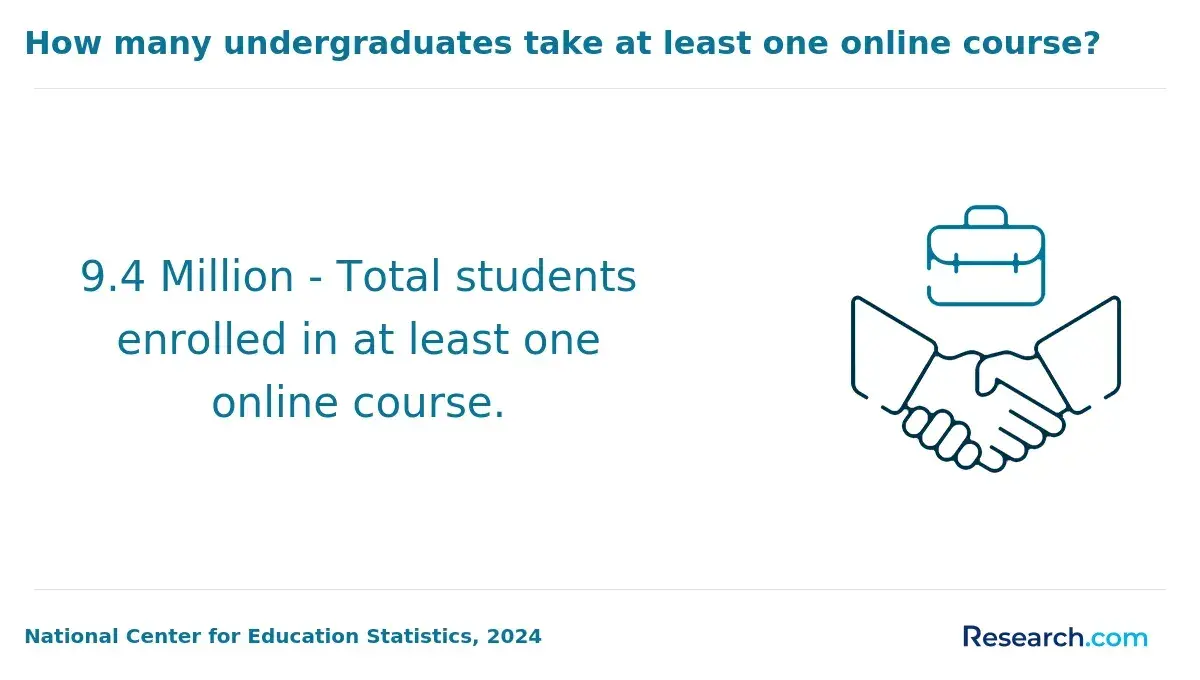
Admissions requirements vary by school, but many online doctoral programs for working adults review professional history alongside transcripts, writing samples, goals statements, and prior graduate coursework. NCES data released in 2024 continues to show strong graduate enrollment in health and psychology-related fields, but admission competitiveness depends on the institution and the applicant pool rather than national enrollment alone.
This comparison shows how different experience levels affect readiness.
| Applicant profile | Likely readiness | Best next step |
| Bachelor's graduate with no consulting or healthcare experience | Low to moderate | Consider gaining applied experience or completing a relevant master's degree first |
| Master's graduate in psychology, counseling, public health, or healthcare administration | Moderate to high | Look for doctoral programs with strong research and applied health behavior coursework |
| Working consultant in healthcare, wellness, HR, or organizational change | High if goals are clear | Choose a program that lets coursework and dissertation work support client-facing expertise |
| Licensed clinician moving into consulting | High for clinical-adjacent consulting | Confirm whether the program adds new consulting capabilities rather than duplicating prior training |
If you do not yet have enough experience, build it deliberately before enrolling. Useful preparation can include healthcare project work, program evaluation, data analysis, grant support, wellness program design, behavioral health operations, or client-facing consulting assignments.
Students interested in youth wellness, pediatric adherence, school health, or family-centered intervention consulting may also explore child psychology master's programs before committing to a broader doctoral path.
Do online Health Psychology doctorate programs require dissertations?
Most online PhD programs in Health Psychology or psychology specializations require a dissertation. That is because the PhD is a research doctorate, and schools need students to demonstrate independent scholarly inquiry. Some professional doctorates use applied capstones or doctoral projects instead, but true non-dissertation Health Psychology doctorates are less common than dissertation-based options.
The dissertation question matters because consulting professionals already manage client deadlines, travel, proposal work, and business development. A dissertation can strengthen a consulting brand if the topic is chosen well, but it can also extend the timeline if the student lacks data access, faculty alignment, or a realistic research scope.
This table explains the practical differences between dissertation and applied-project models.
| Doctoral completion model | Best for | Consulting advantage | Main risk |
| Traditional dissertation | Students who want research credibility, publication potential, or academic consulting authority | Can produce a defensible evidence base for a niche consulting practice | May take longer if the research question is too broad or data access is weak |
| Applied dissertation | Working professionals who want to study a real organizational problem | Can connect directly to client needs or employer challenges | Still requires rigorous methodology and committee approval |
| Doctoral capstone or project | Practice-focused students in professional doctorates | May be easier to translate into consulting tools, frameworks, or implementation plans | May carry less research prestige in academic or expert-witness settings |
Before choosing a dissertation track, ask how students are matched with chairs, whether faculty publish in health psychology or behavioral medicine, what data sources students commonly use, and how the school supports students who work full time. Avoid choosing a program only because the final project sounds easier; choose the model that best supports your consulting credibility.
How flexible are online Health Psychology doctorate programs for consulting professionals?
Online Health Psychology doctorate programs can be flexible, but "online" does not always mean self-paced or low-commitment. Some programs use asynchronous courses, while others require live seminars, residencies, dissertation intensives, comprehensive exams, practica, or scheduled research milestones. Consulting professionals should evaluate the calendar as closely as the curriculum.
The flexibility features below matter because consulting workloads often fluctuate around client launches, travel, renewals, and urgent deliverables.
| Flexibility feature | Why it matters for consultants | Best fit |
| Asynchronous weekly coursework | Allows reading and assignments around client meetings | Consultants with unpredictable schedules |
| Synchronous evening seminars | Creates structure and faculty access | Students who need accountability and discussion |
| Low-residency model | Combines online study with periodic in-person learning | Students who value networking and can travel |
| Part-time enrollment | Reduces weekly workload but may extend completion time | Full-time consultants or business owners |
| Cohort model | Provides peer support and predictable sequencing | Students who want structure over maximum customization |
A practical way to test fit is to map a normal consulting month against the program calendar. Look at weekly reading, discussion posts, research deadlines, residencies, comprehensive exams, and dissertation milestones.
- Choose maximum flexibility if your consulting work involves travel, proposal surges, or irregular client emergencies.
- Choose more structure if you tend to postpone independent research or need scheduled interaction to stay on track.
- Be cautious with accelerated formats if you are building a consulting practice at the same time.
- Ask whether leaves of absence, reduced course loads, or dissertation extensions are available and how they affect cost.
The biggest mistake is underestimating the dissertation phase. Coursework may feel manageable online, but research design, data collection, committee revisions, and final defense often require sustained focus beyond normal class participation.
What should you look for in Health Psychology doctorate programs for consulting careers?
For consulting careers, program quality is not just about rankings. The strongest programs help you become better at diagnosing behavioral problems, evaluating evidence, communicating findings, and designing interventions that clients can implement. Accreditation, faculty expertise, curriculum depth, student support, and professional fit matter more than marketing language.
Use the following quality indicators to compare programs before applying.
| What to evaluate | Quality indicator | Red flag |
| Institutional accreditation | Recognized regional or institutional accreditation | Unclear accreditation claims or pressure to enroll quickly |
| Program purpose | Clear distinction between research, applied consulting, and licensure preparation | Marketing that implies licensure or income outcomes without specific disclosures |
| Health psychology depth | Multiple courses or faculty interests in health behavior, stress, chronic illness, wellness, or behavioral medicine | Only one health-related elective in an otherwise general psychology curriculum |
| Research training | Strong statistics, methods, measurement, ethics, and evaluation sequence | Minimal methodology requirements for a doctoral credential |
| Dissertation support | Transparent chair matching, milestone tracking, and research resources | No clear process for supporting working students through completion |
| Consulting relevance | Opportunities to align projects with organizations, interventions, or applied outcomes | Curriculum disconnected from real client problems |
Ask admissions advisors direct questions and save the answers in writing. A credible program should be able to explain who the degree is for, what it does not qualify you to do, and how students complete doctoral research while working.
- Ask whether the program is intended for licensure, non-licensure consulting, academic research, or professional advancement.
- Request recent examples of dissertation topics related to health psychology, healthcare consulting, or behavioral interventions.
- Confirm average course load expectations in hours per week rather than only credits per term.
- Ask how often students interact with faculty during the dissertation stage.
- Compare total program cost, fees, residency travel, and expected time to completion rather than tuition per credit alone.
Do not choose solely by public versus private status. Public universities can be excellent, and private nonprofit or private for-profit institutions can vary widely. ROI depends on cost, support, completion probability, market fit, and how clearly the doctorate advances your consulting niche.
What skills can consulting professionals gain from an online Health Psychology doctorate?
An online Health Psychology doctorate can build skills that are difficult to develop through client work alone. On-the-job consulting teaches communication, stakeholder management, and delivery under pressure. Doctoral study adds structured research training, theory, ethics, measurement, and deeper understanding of health behavior.
The table below maps doctoral skills to consulting responsibilities so readers can see where the credential may create practical value.
| Doctoral skill | Consulting application | Example deliverable |
| Health behavior theory | Design interventions that address motivation, adherence, stress, and environmental barriers | Behavior-change strategy for a chronic disease program |
| Advanced research methods | Evaluate whether a program, product, or policy is likely to work | Evidence review or research-backed recommendation report |
| Statistics and measurement | Assess outcomes and avoid misleading conclusions from weak data | Evaluation dashboard or pre-post intervention analysis |
| Ethics and diversity | Design recommendations that account for risk, equity, consent, and vulnerable populations | Ethical implementation plan for a wellness initiative |
| Scientific writing | Communicate complex evidence to executives, clinicians, funders, or boards | White paper, grant narrative, or executive briefing |
| Systems thinking | Connect individual behavior to organizational policies, incentives, culture, and access | Multi-level patient engagement roadmap |
AI is also changing what clients expect from consultants. As analytics platforms and generative AI tools make basic summaries easier to produce, consultants with doctoral training can stand out by asking better research questions, judging evidence quality, identifying bias, and translating findings into responsible implementation.
The main limitation is that doctoral programs do not automatically teach sales, pricing, proposal strategy, or business development. Consultants still need to build those skills separately through practice, mentorship, and market exposure.
Can an online Health Psychology doctorate credential increase your income potential as a consultant?
An online Health Psychology doctorate can increase income potential in some consulting paths, but it should not be treated as a salary guarantee. Income depends on niche, client budget, reputation, licensure status, publications, geographic market, business model, and whether the consultant works independently or inside a firm.
For context, BLS reported a May 2024 median annual wage of $101,190 for management analysts. Specialized psychology-related consulting may benchmark above or below that figure depending on whether the role requires doctoral expertise, clinical authority, advanced analytics, or sector-specific experience.
This table shows how the credential may affect income potential in different consulting arrangements.
| Consulting arrangement | How income is typically influenced | How the doctorate may help |
| Internal consultant at a healthcare organization | Salary bands, leadership level, and organizational budget | May support advancement into research, strategy, quality, or behavioral health leadership roles |
| Consultant at a management or healthcare consulting firm | Firm level, billable rate, project scope, and promotion track | Can differentiate a candidate for behavior-change, outcomes, or clinical strategy projects |
| Independent consultant | Client acquisition, pricing, niche authority, and repeat engagements | May justify premium positioning if paired with visible expertise and measurable results |
| Expert consultant | Credentials, specialty fit, legal or regulatory relevance, and reputation | Can strengthen authority, especially with publications, licensure, or recognized subject-matter expertise |
Salary research should be specific to your niche. For example, readers comparing psychology specialties may find it useful to review how much do forensic psychologists make when weighing forensic consulting against health psychology consulting.
Before enrolling, estimate ROI conservatively. Include tuition, fees, books, software, residency travel, reduced work hours, delayed earnings, loan interest, and the realistic time needed to convert the credential into paid consulting opportunities.
Is an online Health Psychology doctorate the right next step for your consulting career?
An online Health Psychology doctorate is the right next step if it clearly supports the kind of consulting work you want to do and if you are ready for several years of advanced study. It is a weaker choice if you mainly need business development skills, a faster credential, or broader management training.
Use this self-assessment to decide whether to apply now, wait, or choose a different path.
| Readiness factor | Apply now if... | Consider waiting if... |
| Career goal | You can name the health psychology consulting niche you want to serve | You are pursuing the degree because it sounds prestigious |
| Experience | You have consulting, healthcare, psychology, public health, wellness, or organizational experience to build on | You have limited applied exposure and are unsure what clients need |
| Time | You can protect weekly study and research time for multiple years | Your work schedule is unstable or you are launching a business from scratch |
| Finances | You have compared total cost against realistic career benefits | You are relying on vague assumptions about future income |
| Program fit | You found faculty, curriculum, and research support aligned with your niche | The program is convenient but not clearly connected to your consulting goals |
If you decide to move forward, take a deliberate application approach rather than applying to the first online program that appears flexible.
- Write a one-sentence consulting goal, such as "I want to consult on adherence programs for adults with chronic illness."
- Identify the evidence base you need to master, including health behavior theory, program evaluation, statistics, and implementation science.
- Shortlist programs only after confirming accreditation, doctoral project requirements, faculty fit, and schedule demands.
- Speak with current students or alumni if possible, especially those who worked full time during the dissertation stage.
- Build a pre-enrollment portfolio through writing, presentations, evaluation projects, or consulting case studies.
If your goal is narrower than health psychology, a different graduate path may be more efficient. For example, school wellness, pediatric behavioral health, and family-focused consulting may point toward child and adolescent psychology training, while organizational strategy may point toward public health, MBA, or organizational psychology programs.
Other Things You Should Know About Health Psychology
It depends on the degree, state rules, licensure status, and how you use the title. Many online Health Psychology PhD programs are non-licensure programs, so graduates should be careful not to imply they are licensed psychologists unless they meet state licensure requirements.
Many students should expect several years of study, especially if the program includes a dissertation. Part-time enrollment can make the workload more manageable for consultants, but it may extend the overall timeline.
APA accreditation is most important for clinical, counseling, or school psychology licensure pathways. For nonclinical consulting, institutional accreditation, curriculum quality, faculty expertise, and market relevance may matter more, but requirements vary by employer and client context.
Sometimes, but only with proper permissions, ethical review, and data protections. Client projects can inspire dissertation topics, but students must follow institutional review board rules and avoid conflicts of interest.
References
- CPA Accredited Programs - Canadian Psychological Association https://cpa.ca/accreditation/cpaaccreditedprograms/
- Online PhD Degree Programs in Psychology: Top Schools & Specialisations https://henryharvin.ae/blog/online-phd-degree-programs-in-psychology-top-schools-specialisations/
- Health Psychology Master’s Programs Online: Find a School https://www.onlinemastersdegrees.org/best-programs/psychology/health-psychology/
- What Can You Do With A Ph.D. In Psychology? | Psychology.org https://www.psychology.org/resources/jobs-with-a-doctorate-in-psychology/
- Health Psychology Emphasis | PhD in Clinical Psychology https://paloaltou.edu/academic-programs/phd-clinical-psychology/health-emphasis
- Clinical Psychology (Ph.D.) https://gs.howard.edu/clinical-psychology-phd
- 2025 Most Affordable Online Colleges for a PhD in Psychology https://www.onlineu.com/most-affordable-colleges/psychology-doctoral-degrees
- PhD in Clinical Psychology https://www.fielding.edu/school-of-psychology/phd-in-clinical-psychology/