2027 Online Family Nurse Practitioner (FNP) Programs for Washington Residents: Costs and Clinical Training

Co-Founder and Chief Data Scientist
Choosing an online family nurse practitioner program in Washington means comparing more than coursework: tuition can depend on the school, and clinical training must happen in approved settings. For registered nurses considering a master's degree or Doctor of Nursing Practice (DNP), this guide separates Washington-based programs from out-of-state alternatives.
It explains what to ask about total cost, clinical hours, placements, and Washington licensure so you can decide whether an FNP program fits your budget, schedule, and career plans.
Key Things to Know About Online FNP Programs in Washington
- Washington-based options include Gonzaga University's online MSN-FNP program and Washington State University's hybrid DNP-FNP program; their degree levels and required campus visits differ.
- National FNP certification pathways generally require at least 500 supervised clinical hours, but a school may require more. Online coursework does not make clinical training remote.
- Washington residence alone does not establish a tuition rate or secure a nearby clinical site. Compare each school's written cost estimate and placement policy before enrolling.
What online FNP programs are available in Washington?
Washington-based choices include an online MSN-FNP at Gonzaga University in Spokane and a hybrid DNP-FNP at Washington State University, whose nursing college is based in Spokane. An FNP is an advanced practice registered nurse trained to provide primary care across the lifespan. An MSN is a master's degree; a DNP is a practice-focused doctoral degree. Neither an "online" nor a "hybrid" label means that clinical work can be completed online.
The distinction between these Washington institutions matters if you need to keep working or cannot travel regularly. The table identifies programs to investigate, not a guarantee that every course, campus visit, or clinical placement will fit your location.
| Washington institution | FNP option | Delivery consideration to confirm |
| Gonzaga University, Spokane | MSN-FNP | Online coursework with required in-person clinical training; confirm current campus or skills-visit requirements. |
| Washington State University, Spokane-based nursing college | DNP-FNP | Hybrid study; confirm required in-person sessions, their location, and the clinical schedule for your cohort. |
If you already hold a graduate nursing degree, ask whether a post-master's FNP certificate is available instead of assuming you need another full degree. Shorter post-master's family nurse practitioner options can help frame that comparison, but each school must confirm your eligible entry route and remaining coursework. Check current program catalogs before applying; a university's general online-learning page does not establish that its FNP track is fully online.
Can Washington residents enroll in online FNP programs based in other states?
Washington residents may be able to enroll in an out-of-state online FNP program, but the school must accept students in Washington and approve clinical training where the student plans to complete it. These are alternatives for Washington residents, not programs located in Washington. Georgetown University, for example, is located in Washington, D.C., not Washington state; a resident considering its online MSN-FNP should obtain current, program-specific confirmation of Washington eligibility before applying.
Ask the school to confirm, in writing, its authorization to enroll you where you live, permission to place you where you will train, and whether its curriculum supports certification and licensure where you intend to practice. These are separate questions. Washington's Nursing Commission governs advanced registered nurse practitioner (ARNP) licensure; school accreditation or permission to offer online classes does not, by itself, establish ARNP eligibility. The guide to FNP education and state licensing alignment explains why this check belongs early in your search.
How much do online FNP programs cost in Washington?
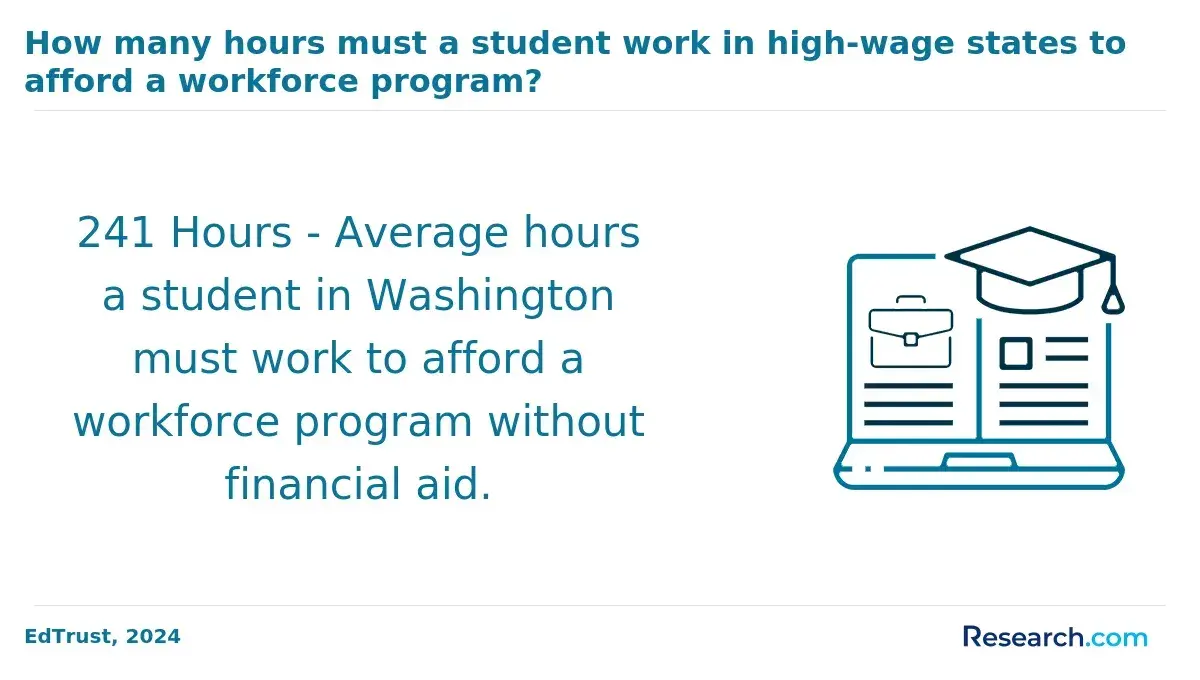
Online FNP costs in Washington depend on the degree, required credits, the school's tuition policy, fees, and clinical travel. A tuition quote is not a total program price. Published rates also change by academic year, so a precise statewide price range or average undergraduate college tuition figure would not be a reliable substitute for a current graduate FNP estimate.
Request an itemized, cohort-specific estimate from each school. These cost categories show what to include when comparing a Washington-based MSN with a DNP or an out-of-state alternative; they are not published prices.
| Cost category | What to request |
| Tuition | Rate per credit or term, required credits, and any different clinical-course rate. |
| Mandatory charges | University, program, technology, lab, and graduation fees. |
| Clinical preparation | Background checks, immunizations, insurance, and other required compliance expenses. |
| Travel and lost work time | Required campus visits and the work schedule needed to complete supervised clinical shifts. |
Compare estimates for the same entry credential and degree whenever possible: a full MSN and a post-master's certificate do not represent equivalent amounts of study. Recheck rates for your start term rather than relying on an older tuition page. For a broader breakdown of charges, see online family nurse practitioner program costs explained.
Do Washington residents pay in-state tuition for online FNP programs?
Washington residents do not automatically receive an in-state rate for every online FNP program. A Washington public university may apply residency-based graduate rates, while a private university or an out-of-state school may use a single online rate or its own residency policy. Living in Washington also does not make a program offered by an institution elsewhere a Washington public program.
For Washington State University's DNP-FNP, check its current graduate tuition schedule and residency classification process. For private Gonzaga University, check its program-specific tuition schedule rather than applying a public university's in-state/out-of-state distinction. If you might move during your degree, ask each school whether a change of residence affects tuition, enrollment eligibility, or clinical placement approval. Compare the resulting total program estimates, not just the advertised per-credit rates.
Are there scholarships or grants for FNP students in Washington?
Washington FNP students can look for school-based graduate nursing awards, eligible Washington scholarship programs, and service-linked loan repayment, but each has different eligibility and timing. Do not assume that aid advertised for undergraduates covers a graduate FNP degree.
The Washington State Opportunity Scholarship's graduate offerings are worth checking for current healthcare-field and service requirements. Washington Health Corps loan-repayment programs are a different form of support: qualifying clinicians generally apply in connection with service at eligible sites, so loan repayment should not be treated as guaranteed tuition funding when enrolling. Schools may also offer awards with their own deadlines.
For a workable aid plan, complete the federal aid application, ask each nursing school which graduate awards apply to its FNP track, and check the current Washington State Opportunity Scholarship and Washington Health Corps eligibility rules. Budget without a conditional award until you receive an offer.

How many clinical hours do online FNP programs require for Washington students?
Online FNP students in Washington must complete supervised, in-person clinical hours, and the exact number depends on the program and degree. National FNP certification pathways commonly specify a minimum of 500 supervised clinical hours; that figure is a floor to check against, not a promise that a particular MSN or DNP requires only 500 hours. DNP programs can include additional practice hours and degree requirements.
Ask each school for its current clinical handbook showing total hours, required patient populations, the term-by-term schedule, and whether previously completed graduate practice hours count toward a post-master's pathway. For planning, the key issue is how many approved shifts you must fit around paid work. Do not assume that hours from your RN job count: the program must approve the site, preceptor, activities, and documentation.
What types of clinical sites are available to FNP students in Washington?
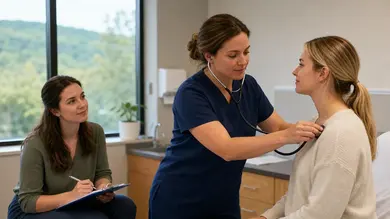
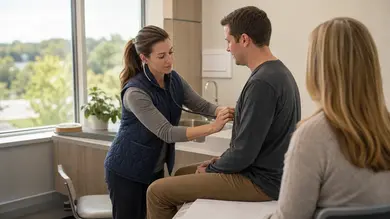
Potential Washington FNP clinical settings include primary care practices, community health centers, rural clinics, pediatric and women's health services, and other approved outpatient settings. Availability is not the same as access: a site must accept students, have an appropriate preceptor, meet the school's learning objectives, and complete any required agreement with the university.
Because FNP training covers patients across the lifespan, one convenient workplace may not provide every required experience. A student in a smaller community may need more than one site or travel for a particular patient population; a student near a large health system still needs an approved preceptor and an available slot. Ask prospective programs which types of Washington sites they have recently approved, without treating past approvals as a promise of a future placement.
Can Washington students complete FNP clinical rotations near home?
Washington students may be able to complete FNP rotations near home, but only if the program approves a suitable local site and preceptor. "Complete clinicals locally" is therefore a possibility to verify, not a guaranteed feature of online enrollment.
Placement responsibilities vary by school. Use these questions to establish who does the work and when a site must be ready:
- Does the school assign Washington sites, help identify preceptors, or require students to find and propose their own?
- How far before the clinical term must the site, preceptor, and affiliation agreement be approved?
- What happens if a proposed local site declines or cannot provide all required patient experiences?
- Are there approved options within a reasonable distance of home, and who pays for any travel?
Start these conversations before accepting admission. Waiting until the clinical term or arranging hours informally with a willing clinician can delay progress if the school cannot approve the arrangement.
How can Washington students determine if an FNP program aligns with their goals?
Washington students can judge fit by matching the program's degree, clinical responsibilities, schedule, total cost, and licensure preparation to where they want to practice. A lower advertised tuition rate is less useful if frequent travel or an uncertain placement would disrupt work and extend the time to completion.
Request comparable answers from each admissions and clinical team before choosing:
- Confirm that your RN license, prior degree, GPA, and experience meet that program's current admission rules.
- Ask for the full course plan, required in-person dates, clinical-hour schedule, and written placement policy.
- Obtain a total cost estimate and check the school's response to Washington licensure and certification questions.
- If you expect to practice outside Washington, ask about that destination state's requirements separately.
A lower GPA need not end the search, but admission rules vary by institution; low-GPA entry into family nurse practitioner programs explained offers questions to raise with admissions staff. Avoid treating a school's general accreditation statement, online label, or past placement examples as an individual eligibility decision.
Is an online FNP program worth the investment for Washington students?
An online FNP program may be worth the investment for a Washington RN who wants primary care practice and can finance the degree while completing its in-person training. Its value depends on the student's current earnings, borrowing, available work hours, clinical access, and plans after graduation - not simply on a projected nurse practitioner salary.
Washington licenses eligible advanced practice nurses through its ARNP process, but graduation alone does not grant a license or guarantee a job. Statewide nurse practitioner wage or employment figures, when used for career planning, describe an occupation that includes specialties beyond FNP; they cannot predict an individual FNP offer. Compare current Washington occupational data with actual local vacancies and your expected debt payments.
A faster route is appealing only if you qualify for it and can manage its workload and clinical schedule. Use eligibility considerations for one-year FNP options explained to test that trade-off rather than assuming an accelerated timeline will reduce total costs or suit a full-time RN schedule.
Other Things You Should Know About Family Nurse Practitioner
Possibly. Some schools offer RN-to-graduate pathways, but others require a BSN before entry. Check the specific FNP track's admission requirements; an RN license and an associate degree do not automatically qualify you for every MSN or DNP.
That depends on the school's admission policy and where you will complete clinical training. Tell admissions which state issued your RN license and where you intend to train, and ask what licensure must be active before clinical courses begin.
Generally, RN work experience does not replace supervised FNP practicum requirements. Ask the school whether any prior graduate-level advanced practice hours can be evaluated; ordinary employment hours should not be counted without written program approval.
Not necessarily. FNP education focuses on primary care across the lifespan; psychiatric-mental health nurse practitioner education prepares students for a different specialty. Compare each track's curriculum and certification route before enrolling.
References
- Tuition and College Costs | wa.gov https://wsac.wa.gov/tuition-and-college-costs
- Washington State Student Nurse Preceptorship Grant (WSSNPG) | Washington State Board of Nursing https://nursing.wa.gov/preceptor
- Family Nurse Practitioner (FNP) - WSU College of Nursing https://nursing.wsu.edu/graduate-program-options/dnp/family-nurse-practitioner/
- Tuition & Expenses | Student Financial Services https://financialaid.wsu.edu/tuition-and-expenses/
- Clinical Placement Standards, Compliance, and Expectations | Current Students https://students.nursing.uw.edu/policies/policy-3-1-clinical-placement-standards-compliance-and-expectations/
- Costs & financial support - UW School of Nursing https://nursing.uw.edu/admissions/costs/