2027 Online Family Nurse Practitioner (FNP) Programs for North Carolina Residents: Costs and Clinical Training

Co-Founder and Chief Data Scientist
Choosing an online family nurse practitioner program in North Carolina means comparing more than coursework: tuition may depend on residency, and clinical rotations still require approved sites and preceptors.
This guide is for registered nurses weighing programs at North Carolina institutions, as well as out-of-state alternatives open to North Carolina residents. It explains what to ask about total cost, clinical training, placement support, and eligibility to practice so you can identify a program that fits your budget, schedule, and career plans.
Key Things to Know About Online FNP Programs in North Carolina
- East Carolina University, the University of North Carolina Wilmington, and Duke University offer distance-based FNP pathways from institutions located in North Carolina; confirm each program's current format and campus-visit requirements.
- North Carolina residency does not produce one statewide online FNP price. Public-university residency rules, program-specific online rates, fees, and clinical expenses can change the total.
- Online coursework does not replace in-person clinical training. National FNP certification pathways generally require at least 500 faculty-supervised clinical hours, and a school may require more.
What online FNP programs are available in North Carolina?
North Carolina residents can start their search with distance-based FNP programs at institutions physically located in the state, including East Carolina University (ECU), the University of North Carolina Wilmington (UNCW), and Duke University. An FNP is a nurse practitioner educated to provide primary care across the lifespan. "Online" describes much of the coursework - not necessarily every campus activity or clinical rotation.
These examples show why school location, degree type, and delivery format should be checked separately. Program formats and admissions cycles can change, so confirm the current catalog and ask whether required visits are feasible before applying.
| North Carolina institution | Location | Distance-based FNP option to investigate | Key detail to confirm |
| East Carolina University | Greenville | MSN family nurse practitioner pathway | Current campus requirements and clinical-placement process |
| University of North Carolina Wilmington | Wilmington | Online MSN family nurse practitioner pathway | Required visits, course sequence, and clinical hours |
| Duke University | Durham | Distance-based MSN family nurse practitioner pathway | On-campus intensives, travel, and total program charges |
These are examples, not a ranking or an exhaustive list. Applicants should also check each school's RN-license and work-experience criteria; this guide to prior clinical experience for FNP study explains why prior practice may matter even when it does not replace required FNP clinical hours.
Can North Carolina residents enroll in online FNP programs based in other states?
Yes, North Carolina residents may be able to enroll in an out-of-state online FNP program, but acceptance must be confirmed for the specific program - not inferred from a university's general online admissions policy. These schools are alternatives to institutions located in North Carolina; the student's address does not make the institution a North Carolina school.
Before paying an application fee, ask the out-of-state program for written confirmation that it currently admits North Carolina residents, permits clinical training at your proposed North Carolina sites, and has determined how its curriculum relates to North Carolina nurse practitioner approval requirements. State authorization to deliver education, permission to arrange clinical learning, national certification eligibility, and professional approval are separate questions. A program's accreditation alone does not settle all of them.
If you expect to work in another state after graduation, check that state separately. The consequences of FNP licensure requirement mismatches are a useful reason to get a program-specific answer before enrolling rather than after completing clinical training.
How much do online FNP programs cost in North Carolina?
Online FNP costs in North Carolina vary by school, degree pathway, residency classification, and clinical expenses; a published per-credit tuition rate is not a reliable total-program price by itself. ECU and UNCW are public universities, while Duke is private, so their published charges may use different rate structures and include different fees.
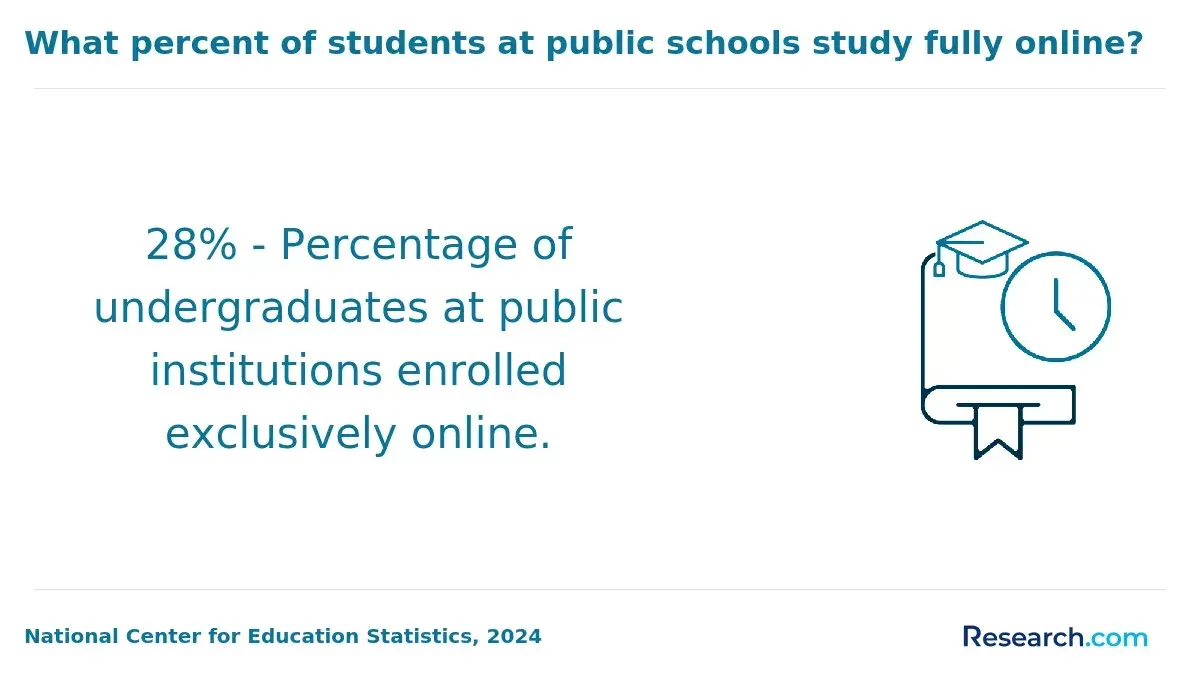
A defensible cost comparison requires a current, program-specific quote from each institution. Published North Carolina undergraduate tuition averages should not be used as an estimate for graduate FNP study: they measure a different student population and may omit graduate program charges. Likewise, a tuition-only figure cannot be compared directly with another school's estimated total cost of attendance.
Use the same calculation for every school: required credits multiplied by the tuition rate that applies to you, plus mandatory university and nursing fees. Then add estimated travel for required campus visits, clinical compliance costs, certification and application expenses, and any costs tied to reduced work hours. Ask whether the school charges for repeat clinical courses or additional terms if a placement is delayed. Request the rate's effective term in writing so an older web page does not become the basis for your budget.
Do North Carolina residents pay in-state tuition for online FNP programs?
North Carolina residents may qualify for resident tuition at a public university such as ECU or UNCW, but living in the state does not automatically establish residency for tuition purposes or guarantee that an online graduate program uses the standard resident rate. Duke, as a private institution, does not become a public in-state tuition option because a student lives nearby.
North Carolina's Residency Determination Service is the statewide process used to establish residency for tuition purposes at participating public institutions. Even after residency is determined, the university's current graduate tuition schedule controls what a particular program charges. Some online offerings have program-specific rates, so compare the applicable resident and nonresident schedules rather than assuming the difference shown for another degree applies to FNP study.
If you are moving to North Carolina or completing clinical work across a state line, ask the bursar which rate applies in your entry term and whether a change in residence could affect later terms. Admissions eligibility, tuition residency, and the location of clinical rotations are different determinations.
Are there scholarships or grants for FNP students in North Carolina?
FNP students in North Carolina may find institutional scholarships, employer education benefits, and service-based funding, but eligibility depends on the current award rules and often on the school or intended job. Do not assume that an award advertised for undergraduate nursing also covers an MSN or post-master's certificate.
North Carolina residents can check whether their school and degree appear on the current eligibility lists for the North Carolina Forgivable Education Loans for Service program. Because eligible programs, funding, and service obligations can change, confirm the terms with the North Carolina State Education Assistance Authority before treating it as guaranteed aid. Federal Nurse Corps funding is another possibility for eligible students willing to meet its service requirements; it is a national program, not North Carolina-specific aid.
Start with the school's graduate nursing financial-aid office and your employer's benefits office, then compare award conditions with your intended work location. For a broader application checklist, see this guide to financial aid for an FNP master's degree.
How many clinical hours do online FNP programs require for North Carolina students?
Online FNP students in North Carolina must complete the clinical hours required by their specific program, even when their coursework is remote. National FNP certification pathways generally call for at least 500 faculty-supervised clinical hours; an individual school may require more, and that certification minimum should not be mistaken for a universal North Carolina program total.
Ask each school for its current hour requirement and a term-by-term clinical plan. The total alone does not show whether rotations will fit around work: hours may be concentrated in particular semesters, and a site's operating schedule can limit evening or weekend opportunities. Also confirm which experiences count as direct patient care, how hours are documented, and whether any clinical courses must be repeated if a placement starts late.
North Carolina regulates nurse practitioner approval and practice through its nursing and medical boards, while schools set program curricula and verify completion. Do not assume ordinary RN shifts or prior nursing experience can be substituted for supervised FNP practicum hours.
What types of clinical sites are available to FNP students in North Carolina?
FNP students in North Carolina may train in approved primary care settings such as family medicine practices, community health centers, pediatric or women's health practices, and outpatient clinics. Which settings count depends on the program's patient-population and preceptor requirements; the presence of a nearby clinic does not mean it accepts students.
A program may require experiences across age groups and types of care, making one practice insufficient for the entire practicum. Site access can also depend on a willing qualified preceptor, an agreement between the school and site, and the clinic's student capacity. Those constraints matter whether the student lives near a large health system or in a less densely served part of the state; neither location guarantees an opening.
Ask prospective schools what kinds of North Carolina sites their recent students used and who is responsible for approaching them. That answer is more useful than a general claim that clinical experiences can occur "locally."
Can North Carolina students complete FNP clinical rotations near home?
North Carolina students can often propose clinical rotations near home, but every site and preceptor needs program approval before hours begin. Some schools help identify or arrange placements; others expect students to lead the search while the school evaluates the site and completes required agreements. Get that division of responsibility in writing.
To test whether a program works in your area, ask its clinical office these questions before enrolling:
- Does the school arrange North Carolina placements, provide leads, or require students to find their own preceptors?
- How early must a proposed site be submitted, and who handles agreements and preceptor verification?
- What happens if no approved site is available near home when a clinical term begins?
- Are rotations permitted at your workplace, with a colleague, or across a state line - and what additional approvals apply?
Begin planning well before the first practicum term. A nearby placement may still involve weekday clinic hours and travel between sites. Nurses planning to remain employed should compare those commitments with the realities of online FNP study while working full time.
How can North Carolina students determine if an FNP program aligns with their goals?
North Carolina students can judge program fit by checking the credential, clinical support, total cost, and practice-state requirements against a specific career plan. The least expensive advertised tuition rate may be a poor fit if required travel, a difficult placement search, or a mismatched pathway delays completion.
Use the following checks to narrow your options:
- Choose the right entry pathway. An RN seeking an advanced degree may need an MSN or DNP route; a nurse who already holds an MSN may want to compare post-master's FNP certificates instead.
- Confirm current nursing-program accreditation and the school's stated preparation for an FNP national certification exam. Ask how graduates pursue North Carolina approval to practice; neither accreditation nor graduation alone grants it.
- Request a written estimate covering your tuition classification, all required terms and fees, campus visits, and the clinical schedule.
- Ask the clinical office what support it offers in your part of North Carolina and what happens if a proposed preceptor is declined.
- If you may work outside North Carolina, verify that jurisdiction's requirements independently before enrolling.
For nurses who already have a master's degree, a guide to FNP pathways for MSN graduates can help frame the credential decision. Whichever route you choose, check the institution's current catalog rather than relying on an older program description.
Is an online FNP program worth the investment for North Carolina students?
An online FNP program may be worth the investment for a North Carolina nurse who wants a primary care advanced-practice role and can manage the full cost and clinical schedule. It is less compelling if borrowing depends on an assumed salary increase, the school cannot explain placement support, or the credential does not match the state where the student intends to practice.
North Carolina has communities with different healthcare access needs, but statewide need does not guarantee an individual graduate a job, preferred location, or salary. FNPs also enter a regulated role: North Carolina requires nurse practitioner approval to practice and a collaborative practice arrangement with a supervising physician under its applicable rules. Those obligations belong in the career decision alongside tuition.
Build a personal comparison using each school's current total-cost estimate, likely time away from paid work, and the jobs you would actually consider after graduation. If the projected financial benefit only works under optimistic assumptions, consider delaying enrollment, seeking employer support, or comparing another FNP pathway before committing.
Other Things You Should Know About Family Nurse Practitioner
No. RN licensure under the Nurse Licensure Compact and North Carolina nurse practitioner approval are separate. Confirm the requirements for each role with the North Carolina Board of Nursing.
Ask the program which national FNP certification examinations its curriculum prepares graduates for and check the current eligibility rules of the certifying organization. Exam preparation and state approval are related but distinct steps.
Possibly, but the destination state sets its own advanced-practice requirements. Check them before enrollment if moving is likely; completing a North Carolina-based program does not automatically authorize practice elsewhere.
Students need to meet their program's RN-licensure, site, and supervision requirements for clinical training. Student clinical participation is not the same as independent authorization to practice as a nurse practitioner after graduation.
References
- NC DHHS: Medical, Dental, and Psychiatric Recruitment Opportunities for Providers https://www.ncdhhs.gov/divisions/office-rural-health/office-rural-health-programs/provider-recruitment-and-placement/medical-dental-and-behavioral-health-recruitment-and-incentives
- Cost of Attendance (Budget) | 2025-2026 Federal Student Aid Handbook https://fsapartners.ed.gov/knowledge-center/fsa-handbook/2025-2026/vol3/ch2-cost-attendance-budget
- Department of Health Sciences, Physician Assistant Program | University of North Carolina at Chapel Hill https://policies.unc.edu/TDClient/2833/Portal/KB/Article/159946/
- Clinical Learning Experiences | 26-27 School of Nursing Bulletin https://nursing.bulletins.duke.edu/policies/academic/clinical
- Family Nurse Practitioner - UNCG School of Nursing https://nursing.uncg.edu/academic-programs/master-of-science-in-nursing-msn/family-nurse-practitioner/
- How much does the online FNP degree cost? | University of Connecticut https://family-nurse-practitioner.online.uconn.edu/program-fees/
- Nurse Practitioner | ncbon.com https://www.ncbon.com/nurse-practitioner