
2027 Online Early Childhood Education Doctorate Programs with No Dissertation Requirement

Co-Founder and Chief Data Scientist
Choosing an online early childhood education doctorate without a dissertation is really a choice between traditional research and applied doctoral work. It matters because leadership roles in education can be financially significant: the BLS reported a May 2024 median wage of $103,460 for elementary and secondary education administrators.
This guide is for educators, center directors, curriculum leaders, and policy professionals comparing dissertation-free EdD pathways. You will learn what replaces the dissertation, how to verify legitimacy, what the degree may cost, and when a capstone-based doctorate is-or is not-the smarter path.
Key Things You Should Know
- Yes, some online early childhood education doctorate pathways avoid a traditional dissertation, but they usually replace it with a doctoral capstone, applied project, project study, or improvement plan-not "no research."
- For career context, BLS May 2024 data places the median wage for preschool and childcare center directors at $57,790 and for elementary and secondary education administrators at $103,460, so role choice affects ROI more than the dissertation format alone.
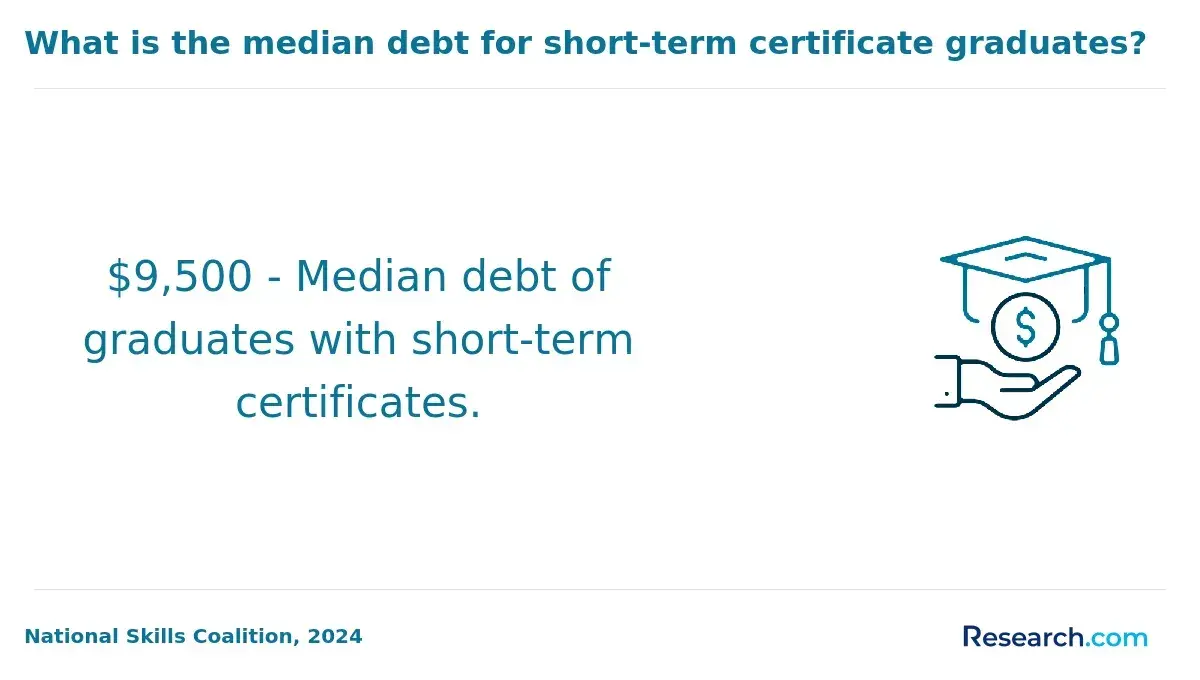
- Graduate federal borrowing can be substantial: Direct Unsubsidized Loans for graduate students are capped at $20,500 per academic year, so students should compare total program cost, transfer credit, employer tuition support, and completion fees before enrolling.
Which Online Early Childhood Education Doctorate Programs Do Not Require a Dissertation?
The most common dissertation-free option is an online Doctor of Education, or EdD, with an early childhood education focus. A PhD in early childhood education is much more likely to require a dissertation because it is designed for original academic research, while many EdD programs are built around applied leadership, program improvement, curriculum design, and organizational problem-solving.
Direct, fully online early childhood education doctorates with no traditional dissertation are less common than general education leadership EdD programs. Because schools sometimes change catalog language from "capstone" to "doctoral project" or from "project study" to "dissertation-in-practice," students should verify the exact terminal requirement in the current academic catalog before applying.
Readers comparing broader options can also review online EdD programs no dissertation to identify related education doctorates that may allow an early childhood-focused project.
The table below summarizes the main types of online doctorate pathways a prospective early childhood education leader is likely to encounter. Use it to distinguish truly dissertation-free structures from programs that simply use different terminology for a substantial research manuscript:
| Program pathway | Typical degree type | Traditional dissertation? | Common final requirement | Best fit |
| Online EdD in Early Childhood Education | Professional doctorate | Often no, but verify by catalog | Capstone, doctoral project, applied study, or dissertation-in-practice | Early childhood directors, curriculum leaders, Head Start administrators, and teacher leaders |
| Online EdD in Curriculum and Instruction with an early childhood concentration | Professional doctorate | Varies by school | Applied curriculum project, improvement plan, or dissertation | Educators focused on PreK-3 curriculum, assessment, literacy, or instructional coaching |
| Online EdD in Educational Leadership with an early learning project focus | Professional doctorate | Varies by school | Leadership capstone, improvement science project, or dissertation-in-practice | Administrators seeking district, nonprofit, or multi-site program leadership roles |
| Online PhD in Early Childhood Education or Child Development | Research doctorate | Usually yes | Original dissertation | Future faculty, researchers, policy analysts, and scholars pursuing publication-focused work |
When a school says "no dissertation," ask what is required instead. A legitimate program should be able to provide the course sequence, capstone handbook, committee or faculty review process, IRB expectations if human subjects are involved, and final evaluation criteria.
What Replaces the Dissertation in an Online Early Childhood Education Doctorate?
In a dissertation-free online early childhood education doctorate, the final requirement usually shifts from producing original theory-building research to solving a real problem of practice.
The work is still doctoral-level: students analyze evidence, review literature, collect or evaluate data when appropriate, and defend a practical recommendation.
The table below compares the most common dissertation alternatives. It helps clarify whether a program is lighter on research, more applied in focus, or simply using a different label for a similarly demanding doctoral manuscript:
| Final requirement | What it usually involves | How it differs from a dissertation | Early childhood education example |
| Doctoral capstone | A structured project that addresses a workplace, school, center, district, or community problem | More practice-oriented and usually narrower than a traditional dissertation | Designing a family engagement model for a multi-site preschool network |
| Applied doctoral project | An evidence-based intervention, implementation plan, or evaluation project | Focuses on measurable improvement rather than broad scholarly contribution | Evaluating a coaching model for PreK teachers implementing inclusive classroom practices |
| Dissertation-in-practice | A research-based inquiry into a practical education problem | May be shorter or more applied than a PhD dissertation, but still research-intensive | Studying barriers to kindergarten readiness in a community early learning partnership |
| Project study | A formal study tied to a local education challenge, often ending in a product or recommendation | Usually emphasizes local application over generalizable research | Creating a professional development plan for infant-toddler teachers based on assessment data |
| Portfolio or improvement plan | A sequence of artifacts showing leadership, research use, and professional impact | May be distributed across courses instead of concentrated at the end | Building a policy, curriculum, and assessment portfolio for an early learning organization |
The best replacement depends on your goal. A center director may benefit from a capstone that improves staff retention or quality rating outcomes, while a future professor may need a traditional dissertation because faculty hiring and scholarly publishing often prioritize original research.
Before assuming a capstone is easier, review the deliverables. Strong applied projects often require a literature review, data collection plan, stakeholder analysis, ethics review, implementation timeline, and formal presentation.
Are Online Early Childhood Education Doctorate Programs Without Dissertations Legitimate and Accredited?
Yes, dissertation-free online doctorates can be legitimate when they are offered by properly accredited institutions and have transparent doctoral standards. The absence of a traditional dissertation is not the problem; weak accreditation, vague project requirements, unrealistic completion claims, or unclear faculty oversight are the warning signs.
Start with institutional accreditation. In the U.S., a legitimate college or university should be accredited by an agency recognized by the U.S. Department of Education or the Council for Higher Education Accreditation.
Programmatic accreditation may also matter, but it depends on your goal. For example, CAEP accreditation can be relevant for educator preparation programs, while state approval may matter if the program is tied to licensure or administrative certification.
Early childhood education doctorates usually do not grant a teaching license by themselves. If your goal involves school-based psychological services, assessment, or specialized student support rather than early learning leadership, compare degree-specific accreditation standards carefully; for example, school psychology programs online accredited by NASP follow a different professional pathway than EdD programs in early childhood education.
Use the following checks before treating a no-dissertation doctorate as credible. These steps are especially important for online programs because marketing language can oversimplify the final doctoral requirement:
- Confirm the institution's accreditation directly with the accreditor or federal database, not only on the school's website.
- Read the current academic catalog and identify the exact final requirement by course name, not by admissions-page wording.
- Ask whether the capstone or applied project requires committee approval, faculty review, IRB review, a defense, or publication-quality writing.
- Check whether the degree title is an EdD, PhD, or another doctorate, because employers may interpret these differently.
- Verify state licensure or administrator certification rules if you plan to use the doctorate for a regulated role.
A common mistake is assuming "no dissertation" means "no doctoral research." A better interpretation is that the research is applied, local, and practice-based rather than designed primarily for academic theory development.
Are No-Dissertation Online Early Childhood Education Doctorate Programs Easier to Complete?
They may be more manageable for working professionals, but they are not automatically easy. Dissertation-free EdD programs often reduce the uncertainty of a multi-year dissertation by embedding the final project into the curriculum. That structure can help students stay on track, especially if they are balancing full-time work, family responsibilities, and leadership duties.
The main difference is the type of difficulty. A dissertation can be difficult because it requires original research design, data analysis, committee approval, and extensive revision. A capstone can be difficult because it requires access to a real setting, cooperation from stakeholders, practical implementation, and evidence that the proposed solution is feasible.
Students often underestimate the following demands in no-dissertation doctorates. Reviewing these early can prevent a costly mismatch:
- Writing volume: Capstone-based programs still require advanced academic writing, literature synthesis, and formal documentation.
- Workplace access: Many applied projects depend on permission from an employer, school, center, district, nonprofit, or community partner.
- Data literacy: Even without a dissertation, students may analyze assessment data, enrollment trends, teacher survey results, quality-rating metrics, or program outcomes.
- Ethics review: Projects involving children, families, educators, or identifiable records may require human-subjects review or institutional approval.
- Time management: Online doctoral coursework is flexible, but deadlines, group discussions, practicum-style tasks, and project milestones still require weekly commitment.
A no-dissertation EdD is often "easier to finish" only when the program is well structured and the student has a clear problem of practice. It is not a shortcut for students who want to avoid research, writing, or sustained independent work.
How Long Does It Take to Complete an Online Early Childhood Education Doctorate Without a Dissertation?
Many online EdD programs take about three to four years, though completion time varies by transfer credit, enrollment intensity, project scope, residency requirements, and whether the program uses a cohort model. Dissertation-free pathways can sometimes be faster because the capstone is built into coursework instead of extending indefinitely after classes are finished.
Some students search for accelerated doctorates because they need a credential for leadership advancement, salary schedule movement, or eligibility for administrative roles.
If speed is a major factor, compare realistic workload and transfer policies rather than relying only on advertised minimum timelines; guides to 1 year EdD programs online can help you understand how unusually compressed options differ from standard doctoral pacing.
The table below outlines typical timelines by completion structure. These are planning categories, not guarantees, because individual progress depends heavily on course load, project approval, and institutional policies:
| Doctoral pathway | Common completion pattern | Why timeline varies | Best for |
| Online EdD with embedded capstone | Often structured for steady completion across coursework | Project milestones are usually tied to specific courses | Working educators who want predictable progress |
| Online EdD with applied doctoral project after coursework | May extend if project approval, data access, or revisions take longer | The final project may function like a separate doctoral phase | Students with a strong workplace-based research site |
| Online EdD with dissertation-in-practice | Can be similar to dissertation timing if research design is complex | Committee feedback and data collection can add time | Students who want applied research with stronger scholarly depth |
| Online PhD with dissertation | Often longer and less predictable | Original research, proposal defense, data analysis, and dissertation defense can extend timelines | Students pursuing faculty, research, or policy scholarship roles |
Ask admissions advisors for the median completion time for recent graduates in your specific concentration, not just the shortest possible time. Also ask how many students need additional terms for capstone revisions, because extension fees can change the real cost of the degree.
How Much Do Online Early Childhood Education Doctorate Programs Without Dissertations Cost?
Costs vary widely because online doctorate pricing depends on credit count, per-credit tuition, transfer credit, technology fees, residency requirements, continuation fees, books, and whether the institution charges different rates for doctoral project courses.
A dissertation-free format can reduce cost if it shortens completion time, but it can also cost the same as a dissertation program if the total credits are similar.
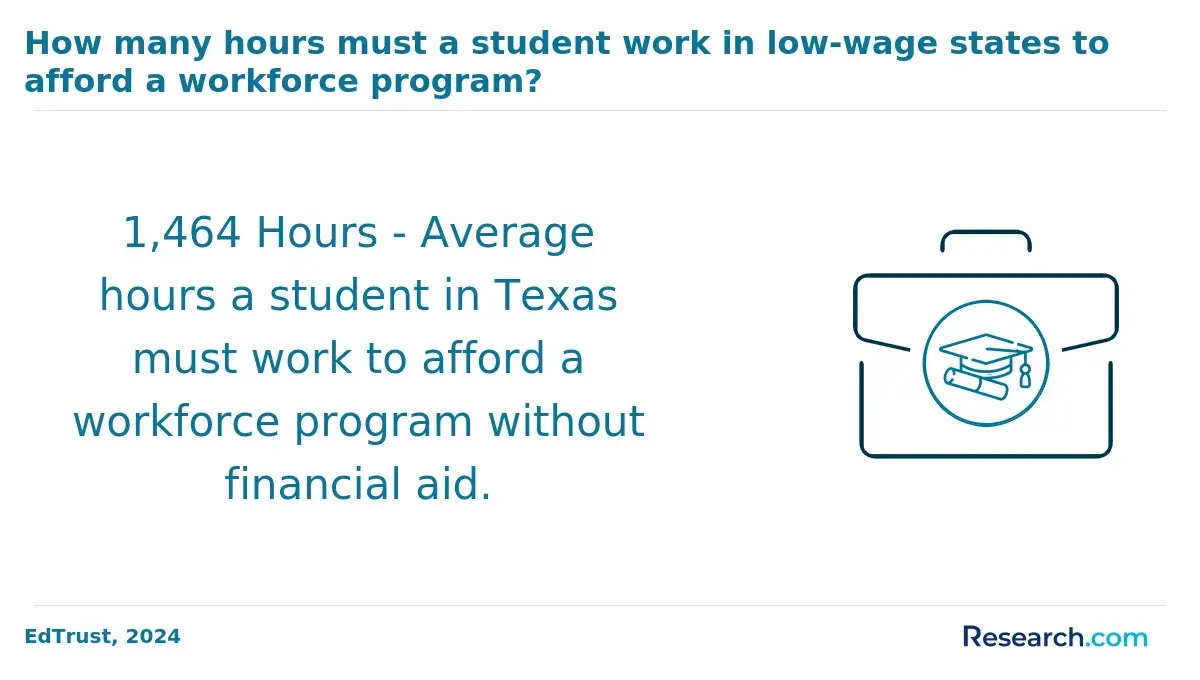
One federal benchmark matters for planning: graduate students may borrow up to $20,500 per academic year through Direct Unsubsidized Loans, while Grad PLUS borrowing is credit-based and can cover remaining eligible cost of attendance.
This does not mean borrowing is advisable; it means students should calculate how much of the program would require loans after employer aid, scholarships, savings, or payment plans.
Use the following cost categories when comparing programs. Schools may label these differently, so request a written total cost estimate before enrolling:
- Tuition: Total credits multiplied by the doctoral per-credit rate.
- Mandatory fees: technology, student services, graduation, transcript, library, or online learning fees.
- Residency or intensive costs: Travel, lodging, meals, childcare, and missed work if the program includes in-person sessions.
- Capstone or project fees: Continuation credits, editing requirements, assessment fees, or project-course tuition if the final requirement extends beyond the standard plan.
- Materials and software: Books, research tools, data analysis software, assessment platforms, or video technology.
- Opportunity cost: Reduced work hours, unpaid practicum time, or leadership project responsibilities completed outside regular duties.
To estimate ROI, compare the program's total net cost with the roles you realistically plan to pursue. BLS May 2024 wage data shows a large difference between preschool and childcare center directors and K-12 education administrators, so a doctorate aimed at district leadership, policy, higher education, or executive nonprofit roles may have a different financial case than a doctorate used only for center-level advancement.
Who Benefits Most From an Online Early Childhood Education Doctorate Without a Dissertation?
A dissertation-free online early childhood education doctorate is usually best for experienced professionals who want to lead programs, improve systems, design curriculum, influence policy, train educators, or evaluate services for young children and families.
It is less ideal for students whose primary goal is tenure-track research faculty work or academic publishing in child development and education journals.
The strongest candidates typically have a clear professional problem they want to solve. Examples include improving PreK attendance, strengthening inclusive early learning environments, reducing teacher turnover, evaluating family engagement programs, aligning curriculum across birth-to-grade-3 systems, or improving kindergarten readiness supports.
This pathway may fit the following professionals particularly well. The key is that the doctorate should support a concrete leadership or applied research goal:
- Early childhood center directors who want to move into multi-site leadership, quality improvement, training, or executive administration.
- PreK-3 teachers or instructional coaches who want to design curriculum, lead professional development, or influence district early learning strategy.
- Head Start, Early Head Start, and nonprofit leaders who need stronger evaluation, compliance, grant, and program improvement skills.
- Education consultants who advise childcare networks, family service agencies, school districts, or early learning coalitions.
- Community college instructors or teacher educators whose institutions value applied doctoral preparation for teaching-focused roles.
Some readers may not need a doctorate yet. If your goal is to build digital curriculum, learning products, or professional training for educators, a specialized master's may be a more targeted and less expensive step; comparing best online instructional design master's programs can help if your desired role is more about learning design than doctoral-level leadership.
How Does a No-Dissertation Online Early Childhood Education Doctorate Affect Career Opportunities?
For many applied education roles, employers care more about the accredited doctorate, leadership record, project relevance, and demonstrated impact than whether the final requirement was called a dissertation.
However, the distinction can matter in research-heavy environments. A capstone-based EdD may be highly relevant for practice leadership, while a PhD or dissertation-based doctorate may be preferred for tenure-track faculty, research institute, or quantitative policy roles.
Career outcomes also depend on prior credentials. A doctorate does not replace required teaching licenses, administrator certifications, state director qualifications, or specialized endorsements. In regulated school roles, the state-not the university's marketing page-determines whether the degree supports licensure or advancement.
The table below connects common career goals with the doctorate structure that usually fits best. Use it as a decision tool, not as a guarantee of employer preference:
| Career goal | How the doctorate may help | Dissertation-free fit | Important caution |
| Early childhood program director or executive director | Builds leadership, finance, evaluation, policy, and staff development capacity | Strong fit when the capstone addresses a real operational problem | State childcare director qualifications may still apply separately |
| District early learning administrator | Supports systems leadership, curriculum alignment, and program evaluation | Good fit for experienced licensed educators or administrators | Administrative licensure may be required by state or district |
| Curriculum and instruction leader | Strengthens assessment, instructional coaching, and evidence-based curriculum design | Good fit if the project produces usable curriculum or professional development artifacts | Employers may value demonstrated instructional results more than degree title alone |
| Higher education instructor or teacher educator | May qualify graduates for teaching-focused positions at some institutions | Possible fit for community college, adjunct, or practice-oriented faculty roles | Tenure-track roles may prefer a PhD or dissertation-based research record |
| Education policy or research analyst | Can support applied evaluation and leadership roles | Moderate fit if the program includes strong research methods and data analysis | Quantitative research roles may prefer advanced statistics and dissertation research |
Technology is also changing expectations. Early childhood leaders increasingly work with assessment dashboards, digital family communication tools, compliance platforms, and AI-assisted curriculum planning.
A strong doctoral project can help you show ethical data use, privacy awareness, and evidence-based decision-making-skills that may matter more than the dissertation label in applied leadership roles.
How Do No-Dissertation Online Early Childhood Education Doctorates Compare With Traditional Doctorates?
The core difference is purpose. A dissertation-free EdD is typically designed to improve professional practice, while a dissertation-based PhD is designed to contribute original research to a scholarly field. A dissertation-based EdD may sit between those two models, combining professional leadership with a more traditional research manuscript.
The comparison below shows how the formats differ across the factors that most affect student decisions. It can help you decide whether flexibility, research depth, career signaling, or academic preparation matters most:
| Factor | No-dissertation online EdD | Dissertation-based EdD | PhD in early childhood education or related field |
| Primary purpose | Applied leadership and problem-solving | Practice leadership plus formal research | Original scholarship and research training |
| Final requirement | Capstone, applied project, project study, portfolio, or dissertation-in-practice | Traditional or practice-oriented dissertation | Original dissertation |
| Best audience | Working professionals seeking advancement in applied education settings | Professionals who want both leadership and stronger research credentials | Future researchers, tenure-track faculty, and policy scholars |
| Timeline predictability | Often more structured if the project is embedded in coursework | Moderate; dissertation approval can extend completion | Often less predictable due to original research scope |
| Employer perception | Often strong for practice-based leadership when accredited and relevant | Strong for leadership roles that value research depth | Strongest for research-intensive academic roles |
| Main risk | Choosing a weak or poorly explained capstone model | Underestimating dissertation time and revisions | Overinvesting in research training if your goal is applied administration |
A no-dissertation doctorate makes the most sense when your goal is to change practice in real settings. A traditional dissertation makes more sense when you want to publish research, compete for faculty roles, conduct large-scale studies, or build a scholarly identity in early childhood education or child development.
How Should Students Choose an Online Early Childhood Education Doctorate Without a Dissertation?
Choose the program by matching the doctoral structure to your career goal, not by searching only for the fastest or easiest option. A strong no-dissertation doctorate should have clear accreditation, transparent project requirements, faculty with early childhood expertise, relevant coursework, reasonable cost, and support for working adults.
Use this step-by-step process to evaluate programs before applying. It is designed to help you avoid programs that sound convenient but do not match your professional needs:
- Define your target role first, such as center executive, district early learning administrator, curriculum leader, policy specialist, consultant, or teacher educator.
- Confirm whether the role requires a license, administrator credential, state director qualification, teaching experience, or specialized endorsement beyond the doctorate.
- Identify the final requirement in the catalog and ask for examples of completed capstone, doctoral project, or dissertation-in-practice topics.
- Review the curriculum for early childhood depth, including child development, family engagement, inclusion, assessment, leadership, policy, finance, and program evaluation.
- Ask how online students receive faculty mentoring, writing support, research methods help, library access, and project feedback.
- Compare total net cost after transfer credits, scholarships, employer reimbursement, military benefits, payment plans, and possible extension fees.
- Ask about residency, synchronous class meetings, fieldwork, practicum expectations, and whether project activities can be completed in your current workplace.
- Request student outcome information that is relevant to your goal, such as completion time, employer types, leadership placements, or alumni project examples.
Watch for red flags. Be cautious if a school will not name the final requirement, promises an unrealistically short completion time without reviewing your transfer credits, lacks recognized accreditation, avoids questions about licensure, or describes the doctorate as requiring little research or writing.
The smartest choice is usually the program whose final project could become part of your professional portfolio. If your capstone helps solve a real early childhood education problem and produces evidence of leadership impact, the no-dissertation format can become an advantage rather than a compromise.
Other Things You Should Know About Early Childhood Education
No. Many early childhood roles require an associate, bachelor's, master's, state credential, teaching license, or director qualification rather than a doctorate. A doctorate is most useful for advanced leadership, policy, consulting, higher education, research-informed program improvement, or executive administration.
Usually not by itself. Licensure rules are set by states, and many doctoral programs are designed for already licensed educators or experienced leaders. Always confirm with your state education agency or licensing board before enrolling.
An EdD is often better for applied leadership, program improvement, and administrative practice. A PhD is usually better for academic research, scholarly publishing, and tenure-track faculty goals. The better choice depends on the role you want after graduation.
A strong topic should be specific, evidence-based, and connected to a real problem you can access. Examples include teacher retention, family engagement, inclusive preschool practices, kindergarten readiness, early literacy supports, curriculum alignment, or program quality improvement.
References
- Online Ed.D. in Early Childhood Education | Doctorate in ECE Online https://www.pacificoaks.edu/academic-programs/edd-in-early-childhood-education/
- The Rewards of a Doctorate in Early Childhood Education - Graduate Programs for Educators https://www.graduateprogram.org/blog/the-rewards-of-a-doctorate-in-early-childhood-education/
- The Best Ed.D. in Early Childhood Education Programs of 2025 https://www.eddprograms.org/schools/early-childhood-education/
- Masters Thesis vs. PhD Dissertation: Key Differences - Wordvice https://wordvice.com/blog/dissertation-vs-thesis-key-differences/
- Ed.D. in Early Childhood Education | ACE https://ace.edu/degree-programs/doctoral-degrees/doctoral-education/doctor-of-education-in-early-childhood-education/
- 2025 Most Affordable Online Doctorates in Education https://www.onlineu.com/most-affordable-colleges/education-doctoral-degrees
- 1-2 Year Doctoral Programs Online: Top Schools & More https://www.phds.me/online-programs/one-year-doctoral-programs/
- What Is a Non-Dissertation Doctorate, and Is It Right for You? https://www.snu.edu/blog/what-is-a-non-dissertation-doctorate-and-is-it-right-for-you
- Earning an Online Doctorate in Early Childhood Education https://www.gograd.org/online-phd-programs/best-early-childhood-education-degrees/
- 2 Year Online EdD Programs: Accelerated Doctor of Education Programs https://www.onlineeddprograms.com/faqs/two-year-online-edd-programs