2027 Best Online Early Childhood Education Doctorate Programs for Executive and Leadership Careers

Co-Founder and Chief Data Scientist
Choosing an online early childhood education doctorate is a high-stakes decision for experienced educators, program directors, policy leaders, and executives. The best programs build skills in systems leadership, research use, finance, equity, workforce development, and organizational change. The need is real: BLS May 2024 data placed the median pay for education administrators in elementary and secondary settings at about $105,000, showing the value of advanced leadership roles.
This guide helps you compare credible online doctorate options by accreditation, flexibility, cost, dissertation format, and career alignment.
Key Things You Should Know
- The strongest online early childhood education doctorates for executive careers combine regional accreditation, applied leadership coursework, faculty expertise in early learning systems, and flexible formats that fit full-time work.
- Most working professionals should expect a 3- to 5-year timeline, although credit load, dissertation or capstone structure, transfer policy, and residency requirements can shorten or extend completion.
- Cost should be evaluated as total investment, not tuition alone: current U.S. online doctoral tuition can range widely by institution, while graduate federal loan interest rates for 2024-25 were 8.08% for Direct Unsubsidized Loans and 9.08% for Grad PLUS Loans.
What Are the Best Online Early Childhood Education Doctorate Programs for Executive and Leadership Careers?
The best online early childhood education doctorate is not always the most famous or the fastest. For executive and leadership careers, the best-fit program is usually the one that matches your target role: district early learning director, nonprofit executive, policy leader, higher education faculty member, consultant, curriculum executive, or owner/operator of a large early learning organization.
Because dedicated online doctorates in early childhood education are less common than general education leadership doctorates, strong candidates often fall into three categories: dedicated early childhood doctorates, education leadership doctorates with early childhood concentrations, and research-focused low-residency programs for advanced specialists. The table below compares common program types and how they tend to fit leadership goals:
| Program type | Best fit for | Typical format | Leadership value | Trade-off to check |
| Online EdD in Early Childhood Education | Senior practitioners, center executives, curriculum leaders, and systems administrators | Mostly online; may include synchronous courses or short residencies | Strong applied focus on program improvement, equity, family engagement, workforce systems, and organizational leadership | May be less research-intensive than a PhD if you want a tenure-track research career |
| Online EdD in Educational Leadership with an Early Childhood Concentration | District, state agency, nonprofit, and policy leaders who need broader executive preparation | Online or hybrid; often cohort-based | Useful for leading systems, budgets, teams, compliance, and strategic change across birth-to-grade-three initiatives | Early childhood content may be a concentration rather than the core of the doctorate |
| Online or Low-Residency PhD in Early Childhood, Child Development, or Education | Researchers, higher education faculty, policy analysts, and evaluation specialists | Online-heavy or low-residency; usually research intensive | Strong preparation for research design, publication, evaluation, and evidence-based policy influence | Often requires a dissertation and may offer less executive-management coursework |
| Online EdD in Curriculum and Instruction with Early Childhood-Relevant Electives | Curriculum directors, instructional leaders, professional-development executives, and learning product leaders | Often fully online | Good fit if your executive goal centers on curriculum systems, coaching models, assessment, or instructional quality | May not carry an explicit early childhood specialization on the transcript |
When comparing schools, prioritize evidence of executive relevance. Look for coursework in strategic planning, finance, policy, organizational improvement, research translation, early childhood assessment, equity, and leadership of adult teams. Also review whether the dissertation or capstone can be completed inside your current organization, because that can turn the doctorate into a practical leadership project rather than a separate academic exercise.
Examples of online or online-heavy programs to research include National University's online EdD specialization in early childhood education, Walden University's EdD specialization in early childhood education, Concordia University Chicago's leadership doctorates with early childhood options, and university-based EdD programs in educational leadership that allow early childhood research or concentration work. Always verify current modality, accreditation, residency, tuition, and dissertation requirements directly with the institution before applying.
Use the following screening steps before building your shortlist. They help you separate executive-ready programs from programs that are online but not necessarily aligned with senior leadership.
- Confirm institutional accreditation through a U.S. Department of Education-recognized accreditor.
- Check whether early childhood education is a formal specialization, concentration, or only a possible dissertation topic.
- Review the curriculum for executive skills, including budgeting, policy, supervision, program evaluation, and change management.
- Ask whether the dissertation, doctoral project, or capstone can focus on your workplace, agency, school system, or early learning network.
- Compare total cost, required travel, synchronous attendance, technology fees, and continuation fees after coursework.
Which Type of Early Childhood Education Doctorate Is Best for Executive Leadership Careers?
For most working executives, an EdD is the more practical choice because it is designed around applied leadership, organizational improvement, and professional practice. A PhD is often better if your main goal is academic research, policy research, higher education faculty work, or advanced program evaluation.
The difference matters because the doctorate should match how you plan to use it. A district early learning director may need budget strategy and implementation science, while a university researcher may need advanced methodology and publication experience.
| Degree option | Primary orientation | Best executive use case | When it may not fit |
| EdD in Early Childhood Education | Applied leadership and professional practice | Leading programs, agencies, districts, nonprofits, curriculum systems, or early learning initiatives | Less ideal if you want a research-intensive academic career |
| EdD in Educational Leadership | Systems leadership across education settings | Moving into superintendent-adjacent, district, state, nonprofit, or cross-sector leadership roles | May require you to create your own early childhood focus through electives and research |
| PhD in Early Childhood Education or Child Development | Research, theory, methodology, and scholarship | University teaching, research leadership, policy analysis, evaluation, or think-tank work | May be slower and less focused on executive operations |
| Doctorate in Curriculum and Instruction | Instructional systems, learning design, assessment, and curriculum leadership | Curriculum executive, instructional design leader, coaching system director, or learning product strategist | May not provide enough executive finance or agency leadership content |
Speed is another factor, but it should not be the only one. Some professionals compare accelerated options such as 1 year EdD programs online, but early childhood leadership candidates should be careful: a shorter format can be useful only if it still includes strong research mentoring, accreditation, and a rigorous final project aligned with executive goals.
An EdD is usually best if you want to solve leadership problems in real time, improve a program, redesign services, manage early learning teams, or influence policy implementation. A PhD is usually best if your credibility will depend on original research, peer-reviewed scholarship, or methodological expertise. If your goal is C-suite advancement outside education, an MBA, DBA, MPA, or organizational leadership doctorate may be a better fit than a highly specialized early childhood doctorate.
What Accreditation Should an Online Early Childhood Education Doctorate Program Have?
The first accreditation requirement is institutional accreditation from an agency recognized by the U.S. Department of Education or the Council for Higher Education Accreditation. Without it, students may face problems with federal financial aid eligibility, credit transfer, employer recognition, and future faculty or administrative opportunities.
Programmatic accreditation is more nuanced. Early childhood education doctorates do not always have a single required programmatic accreditor in the way some clinical or licensure fields do. However, programs housed in schools of education may be connected to educator preparation standards, state approval structures, CAEP-related quality systems, or specialized accreditation for related programs.
Use this accreditation checklist when evaluating online doctorate programs. It is especially important if you work in a regulated public system, plan to teach in higher education, or want your doctorate to support future licensure or administrative advancement.
- Verify the university's institutional accreditation in an official federal or CHEA-recognized database.
- Ask whether the doctorate is housed in an accredited school or college of education.
- Confirm whether the program leads to, supports, or does not support any state licensure, endorsement, or administrative credential.
- Check whether credits are likely to transfer into another doctoral program if your plans change.
- Review whether the institution has clear dissertation, grievance, continuation, and doctoral completion policies.
Do not assume that every education-related online doctorate prepares graduates for licensed roles. For comparison, specialized fields such as school psychology have separate recognition pathways, and students often need to verify whether programs meet field-specific standards, such as school psychology programs online accredited by NASP. Early childhood leadership doctorates are different: they often support advancement, research, policy, or executive practice, but they may not create a new license by themselves.
A red flag is any school that avoids direct answers about accreditation, dissertation policies, licensure outcomes, or student support. Another red flag is a program that markets itself as "accredited" without naming the accrediting body. Accreditation should be verifiable, current, and relevant to your intended career path.
An online early childhood education doctorate teaches experienced professionals how to lead systems, use research, improve program quality, and influence policy for children from birth through the early elementary years. The curriculum is usually broader than classroom teaching; it often focuses on administration, family systems, equity, workforce development, curriculum evaluation, and strategic leadership.
For executive careers, the most valuable courses are those that connect child development knowledge to organizational decisions. The table below summarizes common curriculum areas and why they matter for senior leadership roles:
| Curriculum area | What it covers | Executive relevance |
| Early childhood policy and systems | Public funding, governance, standards, access, equity, and regulatory environments | Prepares leaders to work with agencies, boards, districts, funders, and community partners |
| Leadership and organizational change | Strategic planning, team leadership, supervision, culture, and change management | Supports advancement into director, executive director, or systems leadership roles |
| Research methods and data use | Qualitative, quantitative, mixed-methods, assessment, and program evaluation | Helps executives measure outcomes, evaluate interventions, and justify investments |
| Curriculum and instruction | Developmentally appropriate practice, assessment, instructional coaching, and learning environments | Useful for curriculum directors, quality improvement leaders, and professional learning executives |
| Equity, inclusion, and family engagement | Culturally responsive practice, disability inclusion, multilingual learners, and family partnerships | Essential for leaders responsible for access, compliance, community trust, and service quality |
| Doctoral seminar, dissertation, or capstone | Problem framing, literature review, research design, implementation, and findings | Allows leaders to solve a real organizational problem and demonstrate executive-level expertise |
Current leadership programs are also adapting to digital learning, AI-supported assessment tools, workforce shortages, and data-driven accountability. A strong doctorate should not treat technology as a side issue; it should help leaders evaluate digital tools ethically, protect child and family data, and support educators rather than replacing professional judgment.
If your career goal is curriculum strategy or learning systems leadership, you may also want to compare doctoral study with adjacent graduate programs such as the best online instructional design master's programs. A master's may be enough for professionals who want to move into learning design, training, or curriculum product roles without committing to a multi-year doctorate.
Yes, many online early childhood education doctorates are designed for full-time professionals, but "online" does not always mean fully asynchronous or low time commitment. Working executives should evaluate weekly workload, live class times, residency requirements, dissertation milestones, and whether the program expects daytime fieldwork or research activity.
The best format depends on your job demands and leadership responsibilities. A superintendent's cabinet member, nonprofit executive director, or multi-site childcare leader may need more flexibility than a classroom teacher or instructional coach with a predictable academic calendar.
| Format feature | What it means | Best for | Potential drawback |
| Asynchronous online courses | Coursework can be completed within weekly deadlines without required live sessions | Executives with travel, board meetings, or variable schedules | Less real-time interaction unless faculty create strong discussion and advising structures |
| Synchronous online courses | Live virtual sessions occur at scheduled times | Students who want cohort connection and structured discussion | Can conflict with evening work, family obligations, or time zones |
| Hybrid or low-residency format | Most coursework is online, but students attend short campus or conference-style sessions | Leaders who value networking and intensive faculty access | Adds travel, lodging, time away from work, and possible childcare costs |
| Cohort model | Students move through courses with the same peer group | Professionals who want executive networking and accountability | Less scheduling flexibility if you need to pause or reduce course load |
| Self-paced or competency-based elements | Students may move faster through defined requirements | Highly organized professionals with strong prior research and writing skills | May offer less structured mentoring if not well supported |
Before enrolling, ask for a realistic workload estimate, not only the number of credits. Doctoral writing, literature review work, and dissertation planning can take more time than regular weekly assignments. A practical expectation for part-time doctoral study is that coursework may be manageable during normal work periods, while proposal writing and final research stages may require protected time off.
Common mistakes include choosing the fastest option without checking dissertation support, underestimating synchronous attendance requirements, and ignoring required residencies. If you cannot travel, ask whether residencies are mandatory, optional, virtual, or replaceable through another experience.
Admission requirements vary by school, but online early childhood education doctorates usually target experienced professionals rather than entry-level educators. Programs may prefer applicants with a master's degree in education, child development, early childhood education, curriculum, leadership, psychology, public administration, or a related field.
Applicants should expect a review of academic readiness, professional experience, leadership potential, and research fit. The most common requirements are listed below so you can prepare before contacting admissions teams:
- Master's degree from an accredited institution, often with a minimum graduate GPA set by the school.
- Official transcripts from all prior colleges and universities.
- Professional resume showing education, leadership, administration, policy, coaching, consulting, or program management experience.
- Statement of purpose explaining career goals, research interests, and why the doctorate fits your leadership path.
- Writing sample, scholarly paper, or admissions essay demonstrating doctoral-level writing potential.
- Letters of recommendation from supervisors, faculty, or senior colleagues who can speak to leadership and academic readiness.
- Interview with faculty or admissions staff, especially for cohort-based or dissertation-intensive programs.
GRE requirements have become less common in many education doctorates, but policies vary. If you have been out of school for several years, a strong professional record, focused statement of purpose, and polished writing sample can be especially important.
Executive applicants should use the admissions process to test program fit. Ask whether faculty have expertise in early childhood systems, leadership, policy, or your intended dissertation topic. If the program cannot identify faculty who match your goals, the doctorate may become harder to complete even if you are admitted.
Most online early childhood education doctorates take about 3 to 5 years for working professionals, although timelines vary widely. Completion depends on the number of credits, transfer policy, course load, dissertation structure, residency requirements, and how quickly the student moves from coursework to proposal approval.
The table below shows common timeline patterns. Use it to compare programs by realistic completion pace rather than advertised minimum time.
| Pathway | Typical pace | Who it fits | Main risk |
| Accelerated doctoral pathway | Shortest possible timeline, often requiring continuous enrollment and heavy course loads | Professionals with strong writing skills, stable schedules, and a clear research topic | May be difficult for executives with unpredictable work demands |
| Standard part-time EdD pathway | Usually designed around steady progress while working full time | Most school, nonprofit, and early learning leaders | Requires sustained motivation across several years |
| Research-intensive PhD pathway | Often longer because of methodology, research apprenticeship, and dissertation expectations | Future faculty, researchers, evaluators, and policy scholars | May not align with immediate executive promotion timelines |
| ABD or transfer-friendly pathway | Can reduce coursework if prior doctoral credits are accepted | Students who left another doctorate or completed advanced doctoral coursework | Transfer limits and dissertation requirements may still extend completion |
The biggest delay usually occurs after coursework, when students must define a feasible research problem, secure approval, collect or analyze data, and finish the dissertation or project. Working executives can reduce delays by entering with a practical problem of practice, identifying workplace data access early, and choosing a topic that does not require unrealistic permissions.
Do not choose a program solely because it advertises a short timeline. A slightly longer program with stronger advising, clearer milestones, and better dissertation support may be the faster route in practice.
Many online early childhood education doctorates require a dissertation, but the format differs by degree type and institution. PhD programs usually require a traditional research dissertation. EdD programs may require a dissertation in practice, applied doctoral project, capstone, improvement study, or problem-of-practice project.
The key question is not only whether a dissertation is required. The better question is whether the final doctoral requirement helps you build executive credibility and solve a leadership problem relevant to your career.
| Final requirement | Common in | Best for | What to verify |
| Traditional dissertation | PhD programs and some EdD programs | Research, higher education, policy analysis, and scholarly careers | Faculty expertise, methodology support, data access, and expected scope |
| Dissertation in practice | Applied EdD programs | Executives solving real organizational or systems problems | Whether the study can be conducted in your workplace or professional setting |
| Doctoral capstone or applied project | Practice-focused EdD programs | Leaders focused on implementation, program improvement, or strategy | How rigorous the project is and whether employers will understand its value |
| No traditional dissertation | Some professional doctorates | Students who want a structured applied project instead of a long research dissertation | Whether the alternative still meets your career, teaching, or research goals |
Some working professionals specifically compare online EdD programs no dissertation because they want an applied doctoral project rather than a traditional dissertation. That can be a good fit for executive leaders, but only if the program still develops strong research literacy, evidence-based decision-making, and defensible analysis.
Before applying, ask how dissertation advising works, how chairs are assigned, how often students meet with faculty, and what happens if your chair leaves. Also ask whether the program publishes completion support policies, because weak doctoral mentoring is one of the most common reasons students stall after coursework.
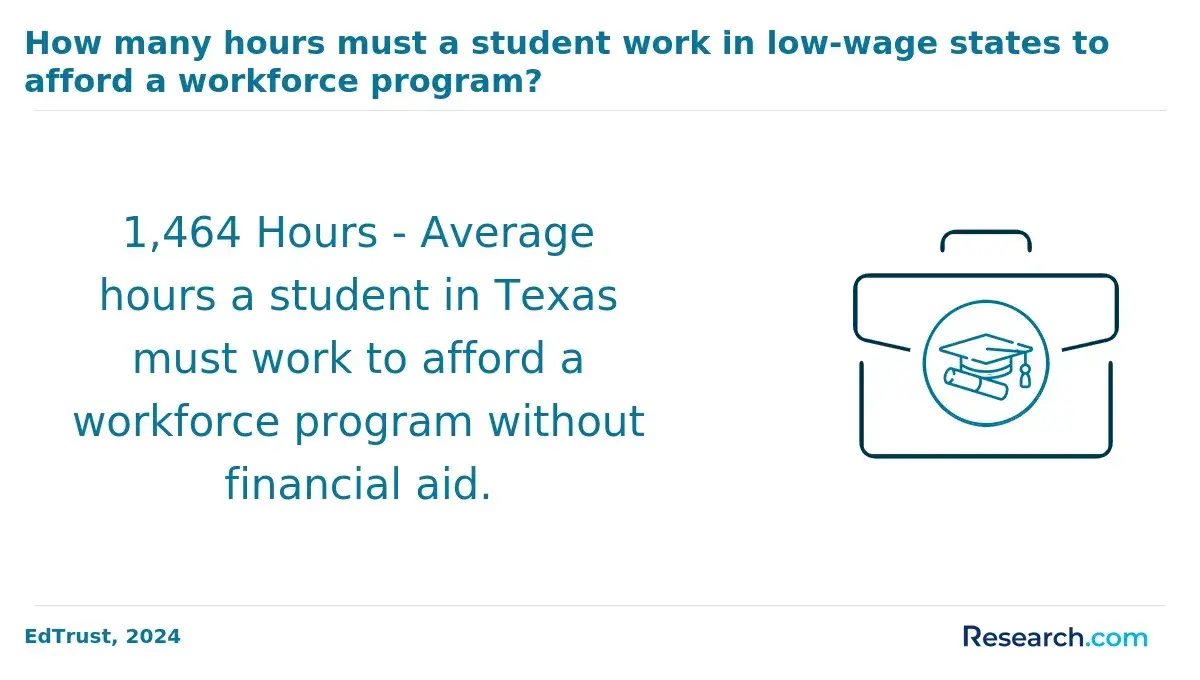
The cost of an online early childhood education doctorate depends on tuition per credit, total credits, fees, residency travel, books, technology, dissertation continuation fees, and the opportunity cost of time. A lower tuition rate can still become expensive if the program requires extra semesters, repeated dissertation registration, or travel that is not included in the advertised price.
Use the following cost figures as a practical framework for comparing programs. They are not a substitute for a school-issued cost sheet, but they show how quickly total investment can change.
- Published online doctoral tuition in education commonly ranges from the mid-hundreds per credit at lower-cost institutions to more than $1,000 per credit at higher-cost private universities.
- A 54-credit doctorate at $600 per credit equals $32,400 in tuition before fees, books, travel, and dissertation continuation costs.
- A 60-credit doctorate at $1,100 per credit equals $66,000 in tuition before fees, books, travel, and dissertation continuation costs.
- For federal loans first disbursed in 2024-25, graduate Direct Unsubsidized Loans carried an 8.08% interest rate, while Grad PLUS Loans carried a 9.08% interest rate.
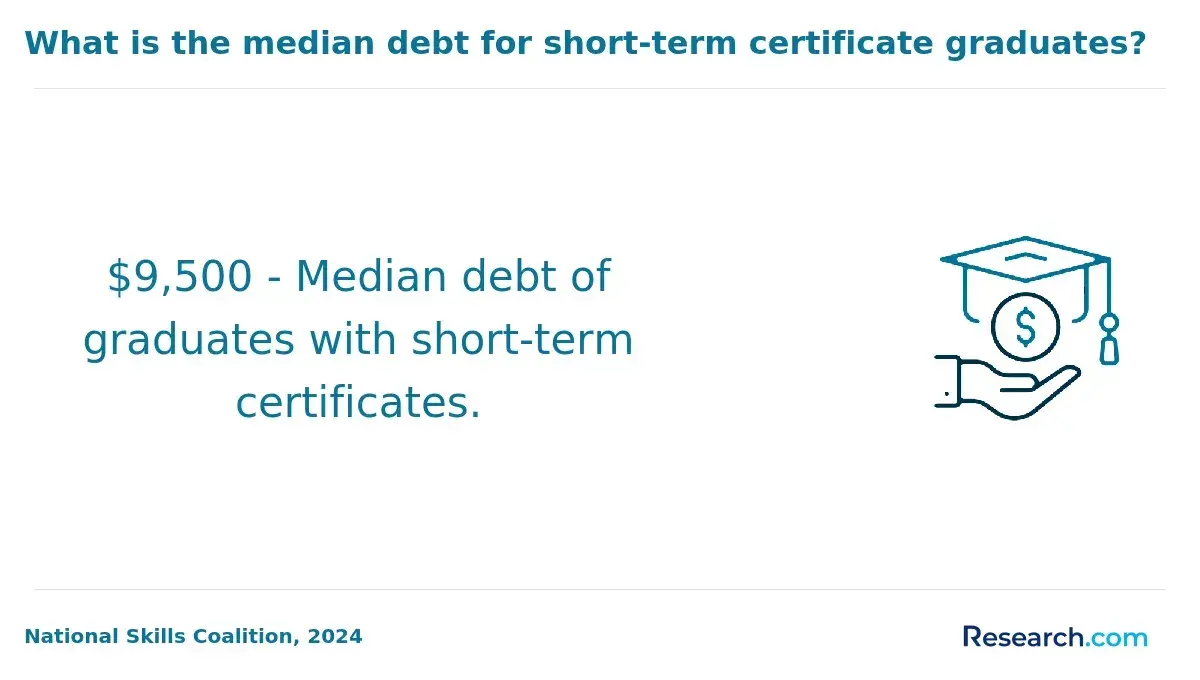
Those loan rates matter because many doctoral students are working adults who finance part of the degree. Even if the monthly payment is manageable later, interest can raise the real cost of a doctorate substantially. Before borrowing, compare employer tuition assistance, public-service loan strategies, scholarships, payment plans, and whether your current role can support a dissertation project that benefits your employer.
Whether the degree is worth it depends on your goal. BLS May 2024 wage data shows that roles adjacent to executive education leadership can pay substantially more than frontline early childhood roles; for example, training and development managers had median pay above $125,000, while management analysts were slightly above $100,000. However, a doctorate does not guarantee access to those roles. Experience, network, sector, location, leadership record, and employer expectations all matter.
A doctorate is more likely to be worth the investment if you already have significant experience and need doctoral-level credibility for senior leadership, consulting, policy, faculty, or systems-change work. It may be less worth it if your target role requires a specific license, if a master's degree is sufficient, if you cannot commit to research writing, or if the total debt would be difficult to manage on your expected salary.
Ask each school these questions before committing financially. They will help you compare real ROI rather than relying on marketing claims.
- What is the total program cost if I complete on the normal part-time timeline?
- Are there technology, residency, dissertation, graduation, or continuation fees?
- How many credits can I transfer, and will transfer credits reduce both time and tuition?
- What is the typical time to completion for students who work full time?
- What support is available during the dissertation or doctoral project stage?
- What career services, executive networking, alumni mentoring, or leadership partnerships are available?
What Executive Careers Can You Pursue With an Online Early Childhood Education Doctorate?
An online early childhood education doctorate can support advancement into executive, administrative, research, consulting, policy, and higher education roles. It is most valuable when paired with substantial professional experience, measurable leadership accomplishments, and a clear specialization such as early learning systems, curriculum quality, family engagement, workforce development, assessment, or public policy.
The table below connects common career paths with the responsibilities and salary context that matter for doctorate-level decision-making. Salary varies by employer, state, sector, and experience, so use the figures as labor-market context rather than personal earnings predictions.
| Career path | Typical responsibilities | How the doctorate may help | Salary context |
| Early childhood program executive or multi-site director | Oversee operations, staffing, compliance, curriculum quality, family engagement, and budgets | Builds credibility in systems leadership, quality improvement, and evidence-based decision-making | BLS May 2024 data placed childcare center director median pay around the mid-$50,000s, with higher pay possible in larger systems and senior roles |
| District or state early learning administrator | Lead birth-to-grade-three strategy, public programs, grants, partnerships, and policy implementation | Supports strategic planning, policy analysis, program evaluation, and cross-sector leadership | Education administrator compensation is typically higher in district and system-level roles than in individual childcare settings |
| Nonprofit executive director or policy leader | Manage fundraising, advocacy, partnerships, staff, program evaluation, and board relations | Strengthens expertise in research translation, equity, community systems, and organizational strategy | Pay varies widely by organization size, funding model, and region |
| Early childhood consultant | Advise agencies, districts, providers, foundations, curriculum companies, or professional learning networks | Provides doctoral credibility and deeper evaluation skills for high-stakes advisory work | BLS May 2024 data for management analysts exceeded $100,000 median pay, but independent consulting income is variable |
| Higher education faculty or academic administrator | Teach, supervise candidates, lead programs, conduct research, or manage academic departments | Often required or strongly preferred for full-time faculty and academic leadership positions | Pay depends on institution type, rank, contract length, and research expectations |
| Curriculum, assessment, or professional learning executive | Design instructional systems, coaching models, assessments, educator training, or learning products | Connects child development expertise with research, adult learning, and systems implementation | Training and development manager roles had median pay above $125,000 in BLS May 2024 data, though education-sector roles vary |
Employers rarely promote someone because of the credential alone. The doctorate works best as part of a broader leadership strategy: build a portfolio of measurable outcomes, lead complex projects, publish or present when possible, and use the dissertation or capstone to solve a problem visible to decision-makers.
Common mistakes include assuming the doctorate automatically leads to a C-suite role, choosing a dissertation topic unrelated to career goals, and ignoring networking. A better approach is to select a program where faculty, peers, and applied research opportunities connect directly to the executive ecosystem you want to enter.
Other Things You Should Know About Early Childhood Education
Yes, if it comes from an accredited institution and the program is academically rigorous. Employers are more likely to value the degree when it is paired with leadership experience, strong references, measurable results, and a dissertation or capstone relevant to the role.
An EdD is usually better for executive practice, administration, consulting, and organizational improvement. A PhD is usually better for research, university faculty roles, policy scholarship, and advanced evaluation work.
Often, yes. Many programs are built for working professionals, but you should confirm live class requirements, weekly workload, residencies, dissertation expectations, and whether your job schedule can support research and writing time.
It can support advancement, but it does not guarantee higher pay. Salary outcomes depend on your role, employer, state, experience, leadership record, and whether the doctorate aligns with positions that actually require or reward doctoral-level preparation.
- 2026 Best Online Doctoral Programs in Educational Leadership https://www.onlineu.com/degrees/educational-leadership
- Expanding the Lens—Leadership as an Organizational Asset https://www.naeyc.org/resources/pubs/yc/may2015/expanding-the-lens
- 25 Best Online EdD Programs of 2025 https://www.eddprograms.org/schools/best-online-doctor-of-education-programs/
- Online Ed.D. in Early Childhood Education | Doctorate in ECE Online https://www.pacificoaks.edu/academic-programs/edd-in-early-childhood-education/
- Ed.D. in Early Childhood Education | ACE https://ace.edu/degree-programs/doctoral-degrees/doctoral-education/doctor-of-education-in-early-childhood-education/