
2027 Are Online Early Childhood Education Doctorate Degrees Respected by Employers? Hiring Trends and Career Outcomes

Co-Founder and Chief Data Scientist
An online doctorate in Early Childhood Education can be respected by employers, but only when it matches the role, institution standards, and career path you want. The stakes are real: BLS May 2024 wage data places median pay for elementary, middle, and high school principals at $104,070, far above many classroom and center-based roles.
This guide helps teachers, administrators, consultants, and education leaders understand employer perceptions, ROI, salary potential, accreditation, online versus campus value, and practical steps for choosing a program that can support advancement.
Key Things You Should Know
- Employers usually care more about accreditation, institutional reputation, applied experience, leadership results, and research relevance than whether an Early Childhood Education doctorate was completed online or on campus.
- The strongest financial returns tend to come from leadership, policy, higher education, consulting, and district-level roles; BLS May 2024 median pay was $104,070 for K-12 principals and $103,960 for postsecondary education administrators.
- ROI is weakest when students borrow heavily for a doctorate but remain in roles where pay is set by fixed early childhood salary schedules or where a doctorate is not required, preferred, or rewarded.
What Is the True ROI of an Online Early Childhood Education Doctorate?
The true ROI of an online Early Childhood Education doctorate is the value you gain after weighing tuition, time, opportunity cost, employer recognition, and career outcomes. It is not just a salary calculation. For many educators, the return may include promotion eligibility, credibility for consulting, access to higher education roles, stronger policy influence, or a move from direct service into systems leadership.
Employer respect depends heavily on context. A public school district evaluating a candidate for central-office leadership may focus on state licensure, administrative experience, and accredited doctoral training. A college hiring faculty may care more about research, publications, teaching experience, and whether the doctorate is a PhD or EdD. A nonprofit or early learning agency may value applied leadership, program evaluation, grant experience, and evidence that the degree helped the candidate solve real organizational problems.
The table below summarizes the factors that most often shape employer recognition. Use it to judge whether a program is likely to support your target career rather than assuming every online doctorate has the same market value.
| Employer Recognition Factor | Why It Matters | What to Look For |
| Institutional accreditation | Employers, licensing boards, and other universities generally expect the school to be accredited by a recognized accreditor. | Confirm the institution appears in the U.S. Department of Education or CHEA-recognized accreditation databases. |
| Program alignment | A doctorate in Early Childhood Education is most persuasive when the curriculum matches the role you want. | Look for coursework in early learning systems, child development, policy, leadership, curriculum, assessment, or research methods. |
| Doctorate type | EdD programs often emphasize applied leadership, while PhD programs often emphasize research and academic scholarship. | Choose an EdD for practice-focused leadership or a PhD for research-heavy faculty, policy, or scholarly roles. |
| Field experience | Employers rarely evaluate the degree in isolation, especially for senior jobs. | Prioritize programs that let you connect doctoral projects to your school, district, agency, nonprofit, or early learning organization. |
| Employer-facing outcomes | Marketing claims do not prove workforce value. | Ask for alumni roles, dissertation or capstone examples, employer partnerships, placement patterns, and leadership promotion data. |
In practical terms, an online doctorate is usually respected when it comes from a legitimate accredited institution and is supported by strong professional experience. It is less likely to pay off if the program is poorly aligned with your target job, lacks meaningful faculty mentorship, or requires high borrowing without a realistic advancement path.
How Much Does an Online Early Childhood Education Doctorate Increase Earning Potential?
An online Early Childhood Education doctorate can increase earning potential, but the increase is uneven. The degree tends to matter most when it helps you move into roles with broader responsibility, such as school administration, district leadership, higher education, consulting, curriculum leadership, research, or policy. It tends to matter less in jobs where pay is controlled by local salary schedules or where early childhood employers have limited budgets.
The salary data below should be read as occupational context, not a promise of earnings for doctorate graduates. BLS May 2024 wage data shows how compensation varies across related education roles, which helps explain why the same doctorate can produce different ROI depending on the career path.
| Career Area | BLS May 2024 Median Annual Pay | How a Doctorate May Affect Value |
| Elementary, middle, and high school principals | $104,070 | A doctorate may strengthen competitiveness for senior leadership, district roles, or superintendent-track advancement, especially when paired with administrative licensure. |
| Postsecondary education administrators | $103,960 | A doctorate can support advancement into program director, dean, accreditation, student success, or academic affairs leadership roles. |
| Postsecondary teachers | $83,980 | A doctorate is often expected for full-time faculty roles, though colleges may also weigh research, teaching record, publications, and specialization. |
| Instructional coordinators | $74,720 | A doctorate can help candidates move from curriculum implementation into systemwide curriculum design, assessment, and leadership roles. |
| Preschool and childcare center directors | Mid-$50,000 range | A doctorate may add credibility, but the financial return is often limited unless it leads to multi-site leadership, nonprofit management, consulting, or policy work. |
The key takeaway is that the doctorate itself does not automatically raise pay. It becomes financially valuable when it enables a move into higher-responsibility roles, helps you qualify for senior positions, or differentiates you in competitive leadership and higher education markets.
Which Careers Provide the Best Financial Return With an Online Early Childhood Education Doctorate?
The best financial return usually comes from roles where doctoral-level expertise is either required, strongly preferred, or clearly useful for leadership decisions. In Early Childhood Education, that often means jobs that influence systems rather than only individual classrooms.
The table below compares career paths by likely doctorate value. It can help you identify whether the degree supports a realistic move into higher-paying or higher-authority work.
| Career Path | Typical Employer | Doctorate Value | Financial Return Potential |
| Early childhood higher education faculty | Colleges and universities | High when the role requires doctoral preparation, research, or teacher education expertise. | Moderate to strong, depending on institution type, rank, tenure track status, and research expectations. |
| District or state early learning administrator | School districts, state agencies, education departments | High when paired with leadership experience, policy knowledge, and administrative credentials. | Strong when the role moves beyond classroom salary schedules. |
| Curriculum and assessment leader | Districts, publishers, nonprofits, edtech companies | Moderate to high when doctoral projects demonstrate curriculum, assessment, or learning science expertise. | Moderate to strong, especially outside low-funded center-based settings. |
| Program evaluator or policy researcher | Think tanks, nonprofits, foundations, government contractors | High when the doctorate includes strong quantitative, qualitative, or mixed-methods research training. | Strong for candidates with technical research skills and grant or evaluation experience. |
| Childcare center director | Private, nonprofit, public, or Head Start-affiliated centers | Limited to moderate unless the role includes regional leadership, compliance, training, or multi-site operations. | Often limited if compensation remains tied to center-level budgets. |
Financially, the strongest use case is not "earn a doctorate and stay in the same job." It is "earn a doctorate to move into a better-compensated responsibility level." Before enrolling, identify three to five real job postings you would pursue after graduation and check whether they mention a doctorate as required, preferred, or advantageous.
Employer Confidence in Online vs. In-Person Degree Skills, Global 2024

How Does an Online Early Childhood Education Doctorate Affect Career Advancement?
An online Early Childhood Education doctorate can support advancement by signaling expertise in child development, early learning systems, leadership, curriculum, research, equity, assessment, and family engagement. Employers are most likely to value it when the degree helps explain why you are ready for a bigger role.
The career advancement benefit is strongest when the doctorate is connected to visible professional accomplishments. For example, a principal candidate may use doctoral research to show results in kindergarten readiness, literacy intervention, teacher coaching, or family engagement. A higher education candidate may use the degree to demonstrate scholarly preparation for teacher education and program assessment. A nonprofit leader may use the degree to show expertise in policy implementation, workforce development, or program evaluation.
Some professionals also compare adjacent graduate paths before committing to a doctorate. For example, educators interested in child learning, assessment, and student support may also review school psychology programs online accredited by NASP, especially if their target work involves psychological services or school-based assessment rather than early childhood leadership.
Employers also look for skills that a doctorate alone may not prove. To make the credential more useful, build evidence in the areas hiring committees can evaluate directly:
- Leadership results, such as improved program quality, teacher retention, accreditation outcomes, kindergarten transition processes, or family engagement metrics.
- Research and evaluation skills, including data analysis, needs assessment, grant reporting, program evaluation, and evidence-based decision-making.
- Communication skills, such as board presentations, professional development facilitation, policy briefs, faculty teaching, and public-facing reports.
- Technology and AI literacy, including responsible use of learning analytics, digital assessment tools, accessibility practices, and privacy-aware decision-making.
- Professional network strength, including relationships with districts, Head Start agencies, state early learning offices, colleges, nonprofits, and professional associations.
A common mistake is assuming the doctorate will "speak for itself." In competitive hiring, employers usually want the degree plus a clear record of solving problems at scale.
How Does the Cost of an Online Early Childhood Education Doctorate Affect Its Overall Value?
Cost has a direct effect on ROI because education leadership salaries vary widely across early childhood settings. A doctorate that is affordable for a district administrator pursuing a promotion may be financially risky for a childcare worker planning to remain in a low-paid center-based role.
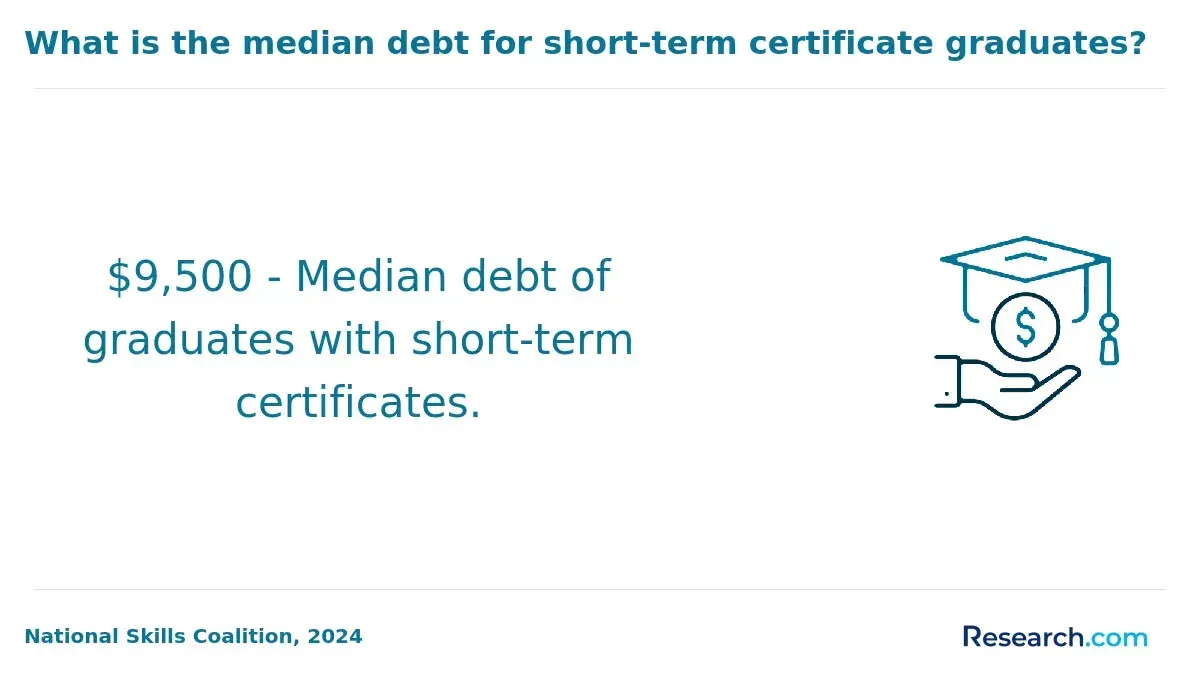
Recent NCES figures released in 2024 show why program price matters: annual graduate tuition and required fees averaged roughly $12,000 at public institutions and about $30,000 at private nonprofit institutions. Those figures are broad averages, but they illustrate how choosing a school can change the payback period before any salary benefit appears.
When comparing costs, look beyond the advertised per-credit tuition. The total investment may include fees, books, technology requirements, residency travel, dissertation or capstone continuation credits, lost overload pay, childcare, and the interest cost of loans. Employer tuition assistance, assistantships, military benefits, scholarships, and pay-as-you-go enrollment can substantially improve the value equation.
Use this cost framework before choosing a program:
- Estimate the total program cost, including tuition, fees, travel, continuation credits, and expected loan interest.
- Identify the roles you realistically plan to pursue within three years of graduation.
- Compare current pay with the salary ranges or posted pay bands for those roles.
- Check whether your target employers require, prefer, or merely accept a doctorate.
- Calculate how long it may take for additional earnings or promotion-related benefits to offset the total cost.
Red flags include vague tuition pages, unusually aggressive admissions tactics, no transparent accreditation information, no faculty expertise in early childhood education, and career claims that rely only on testimonials rather than broader alumni outcomes.
How Does the Time Commitment of an Online Early Childhood Education Doctorate Affect Its ROI?
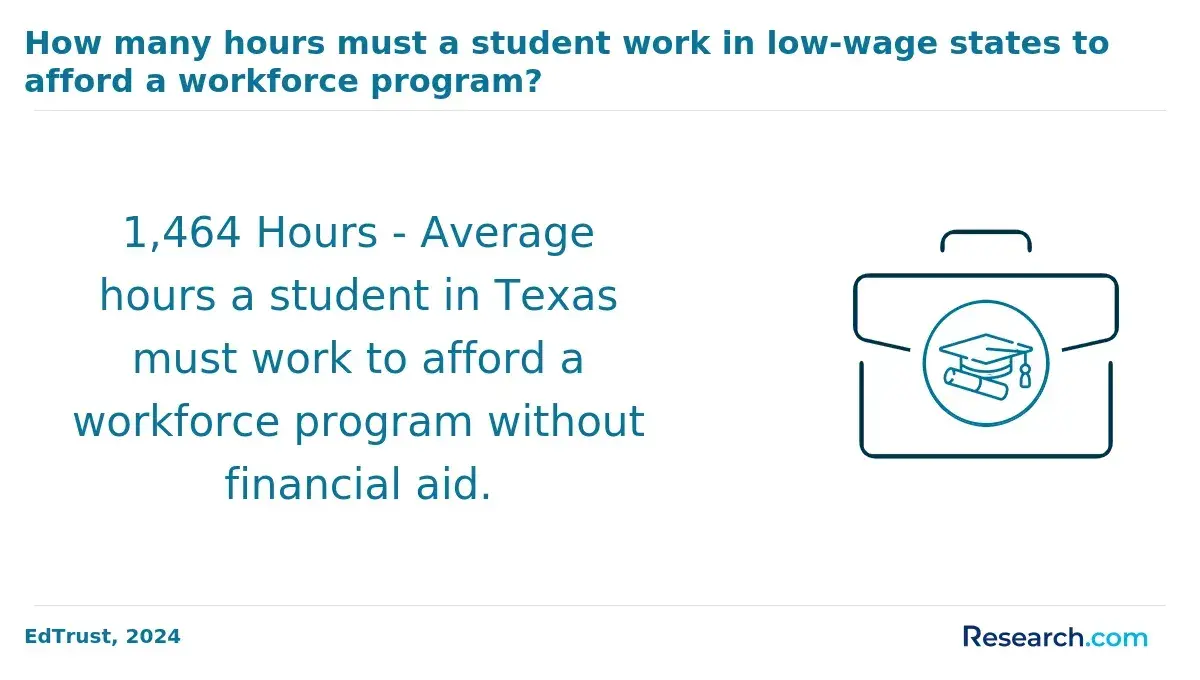
Time affects ROI because most doctoral students in Early Childhood Education are working professionals. Even when online study reduces relocation and commuting costs, the program still requires sustained reading, research, writing, fieldwork, meetings, and a dissertation or applied capstone.
Many online education doctorates take about three to five years, though accelerated structures may shorten the timeline for students with strong preparation and a focused research topic. If speed is a major factor, compare legitimate 1 year EdD programs online carefully, because faster completion usually requires a narrow project scope, significant weekly availability, and limited disruptions.
The time commitment becomes worthwhile when the program fits your work rhythm and career window. For example, a mid-career administrator who can immediately apply coursework to district initiatives may see value sooner than a student who must pause work, delay promotions, or extend enrollment because dissertation support is weak.
Before enrolling, ask programs these time-related questions:
- What is the median time to completion for online doctoral students in this program, not just the fastest possible timeline?
- How many students finish the dissertation or capstone without paying for multiple extra continuation terms?
- Are courses asynchronous, synchronous, or hybrid, and how often are live sessions required?
- Can professional work projects become part of the applied research or capstone process?
- What support is available if a student changes jobs, has family responsibilities, or needs to slow enrollment temporarily?
A shorter program is not automatically better. The best ROI usually comes from a program that you can finish on schedule while producing credible work that employers can understand and value.
Does an Online Early Childhood Education Doctorate Have the Same Career Value as a Campus-Based Degree?
An online Early Childhood Education doctorate can have the same career value as a campus-based degree when the institution is accredited, the curriculum is rigorous, faculty mentorship is strong, and the student can demonstrate relevant professional outcomes. Employers increasingly focus on the legitimacy and relevance of the credential rather than the delivery format alone.
That said, online and campus programs can differ in networking, research access, faculty visibility, assistantship availability, and local employer pipelines. These differences may matter more than the word "online." A campus program tied closely to a state agency, research center, or local district network may offer advantages for certain roles. An online program may be better for working professionals who need to keep earning while studying and who can use their own workplace as a research setting.
The table below compares the career-value factors that matter most. Use it to evaluate actual program design rather than assuming one format is always superior.
| Comparison Factor | Online Doctorate | Campus-Based Doctorate | Employer-Relevance Takeaway |
| Credential recognition | Strong when the school is accredited and the program is credible. | Strong when the school is accredited and respected in the field. | Accreditation and reputation matter more than format. |
| Networking | May rely on virtual cohorts, professional associations, and workplace-based projects. | May offer more frequent in-person faculty and peer interaction. | Choose the format that gives you access to the employers and mentors you need. |
| Research opportunities | Often applied and workplace-connected. | May include more lab, center, grant, or faculty research assistant opportunities. | PhD and faculty-track candidates should inspect research infrastructure closely. |
| Flexibility | Usually stronger for working educators and administrators. | May require relocation, commuting, or fixed daytime availability. | Flexibility can improve ROI if it allows continued employment. |
| Employer perception | Varies by employer, institution, and evidence of rigor. | Varies by institution, program reputation, and candidate experience. | Most employers evaluate the whole candidate, not format alone. |
If a résumé does not say "online," employers may never ask about delivery format. If they do, be ready to explain the program's accreditation, research expectations, faculty qualifications, and how the degree improved your leadership practice.
How Does an Online Early Childhood Education Doctorate Compare With Other Career Advancement Options?
An online doctorate is not the only path to advancement. Depending on your goal, a master's degree, administrative license, instructional design credential, coaching endorsement, bilingual education credential, special education certification, or policy fellowship may produce a faster or cheaper return.
For example, educators who want to move into curriculum technology, learning design, or corporate training may find that best online instructional design master's programs align more directly with job postings than an Early Childhood Education doctorate. The smarter choice depends on the job you want, not on the highest credential available.
The table below compares common advancement options. It is meant to help you identify whether a doctorate is necessary, strategically useful, or possibly more than you need.
| Advancement Option | Best Fit | Typical Advantage | When It May Beat a Doctorate |
| Online Early Childhood Education doctorate | Senior leaders, faculty candidates, researchers, policy specialists, consultants | Highest credential; supports authority in research, leadership, and systems change. | When the target role expects doctoral-level expertise or leadership credibility. |
| Master's degree | Teachers, coordinators, early-career administrators | Often faster and less expensive than a doctorate. | When job postings require only a master's or when salary lanes reward graduate credits. |
| Administrative license | School principals, district administrators | May be legally required for certain public school leadership roles. | When licensure is the barrier and a doctorate is only preferred. |
| Instructional design credential | Curriculum designers, edtech specialists, training professionals | Builds job-specific design and technology skills. | When the goal is learning product design rather than early childhood leadership. |
| Professional certificate or endorsement | Specialists in literacy, special education, coaching, ESL, or infant-toddler development | Targeted and usually shorter. | When employers want a specific skill or credential, not a doctorate. |
The mistake to avoid is choosing a doctorate because it feels like the most impressive option. Choose it when it is the most relevant option for the role, employer, and level of responsibility you are targeting.
Which Professionals Benefit Most From an Online Early Childhood Education Doctorate?
The professionals who benefit most are usually those who already have experience in education and want to move into senior leadership, higher education, research, policy, or consulting. The degree is less likely to create strong ROI for someone who is new to the field, unsure of a target role, or planning to remain in a position where a doctorate is neither required nor rewarded.
An online Early Childhood Education doctorate tends to fit these professionals best:
- Experienced early childhood directors who want to move into regional, multi-site, nonprofit, Head Start, or state-level leadership.
- K-12 educators and administrators focused on pre-K, kindergarten readiness, early literacy, family engagement, or early intervention systems.
- Community college or university instructors who need a doctorate for full-time faculty, program chair, or teacher preparation leadership roles.
- Curriculum specialists who want to lead early learning assessment, instructional improvement, or professional development at scale.
- Policy, advocacy, and nonprofit professionals who need stronger research and evaluation skills to influence early childhood systems.
- Consultants who want greater credibility in program evaluation, accreditation preparation, leadership coaching, or early learning quality improvement.
Professionals who may want to wait include those without a clear career goal, those still deciding between teaching and administration, those who need a state license before a doctorate, and those who would need heavy borrowing without realistic access to higher-paying roles.
Admissions requirements vary, but many programs expect a master's degree, professional experience, transcripts, recommendations, a statement of purpose, and sometimes a writing sample or interview. Some PhD programs may expect stronger research preparation, while many EdD programs emphasize applied leadership experience.
How Can Students Decide Whether an Online Early Childhood Education Doctorate Is Worth It?
To decide whether an online Early Childhood Education doctorate is worth it, start with the job market rather than the program brochure. The central question is not "Is the degree respected?" but "Will the employers I want to work for value this specific credential from this specific institution for this specific role?"
Some students also consider alternatives to the traditional dissertation model. If the dissertation is the main barrier, review legitimate online EdD programs no dissertation, but compare capstone rigor carefully because employers may still expect evidence of advanced research, evaluation, or applied leadership ability.
Use this decision process before committing:
- Define the target role, such as faculty member, principal, district leader, policy analyst, program evaluator, consultant, or early learning executive.
- Collect current job postings from your target employers and note whether a doctorate is required, preferred, optional, or not mentioned.
- Verify institutional accreditation through recognized accreditation databases rather than relying only on a school's marketing language.
- Ask whether the program has faculty with early childhood expertise, not only general education leadership faculty.
- Request alumni outcome examples, including job titles, employer types, promotions, faculty placements, or consulting pathways.
- Compare total cost against realistic post-graduation roles, not against the highest salary you can find online.
- Check state licensure rules if your goal involves public school administration, school psychology, special education, or other regulated work.
- Evaluate networking, residencies, research support, dissertation or capstone advising, and employer connections.
- Plan how you will present the doctorate on your résumé, LinkedIn profile, portfolio, and interviews.
Common mistakes include assuming all online doctorates are equal, choosing based only on rankings, ignoring state licensure, relying on a single testimonial, overlooking dissertation completion support, and enrolling before confirming that target employers actually value the credential.
A strong résumé should frame the doctorate as evidence of relevant expertise. Instead of only listing the degree, highlight the research topic, leadership project, measurable outcomes, presentations, publications, policy work, grant experience, or curriculum improvements connected to the program.
An online Early Childhood Education doctorate is most respected when it is accredited, career-aligned, supported by real leadership experience, and used to solve problems employers care about.
Other Things You Should Know About Early Childhood Education
Yes, graduates of legitimate doctoral programs may generally use the title "Dr." in academic and professional settings. In public-facing contexts, be clear that the doctorate is in education, not medicine or clinical psychology.
An EdD is usually better for applied leadership, administration, and practitioner-focused improvement work. A PhD is usually better for research-intensive faculty roles, scholarly research, and policy analysis requiring advanced research preparation.
Some do and some do not. Online programs may include short residencies, dissertation intensives, orientation sessions, or in-person research presentations, so students should confirm travel requirements before enrolling.
Not by itself in many cases. Licensure rules vary by state and role, so students should check the relevant state education agency or licensing board before assuming a doctorate meets credentialing requirements.
References
- The Best Ed.D. in Early Childhood Education Programs of 2025 https://www.eddprograms.org/schools/early-childhood-education/
- Jobs with an Early Childhood Education Degree | University of Phoenix https://www.phoenix.edu/articles/education/jobs-with-an-early-childhood-education-degree.html
- Early Childhood Education Degrees: The Differences Explained https://www.pacificoaks.edu/voices/education/early-childhood-education-degrees-differences-explained/
- Earning an Online Doctorate in Early Childhood Education https://www.gograd.org/online-phd-programs/best-early-childhood-education-degrees/
- Positions to Target with an Early Childhood Education Degree - Graduate Programs for Educators https://www.graduateprogram.org/blog/positions-to-target-with-an-early-childhood-education-degree/
- Online PhD: Revolutionizing Education or a Risky Gamble? https://onlinecourses.rademics.com/blog-details
- Are Online PhD Programs Credible? https://henryharvin.ae/blog/are-online-phd-programs-credible/
- The Influence of Online Learning Platforms on Early ... https://ejournal.gomit.id/junior/article/download/313/344/6491
- Ed.D. in Early Childhood Education | ACE https://ace.edu/degree-programs/doctoral-degrees/doctoral-education/doctor-of-education-in-early-childhood-education/
- How Employers View Online Degrees: Interviews with Nine Hiring Executives https://www.onlineeducation.com/features/how-employers-view-online-degrees


