2027 Shortest Online Early Childhood Education Doctorate Programs: Fast PhD, DBA, EdD, DNP, PsyD, and Professional Doctorate Options

Co-Founder and Chief Data Scientist
Choosing the shortest online early childhood education doctorate is really a decision about speed, career fit, and credibility. The need is practical: BLS May 2024 wage data show education leadership roles can exceed $100,000 in median pay, while early childhood leadership roles often pay much less, making return on investment especially important. This guide is for teachers, directors, curriculum specialists, administrators, and child-development professionals comparing fast doctoral options. You will learn which doctorate types usually finish fastest, what slows students down, and how to choose a program that saves time without weakening quality.
Key Things You Should Know
- The fastest realistic online early childhood education doctorate is usually an EdD or other applied professional doctorate with an embedded capstone; many credible accelerated options advertise about 2 to 3 years, while PhD and licensure-focused PsyD routes commonly take longer.
- Speed depends more on dissertation or capstone design, transfer-credit policy, residency requirements, and enrollment pace than on the word "online"; an online program with a traditional dissertation can still take 4 or more years.
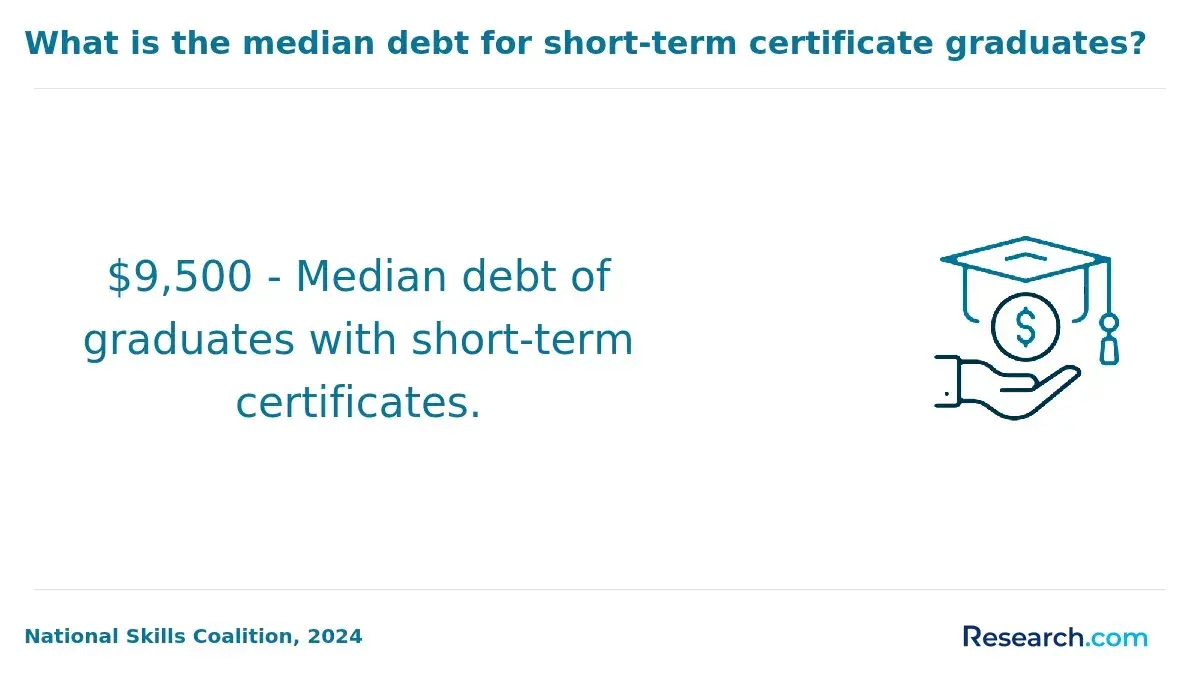
- Cost and ROI should be checked before prioritizing speed: graduate/professional students can borrow up to $20,500 per academic year in Direct Unsubsidized Loans, so an extra year of study can materially affect debt and opportunity cost.
Which Online Early Childhood Education Doctorate Programs Can Be Completed the Fastest?
The shortest online early childhood education doctorate programs are generally applied doctorates built for working educators, not research-intensive PhD programs. For most students, the fastest credible path is an online EdD in early childhood education, curriculum and instruction, educational leadership, or child development with an early childhood concentration.
Use advertised timelines cautiously. A school may market an accelerated doctoral pathway, but the real completion time often depends on whether the dissertation or capstone starts early, whether the student enrolls year-round, and whether the program requires campus residencies. Students exploring highly compressed formats can compare broader 1 year EdD programs online, but early childhood specialization, accreditation, and research support should still come first.
The table below compares common doctorate types by typical online completion speed and how directly each one fits early childhood education careers. These ranges are best used as planning benchmarks, not promises.
| Doctorate type | Fastest common online pathway | Typical completion pattern | Best fit for early childhood professionals | Main speed limitation |
| EdD | Online EdD in early childhood education, educational leadership, or curriculum and instruction | Often about 2 to 3 years in accelerated formats | ECE administrators, teacher leaders, district leaders, curriculum directors, college instructors | Dissertation or capstone approval, data collection, and committee feedback |
| Professional doctorate | Applied doctorate in education, leadership, child development, human services, or organizational leadership | Often about 2 to 3 years when capstone-based | Program directors, nonprofit leaders, policy practitioners, training leaders | Fit with ECE-specific career goals and employer recognition |
| DBA | DBA in organizational leadership, nonprofit management, or social impact leadership | Often about 2.5 to 4 years | Childcare business owners, multi-site center executives, education entrepreneurs | Business research focus may not satisfy education faculty or licensure expectations |
| DNP | Post-master's DNP with pediatric, family, public health, or leadership focus | Often about 2 to 4 years depending on clinical hours | Nurses working in pediatric, family, early intervention, or public health settings | Clinical practice-hour requirements and nursing licensure prerequisites |
| PsyD | Online or hybrid PsyD in school, clinical, counseling, or child psychology where available | Commonly longer than 3 years, especially when licensure-oriented | Child psychology, school psychology, assessment, and behavioral health careers | Practicum, internship, supervision, and state licensure rules |
| PhD | Online PhD in education, child development, human development, or educational psychology | Often 4 to 7 years | Researchers, tenure-track faculty candidates, policy researchers | Original research dissertation, methodology sequence, and publication expectations |
The practical answer is that an EdD is usually the shortest doctorate that still aligns naturally with early childhood education. A DBA, DNP, or PsyD may be faster for a student already in that professional field, but those degrees are not interchangeable with an education doctorate.
Which Type of Online Early Childhood Education Doctorate Offers the Fastest Path to Graduation?
The fastest path depends on the job you want after graduation. A center director seeking executive leadership skills, a preschool teacher moving into curriculum leadership, and a nurse specializing in early intervention may all serve young children, but they may need different doctoral credentials.
The table below matches doctorate types to career goals and likely speed. It helps separate "fastest overall" from "fastest degree that actually supports your next role."
| Career goal | Best-matched doctorate | Why it may be fast or slow | When to avoid it |
| Lead early childhood programs, districts, or education agencies | EdD | Applied coursework and capstone models can shorten time to completion | Avoid if your goal is a research university tenure-track role that strongly prefers a PhD |
| Teach early childhood education at a college or conduct research | PhD | Research depth adds time but may better support scholarly careers | Avoid if you need the quickest leadership credential and do not want a traditional dissertation |
| Run a childcare company, franchise network, or education startup | DBA | Applied business research may move faster than a PhD | Avoid if employers require a doctorate specifically in education |
| Lead pediatric, family, or early intervention health programs | DNP | Post-master's DNPs can be efficient for licensed nurses | Avoid if you are not a nurse or need an education leadership doctorate |
| Provide child assessment or mental health services | PsyD | Professional focus can be direct, but supervised practice often extends the timeline | Avoid if you want a non-licensure education administration role |
| Move into policy, nonprofit, or interdisciplinary child services leadership | Professional doctorate | Capstone-based models may be efficient and flexible | Avoid if the degree title is not recognized by your target employer or state system |
For students focused on school, district, higher education, or curriculum leadership, an EdD with a capstone or dissertation-in-practice is often the best balance of speed and relevance. If the final project is your biggest concern, compare online EdD programs no dissertation, but confirm whether the alternative capstone still requires research, data analysis, or field implementation.
What Program Features Help Students Finish an Online Early Childhood Education Doctorate Faster?
Fast online doctoral programs are usually designed differently from traditional doctoral programs. The most efficient ones reduce idle time between courses, connect assignments to the final project, and provide structured faculty support before the dissertation or capstone becomes overwhelming.
Look for the following features because they directly affect whether the advertised timeline is realistic for a working adult:
- Year-round scheduling with multiple start dates, short terms, or continuous enrollment so students do not lose months waiting for the next course sequence.
- Embedded dissertation or capstone milestones that begin in the first year rather than after all coursework is completed.
- Clear transfer-credit policies for relevant graduate coursework, specialist degrees, or post-master's credits, when allowed by the institution.
- Asynchronous coursework for most classes, paired with predictable synchronous sessions rather than frequent mandatory live meetings.
- Dedicated doctoral advising, writing support, methodology coaching, and committee timelines that prevent students from stalling during proposal development.
- Limited or clearly scheduled residency requirements, especially for students who cannot easily travel during the school year.
The biggest red flag is a program that advertises speed but gives vague answers about dissertation support, average time to completion, or faculty availability. A genuinely accelerated doctorate should be structured, not merely compressed.
What Requirements Most Commonly Extend the Length of an Online Early Childhood Education Doctorate?
The requirements that extend doctoral timelines are usually not the online classes themselves. Delays most often happen in the final-project stage, supervised practice stage, or approval stage, especially when students need access to schools, children, families, teachers, or administrative data.
These requirements deserve special attention before enrollment because each one can add a semester or more if it is poorly planned:
- Traditional dissertation expectations, especially when the study requires original data collection in early childhood centers, schools, or family-service settings.
- Institutional Review Board approval for research involving young children, families, teachers, or protected educational records.
- Practicum, internship, clinical, or supervised fieldwork requirements in PsyD, DNP, school psychology, counseling, or licensure-related programs.
- Residencies, intensives, or on-campus seminars that are required only once or twice but occur on fixed dates.
- State authorization, background checks, placement approvals, or district research permissions that must be completed before field-based work begins.
- Advanced statistics, research methods, or assessment courses that must be repeated if a student enters without enough preparation.
Students considering child assessment, behavioral health, or school-based psychological services should be especially careful. Licensure-related psychology pathways can be valuable, but they are rarely the shortest route; those comparing recognized options can review school psychology programs online accredited by NASP to understand how accreditation and fieldwork expectations shape program design.
How Do Enrollment Choices Affect Completion Time in an Online Early Childhood Education Doctorate?
Enrollment pace can change a doctorate from a 2.5-year plan to a 5-year experience. For online early childhood education doctoral students, the best pace is the fastest schedule they can sustain while still producing strong research, passing key milestones, and maintaining work and family responsibilities.
The table below shows how common enrollment choices affect completion time and workload. It is useful because "full time" and "part time" mean different things across doctoral programs.
| Enrollment choice | Typical effect on speed | Best for | Main risk |
| Full-time, year-round | Fastest path when courses and project milestones are sequenced tightly | Students with employer support, flexible schedules, or reduced work hours | Burnout, rushed research planning, and reduced time for high-quality writing |
| Part-time, continuous | Slower but steady, often realistic for full-time educators | Teachers, center directors, and administrators who cannot reduce work hours | Longer total cost exposure and possible loss of momentum |
| Cohort-based | Can be efficient because courses are pre-planned | Students who want structure and peer accountability | Less flexibility if a student pauses or fails a milestone |
| Self-paced or flexible pacing | Can be fast for highly organized students | Students with strong writing skills and predictable work schedules | Easy to procrastinate without strict milestone deadlines |
| Stop-out or leave-of-absence pattern | Usually lengthens completion substantially | Students facing unavoidable professional or personal interruptions | Policy changes, committee turnover, and readmission requirements |
Before choosing a pace, ask the school for the average time to completion for students with similar work schedules, not just the minimum advertised timeline. If the program cannot explain how many students finish on the accelerated track, treat the shortest timeline as a best-case scenario.
Which Online Early Childhood Education Doctorate Programs Are Best for Working Professionals?
The best online early childhood education doctorate for working professionals is usually one that has predictable weekly expectations, asynchronous coursework, strong advising, and a final project that can connect to the student's workplace. A slightly longer but better-supported program may be more realistic than the absolute shortest option.
Working educators should compare programs using fit, not only speed. These program characteristics usually matter most for adults employed in schools, childcare centers, nonprofits, public agencies, or higher education:
- Courses that allow applied projects using real workplace problems, such as family engagement, teacher coaching, inclusion, early literacy, program quality, or staff retention.
- Schedules that avoid mandatory daytime meetings during school or center operating hours.
- Faculty with experience in early childhood education, child development, special education, family services, or education leadership.
- Transparent policies for temporary workload reductions if a student has a new job, leadership transition, accreditation visit, or family obligation.
- Technology platforms, library access, writing support, and research software training designed for remote doctoral students.
Some professionals may not need a doctorate immediately. If your goal is instructional design, digital learning, training, or curriculum development outside senior leadership or higher education, comparing the best online instructional design master's programs may reveal a faster and less expensive credential for the same near-term goal.
Does Finishing an Online Early Childhood Education Doctorate Faster Affect Cost or Academic Quality?
Finishing faster can reduce total tuition exposure, fees, and opportunity cost, but it does not automatically make a program cheaper or better. Accelerated doctorates may require heavier course loads, fewer breaks, and rapid progress on research milestones, which can create hidden costs if a student has to repeat courses, extend the dissertation phase, or reduce work hours.
A useful cost check is to compare total program cost against realistic time to completion. Graduate and professional students can borrow up to $20,500 per academic year in federal Direct Unsubsidized Loans, so a program that takes an extra year may affect both borrowing needs and interest accumulation. That does not mean borrowing is always a bad decision; it means speed should be evaluated alongside salary potential, employer tuition support, and career mobility.
Quality should be judged through evidence, not assumptions about format. Online delivery can be rigorous when the institution is properly accredited, faculty are engaged, research expectations are clear, and student support is strong.
Before choosing the shortest option, check these quality signals:
- Institutional accreditation from an accreditor recognized by the U.S. Department of Education or CHEA.
- Program-level accreditation or professional alignment when relevant to education, psychology, counseling, nursing, or school-based practice.
- Published curriculum, dissertation or capstone requirements, residency rules, and faculty qualifications.
- Clear student support for research design, academic writing, data analysis, and IRB processes.
- Transparent tuition, fees, continuation costs, and policies for extension beyond the planned timeline.
The best value is not always the lowest tuition or the shortest timeline. It is the program that helps you finish at a sustainable pace with a credential recognized for the work you want to do.
Which Careers Benefit Most From Completing an Online Early Childhood Education Doctorate Quickly?
Completing an online early childhood education doctorate quickly is most valuable when the credential removes a barrier to promotion, leadership eligibility, college teaching, consulting, or advanced practice. It is less valuable if the target role does not require a doctorate or if a lower-cost credential would produce the same career move.
BLS May 2024 wage data show why career target matters: median pay for elementary and secondary education administrators is above $100,000, while preschool and childcare center directors are in the mid-$50,000 range. This gap means a doctorate may have stronger financial logic for district, higher education, policy, consulting, or executive leadership pathways than for roles limited to small-site preschool management.
The table below connects common early childhood career goals with doctorate types and the value of finishing quickly. Use it to identify where speed is likely to matter most.
| Career path | Most relevant doctorate | How faster completion may help | Important limitation |
| Early childhood program executive or multi-site director | EdD, DBA, or professional doctorate | Can support leadership credibility, strategic planning, and advancement timing | Salary depends heavily on employer size, funding model, and region |
| District early learning administrator | EdD or PhD | May help meet leadership expectations for senior administrative roles | State administrator licensure may still be required separately |
| College instructor or faculty member in early childhood education | EdD or PhD | Can help meet minimum credential expectations for many postsecondary roles | Tenure-track research roles may prefer or require a PhD |
| Education consultant or professional development provider | EdD, PhD, or professional doctorate | Can strengthen credibility with districts, nonprofits, and agencies | Business development and subject-matter expertise still drive opportunities |
| Child development policy analyst or nonprofit leader | PhD, EdD, DBA, or professional doctorate | Can accelerate eligibility for senior research, policy, or executive roles | Quantitative, grant-writing, and evaluation skills may matter as much as the degree title |
| Pediatric or early intervention health leader | DNP | Can align with advanced nursing leadership and practice roles | Requires nursing credentials and clinical compliance |
| Child psychology or school-based mental health professional | PsyD or PhD in psychology | Can support professional practice goals when licensure is required | Internship and supervision requirements often limit acceleration |
A fast doctorate is most defensible when it aligns with a defined job requirement, promotion window, or leadership transition. If the goal is general professional growth, a slower but stronger program may produce better long-term value.
What Student Characteristics Lead to Faster Completion of an Online Early Childhood Education Doctorate?
Students who finish online early childhood education doctorates quickly usually do more than take heavier course loads. They enter with a clear research interest, a realistic schedule, strong writing habits, and a support system that protects time for doctoral work.
The following traits make accelerated completion more realistic because they reduce the most common causes of delay:
- A focused problem of practice, such as kindergarten readiness, teacher retention, inclusive classrooms, family engagement, coaching, early literacy, or program quality improvement.
- Consistent weekly writing time, including time for reading research, revising drafts, and responding to committee feedback.
- Comfort with research methods, statistics, qualitative analysis, or program evaluation before the dissertation or capstone begins.
- Access to an appropriate research or project site, with permission from supervisors, districts, centers, or agencies when needed.
- Employer and family support for intensive terms, residency travel, data collection periods, and final-project deadlines.
- Willingness to choose a manageable study design rather than an overly broad topic that requires difficult permissions or large samples.
Common mistakes include choosing the shortest advertised program without confirming accreditation, assuming online means fully asynchronous, underestimating dissertation workload, and selecting a doctorate that does not match the intended career. The best accelerated students are ambitious but practical; they protect quality by narrowing the project and using faculty feedback early.
How Should Students Compare the Shortest Online Early Childhood Education Doctorate Programs?
Comparing the shortest online early childhood education doctorate programs requires more than sorting schools by advertised duration. A strong comparison looks at the minimum timeline, the average timeline, total cost, academic support, accreditation, final-project structure, and career fit.
Use this step-by-step process to evaluate programs before applying:
- Define the career outcome first, such as district leadership, college teaching, center ownership, policy work, consulting, nursing leadership, or child psychology practice.
- Eliminate degree types that do not match that goal, even if they appear faster or cheaper.
- Verify institutional accreditation and any program-level accreditation or licensure alignment needed for your profession.
- Ask for both the minimum advertised completion time and the typical completion time for working adults.
- Request details on dissertation, capstone, practicum, internship, residency, and IRB requirements before comparing tuition.
- Calculate total cost using tuition, fees, books, residency travel, continuation credits, technology fees, and the cost of any extra terms.
- Ask how many transfer credits may apply and whether they reduce both time and tuition.
- Review faculty expertise in early childhood education, child development, leadership, curriculum, special education, policy, or family services.
- Confirm whether courses are asynchronous, synchronous, hybrid, cohort-based, or self-paced.
- Choose the fastest program that still meets your quality, professional recognition, support, and career-alignment requirements.
The best short online doctorate is not simply the one with the fewest months on a website. It is the one you can realistically complete, afford, and use in the professional setting where you want the credential to matter.
Other Things You Should Know About Early Childhood Education
Some doctoral programs admit students with only a bachelor's degree, but many online education doctorates require a master's degree or substantial graduate coursework. Bachelor's-to-doctorate routes usually take longer because they include master's-level foundations before doctoral work.
It can be respected when the institution is properly accredited, the curriculum is rigorous, and the degree matches the role. Employers usually care more about accreditation, relevance, experience, and demonstrated leadership than whether courses were online.
Not always. Some programs are designed for licensed teachers, while others accept administrators, nonprofit leaders, researchers, consultants, or child-development professionals. Licensure requirements vary by program and by the career you want after graduation.
No. Early childhood education usually focuses on teaching, curriculum, leadership, assessment, and learning environments for young children. Child development often focuses more broadly on developmental theory, family systems, psychology, health, and research across early life stages.
References
- The Best Ed.D. in Early Childhood Education Programs of 2025 https://www.eddprograms.org/schools/early-childhood-education/
- Online Ed.D. in Early Childhood Education | Doctorate in ECE Online https://www.pacificoaks.edu/academic-programs/edd-in-early-childhood-education/
- 2025 Most Affordable Online Doctorates in Education https://www.onlineu.com/most-affordable-colleges/education-doctoral-degrees
- Scholarships and Financial Aid https://earlychildhoodny.org/resources/scholarships-and-financial-aid
- 1-2 Year Doctoral Programs Online: Top Schools & More https://www.phds.me/online-programs/one-year-doctoral-programs/
- Programs - NCSEAA https://www.ncseaa.edu/programs-2/
- ECECD Scholarship Information - Scholarship and Pay Incentive Programs https://ececdscholarship.org/scholarship-information/
- American College of Education Launches Online Doctoral Programs for Early Childhood Professionals | ACE News https://ace.edu/news/american-college-of-education-launches-online-doctoral-programs-for-early-childhood-professionals/
- Earning an Online Doctorate in Early Childhood Education https://www.gograd.org/online-phd-programs/best-early-childhood-education-degrees/
- Professional Doctorate SOP: How to Write for EdD, DBA, DNP, and PsyD Programs https://gradpilot.com/news/professional-doctorate-sop-edd-dba-dnp-psyd-guide