2027 Online Data Science Master's After a Bachelor's in Public Policy: Prerequisites and Program Fit

Co-Founder and Chief Data Scientist
A public policy bachelor's can be a strong starting point for an online data science master's, but policy coursework alone may not establish the programming and mathematics readiness a program expects. The decision depends on what you have already studied, the technical depth of the degree, and whether you want to apply data science in policy or move into a broader technical role.
This guide helps you identify gaps, compare programs, and decide whether a master's is the right next step.
Key Things You Should Know
- A public policy degree does not automatically qualify or disqualify you. Compare your transcript and projects with each program's stated math, statistics, and programming expectations.
- Prioritize programs with substantial technical instruction and projects if you want data scientist roles. Policy analysis experience remains valuable for defining problems and interpreting results.
- The U.S. Bureau of Labor Statistics projects 35% growth in data scientist employment from 2025 to 2035, but that occupation-wide forecast does not predict an individual graduate's job prospects.
What is an online data science master's, and is it a good fit after public policy?
An online data science master's is graduate study in using computation, statistics, and data to investigate questions and build predictive or analytical tools. A public policy graduate may already have experience with research design, survey data, program evaluation, or communicating evidence to decision-makers. Preparation varies, though: one policy curriculum may include extensive econometrics, while another emphasizes law or institutions.
The degree is a particularly good fit if you want to pair policy knowledge with stronger coding and quantitative methods—for example, evaluating public programs using administrative data or developing models that support resource planning.
A technically demanding program may also support a move beyond policy, provided you are willing to close any prerequisite gaps.
If your goal is primarily reporting, dashboards, or organizational decision support rather than advanced modeling, compare the curriculum with data analytics master's degree selection before committing to a data science degree. Choose based on the work you want to perform, not the degree title alone.
What prerequisites do public policy graduates need for a data science master's?
Requirements differ by program. Common areas to investigate are statistics, calculus or linear algebra, and programming. Policy graduates should assess what they can demonstrate, not assume that a course title either proves or rules out readiness.
The table separates preparation you may already have from gaps worth checking against published requirements.
| Area | Possible evidence from public policy study | Potential gap for data science study |
| Statistics and research design | Regression, evaluation, or survey-methods coursework | Probability, mathematical statistics, or deeper model diagnostics |
| Mathematics | Quantitative methods or economics coursework | Calculus and linear algebra, where required |
| Programming and data work | Analysis using statistical software or public datasets | Python or R programming, SQL, and reproducible code |
| Domain judgment | Policy context, causal questions, and stakeholder communication | Applying that judgment within a technically rigorous project |
A practical first step is to compare your transcript with each program's admissions page, then ask whether a missing course is a formal prerequisite, a recommended preparation topic, or material taught after enrollment.
A short course or self-study can build ability, but it does not necessarily satisfy a requirement for graded college credit. If a program offers a preparatory pathway, confirm that completing it makes you eligible to apply or enroll rather than assuming it guarantees admission.
How do you choose an accredited online data science master's program?
Start by verifying the university's institutional accreditation through the institution and its recognized accreditor; do not assume that an online format or a familiar-sounding program name establishes accreditation. If you live outside the university's state, also confirm that it can enroll students in your state. Accreditation and state authorization are different questions.
Then inspect required courses rather than relying on marketing descriptions. A suitable program should develop the methods you need, provide projects in which you use them, and offer enough support for your starting level.
For policy-focused work, look for opportunities to address messy administrative data, evaluation, fairness, privacy, and communicating uncertainty. For a broader data scientist transition, examine the depth of programming, statistical learning, and computing.
Beware of a curriculum that advertises advanced AI but leaves little room to build foundational skills. If AI is your actual career target, compare its technical coverage and total cost with lower-cost artificial intelligence master's options; a less expensive degree is worthwhile only if it teaches the skills your target roles require.
Employer Confidence in Online vs. In-Person Degree Skills, Global 2024

What admission requirements do online data science master's programs have?
Expect requirements to vary. Programs may request a bachelor's transcript, evidence of quantitative preparation, a résumé, recommendations, a statement of purpose, or samples of technical work.
Some specify prerequisite courses; others assess readiness more holistically. Check the current admissions page for every program rather than treating a general data science checklist as its policy.
A public policy applicant can make a stronger case by connecting prior work to the intended degree: identify the question you investigated, the data and methods you used, the limits of your findings, and the technical skills you now need. A reproducible analysis can be useful evidence of readiness, but it does not replace a required course unless admissions explicitly accepts it.
If application writing is a barrier, essay-free application options for an ML master's illustrate a different admissions route. Verify the current requirements and curriculum before treating an ML degree as interchangeable with data science.
What do you learn in an online data science master's program?
Relevant programs generally bring together data preparation, statistical inference, programming, machine learning, and communication of results.
For someone from public policy, the critical question is whether courses advance beyond methods you already know. An introductory regression class may offer less value than work on computational methods, causal inference, or evaluating models on imperfect data.
Inspect syllabi and project descriptions for the depth behind course titles. A substantial project might require you to clean and document a public dataset, explain a modeling choice, assess error across relevant groups, and present findings in terms a policy decision-maker could use. That is stronger evidence of learning than merely naming an algorithm in a presentation.
Also check whether the program teaches data pipelines and storage when your intended role involves building or maintaining data products. Programs with that emphasis can be compared with artificial intelligence master's degrees with data systems training. Neither label, by itself, establishes how much hands-on systems work students complete.
How long do online data science master's programs take and cost?
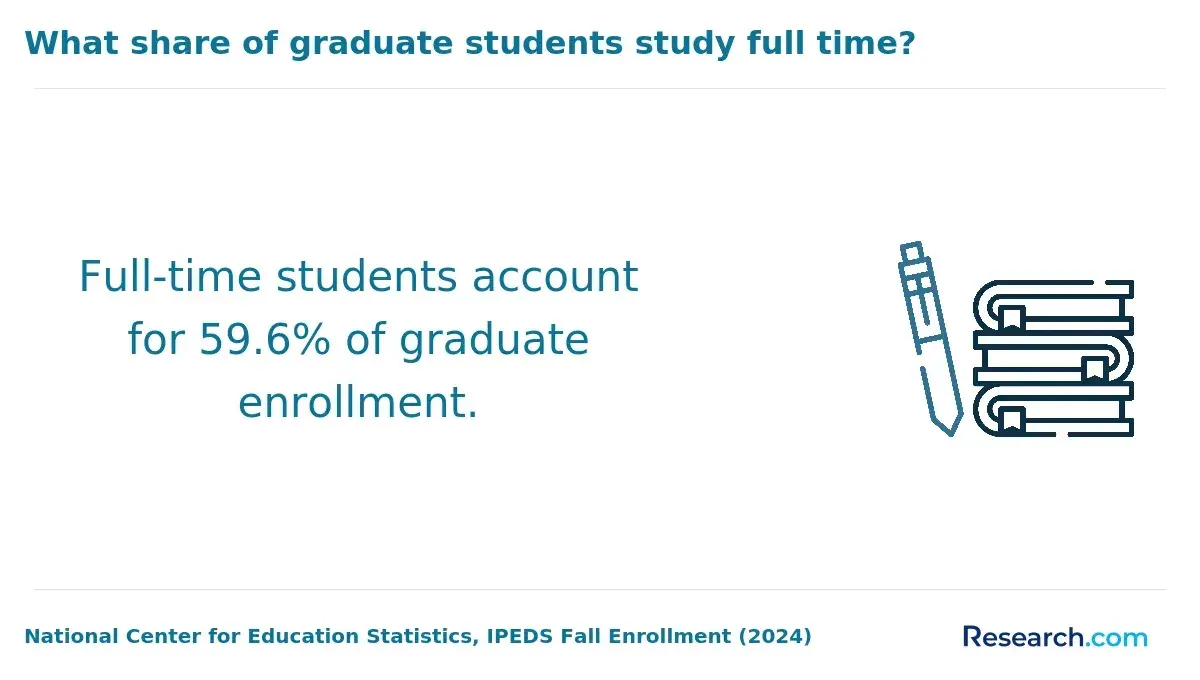
There is no reliable single duration or price for this category. Completion time depends on required credits, course availability, prerequisites, and whether you study full-time or part-time.
Published tuition may omit mandatory fees, software or materials, and any travel requirement. Ask for a current estimate based on your residency, intended pace, and expected start term.
Before deciding that a program is affordable, separate the costs you can verify from those that depend on your circumstances:
- Calculate tuition from the credits you must actually complete, including any required preparatory courses.
- Add mandatory fees and ask whether tuition or fees can change while you are enrolled.
- Check for equipment, materials, proctored exams, or travel costs.
- Compare aid, employer tuition assistance, and any borrowing costs against the schedule you can realistically maintain.
A lower advertised tuition is not necessarily a lower total cost if prerequisites extend your studies. The graduate data science financial aid guide can help you examine funding routes; confirm eligibility and award terms with each institution before relying on them.
How do online data science programs compare with campus-based degrees?
Online study can make it easier to keep working and to consider universities beyond commuting distance. Campus study may better suit someone who wants regular in-person contact or access to particular local research and networking opportunities. Neither format establishes instructional quality or career outcomes on its own.
For a public policy graduate filling technical gaps, the more important comparison is how instruction works: Are foundational courses available before advanced ones? Can you get feedback on code and mathematics? Are projects collaborative, and when must you meet?
Ask online programs about synchronous sessions, time zones, exam scheduling, and any campus visits. Compare the answers with your work schedule and learning preferences, rather than assuming "online" means fully self-paced.
What careers can public policy graduates pursue with a data science master's?
A natural first target may be a policy data analyst, program evaluation analyst, or research-focused role where subject knowledge and quantitative work intersect. With stronger programming and modeling evidence, data scientist roles may become plausible. The distinction matters: employers can value policy expertise while still requiring demonstrable technical ability for a technical title.
The Bureau of Labor Statistics projects 35% growth in U.S. data scientist employment from 2025 to 2035. That signals projected demand across the occupation, not a promise of openings in policy organizations or for new graduates.
Build a portfolio around the role you want: for policy-facing work, show defensible analysis and clear recommendations; for general data science, also show rigorous coding, model evaluation, and reproducibility.
A master's may not be necessary if your target jobs accept your existing experience and you can acquire the missing tools through focused coursework or projects. Read several real job descriptions before enrolling, noting which requirements repeatedly exceed your current preparation.
How much can data science master's graduates earn in the United States?
The Bureau of Labor Statistics reports a $120,230 median annual wage for U.S. data scientists in May 2025. This is an occupation-wide figure, not a reported salary for master's graduates or for people transitioning from public policy. Pay for a particular job can differ with experience, responsibilities, employer, and location.
Use that median as labor-market context, not as an estimate of your post-degree income. A sound financial decision compares the degree's full cost and time commitment with realistic target roles and your current earnings; it does not assume the credential itself causes a salary increase.
What certifications and skills improve data science career prospects?
For this transition, evidence of applied skills is usually more informative than collecting unrelated certificates. Useful capabilities include programming in Python or R, working with SQL, statistical reasoning, reproducible workflows, and explaining limitations to nontechnical audiences. Which skills matter most depends on the jobs you intend to pursue.
A certification can help structure learning or demonstrate familiarity with a particular tool, but check whether target employers ask for it before paying for one. A focused portfolio project can connect your policy background to new technical skills.
Pose a consequential question, document the data and code, test whether conclusions are robust, and explain what the analysis cannot establish. Do not present a predictive result as a causal policy effect without an appropriate research design.
Other Things You Should Know About Data Science Programs
Only if your employer or data provider permits that use and the program's handling requirements can be met. Otherwise, use public or properly de-identified data and follow any applicable agreements.
For a coursework-focused degree, admissions staff may be the best first contact. Contact a professor when you have a specific question about supervised research or a project area the program offers.
Possibly. Check your employer's outside-education, tuition-assistance, and data-use rules, then compare the program's scheduled activities with your work obligations.
Ask how much feedback they received on technical work, whether course sequencing accommodated their background, and what they could build independently by graduation. Their experience is useful context, not a guaranteed outcome.
References
- Master of Science | University of Maryland https://cmns.umd.edu/graduate/science-academy/data-science/master-science
- Data Science Master's Degree Requirements | jhu.edu https://ep.jhu.edu/programs/data-science/masters-degree-requirements/
- Online Master's FAQs - UVA School of Data Science https://datascience.virginia.edu/degrees/info/online-msds-faqs
- What Can I Do With a Degree in Data Science? Career Paths & Skills | Harvard SEAS https://seas.harvard.edu/news/what-can-i-do-degree-data-science-career-paths-skills
- Public Policy | Academic Catalog | The University of Chicago http://collegecatalog.uchicago.edu/thecollege/publicpolicystudies/
- Master of Science in Public Policy Data Science - USC Viterbi https://datascience.usc.edu/academics/master-of-science-in-public-policy-data-science/