
2027 Speech Analytics in an Online Data Science Master's: Courses, Projects, and Program Selection

Co-Founder and Chief Data Scientist
Speech analytics is a specialized goal, but many online data science master's programs do not advertise it by name. Prospective students need to determine whether a program offers enough depth in audio processing, natural language processing, and applied projects - not merely a broad AI elective.
This guide explains what to look for in courses and capstones, how to compare online programs, and which admissions, cost, and career questions to resolve before enrolling.
Key Things You Should Know
- Look for a progression from statistics and machine learning to speech recognition, language analysis, evaluation, and a substantial project; an NLP course title alone does not establish speech-specific depth.
- Confirm that you can use suitable audio data, computing resources, and faculty guidance for a speech project before treating a general capstone as an opportunity to specialize.
- The U.S. Bureau of Labor Statistics reports a $120,230 median annual wage for data scientists in May 2025, but that occupation-wide figure is not a salary estimate for new speech analytics graduates.
What is speech analytics in an online data science master's program?
Speech analytics uses recorded or live audio to answer questions about spoken communication. A typical workflow may convert speech to text, identify speakers or topics, and analyze the resulting language for patterns. Applications include finding recurring customer-service issues, searching interview archives, and measuring how reliably a voice interface understands requests.
In a data science master's program, the subject may sit across machine learning, signal processing, and natural language processing (NLP). The distinction matters: analyzing an accurate, ready-made transcript teaches useful text analytics, but it does not necessarily teach how to handle noisy audio, recognition errors, or differences in performance across speakers. A strong speech-focused pathway connects those stages and treats consent, privacy, and evaluation as part of the technical work.
Which courses teach speech analytics and natural language processing?
Start with the sequence, not the course labels. Statistics, Python programming, and machine learning support model development; NLP addresses meaning and structure in transcripts; speech or audio coursework addresses the signal and transcription process. A catalog description and recent syllabus can show whether these subjects receive sustained attention.
The following comparison separates levels of exposure that can look similar on a program's marketing page but prepare students for different projects.
| Curricular depth | Typical evidence | What it may support |
| Passing mention | Speech appears among examples in a general AI course. | Awareness of the application, with little opportunity to practice it. |
| Single unit | An NLP or machine learning course includes an audio or transcription assignment. | Limited experimentation with a speech workflow. |
| Dedicated course | A syllabus covers speech recognition, audio features, evaluation, or related methods through multiple assignments. | Deeper technical preparation. |
| Advanced project depth | Students can combine relevant electives with a supervised project using speech data. | Portfolio evidence of an end-to-end application. |
Ask for recent syllabi and check whether assignments require students to assess transcription quality as well as downstream text analysis. If the program's emphasis is broader AI rather than speech specifically, compare economical online AI graduate study - but apply the same syllabus and project checks before assuming an AI degree provides more speech depth.
What projects can students complete in speech analytics programs?
A useful speech analytics project begins with a narrow question and ends with evidence that the result works for that purpose. For example, a student could study whether transcripts help identify recurring reasons for support calls, or compare how transcription errors affect topic detection. Neither project requires claiming that an automated system can reliably infer a speaker's emotions or intentions.
Before choosing a program for its capstone, investigate the conditions that would make a speech project feasible:
- Data access: Determine whether you can obtain audio with appropriate rights and consent, or use a suitable public dataset.
- Technical scope: Establish whether the project can include audio preparation, transcription, downstream analysis, and comparison with a baseline.
- Evaluation: Plan to examine recognition errors and whether those errors change the answer to the project's original question.
- Support and reproducibility: Confirm access to relevant supervision and computing, and whether you can document methods without exposing private recordings.
A program need not offer a speech-specific capstone to support this work. It does, however, need project rules, resources, and an advisor whose expertise fit the proposed topic. Confirm those details rather than assuming an open-ended capstone guarantees approval.
How do online and campus-based data science master's programs compare?
Delivery mode is less important than access to the courses, collaboration, and project supervision you need. An online program may suit a working professional who can practice on their own schedule; a campus program may be preferable for someone who values in-person lab work or frequent face-to-face collaboration. Neither format inherently provides better speech analytics training.
Compare the same practical features across both formats: whether advanced electives run regularly, whether courses meet live, how students obtain computing and datasets, and how capstone advising works at a distance. For students seeking collaborators or industry contacts, ask how remote students meet peers and alumni. Master's-level AI programs with alumni networking opportunities offer another comparison point, though networking features should not substitute for relevant coursework.
What are the admission requirements for an online data science master's?
Requirements vary by institution. Programs may assess prior coursework, quantitative preparation, programming experience, academic records, and application materials differently. Speech analytics adds no universal admission requirement, but students will be better prepared for advanced work if they can program, interpret statistical results, and understand introductory machine learning.
Compare each program's published prerequisites with your transcript and experience. If you have a gap, ask whether a course or other preparation would satisfy a formal admissions requirement, or would only help you succeed after admission. Foundation pathways into artificial intelligence graduate programs may help applicants explore preparatory options; acceptance of any pathway remains the receiving program's decision.
How long does an online data science master's take and cost?
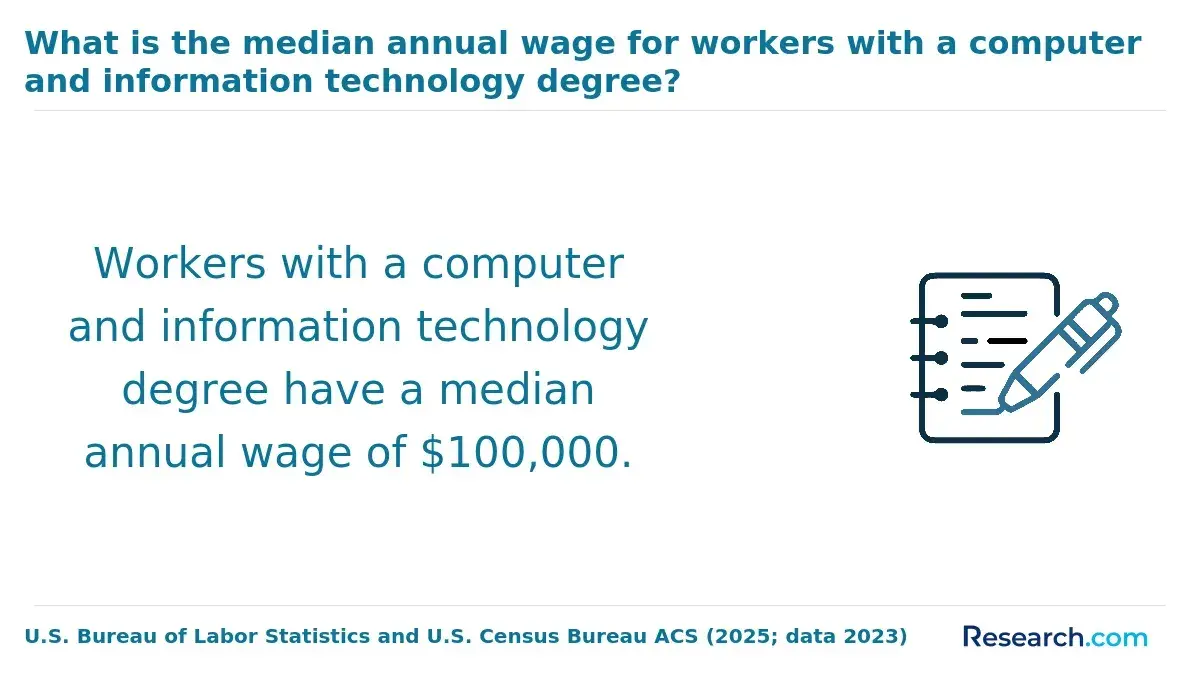
There is no reliable single duration or price for online data science master's programs: credit requirements, course availability, enrollment pace, and tuition policies differ. For a speech-focused student, the earliest possible graduation date matters less if the desired NLP elective runs infrequently or must be completed before a capstone.
Request a course-by-course completion plan and a written cost estimate based on your intended pace. Compare tuition and mandatory fees separately from materials, computing, any travel, and financing costs. Ask whether taking fewer courses changes per-credit pricing or fees. Lists of affordable paths to a data science master's degree can help build a shortlist, but verify current charges with each institution before comparing total cost.
How can students verify data science program accreditation?
Check the institution's accreditation status through the U.S. Department of Education's accreditation database or the accreditor directly. Distinguish institutional accreditation from any program-specific recognition: the latter should not be assumed simply because a master's program is offered by an accredited university.
Also confirm that the institution can enroll online students residing in your state, particularly if you may move while studying. Accreditation and state authorization answer different questions, and neither proves that a program teaches speech analytics well. Treat an unverifiable accreditation claim - or reluctance to identify the accreditor - as a reason to pause before paying a deposit.
What careers can speech analytics skills support after graduation?
Speech analytics skills can support work in data science, machine learning, NLP, and product analytics, depending on the role and the graduate's prior experience. A customer-service analytics role might emphasize transcript quality and business interpretation; a speech-modeling role may demand substantially more audio and machine learning depth. Job titles alone do not reveal which skills an employer expects.
Read target job descriptions before selecting electives. If the roles you want emphasize general analysis across teams, data science degrees for opportunities across data teams may be a better fit than a narrow speech pathway. If they emphasize building or evaluating speech systems, prioritize dedicated coursework and a relevant portfolio project.
What salaries and job outlook can speech analytics graduates expect?
The U.S. Bureau of Labor Statistics reports that the median annual wage for data scientists was $120,230 in May 2025. That is a benchmark for an occupation, not a reported outcome for speech analytics graduates or an entry-level pay offer; compensation depends on the position, experience, employer, and location.
BLS projects data scientist employment to grow 35% from 2025 to 2035. The projection indicates demand for the broader occupation, not a forecast for speech-specific jobs or a guarantee of employment. Evaluate a program's career claims by asking which graduates were surveyed, when, and whether reported salaries reflect experienced professionals rather than new entrants.
Which certifications and standards strengthen speech analytics credentials?
A master's degree, a vendor certification, and a documented project communicate different strengths. A relevant cloud or machine learning certification may demonstrate familiarity with particular tools, but it is not a universal requirement for speech analytics work and cannot replace evidence that you can evaluate a model and explain its limitations.
For projects involving recorded conversations, familiarity with an employer's privacy and security requirements matters as much as a tool badge. The NIST AI Risk Management Framework can provide a way to discuss AI risks, while organizational security standards and applicable laws shape actual handling of recordings. Do not describe familiarity with a framework as a professional license or proof that a project is compliant. Choose an optional certification only after checking whether your target employers request that platform or skill.
Other Things You Should Know About Data Science
No. Speech recognition identifies spoken words; speaker recognition concerns who is speaking. A project can use one without the other, so clarify which task a course or employer means.
Yes. Students can work with appropriately licensed existing recordings or transcripts, subject to the dataset's terms and the project's goals. If you only use transcripts, be clear that the work does not evaluate audio processing.
Not necessarily. The computing needed depends on whether you train models, adapt an existing model, or analyze available transcripts. Define the project first, then check the program's available resources.
It can, but performance should be tested on speech that resembles the intended setting. Results from one language, accent group, or recording environment should not be assumed to transfer to another.
References
- Cost of Attendance (Budget) | 2025-2026 Federal Student Aid Handbook https://fsapartners.ed.gov/knowledge-center/fsa-handbook/2025-2026/vol3/ch2-cost-attendance-budget
- M.S. in Data Science, Online | virginia.edu https://datascience.virginia.edu/degrees/msds-online
- AI in Research IT | berkeley.edu https://research-it.berkeley.edu/services-projects/ai-research-it
- Online and Distance Education | Student Services Center https://studentservices.ncsu.edu/finances/tuition-and-fees/tuition-and-fee-rates/online-and-distance-education/
- Online Master's in Data Science and Analytics | OU Online https://online.ou.edu/program/ms-in-data-science-and-analytics/
- What's the Difference Between Asynchronous and Synchronous Learning? | Ohio State Online https://online.osu.edu/content-hub/blogs/whats-the-difference-between-asynchronous-and-synchronous-learning/
- NSF's ACCESS Cyberinfrastructure Program | ucf.edu https://rci.research.ucf.edu/resource/nsfs-access-cyberinfrastructure-program/
- Tuition & Financial Aid | Speech@NYU https://speech.steinhardt.nyu.edu/admissions/tuition-financial-aid/
- How to Become a Data Scientist | Harvard SEAS https://seas.harvard.edu/news/how-become-data-scientist
- Online Program - UChicago Data Science Institute https://datascience.uchicago.edu/education/masters-programs/online-program/


