2027 Genomic Data Analysis Capstones: What to Look for in a Data Science Master's

Co-Founder and Chief Data Scientist
A genomic data analysis capstone can be compelling evidence of your skills - or a project too constrained to show what you can do. If you are comparing data science master's programs for a career in genomics, look beyond whether the curriculum mentions DNA or offers a capstone.
What matters is whether you can access suitable data, get both technical and biological guidance, evaluate results responsibly, and share credible evidence of your work. This guide explains how to assess those conditions before you enroll.
Key Things You Should Know
- Choose a program that can support a genomic question from data access through validation, reproducible analysis, and a defensible final presentation - not merely one that lists "genomics" as a possible topic.
- Ask whether genomic data, appropriate supervision, and a shareable portfolio artifact will actually be available; restrictions on human data can change the project you are able to complete.
- The U.S. Bureau of Labor Statistics projects 35% growth in data scientist employment from 2025 to 2035, but that broad forecast does not measure demand for genomics specialists or guarantee a capstone-related job.
What Is a Genomic Data Analysis Capstone in a Data Science Master's Program?
It is a culminating project that applies data science methods to a defined question about genomic or related molecular data. A student might analyze gene expression, compare variant-analysis approaches, or investigate whether a model generalizes across datasets. The output should explain the biological question, data provenance, analytical choices, evaluation, limitations, and implications - not just display code or a prediction score.
These examples show why "genomics capstone" is not one standard assignment. The project design affects which skills a student can demonstrate.
| Project design | Possible question | Important limitation to address |
| Gene-expression analysis | Which measured expression patterns differ between defined sample groups? | Batch effects and sample composition may explain apparent differences. |
| Variant-analysis workflow | How do analytical choices affect the variants identified in a dataset? | Results depend on data quality, reference choices, and validation. |
| Predictive modeling | Can molecular features predict a specified outcome in held-out data? | Small samples and related observations can produce misleading performance estimates. |
A program may permit such a topic without supplying a genomics partner, dataset, or qualified adviser. Distinguish an approved project pathway from a hypothetical possibility when comparing schools.
What Skills Should a Genomic Data Science Capstone Demonstrate?
A strong project connects biological reasoning to sound statistical and computational practice. It should show that the student can describe what a genomic measurement represents, build a reliable analysis, and avoid claiming more than the data support. The most persuasive evidence is visible in the methods and results, not in a list of software tools.
When reviewing a sample capstone or proposed project, look for evidence across these connected skills:
- Data stewardship: documented data origin, permitted uses, quality checks, and handling of sensitive human information.
- Analytical judgment: methods suited to the question, consideration of confounding and multiple comparisons where relevant, and a justified comparison with a simpler baseline.
- Valid evaluation: training and test separation that respects related samples, patients, or collection batches, with uncertainty and failure cases reported.
- Reproducibility and communication: documented code and dependencies, an interpretable account of results, and conclusions that distinguish association or prediction from clinical utility.
Newer AI methods can be useful, but a sophisticated model is not automatically a stronger capstone. If data are limited, a carefully validated conventional analysis may tell a more trustworthy story than a complex model trained on a small dataset.
How Do You Evaluate a Genomic Data Analysis Capstone Project?
Evaluate both the proposed question and the evidence the finished project will produce. A polished visualization cannot rescue a question with no suitable dataset, while a strong model score means little if samples leaked across evaluation groups.
Before committing to a topic - or a program that promises to support it - work through these checks:
- Define the claim. State the biological or operational question, the intended audience, and what a useful result would mean. Avoid framing exploratory findings as a diagnostic conclusion.
- Confirm feasible data access. Check dataset permissions, documentation, sample characteristics, computing needs, and whether approval or a collaborator is required before analysis can begin.
- Plan credible evaluation. Identify likely confounders, choose a relevant baseline, and decide how to test generalization without splitting related observations improperly.
- Specify deliverables. Confirm whether the final work includes a report, documented code, a presentation, or another artifact - and what can legally be shown to employers.
- Check supervision. Determine who will review the biological assumptions as well as the statistics, software, and interpretation.
Watch for vague promises of "real-world genomic data" without a named access process, projects judged only by model accuracy, or an expectation that students will obtain restricted data and domain mentorship on their own. A narrower project with secure data access and rigorous evaluation is usually a better capstone choice than an ambitious one that cannot be completed responsibly.
What Coursework Prepares Students for Genomic Data Analysis Capstones?
Preparation typically spans programming, statistics, machine learning, and biological context. For a gene-expression project, for example, statistical design and data preprocessing matter as much as the final model. For a variant workflow, data formats, quality control, and computational reproducibility may take greater priority.
Read syllabi and course descriptions for the work students actually perform. A dedicated bioinformatics course, a relevant advanced elective, and a substantial genomics project provide different levels of preparation; a passing mention of sequencing data is not equivalent to hands-on analysis. Ask whether courses cover experimental design, high-dimensional data, version-controlled workflows, and responsible use of human data, then check how those skills connect to the capstone sequence. For a broader comparison of transferable technical preparation, see data science degrees linked to in-demand skills.
If your background is mainly biological, prioritize opportunities to strengthen coding and statistical evaluation. If it is mainly computational, look for instruction or mentorship that helps you understand how samples were generated and what conclusions the measurements can support.
Do Online Data Science Master's Programs Offer Quality Genomics Capstones?
They can, but online delivery alone says little about capstone quality. An online program is a strong fit when students can access appropriate datasets and computing resources remotely, consult advisers with relevant expertise, and receive timely feedback on project design and interpretation. Confirm whether meetings, group work, presentations, or any campus visits have scheduling requirements you can meet.
Ask an adviser to describe a recent genomics-related project, how its data were obtained, who supervised it, and what the student could share afterward. If the answer is only that students may choose any topic, treat genomics support as unverified. Some applicants also compare online AI degrees on price; an online AI degree affordability guide can help frame that separate comparison, but low cost or AI coursework does not establish access to a suitable genomics capstone.
What Are the Admission Requirements for Genomics-Focused Data Science Master's Programs?
Requirements vary by institution and by degree. Programs may evaluate quantitative preparation, programming, prior coursework, academic records, recommendations, and written materials; some may also value biology experience. Do not assume a biology degree is required - or that one substitutes for statistics and coding preparation. Likewise, a computer science background does not automatically establish genomics knowledge.
Compare your preparation with each program's published prerequisites, then ask admissions staff whether missing coursework must be completed for eligibility or can be addressed before the capstone. A small, documented analysis of an appropriately licensed public dataset may help demonstrate readiness, but it does not formally satisfy a prerequisite unless the program says it does. If application paperwork is a deciding factor, machine learning master's options with no admissions statement illustrate why requirements must be checked program by program; a lighter application is not evidence of stronger genomics preparation.
How Long and How Much Do Genomics Data Science Master's Programs Take?
There is no reliable universal timeline or price for this pathway. Completion depends on course load, prerequisites, project sequencing, and whether data access or collaborator approvals delay the capstone. Before comparing advertised timelines, ask when a student must secure an adviser and dataset, whether the capstone spans more than one term, and what happens if the original project becomes infeasible.
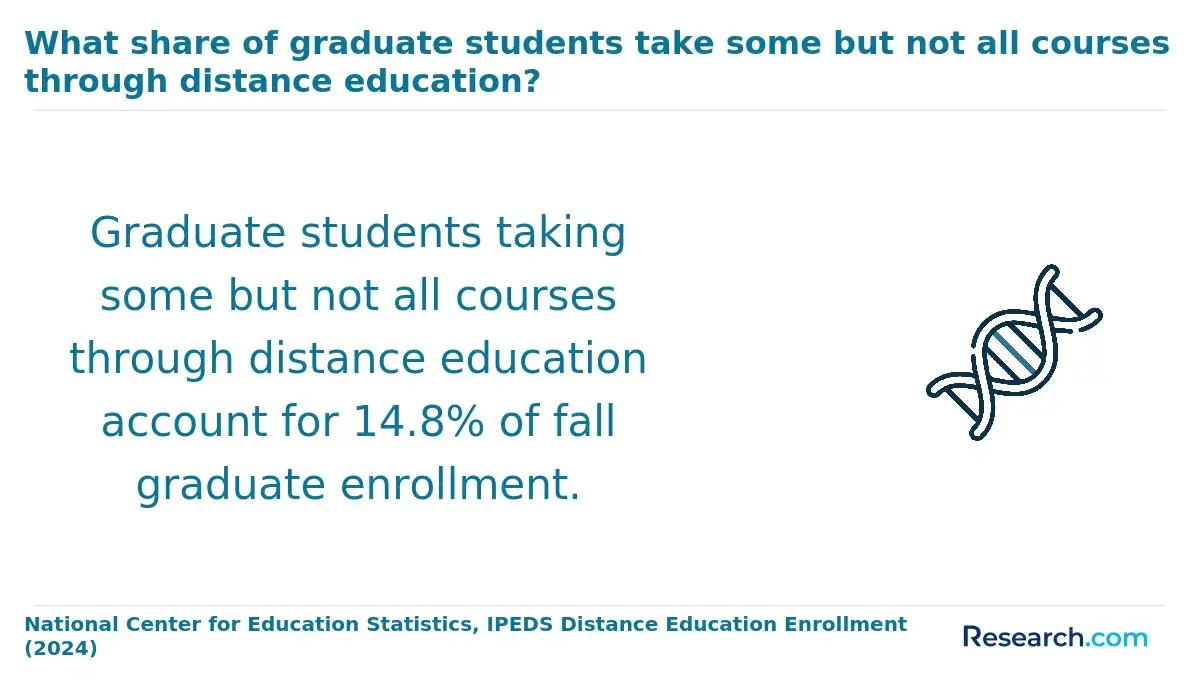
For costs, request the current tuition and mandatory-fee schedule for your enrollment status. Add any program-specific technology, computing, travel, or materials costs, and consider the income or time you would give up. Restricted-data work may require approved infrastructure rather than a personal computer. A guide to covering the cost of a data science master's can help you investigate funding options; verify eligibility and current terms with each school rather than treating aid as guaranteed.
Which Accreditation Standards Apply to Data Science Master's Programs?
Check the institution's current accreditation status through the accreditor and the U.S. Department of Education's recognized-accreditor information. Institutional accreditation is a baseline school-level check; it does not certify that a particular capstone has genomic data, appropriate supervision, or employer value. Do not assume a genomics-focused data science degree needs a special genomics accreditation merely because its projects use biological data.
If you need federal student aid, employer reimbursement, or a credential accepted for further study, confirm the relevant eligibility rules directly with the school and the organization making that decision. Evaluate capstone quality separately through project requirements, faculty expertise, and examples of completed work.
What Careers Can Genomic Data Analysis Capstones Prepare You For?
A well-executed capstone can support applications for roles involving bioinformatics, computational biology, research data science, or analytical work in genomics-oriented organizations. Its value depends on the role: a reproducible pipeline may be especially relevant to computational research, while a carefully evaluated predictive model may be more relevant to a data science team. Neither project replaces the domain experience, laboratory knowledge, or other qualifications an employer specifies.
Choose a project that produces evidence for your intended role, and ask employers or alumni which deliverables they can meaningfully assess. If your goal is primarily general AI engineering rather than analysis of genomic data, a different degree may be a better fit; AI master's programs with sub-two-year pathways provide a separate format to compare. Faster completion, however, should not outweigh the project access and domain guidance you need for a genomics career.
What Salaries and Job Outlook Apply to Genomics Data Science Careers?
The U.S. Bureau of Labor Statistics reports a $120,230 median annual wage for data scientists in May 2025. That figure describes a broad occupation, not pay specifically for genomics capstone graduates, new master's graduates, or any particular employer. Prior experience, responsibilities, location, and organization all affect an individual offer.
BLS also projects 35% employment growth for data scientists from 2025 to 2035. This signals a strong outlook for the wider occupation but cannot establish how many openings will involve genomics. When weighing degree cost against potential earnings, compare actual postings for your target roles and locations, note their required skills, and avoid treating an occupational median as a return promised by the degree.
Other Things You Should Know About Data Science
Not necessarily. A thesis generally emphasizes a sustained research contribution, while a capstone may emphasize applied problem-solving and a deliverable. Schools define both terms differently, so compare their actual requirements and supervision.
Yes, particularly for testing a workflow or demonstrating reproducibility. Be explicit about how the data were generated and which findings cannot be generalized to real biological samples.
Only if the applicable data-use agreement, collaborator permissions, and school policies allow it. Settle publication and portfolio permissions before choosing the project; a public methods description may be possible even when the underlying data cannot be shared.
No. A capstone demonstrates project skills, not authorization to provide clinical interpretation or patient advice. Clinical responsibilities depend on the role, employer, and applicable professional or regulatory requirements.
References
- Methods for Stratification and Validation Cohorts: A Scoping Review - PMC https://pmc.ncbi.nlm.nih.gov/articles/PMC9144352/
- WHO releases new principles for ethical human genomic data collection and sharing https://www.who.int/news/item/20-11-2024-who-releases-new-principles-for-ethical-human-genomic-data-collection-and-sharing
- Privacy in Genomics | Genome.gov https://www.genome.gov/about-genomics/policy-issues/Privacy
- Health Informatics Capstone - O'Donnell School of Public Health | UT Southwestern, Dallas, TX https://osph.utsouthwestern.edu/degree-programs/health-informatics/capstone.html
- Master of Science in Human Genetics and Genomic Data Analytics | kgi.edu https://www.kgi.edu/degrees-and-programs/healthcare/master-of-science-in-human-genetics-and-genomic-data-analytics/index.html
- Public Use Datasets | fiu.edu https://research.fiu.edu/irb/public-use-datasets/
- Data Science in Biomedicine Masters Program | Computational Medicine Online Master's Program https://datasciencebiomedicine.ucla.edu/layout-page/data-science-biomedicine-masters-program
- MS in Data Science - Genomics Track: Graduate Program | rochester.edu https://www.hajim.rochester.edu/dsc/graduate/ms-genomics.html
- Assessing by Capstone Project | UNSW Staff Teaching Gateway https://www.teaching.unsw.edu.au/capstone-project
- Finding Datasets for Secondary Analysis: Recommended | jhmi.edu https://browse.welch.jhmi.edu/datasets/nih-data-repositories