
2027 Online BA in Psychology - General Psychology for Psychology of Problem Solving: Which Courses Should You Look For?
Audited and Verified:
Our Editorial and Data Verification Process
Research.com uses government datasets, official education statistics and primary institutional information to support its career and degree guides. Our review process checks factual accuracy, occupational definitions, source dates and the requirements associated with the credentials discussed.
How This Article Was Fact-Checked
Our editorial team verifies salary estimates, employment projections, education requirements and program information against original data providers and official organizations. Salary figures are checked against the relevant occupational definitions and reporting periods. Information about licensure, accreditation and required in-person training is reviewed separately.
Fact-checked and verified on:

Co-Founder and Chief Data Scientist
An online BA in general psychology can teach you to investigate why a problem occurs, evaluate evidence, and test a possible solution. But course titles alone do not show whether a program gives you enough practice to do those things.
If you are choosing a major or returning to finish a degree, this guide identifies the courses and learning experiences that matter most. It also explains how to check online delivery, cost, and career fit so you can choose a program for the problems you want to solve.
Key Things You Should Know
- Prioritize statistics, research methods, cognitive psychology, and an applied project; together, they provide a stronger problem-solving foundation than a collection of topic electives alone.
- Check the sequence, not just the catalog: a typical bachelor's degree requires about 120 semester credits, and delayed prerequisites or infrequently offered courses can extend completion.
- A general psychology BA can support nonclinical work, but it does not qualify you to diagnose conditions, provide psychotherapy, or practice as a licensed psychologist.
What Is an Online BA in General Psychology for Problem Solving?
An online BA in general psychology is a broad undergraduate degree, not usually a credential formally named "psychology of problem solving." Students study behavior and mental processes across several areas of psychology, typically alongside general education and electives.
A BA may allow more room for electives outside the major than some BS curricula, but the actual requirements, not the letters on the diploma, determine how much research and quantitative preparation you receive.
For problem solving, the useful question is whether the curriculum teaches you to define a problem, consider competing explanations, examine evidence, and evaluate an intervention without claiming more than the evidence supports.
That approach can be useful in research support, community programs, education-adjacent work, and organizational settings. For a broader view of degree formats before comparing individual course sequences, see psychology degree planning for prospective online students.
Is an Online Psychology Bachelor's Degree Accredited?
Accreditation depends on the institution, not on whether courses are online. Confirm the school's current institutional accreditation through the accreditor or the U.S. Department of Education's accreditation database, and check that the online BA is awarded by that institution. Also confirm that the accreditation and program details apply to the campus or online division where you would enroll.
Do not look for American Psychological Association accreditation as a general BA quality seal: APA accreditation covers specified professional psychology training programs, not general psychology bachelor's degrees. Institutional accreditation also does not establish eligibility for a state-regulated job.
If your goal is addiction-service work, compare the academic degree with the credential rules for the state and role you want; lower-cost addiction counseling bachelor's career preparation is a separate decision from choosing a broad general psychology major.
What Courses Should You Look For in General Psychology Programs?
The strongest course combination depends on the problems you hope to address. The table distinguishes foundational courses from electives and shows what each contributes; course names and whether they are required vary by school.
| Course or experience | Contribution to problem solving | What distinguishes a stronger option |
| Statistics | Interpreting variation, uncertainty, and group differences | Practice with real or realistic datasets and interpretation, not calculation alone |
| Research methods or experimental psychology | Forming testable questions and assessing study design | Attention to sampling, confounding, ethics, and limits on causal claims |
| Cognitive psychology | Understanding attention, memory, judgment, and decision-making | Applying findings to errors and choices without assuming everyone thinks alike |
| Social psychology | Examining how groups and situations influence behavior | Evaluating context rather than attributing every problem to individual traits |
| Developmental or learning psychology | Understanding how abilities and behavior change with experience and age | Connecting proposed solutions to the people they are meant to serve |
| Capstone, research project, or approved applied elective | Integrating theory, evidence, and a clearly bounded recommendation | Faculty feedback and a deliverable that explains methods and limitations |
Start with introductory psychology and any math prerequisites, then take statistics before research methods if the program permits. Cognitive and social psychology add different explanations for why a solution might work. Finish with a project that requires you to defend your reasoning.
If graduate study is a possibility, check prospective programs' prerequisites before spending elective space; fast-track graduate psychology programs may leave less room to repair a missing methods foundation later.
Online study can provide the same subject matter as campus study, but access to practice and feedback varies. An asynchronous lecture may fit around work; a scheduled research meeting, group project, proctored exam, or local placement may not. Campus students may have easier access to laboratories and informal faculty contact, while online students may need to arrange those opportunities deliberately.
Ask how often students analyze data, receive feedback on research designs, meet faculty, and complete group work. Confirm whether a capstone can use public or appropriately authorized data rather than assuming you will have access to client records.
Online format matters at later degree levels too: when comparing shorter online forensic psychology master's pathways, distinguish a compressed course schedule from genuinely flexible weekly attendance. The same distinction applies to a BA.
First-year applicants generally need a high school diploma or equivalent and the institution's required application materials. Transfer applicants usually submit transcripts from every college attended. Schools differ on GPA thresholds, application deadlines, testing policies, and whether admission to the university also admits you to the psychology major.
If you are returning to college, request a degree audit before choosing courses. A school may accept a statistics course as elective credit without counting it toward the psychology major; research-methods equivalencies can be especially important for sequencing.
Ask the registrar or psychology department for a written ruling on substitutions and remaining requirements. For an alternative specialization, review online addiction psychology bachelor's admissions and coursework separately rather than assuming its requirements match those of a general BA.
A conventional bachelor's curriculum is about 120 semester credits and is often planned as four years of full-time study. Your remaining time depends on approved transfer credits, enrollment pace, prerequisite order, and when required courses run. Part-time study can make weekly work manageable but may extend the period over which you pay fees.
For a useful cost comparison, ask each school for a degree audit and a term-by-term estimate covering remaining tuition, mandatory fees, books or software, and any required travel.
Compare the cost to finish, not the advertised per-credit price alone, and check financial-aid eligibility against your planned course load. Cost-focused comparisons of psychology degrees can help identify candidates, but only an individual school can confirm how your credits will apply.
Employer Confidence in Online vs. In-Person Degree Skills, Global 2024

A strong curriculum helps you turn a broad concern, such as low participation in a community program, into a defined question. You learn to distinguish an observation from an explanation, choose a measure that fits the question, look for alternative causes, and communicate a recommendation with its limitations.
Statistics helps you judge whether an apparent difference is meaningful; research methods helps you decide whether the evidence supports a causal claim at all.
For an early-career student, a supervised project can make those skills visible to an employer: an evidence review, an analysis of permitted data, or a proposed evaluation plan is more informative than simply listing course titles.
A justice-related interest could later lead to short-format forensic psychology graduate program choices, but specialized study is worthwhile only if its methods and career fit justify the added time and cost. It does not create investigative or clinical authority.
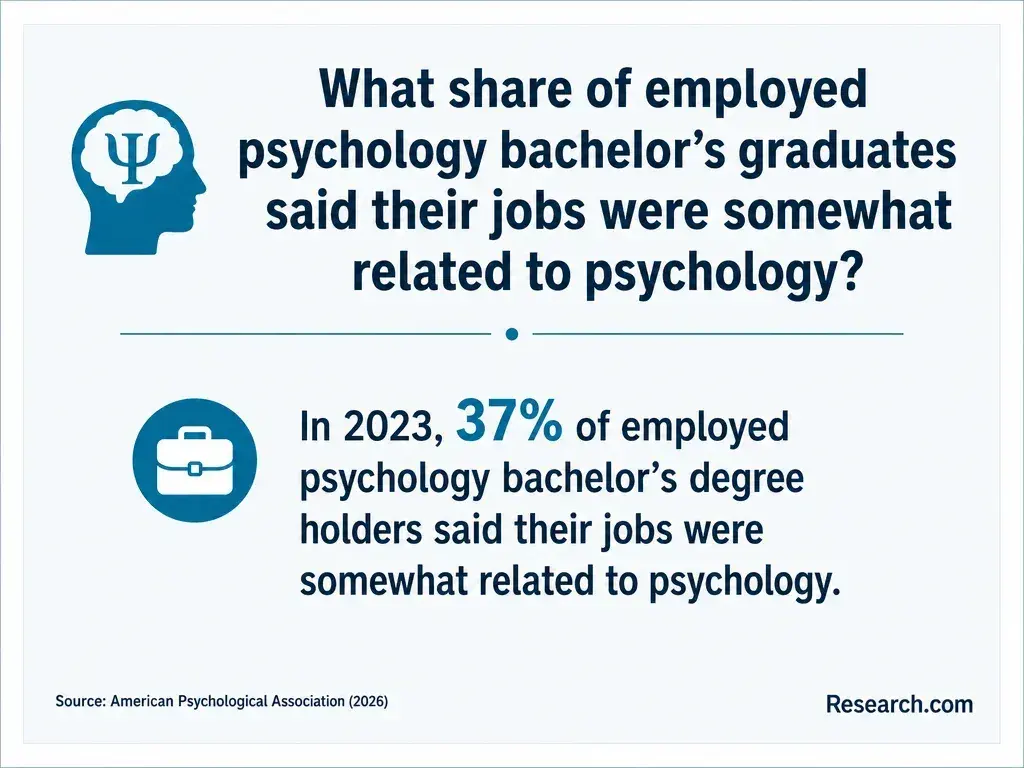
A general psychology BA can support applications for nonclinical positions such as research assistant, program assistant, intake or service coordinator, and some human-services support roles.
Responsibilities may include organizing study materials, documenting referrals, helping deliver approved programs, or tracking outcomes. Employers may also require experience, background checks, technical skills, or a different major; the degree alone does not establish eligibility.
Choose experience that matches the work you want. A research-minded student should seek supervised data and documentation tasks, while someone interested in community services may benefit more from an approved service placement and training in referral boundaries.
For justice-system interests, comparing jobs associated with forensic psychology graduate education can clarify how support, research, and licensed specialist roles differ before you invest in a specialization.
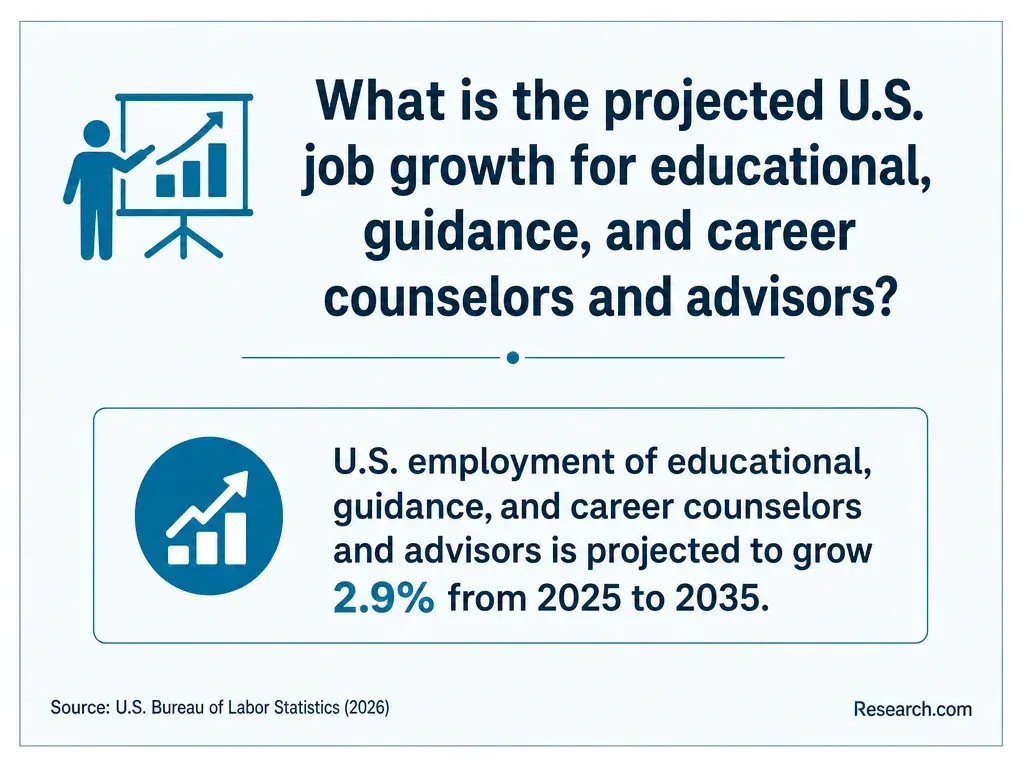
There is no single salary or growth rate for general psychology BA graduates: pay follows the occupation, location, employer, and experience. For a target job, use the U.S. Bureau of Labor Statistics Occupational Outlook Handbook entry that matches its actual duties and entry requirements. An occupation-wide median is not a starting salary or an outcome for graduates of a particular program.
Compare likely entry roles with the full cost of any additional education. A master's degree may strengthen preparation for certain research or applied positions, but it is not automatically needed for a support role or sufficient for a licensed one. Budget-friendly online psychology graduate degrees are worth examining only after you identify a job or research goal for which graduate training offers a clear advantage.
Does a Psychology Bachelor's Degree Qualify You for Licensure or Certification?
A general psychology BA does not, by itself, qualify you to practice as a licensed psychologist, independently assess or diagnose conditions, or provide psychotherapy.
Those activities require the education, supervised training, examinations, and authorization specified by the relevant state and profession. Some support occupations have separate certifications or employer training requirements; rules and permitted duties vary.
If your goal is counseling, examine a degree specifically designed around the state's counselor-licensure educational requirements rather than assuming a psychology BA or general psychology MS meets them.
Accelerated online master's preparation in mental health counseling is one possible next-path comparison, but verify program recognition, fieldwork, and state-board rules before applying. For nonclinical problem-solving work, targeted experience or coursework may be a more direct next step.
Other Things You Should Know About Psychology Programs
You need to become comfortable interpreting statistics, but you do not need to arrive as an expert. Check the math prerequisites and seek tutoring early if interpreting graphs or probability is new to you.
Follow your course's AI policy. Verify any generated citations or claims yourself, document permitted use, and never enter confidential participant or client information into an unapproved tool.
Choose a narrow question, an accessible and permitted evidence source, and an output you can finish within the course. A careful comparison of possible explanations is better than an unsupported claim that an intervention works.
Not automatically. Ask the department whether prior learning can satisfy a requirement and what documentation it needs. Even relevant work may not replace a course that requires faculty-assessed research methods.
- Online group projects in higher education - PMC https://pmc.ncbi.nlm.nih.gov/articles/PMC10038701/
- Online Psychology, BS | UCF Online https://www.ucf.edu/online/degree/psychology-b-s/
- 4 Types of Psychology Degrees: Picking the Right Program | Bouvé College of Health Sciences https://bouve.northeastern.edu/news/4-types-of-psychology-degrees-picking-the-right-program/
- The 12 Types of Experiential Learning | utk.edu https://experiencelearning.utk.edu/about/types/
- B.S. in Psychology Courses, Online or In-Person | Wilmington University https://www.wilmu.edu/behavioralscience/psychology-curriculum.aspx
- Transfer Credit Policies - Georgia State Admissions https://admissions.gsu.edu/transfer-and-transition-resource-center/transfer-to-gsu/transfer-credit-policies/
- Statistics in psychological research | apa.org https://www.apa.org/education-career/training/psyclearn-research-statistics
- Psychology (PSYC) | unomaha.edu https://catalog.unomaha.edu/undergraduate/coursesaz/psyc/
- General Psychology | Online Bachelor's Degree | Capella University https://www.capella.edu/online-psychology-degrees/bs-psychology-program/bachelors-general-psychology/
- 20 Types of Psychology Specializations: Find Your Path | Alliant University https://www.alliant.edu/blog/psychology-specializations-which-is-right-for-you


