2027 Online BA in Psychology - General Psychology for Psychology of Organizational Change: Which Courses Should You Look For?
Audited and Verified:
Our Editorial and Data Verification Process
Research.com uses government datasets, official education statistics and primary institutional information to support its career and degree guides. Our review process checks factual accuracy, occupational definitions, source dates and the requirements associated with the credentials discussed.
How This Article Was Fact-Checked
Our editorial team verifies salary estimates, employment projections, education requirements and program information against original data providers and official organizations. Salary figures are checked against the relevant occupational definitions and reporting periods. Information about licensure, accreditation and required in-person training is reviewed separately.
Fact-checked and verified on:

Co-Founder and Chief Data Scientist
An online BA in general psychology can help you understand how people respond to workplace change, but the degree title alone tells you little about whether you will learn to evaluate a change initiative. This guide is for prospective students and working professionals considering organizational roles. It identifies the courses worth prioritizing, explains how to judge their applied value, and shows when business training or experience may be more direct. You can use it to compare actual course schedules - not just program descriptions - before committing time and tuition.
Key Things You Should Know
- Prioritize statistics and research methods, social psychology, and industrial-organizational psychology; add organizational behavior or change-management coursework if available.
- Look for an applied project that lets you analyze a workplace question ethically. An elective's title alone does not demonstrate that you can design a survey or interpret results.
- A general psychology BA is not a change-management credential or a psychology license. Relevant work experience, business knowledge, and evidence of applied skills matter when seeking organizational roles.
What Is an Online General Psychology Bachelor's Degree for Organizational Change?
A general psychology BA studies behavior and psychological science across multiple settings. Organizational change concerns how an organization plans, communicates, implements, and evaluates changes to its work. The connection is useful: employees' motivation, group norms, leadership, and perceptions of fairness can affect how a change unfolds.
Most general psychology degrees are not formal organizational-change concentrations. You build that direction through electives, a minor, approved projects, or experience alongside the major. Confirm whether a school actually awards a concentration or simply offers related courses. A focused program may fit better if you already know you want a different field; for example, a bachelor's-level addiction psychology program guide addresses a service-oriented focus rather than workplace change.
Which Courses Should You Look For in Organizational Change Psychology Programs?
Start with courses that teach you to explain behavior and test whether an intervention worked. The table separates essential foundations from valuable options; course names and availability vary by school.
| Course area | Why it matters for organizational change | What to check in the syllabus |
| Statistics and research methods | Helps you evaluate surveys, compare outcomes, and recognize weak evidence. | Practice with data, study design, uncertainty, and limits on causal claims. |
| Social psychology | Explains attitudes, influence, group behavior, and perceived fairness. | Application of evidence to groups rather than unsupported persuasion tactics. |
| Industrial-organizational psychology | Connects psychological research to work, teams, leadership, and employee experience. | Coverage of organizations and ethical employee measurement. |
| Cognition, learning, or motivation | Informs training, habit change, and how people process new procedures. | Opportunities to distinguish research findings from workplace assumptions. |
| Organizational behavior, communication, or change management | Adds operational context that a psychology major may not provide. | Projects involving stakeholders, implementation, and evaluation. |
Take introductory psychology and any mathematics prerequisites before the statistics-methods sequence; then use an upper-level organizational elective or capstone to apply those methods. If the desired course is offered infrequently, ask whether an approved business elective can fill the gap. When comparing online psychology degree curricula, check required courses, elective access, prerequisites, and recent schedules rather than relying on course catalogs alone.
A strong applied assignment might ask you to propose how to measure employees' understanding of a new process, identify whose responses may be missing, and explain what the results could - and could not - show. It should not require access to confidential personnel records without authorization.
Is an Online Psychology Bachelor's Degree Accredited and Career-Ready?
Check the institution's accreditation with its recognized accreditor and confirm that the credential awarded is the BA you intend to earn. Institutional accreditation matters for academic quality assurance and can affect credit transfer and federal aid eligibility; it does not certify that a particular course prepares you for organizational change. APA accreditation does not apply to a general psychology BA.
Career readiness calls for a separate test: Does the program offer the methods sequence, organizational electives, substantive feedback, and an accessible project or internship? Ask what students can produce, who supervises applied work, and whether online students can enroll in the relevant courses. Different professional goals require different qualifications: substance use counseling education and degree options, for example, should be assessed against the applicable state's credential rules, not treated as interchangeable with a general BA.
The academic questions should be the same in either format: Can you learn research methods, receive feedback on analyses, and collaborate on a realistic organizational problem? Online delivery may make lectures easier to schedule, while campus study may offer more convenient access to research teams or local employer relationships. Neither advantage is automatic.
Ask whether statistics labs, group projects, faculty meetings, and presentations are asynchronous, scheduled live, or held on campus. Also check whether an internship requires an approved local site. Online programs aimed at clinical careers can have substantially different placement obligations; online mental health counseling master's timelines should not be used to predict the schedule of a nonclinical psychology BA.
Undergraduate admission commonly involves prior school transcripts and an application, but institution and major-entry rules differ. Transfer applicants should distinguish credits a school accepts from credits it applies to psychology, statistics, general education, or graduation requirements. A prior business statistics course, for example, may not automatically replace the psychology major's required statistics course.
Request a written degree audit before planning your course sequence. Ask which prerequisites remain, whether upper-level electives have enrollment restrictions, and how often they run online. The institution makes the final equivalency decision; this college credit evaluation for psychology majors guide can help you prepare questions, not guarantee a particular transfer outcome.
Time and cost depend on the credits that apply to your degree, enrollment pace, tuition and fees, and the availability of required courses. A low advertised per-credit price may not be the least expensive route if key electives are unavailable or a required sequence delays completion.
For a meaningful comparison, obtain a school-specific remaining-course plan and estimate tuition and mandatory fees for those courses. Include materials, software, any travel, and the effect of reducing work hours for an internship. Compare that estimate - not just a posted tuition rate - when comparing affordable psychology colleges online. Ask financial-aid staff how your intended enrollment pace affects eligibility before changing your schedule.
The most transferable combination is behavioral explanation, evidence evaluation, and clear communication. Social and organizational psychology can help you frame questions about trust or teamwork. Methods courses help you choose measures and spot selection bias. Writing and presentation assignments help you explain findings without claiming that a correlation proves a change caused an outcome.
Build evidence of these skills through an authorized, nonclinical project: a literature review, a proposed employee-feedback plan, or an analysis of public data. If a current employer is involved, obtain approval before collecting responses or using internal information; check privacy, consent, and institutional review requirements as applicable. If you already hold a bachelor's degree and mainly need deeper research training, compare targeted coursework with affordable MA and MS psychology programs online rather than assuming a second BA is necessary.
Potential nonclinical targets include HR or training support, employee-experience coordination, recruiting, program coordination, and research support. Duties vary: an HR assistant may manage records and communications, while a program coordinator may track whether staff completed training. More independent organizational development or analyst roles often call for substantial experience and additional technical or business skills.
Start with the work you already know. Someone who has helped roll out procedures may need stronger survey and analysis skills; someone with research coursework may need employer-facing project experience. If your intended work is recovery support rather than organizational change, review recovery-focused roles and qualifications instead of assuming the same job requirements apply. A psychology BA alone does not establish eligibility for any particular opening.
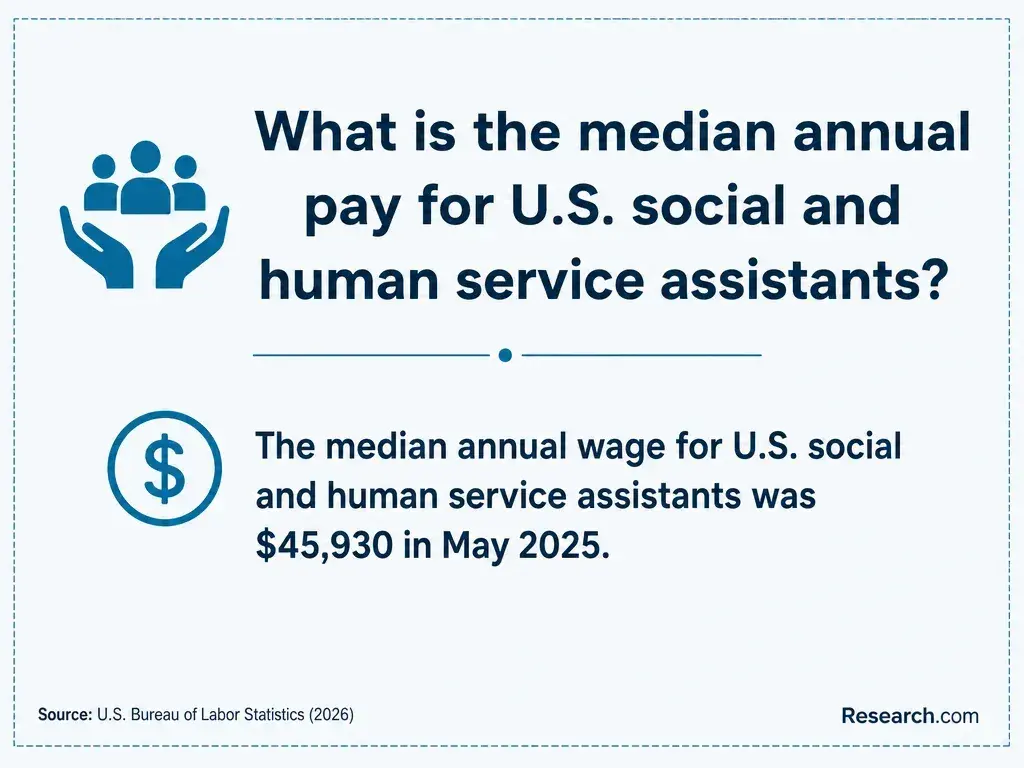
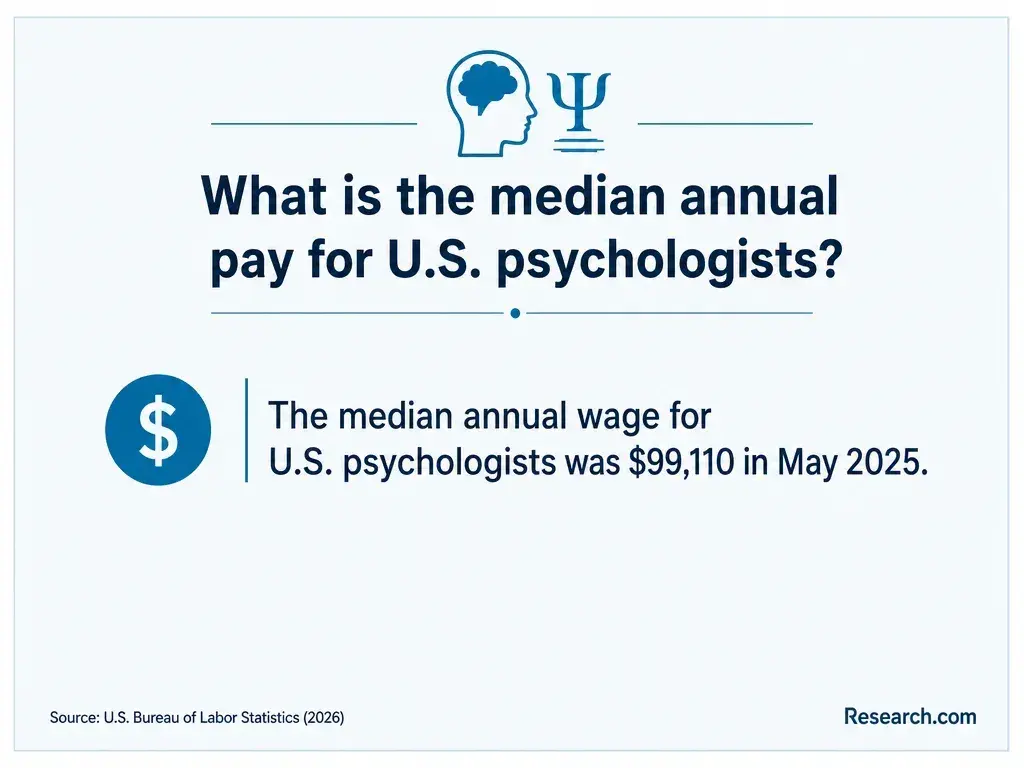
There is no single salary or job-growth figure for "organizational change psychology" BA graduates. Compensation and outlook should be checked against a specific occupation - such as human resources specialist or training and development specialist - using the latest U.S. Bureau of Labor Statistics Occupational Outlook Handbook entry. Its occupation-wide median is not a starting salary or a forecast for graduates of a particular program.
Match the occupation's stated duties and typical entry requirements to local job postings before using its figures in a return-on-investment decision. Do not compare an organizational support role's pay directly with a licensed counseling occupation's pay without accounting for different credentials, supervised training, and costs. That distinction also matters when reviewing shorter online counseling master's financial comparisons.
Does a Psychology Bachelor's Degree Lead to Licensure or Professional Certification?
No general psychology BA by itself qualifies someone to practice as a licensed psychologist, diagnose conditions, provide psychotherapy, or independently administer restricted psychological assessments. Organizational change work is generally nonclinical, but employers may still expect experience or a role-specific professional certification. Certification eligibility and value depend on the issuing organization and the job.
If your goal is a regulated profession, identify the exact state and credential before choosing further education. Even faster pathways through graduate psychology coursework are not shortcuts around the requirements of a qualifying professional program, supervised practice, or licensure. If your goal is workplace change, prioritize relevant coursework and demonstrable projects over collecting credentials without a defined use.
Other Things You Should Know About Psychology
Compare the actual requirements, not the letters. Choose the route that leaves room for rigorous methods, organizational electives, and relevant experience while meeting your other academic goals.
No. Industrial-organizational psychology applies psychological science to work; change management also involves implementation, operations, and stakeholder coordination. Their coursework can complement each other.
Possibly, if your program approves its scope and supervision and your employer authorizes the work and any data use. Employment alone does not make a project an approved capstone.
Ask whether an approved business, management, or communication course can count. If not, compare programs - or pursue targeted training alongside a psychology major with strong research methods.
- Accreditation in the U.S. | ed.gov http://www.ed.gov/laws-and-policy/higher-education-laws-and-policy/college-accreditation/accreditation-in-the-us
- Internships and Capstones | Career Preparation https://scds.uoregon.edu/career-preparation/internships-capstones
- Change Management Jobs: Roles, Skills and Career Paths | EWU https://online.ewu.edu/degrees/business/mba/organizational-leadership/change-management-jobs/
- A Guide To Experiential Learning, Internships, Capstones, and Practicums - UOnline - The University of Utah https://online.utah.edu/blog/posts/learning-experiences.php
- 10 Industrial-Organizational Psychology Jobs to Consider | Touro University Worldwide https://www.tuw.edu/psychology/industrial-organizational-jobs/
- Psychology careers guide | apa.org https://www.apa.org/education-career/guide/careers
- Starting and Maintaining a Quality Internship Program | Engineering Career Center https://ecc.ku.edu/starting-and-maintaining-quality-internship-program
- What Is I/O Psychology? | Purdue Global https://www.purdueglobal.edu/blog/psychology/what-is-industrial-organizational-psychology/
- The Psychology Behind Change Management | JWU Online https://online.jwu.edu/blog/the-psychology-behind-change-management/
- 5 Critical Steps in the Change Management Process | Harvard Business School https://online.hbs.edu/blog/post/change-management-process