2027 Online Applied Psychology Doctorate Programs with No Dissertation Requirement

Co-Founder and Chief Data Scientist
Choosing an online applied psychology doctorate without a dissertation is really a choice between research training and applied problem-solving. The distinction matters because the U.S. Bureau of Labor Statistics lists a $94,310 median annual wage for psychologists in its May 2024 data, but career paths vary sharply by license, specialization, and degree type.
This guide is for working professionals comparing PsyD, EdD, DBH, and other applied doctoral options. You will learn what replaces the dissertation, how to verify legitimacy, what costs to expect, and when a dissertation-free route makes sense.
Key Things You Should Know
- Yes, some online or mostly online applied psychology doctorates replace the traditional dissertation with a capstone, applied doctoral project, portfolio, consulting project, or practice-based research study, but they still require advanced writing and evidence-based analysis.
- No-dissertation options are most common in professional doctorates such as PsyD, EdD, DBH, and organization-focused doctoral programs; they are less common in research PhD programs and may not fit academic faculty or research-scientist goals.
- Before enrolling, verify institutional accreditation, state licensure alignment, total tuition and fees, residency requirements, and the exact final project rules; BLS data projects 6% employment growth for psychologists from 2024 to 2034, but degree value depends heavily on specialization and credentials.
Which Online Applied Psychology Doctorate Programs Do Not Require a Dissertation?
Online applied psychology doctorates with no dissertation requirement do exist, but they are not usually advertised as "no work at the end." Instead, schools often describe the final requirement as an applied doctoral project, capstone, portfolio, professional practice project, or doctoral research project. The safest way to identify these programs is to read the current academic catalog, not just the marketing page.
Applied psychology is a broad field that uses psychological science to solve real-world problems in organizations, schools, health systems, courts, sport, behavior analysis, coaching, and community services. Because of that breadth, "no dissertation" programs are more likely to appear in professional or practice-oriented doctorates than in traditional research doctorates.
The table below shows the main types of online or mostly online applied psychology doctoral pathways where a dissertation alternative may appear. Use it to understand what kind of program you are actually comparing before you request admissions information.
| Doctoral pathway | Typical focus | Common final requirement | Best fit | Important caution |
| PsyD in applied, organizational, sport, or human performance psychology | Professional use of psychology in practice settings | Applied doctoral project, practice project, or capstone | Practitioners, consultants, coaches, and managers using psychology outside traditional research roles | Not every PsyD is licensure-oriented, and not every PsyD avoids a dissertation |
| EdD with psychology, learning, counseling, behavior, or human development emphasis | Education, leadership, learning systems, and applied behavioral problems | Capstone, dissertation-in-practice, or improvement project | School leaders, training directors, student-support professionals, and education consultants | Some EdD programs still require a dissertation or dissertation-in-practice that is dissertation-like |
| Doctor of Behavioral Health or behavioral science doctorate | Integrated care, behavioral health systems, health behavior, and service delivery | Applied project, portfolio, or systems-improvement project | Behavioral health administrators and professionals working in health systems | Clinical licensure depends on prior credentials and state rules, not the doctorate alone |
| Doctorate in industrial-organizational or business psychology | Workplace behavior, assessment, leadership, talent systems, and organizational change | Consulting project, applied research project, or capstone | HR leaders, consultants, executive coaches, and organizational development professionals | Research-heavy I-O PhD programs usually require a dissertation |
| Doctorate related to applied behavior analysis | Behavior assessment, intervention design, supervision, and program evaluation | Capstone, applied project, or dissertation depending on school | Experienced ABA professionals seeking leadership, research-practice integration, or faculty-adjacent roles | BCBA eligibility is tied to specific coursework, fieldwork, exams, and certification rules |
A practical search strategy is to use both degree and final-project terms: "online PsyD applied psychology capstone," "online EdD psychology dissertation in practice," "online doctor of behavioral health applied project," and "online organizational psychology doctorate no dissertation." Then confirm the curriculum sequence course by course.
What Replaces the Dissertation in an Online Applied Psychology Doctorate?
In a legitimate dissertation-free applied psychology doctorate, the dissertation is usually replaced by a structured project that applies research to a real professional problem. The key difference is that the project is designed for practice improvement rather than producing an original scholarly contribution for an academic research audience.
The table below compares common doctoral completion models. It can help you decide whether the final requirement matches the kind of work you want to do after graduation.
| Completion requirement | Main purpose | Typical output | Research intensity | Career alignment |
| Traditional dissertation | Create original research that contributes to scholarly knowledge | Long research manuscript with proposal, methodology, data analysis, findings, and defense | Highest | Best for academic, research, and PhD-level scholarly roles |
| Capstone | Apply theory and evidence to a defined professional problem | Project report, implementation plan, evaluation, presentation, or portfolio | Moderate to high | Strong fit for working professionals and practice leaders |
| Applied doctoral project | Study or improve a real-world system, service, intervention, or organizational process | Needs assessment, intervention design, evaluation plan, measurable outcome analysis, and defense | High, but practice-focused | Useful for consultants, administrators, behavior specialists, and organizational leaders |
| Dissertation-in-practice | Solve a persistent problem of practice using systematic inquiry | Improvement study, implementation analysis, or action research report | High, often similar to a dissertation in workload | Common in EdD pathways for education and leadership settings |
| Portfolio or competency demonstration | Show mastery across professional competencies | Evidence portfolio, reflective analysis, case studies, and faculty review | Variable | Best when tied to professional standards and measurable competencies |
Students sometimes assume "no dissertation" means "no research," but that is rarely true. You may still complete literature reviews, data collection, program evaluation, ethical reviews, statistics courses, and a formal defense. The difference is that your work is judged by how well it addresses an applied problem, not by whether it produces publishable original research.
For example, an ABA-focused doctoral student might evaluate intervention fidelity across service sites, while someone still exploring master's-level ABA credentials may first compare the fastest BCBA program before committing to a doctorate. The right sequence depends on whether you need certification, leadership preparation, or advanced applied research skills.
Are Online Applied Psychology Doctorate Programs Without Dissertations Legitimate and Accredited?
A no-dissertation online applied psychology doctorate can be legitimate, but only if the school is properly accredited and the degree matches your intended use. Accreditation matters because it affects federal financial aid eligibility, transferability, employer recognition, licensure review, and credibility with professional organizations.
The most important distinction is institutional accreditation versus programmatic accreditation. Institutional accreditation reviews the university as a whole. Programmatic accreditation reviews a specific professional program, and it is especially important when the degree is tied to psychology licensure or a regulated clinical role.
Use the table below to separate accreditation questions that apply to most doctoral students from those that matter only for certain career paths:
| What to verify | Why it matters | Where to check |
| Institutional accreditation | Shows that the university meets recognized academic and administrative standards | U.S. Department of Education database, accreditor directory, and the school catalog |
| APA accreditation | Often important for clinical, counseling, and school psychology licensure pathways | APA accredited program listings and state psychology board rules |
| State authorization | Confirms whether the school can enroll online students in your state | School disclosures and state authorization pages |
| Licensure alignment | Determines whether the curriculum, practicum, internship, and supervision meet state requirements | Your state licensing board before enrollment |
| Final project language | Prevents confusion between a true capstone and a renamed dissertation | Current academic catalog, doctoral handbook, and syllabi, if available |
Students aiming for clinical practice should be especially careful. A dissertation-free applied doctorate may be valuable for leadership, consulting, coaching, education, or organizational roles, but it may not satisfy psychologist licensure requirements. If your end goal is therapy or clinical assessment, compare doctoral requirements against state rules and consider whether an online clinical psychology masters is a more appropriate step before doctoral study.
Are No-Dissertation Online Applied Psychology Doctorate Programs Easier to Complete?
No-dissertation doctorates are not automatically easier. They may be more practical for working adults because the final project is connected to workplace problems, but that does not mean the academic bar is lower. In many programs, the capstone or applied project requires advanced literature review, research design, data interpretation, ethics review, and faculty approval.
The main difference is the kind of difficulty. A dissertation is difficult because it requires original scholarly research and often a long, independent writing process. A capstone is difficult because it requires practical execution: defining a real problem, designing an evidence-based response, measuring outcomes, and explaining the implications for a professional setting.
Students who do well in dissertation-free formats usually prefer structured milestones and applied deliverables. They are often comfortable working with real clients, organizations, schools, or service systems. Students who prefer theory-building, publication, independent research design, or academic careers may find a dissertation-based doctorate more valuable even if it takes longer.
Common mistakes include treating "capstone" as a shortcut, underestimating the writing load, assuming a workplace project will be easy to approve, and waiting too long to secure access to data or a project site. A better approach is to ask for sample project titles, defense requirements, grading rubrics, and average completion patterns before you enroll.
How Long Does It Take to Complete an Online Applied Psychology Doctorate Without a Dissertation?
Most online applied psychology doctorates without a traditional dissertation take about three to five years of part-time or full-time study, depending on transfer credits, course load, residency requirements, and the final project design. The absence of a dissertation can reduce the risk of a long dissertation delay, but it does not remove the need for a substantial culminating experience.
The table below summarizes typical timeline patterns by doctoral structure. Use it as a planning tool, not a guarantee, because schools calculate time differently and some limit how many credits can transfer.
| Program structure | Typical pacing | Timeline factors that can shorten completion | Timeline factors that can delay completion |
| Professional PsyD with applied project | Often structured in sequential doctoral courses | Year-round enrollment, transfer credits, early project planning | Residencies, practicum rules, clinical requirements, project revisions |
| EdD with capstone or dissertation-in-practice | Often cohort-based or milestone-based | Clear problem of practice, employer support, existing access to a project site | Changing jobs, unclear data access, committee delays |
| DBH or behavioral health doctorate | Often designed for working professionals | Relevant professional background, integrated workplace project | Project approvals, ethics review, competing work obligations |
| Organizational or business psychology doctorate | Often flexible online with applied research milestones | Consulting experience, strong quantitative or evaluation skills | Difficulty gaining organizational data, scope creep |
To estimate your personal timeline, ask admissions advisors how many students finish the capstone on the first attempt, when project planning begins, whether the project requires external site approval, and whether courses are offered every term. A program that starts project development early is often easier to finish on time than one that waits until the final year.
How Much Do Online Applied Psychology Doctorate Programs Without Dissertations Cost?
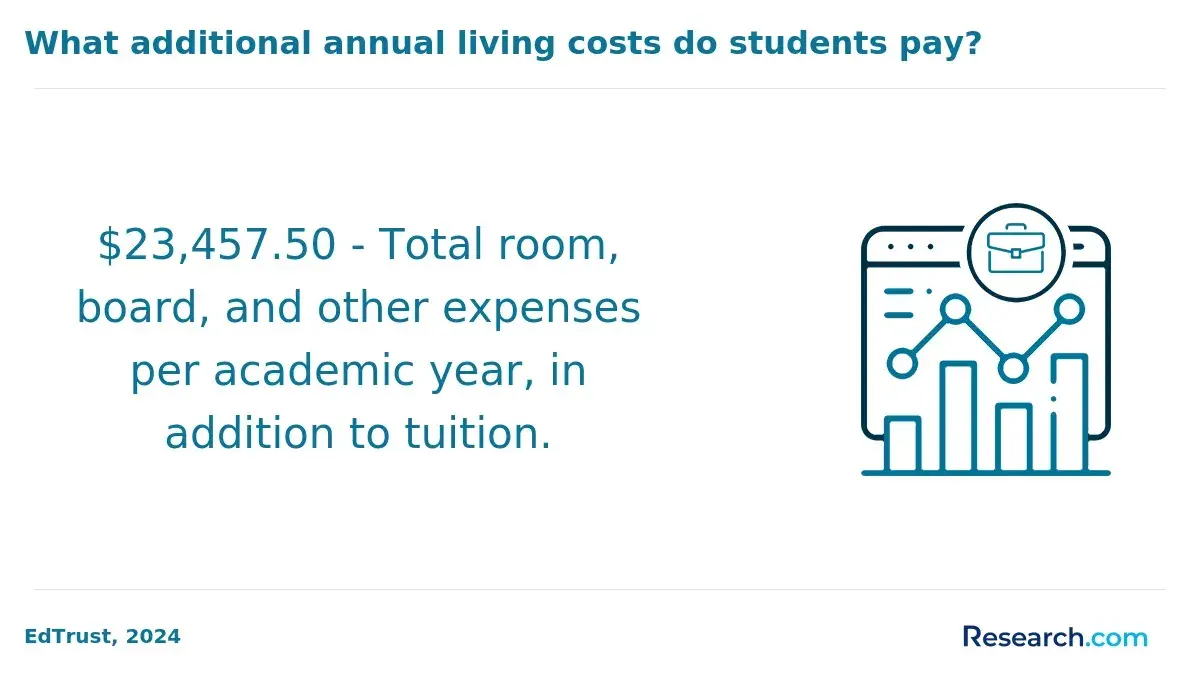
Costs vary widely because online applied psychology doctorates differ in credit length, tuition model, residency requirements, transfer-credit policies, technology fees, and final project costs. The most useful comparison is total estimated cost to degree, not tuition per credit alone.
For context, the National Center for Education Statistics' Digest of Education Statistics 2024 reports graduate tuition and required fees for the 2022-23 academic year across U.S. institution types. These are broad graduate-level benchmarks rather than doctoral program price quotes, but they help show why institution type and fee structure matter.
- Public institutions: average graduate tuition and required fees of $12,596 for the academic year
- Private nonprofit institutions: average graduate tuition and required fees of $29,931 for the academic year
- Private for-profit institutions: average graduate tuition and required fees of $14,161 for the academic year
The table below shows the major cost categories to compare when evaluating no-dissertation online doctorates. It is especially important to include costs tied to the final project, because those can be easy to overlook during the admissions process.
| Cost category | Why it matters | What to ask the school |
| Tuition model | Per-credit, per-term, and subscription models can produce very different totals | What is the estimated total tuition if I follow the standard plan of study? |
| Transfer credits | Accepted doctoral or master's credits can reduce time and cost | How many credits can transfer, and are transferred credits guaranteed before enrollment? |
| Residency or intensive fees | Some online programs require campus visits, virtual intensives, or professional residencies | Are travel, lodging, residency, or intensive-session fees required? |
| Capstone or project fees | Final projects may involve software, transcription, assessment tools, data access, or continuation enrollment | Are there project course, continuation, or defense fees if my project extends beyond one term? |
| Licensure-related costs | Clinical or behavioral credentials may require exams, supervision, background checks, or state applications | Which costs are outside tuition and paid directly to third parties? |
A dissertation-free doctorate is worth the cost only if the degree supports a specific professional goal. Before borrowing, compare the total price with realistic outcomes in your field, whether the doctorate is required or simply preferred, and whether a lower-cost master's or certificate could achieve the same near-term career move.
Who Benefits Most From an Online Applied Psychology Doctorate Without a Dissertation?
A no-dissertation online applied psychology doctorate is usually best for experienced professionals who want to apply psychological science in leadership, consulting, education, behavior change, program design, or organizational settings. It is less ideal for students whose main goal is tenure-track academic research or a licensed psychologist pathway that requires a specific accredited doctoral structure.
This format can be especially useful when your workplace can become the setting for a capstone or applied project. For example, a school administrator may evaluate a student-support intervention, a behavioral health manager may improve referral workflows, and an organizational consultant may test a leadership development model.
The following groups are often a strong fit, provided the program is accredited and aligned with their career requirements:
- Working professionals who want a doctoral credential without pausing their careers for a full-time campus program
- Educators, school leaders, and child-serving professionals who want to design and evaluate learning, behavior, or student-support interventions
- Organizational leaders, HR professionals, and consultants who use assessment, motivation, training, coaching, and change-management principles
- Behavioral health or human services professionals who want leadership roles in service design, program evaluation, or interdisciplinary care
- Practitioners who prefer a final project tied to measurable workplace outcomes rather than a traditional scholarly dissertation
Students interested in working with children and adolescents should also compare master's pathways before committing to doctoral study. In some roles, child psychology master's programs may provide the more direct preparation, while a doctorate may make sense later for leadership, research-practice integration, or advanced specialization.
You should be cautious if you are entering psychology with little professional experience. Applied doctoral projects often depend on access to real settings, stakeholders, data, or clients. Without a clear practice context, the final project can become harder to define and less valuable professionally.
How Does a No-Dissertation Online Applied Psychology Doctorate Affect Career Opportunities?
A no-dissertation online applied psychology doctorate can support career advancement, but its impact depends on the job market you are targeting. Employers in consulting, education, behavior services, organizational development, human services, and health administration may value applied doctoral training when it directly improves leadership, evaluation, assessment, or intervention skills.
The U.S. Bureau of Labor Statistics projects 6% employment growth for psychologists from 2024 to 2034. That broader outlook suggests steady demand, but it does not mean every applied psychology doctorate leads to the same opportunities; licensure, specialization, supervised experience, and employer expectations still shape outcomes.
Common career uses include organizational consulting, instructional and training leadership, program evaluation, behavioral health administration, student-support leadership, executive coaching, applied research management, and policy or service design. In these roles, a capstone can become a portfolio asset if it demonstrates measurable improvement, ethical research practice, and practical communication.
Technology is also changing applied psychology work. AI-supported assessment platforms, people analytics, telebehavioral tools, and digital coaching systems are increasing demand for professionals who can interpret data ethically, evaluate interventions, and translate findings for decision-makers. A dissertation-free doctorate can still build those skills if the curriculum includes research methods, statistics, ethics, and applied evaluation.
Students interested in legal, correctional, or investigative settings should be careful to match the degree to the role. Some positions may be better served first by forensic psychology master's programs, while doctoral study may be more useful for advanced consulting, evaluation, administration, or expert-level specialization.
How Do No-Dissertation Online Applied Psychology Doctorates Compare With Traditional Doctorates?
No-dissertation online applied psychology doctorates and traditional dissertation-based doctorates can both be rigorous, but they serve different goals. The best choice depends on whether you want to generate original scholarship, qualify for a regulated clinical pathway, or apply psychological science to solve practical problems.
The table below summarizes the major trade-offs. Use it to decide whether the dissertation alternative strengthens or weakens your intended career path.
| Comparison point | No dissertation applied doctorate | Traditional dissertation-based doctorate |
| Primary purpose | Apply evidence to professional problems | Produce original scholarly research |
| Common degree types | PsyD, EdD, DBH, applied professional doctorate | PhD and some PsyD or EdD programs |
| Final requirement | Capstone, applied project, portfolio, doctoral project, or dissertation-in-practice | Traditional dissertation with proposal, study, analysis, and defense |
| Best career fit | Practice leadership, consulting, administration, education, organizational change, program evaluation | Academic research, tenure-track roles, research science, some licensure-focused doctoral pathways |
| Research expectations | Applied research, evaluation, literature use, and professional implementation | Original research design, theory contribution, advanced methodology, and scholarly publication potential |
| Completion risk | May reduce dissertation delays if milestones are structured | Can be delayed by topic approval, data collection, committee review, or major revisions |
| Employer perception | Strongest when the employer values applied outcomes and accredited credentials | Strongest where research productivity, publication, and academic training are valued |
A traditional doctorate often makes more sense if you want to become a licensed psychologist in a state that expects a specific accredited doctoral structure, pursue a research-heavy academic career, or compete for roles where publications and advanced methodology matter. A dissertation-free doctorate may be the better fit if your goal is to lead programs, improve systems, consult, teach in practice-oriented settings, or apply psychology in organizations.
If your goal is clinical practice, do not choose based on dissertation format alone. Compare prerequisites, practicum, internship, supervision, and state licensure rules, and consider whether an online clinical psychology master's is a realistic bridge or alternative for your state and role.
How Should Students Choose an Online Applied Psychology Doctorate Without a Dissertation?
Choosing a no-dissertation online applied psychology doctorate requires more than confirming that the word "dissertation" is missing from the curriculum. You need to know what replaces it, how demanding that requirement is, and whether the degree is respected for your specific career goal.
Use the following step-by-step process to evaluate programs before you apply:
- Confirm institutional accreditation through recognized accreditation databases and the school's current catalog.
- Identify the exact degree type, specialization, and whether the program is designed for licensure, non-licensure practice, leadership, education, consulting, or research-practice roles.
- Read the doctoral handbook or catalog description for the final requirement and look for terms such as capstone, applied doctoral project, doctoral research project, dissertation-in-practice, or portfolio.
- Ask whether the final project requires data collection, site approval, an ethics review, a committee, a defense, continuation enrollment, or publication-style formatting.
- Compare the total estimated cost to a degree, including fees, residencies, transfer-credit limits, software, project expenses, and extra terms if the project takes longer than planned.
- Verify state licensure or certification rules before enrolling if your goal involves clinical psychology, counseling, school psychology, behavior analysis, or another regulated field.
- Ask for recent examples of approved capstone or applied project topics so you can judge whether the work matches your professional interests.
- Review faculty expertise, student support, research-methods preparation, writing support, and project advising structure.
- Contact employers, licensing boards, or professional associations in your target field to understand how they view the degree and final project format.
- Compare the doctorate against lower-cost alternatives, including master's programs, graduate certificates, certifications, and employer-funded training.
Red flags include vague accreditation claims, pressure to enroll quickly, refusal to provide catalog language, "no research required" promises, unclear total costs, no explanation of project supervision, and claims that the degree automatically qualifies you for licensure or a specific salary. Legitimate programs are usually transparent about workload, limitations, and state-by-state requirements.
The smartest choice is the program whose final project helps you produce evidence of professional value. If your capstone can solve a meaningful workplace problem, demonstrate ethical applied research, and strengthen your portfolio, a dissertation-free doctorate can be a practical investment. If you need certification first, compare the doctoral path with a master's-level option such as the fastest BCBA program before committing to a longer and more expensive degree.
Other Things You Should Know About Applied Psychology
Not automatically. In most states, "psychologist" is a regulated title tied to specific education, supervised experience, exams, and licensing rules. A non-licensure applied psychology doctorate may support consulting, leadership, or education roles, but you must check your state board before using protected titles.
Some do and some do not. Even programs marketed as online may require residencies, intensives, clinical training, internship components, or in-person defenses. Always review the academic catalog and state authorization disclosures before applying.
It depends on the role. For practice, consulting, leadership, and program evaluation roles, a strong capstone tied to measurable outcomes can be persuasive. For research faculty roles, a traditional dissertation and publications may carry more weight.
Ask what replaces the dissertation, whether the final project requires a defense, how long students usually take to finish it, what happens if you need extra terms, whether the degree supports licensure in your state, and how total program cost is calculated.
References
- Do You Need a Master’s to Pursue a PsyD? https://www.calsouthern.edu/articles/do-you-need-a-masters-to-pursue-a-psyd/
- Online and Hybrid PhD & PsyD Programs in Psychology https://www.psychologist-license.com/phd/
- What Can You Do With A Ph.D. In Psychology? | Psychology.org https://www.psychology.org/resources/jobs-with-a-doctorate-in-psychology/
- Applying to psychology Ph.D. programs https://www.katenuss.com/advice/applying_to_phd/
- Doctorate in Psychology | Psychology Degree Guide https://psychologydegreeguide.org/degree/doctorate-degree/
- Strategies for a Successful Capstone Project - Graduate Programs for Educators https://www.graduateprogram.org/blog/strategies-for-a-successful-capstone-project/
- Capstone Options in Master's in Communication Programs (Thesis vs Project) https://www.mastersincommunications.com/features/guide-to-graduate-communication-capstone-options