2027 Best Online Applied Psychology Doctorate Programs for Mid-Career Professionals

Co-Founder and Chief Data Scientist
You may already use psychology at work, but a doctorate can change the level at which you lead, research, consult, teach, or design interventions. The U.S. Bureau of Labor Statistics reports a May 2024 median annual wage of $94,310 for psychologists, underscoring why advanced expertise remains valuable in health, education, organizational, and behavioral roles.
This guide is for working professionals comparing online applied psychology doctorates. You will learn how programs differ, what they cost, which careers they support, and how to choose an option that fits your schedule and goals.
Key Things to Know About Online Applied Psychology Doctorate Programs for Mid-Career Professionals
- Online applied psychology doctorates are best for professionals who want to apply psychological science in organizations, health systems, education, behavioral services, consulting, research, or leadership rather than pursue a purely theory-focused academic path.
- Cost planning matters: federal Direct Unsubsidized Loans for graduate students carried an 8.08% interest rate for 2024-25, while Grad PLUS Loans carried 9.08%, so employer support, scholarships, and pay-as-you-go pacing can materially affect ROI.
- Most working adults should compare programs by specialization, accreditation, dissertation support, residency requirements, faculty fit, and weekly workload—not rankings alone—because the best program is the one aligned with the career outcome they actually need.
Is earning an online Applied Psychology doctorate worth it for mid-career professionals?
An online applied psychology doctorate can be worth it when the degree solves a specific professional problem: moving into senior leadership, qualifying for teaching or research roles, building a consulting practice, advancing in behavioral health administration, or gaining expertise in an applied specialty such as organizational psychology, behavior analysis, forensic psychology, or health psychology. It is less likely to be worth it if you only need a shorter credential, a state license that requires a different degree path, or a modest salary increase without a clear promotion route.
The value of the degree depends on career fit more than the title alone. Applied psychology is the practical use of psychological theory, assessment, research methods, and behavior-change strategies to solve real-world problems. A doctorate usually adds advanced research design, program evaluation, leadership, ethics, and specialization depth. For mid-career professionals, the biggest advantage is that coursework and dissertation work can often be tied to existing workplace problems.
The table below summarizes when an online doctorate tends to make sense and when another option may be more practical. Use it to pressure-test your motivation before committing years of time and tuition.
| Decision factor | Doctorate may be worth it when | Consider waiting or choosing another credential when |
| Career goal | You need doctoral-level credibility for executive consulting, applied research, postsecondary teaching, or senior behavioral health leadership. | Your target job only requires a master's degree, certificate, or supervised experience. |
| Licensure goal | The program is designed for the license you need and meets state-specific educational requirements. | You assume any online psychology doctorate leads to licensure without verifying state board rules. |
| Work schedule | You can protect regular weekly study time and attend required residencies or synchronous sessions. | Your work, caregiving, or travel schedule makes sustained research and writing unrealistic right now. |
| Financial return | Your employer, promotion path, consulting market, or leadership role can plausibly support the investment. | You would rely entirely on high-interest borrowing without a clear career use case. |
| Research readiness | You have a workplace problem, population, or applied setting that could support dissertation research. | You dislike research, statistics, writing, or long-term independent projects. |
A doctorate is often strongest for professionals already operating near the ceiling of a master's-level role. If the credential helps you cross into leadership, program design, doctoral teaching, or specialized consulting, the investment may be defensible. If your goal is to switch fields quickly, a graduate certificate or second master's may be faster and less expensive.
Which online Applied Psychology doctorate programs are the best for mid-career professionals?
The best online applied psychology doctorate for a mid-career professional is not always the most famous program. It is the program with the right specialization, realistic delivery format, credible accreditation, strong faculty support, and a dissertation process that can be completed while working.
Because "applied psychology doctorate" is used broadly, strong options may carry different degree titles, including PhD in Psychology, PsyD, Doctor of Behavioral Health, EdD with psychology-related applications, or a doctorate in organizational, behavioral, health, forensic, or human performance psychology. The comparison below highlights common U.S. online or low-residency options professionals often evaluate.
| Program type | Examples of institutions to compare | Best fit for mid-career professionals | Important caution |
| Online PhD in Psychology with applied specializations | Capella University, Walden University, Liberty University, Grand Canyon University, National University | Professionals seeking research, teaching, consulting, organizational, developmental, health, or general applied psychology roles. | Not every PhD in Psychology is licensure-oriented; verify whether the program is designed for your intended credential. |
| Online or low-residency PsyD in applied or organizational psychology | Touro University Worldwide, The Chicago School, selected professional psychology schools | Practitioners who want a practice-oriented doctoral model in human and organizational behavior, consulting, or applied assessment. | PsyD programs vary widely in residency, practicum, and licensure alignment. |
| Doctor of Behavioral Health or integrated behavioral health doctorate | Arizona State University and similar health-focused online programs | Healthcare, behavioral health, case management, and population health professionals moving into integrated care leadership. | This is not the same as a clinical psychology doctorate and may not lead to psychologist licensure. |
| Online EdD with organizational change, counseling-adjacent, or educational psychology applications | USC, Vanderbilt, Baylor, and other universities with online professional doctorates | Education, HR, learning and development, student services, and organizational change professionals. | The degree may be more education-leadership focused than psychology-focused. |
| Low-residency clinical or counseling psychology doctorate | Fielding Graduate University and selected hybrid institutions | Professionals who need a licensure-aligned doctoral pathway but cannot attend a traditional campus program full time. | Accreditation, internship placement, and state licensure rules are critical and must be verified before applying. |
For mid-career students, a practical shortlist should include one affordability-focused option, one specialization-fit option, and one reputation or faculty-fit option. That comparison is more useful than applying only to programs that appear in broad psychology rankings but do not match your work schedule or career outcome.
Common red flags include unclear dissertation milestones, vague faculty availability, required residencies that conflict with work travel, aggressive enrollment pressure, and program pages that do not clearly explain whether the degree is licensure-oriented. If an admissions representative cannot answer these questions in writing, keep comparing.
What specializations are available in Applied Psychology doctorate programs?
Specialization choice is one of the most important decisions because it shapes coursework, dissertation topics, internships or fieldwork, and career outcomes. A mid-career professional should choose a concentration based on the problems they want to solve, not just the psychology topic they find interesting.
The table below explains common specializations and the professional goals they typically support. It can help you distinguish between a concentration that deepens your current role and one that moves you into a different career lane.
| Specialization | Typical focus | Good fit for professionals in | Potential outcomes |
| Industrial-organizational psychology | Workplace behavior, leadership, selection, assessment, motivation, culture, and performance. | HR, talent development, consulting, operations, leadership development. | Organizational consultant, people analytics leader, assessment specialist, leadership development director. |
| Applied behavior analysis | Behavior assessment, intervention design, data-based decision-making, and behavioral systems. | Autism services, education, clinical operations, behavioral health, developmental services. | Behavioral program director, ABA leader, consultant, doctoral-level researcher or educator. |
| Health psychology or behavioral health | Behavior change, chronic disease management, integrated care, prevention, and patient engagement. | Healthcare, public health, case management, wellness, integrated behavioral health. | Behavioral health administrator, health behavior consultant, program evaluator. |
| Forensic psychology | Psychology in legal, correctional, investigative, and public safety contexts. | Criminal justice, victim services, law enforcement support, corrections, human services. | Forensic consultant, correctional program leader, expert-informed policy or assessment roles. |
| Child, adolescent, or developmental psychology | Development, family systems, learning, risk, resilience, and intervention across childhood and adolescence. | Education, youth services, social services, counseling-adjacent roles, nonprofit leadership. | Youth program director, developmental researcher, education consultant, family services leader. |
| Educational psychology or learning sciences | Learning, assessment, motivation, instructional systems, and evidence-based education design. | K-12, higher education, instructional design, student success, workforce learning. | Learning strategist, assessment director, instructional research leader. |
If you are not ready for a doctorate but want to test a specialty, a master's program can be a lower-risk bridge. Professionals focused on youth development, for example, may compare child psychology master's programs before committing to a doctoral concentration.
What admission requirements should professionals prepare for Applied Psychology doctorate programs?
Online applied psychology doctorate admissions usually evaluate academic readiness, professional maturity, writing ability, research interests, and fit with the program's faculty and specialization. Mid-career applicants often bring stronger work experience than recent graduates, but they still need to show that they can handle doctoral-level research and long-term independent writing.
Most programs ask for a combination of academic records and professional materials. The exact requirements vary by school and by whether the doctorate is research-focused, practice-focused, or licensure-aligned:
- Graduate transcripts showing a completed master's degree or, in some cases, a bachelor's degree with strong preparation for doctoral study.
- Minimum GPA requirements, often with more flexibility for applicants who can show substantial professional experience or recent graduate-level success.
- Statement of purpose explaining career goals, applied psychology interests, and why the program's format and faculty fit the applicant's plans.
- Academic or professional recommendations from supervisors, faculty, or senior colleagues who can speak to leadership, writing, ethics, and research readiness.
- Current resume or CV showing relevant work experience, leadership responsibilities, publications, presentations, certifications, or applied projects.
- Writing sample, research proposal, or scholarly essay demonstrating graduate-level reasoning and APA-style communication.
- Interview, admissions call, or faculty conversation for programs that want to assess fit before making an offer.
- GRE scores only if required; many professional and online psychology doctorates have moved away from universal GRE requirements, but applicants should confirm program-specific policies.
Professionals entering from counseling, social work, education, HR, healthcare, or criminal justice may need prerequisite psychology coursework. Applicants whose background is more clinical may also compare online clinical psychology masters options if they need foundational preparation before applying to a doctorate.
The most common mistake is treating the statement of purpose like a personal biography. Strong applications connect work experience to a specific doctoral problem, such as reducing staff burnout, improving behavioral intervention fidelity, evaluating a youth program, or designing evidence-based leadership assessments.
How much does an online Applied Psychology doctorate program cost?
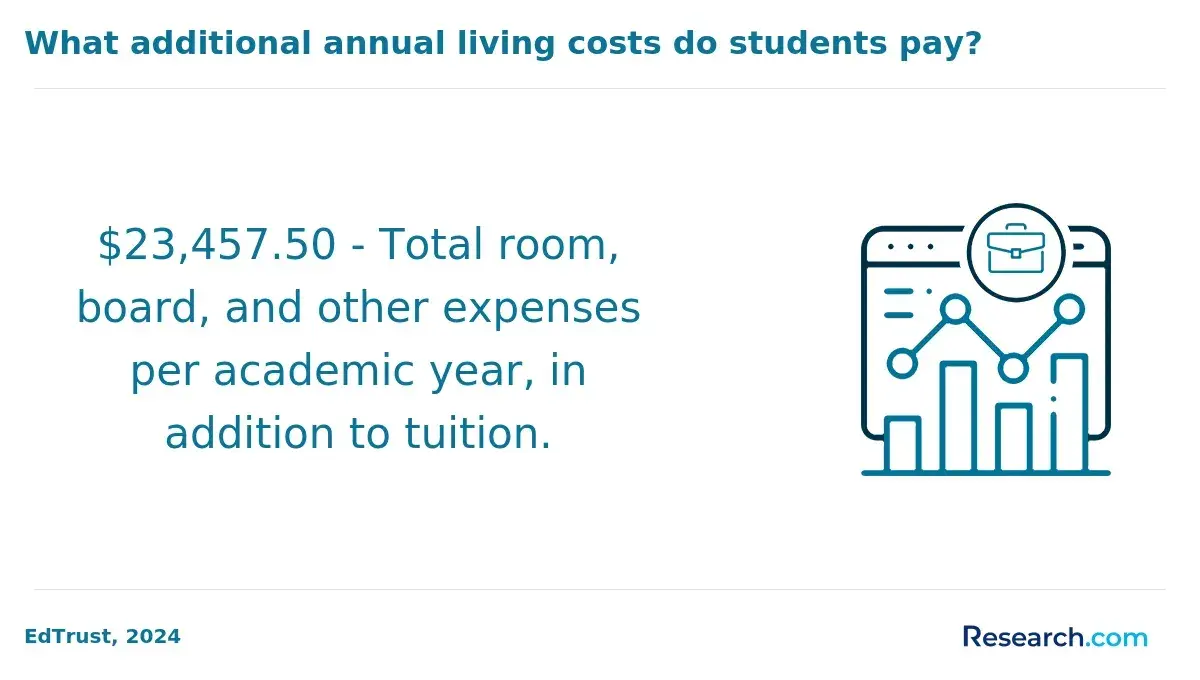
Online applied psychology doctorate costs vary widely by institution, credit requirement, residency fees, transfer credit, dissertation extension fees, and whether the program is public, private nonprofit, or private for-profit. Institution type alone does not determine value; a higher-cost program may be worthwhile if it has strong licensure alignment or faculty fit, while a lower-cost program may be poor value if it delays completion or lacks support.
Students should compare the full cost of attendance rather than tuition alone. The following price categories are common when reviewing program pages and financial aid estimates.
- Per-credit tuition may range from several hundred to well over $1,000 per credit, depending on the university and program model.
- Total tuition commonly depends on whether the doctorate requires about 60 credits after a master's degree or closer to 90 credits from the bachelor's level.
- Residency, technology, dissertation, internship, background check, and graduation fees can add meaningful costs beyond tuition.
- Federal graduate loan costs are higher than many students expect: 2024-25 Direct Unsubsidized Loans carried an 8.08% interest rate, and Grad PLUS Loans carried 9.08%.
- Employer education assistance may be tax-free up to $5,250 per year under current IRS rules, which can reduce out-of-pocket costs if the employer participates.
The table below shows the major cost variables to compare before enrolling. This is especially important for working adults because part-time pacing may reduce annual cash pressure but increase the number of terms in which fees are charged.
| Cost factor | Why it matters | Question to ask the school |
| Credits required | More credits usually mean higher tuition and a longer timeline. | How many credits are required after my prior master's degree? |
| Transfer credit | Accepted credits can reduce cost and time, but policies vary. | Can you complete a preliminary transfer review before I enroll? |
| Dissertation fees | Some students pay additional terms while finishing research and writing. | What happens financially if my dissertation takes longer than planned? |
| Residency costs | Travel, lodging, and time away from work can raise the real cost of an online program. | How many in-person sessions are required, and where are they held? |
| Employer support | Tuition reimbursement can materially change affordability. | Can billing or documentation be structured around employer reimbursement cycles? |
To reduce cost, ask about scholarships for doctoral students, military or public service discounts, employer partnerships, alumni tuition reductions, and whether you can slow your pace during expensive work or family periods. Also estimate loan repayment before enrolling; a doctorate should support a career plan, not just an academic aspiration.
What is the typical timeline for online Applied Psychology doctorate programs?
Many online applied psychology doctorates are designed for working adults, but "online" does not mean quick. Coursework, comprehensive exams, practicum or internship requirements, and dissertation research can take several years, especially for students who remain employed full time.
The table below compares common pacing models. Use it to estimate whether your target timeline matches your work schedule and personal responsibilities.
| Pace | Typical structure | Best for | Trade-off |
| Accelerated full-time | Heavier course loads, year-round enrollment, faster movement into dissertation work. | Professionals with flexible work, sabbatical options, or strong employer support. | Higher weekly workload and less room for travel, caregiving, or job volatility. |
| Part-time while working | One or two courses per term with steady dissertation planning. | Full-time employees who need sustainable pacing. | Longer time to completion and possible additional term-based fees. |
| Low-residency cohort | Online coursework combined with required in-person or synchronous intensives. | Students who want peer connection and faculty access without relocating. | Residency travel must be planned around work and family calendars. |
| Dissertation-flexible model | Coursework ends before an extended research, writing, and defense phase. | Professionals conducting workplace-based applied research. | Momentum can slow without strong faculty support and self-management. |
Professionals considering behavior analysis may also compare a shorter credential first. A fastest BCBA program may make more sense if the immediate goal is certification eligibility rather than doctoral-level leadership, research, or teaching.
A practical timeline starts before the first course. Mid-career students should identify a likely dissertation area during the application process, confirm access to a research site, and ask how often students meet with dissertation chairs. The biggest delay often occurs after coursework, when students underestimate how much time research approvals, data collection, analysis, and revisions require.
What skills can professionals learn from online Applied Psychology doctorate programs?
An applied psychology doctorate is designed to build advanced skills that help professionals evaluate problems, design interventions, lead programs, and communicate evidence to decision-makers. The strongest programs do not just teach psychology concepts; they train students to apply research in complex human systems.
Professionals should look for coursework and dissertation experiences that develop the following skill clusters. These are especially valuable when a student wants to move beyond direct service or mid-level management.
- Applied research design, including how to turn a workplace, clinical, educational, or organizational problem into a researchable question.
- Quantitative and qualitative analysis, including statistics, interviews, surveys, mixed methods, and program evaluation.
- Psychological assessment literacy, including ethical use of measures, interpretation limits, and evidence-based decision-making.
- Behavior-change strategy, including intervention design, implementation science, coaching, reinforcement systems, and outcome tracking.
- Leadership and consultation, including how to influence teams, advise executives, facilitate change, and communicate findings to non-specialists.
- Ethics and cultural responsiveness, including privacy, informed consent, bias, power dynamics, and responsible use of psychological data.
- Scholarly writing and presentation, including journal-style argumentation, literature synthesis, conference presentations, and dissertation defense skills.
AI is also changing applied psychology work. Professionals increasingly need to evaluate algorithmic tools used in hiring, learning analytics, mental health triage, employee monitoring, and behavioral data systems. Doctoral training can help students ask better questions about validity, bias, privacy, and human impact rather than simply adopting new tools because they appear efficient.
What career opportunities open up for online Applied Psychology doctorate degree holders?
An online applied psychology doctorate can support advancement in several fields, but outcomes depend on specialization, prior experience, licensure status, employer requirements, and the reputation and accreditation of the program. The degree is usually most powerful when paired with an existing professional track rather than used as a stand-alone job guarantee.
The U.S. Bureau of Labor Statistics projects psychologist employment to grow 7% from 2024 to 2034, which is faster than the average for all occupations. This does not mean every doctorate holder will move into a psychologist role, but it signals continued demand for advanced psychological expertise across clinical, school, industrial-organizational, and applied settings.
The table below connects common career directions with the type of applied psychology preparation that tends to be relevant. Use it to match a program's specialization to realistic roles.
| Career direction | Relevant doctorate focus | Typical work settings | What the doctorate may add |
| Organizational consultant or leadership advisor | Industrial-organizational psychology, organizational development, assessment. | Consulting firms, corporations, government, nonprofits. | Credibility in assessment, leadership research, analytics, and evidence-based change. |
| Behavioral health or integrated care leader | Health psychology, behavioral health, population health, program evaluation. | Hospitals, clinics, insurers, community health organizations. | Advanced ability to design, evaluate, and scale behavioral interventions. |
| Postsecondary instructor or faculty member | General psychology, applied psychology, educational psychology, research methods. | Colleges, universities, online programs, professional schools. | Eligibility for doctoral-level teaching roles, depending on institution requirements. |
| Forensic or correctional program consultant | Forensic psychology, assessment, trauma, program evaluation. | Courts, corrections, public safety, victim services, policy organizations. | Specialized expertise in legal-system applications of psychology. |
| Learning, talent, or workforce development leader | Educational psychology, learning sciences, I-O psychology. | Corporate learning, higher education, government training, edtech. | Research-based design of training, assessment, motivation, and performance systems. |
| Research or program evaluation director | Applied research methods, statistics, evaluation, implementation science. | Nonprofits, agencies, healthcare, education, foundations. | Doctoral-level design, analysis, publication, and evidence communication skills. |
Professionals interested in legal and justice-related applications can also compare forensic psychology master's programs before deciding whether a full doctorate is necessary for their intended role.
A common mistake is assuming the doctorate alone creates a promotion. A better approach is to identify target job descriptions, ask employers which credentials matter, and choose dissertation and practicum projects that produce visible evidence of expertise.
How can Applied Psychology doctorate students balance their time between studies and work?
Balancing doctoral study with a mid-career workload requires more than motivation. Students need a repeatable system for reading, writing, research, family responsibilities, and recovery. The most successful working students often treat the doctorate like a long-term professional project with milestones, not like an extended version of a master's program.
The steps below can help professionals build a sustainable plan before classes begin. They are especially useful for students who travel, manage teams, or have caregiving responsibilities.
- Audit your weekly calendar and identify at least three protected study blocks before enrolling.
- Ask the program for realistic weekly workload expectations during coursework and dissertation phases.
- Discuss schedule flexibility with your supervisor, especially around residencies, exams, proposal defense, and data collection.
- Choose course projects that connect to your work context so assignments build toward your dissertation or career portfolio.
- Create a writing routine early, even before the dissertation phase, because writing delays are one of the most common barriers to completion.
- Build a support system that includes family, peers, faculty, and workplace allies who understand the time commitment.
- Schedule recovery time deliberately to avoid burnout during overlapping work deadlines and academic milestones.
Professionals should also be realistic about life timing. Starting a doctorate during a major job transition, relocation, new caregiving responsibility, or financial strain may increase the risk of stopping out. Waiting six to twelve months to stabilize work and finances can sometimes be the smarter decision.
What should professionals evaluate when choosing an online Applied Psychology doctorate program?
Choosing an online applied psychology doctorate should be a structured comparison, not a reaction to advertising, convenience, or brand familiarity. The right program should match your career goal, regulatory needs, learning style, budget, and available time.
Use the following evaluation checklist when speaking with admissions advisors, faculty, and current students. Ask for written answers when the issue affects licensure, cost, or completion.
- Accreditation: Confirm institutional accreditation and, when relevant, programmatic accreditation such as APA accreditation for licensure-oriented clinical, counseling, or school psychology pathways.
- Licensure alignment: Verify state board requirements directly if your goal is psychologist licensure, because online delivery alone does not determine eligibility.
- Specialization fit: Compare required courses, electives, faculty expertise, and dissertation topics against your target career path.
- Faculty access: Ask how dissertation chairs are assigned, how often students meet with advisors, and what happens if a faculty member leaves.
- Residency and synchronous requirements: Confirm dates, locations, attendance expectations, and whether sessions conflict with work travel.
- Dissertation support: Ask about proposal timelines, research methods support, IRB guidance, data analysis help, and average dissertation extension patterns.
- Career services: Look for doctoral-level support such as consulting portfolio development, teaching preparation, research presentation coaching, and alumni networks.
- Total cost: Compare tuition, fees, transfer credits, dissertation terms, travel, loan interest, and employer reimbursement.
- Student outcomes: Ask for available completion, licensure, internship, placement, or alumni career information that is specific to the program.
The biggest red flag is a program that cannot clearly explain its outcomes or requirements. A strong program should be transparent about workload, time to completion, research expectations, and the limits of what the degree can do.
The best online applied psychology doctorate for a mid-career professional is the one that turns existing experience into higher-level expertise without creating unrealistic debt, licensure surprises, or an unsustainable schedule.
Other Things You Should Know About Applied Psychology
In most cases, diplomas do not state the delivery format, but policies vary by university. Ask the registrar how the degree title appears on the diploma and transcript before enrolling.
Often, yes, but you usually need employer permission, institutional review board approval, privacy protections, and a plan for avoiding conflicts of interest. Discuss this early with both your employer and potential dissertation chair.
Some programs accept transfer credits or waive selected courses, especially for applicants with a relevant master's degree. The number accepted depends on course match, age of credits, grades, and institutional policy.
Yes, especially for research-focused programs. A short, professional email about your interests can help you assess faculty fit, dissertation support, and whether the program can support your applied goals.
References
- PhD Application Requirements https://www.applykite.com/blog/phd-guide-application-requirements
- How Internships Help You Choose a Major: Earn Real-World Experience Before Committing to Your Choice https://www.deltainstitute.co/blog-delta-institute/how-internships-help-you-choose-a-major-gaining-real-world-experience-before-committing-to-your-academic-path
- Mid-Career Professionals https://www.forumea.org/mid-career-professionals.html
- The Crucial Role of Internships in Career Development - Not Just Labcoats https://notjustlabcoats.co.uk/the-crucial-role-of-internships-in-career-development/
- CPA Accredited Programs - Canadian Psychological Association https://cpa.ca/accreditation/cpaaccreditedprograms/
- Psychology Accreditation: What you need to know https://www.onlinepsychologydegrees.com/articles/accreditation/
- Online and Hybrid PhD & PsyD Programs in Psychology https://www.psychologist-license.com/phd/
- 3 Year PsyD Programs: Accelerated, Comprehensive, and Blended Weekend Program https://www.scuhs.edu/psyd-article/3-year-psyd-programs-accelerated-comprehensive-and-blended-weekend-program/
- What is APA Accreditation? https://counselingaccreditation.org/apa/
- How to apply for a PhD or professional doctorate https://www.massey.ac.nz/study/about-postgraduate-study/phds-and-professional-doctorates/how-to-apply-for-a-doctoral-degree/