
2027 MSN/MBA Dual Degree Programs for Nurses in Michigan: Entry Requirements, Format, and Total Cost
Audited and Verified:
Our Editorial and Data Verification Process
Research.com uses government datasets, official education statistics and primary institutional information to support its career and degree guides. Our review process checks factual accuracy, occupational definitions, source dates and the requirements associated with the credentials discussed.
How This Article Was Fact-Checked
Our editorial team verifies salary estimates, employment projections, education requirements and program information against original data providers and official organizations. Salary figures are checked against the relevant occupational definitions and reporting periods. Information about licensure, accreditation and required in-person training is reviewed separately.
Fact-checked and verified on:

Co-Founder and Chief Data Scientist
An MSN/MBA can help an experienced nurse prepare for leadership roles that combine clinical operations with budgeting, staffing, and organizational strategy. But "dual degree" does not always mean a shorter or cheaper route, and a Michigan school's MSN and MBA offerings do not necessarily form an approved joint program. This guide shows RNs what to verify before applying: whether both degrees are awarded, who can enter, how courses fit around work, and what the full cost may be. It also explains when a single degree or a different credential is the better investment.
Key Things You Should Know
- An MSN/MBA awards two master's degrees only if the institution formally approves both degree plans; offering an MSN and an MBA separately is not enough.
- These programs generally target licensed RNs seeking management roles, not initial RN licensure or automatic nurse practitioner eligibility.
- Published tuition is not total cost: as an illustration, 60 credits at $900 per credit would mean $54,000 in tuition before fees, travel, or lost income - not a quoted Michigan program price.
What are MSN/MBA dual degree programs for nurses in Michigan?
An MSN/MBA combines a Master of Science in Nursing - usually with a leadership, administration, or systems emphasis - with a Master of Business Administration. The nursing work addresses care delivery, quality, and professional leadership; the MBA adds accounting, finance, operations, and strategy. A formal dual-degree plan may let approved courses count toward both awards, but the school determines which credits can overlap and whether students must apply to each school separately.
This is a postlicensure leadership route, not a substitute for becoming an RN. Someone exploring fast-track practical nursing application planning is at a different entry point: LPN preparation does not itself meet an MSN/MBA's RN requirement. For an experienced RN, the decisive question is whether the second degree adds business skills and recruiting access that their intended role actually values.
Which Michigan schools offer accredited MSN/MBA dual degree programs?
A reliable list requires a current, school-published catalog entry explicitly identifying an MSN/MBA dual degree, both awarding units, its admission status, and its degree requirements. No Michigan institution is identified here as a confirmed, currently enrolling option without that verification. This is not a claim that no program exists; it is a warning against treating separate MSN and MBA webpages, or an older directory listing, as proof that a dual degree is available for your entry term.
When contacting Michigan universities, ask for the current dual-degree catalog page and a written degree audit showing the total credits and overlap. Confirm institutional accreditation, the accreditation status of the specific MSN program with its nursing accreditor, and any separate accreditation claimed for the business school. Accreditation of one school does not automatically cover the other degree or establish that a joint pathway exists. If a formal dual degree is unavailable, an RN with an associate degree can compare associate-to-master's nursing pathways before deciding whether a separate MBA is necessary.
What are the admission requirements for MSN/MBA programs in Michigan?
Expect the nursing and business schools to evaluate eligibility separately. Requirements vary, so an applicant should obtain the rules for the intended entry term rather than assume admission to one degree grants admission to both.
The following items determine whether a nurse can enter immediately or needs an additional step first:
- Nursing standing: An active RN license and an accepted nursing bachelor's degree are common starting points; ask how the school evaluates an ADN, a diploma, or a non-nursing bachelor's degree.
- Academic record: Both schools may review transcripts, minimum GPA, prior statistics or business coursework, and any applicable test or waiver policy.
- Professional evidence: A résumé, goals statement, recommendations, and leadership experience may matter, particularly for a management-focused MSN.
- Separate decisions: Confirm whether there are two applications, separate deadlines, or conditions that must be met before dual-degree enrollment.
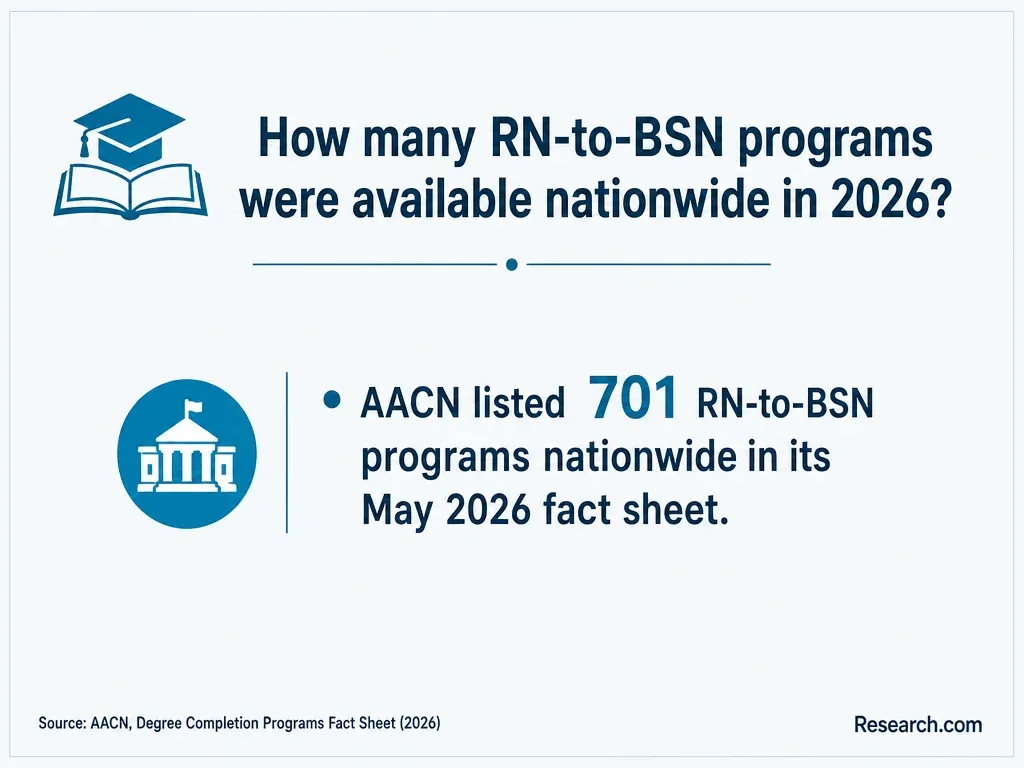
An RN who needs a bachelor's degree first can investigate RN-to-BSN programs without traditional clinical rotations, while checking each program's actual practice or project requirements. Prior credits or management experience should not be assumed to waive graduate requirements without a written evaluation.
Format must be verified for both degrees and for the particular courses in a dual-degree plan. An online MSN paired with an on-campus MBA is not an entirely online dual degree. Even where coursework is remote, live discussions, team projects, leadership practicum activities, examinations, or campus visits may constrain a working nurse's schedule.
Ask for a term-by-term timetable that identifies synchronous meetings, required visits, fieldwork, and who approves a workplace-based project. Also confirm that the school can enroll you from your state of residence; a Michigan campus location alone does not settle out-of-state enrollment rules. Nurses comparing a different graduate leadership credential may encounter online DNP leadership pathways for graduate nurses, but should check required practice activities rather than interpret "online" or "without clinicals" as meaning no scheduled fieldwork.
A leadership-oriented MSN commonly covers nursing systems leadership, quality and safety, health policy, evidence appraisal, and organizational change. MBA coursework commonly includes accounting, financial decision-making, economics, operations, marketing, and strategy. The actual catalog - not the degree label - shows which courses are required, which may be shared, and whether there is a practicum or capstone.
For an RN aiming to manage a service line, a useful curriculum connects staffing and patient-safety measures to budgets and operational decisions. It does not automatically provide advanced-practice assessment, pharmacology, population-focused training, or supervised patient-care hours. Nurses seeking an FNP role need an appropriate APRN pathway and should separately assess FNP clinical arrangement models; an administrative project is not a substitute for approved NP clinical preparation.
There is no defensible Michigan-wide completion time without a verified program plan. Duration depends on the combined credits, permitted overlap, course rotation, entry prerequisites, and whether the nurse studies full time or part time. Two degrees taken concurrently are not necessarily faster than a single MSN, particularly if required MBA courses are offered only in certain terms.
Request a degree map showing each term through both graduations. Ask what happens if a course fills, a work-based project is delayed, or you reduce your course load; those details can matter more than an advertised minimum. A nurse whose main goal is doctoral-level systems leadership could compare faster online DNP routes, but should compare actual credit and practice requirements rather than assume the shortest advertised route fits their prior degree.
No single Michigan MSN/MBA price can be stated responsibly without a confirmed program, entry term, credit plan, and published charges. Calculate the cost of both awards together, including whether nursing and business courses have different per-credit rates. A quoted rate for one school is not a dual-degree total.
This example illustrates the calculation, not an advertised tuition or fee schedule:
| Cost component | Illustrative calculation | What to verify |
| Tuition | 60 credits × $900 = $54,000 | Actual billed credits, overlap, and each school's rate |
| Required fees and materials | $4,000 assumed | Program, technology, books, and graduation charges |
| Travel and attendance | $3,000 assumed | Visits, lodging, and project-related travel |
| Illustrative direct total | $61,000 | Recalculate using your written degree plan |
Lost wages from reduced shifts, extra terms, and financing costs could raise the personal total further. Ask financial aid and your employer how dual enrollment, tuition reimbursement, and any service commitment apply before counting on them. If your goal is clinical advanced practice rather than administration, comparing lower-cost NP programs is a different - but more relevant - cost exercise.
The degrees do not replace an RN license or confer an APRN license. Graduates whose work involves RN practice must maintain the license appropriate to where they practice and meet applicable employer requirements. An administration-focused MSN/MBA, by itself, does not establish eligibility to practice as a nurse practitioner.
Leadership certifications may be useful later, but each certifying body sets its own education, experience, examination, and renewal rules. Nurses who already hold a graduate nursing degree and instead want an FNP role can investigate accelerated postgraduate family NP certificates; the receiving program and relevant licensing and certifying bodies must determine whether prior coursework and supervised clinical preparation meet their requirements.
The strongest fit is often an RN who already has clinical and supervisory experience and wants responsibility for budgets, staffing, quality, or service-line performance. Possible titles include nurse manager, director of nursing, clinical operations leader, and healthcare administrator. Employers may require substantial management experience regardless of degree, and an MBA does not guarantee promotion.
For wage research, the U.S. Bureau of Labor Statistics occupation medical and health services managers can provide broad national context for some administrative duties; it is not a Michigan MSN/MBA graduate salary or a nurse-manager offer. Compare current Michigan job postings with your own role and experience, then assess whether the pay difference plausibly offsets tuition and time away from work. A nurse whose intended job is psychiatric NP rather than management should evaluate affordable online psychiatric nurse practitioner programs instead of assuming an MSN/MBA leads to that clinical role.
How can nurses choose a reputable MSN/MBA program in Michigan?
Start with the intended job, then ask schools for documentation that makes their programs comparable. A promising marketing description is not enough to establish that the joint credential, format, or price fits your circumstances.
Before paying an application deposit, work through these checks in order:
- Obtain the current catalog entry confirming both degrees, the application route, and the exact shared-credit policy.
- Verify institutional and MSN-program accreditation with the responsible accreditors; check any business-school accreditation claim separately.
- Request a term-by-term plan identifying delivery mode, live sessions, required visits, projects, and a realistic part-time sequence.
- Get a written cost estimate for all required credits and fees, then add travel, financing, and any expected reduction in earnings.
- Compare those requirements with actual jobs you want and ask whether a single MSN, MBA, or targeted management training would suffice.
If you are not yet an RN, do not choose an MSN/MBA as an entry-to-practice shortcut. Begin by comparing prelicensure nursing study options online, while verifying their in-person clinical requirements and eligibility for initial RN licensure.
Other Things You Should Know About Nursing
Yes, but that is ordinarily two separate degrees, not a coordinated dual-degree plan. Do not assume either school will accept the other's courses toward its graduation requirements.
Experience can strengthen an application, but credit or course waivers depend on the business school's written policies and individual evaluation.
Review the eligible-degree rules, annual limit, grade requirements, payment timing, and any obligation to repay funds if you leave the job. Get confirmation that both degrees qualify.
Its business coursework may support a move into broader healthcare operations or another industry, but hiring will also depend on relevant experience and the skills required for the specific job.
- Eligibility Requirements | Federal Student Aid https://studentaid.gov/understand-aid/eligibility/requirements
- Cost of Attendance (Budget) | 2025-2026 Federal Student Aid Handbook https://fsapartners.ed.gov/knowledge-center/fsa-handbook/2025-2026/vol3/ch2-cost-attendance-budget
- Class Formats | Ivy Tech Community College https://www.ivytech.edu/classes/class-formats/
- Online M.S.N./M.B.A. Dual Degree Curriculum & Courses | Benedictine University https://online.ben.edu/programs/dual-degrees/msn-mba/courses/
- Program: Nursing, B.S.N. | csuohio.edu https://catalog.csuohio.edu/preview_program.php
- Pathways to Nursing | LAS Pre-Health | University of Illinois Chicago https://prehealth.las.uic.edu/educational-goals/nursing-uic/pathways-to-nursing/
- MSN/MBA | Elms College https://www.elms.edu/school-of-nursing/master-science-nursing/msnmba/
- RN to MSN-MBA Dual Degree | Spring Arbor University https://online.springarbor.edu/programs/master-of-science-in-nursing/rn-msn-mba


