2027 MLIS Programs for Taxonomy Governance Teams

Co-Founder and Chief Data Scientist
A taxonomy governance role calls for more than learning how to label content: it requires rules for creating terms, resolving disagreements, and keeping search and discovery systems consistent. For prospective MLIS students, the challenge is finding a program that teaches those skills without mistaking a relevant elective for a dedicated specialization.
The U.S. Bureau of Labor Statistics projects 2.6% employment growth for librarians and media collections specialists from 2025 to 2035—a useful benchmark, though not a forecast for taxonomy jobs. This guide helps you compare curricula, experience, costs, and career alternatives before enrolling.
Key Things You Should Know
- Look for knowledge-organization and metadata courses plus a project in which you design, test, and document a controlled vocabulary; a course title alone does not establish a taxonomy specialization.
- Verify ALA accreditation for the specific master's program if librarian roles are a goal. Taxonomy jobs outside libraries may accept other degrees and relevant experience.
- The May 2025 median pay for U.S. librarians and media collections specialists was $68,270. It is occupational context, not a salary estimate for taxonomy governance positions.
What is an MLIS program for taxonomy governance teams?
It is a library and information science master's program whose coursework and applied work can prepare someone to manage the terms and relationships used to organize information. "Taxonomy governance" describes the work, not necessarily the name of a degree or formal concentration.
A governance team decides when to add or retire a term, which label should be preferred, how synonyms should work, and who can approve changes. It also documents decisions so that search, navigation, analytics, and content-management systems use the taxonomy consistently.
In a library, that work may overlap with subject access and authority control; in a company, it may support product content, digital assets, or an internal knowledge base.
The strongest educational fit depends on the intended setting. An MLIS can be particularly useful when the job connects taxonomy decisions to metadata, discovery, and user access. Someone focused mainly on enterprise software implementation may also need substantial technical or domain-specific experience.
Which MLIS programs are accredited for taxonomy governance careers?
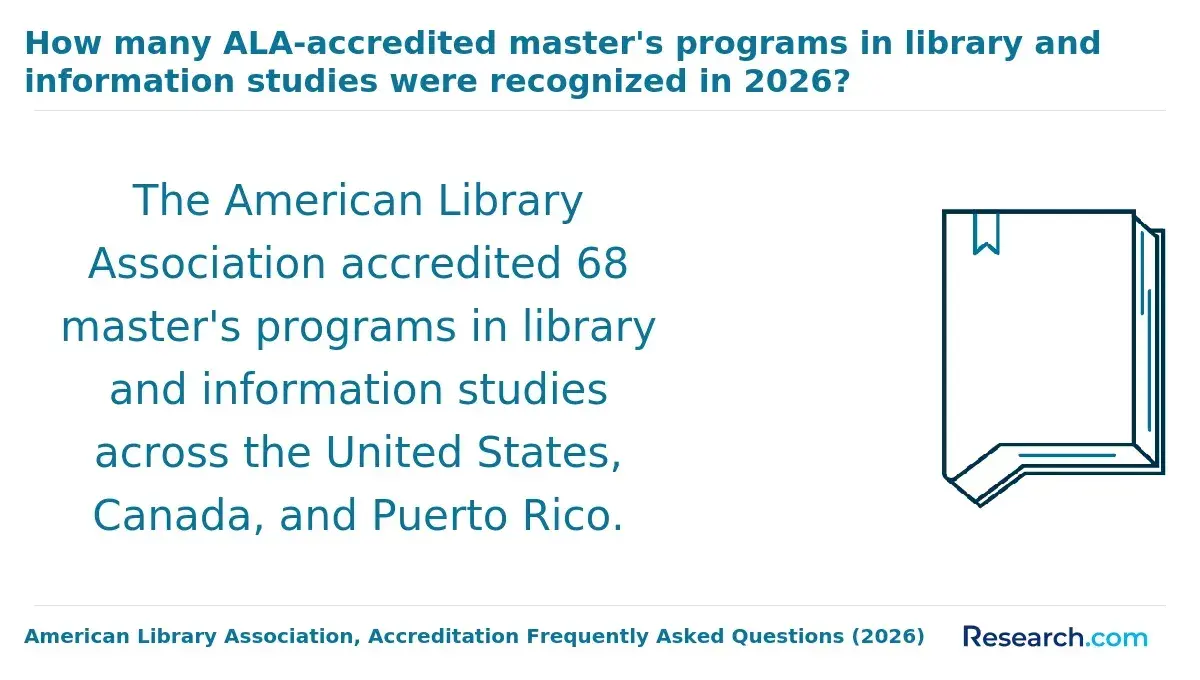
The American Library Association (ALA) accredits eligible master's programs in library and information studies; it does not award a separate accreditation for taxonomy governance.
Check the current ALA directory for the specific degree you would enter, whether a school calls it an MLIS, MLS, MS in Library Science, Master of Information, or another title. A university's institutional accreditation does not establish that its LIS master's program is ALA-accredited.
Accreditation is especially relevant if you want to retain eligibility for librarian positions that require an ALA-accredited degree. It does not verify that a taxonomy elective will run during your enrollment, that an internship is available, or that graduates enter governance jobs. Use library information science masters rankings as a starting point for identifying programs, then check each candidate against the ALA directory and its current catalog.
Before applying, ask the department which courses cover controlled vocabularies and metadata, when they are expected to run, and whether you can complete a taxonomy-focused project with faculty supervision. These answers are more informative for this career than a program's general reputation alone.
What degree pathways prepare students for taxonomy and metadata work?
An ALA-accredited MLIS is one pathway, not the only one. The comparison below separates credentials by the kind of preparation they can offer; actual coursework and employer requirements still need to be checked individually.
| Pathway | Potential fit | Important limitation |
| MLIS, MLS, or another LIS master's degree | Knowledge organization, metadata, information-seeking behavior, and library career eligibility when the specific program is ALA-accredited | Taxonomy depth depends on electives and applied work, not the degree title |
| Information science or information-management master's degree | Search systems, data structures, user research, or enterprise information work | Check accreditation separately if professional librarian jobs remain a goal |
| Graduate certificate or focused professional training | Targeted skills for someone who already has relevant experience or a graduate degree | May not satisfy jobs requiring a master's or an ALA-accredited LIS degree |
Choose backward from job descriptions: note whether target employers require an MLIS, accept equivalent experience, or prioritize particular systems and subject expertise. For an MLIS applicant, a combination of cataloging or metadata, knowledge organization, and a substantial independent project may be more useful than a broadly named track with little opportunity to build a taxonomy.
Are online or campus-based MLIS programs better for taxonomy careers?
Neither format is inherently better for taxonomy governance. Compare the work you can actually complete: access to relevant electives, feedback on vocabulary design, opportunities to test terms with users, and a project that produces portfolio evidence.
Online study may suit someone already employed on a metadata or content team, because an approved workplace project can connect coursework to a real governance problem.
But online does not necessarily mean asynchronous, and a remote student should not assume every elective or practicum can be completed remotely. A campus program may make it easier to join local projects or work with on-site collections, but those opportunities also require confirmation.
If scheduling drives your choice, compare live-session requirements, time zones, elective sequencing, and project supervision before deciding. A library science program for working adults is useful only if its actual schedule and curriculum fit the work you intend to pursue.
What courses do MLIS programs offer for taxonomy governance?
Course names vary, so read descriptions and assignments rather than searching only for "taxonomy." The most valuable combination teaches how to structure terms, represent them in systems, and evaluate whether people can find information using them.
For each prospective program, look for evidence that you could produce the following kinds of work:
- Knowledge organization: a controlled vocabulary with preferred terms, synonyms, broader and narrower relationships, and documented rules for adding terms.
- Metadata and cataloging: a mapping between a vocabulary and the fields used by a collection or content system, with an explanation of how consistency will be maintained.
- Information retrieval or user research: a test of whether people can locate content with the proposed labels and relationships.
- Information systems or linked data: a plan for identifiers, term changes, and interoperability when information moves between systems.
A catalog listing establishes that a course exists, not that it will be offered in a term you can attend. Ask for a likely course schedule and whether an independent study, capstone, or practicum can accommodate a taxonomy project.
If AI-assisted tagging is part of the project, include a way to review proposed terms and record human approval rather than treating generated labels as authoritative.
What are the admission requirements for MLIS programs?
Requirements vary by institution. Applicants should expect to verify the required prior degree, transcripts, application materials, and any program-specific prerequisites or language requirements on the current admissions page. Relevant work in libraries, content operations, or metadata can strengthen an application, but it does not automatically replace a published degree requirement.
Use the statement of purpose to connect your experience to a concrete governance problem. For example, inconsistent product categories or search terms that vary across collections. You do not need to claim an existing taxonomy specialization. Explain which courses and applied opportunities would help you develop the skills you lack.
If you have an unusual academic record, international credentials, or a previous graduate course you hope to transfer, request an individual assessment before relying on an assumed exception. Graduate transfer-credit rules are program-specific; prior professional experience should also be discussed separately from transfer credit.
How long do MLIS programs take and what do they cost?
Completion time depends on required credits, course load, and whether needed electives are offered when you can take them. An accelerated schedule can be attractive, but it is a poor fit if it leaves no room for the metadata courses or applied project central to your goal. Compare an intensive online library science degree against the actual sequence of courses you would need, not its shortest advertised timeline.
No single tuition figure reliably represents the cost of an MLIS across institutions or residency categories. For a comparable estimate, multiply each program's published tuition per credit by its required credits, then add mandatory fees and the likely cost of books, software, travel, or an in-person practicum. Ask whether extra terms could result from elective scheduling and whether an online student qualifies for the quoted tuition rate.
Separate the gross program cost from what you would pay after confirmed employer support or awards, and from what you would finance through loans. Check current financial-aid eligibility and borrowing terms for your enrollment period before treating aid as available.
A useful return-on-investment comparison considers your current earnings and realistic target jobs; neither an MLIS nor a taxonomy project guarantees a particular salary.
What careers can MLIS graduates pursue in taxonomy governance?
Job titles vary more than the underlying work. The following roles show where taxonomy skills can be applied and why reading each posting matters.
| Possible role | Typical governance contribution | Qualification consideration |
| Taxonomist or taxonomy manager | Maintains terms, relationships, change rules, and stakeholder review | An MLIS may be relevant; employers may also value domain or systems experience |
| Metadata librarian or metadata specialist | Connects controlled terms to records, digital collections, and discovery | Professional librarian positions may require an ALA-accredited LIS master's |
| Digital asset or content operations specialist | Applies naming and classification rules across content workflows | May accept several degree paths and demonstrated platform experience |
| Knowledge management specialist | Improves how employees organize and retrieve internal information | Business, technology, and subject expertise may matter alongside an MLIS |
A strong entry portfolio might show a small taxonomy, its scope and term-selection rules, a record of stakeholder feedback, and a before-and-after search test. It should explain how you would handle conflicting labels, not just display a finished hierarchy. Existing content, cataloging, digital-asset, or records work can provide a practical starting point if you have permission to use a project in a portfolio.
For readers also considering traditional librarian positions, library science jobs that pay well can broaden the comparison. Evaluate taxonomy openings separately. An MLIS may be required, preferred, or simply one acceptable qualification, depending on the employer.
How much do taxonomy and metadata professionals earn?
There is no single salary in the supplied occupational data that isolates taxonomy governance or metadata work across employers.
As a nearby U.S. benchmark, the Bureau of Labor Statistics reports a May 2025 median annual salary of $68,270 for librarians and media collections specialists. That figure describes a broader occupation; it should not be presented as the median for taxonomists, metadata specialists, or graduates of a particular program.
When evaluating a job or degree, compare posted pay ranges for the roles and locations you actually want, then check the required degree, experience, and technical skills. A corporate taxonomy position and a library metadata position may have different qualification and compensation structures even when both use controlled vocabularies.
Which certifications and standards matter for taxonomy governance?
No single certification is universally required for taxonomy governance. Hiring managers may care more about whether you can apply a standard appropriately and explain how a vocabulary will be maintained. A certificate can be worthwhile if it fills a specific skill gap, but it is not a substitute for checking job requirements.
Useful standards depend on the setting. SKOS provides a way to represent concepts and their relationships for linked-data applications. Dublin Core may matter when terms describe digital resources.
MARC and RDA are more pertinent when work connects to library cataloging. Learn the standards used by your target systems rather than trying to collect credentials indiscriminately. Keep professional program accreditation, optional training, and state-regulated credentials distinct.
If you also intend to pursue librarian roles, check the requirements for the position and location. Illinois librarian requirements illustrate why location-specific guidance deserves separate review. School librarian certification is a different question and must be verified with the relevant state education authority.
Other Things You Should Know About Library Science Programs
That depends on the organization's governance policy. A practical policy names who can propose a term, who checks it for duplication and clarity, and who has final approval. Without assigned responsibility, similar requests can produce conflicting labels.
The team should decide whether the old term redirects to a replacement, remains as a synonym, or is removed from use. It also needs a plan for updating affected records and preserving enough change history to explain earlier decisions.
Test whether intended users can find representative content, and review searches that return poor or ambiguous results. Combine those observations with feedback from people who apply the terms; a tidy hierarchy alone does not prove that it supports discovery.
Yes. Familiarity with a field's terminology can help you identify ambiguous labels and consult the right stakeholders. You still need to test whether the resulting terms make sense to the people who will search or apply them.
References
- Library and Information Science, MLIS: Information Organization | UW-Milwaukee Academic Catalog https://catalog.uwm.edu/community-engagement-professions/information-studies/library-information-science-organization-mlis/
- Key choices in the design of Simple Knowledge Organization System (SKOS) - ScienceDirect https://www.sciencedirect.com/science/article/pii/S1570826813000176
- Information Architecture & Taxonomy | University of Washington https://ischool.uw.edu/programs/mlis/careers/information-architecture
- MLIS Curriculum, Specialties & Courses | University of Arizona College of Information Science https://infosci.arizona.edu/ma-library-information-science/curriculum-specialties-courses
- MLIS Program Requirements and Curriculum | umd.edu https://info.umd.edu/academics/masters-programs/master-of-library-and-information-science/curriculum-specializations/
- Accreditation Frequently Asked Questions | ALA https://www.ala.org/educationcareers/accreditedprograms/faq
- Taxonomy Governance | Business Data Governance Framework | Taxonomy Strategies https://taxonomystrategies.com/governance/