2027 Med-Surg vs ICU vs Emergency Nursing: Workload, Patient Acuity, and Entry Routes
Audited and Verified:
Our Editorial and Data Verification Process
Research.com uses government datasets, official education statistics and primary institutional information to support its career and degree guides. Our review process checks factual accuracy, occupational definitions, source dates and the requirements associated with the credentials discussed.
How This Article Was Fact-Checked
Our editorial team verifies salary estimates, employment projections, education requirements and program information against original data providers and official organizations. Salary figures are checked against the relevant occupational definitions and reporting periods. Information about licensure, accreditation and required in-person training is reviewed separately.
Fact-checked and verified on:

Co-Founder and Chief Data Scientist
Choosing a first hospital unit means choosing how you will learn to manage risk, not just which patients you will see. Med-surg nurses coordinate care across several patients; ICU nurses monitor fewer patients with greater instability; emergency nurses respond to an unpredictable mix of urgent needs.
For nursing students, new graduates, and RNs considering a change, this comparison explains the work, entry routes, and credentials - and shows what to ask about orientation and staffing before accepting an offer.
Key Things You Should Know
- Workload differs by task, not just patient count: ICU assignments often involve one or two patients, while med-surg nurses commonly manage more; emergency assignments can change rapidly as patients arrive and depart.
- New graduates can enter any of the three specialties when an employer offers appropriate onboarding. A supported transition matters more than a rule that every nurse must start in med-surg.
- All three are RN career paths: an approved prelicensure route, NCLEX-RN passage, state licensure, and employer orientation come before independent practice; specialty certification usually comes later.
How do med-surg, ICU, and emergency nursing differ in workload and patient acuity?
Patient acuity describes the intensity and complexity of care a patient needs. It does not, by itself, describe a nurse's entire workload: admissions, discharges, documentation, family communication, available support, and patient turnover also matter. The comparison below describes typical patterns, not safe staffing limits or guaranteed assignments.
| Setting | Typical patients and pace | Where the workload concentrates |
| Medical-surgical unit | Several hospitalized patients with varied conditions; planned care interrupted by changes in condition, admissions, and discharges | Prioritizing medications, assessments, teaching, discharge planning, and escalation across a larger assignment |
| Intensive care unit (ICU) | Usually fewer patients with life-threatening illness or a high risk of deterioration | Frequent reassessment, complex equipment and therapies, detailed documentation, and rapid responses to subtle changes |
| Emergency department (ED) | Patients with undifferentiated problems, from lower-acuity needs to resuscitation | Rapid assessment, changing priorities, procedures, handoffs, and arrivals whose timing cannot be planned |
An ICU assignment of two patients is not necessarily easier than a larger med-surg assignment; likewise, an ED nurse's patient count at one moment says little about the next hour. Ask employers about acuity-adjusted assignments, support staff, breaks, and escalation procedures rather than comparing ratios alone. Academic advancement through nontraditional practice formats in RN-to-BSN programs is a separate question from whether a unit provides adequate supervised bedside preparation.
Which nursing specialty is best for new graduates: med-surg, ICU, or emergency?
There is no universally best starting unit. Med-surg can build broad assessment, prioritization, and coordination skills. ICU can suit a graduate drawn to sustained, detailed care of critically ill patients. Emergency nursing can suit someone who enjoys rapid assessment, short encounters, and frequent changes in plan. Each involves high-stakes decisions, and none should require a novice to work beyond demonstrated competence.
The strongest new-graduate offer is often the one with a structured residency or orientation, consistent preceptors, staged assignments, competency checks, and an accessible charge nurse - not simply the most appealing specialty label. Ask how long supervised orientation lasts, what changes if progress is slower than expected, and whether new nurses are expected to take charge or float early. A career changer still needs these supports, even when prior work provides useful communication or crisis-management skills. For someone who already has a non-nursing bachelor's degree, ABSN options for second-degree applicants may provide a prelicensure route, but admission and completion do not guarantee a specialty placement.
What education and licensing requirements apply to med-surg, ICU, and emergency nurses?
Staff RN positions in these units generally require completion of an eligible prelicensure nursing program, passage of the NCLEX-RN, and an active RN license recognized in the state of practice. The state board determines licensure eligibility; the employer determines hiring criteria and validates unit-specific competence. An ADN or BSN is an educational award, not a license. Graduation, exam eligibility, licensure, and readiness to manage a specialty assignment are distinct milestones.
Before enrolling, confirm the program's state-board status and whether it meets the requirements for licensure where you intend to practice. Check institutional accreditation and any nursing program accreditation separately; they serve different purposes. An advanced degree is not an entry requirement for bedside med-surg, ICU, or ED nursing. Even if you are exploring DNP admissions and applicant preparation for a later goal, a DNP does not replace initial RN licensure or unit orientation.
Both prelicensure ADN and BSN routes can lead to NCLEX-RN eligibility when the program meets applicable state requirements. An ADN commonly takes about two academic years of nursing study after any required prerequisites; a traditional BSN commonly takes about four years overall. Actual time depends on course sequencing, prior credits, and clinical availability. Either route prepares a generalist RN, not an independently ready ICU or ED specialist.
Compare the route against hospitals you might realistically apply to. Some accept ADN-prepared new graduates, while others prefer or require a BSN or expect later degree completion. Ask whether an employer offers tuition assistance and how its scheduling works before treating an RN-to-BSN plan as cost-free or effortless. An ADN-to-MSN bridge length and requirements comparison may help an experienced RN with a defined graduate goal, but an MSN is not needed simply to move from med-surg to ICU or the ED.
Prelicensure programs teach general nursing foundations: assessment, pharmacology, clinical judgment, medication and patient safety, communication, and supervised care. Students may encounter medical-surgical, critical-care, and emergency patients during clinical learning, but exposure varies by school and placement. Simulation helps students practice decisions; it does not establish independent specialty competence.
Specialty preparation usually continues after hiring. Med-surg orientation emphasizes managing a changing group of patients and coordinating discharge. ICU onboarding develops close monitoring and care involving complex therapies and equipment. ED onboarding emphasizes rapid assessment, changing priorities, resuscitation teamwork, and safe handoffs. Employers evaluate performance under supervision before expanding assignments. These staff-RN pathways should not be confused with graduate advanced practice study, including one-year family nurse practitioner pathways, which has different entry requirements and intended roles.
Online coursework can cover theory, but initial RN preparation is not an online-only clinical experience. A prelicensure program still needs required in-person skills learning and supervised clinical experiences under its approved design. Before enrolling, ask where placements occur, who arranges them, how often campus or simulation attendance is required, and whether the program supports licensure eligibility in your state.
Postlicensure online RN-to-BSN study serves a different purpose: it builds on an existing RN license and does not substitute for ICU or ED orientation. Similarly, an online PMHNP certificate program guide concerns an advanced practice pathway, not a shortcut to emergency nursing competence. For any online option, confirm scheduled live sessions and in-person requirements rather than assuming that online means self-paced.
Prelicensure admission commonly involves prerequisite sciences, minimum grades, an application, and clinical-placement eligibility requirements; some schools also use entrance tests or interviews. Requirements differ by program, and admission to a university may not mean admission to its nursing sequence. If access is your main concern, compare nursing admission choices for a broader applicant pool against board status, clinical access, and outcomes - not admission selectivity alone.
There is no reliable single price for an ADN or BSN. Compare each school's published tuition and fees using your expected credits and enrollment pace, then add supplies, background checks, immunizations, travel to clinical sites, licensure expenses, and any earnings lost while attending. A shorter advertised timeline may not save money if prerequisites, limited course availability, or unpaid clinical time extend enrollment. Request a term-by-term plan and a total-cost estimate before committing.
RN licensure is the legal foundation; specialty certification is generally a later professional credential, not a substitute for an RN license. Employers may require life-support training and completion of local competencies for particular assignments. Confirm exactly which courses and deadlines apply to the unit: a course required by one employer may not be required for every nurse in that specialty.
Experienced nurses may consider medical-surgical certification, the AACN Certification Corporation's CCRN for eligible critical-care nurses, or the Board of Certification for Emergency Nursing's CEN. Eligibility, practice-hour rules, exam content, and renewal requirements differ by credential and can change; check the awarding organization before applying. A BSN-to-MSN program affordability guide addresses a separate educational investment. Neither a graduate degree nor a specialty exam replaces observed unit competence.
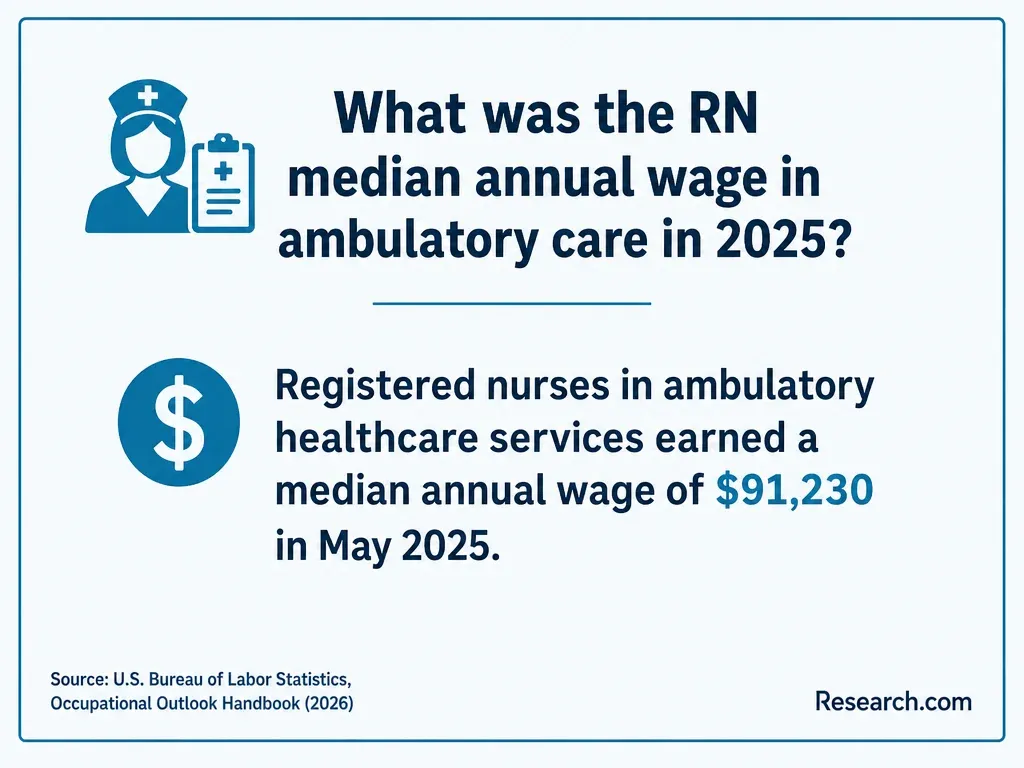
The U.S. Bureau of Labor Statistics reports wages for registered nurses as an occupation, not separate national med-surg, ICU, and ED medians. A national RN figure therefore cannot establish that one of these specialties reliably pays more. Compare actual offers using base hourly pay, nights and weekends, shift differentials, overtime expectations, benefits, and local living costs. Also ask whether a sign-on bonus has repayment conditions.
Each setting can lead to preceptor, charge, education, quality, or management responsibilities with additional experience and employer-specific qualifications. Moving between units usually calls for targeted orientation rather than another degree. Advanced practice is a different career decision: lower-tuition advanced practice nursing programs may be worth comparing if becoming an NP is the actual goal, but an NP program is not required for ICU or ED staff-RN advancement.
What job outlook and employer demand exist for acute-care nurses?
National RN employment projections offer context for the occupation as a whole; they do not predict vacancies on a particular med-surg unit, ICU, or ED. Local hiring depends on staffing budgets, turnover, service lines, and the number of supported new-graduate openings. A hospital may hire experienced ICU nurses while offering no ICU positions for new graduates.
Use current local postings to separate true entry-level roles from jobs requiring specialty experience, then ask recruiters about residency cohorts and retention support. Do not infer demand for bedside ED nurses from interest in other roles, including the advanced practice route described in shorter MSN routes to psychiatric NP preparation. For an immediate decision, the quality of a specific unit's offer and onboarding is more useful than a broad national outlook.
Other Things You Should Know About Nursing
Floating depends on employer policy, staffing, and the nurse's demonstrated competence. Before accepting a job, ask where nurses float, what orientation they receive, and how assignments are adjusted when the destination unit is unfamiliar.
Some units have more openings on nights, but availability varies. Compare supervision, experienced staff on shift, schedule sustainability, and any differential pay rather than choosing nights solely to enter a specialty.
Use approved clinical experiences, shadowing opportunities, and conversations with staff to learn how a unit handles distressing events and supports nurses afterward. Notice whether its pace and type of patient contact suit you, without assuming one brief experience represents every unit.
No. Assessment, communication, and prioritization skills transfer, but the receiving employer must assess specialty-specific gaps and provide appropriate onboarding. Ask how prior experience changes the orientation plan, not whether it eliminates orientation.
- Nurses' Time Allocation and Multitasking of Nursing Activities | nih.gov https://pmc.ncbi.nlm.nih.gov/articles/PMC6371290/
- General Schedule Qualification Policies | U.S. Office of Personnel Management https://www.opm.gov/policy-data-oversight/classification-qualifications/general-schedule-qualification-policies/
- Nurse Staffing | nj.gov https://healthapps.nj.gov/nursestaffing/quarterly.aspx
- Nursing and Patient Safety | PSNet https://psnet.ahrq.gov/primer/nursing-and-patient-safety
- The association between nurse staffing and quality of care in emergency departments: A systematic review - ScienceDirect https://www.sciencedirect.com/science/article/pii/S002074892400018X
- How to Become an ICU Nurse | Western Governors University https://www.wgu.edu/career-guide/healthcare/icu-nurse-career.html
- The Emergency Department: Critical Care Nurses' Other Home? - AACN https://www.aacn.org/blog/the-emergency-department-critical-care-nurses-other-home