2027 Is a Social Psychology Degree Better Than Experience Alone? Salary, Hiring, and Career Growth Compared

Co-Founder and Chief Data Scientist
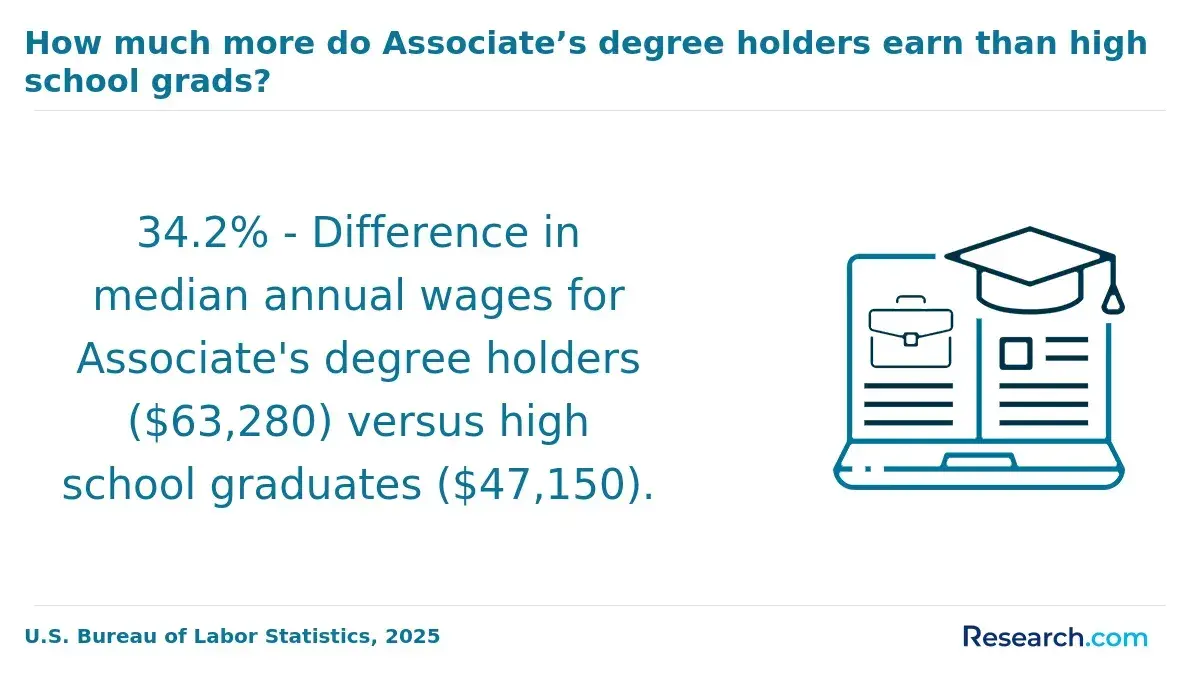
In the social psychology field, a degree often serves as a gatekeeper-many positions require formal education, limiting access for those relying solely on experience and self-teaching. A 2025 study found that degree holders earn on average 18% more annually than those without academic credentials. Employment opportunities also skew toward graduates, with 67% of social psychology roles demanding at least a bachelor's degree.
Career growth similarly favors degree holders, who report faster advancement and higher leadership representation. This article will explore salary, hiring practices, and career trajectories, equipping readers to decide whether pursuing a social psychology degree aligns with their professional goals.
Key Points About Having Social Psychology Degrees vs Experience Alone
- Degree holders in social psychology earn on average 18% more than experienced non-degree professionals due to higher qualification requirements in research and academic roles.
- Employers favor candidates with social psychology degrees for specialized roles, increasing job opportunities compared to self-taught or solely experienced applicants.
- Career advancement into leadership or policy-making positions is 25% more frequent among degree holders, reflecting the value of formal education in promotion considerations.
What technical proficiencies can you gain from having Social Psychology degrees vs self-teaching?
Professionals looking to build a career in social psychology can acquire foundational principles and practical applications through formal degrees or on-the-job experience, but the depth and structure of skills gained often differ significantly. The technical skills developed in a social psychology degree program tend to be more comprehensive compared to those gained solely through self-teaching and experiential learning. Below are five key proficiencies where degree education typically surpasses informal experience:
- Advanced research methodology: Degree programs provide structured training in experimental design, sampling, and longitudinal studies, ensuring results are valid and reliable. Self-learning may cover basics but rarely offers the rigorous guidance needed for complex research.
- Statistical analysis software: Mastery of tools like SPSS, R, or SAS requires consistent practice often guided by mentors in degree settings. Bootcamps or workplace learning may teach elements but usually not with the same depth needed for complex hypothesis testing.
- Theoretical frameworks: Understanding social behavior through theories such as social identity and group dynamics demands critical thinking and comprehensive study, which is difficult to replicate through experience alone.
- Ethical considerations and compliance: Navigating Institutional Review Boards and informed consent procedures is a core part of degree curricula, providing essential knowledge rarely transmitted fully in practical settings.
- Applied intervention design: Degree programs often include supervised, hands-on projects teaching students to evaluate social interventions, a level of feedback and oversight hard to obtain solely through self-teaching.
A 2025 survey by the National Association of Psychologists found that 78% of employers prefer candidates with formal social psychology education for research and applied roles, citing enhanced technical skills and preparedness compared to those relying on experiential learning alone. For students considering options, programs such as a 12 month DNP program online demonstrate how structured education accelerates technical skills development.
These distinctions highlight how social psychology degree technical skills development can better prepare individuals for advanced research and professional challenges than informal experience by itself.
Are there certifications or licenses that only Social Psychology degree holders can obtain?
Continuing education and earning additional credentials can significantly enhance career prospects, especially as more employers shift toward skills-based hiring. Certain certifications and licenses remain closely tied to formal education, often requiring a degree rather than relying solely on experience or self-teaching. Below are key credentials that typically mandate having a social psychology degree or related academic background.
- Certified Applied Social Psychologist (CASP): This certification, offered by the Society for Applied Social Psychology, demands graduate-level coursework and formal education in social psychology. It demonstrates expertise in applying social psychology theories to practical settings and increases employability by validating specialized skills.
- Licensed Psychologist: Often required for independent clinical or research practice, licensure varies by state but generally requires a doctoral degree in a psychology-related field. Degrees in social psychology satisfy many licensing requirements, opening the door to higher-paying and more autonomous roles.
- Board Certified in Cognitive and Behavioral Psychology (BCB): Awarded by the American Board of Professional Psychology, this credential requires a doctorate and specialized training connected to behavior and cognition. It signals advanced competence highly valued in clinical and academic positions.
- Certified Behavior Analyst (CBA): With a focus on behavior modification covered in social psychology programs, this certification is more accessible to those with formal psychological education. It enables careers in organizational development, education, and therapeutic fields.
These certifications reflect the strict social psychology degree licensing requirements that many professions maintain. Data shows that 78% of employers in psychology-related fields prioritize candidates with recognized degrees and certifications over self-taught experience. For students considering alternatives, exploring options like an accelerated healthcare administration degree online might also expand career possibilities within interdisciplinary settings.
Will a degree in Social Psychology make you more employable?
Job prospects for individuals with a social psychology degree are generally stronger than for those relying solely on experience or self-directed learning. About two-thirds of employers in this field require at least a bachelor's degree, indicating the value placed on formal education. While some listings focus mainly on practical skills like data analysis and critical thinking, candidates with degrees often have the upper hand due to verified expertise.
The advantage of holding a degree comes from more than just theoretical knowledge. Degree programs provide structured exposure to essential research methods, ethical practices, and statistical techniques that are difficult to fully grasp outside academia. Furthermore, degree holders tend to benefit from internships, mentorships, and networking opportunities that can be crucial in securing initial roles and advancing careers. Experience can complement these qualifications but rarely replaces the foundational training that employers expect.
Ultimately, whether pursuing a degree is necessary depends on individual career ambitions within social psychology. For entry-level or practical positions, hands-on experience might suffice. However, many specialized roles in research and policy demand formal credentials. Aligning educational choices with professional goals ensures the best path forward.
When asked about his own journey, a professional who earned an online bachelor's degree in social psychology shared that, "Balancing work and classes was overwhelming at times, especially managing research projects remotely." He noted that the program's structured curriculum helped him build confidence in handling complex data and interpreting psychological studies. "There were moments I doubted if the degree was worth it," he admitted, "but once I started applying for jobs, having that credential opened doors I hadn't expected." His experience underscores how a formal degree can serve as both a knowledge base and a signal to employers that goes beyond what self-study or experience alone can demonstrate.
Holders of social psychology degrees benefit from formal networks that connect them with professors, peers, and alumni active in research, clinical, or organizational roles. These established connections often lead to referrals, internships, and employment opportunities that are less accessible to those without academic credentials. In contrast, individuals relying on experience alone typically depend on informal networking within their immediate circles or professional environments.
Students and graduates of social psychology programs also gain from resources such as alumni databases, faculty mentorship, professional association memberships, and university career services. These assets enhance credibility and provide structured pathways to key industry events and expert contacts. Non-degree holders, however, tend to leverage personal relationships, workplace connections, and platforms like LinkedIn, which, while helpful, may not carry the same level of institutional validation.
The field of social psychology places significant value on networking, with many opportunities and job referrals arising through academic affiliations. Data suggest that degrees amplify one's presence in referral networks, making professional connections an important factor in career advancement. While hands-on experience remains essential, building a career in social psychology often depends on access to and engagement within these formalized networks.
What Graduates Say About Their Social Psychology Degrees
- Olivia: "Graduating with a degree in social psychology truly set me apart in a competitive job market. The practical skills I gained made me not only job-ready but also confident in applying psychological principles directly to workplace challenges. This degree was instrumental in opening doors and securing promotions early in my career."
- Colsen: "My social psychology degree gave me a valuable edge by deepening my understanding of human behavior, which is essential in my line of work. It prepared me well for real-world scenarios and enhanced my problem-solving abilities. Over time, this foundation has positively impacted both my career progression and salary growth."
- Isaiah: "Reflecting on my journey, my degree in social psychology provided a solid framework that made me highly competitive in the field. It not only equipped me with critical analytical skills but also supported my advancement into leadership roles. The investment in this education has consistently paid off through better job opportunities and increased earning potential."
Other Things You Should Know About Social Psychology Degrees
Most social psychology studies involving human participants need approval from an Institutional Review Board, or IRB, before recruitment starts. Researchers must submit consent forms, procedures, and risk details. University IRBs and hospital-based ethics committees usually review projects before any surveys, interviews, or experiments begin.
Some employers may consider candidates without formal degrees if they demonstrate substantial relevant experience and skills. However, many social psychology roles-especially in research, academia, or specialized consulting-prefer or require candidates with academic credentials to ensure a solid grasp of theoretical concepts and methodologies. The hiring outlook varies by industry and the specific nature of the role.
Possessing a social psychology degree typically provides greater access to advanced research opportunities, including graduate studies and funded projects. Academic programs offer training in research design, statistics, and ethical standards essential for high-quality research. Experience alone rarely grants entry to formal research avenues that require institutional affiliation or recognized qualifications.
- List of credentials in psychology - Wikipedia https://en.wikipedia.org/wiki/List_of_credentials_in_psychology
- Social Psychology Network https://www.socialpsychology.org/facq.htm
- Graduates in ‘AI-proof’ fields face negative returns - VnExpress International https://e.vnexpress.net/news/tech/tech-news/graduates-in-ai-proof-fields-face-negative-returns-5059151.html
- MS vs. MA in Applied Social Psychology: How to Choose | UNF https://www.unfc.ca/blog/ms-vs-ma-applied-social-psychology
- How a Psychology Degree Helps You Create Social Change? - SNHU https://in.snhu.edu/blogs/how-a-psychology-degree-empowers-you-to-drive-social-change
- AI not all 'doom and gloom' for graduates, say businesses https://www.bbc.com/news/articles/cvg33nwy9llo
- Validating a measure of motivational regulation strategies and examining their relationship to English proficiency https://pressto.amu.edu.pl/index.php/ssllt/article/view/38771
- Self-Taught vs Degree: An Honest Comparison for Tech Careers https://hakia.com/skills/self-taught-vs-degree/
- Requirements on How to Become a Social Psychologist https://www.counselingpsychology.org/psychology/careers/social-psychologist/
- That Question: “What’s a Psychology Degree Worth, Anyway?" https://www.psychologytoday.com/us/blog/head-of-the-class/201403/that-question-whats-a-psychology-degree-worth-anyway