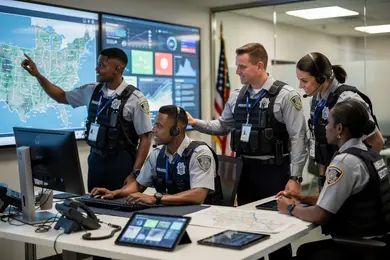
2027 Industry Demand for Homeland Security Master's Graduates: Job Outlook & Hiring Trends

Co-Founder and Chief Data Scientist
Positions demanding advanced homeland security expertise increasingly require specialized skills across threat analysis, regulatory compliance, cyber defense, and critical infrastructure protection. Organizations such as federal agencies, emergency management firms, and private security contractors prioritize candidates with credentials like CPP or CISSP, alongside demonstrated leadership in interdisciplinary teams. Technical proficiency in data analytics, risk assessment software, and operational protocols shapes hiring decisions, especially within sectors facing evolving security challenges.
The flexibility of accredited online master's programs plays a significant role for working professionals balancing employment and study, with the National Center for Education Statistics noting a steady 6% rise in graduate online enrollments in 2025, reflecting strategic scheduling and access preferences. This article examines current hiring patterns, required competencies, and program features to guide readers in aligning a homeland security master's degree with their professional objectives, finances, and job prospects.
Key Things to Know About Industry Demand for Homeland Security Master's Graduates
- Specialized roles within homeland security increasingly demand interdisciplinary skills, pushing graduates to balance broader knowledge with niche expertise, which may limit immediate job flexibility but heightens long-term career resilience.
- Employers prioritize candidates holding master's degrees combined with relevant certifications, reflecting a hiring trend that raises the credential bar and influences workforce stratification toward advanced practitioner and analytic roles.
- According to the National Center for Education Statistics 2024, the rise in online graduate program enrollment signals greater access for working adults but also means intensified competition and the need to weigh cost versus accelerated credentialing.
What is the Current Job Outlook for Homeland Security Master's Graduates?
The current job outlook for homeland security master's graduates reveals a nuanced landscape shaped by evolving employer expectations, sector-specific growth patterns, and credential demands that collectively redefine competitiveness. Rather than broad growth projections, practical hiring trends underscore the importance of specialized expertise and strategic credentialing.
- Industry Demand Variability: Federal, state, and local government agencies remain primary employers, especially for roles tied to counterterrorism and infrastructure protection. Private sector demand is concentrated in critical industries such as energy and transportation, where risk mitigation expertise tied to homeland security is increasingly vital.
- Credential Emphasis: Advanced degrees alone often do not suffice; professional certifications like the Certified Protection Professional (CPP) or Certified Homeland Protection Professional (CHPP) serve as key differentiators. Such credentials validate subject-matter mastery, increasing job candidates' appeal in competitive applicant pools.
- Emerging Specializations: Cybersecurity and intelligence analysis are growth areas within homeland security, reflecting the sector's pivot toward technological threat environments. Graduates equipped with data analytics and cyber defense skills are better positioned to access higher-level roles commanding stronger salary prospects.
- Regional Hiring Patterns: Metropolitan hubs housing federal installations or critical infrastructure present denser clusters of employment opportunities. Candidates open to relocation or remote hybrid roles linked to these centers gain practical advantages in a field where geographic concentration affects role availability.
- Advancement Constraints and Opportunities: Master's-prepared professionals with combined policy expertise, operational experience, and ongoing education tend to access mid- to upper-tier positions. However, career mobility often hinges on networking within government and private security sectors, demonstrating that credentialing must be complemented by relationship-building.
- Returning Career Changers: For individuals transitioning into security fields, an affordable and flexible master's program aligned with current workforce needs-including consideration of the cheapest easiest master's degree options-can provide a prudent ROI without sacrificing critical competencies required by employers.
Which Industries Hire the Most Homeland Security Master's Graduates?
Industries that hire homeland security master's graduates do so because these sectors require specialized expertise that blends analytical, regulatory, and operational capabilities to manage complex security challenges. Demand is not uniform but reflects tailored workforce needs tied to regulatory environments, technical threat landscapes, and leadership demands.
- Government Agencies: Federal and state bodies lead hiring given their mandate over national security, emergency management, and law enforcement. Graduates are sought for their ability to navigate multifaceted policy issues, coordinate interagency efforts, and lead in counterterrorism and infrastructure protection roles that emphasize compliance and intelligence analysis.
- Cybersecurity Sector: Private companies focused on digital threat mitigation increasingly require graduates adept in both technical resilience and strategic risk assessment. Their capability to bridge operational experience with emerging technology positions them well for leadership and specialized analyst roles amid evolving cyber-physical threats.
- Critical Infrastructure: Industries such as energy, transportation, and telecommunications employ graduates to address stringent regulatory scrutiny and complex crisis management. Managing security programs and liaising with federal regulators demands graduate-level expertise in policy interpretation and contingency planning.
- Emergency Management: Organizations responsible for disaster response engage graduates in designing comprehensive crisis plans and resource coordination. While entry roles may be accessible with less education, advanced positions demand the graduate's ability to synthesize risk data and manage multi-jurisdictional operations.
- Consulting and Research: Security analysis firms recruit for specialized roles in threat evaluation and policy impact studies. These positions rely heavily on advanced critical thinking and interdisciplinary skills fostered by master's programs and offer varied project-based work aligned with funding and geopolitical cycles.
What are the Most Common Job Titles for Homeland Security Master's Degree Holders?
The job titles attached to master's holders in homeland security often reveal employer expectations about expertise level, functional focus, and sector-specific demands. Employers use a blend of titles that reveal whether a role is oriented toward operational execution, strategic oversight, or specialized technical skillsets, reflecting how graduate training translates into workplace value.
In practical terms, this taxonomy influences salary brackets, credential prioritization, and advancement trajectories, particularly as federal, state, and private actors maintain distinct hiring standards and certification requirements.
- Homeland Security Analyst: Typically entry to mid-level, this role centers on intelligence gathering, threat assessment, and policy input. Its frequent use in federal agencies and intelligence units signals demand for graduates with strong analytical foundations and security clearance eligibility.
- Emergency Management Coordinator: Commonly positioned at state or local government levels, this title underscores operational planning and crisis response skills, emphasizing practical capabilities over theoretical knowledge and often requiring recognized emergency management certifications.
- Security Manager: This title reflects a shift to leadership roles within private sector firms or infrastructure environments, where graduates must integrate policy development, personnel oversight, and risk mitigation into organizational security frameworks.
- Counterterrorism Specialist: A niche role demanding advanced technical knowledge coupled with clearance and experience, highlighting how employers differentiate specialist roles from broader analytical or managerial positions within homeland security.
- Cybersecurity Analyst: Illustrates the growing convergence of IT security expertise and homeland security missions, attracting graduates who blend technical acumen with strategic understanding of evolving threats to critical cyber infrastructure.
An early-career graduate described how exploring these titles shaped their job search approach. While initially fixated on analyst roles, they discovered that equivalent opportunities appeared under various titles with subtle distinctions in required certifications and operational emphasis.
This realization prompted a deeper review of job descriptions, which revealed pathways either leaning more heavily toward emergency management or cybersecurity-fields that leveraged different aspects of their degree. This nuanced understanding helped narrow their applications to roles realistically matching both their skills and industry expectations, reducing uncertainty about role fit and potential career growth.
How Does Salary for Homeland Security Master's Graduates Compare to Other Advanced Degrees?
Salary comparisons for graduates with a master's in homeland security reveal distinct dynamics shaped by the niche and public-oriented nature of their work. Unlike some advanced degrees with broader industry applications, homeland security salaries respond directly to specialized employer demand and role specificity.
- Industry Premium: Federal and public sector roles dominate hiring for homeland security graduates, often offering steady but moderated pay scales compared to the private sector. This contrasts with degrees like MBAs, where broader market demand can command higher starting salaries.
- Role Specialization: Graduates typically fill specialized positions in risk analysis, crisis management, and intelligence where pay reflects operational expertise rather than broad managerial authority. This limits median salary growth relative to fields such as engineering that emphasize technical leadership.
- Credential Signaling: Certifications like Certified Protection Professional (CPP) or Project Management Professional (PMP) can enhance earning potential within homeland security by validating specific skills, yet wage increments often trail behind professions where licensing drives compensation more directly.
- Geographic & Sector Variation: Salaries vary significantly by region and employer type; federal agencies and law enforcement leadership posts in high-demand areas offer more competitive pay, while local or private sector roles may lag behind other advanced degree holders.
- Advancement Ceiling: Growth in compensation often plateaus at mid-level managerial or analyst tiers, reflecting the sector's blend of mission-driven roles rather than profit-driven leadership tracks common in business or law careers.
- Return-on-Investment Tradeoff: Homeland security master's graduates prioritize job stability and public service impact over peak salary, making ROI closely tied to individual career goals and agency hiring trends rather than raw earning potential.
This nuanced salary landscape emphasizes evaluating homeland security master's degrees in context of specific roles and sectors rather than general compensation trends. For those seeking affordable, flexible programs with clear pathways into federal or infrastructure protection careers, consulting listings of prestigious online universities can help align educational choices with workforce realities.
What Hiring Trends are Shaping Demand for Homeland Security Master's Talent?
Employer demand for master's graduates in homeland security increasingly hinges on a combination of technical acumen and applied strategic skills tailored to current operational demands. For instance, candidates who can integrate cybersecurity protocols with real-time threat assessment tools have an advantage over those with only theoretical knowledge, reflecting a shift toward proactive, tech-enhanced defense roles.
- Applied Technical Expertise: Employers expect graduates to go beyond foundational concepts, demonstrating hands-on problem-solving using advanced technologies like data analytics or automated incident response systems tailored to homeland security challenges.
- Leadership Under Pressure: Candidates who exhibit readiness to coordinate multi-agency operations and communicate effectively across stakeholders gain preference, especially for crisis management roles requiring adaptive decision-making and regulatory navigation.
- Credential Alignment: Advanced certifications and degrees keyed to niche fields-such as counterterrorism or infrastructure protection-serve as strong signals of specialized knowledge and practical commitment, directly influencing hiring competitiveness.
- Cross-Functional Communication: The ability to translate technical findings into actionable strategies across multidisciplinary teams is increasingly crucial, enhancing effectiveness in environments where rapid, collaborative response is standard.
These factors collectively shape how employers evaluate master's-level homeland security candidates, emphasizing integrated skill sets that blend operational proficiency, strategic leadership, and specialized expertise. Graduates who match this evolving profile typically secure stronger placement opportunities and greater mobility across the public, private, and nonprofit sectors.
What Skills and Specializations are Most in Demand for Homeland Security Master's Roles?
Employers recruiting for master's graduates in homeland security prioritize specialized skills that reflect the field's evolving complexity, moving beyond basic competencies to advanced, applied capabilities. Hiring managers increasingly seek candidates who demonstrate measurable expertise in cybersecurity, intelligence analysis, and coordinated crisis management, aligning with operational demands and strategic threat mitigation.
Graduates that effectively translate their technical and analytical training into leadership-ready roles hold stronger positions in the hiring pool and often experience greater salary potential and mobility across sectors.
- Cybersecurity Expertise: Mastery of cyber risk management and incident response is essential as agencies confront sophisticated digital threats. Proficiency with encryption technologies and security frameworks distinguishes candidates in both federal and private sector roles focused on protecting critical infrastructures.
- Intelligence Analysis: Skills in data fusion, predictive threat modeling, and geographic information systems (GIS) enable graduates to generate actionable insights that inform policy and operational decisions, increasing demand for those versed in open-source intelligence tools.
- Emergency Management: Competence in designing response plans and employing risk assessment software is vital for managing multi-jurisdictional emergencies. Ability to coordinate recovery efforts and public safety communication enhances hiring outcomes in crisis response positions.
- Regulatory and Credential Fluency: Though certifications like Certified Protection Professional (CPP) add value, employers often prioritize demonstrated experience with compliance and software platforms, expecting adaptable problem-solving over credential accumulation alone.
- Cross-Functional Leadership: The best candidates integrate strategic foresight with technical skills, capable of interagency coordination and operational readiness. Hiring preference favors those who can navigate complex regulatory environments while fostering collaborative relationships.
These in-demand skills for homeland security master's graduates signal how advanced specializations shape career trajectories and hiring decisions. Candidates evaluating programs should balance cost, flexibility, and relevance to these competencies, especially when considering a career change or leadership aspirations.
For those interested in expanding operational and analytical capabilities beyond homeland security, pursuing related credentials such as an MBA operations management may complement specialized expertise and broaden career prospects.
How Do Employers Describe the Value of Homeland Security Master's Graduates?
Employers in homeland security increasingly frame master's graduates as candidates who combine specialized expertise with practical adaptability, creating distinct advantages over bachelor's-level hires. This distinction becomes clear in hiring scenarios where candidates must align advanced theoretical training with agency operational demands and interagency collaboration.
For recruiters, the master's credential is a meaningful filter-not just for technical skills but also for leadership potential and applied problem-solving demonstrated through project experience.
- Technical Depth: Master's graduates bring deeper analytic capabilities and field-specific knowledge, such as advanced threat modeling and cyber resilience strategies, that support complex security assessments and intelligence synthesis beyond entry-level expectations.
- Applied Problem-Solving: Employers seek candidates who translate academic frameworks into actionable responses, valuing demonstrated success in managing incidents, updating protocols, or integrating technology within operational workflows.
- Leadership Readiness: Graduates are often seen as prepared to take on supervisory or coordination roles that require budget oversight, stakeholder negotiation, and strategic communication across agencies and jurisdictions.
- Credential and Experience Synergy: The master's degree tends to distinguish candidates in crowded applicant pools, but hiring managers also weigh practical experience like internships and real-world projects heavily to validate the academic credential's relevance.
- Cross-Functional Communication: Effective liaison skills across federal, state, and private partners are critical; master's graduates are valued for their ability to navigate these networks and translate technical concepts into policy or operational language.
- Comparison to Bachelor's Candidates: While bachelor's degree holders often fill operational positions, master's graduates are expected to contribute at a strategic level, influencing policy and managing complex interdisciplinary challenges.
One homeland security master's graduate recalled during a late 2025 job interview that the hiring panel focused intensely on their capacity to lead multi-agency crisis responses. Although the graduate's prior internships provided some applied experience, the interviewers prioritized examples of strategic planning and risk anticipation tied directly to their master's coursework.
The graduate noted how the discussion shifted when presenting a capstone project involving policy alignment and real-time intelligence sharing, signaling that employers were looking beyond credentials to concrete evidence of operational impact. They left the process understanding that the degree opened doors but that ongoing demonstration of leadership competence and technical versatility was essential in competitive selections.
What ROI Do Homeland Security Master's Graduates Typically See from Their Degree Investment?
ROI for homeland security master's graduates extends well beyond an immediate salary boost and hinges on how the degree integrates with real-world hiring structures and career demands. Graduates must weigh tuition costs, time invested, and alignment with sector-specific requirements to convert advanced study into tangible career benefits.
For example, a mid-career public safety professional pursuing an affordable online master's while employed may recover costs quickly through promotion eligibility and employer tuition reimbursement, whereas a recent graduate without relevant experience might face longer payback periods despite the credential.
- Salary Growth Potential: Advanced degrees open doors to supervisory and analytical roles that command higher pay, but this depends on demonstrating applicable skills and fitting within the employer's credential preferences rather than holding the degree alone.
- Promotion Access: Many leadership positions in homeland security explicitly require or give preference to master's-level education, making the degree a gatekeeper for upward mobility in both public and private sector organizations.
- Career-Change Leverage: For professionals shifting into homeland security from related fields, the master's credential can validate readiness, especially when paired with relevant certifications or practical experience.
- Credential Requirements: Licensures and certifications often complement the master's degree to meet employer expectations, so understanding which credentials enhance hiring viability is crucial for maximizing ROI.
- Opportunity Cost and Debt Sensitivity: Online programs with flexible schedules reduce income disruption and out-of-pocket costs, which are critical factors for working adults managing family and financial responsibilities.
- Market Resilience: Hiring trends emphasize combined experience and education; graduates who leverage internships or prior operational roles typically navigate shifting job markets more successfully.
What Job Search and Hiring Strategies Work Best for Homeland Security Master's Candidates?
Job search strategy is crucial for homeland security master's graduates because the hiring market values specific, applicable skills more than generic credentials. Employers increasingly use automated screening tools and demand evidence of applied expertise that distinguishes specialized candidates from generalists.
For example, a graduate emphasizing cybersecurity project experience will progress further in pipelines for intelligence or defense roles than one with general coursework listed without context. This dynamic underscores the importance of targeted searches and strategic application timing in sectors with fluctuating threat-driven hiring cycles.
- Employer Targeting: Focus searches on agencies and organizations prioritizing advanced analytical skills, crisis management, or policy expertise. Tailoring applications to federal, state, and private sector roles aligned with homeland security master's competencies improves relevance and competitive positioning.
- Credential Positioning: Move beyond degree listing by contextualizing coursework, certifications, and practical experiences to match specific role requirements such as intelligence analysis or emergency response leadership. Clear translation of academic projects into real-world impact strengthens employer screening outcomes.
- Portfolio Evidence: Present tangible work samples like risk assessments or simulation exercises to demonstrate critical thinking and practical solution development. Supplementing resumes with these deliverables can bypass automated applicant tracking filters and validate claims of competence.
- Interview Preparation: Anticipate scenario-based questions on threat identification, interagency collaboration, and ethical challenges. Articulating problem-solving methodologies that reflect mission-focused adaptability resonates with most hiring panels in homeland security.
- Timing Applications: Align job applications with budget cycles, grant periods, or heightened threat phases. Monitoring sector-specific hiring trends allows candidates to submit materials when organizational demand peaks, increasing chances of selection.
Effective hiring tactics for homeland security advanced degree candidates must incorporate these nuanced strategies, especially for budget-conscious adult learners and career changers seeking flexible, affordable options with strong ROI. For those considering complementary specializations, examining fields such as a forensic psychology major may offer interdisciplinary value when framed appropriately within job applications.
How Will Future Trends Like AI And Automation Affect Hiring for Homeland Security Master's Graduates?
Artificial intelligence and automation are not merely replacing roles in homeland security but are fundamentally reshaping employer expectations for master's graduates. Hiring now favors candidates who combine technical fluency with nuanced interpretation and strategic judgment. For example, a graduate involved in cyber threat analysis must evaluate AI-generated risk scores critically, distinguishing false positives from genuine threats to guide effective responses.
This underscores a shift where graduates manage integrated human-machine teams, balancing automated data with domain expertise to meet ethical and regulatory standards. The impact of AI and automation on homeland security career demand centers on redefining role complexity and required skill sets across the field.
- Hybrid Skillsets: Employers seek professionals who blend technical proficiency with leadership and ethical reasoning. Master's graduates must interpret AI outputs beyond surface-level analytics, applying contextual intelligence to operational decisions.
- Automation-Resistant Judgment: Routine data processing is increasingly automated, elevating the importance of critical thinking and expert evaluation in high-stakes environments where errors have significant consequences.
- Integrated Digital Workflows: Familiarity with AI-assisted platforms and real-time data integration is essential. Graduates must adapt quickly to shifting information streams to anticipate threats that purely automated systems might miss.
- Cross-Functional Collaboration: Managing teams that combine technical staff and operators requires strong communication and coordination skills to align efforts within complex organizational and regulatory frameworks.
For working professionals and career changers aiming for roles that reflect these trends, prioritizing continuous education on emerging technologies alongside foundational security principles is critical. Such an approach enhances long-term career resilience and positions candidates advantageously within the evolving landscape of Homeland Security.
Prospective students, especially budget-conscious adult learners, should seek programs that balance affordability, flexible schedules, and practical relevance to meet these shifting demands. Understanding these dynamics is vital given the growing importance of specialized expertise amid technological change. Those exploring pathways aligned with these realities will find stronger employability prospects and clearer advancement routes.
For more insight into career suitability related to personality and work style considerations, see the best jobs for introverts.
What Do Graduates Say About Industry Demand for Homeland Security Master's Graduates?
- Alfredo: "Balancing a full-time job and family obligations made me lean towards a homeland security master's program with flexible online options. I chose the program largely because it offered evening classes and allowed me to build a practical portfolio through a virtual internship. While employers valued my hands-on experience, I learned that some roles still prioritize certifications over academic credentials, which shaped my subsequent professional development path."
- Erik: "After switching careers from law enforcement, I faced a tight budget and limited time, so I opted for a condensed homeland security master's program with a strong focus on leadership and policy. That decision helped me secure an internship with a federal agency, which proved more valuable than the degree alone. Still, I found that without certain clearance and certifications, advancement in federal roles can be slower, prompting me to pursue additional qualifications post-graduation."
- Landon: "I enrolled in a homeland security master's program while working in emergency management, knowing the workload would be intense. The program's emphasis on real-world simulations and strategic planning gave me skills that helped me transition into cybersecurity. However, I noticed that in private sector jobs, some employers prioritized seasoned experience or specific certifications over the degree itself, making networking and continuous learning essential to breaking in."
Other Things You Should Know About Homeland Security Degrees
In 2026, pursuing a homeland security master's degree remains valuable for aspiring leaders. Such programs provide a robust foundation in policy and strategic planning, essential for leadership roles. Employers increasingly seek candidates with a comprehensive understanding of security dynamics beyond technical proficiency.
Employers increasingly prioritize candidates with hands-on experience such as internships or simulations within their master's education. Programs heavy on theory but light on applied learning might limit graduates' immediate job readiness. Students should prioritize programs integrating real-world exercises or partnerships with agencies, as these experiences often correlate with smoother transitions into relevant roles and stronger professional networks.
Pursuing a master's degree can open leadership pathways, but program alignment is critical. Degrees emphasizing management, policy, and strategic decision-making better position graduates for executive roles than those focused primarily on operational or tactical skills. Candidates aiming for leadership should prioritize curricula that build analytical, financial, and organizational competencies, as missing these may slow advancement despite possessing the degree.
While accreditation ensures baseline quality and often eligibility for federal aid, program reputation influences employer perception and networking opportunities. Homeland security employers frequently prefer graduates from recognized and accredited programs that align with established standards. Prioritizing accredited programs with a strong industry presence can enhance hiring prospects, especially since lesser-known or non-accredited options may require graduates to overcome bias or additional validation hurdles.
References
- 2026 Global Trends in Homeland Security https://www.milipol.com/en/newsroom-milipolparis/Global-trends-in-homeland-security
- Artificial intelligence and the future of work: Disruptions and opportunities https://unric.org/en/ai-and-the-future-of-work-disruptions-and-opportunitie/
- The 15 Master's Degrees With the Best Return on Investment https://money.com/masters-degrees-best-return-on-investment/
- Homeland Security Careers: DHS Jobs Guide 2026 https://www.jobtestprep.com/blog/homeland-security-careers-assessment-guide
- Nearly half of master’s degrees have a negative ROI https://thehill.com/homenews/education/4659444-nearly-half-of-masters-degrees-have-a-negative-roi/amp/
- AI in Government: Jobs at Risk, New Roles, and What Comes Next https://www.scholaro.com/db/News/ai-in-government-jobs-and-future-346
- Homeland Security Requirements (Degrees, Jobs & Salary) https://www.allcriminaljusticeschools.com/federal-law-enforcement/homeland-security/
- Future-Proof Your Career with a Master’s in Homeland Security Leadership | UMGC https://www.umgc.edu/blog/umgc-new-masters-degree-homeland-security-leadership
- How AI will impact security careers and what leaders should do about it https://www.cybersecuritydive.com/spons/how-ai-will-impact-security-careers-and-what-leaders-should-do-about-it/813175/
- What Can You Do with a Homeland Security Master's Degree? | Tiffin University https://go.tiffin.edu/blog/what-can-you-do-with-a-homeland-security-degree/