
2027 Engineering Degree Clinical Placement Report: Hours, Site Access, and Completion Bottlenecks

Co-Founder and Chief Data Scientist
Engineering students increasingly need real project experience before graduation, but "clinical placement" can mean very different things across biomedical, clinical, systems, industrial, and general engineering programs. The stakes are high. The Bureau of Labor Statistics reported a $97,310 median annual wage for architecture and engineering occupations in May 2024, making timely degree completion and strong site experience financially important.
This guide is for prospective and current students comparing programs, planning schedules, or trying to avoid placement delays. You will learn how hours, site access, costs, supervision, and bottlenecks affect completion decisions.
Key Things You Should Know
- Most engineering degrees do not have a universal licensure-style clinical-hour requirement; required site time depends on the program, accreditation design, internship/co-op policy, and whether the degree is in clinical engineering, biomedical engineering, engineering technology, or a healthcare-adjacent specialty.
- College Board's 2024-25 published tuition and fees averaged $11,610 for in-state public four-year students, $30,780 for out-of-state public students, and $43,350 at private nonprofit four-year colleges.
- BLS reported a $97,310 median annual wage for architecture and engineering occupations in May 2024, so delayed graduation, weak site access, or limited hands-on experience can affect both timing and employability.
- What Clinical Placement Requirements Do Engineering Degree Programs Have?
- How Are Clinical Placement Sites Assigned in Engineering Degree Programs?
What Clinical Placement Requirements Do Engineering Degree Programs Have?
In engineering education, "clinical placement" usually refers to a supervised, site-based learning experience rather than the mandatory patient-care rotations used in nursing or therapy fields. It may be called an internship, co-op, practicum, field placement, hospital-based clinical engineering rotation, senior design placement, industry-sponsored capstone, or applied research placement.
The most important point is that engineering has no single national clinical-hour rule that applies to all students. ABET-accredited engineering programs must show that students achieve defined outcomes and complete appropriate design experience, but programs decide how internships, co-ops, practicums, and site-based projects fit into the curriculum. That makes catalog language and placement policies more important than the program title alone.
The table below summarizes how placement expectations usually differ by engineering program type. Use it to identify whether a program is likely to require formal site hours or simply recommend experience for career readiness.
| Engineering program type | Common placement format | How hours are usually defined | Completion risk if site access is limited |
| General engineering bachelor's degree | Senior design, lab work, optional internship, or employer-sponsored project | Often tied to course credits, project milestones, or faculty evaluation rather than a fixed clinical-hour total | Usually moderate unless the capstone depends on an external sponsor |
| Biomedical engineering | Device lab, hospital partner, research lab, startup, manufacturer, or regulatory project | May be defined through internship credits, capstone deliverables, or research expectations | Higher when hospital access, compliance training, or specialized equipment is required |
| Clinical engineering | Hospital technology management, medical device support, health systems engineering, or safety projects | Often site-based and supervisor-documented, especially in graduate or professional tracks | High if hospital partners are scarce or onboarding is slow |
| Engineering technology | Applied technical internship, manufacturing site, quality lab, or field service setting | Frequently tied to internship course credits, employer hours, and competency checklists | Moderate to high depending on regional employer partnerships |
| Online or hybrid engineering program | Remote coursework plus local labs, employer-based projects, short residencies, or approved local placements | Varies widely; some programs allow workplace projects while others require approved external sites | High if the school expects students to secure their own local site |
Engineering students should not assume that "clinical" means the same thing it does in healthcare degrees. For comparison, online speech pathology programs typically revolve around supervised clinical practice requirements that are more standardized and licensing-driven than most engineering placements.
A practical way to read an engineering curriculum is to separate required site experience from career-building experience. A required site experience can delay graduation if not completed. A recommended internship may not block graduation, but skipping it can weaken a resume, reduce employer exposure, and make the first job search harder.
How Are Clinical Placement Sites Assigned in Engineering Degree Programs?
Engineering placement assignment depends on the school's employer network, the student's location, the program format, and the risk level of the site. Hospital-based clinical engineering placements are usually more controlled than general industry internships because they may involve patient-adjacent environments, equipment safety rules, privacy training, immunization records, and facility onboarding.
The table below compares the most common assignment models. This matters because "placement support" can mean anything from full coordination by the school to a job-board link and a requirement that students find their own site.
| Placement model | How it works | Best fit | Main limitation |
| School-arranged placement | The program matches students with approved hospitals, employers, labs, or project sponsors | Students who need structure, are new to the field, or are in a healthcare-adjacent engineering specialty | Students may have limited control over site location, schedule, or project type |
| Student-arranged placement with approval | The student finds an employer or site, then the program reviews the site, supervisor, and learning plan | Working adults, online students, and students with local employer connections | Approval can take time, and some sites may not meet academic or supervision standards |
| Employer-based placement | A current job is used as the applied site if duties align with program outcomes | Engineering technology students, graduate students, and working professionals | Routine job duties may not satisfy learning objectives without a defined project |
| Competitive internship or co-op | Students apply through employers, career fairs, or co-op offices and must be selected | Students seeking full-time industry experience and stronger employer exposure | Selection is not guaranteed, and timing may extend the degree plan |
| Research or design-lab placement | Faculty supervise students in a lab, design center, or grant-funded project | Students considering graduate school, R&D, medical devices, or technical specialization | May provide less direct workplace exposure than an employer site |
Before enrolling, ask whether the school has signed agreements with placement partners, how many students compete for each available site, and whether online students outside the school's region receive the same level of support. A program with strong advising but no site network may still be workable for a student with employer connections; it is riskier for a student who needs the school to open doors.
Students can reduce assignment problems by preparing early and documenting every requirement. The following steps are especially useful when the program requires external approval before site work can begin:
- Request the written placement policy before admission, including who is responsible for finding the site.
- Confirm whether the school has approved partners in your preferred region, not just in the state where the campus is located.
- Ask how far in advance site requests must be submitted and whether late paperwork can move you to the next term.
- Verify that your proposed supervisor has the qualifications the program requires.
- Keep copies of affiliation agreements, learning objectives, onboarding documents, and supervisor contact information.
Clinical placement bottlenecks in engineering are usually caused by a mismatch between academic timelines and site capacity. Engineering departments may plan courses by semester, while hospitals, manufacturers, utilities, labs, and technology firms plan projects around staffing, compliance, budgets, and operational risk.
The table below identifies common bottlenecks and how they can affect students. It is meant to help readers recognize delays before they become graduation problems.
| Bottleneck | Why it happens | Possible impact on completion |
| Limited hospital or lab access | Clinical engineering and biomedical placements may require controlled environments, safety protocols, or equipment access | Students may wait for a later term or accept a less convenient site |
| Slow affiliation agreements | Schools and sites must define liability, supervision, confidentiality, and student responsibilities | Start dates can be delayed even after a site says yes |
| Background checks and health clearance | Healthcare-adjacent sites often require screenings before entry | Incomplete documentation can block onboarding |
| Supervisor shortages | Qualified engineers, clinical engineering managers, or technical leads may not have time to supervise students | Placements may be capped or canceled |
| Geographic mismatch | Online or commuter students may live far from approved partners | Students may face travel, relocation, or reduced scheduling options |
| Project timing | Engineering projects may not align neatly with academic terms | Students may need an extension, substitute project, or summer placement |
Common student mistakes often make these bottlenecks worse. The most damaging mistake is assuming that admission to the degree automatically includes a guaranteed placement. Another is waiting until the semester before the practicum, co-op, or capstone to ask where site work will happen.
Red flags deserve direct follow-up before you commit to a program. Watch for language that sounds supportive but avoids responsibility, such as "students are encouraged to identify opportunities" without explaining approval timelines, backup options, or the school's role if a site falls through.
Other red flags include:
- The program cannot explain how many approved placement partners are active in your region.
- Online students must find sites independently but receive no template for employer outreach or site approval.
- Required clinical or field courses are offered only once per year, making a missed placement especially costly.
- The school advertises internships heavily but does not distinguish optional internships from graduation requirements.
Supervision and evaluation standards vary, but strong engineering placements usually have three elements: a qualified site supervisor, a faculty contact, and measurable learning outcomes. The site supervisor confirms the student's work, professional conduct, safety awareness, and technical contribution. The faculty member evaluates whether the experience meets academic standards.
Engineering supervision is different from clinical supervision in licensed therapy or healthcare programs. In many engineering settings, the student is not providing regulated care.
The emphasis is on design judgment, documentation, teamwork, safety, troubleshooting, ethics, and professional communication. By contrast, marriage and family therapy master's programs usually involve supervised client-contact requirements tied more directly to licensure preparation.
Students should expect evaluation to include both technical and professional criteria. Site performance alone may not be enough if the student fails to submit journals, project reports, design documentation, presentations, or reflective assignments required by the course.
The strongest placement handbooks make expectations explicit. Look for these elements before you begin site work:
- A written learning agreement that defines the project scope, site duties, schedule, and evaluation method.
- Supervisor qualification rules, including whether the supervisor must be a licensed professional engineer, clinical engineering manager, faculty researcher, or experienced technical lead.
- Clear safety and confidentiality rules, especially for hospital, device, defense, energy, or proprietary manufacturing environments.
- A process for reporting problems if the site changes the project, cancels hours, or assigns work unrelated to the learning objectives.
- A final evaluation process that includes both site feedback and academic assessment.
Students should also understand boundaries. A placement is not a guarantee of employment, licensure, certification, or professional engineering eligibility.
For students pursuing the Professional Engineer pathway, state boards set their own education, exam, and experience rules; a school placement may support career development, but it does not replace formal licensure requirements.
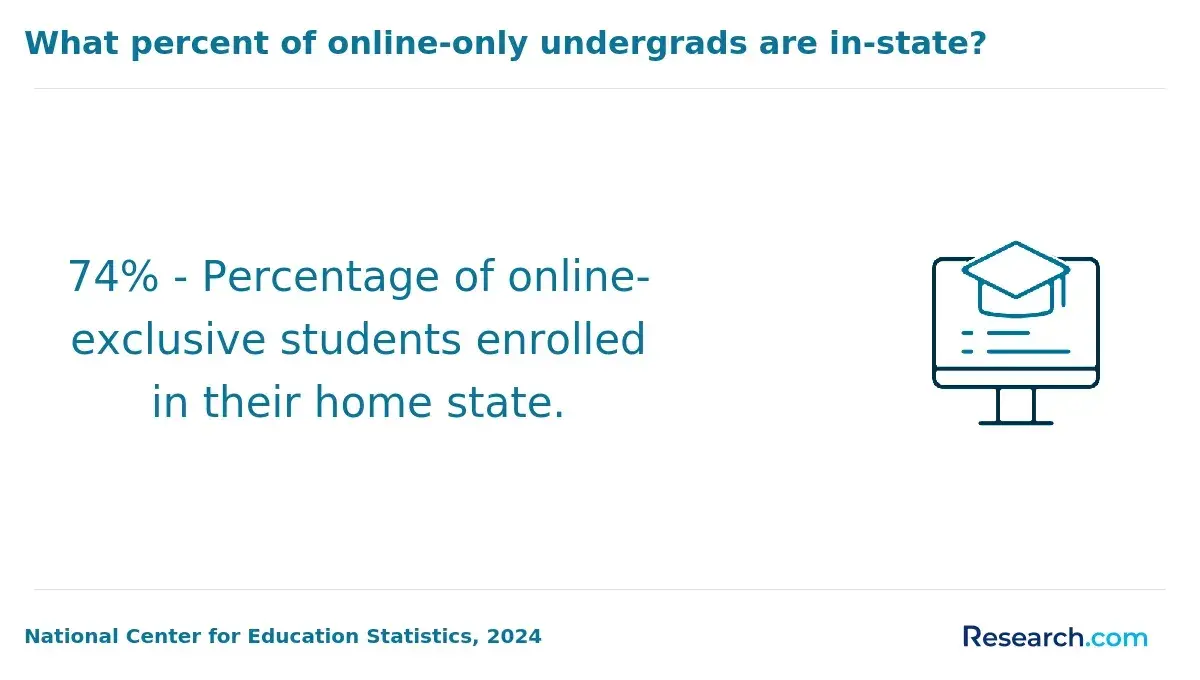
Some engineering students can complete placements part-time, online-supported, or near home, but flexibility depends on the program and the site. Online coursework does not automatically mean online placement. If the degree requires hands-on testing, hospital equipment, manufacturing processes, or supervised design work, the student may still need in-person access.
Part-time placements work best when the site has predictable tasks, the supervisor can meet consistently, and the program allows extended completion. They work poorly when the project depends on shift-based operations, shared lab equipment, patient-care technology schedules, or a team design cycle that moves quickly.
Students comparing online, hybrid, and campus programs should ask targeted questions rather than relying on broad labels. The following questions help reveal whether the placement model fits your life:
- Can required site work be completed near my home, or only near the campus?
- Does the school already have approved partners in my state or region?
- Can I use my current engineering or technical job as the placement site?
- Are evening, weekend, or condensed placements allowed, or must hours occur during standard business hours?
- Will the school contact sites on my behalf, or must I secure the site before receiving approval?
- What happens if my local site withdraws after the semester starts?
Near-home placement can be a strong option for working adults and students with family responsibilities. It is less suitable when the student lives in a region with few engineering employers, hospitals, labs, or approved supervisors. In that case, paying less for an online program may not be a good trade if site access becomes the barrier that delays graduation.
Campus programs may offer stronger placement pipelines when they have long-standing employer relationships, active co-op offices, hospital partnerships, or faculty-led labs. Online programs can still be excellent when they provide proactive site approval support, clear documentation, and flexibility for employer-based projects.
Placement costs are easy to underestimate because they are often separate from tuition. Students may budget for courses but forget transportation, background checks, immunizations, software, lab materials, professional clothing, relocation, parking, or unpaid time away from work.
The College Board's 2024-25 figures show why the total budget matters: published tuition and fees averaged $11,610 for in-state public four-year students, $30,780 for out-of-state public students, and $43,350 at private nonprofit four-year colleges. Placement-related expenses can add pressure to those baseline costs, especially when students must travel or reduce paid work hours.
The table below outlines common cost categories. These costs vary by school, site, region, and whether the placement is paid, unpaid, for credit, or embedded in a course.
| Cost category | Where it appears | Why students should check it early |
| Tuition and course fees | Internship credit, practicum course, capstone sequence, or co-op registration | Some schools charge tuition even when most work occurs off campus |
| Transportation and parking | Commuting to hospitals, labs, plants, utilities, or employer sites | Distant sites can make a low-tuition program more expensive in practice |
| Background checks and onboarding | Healthcare, defense, energy, or controlled-access sites | Clearance delays can affect start dates |
| Health documentation | Hospital-based or patient-adjacent environments | Immunization records or screenings may be required before access |
| Equipment and software | Design, simulation, data analysis, prototyping, or lab-based projects | Some tools may not be covered by tuition or general technology fees |
| Lost wages | Unpaid or daytime placements that conflict with employment | The opportunity cost may be larger than direct placement fees |
If minimizing education cost is your top priority, compare whether you truly need a site-intensive engineering pathway or whether another career route fits your goals better. Some students exploring shorter credentials also look at options such as the cheapest paralegal certificate online, but that comparison only makes sense if the target career is different.
For engineering students, the key financial question is not simply "Which program is cheapest?" It is "Which program gives me the strongest chance to complete required site work without extra terms, relocation, or unplanned unpaid time?" A slightly higher-tuition program with reliable placement support may be financially safer than a lower-cost program that shifts all site responsibility to the student.
Clinical and site-based placements can improve career readiness because they turn classroom knowledge into evidence of applied skill. Employers often want to see that new engineers can communicate with non-engineers, document decisions, follow safety rules, troubleshoot real systems, and contribute to a team under constraints.
The value of a placement depends on the setting. A hospital-based clinical engineering placement may build experience with medical equipment, risk management, preventive maintenance, cybersecurity concerns, and cross-functional communication with clinicians.
A manufacturing placement may strengthen process improvement, quality control, automation, and production problem-solving. A design lab may support research, prototyping, testing, and technical documentation.
The table below compares common placement settings and the career signals they can provide. It should help students choose experiences aligned with their target roles.
| Placement setting | Typical learning experience | Career readiness signal |
| Hospital clinical engineering department | Medical device support, equipment lifecycle, safety documentation, and technology management | Useful for clinical engineering, biomedical equipment, health technology, and hospital systems roles |
| Medical device company | Design controls, testing, documentation, regulatory awareness, and cross-functional product work | Useful for biomedical engineering, quality, verification, validation, and product development roles |
| Manufacturing or industrial site | Process improvement, automation, quality systems, and production constraints | Useful for industrial, mechanical, manufacturing, and operations engineering roles |
| Research lab | Experiment design, data analysis, prototyping, and technical writing | Useful for graduate school, R&D, and specialized technical roles |
| Utilities, energy, or infrastructure site | Field systems, reliability, safety, maintenance planning, and compliance documentation | Useful for civil, electrical, environmental, energy, and systems roles |
| Software or data-driven engineering team | Simulation, modeling, analytics, automation, and workflow integration | Useful for systems, software-adjacent engineering, AI-enabled engineering, and analytics roles |
Students should leave a placement with artifacts they can discuss professionally, even if proprietary details cannot be shared. Examples include a sanitized project summary, methods used, problems solved, tools learned, safety considerations, and measurable process improvements if the site permits disclosure.
A placement is strongest when it helps the student answer interview questions with specific examples. "I completed an internship" is less persuasive than explaining how you tested a design, communicated with stakeholders, documented a failure mode, or improved a workflow under supervision.
Engineering placements are changing as employers adopt AI-enabled design tools, simulation platforms, digital twins, automation, remote monitoring, and more data-heavy workflows. These technologies do not eliminate hands-on experience; they change what students may be expected to do during site-based learning.
In healthcare-adjacent engineering, hospitals and device companies are also paying closer attention to cybersecurity, interoperability, equipment lifecycle management, and risk documentation. That makes clinical engineering placements more valuable when they expose students to real operational constraints rather than only classroom-style design problems.
Several trends now influence placement access and quality. Students should consider them when comparing programs, especially online and hybrid options:
- More simulation before site access: programs may use virtual labs, modeling, or case-based preparation before students enter a workplace or hospital environment.
- Higher documentation expectations: employers increasingly value students who can write clear technical notes, risk assessments, test plans, and project summaries.
- More competition for premium sites: hospitals, device companies, and advanced manufacturing employers may limit student slots because supervision time is scarce.
- Growth of employer-sponsored projects: some programs use real industry problems in capstones to expand access when formal internships are limited.
- Hybrid supervision models: faculty and site supervisors may combine in-person work with virtual check-ins, shared documentation, and remote project management tools.
These trends favor students who prepare early and can show readiness before placement starts. Completing safety training, learning core software, building a portfolio, and practicing technical communication can make a student easier for a site to supervise.
They also favor programs with active employer relationships. A curriculum that mentions AI, digital health, or advanced manufacturing is not enough; students should ask whether those themes appear in real projects, partner sites, labs, and supervised deliverables.
Placement quality should be a serious factor in choosing an engineering degree program, especially if the curriculum includes required practicum, co-op, capstone, or hospital-based experience. A strong placement system reduces uncertainty by making responsibilities, timelines, site options, and backup plans visible before students reach the final year.
Students comparing engineering with other graduate or professional pathways may also consider management-focused routes, including the easiest MBA programs, but the placement question is different: engineering programs should be judged on technical supervision, applied project quality, and access to relevant engineering environments.
Use the following checklist when speaking with admissions staff, department advisors, co-op offices, and current students. These questions are designed to reveal whether placement support is operationally strong or mostly promotional:
- Is the placement, internship, co-op, practicum, or capstone required for graduation, or is it optional?
- Who is responsible for securing the site: the school, the student, or both?
- How many active placement partners does the program have in the student's intended region or specialty area?
- What happens if a site cancels, a supervisor leaves, or onboarding is delayed?
- Are online and hybrid students eligible for the same placement support as campus students?
- Can students complete site work through a current employer, and what approval rules apply?
- Are placements paid, unpaid, tuition-bearing, or connected to a co-op transcript notation?
- How are site supervisors trained or oriented to the program's learning outcomes?
- What documentation must be completed before the student can begin hours?
- Can the program provide sample degree plans showing placement timing for full-time and part-time students?
A program is usually stronger when it can provide clear answers, written policies, and examples of recent placement settings. It is weaker when staff describe placement as "flexible" but cannot explain approval steps, supervision standards, or what happens when local sites are unavailable.
The best choice depends on the student. A campus program with a strong co-op pipeline may suit a traditional student who can relocate or adjust semesters. An online program with employer-based project approval may fit a working professional. A hospital-connected biomedical or clinical engineering program may be worth a higher cost if the student's career goal requires healthcare technology exposure that would be difficult to arrange independently.
Clinical or site-hour requirements affect completion when they control access to a required course, capstone sequence, internship credit, or graduation audit. In many engineering programs, the bigger issue is not the number of hours alone; it is whether those hours must happen at an approved site during a narrow academic window.
Federal credit-hour rules commonly use the idea that one credit represents an amount of student work defined by the institution and consistent with accepted practice. In practical terms, a three-credit practicum, internship, or design course can require a substantial weekly commitment once site time, documentation, meetings, and deliverables are combined. Students should therefore evaluate the full workload, not just the hours spent physically on site.
The table below shows how different site-based formats can interact with degree completion. The exact hour total must always be verified in the current catalog, handbook, or course syllabus.
| Format | Typical completion pattern | Why it can affect graduation timing | Best planning assumption |
| Required capstone with external sponsor | Usually completed in the final year as part of a design sequence | A sponsor change can disrupt deliverables, testing, or evaluation | Confirm backup projects and faculty supervision rules |
| Internship for academic credit | Often completed during summer, a semester, or part-time alongside coursework | Students may need site approval before registering for credit | Start employer outreach at least one term before registration |
| Co-op semester | Usually a full-time work term integrated into the degree plan | It may extend time to graduation unless the curriculum is built around alternating terms | Ask for a sample four- or five-year plan that includes co-op timing |
| Hospital-based clinical engineering practicum | Often scheduled around site availability, onboarding, and supervisor capacity | Compliance checks and limited site slots can delay start dates | Complete clearance tasks early and ask about alternate hospitals or departments |
| Employer-based applied project | Completed through a student's current workplace when approved | Routine work may not satisfy academic outcomes without a defined scope | Secure written approval for the project, supervisor, and deliverables |
Students who work full-time should be especially cautious. A placement described as "part-time" may still require daytime meetings, supervisor availability, lab access, safety training, and fixed project deadlines. If a required site course is offered only in spring or fall, a missed clearance deadline can turn into a one-term or one-year delay.
The best completion strategy is to treat placement planning as part of degree planning, not as a final-year administrative task. Students should map prerequisites, site application windows, transportation, work schedules, and documentation deadlines before they reach the placement semester.
Other Things You Should Know About Engineering Clinical Placement
Most engineering degrees do not require universal clinical hours like nursing or therapy programs. Site-based requirements depend on the school, major, accreditation design, and whether the program includes a required internship, co-op, practicum, hospital placement, or capstone project.
A clinical placement in engineering usually means supervised work in a healthcare-adjacent or applied technical setting, such as a hospital clinical engineering department or biomedical device environment. An internship is broader and may occur in manufacturing, software, energy, research, construction, or other engineering workplaces.
Sometimes. Many programs allow local or employer-based placements if the site, supervisor, and learning objectives are approved. Students should confirm this before enrolling because some schools have limited approved partners outside their campus region.
Yes, especially if site work is required for graduation. Strong placement support can reduce the risk of delayed completion, unexpected travel, and weak hands-on experience. Ask who finds the site, what backup options exist, and how supervision is evaluated.
See What Experts Have To Say About Studying Engineering
Read our interview with Engineering experts


Jasna Jankovic
Engineering Expert
Associate Professor
University of Connecticut

Bohdan W. Oppenheim
Engineering Expert
Professor Emeritus of Healthcare Systems Engineering
Loyola Marymount University

- Getting Started in Clinical Research - ACRP https://acrpnet.org/career-center/getting-started-in-clinical-research
- LSRT Clinical Placement: How To Find, Pitch, And Secure Your Own Externship Site https://ccitraining.edu/blog/how-to-find-lsrt-externship-site/
- Criteria for Accrediting Engineering Programs, 2025 - 2026 - ABET https://www.abet.org/accreditation/accreditation-criteria/criteria-for-accrediting-engineering-programs-2025-2026/
- Managing clinical placements for online programs https://corehighered.com/en/blog/managing-clinical-rotations-for-online-programs
- National Society of Professional Engineers https://www.nspe.org/career-growth/pe-magazine/march-2019/how-many-credit-hours-make-engineering-grad-you-may-be
- Exploring Clinical Research Sites: What You Need to Know - Bio Research Partner https://bioresearchpartner.com/exploring-clinical-research-sites-what-you-need-to-know/


